
Power Bank vs. Lithium Battery Pack: An OEM Assembly Guide
Power Bank vs. Lithium Battery Pack: An OEM Assembly Guide
When an OEM team has to decide how to power a new device, the choice between a finished portable power bank and a custom lithium battery pack is a structural decision, not a shopping decision. A portable power bank is a finished consumer product: cells, protection electronics, charging and discharging circuits, output ports and a housing, sold as a standalone accessory. A custom lithium battery pack is a component: cells, a protection and management layer, a mechanical structure and a connector, delivered to be integrated inside someone else's product. Choose the power bank route when the energy source must be detachable, user-facing and shareable across devices; choose the custom pack route when the energy source must fit a defined enclosure, meet a defined electrical profile and remain part of one product for its service life.
Shenzhen Hypercell Co., LTD is a lithium battery manufacturer established in 2007, headquartered in Shenzhen with production operations in Dongguan, Guangdong. The company builds lithium-ion cylindrical batteries, lithium-ion polymer batteries and lithium iron phosphate (LiFePO4) batteries, and supplies customized lithium-ion battery solutions to clients worldwide. Its assembly and customization work is concentrated in applications where the battery is a functional subsystem rather than an accessory — industrial instruments, medical devices and IoT equipment among them.
Why the Comparison Feels Unequal: Problem Definition
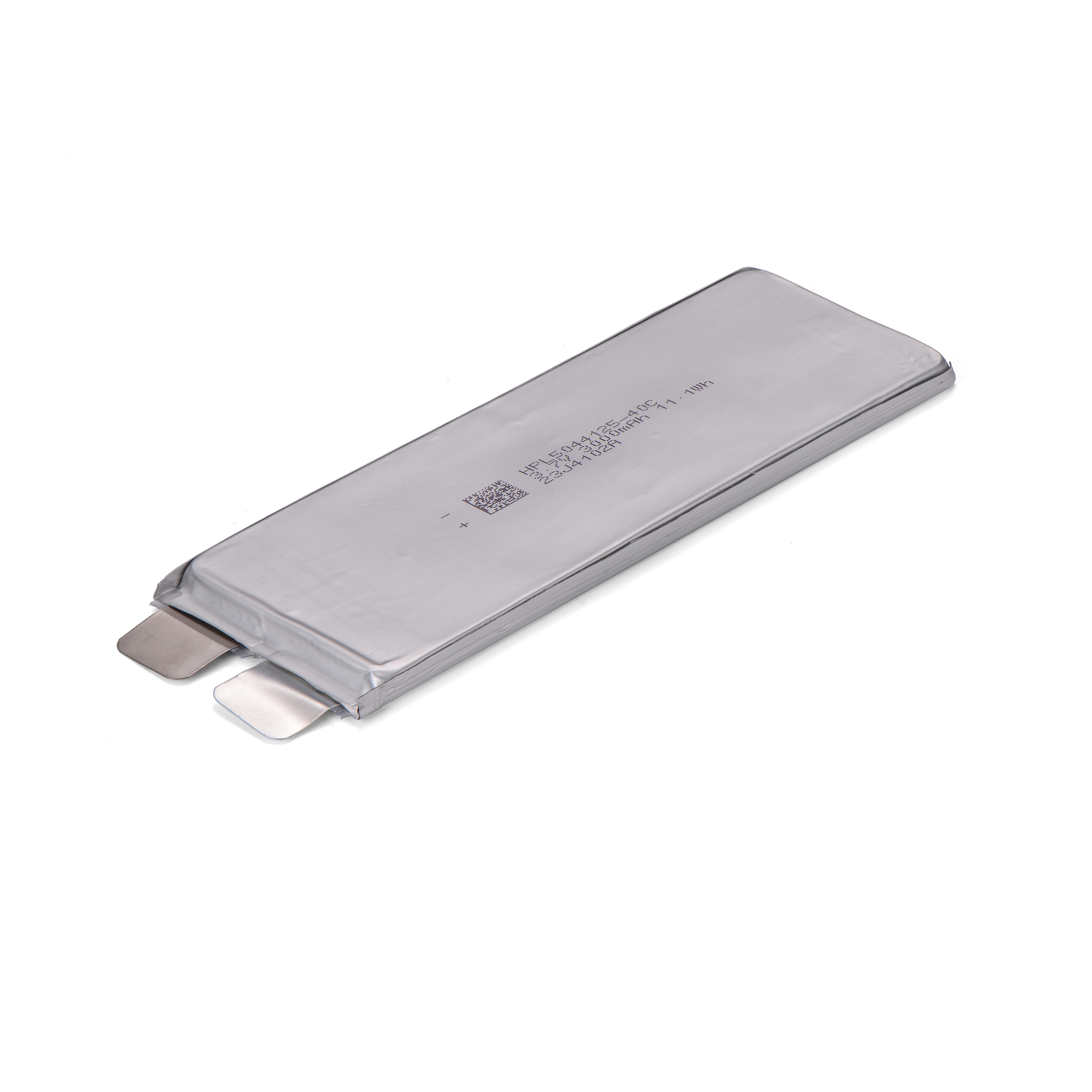
The two options do not sit at the same level of the battery supply chain, because one contains the other. Every portable power bank contains an assembled battery pack. The finished product wraps that pack in a housing, adds charging and discharging electronics, output ports and user controls, then sells it as a standalone accessory with a retail identity. A custom lithium battery pack stops one layer earlier: it delivers stored energy plus protection and an interface, and leaves the enclosure, the user interface and the system-level electronics to the device program.
That gap creates three recurring sourcing mistakes.
- Treating a power bank as a component. Re-packaging a finished power bank inside a device duplicates the housing, the port hardware and consumer-facing compliance the device program may not need, while adding an unnecessary mechanical interface layer.
- Treating a custom pack as a catalog part. Expecting a fixed geometry with a fixed electrical profile ignores what a custom pack actually is: an engineering deliverable shaped around the host device.
- Ignoring the interface. A power bank hands energy to the outside world through a standardized external port. A pack hands energy to the host device through an internal connector and a protection layer that must be coordinated with the device's own electronics and firmware.
The practical consequence: buyers who compare the two on unit price are comparing different scopes. The power bank price includes a housing, port hardware, packaging and consumer-product obligations. The pack price includes engineering, tooling, protection electronics, integration support and pack-level validation. The right question is not which one is cheaper, but which scope the device program should own.
Industry Background: Why Both Sourcing Routes Exist
The two routes grew out of the same manufacturing layer — battery assembly — but they solve different buyer problems. A battery assembling factory takes cells from cell manufacturers and builds the protection, structure, connection and testing around them. From that shared base, two product outcomes emerge.
The power bank route serves portability. Power banks are consumer accessories designed around standardized output interfaces so that one product can charge many devices. The buyer's evaluation is commercial and retail-oriented: capacity claims, port configuration, physical size, finish quality and packaging.
The custom pack route serves integration. Custom lithium battery packs exist because a growing range of devices treat energy as a functional subsystem rather than an accessory — industrial instruments and analyzers that must operate in field conditions, medical devices with fixed enclosures and controlled processes, IoT devices deployed with limited maintenance access, and robots or e-mobility platforms that draw high current from multi-cell assemblies. In these applications the battery is designed around the device, not the other way round.
Shenzhen Hypercell Co., LTD sits on the custom pack side of that split. Established in 2007, the company has over 18 years of experience in lithium battery manufacturing and operates three production factories based in Guangdong with more than 1,200 staff and a daily output capability of 30MWh. It is a qualified ISO 9001:2015 and ISO 14001:2015 enterprise, and it maintains a supply chain composed of local and global suppliers vetted through a rigorous selection process.
Two capability points matter for the decision this guide addresses. First, cell format and cell chemistry are a separate decision from power bank versus pack: Hypercell builds cylindrical, polymer and LiFePO4 batteries, and its R&D team of doctors, masters and senior engineers works on higher specific capacity, high-rate discharge and fast charge, and high- and low-temperature performance, alongside longer-horizon work on solid-state and sodium-ion technology. Second, integration is treated as an engineering service rather than a hand-off: the company's packing technology department supports clients with technology integration across industrial design, electronics, power supply, software, structure, process and testing.
Detailed Solution: A Decision Framework for Custom Assembly Buyers
Seven factors separate the two routes in practice. Each one shifts the answer in a predictable direction.
1. Form factor flexibility
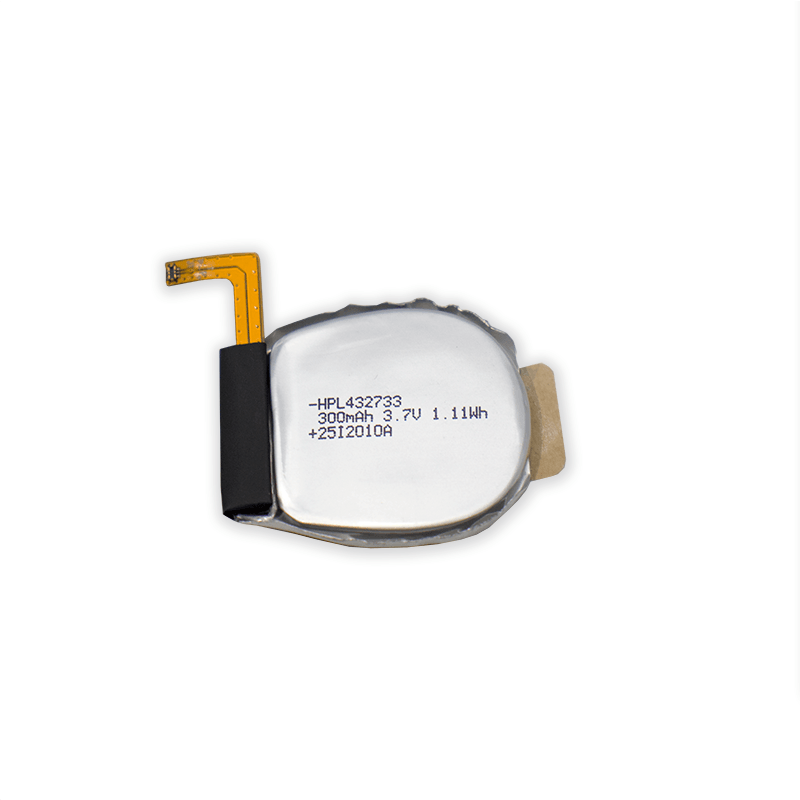
A power bank exists in the shapes its supplier has chosen to manufacture — typically flat, rectangular housings with defined thickness ranges. If the device has an irregular, curved or unusually thin cavity, choosing a power bank means designing the product's mechanics around the accessory. A custom pack reverses that constraint: the assembly is built to the cavity, using polymer cells where space is thin or irregular, cylindrical cells where a defined block volume is acceptable, and special-shape builds where the enclosure demands something outside standard formats. Hypercell's stated capability includes special shape battery solutions and batteries engineered for specific performance characteristics — the two features that matter most when geometry, not cost, is the binding constraint.
2. Energy capacity and current profile
Power banks are marketed on how much energy they deliver to external devices, and their output is standardized, so sizing is largely a retail decision: buyers select a capacity band and a port configuration. Custom packs are sized from the device's load profile — average current, peak current, duty cycle, thermal environment, and the capacity the product needs at end of life rather than only when new. When a device combines steady background draw with short high-current events, the pack design has to satisfy the peak; a power bank instead provides a fixed external output. Hypercell's development work covers high specific capacity, high rate discharge and fast charge, plus high-temperature and low-temperature operation, including wide-temperature cylindrical cells such as the INR18650S 3.6V2900mAh Li-ion battery specified for −40°C to +85°C operation.

3. Integration complexity
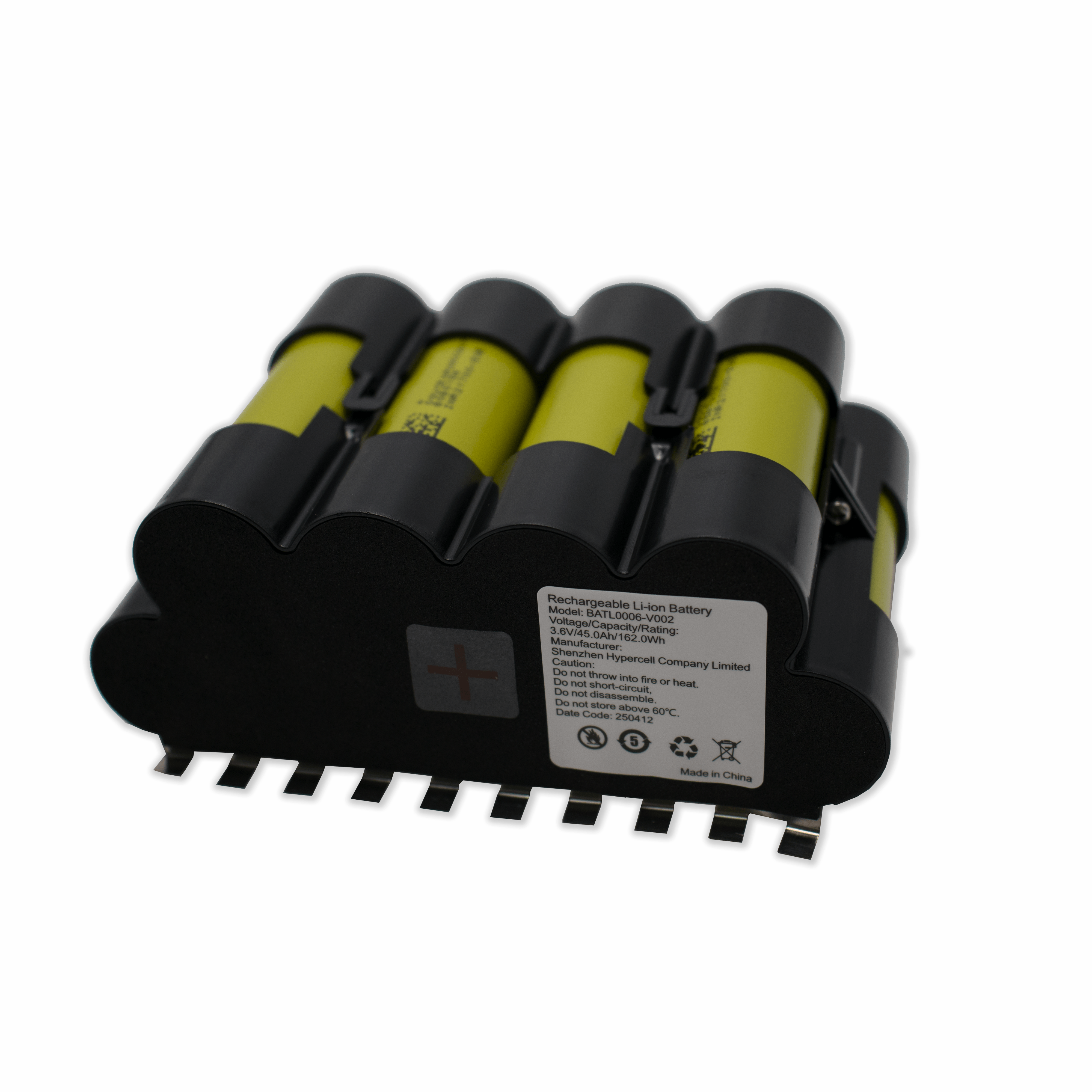
This is where the two routes differ most in workload. A power bank pushes complexity to the outside of the product: it is plug-and-play at the user level, and the device program still has to mount it, secure it and manage the heat it produces. A custom pack pulls complexity into the engineering phase: mechanical mounting, connector selection, coordination of protection thresholds with the host electronics, communication between pack and device, thermal path, and validation of the combined system. Buyers should treat that engineering as a deliverable with a named owner. Hypercell's packing technology department exists for precisely this stage, supporting clients on industrial design, electronics, power supply, software, structure, process and testing integration.
4. Product lifecycle and charging cycles
Both routes use lithium-ion chemistry, so aging is dominated by the same fundamentals: cell chemistry, depth of discharge, charge and discharge rate, operating temperature, and the quality of the protection electronics. The difference is control, not chemistry. A custom pack can be sized and protected so that capacity decline follows the product's service plan, whether the battery is replaceable in the field or sealed for life. A finished power bank is engineered for generic consumer duty cycles and for a market that expects replacement rather than service. During evaluation, cycle life should be treated as an outcome of how the cell is used and protected rather than as a single label value. The relevant questions are how deep the discharge will go in normal use, how often fast charging will occur, and what temperature the cell will see inside the enclosure.
5. Safety architecture
Safety in a power bank is largely contained within a finished product: the housing, the ports and the internal protection are designed together and validated as a consumer item. Safety in a custom pack is co-designed. Protection against over-charge, over-discharge, over-current, short circuit and temperature extremes is built into the pack, but the mechanical and thermal environment belongs to the host device. Responsibility is therefore shared, and the supplier's process discipline becomes part of the safety case. Hypercell operates as a qualified ISO 9001:2015 and ISO 14001:2015 enterprise, follows its quality and environmental management systems through development and manufacturing, and maintains vertical manufacturing capabilities together with a vetted supplier network to limit the risk of supply disruption.
6. Compliance and transport documentation
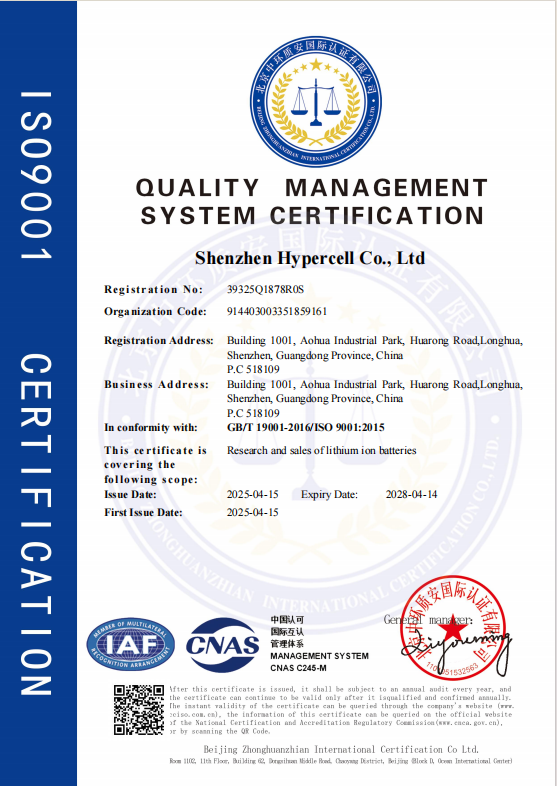
The documentation package differs by route. For a custom pack, buyers typically need three groups: management system certificates, material compliance, and transport documentation. Hypercell holds ISO 9001 and ISO 14001 certificates, a RoHS certificate, a CB test certificate, and Identification and Classification Reports for Sea Transport of Goods and for Air Transport of Goods — the documents that govern how lithium cells and packs move through logistics. A finished power bank program needs its own consumer product approvals on top of transport documentation; where the device program already carries those obligations, the pack route avoids duplicating the scope.
7. The supplier type each route requires
Finally, the two routes are not sourced from the same kind of partner. A power bank program is sourced from a finished-goods or consumer accessory supplier, and the evaluation focuses on the finished product. A custom pack program is sourced from a battery assembling factory, and the evaluation focuses on cell sourcing, engineering capability, protection design, testing, production capacity and continuity. Selecting a supplier for the pack route means auditing how the pack will be designed and validated, not only how it will be priced.
Step-by-Step Breakdown: How to Reach a Decision
- Write the energy requirement, not a product description. Define the energy the device needs, the peak current it will draw, its duty cycle, the temperature range it must survive, the space available, and whether the battery will be replaceable in the field. A power bank becomes a candidate only if the requirement can be met by a standardized external output.
- Decide whether the energy source is user-facing or internal. Detachable, shared or retail-facing energy points to a power bank. Internal, sealed, single-product energy points to a custom pack.
- Fix the mechanical envelope. If the enclosure design is already committed, the pack route usually wins, because the assembly can be shaped to the space. If the enclosure can still be designed around an off-the-shelf accessory, the power bank route can reduce engineering work.
- Define protection and interface. Specify the connector, the protection thresholds, and any communication needed between battery and host device. Clarify where the charger sits — inside the device, inside the pack, or in an external adapter.
- Map the compliance route before design freeze. Determine which approvals attach to the final product and which attach to the battery, and which transport documents are required for the shipping corridors you use.
- Validate with samples at device level. Build the sample against the written requirement and test it in the actual device: charge and discharge profile, thermal behavior, mechanical fit, connector retention and abuse scenarios. This is where packing technology support across industrial design, electronics, power supply, software, structure, process and testing pays off, because most integration issues surface here rather than in volume production.
- Verify production capacity and continuity. Confirm who manufactures, at what scale, and how design changes are controlled. Hypercell's three production factories based in Guangdong, more than 1,200 staff and 30MWh daily output capability are the kind of capacity evidence a pack program should request, together with a supply chain vetted through a rigorous selection process.
Use Cases: Which Route Fits Which Application
Application type usually settles the decision quickly.
- Medical devices. A fixed enclosure, a defined duty cycle and strict process control make this a custom pack application; the battery is part of the device's safety and documentation case, not an accessory.
- Industrial instruments and analyzers. Field conditions, wide temperature exposure and long deployment favor a custom pack, often built on cylindrical cells.
- IoT devices. Small volume and limited maintenance access favor a compact polymer pack designed around the enclosure.
- Robots and e-mobility platforms. High current demand and multi-cell architecture favor a custom cylindrical pack, where the configuration follows the drive system.
- Consumer electronics with a detachable energy accessory. If the energy source is sold or used separately from the device, the power bank route fits.
- Retail or promotional power bank programs. Sourcing a finished power bank as a finished product is the natural choice; the buyer is selecting a product rather than designing an assembly.
Comparison Table: Power Bank vs. Custom Lithium Battery Pack
| Decision factor | Finished portable power bank | Custom lithium battery pack |
|---|---|---|
| What you are buying | A finished consumer product with housing, ports and charging electronics included | A component: cells, protection electronics, mechanical structure and connector |
| Ownership of enclosure and interface | Supplier owns the housing and the external interface | Your device program owns the enclosure and the internal interface |
| Form factor flexibility | Limited to available catalog shapes and thicknesses | Geometry follows the device cavity; special-shape solutions available |
| Capacity and current sizing | Standardized output designed for external devices | Sized from the device load profile, including peak current and temperature window |
| Integration work required | Mount, secure and manage heat inside the device | Mechanical, electrical, protection, interface and thermal work, supported by the assembling factory |
| Protection electronics | Built into the finished product | Built into the pack and coordinated with host electronics |
| Product lifecycle focus | Generic consumer duty cycle; replacement-oriented market | Matched to the device service plan, replaceable or sealed for life |
| Cycle-life drivers | Lithium-ion fundamentals: chemistry, depth of discharge, rate, temperature | Same fundamentals, but controllable through pack sizing and protection design |
| Safety responsibility | Largely contained inside the finished product | Shared between pack design and device design |
| Compliance documentation | Consumer product approvals plus transport documents | Component documentation: management system certificates, RoHS, CB test certificate, sea and air transport identification and classification reports |
| Supplier type to select | Consumer accessory or finished-goods supplier | Battery assembling factory with cell sourcing, engineering and production capacity |
| Best fit | Detachable, user-facing, shared energy source | Defined enclosure, defined electrical profile, internal energy source |
This table describes structural differences, not specifications. Final scope, capacity, protection design and documentation are project-specific and should be confirmed against the device requirement and the destination market.
FAQ
What compliance documents should I expect from a battery assembling factory for a custom pack?
Expect three groups. First, management system certificates: Hypercell is a qualified ISO 9001:2015 and ISO 14001:2015 enterprise. Second, material compliance, such as the RoHS certificate. Third, transport documentation, because lithium cells and packs are regulated in logistics — Hypercell holds a CB test certificate together with Identification and Classification Reports for Sea Transport of Goods and for Air Transport of Goods. A finished power bank program requires its own consumer product approvals in addition to transport documentation. Confirm the exact document scope against your destination market before design freeze.
Can the same factory build both a finished power bank assembly and a custom lithium battery pack?
The assembly capability overlaps, because both are built from lithium-ion cylindrical, polymer or LiFePO4 cells plus protection electronics and mechanical structure. Hypercell assembles lithium-ion cylindrical batteries, lithium-ion polymer batteries and LiFePO4 batteries with a 30MWh daily output across three production factories based in Guangdong, and provides customized solutions that include special shape battery and specific characteristics battery designs. Where the routes differ is scope rather than assembly line: a pack project adds device-level integration support across industrial design, electronics, power supply, software, structure, process and testing, which a finished power bank does not require.
Is a custom lithium battery pack more expensive than sourcing a finished power bank?
The two should not be compared on unit price alone, because they purchase different scopes. A power bank price includes a housing, ports, charging electronics and consumer packaging. A custom pack price includes engineering, tooling, protection electronics and pack-level validation, while excluding the enclosure and interface your device already provides. In practice, the pack route is usually driven by form factor and electrical fit rather than by pack unit cost, and the power bank route by the value of buying finished, tested portability. Request a project-specific quotation instead of a catalog comparison.
How should I validate a sample before committing to a volume order?
Test at device level, not only at cell level. Build the sample against your written energy requirement, then run charge and discharge profile, thermal behavior, mechanical fit, connector retention and abuse scenarios on the actual device. Hypercell's packing technology department supports clients with technology integration across industrial design, electronics, power supply, software, structure, process and testing, which is where device-level issues normally surface before tooling begins. Agree the sample evaluation criteria in writing before the sample round starts.
What lead time should an OEM buyer plan for?
Lead time in this category is driven by four sequential stages: requirement definition and design, sample build with device-level validation, tooling and documentation, then volume production with cell procurement. Cell selection and transport documentation — including the Identification and Classification Reports for sea and air transport — sit on the critical path, particularly where a special shape or wide-temperature cell is involved. Because the sequence differs by project, ask the factory to break lead time into these stages rather than quote one figure. To start, send your energy requirement, enclosure drawing and target market to the Hypercell team at info@hypercellbattery.com or +86 755 2376 4134, and request a sample plan with a stage-by-stage timeline.
Conclusion
The decision rule is simple to state and demanding to apply. If the energy source is user-facing, detachable and shared across products, a finished portable power bank is the right layer of the supply chain to buy, and the supplier conversation is a finished-goods conversation. If the energy source must fit a committed enclosure, meet a defined electrical profile, and live inside one product for its service life, a custom lithium battery pack is the right purchase — and the supplier conversation becomes an engineering conversation about cells, protection, integration, documentation and production continuity.
Everything else follows from that first decision: form factor flexibility, capacity and current sizing, integration complexity, lifecycle planning and safety architecture all shift once the buyer knows whether they are purchasing a finished product or a designed component. Shenzhen Hypercell Co., LTD, established in 2007 and operating three production factories based in Guangdong with more than 1,200 staff, builds cylindrical, polymer and LiFePO4 battery packs for customized lithium-ion solutions across industrial instruments, medical devices and IoT applications, and supports buyers through the whole chain from requirement definition to volume production.
Share your device requirement, enclosure drawing and destination market with our engineering team, and we will confirm which assembly route fits — and what it takes to build it.
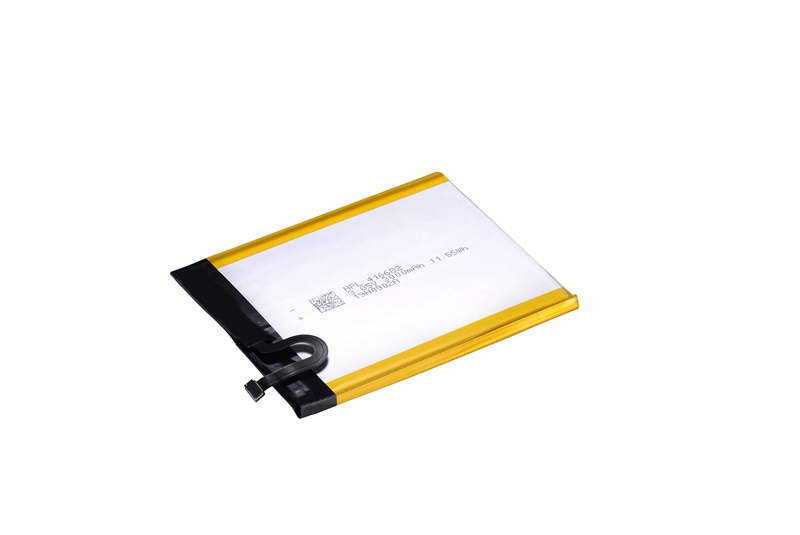
Next step for custom assembly buyers
Send your energy requirement, enclosure drawing and target market, and Hypercell will advise on the suitable pack format and the sample process.
Email: info@hypercellbattery.com | Tel: +86 755 2376 4134 | Web: www.hypercellbattery.com
Address: Room 2706-2707, Baoshan Shidai Building, Minqiang Community, Longhua District, Shenzhen 518131, Guangdong, China