
What Is Supplier Capability Verification for Battery Assembling Factories?
Supplier capability verification is the practice of confirming — with evidence from the production floor rather than from a sales presentation — that a battery assembling factory can actually build the pack you are buying, control the process that determines its quality, and deliver the order on the date it promised. It answers three questions: does this factory really assemble what it claims, can it repeat that result across orders, and can it protect your delivery schedule?
For a first-time buyer sourcing assembled lithium battery packs or power banks, the distinction matters more than it first appears. Cells are a commodity that many companies can resell. Assembly is where your product is actually created — and assembly is also the part of the supply chain that is hardest to see from a quotation sheet.
What Supplier Capability Verification Actually Means
In its simplest form, verification means replacing assumptions with observations. A buyer who verifies capability does not ask whether a supplier is good; the buyer asks which operations happen at which site, which parameters are recorded, who signs off each stage, and what happens when something goes wrong.
Capability verification covers three distinct capabilities, and all three have to be checked separately, because a factory can be strong in one and weak in another.
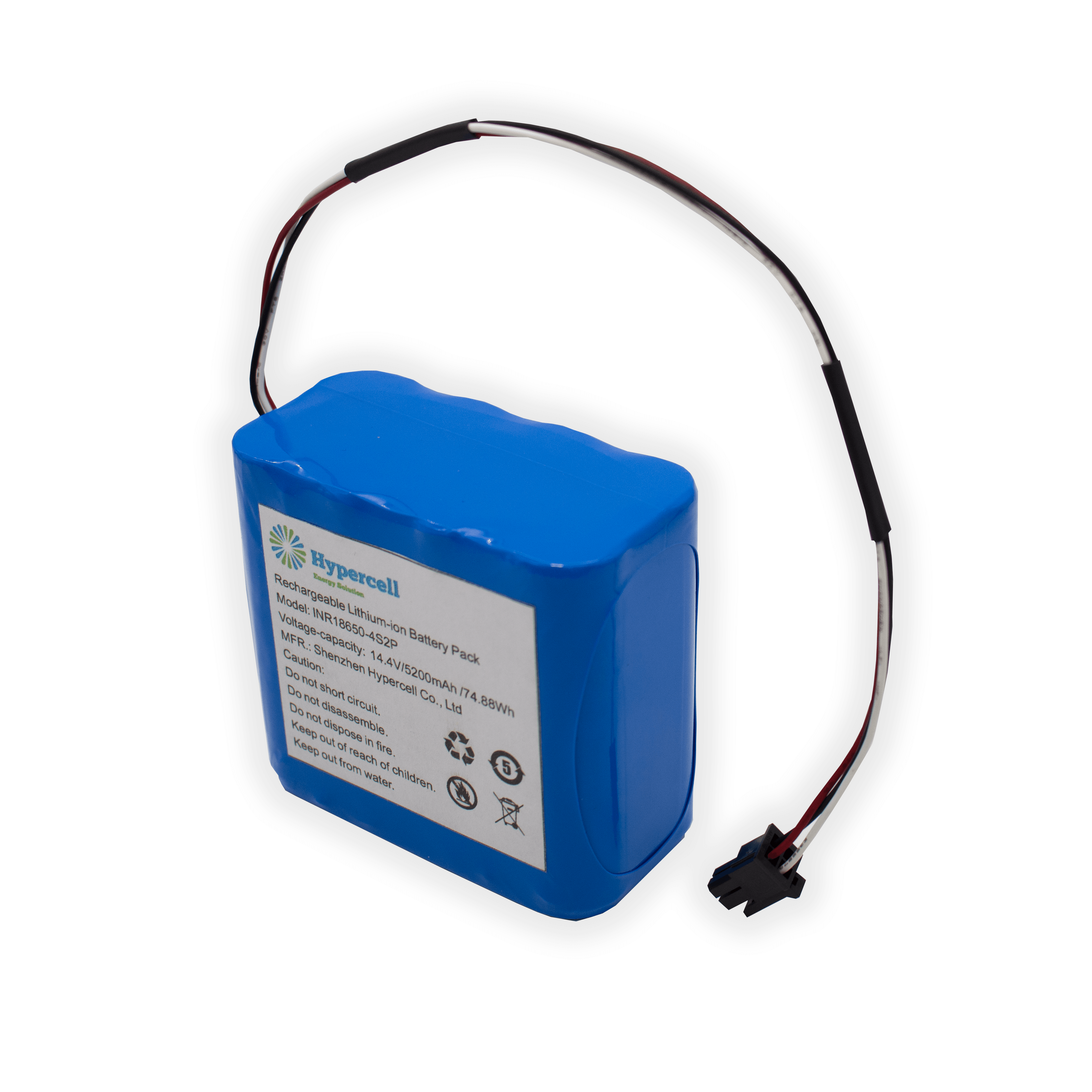
- Physical capability — the equipment, stations, tooling and trained operators needed to convert cells and components into a finished pack or power bank. This includes cell grading equipment, welding equipment, protection or battery management electronics integration and wiring stations, insulation and enclosure assembly areas, and charge–discharge testing capacity.
- Process capability — the documented and repeatable control of assembly parameters. Two factories can own identical welding machines and produce very different packs, because what determines quality is whether welding energy, electrode pressure, soldering temperature and inspection intervals are specified, recorded and enforced.
- Delivery capability — the planning system behind the promised date: production scheduling, milestone visibility, and contingency plans for the disruptions that inevitably occur.
What verification is not
Verification is not the same as a certification review. A certificate describes a management system that has been assessed; it does not describe the specific line that will build your order, or whether that line is currently staffed, calibrated and available. Certification narrows a supplier list. Verification decides who actually receives the order.
It is also not a price comparison, and it is not a sample-only evaluation. A sample can be built carefully by an engineer in a laboratory, which tells you the design is feasible but says nothing about whether a production line can repeat it at volume.
The Problem Verification Solves: The Invisible Middle of a Battery Pack
The reason capability questions keep reappearing in battery sourcing is that the visible part of the purchase — the cell — is not usually the part where quality problems originate.
Cells are manufactured by a relatively small number of producers and are bought, in practice, by almost everyone. What an assembling factory actually contributes is the integration: selecting and matching cells, making the current-carrying connections, integrating the protection or battery management electronics, insulating and mechanically securing the assembly, and testing the finished unit. These steps are rarely itemized in a quotation, and they are exactly the steps that determine whether a pack performs for a single cycle or for a product lifecycle.
When capability is never verified, the same failure patterns recur. Assembly is quietly subcontracted to a site the buyer has never seen. Weld quality varies between operators and between shifts. Protection electronics are matched by trial and error rather than by specification. Pack-level capacity is quoted from a cell datasheet rather than from a tested assembly. Delivery dates slip because the order was accepted without a slot in the production schedule.
None of these are exotic risks. They are the ordinary consequences of buying from a supplier whose assembly capability was assumed rather than checked.
Industry Background: Why Assembly Became the Deciding Layer
Commercial battery sourcing has shifted in a consistent direction. Buyers increasingly specify at pack level rather than cell level — they need a finished assembly with a defined connector, enclosure, protection circuit and mechanical form factor, not a bare cell. Custom requirements such as wide operating temperature ranges, high-rate discharge or fast charging, unusual form factors and application-specific duty cycles are handled at the assembly and integration stage rather than at the cell stage. Power bank programs add a further layer, because the same factory is effectively delivering a consumer-facing product with charging behavior, interface and appearance requirements.
The practical consequence is that the deciding capability in most sourcing projects is no longer cell manufacturing. It is assembly control: whether a factory can take a defined cell, a defined protection scheme and a defined mechanical envelope, and reproduce that combination consistently, order after order. That is what capability verification exists to test.
The Four Layers of a Verification Framework
A practical verification framework organizes itself into four layers, best checked in order, because each layer depends on the one before it.
| Layer | What it confirms | Core verification question |
|---|---|---|
| 1. Real assembly capability | The factory physically performs the operations your product requires. | Which site and which line will build my pack, and which steps happen elsewhere? |
| 2. Process control | The operations are specified, recorded and repeatable. | Which assembly parameters do you record, and how do you prove they were held? |
| 3. Capacity claims | Claimed output translates into available line time for your program. | How much of this specific line can I actually book, and starting when? |
| 4. Delivery assurance | Scheduling, visibility and contingency protect the promised date. | What is my milestone plan, and what happens if a step fails? |
Step-by-Step: How to Verify a Battery Assembling Factory
Step 1 — Confirm who physically builds your pack
Start with identity, not capacity. Ask for the factory address, the specific building and the line that will run your product. Request a live, unedited walkthrough during working hours, with the camera on the line rather than in a meeting room, or work-in-progress photographs that include a batch document or model label. Then ask directly which operations are in-house and which are outsourced. If welding, electronics integration or testing happens somewhere you have not assessed, you have verified only a fraction of your supplier.
Step 2 — Map the assembly flow and check that every station exists
A typical lithium pack assembly flow runs: incoming cell inspection and grading, cell matching by capacity and internal resistance, tab preparation, welding, weld quality verification, protection or BMS integration and wiring, insulation and shielding, enclosure or wrap assembly, charge–discharge cycling, final inspection, labeling and packing. Power bank assembly adds printed circuit board integration, interface and port fitting, housing assembly, and functional and cosmetic final checks.
Walk that flow against what you are shown. Each missing or vague station is a step that either does not happen at all, or happens outside the site you are evaluating.
Step 3 — Verify process control, not just equipment
Equipment is easy to display; control is what makes output repeatable. Ask which assembly parameters are recorded and retained — welding energy and electrode pressure, soldering temperature, fastener torque, aging conditions — how weld quality is verified, and how in-process inspection is triggered. Ask how work instructions and traveler documents follow a batch through the line, how non-conforming units are quarantined, and how a finished pack can be traced back to its cell batch and assembly date.
A factory that answers these questions with documents, not adjectives, has a process. A factory that answers with reassurances has a hope.
Step 4 — Test the capacity claim
Capacity is one of the most ambiguous words in battery sourcing. It can mean cell supply capacity, total facility output, or the line time actually available to your program — and only the third one affects your order. Ask for the daily output of the specific line rather than of the company as a whole, how many programs currently share that line, how long changeover between models takes, how shift patterns are organized, and how the factory decides whether to accept a new program. Capacity claimed at facility level, with no answer about line loading or changeover, is not verification.
Step 5 — Check the delivery-assurance mechanisms
Delivery reliability is a system, not a promise. Three mechanisms are worth verifying explicitly.
- Production scheduling. Your order should appear in a real schedule with a confirmed line slot and a start date, and you should receive that schedule rather than a verbal assurance. If scheduling is informal, the date is a wish.
- Milestone tracking. Define checkpoints in advance — materials ready, assembly start, welding complete, testing complete, quality release, packing, shipment booking — and agree who notifies you at each point and by when. Visibility is what converts a date into a plan.
- Contingency planning. Ask what happens when a cell shipment is delayed, a line stops, a test batch fails, or transport capacity is disrupted. A factory with a plan can name pre-approved alternatives and an escalation path. A factory without one improvises at your expense.
Step 6 — Verify again at the sample and pilot stage
Verification does not end with a successful audit. Ask whether the sample was built on the production line with production tooling, whether it carried a traveler, and whether the process used for the sample is the process that will run your volume. Then confirm the same parameters during the pilot run. Capability is a repeating condition, not a one-time event.
How Verification Plays Out Across Different Products
The framework stays the same, but the emphasis changes with the application — which is why verifying against a generic capability list is rarely enough.
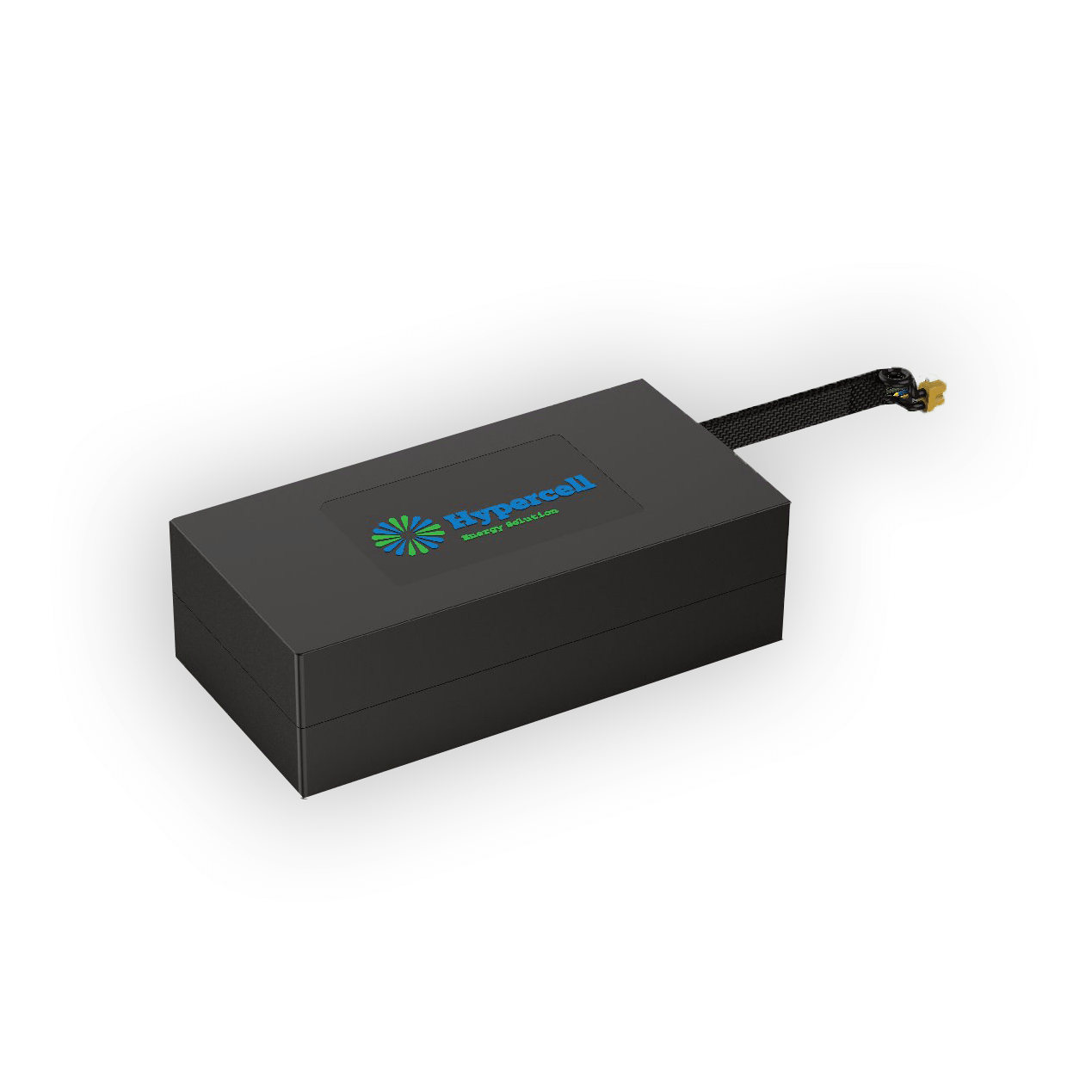
- Industrial instruments and analyzers. The verification focus is form-fit tolerance, consistent cell matching and stable behavior across temperature extremes, because the pack sits inside a fixed enclosure and must behave predictably in the field.
- Medical devices. Emphasis shifts to documentation: process change control, traceability, batch consistency, and the ability to reproduce a small, tightly specified assembly repeatedly.
- Consumer electronics and power banks. The focus moves to printed circuit board integration, charging behavior consistency, housing fit and finish, and repeatability across larger production runs.
- IoT devices. Verification centers on low self-discharge consistency, small-format polymer assemblies, connector reliability and long shelf-life behavior.
- Robots and e-mobility. Multi-cell series and parallel packs make weld quality at higher currents, protection electronics integration and mechanical robustness the critical checks.

Comparing Claims: What Verified Evidence Looks Like
The table below converts the framework into a comparison you can use in a supplier conversation. It compares claim types rather than suppliers, so it stays valid whichever factories you happen to be evaluating.
| Verification topic | Typical sales claim | Verified evidence | Follow-up question |
|---|---|---|---|
| Assembly location | We have our own factory. | A named building and line, shown live during production hours. | Which site and line will run my order? |
| Assembly scope | We can build any battery pack. | A station-by-station flow that matches your product's manufacturing steps. | Show me the welding, electronics and testing stations. |
| Process control | Our quality is very stable. | Recorded parameters, a defined weld verification method, defined inspection intervals, a quarantine procedure. | What do you record, and how long is it retained? |
| Capacity | We have large capacity. | Line-level output figures and the current loading of that line. | How much line time can I book, and starting when? |
| Sample | We will send you a sample. | A sample built on the production line with its accompanying record. | Was this built on the line or in the laboratory? |
| Delivery | We always deliver on time. | A scheduled line slot, an agreed milestone plan and a named escalation contact. | Send me the milestone plan from a recent order. |
| Traceability | Full traceability. | A completed batch record linking cells, assembly date and test results. | Show me a closed traveler for a shipped batch. |
Frequently Asked Questions
Does supplier capability verification replace certification review?
No, and treating them as substitutes is a common first-buyer mistake. Certification review answers whether an organization's management system has been assessed against a recognized standard. Capability verification answers whether the specific line, process and people that will build your product are actually capable of doing so. A certified factory can still have an unverified line assignment, and an uncertified claim tells you nothing about process control. The two are complementary: certification helps you build a shortlist, verification tells you which supplier on that shortlist can genuinely execute your program.
How can I confirm that a battery assembling factory really assembles packs in-house?
Ask for three things and compare them. First, a live walkthrough of the specific line during working hours. Second, work-in-progress images that include a batch document, traveler or model label alongside the assembly. Third, a direct statement of which operations are outsourced. Then map your own bill of process — grading, welding, electronics integration, insulation, enclosure, testing — against the stations you actually saw. Any step that cannot be located on the site is a step you have not verified, regardless of how the supplier describes it.
How much effort should capability verification take, and when should it happen?
Verification is mostly a cost of time and attention rather than a fee, and the correct moment is before you commit to volume — ideally in parallel with sample discussion, so that process questions are answered while the design is still open. If you are comparing several suppliers, run the same four-layer framework against each of them so that the comparison is consistent. Verification done after a purchase order is risk management; verification done before it is supplier selection.
Can a sample alone prove assembly capability?
Only partially. A sample proves that a design can be built; it does not prove that a production line can reproduce it consistently. A sample produced in a laboratory, or hand-assembled by an engineer, bypasses every process control question that matters at volume. The useful version of a sample test is a sample built on the production line, using production tooling, accompanied by its process record — followed by re-confirmation of the same parameters during the pilot run.
How does capability verification protect on-time delivery?
It protects delivery by making the schedule visible while there is still time to act. When an order is entered into a real production schedule, when milestones have named owners and notification points, and when contingency plans exist for cell delays, line downtime, test failures and transport disruption, delivery problems surface as exceptions rather than as surprises. Buyers who verify delivery mechanisms before ordering usually discover that the difference between reliable and unreliable suppliers is not enthusiasm — it is planning discipline.
If you are sourcing assembled lithium packs or power banks for the first time and would like to run these checks against a real program, Hypercell can provide a sample build and a quotation for your specification. Contact the team at info@hypercellbattery.com or +86 755 2376 4134 to start with a capability conversation rather than a price list.
Conclusion: Verification Is a Habit, Not a Checkbox
Supplier capability verification for battery assembling factories is not a single document or a single visit. It is a repeating habit of asking for evidence at three levels: whether the factory really performs the assembly operations your product requires, whether its process controls make the result repeatable, and whether its planning system protects the delivery date it has committed to. Physical capability, process capability and delivery capability are separate things, and each has to be confirmed on its own terms.
For first-time buyers, that habit is what turns a supplier relationship from a bet into a decision. Start with the line, not the price list; ask for records, not adjectives; and re-verify at the sample stage, because a capability that cannot be repeated is not a capability at all.
About Hypercell
Shenzhen Hypercell Co., LTD is a lithium battery manufacturer established in 2007, headquartered in Shenzhen with manufacturing operations in Dongguan and three production facilities across Guangdong. Hypercell assembles customized lithium-ion cylindrical batteries, lithium-ion polymer batteries and lithium iron phosphate batteries, along with power bank assemblies, serving applications in industrial instruments, medical devices and the Internet of Things. The company is an ISO 9001:2015 and ISO 14001:2015 certified enterprise, with a packing technology department supporting customers on structure, electronics integration, process and testing. Website: www.hypercellbattery.com | Email: info@hypercellbattery.com | Tel: +86 755 2376 4134 | Address: Room 2706-2707, Baoshan Shidai Building, Minqiang Community, Longhua District, Shenzhen 518131 Guangdong, China.

Request a sample or a capability review
Send Hypercell your pack or power bank specification — chemistry, form factor, application and target volume — and the team will confirm the assembly scope, the process steps and the delivery plan before you commit to a program.
www.hypercellbattery.com · info@hypercellbattery.com · +86 755 2376 4134
Have Questions or Need More Details?
Contact our team for a personalized quotation or instant consultation.
Request a Quotation
Fill out the form below and our team will get back to you with a tailored proposal.
WhatsApp Direct Chat
Prefer to chat in real-time? Message us on WhatsApp for instant assistance & quick answers.
- Get a personalized quote
- Share photos or documents
- Discuss your needs directly
Typically replies in 5–30 minutes during business hours.