
What Is a Battery Assembling Factory? A Beginner's Guide to Lithium Battery & Power Bank Assembly
What Is a Battery Assembling Factory? A Beginner's Guide to Lithium Battery & Power Bank Assembly
A battery assembling factory is a manufacturing business that takes finished lithium cells and converts them into a working battery product — a sealed pack, a power bank, or a custom assembly built around one device. It does not stop at selling cells as a commodity. It matches cells, defines the electrical and mechanical architecture, integrates protection and management circuitry, builds the enclosure, tests the finished unit, and prepares the transport documentation that lithium batteries require before they can ship. In simple terms, it is the layer between a cell manufacturer and a finished device.
This guide explains that category from the beginning: why the phrase "battery factory" is ambiguous, how pack assembly became a discipline of its own, what a battery assembling factory actually does, where lithium battery and power bank assembly sit inside it, and which questions a first-time buyer should ask before shortlisting a supplier.
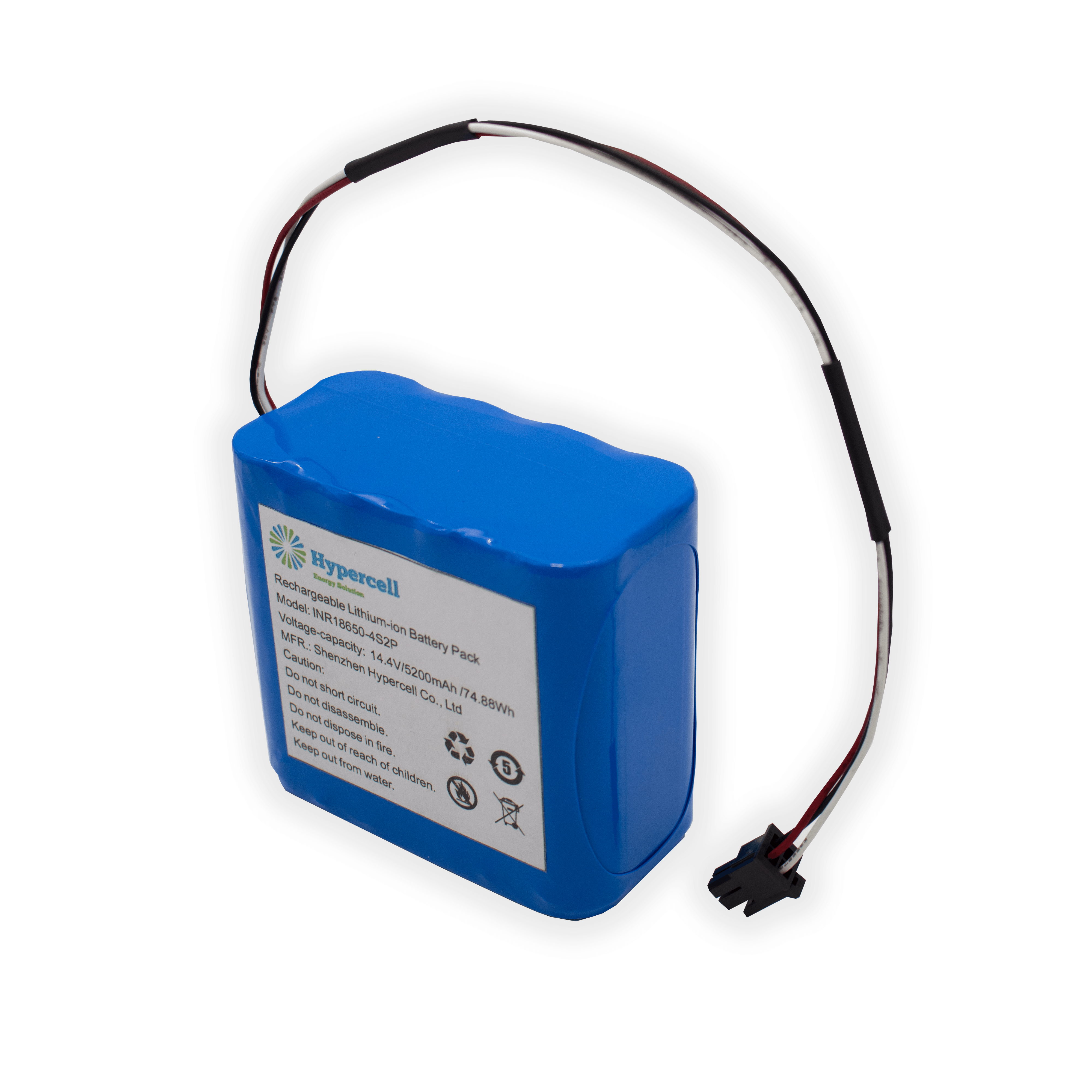
Figure 1: A multi-cell cylindrical pack (INR18650-4S2P) — the typical finished output of pack-level battery assembly.
The problem: one search term, three different businesses
Buyers searching for a "battery factory" usually receive quotations that describe three entirely different scopes of work. The terminology does not make this obvious, so the mismatch only becomes visible after specifications are exchanged.
- Cell manufacturers produce bare lithium cells — cylindrical, polymer, or LiFePO4 — in a fixed set of form factors and capacities. Their strength is electrochemical consistency at the cell level.
- Battery assembling factories buy or receive cells and build them into finished products: packs with welded connections, protection circuitry, connectors, wiring, insulation, enclosures, and tested output.
- Traders and integrators coordinate between the two but may not own production equipment or process documentation.
The practical consequence is that a buyer can compare three quotations that look similar on paper and still be comparing a cell price against a finished-pack price against a brokered price. Design responsibility shifts accordingly. If the supplier is a cell maker only, the buyer often inherits the pack design, the enclosure fit, the wiring, and the testing plan. If the supplier is an assembler, those items sit inside the quotation — but the assembler depends on upstream cell supply.
Industry background: why pack assembly became its own discipline
Lithium cells have consolidated around a small number of common formats, while end products have moved in the opposite direction. Instruments, medical devices, IoT nodes, robots, e-mobility units, and consumer power banks each need a specific voltage, capacity, connector, enclosure shape, and thermal envelope. The cell is a standardised building block; the finished battery is not.
That gap created the battery assembling factory as a distinct supplier type. Assembly work carries responsibilities that a cell datasheet cannot cover:
- Configuration. Cells arranged in series and parallel determine voltage and capacity. The same cell family produces very different products: a five-cell pack, a six-cell pack, or a large multi-string assembly.
- Integration. A finished battery combines the cell group with protection circuitry, terminals, wiring, insulation, and often firmware and indicators.
- Validation. The assembled unit, not the bare cell, is what the end user operates. Assembly-level testing is therefore part of the product definition.
- Regulatory handling. Lithium batteries move under transport rules. Sea and air identification and classification reports apply to the shipped article, which is the assembled pack.
Demand fragmentation reinforces the model. A factory that only stamps out one cell type cannot serve a medical device account and a power bank account with the same equipment set. Assembly operations, by contrast, are organised around flexible build and test lines that can be reconfigured between projects.
Detailed solution: what a battery assembling factory actually does
A working definition is easier to hold onto when the work is broken into its six functional blocks. Each block produces a document or an artifact that a buyer can inspect.
1. Cell selection and matching
Assembly begins with the choice of chemistry and form factor. Li-ion cylindrical cells suit robust, replaceable, higher-energy configurations; Li-polymer cells suit thin and shaped products; LiFePO4 cells are selected where cycle life and thermal stability are prioritised. Within a chosen family, the factory also handles temperature capability — for example the INR18650S 3.6V 2900mAh Li-ion cell rated for a wide operating window of -40°C to +85°C is used where equipment must work outside normal room conditions.

Figure 2: Wide-temperature cells such as the INR18650S 3.6V 2900mAh are selected at the assembly stage for equipment used outside standard conditions.
2. Electrical architecture and managing circuit
Series and parallel configuration, protection thresholds, charging behaviour, and the managing circuit are defined here. This is the block where a pack stops being a group of cells and becomes a safe, predictable power source for a specific device.
3. Mechanical and structural build
Cell holders, spacing, insulation, wiring routing, terminals, and the enclosure are defined so the battery fits the target product and survives its handling environment. Custom shapes are frequently the reason a buyer approaches an assembling factory rather than a cell catalogue.
4. Electronics, power supply and software integration
Power banks and smart packs add charging electronics, indicators, and firmware to the cell group. This is genuine integration work rather than component trading: industrial design, electronics, power supply, software, structure, process, and testing must agree with each other before a unit can be released.
5. Testing and validation
The assembled article is verified against the agreed specification — electrical output, mechanical fit, and behaviour under the conditions the buyer declared. A test record tied to the production bill of materials is what separates a production build from a prototype.
6. Documentation and transport compliance
Lithium batteries ship under transport requirements. Identification and classification reports for sea transport and for air transport, together with material and safety documentation such as a RoHS certificate and a CB Test Certificate, belong to the factory's output package — not to the buyer's admin burden after the fact.
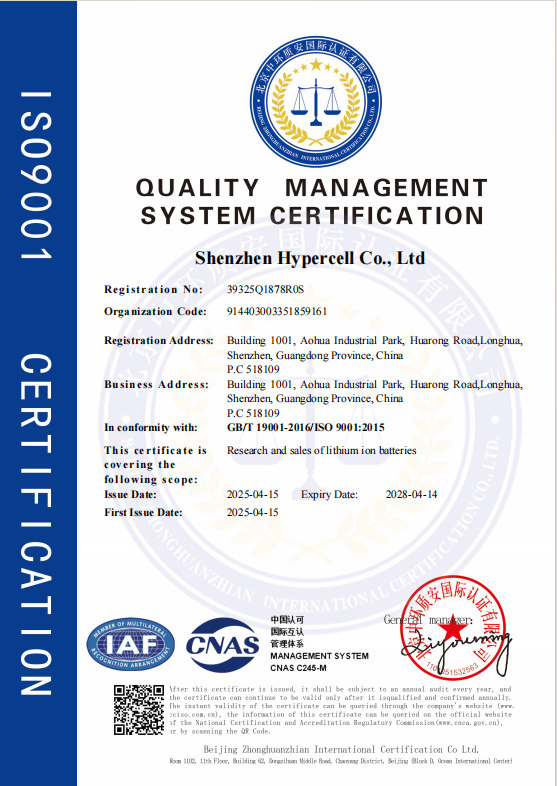
Figure 3: Quality and environmental management certification is part of the evidence a battery assembling factory should be able to present.
Where this fits in practice: the Hypercell example
Shenzhen Hypercell Co., LTD is a lithium battery manufacturer established in 2007, headquartered in Shenzhen with production operations in Dongguan, Guangdong, China, supplying Li-ion cylindrical batteries, Li-ion polymer batteries, and LiFePO4 batteries together with customised pack and assembly work. The company operates three production factories in Guangdong with more than 1,200 staff and a stated daily output of 30MWh. Its packing technology department supports clients with technology integration across industrial design, electronics, power supply, software, structure, process, and testing — the integration blocks described above. Hypercell is certified to ISO 9001:2015 and ISO 14001:2015 and maintains a vetted supply chain of local and global suppliers, which matters to buyers because assembly quality is partly a function of what enters the line, not only of what happens on it.
Where power bank assembly fits
A power bank is the most consumer-visible form of assembled lithium product, and it demonstrates the category well. It contains a cell group, charging and protection electronics, indicators or a display, a connector set, firmware in most designs, and an enclosure that must survive daily handling.
For a buyer, that means a power bank order is an assembly project rather than a cell purchase. The specification must fix capacity, output behaviour, port configuration, enclosure material and finish, branding, and the test regime. The factory's contribution is the electrical architecture, the fit between board and cell, the thermal and mechanical assembly quality, and the validation record. Consumer electronics batteries of this type are commonly built on Li-polymer cells, which allow slim and irregular enclosures — for example the HPL432733 3.7V 300mAh Li-polymer cell used in compact devices.
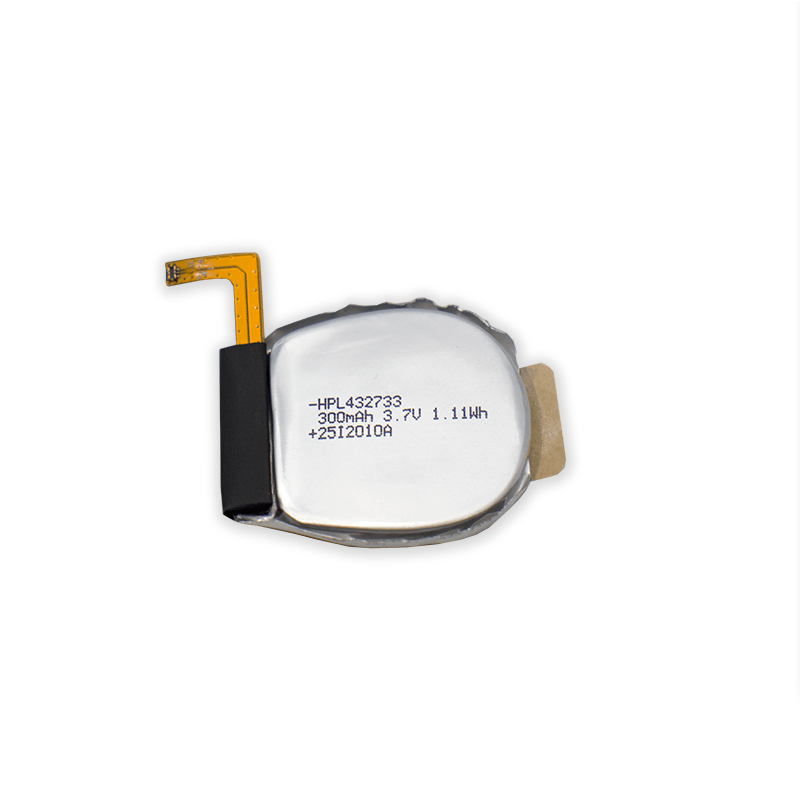
Figure 4: Li-polymer cells such as the HPL432733 3.7V 300mAh allow slim, shaped battery designs in consumer electronics and power banks.
Step-by-step: how an assembly project runs from requirement to shipment
The sequence below reflects how custom battery assembly projects are typically structured. Timelines vary by project, but the order of decisions does not.
Step 1 — Define the requirement in device terms
Voltage, capacity, continuous and peak current, operating temperature range, usable space, connector type, expected service life, and target market. Requirements written in device language let the factory choose cells and architecture rather than force a catalogue part into an unsuitable slot.
Step 2 — Decide the sourcing model
Two routes exist: supply cells to the assembler, or let the assembler source them. The second route places cell selection, incoming verification, and supply continuity inside the factory's responsibility — the configuration Hypercell describes as vertical manufacturing supported by a vetted local and global supplier network.
Step 3 — Design and prototype
The pack drawing, bill of materials, circuit layout, and mechanical layout are produced. This is where special requirements are designed in: high specific capacity, high-rate discharge or fast charging, high-temperature or low-temperature operation, and non-standard shapes.
Step 4 — Build and evaluate a sample
A prototype is assembled and checked against the specification. The sample is only meaningful if it is built to the same bill of materials and process route intended for volume, otherwise it validates a product that will never be produced.
Step 5 — Freeze the design and document the process
Approved sample, agreed test criteria, control points, and packaging. Changes after this point should be handled as documented revisions.
Step 6 — Volume assembly
Cells are matched, connected, insulated, assembled into the structure, fitted with electronics where required, and routed through the agreed test gates.
Step 7 — Test, document, and ship
Final verification, packaging, and transport documentation. A factory that already holds sea and air identification and classification reports removes a common cause of delay at the dispatch stage.

Figure 5: Series and parallel configuration (INR18650-3S6P shown) is fixed at the design stage and verified at the test gate.
Use cases: which buyers need an assembling factory rather than a cell catalogue
Assembly-led sourcing becomes necessary wherever the battery is shaped by the device rather than by a standard format.
- Industrial instruments and analyzers. Portable measurement equipment needs stable output, defined temperature behaviour, and a pack that fits a sealed instrument housing. Industrial usage batteries are usually specified around the instrument, not around a cell catalogue.
- Medical devices. Device-level documentation, traceability of the built unit, and predictable behaviour matter as much as capacity. Medical device batteries are typically procured with an agreed test record attached to each build.
- IoT devices. Long standby, low self-discharge, and compact or unusual shapes dominate. IoT device batteries are frequently the reason a buyer needs a special-shape rather than standard pack.
- Robots and e-mobility. Higher discharge rates and mechanical robustness are the defining requirements, which pushes configuration and thermal design to the front of the project.
- Consumer electronics and power banks. Slim Li-polymer builds, branding, and finish quality drive the specification, with electronics integration as the core assembly task.
- Custom and special-shape builds. Where a device cannot accept any standard pack, the assembly factory designs the battery to the available volume — the case Hypercell addresses through special-characteristic and special-shape battery development.
Comparison: cell manufacturing versus pack assembly versus an integrated operation
The table below isolates what changes depending on which type of supplier a buyer selects. It describes scope, not quality — each model is appropriate for different projects.
| Aspect | Cell manufacturer | Battery assembling factory (pack level) | Integrated cell + pack operation |
|---|---|---|---|
| Primary output | Bare lithium cells in standardised formats | Finished packs, power banks, and custom battery assemblies | Both cell-level products and finished assemblies |
| Design ownership | Cell chemistry and cell specification | Pack architecture, circuit, structure, enclosure, integration | Shared ownership across cell and pack levels |
| Customisation levers | Limited to available cell types | Shape, capacity, discharge rate, temperature range, connectors, enclosure | Custom cells combined with custom assembly |
| What the buyer must still arrange | Pack design, assembly, testing, transport documentation | Upstream cell supply dependence unless the factory also makes cells | Fewer external dependencies; deeper involvement in one supplier |
| Typical buyer question | Which cell fits my device? | Can you build, test, and document the finished pack? | Can one supplier cover cell and pack together? |
| Evidence a buyer should request | Cell datasheet and material documentation | Pack drawing, bill of materials, test report, transport identification and classification reports | Cell documentation plus pack drawing, test report, and transport reports |
Hypercell's own structure illustrates the integrated column: cell production across cylindrical, polymer, and LiFePO4 chemistries sits alongside a packing technology department that handles integration, testing, and documentation for assembled products.
FAQ: what first-time buyers ask about battery assembling factories
1. Which certificates should a battery assembling factory be able to show?
At minimum, a buyer should expect ISO 9001:2015 for quality management and ISO 14001:2015 for environmental management, because both describe how the production process is controlled rather than what a single unit can do. For the product itself, a RoHS certificate addresses restricted substances, a CB Test Certificate addresses electrical safety, and identification and classification reports for sea transport and air transport confirm that the assembled battery can be shipped under lithium battery transport rules. The distinction that matters is level: a cell datasheet does not replace pack-level test reports, and a pack drawing does not replace transport documentation. Hypercell holds ISO 9001:2015, ISO 14001:2015, a RoHS certificate, a CB Test Certificate, and both sea and air transport identification and classification reports.
2. What can a battery assembling factory do that a cell supplier cannot?
A cell supplier defines a component. An assembling factory defines a product. That includes matching cells into a configuration, designing the electrical architecture and managing circuit, building the mechanical structure and enclosure fit, integrating electronics, power supply and software for products such as power banks, running assembly-level testing, and preparing shipping documentation for the finished article. In Hypercell's case this work is carried by a packing technology department that supports clients with technology integration in industrial design, electronics, power supply, software, structure, process, and testing, backed by an R&D team of doctors, masters, and senior engineers working on new materials, new technology, and managing circuits.
3. What drives the cost of a custom lithium battery pack or power bank project?
Cost is driven by the specification rather than by a single unit price. The main levers are cell chemistry and grade, the number and configuration of cells, the complexity of the managing circuit and electronics, enclosure tooling and material, the scope of testing, the level of documentation required, and order quantity. Two quotations that differ significantly usually differ in one of these lines rather than in margin alone, so a useful quote shows the breakdown. Buyers should also separate the one-time engineering and tooling cost from the recurring per-unit cost, because the two scale differently with volume — and should confirm which party carries the cost of design changes after sample approval.
4. How should a buyer evaluate a sample before committing to volume?
Start by confirming the sample was built to the intended production bill of materials and process route; a hand-built unit proves very little. Then check that the cell model and markings match the agreed specification, that measured voltage and capacity match the declared values under the agreed test conditions, that the mechanical fit matches the drawing and the target device, and that the accompanying test record is traceable to the unit you received. Ask what would change between the sample and the volume build. If the answer is "nothing", the sample is a valid reference point for the purchase order. Hypercell builds customised samples and quotes against a defined specification, so requirements should be written down before the request is sent.
5. What affects lead time on a battery assembly order?
Lead time is a chain of dependent stages rather than a single number: requirement clarity, design and drawing approval, sample build and evaluation, design freeze, cell availability, enclosure tooling where a new shape is required, production scheduling, testing, and documentation for shipment. Projects that stall usually stall at design freeze or at cell availability, not on the assembly line itself. Buyers can compress the front end by supplying a complete requirement in device terms at the first contact — voltage, capacity, current, temperature range, dimensions, connector, target market, and expected annual volume. To get a project-specific response, send the specification to info@hypercellbattery.com or call +86 755 2376 4134 and ask for a sample and quotation plan built around those parameters.
Conclusion: assembly is the layer that turns cells into a product
A battery assembling factory is best understood as the manufacturing layer that converts a standardised electrochemical component into a device-specific product. It owns cell matching, electrical architecture, managing circuitry, mechanical structure, electronics and software integration where required, assembly-level testing, and the transport documentation that lithium batteries need in order to move. Cell manufacturing and pack assembly are different scopes of work, and the mismatch between them is the most common source of failed battery sourcing projects.
For a first purchase, three habits reduce risk. First, describe the requirement in device terms rather than in cell terms. Second, confirm in writing who owns pack design, testing, and documentation. Third, ask for the evidence set — pack drawing, bill of materials, test record, and transport reports — before comparing prices, because a lower quotation for a smaller scope is not a lower cost.
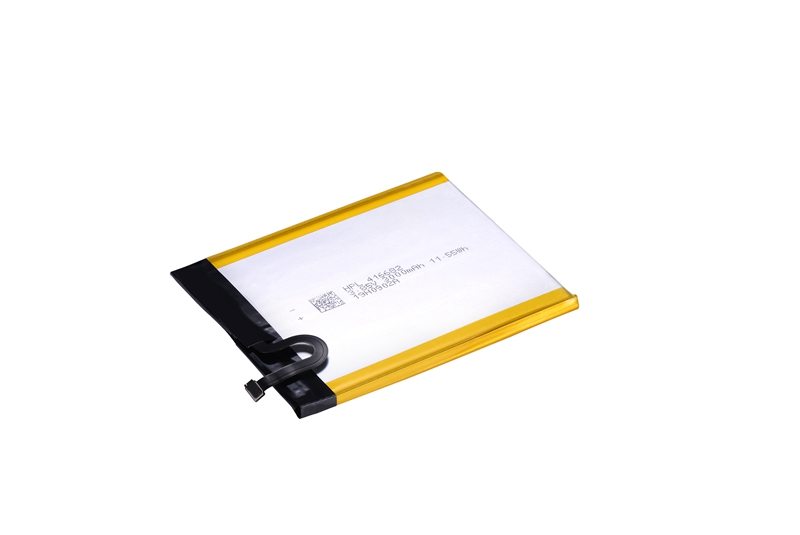
Figure 6: Custom assemblies such as the HPL416682 are built to a device specification rather than to a standard catalogue format.
Planning a lithium battery or power bank assembly project?
Shenzhen Hypercell Co., LTD has manufactured Li-ion cylindrical, Li-polymer, and LiFePO4 batteries since 2007, with three production factories in Guangdong, more than 1,200 staff, a 30MWh daily output, and ISO 9001:2015 and ISO 14001:2015 certification. Send your electrical and mechanical requirement to receive a sample plan and a quotation broken down by cost line.
Email: info@hypercellbattery.com | Tel: +86 755 2376 4134 | www.hypercellbattery.com
Room 2706-2707, Baoshan Shidai Building, Minqiang Community, Longhua District, Shenzhen 518131, Guangdong, China
Have Questions or Need More Details?
Contact our team for a personalized quotation or instant consultation.
Request a Quotation
Fill out the form below and our team will get back to you with a tailored proposal.
WhatsApp Direct Chat
Prefer to chat in real-time? Message us on WhatsApp for instant assistance & quick answers.
- Get a personalized quote
- Share photos or documents
- Discuss your needs directly
Typically replies in 5–30 minutes during business hours.