
What to Check in a China Battery Manufacturer’s Compliance and Acceptance Documentation
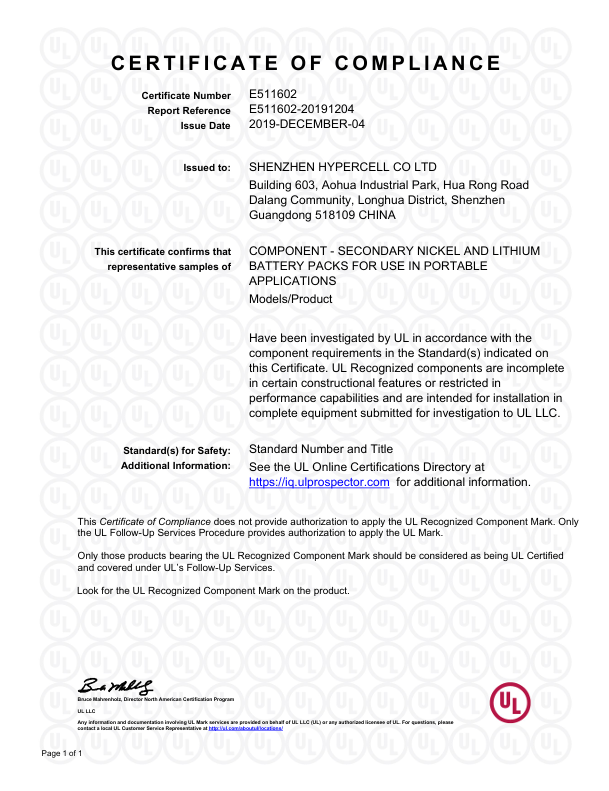
When a sourcing team evaluates a China battery manufacturer, the compliance folder and the acceptance criteria should be read as one package. The certificate proves which standard and scope were covered; the datasheet and purchase terms define which model, parameters and test conditions the buyer is accepting. Hypercell (Shenzhen Hypercell Co., LTD), a China battery manufacturer established in 2007, provides a useful example of how document identity, product parameters and commercial terms need to line up. This guide explains what to request, what to verify and what to write into the purchase order before a lithium-ion battery or power bank is approved.
Problem definition: the document exists, but it does not match the product
The common failure is not a missing document. It is a document that does not match the product. A certificate may cover one pack family but not the custom model under review. A datasheet may list a nominal voltage but not the charge cut-off, discharge limit or cycle-life test basis. A supplier may state 100% test without defining which test, at which stage, or with what pass or fail record. Those gaps matter because lithium battery packs are safety components and because acceptance disputes usually arise from ambiguous terms, not from missing brochures.
For a China battery manufacturer, the buyer needs a traceable chain: legal supplier identity, certificate identity, standard and scope, covered model, specification and bill of materials, acceptance test, production lot record, and commercial terms. If any link is missing, the buyer cannot tell whether the purchased pack is the pack that was qualified. The point is not to collect more paper. The point is to make every approval claim checkable against a controlled record.
Industry background: why generic compliance language is not enough
China's battery supply base is broad, and suppliers range from large cell makers to custom pack assemblers. That range makes document discipline more important, not less. A buyer may see the same words, such as UL, IEC, CE, RoHS, medical or industrial, on several websites while the actual certificate number, issuing body, model scope and validity differ. The practical response is to stop treating logos as evidence and start treating documents as controlled records with revision, scope and model linkage.
For custom lithium-ion packs, the review also needs to cover the configuration. A 4S8P 12.8V 120Ah pack, a 4S2P 14.4V 6700mAh pack and a 13S1P 46.8V pack do not share the same acceptance limits even when all are lithium-ion batteries. The buyer should require the supplier to state the exact model and configuration on every document that will be used for approval. The same logic applies to Li-ion cylindrical, Li-polymer, LiFePO4 and customized packs: the chemistry and format may differ, but the document-to-model link must still be explicit.
Detailed solution: build one matched compliance and acceptance file
A workable package has six parts: certificate record, model-specific datasheet, BMS and protection specification, test and quality-control record, purchase-order acceptance terms, and change-control commitment. Each part should identify the model and revision. Each claim should be checkable against a document number, test condition or certificate scope. The following steps show how to review that package in practice.
Step-by-step breakdown
Step 1: Verify certificate identity and scope before reviewing performance
Start with the certificate record, not the product brochure. Ask for the standard name, certificate number, issuing authority, issue date, expiry date, legal certificate holder, scope text and covered models. For Hypercell, the supplied certificate record is UL62133, certificate number E511602, issued by UL, issue date 2019-12-04, expiry date listed as 2999-01-01, with scope 'Secondary Nickel and Lithium battery packs for use in portable applications'. The same record relates to model 24AQ506-01.
That is useful evidence, but it is not a blanket approval for every Hypercell product. A buyer evaluating the HPC B1 power bank or the INR18650-4S2P pack should ask whether the certificate scope and model list cover those items. If the answer is a general statement such as 'all products are certified', ask for the certificate copy and model linkage. The correct acceptance statement is narrow: the certificate number, standard and scope must match the product being purchased.
Step 2: Lock the model-specific parameter sheet
The datasheet should be specific enough to become an acceptance annex. At minimum, it should state model, configuration, nominal voltage, nominal capacity, nominal energy, maximum charging voltage, fast-charge current and temperature condition, discharge end voltage, maximum continuous discharge current and temperature condition, operating temperature range, cycle-life value with C-rate and capacity-retention basis, dimensions with tolerance, enclosure material and rating, connector, and BMS protections.
The table below shows why generic descriptions are insufficient. Each row uses a documented Hypercell model to illustrate a different acceptance field. These are product facts, not a claim that every model shares the same certification scope.
| Model | Documented parameters to lock | Acceptance check |
|---|---|---|
| HPC B1 power bank | Energy 3.6V/4000mAh; rating 14.4Wh; Type-C input; USB-A output 5V1.2A; material INR; applicable industry Medical and Consumer | Input and output ports, ratings and material must appear in the purchase order and on the approved label. |
| 24AQ507-01 lithium battery | Configuration 4S8P; nominal voltage 12.8V; nominal capacity 120Ah; nominal energy 1536Wh; maximum charging voltage 14.6V; fast charge 0.2C at 25℃; discharge end voltage 10.0V (2.50V per cell); maximum continuous discharge 5A at 25℃; charge 0℃ to 45℃; discharge -20℃ to 60℃; cycle life 3000 cycles with at least 80% rated capacity at 0.2C/0.2C; BMS protection including OV, UV, OC, OT, UT and SCC; 0V battery charging prohibited | Cycle-life basis, temperature window and BMS protections should be written as measurable acceptance criteria. |
| INR18650-4S2P lithium battery | Nominal voltage 14.4V; nominal capacity 6700mAh; nominal energy 96.48Wh; maximum charging voltage 16.8V; fast charge 0.5C at 25℃; discharge end voltage 10.0V; maximum continuous discharge 6.0A at 25℃; cycle life 500 cycles with at least 80% rated capacity at 0.5C/0.5C; enclosure PC+ABS, UL94-V0 and IP68; 6-pin blade connector; BMS protection including OV, UV, OC, OT, UT and SCC | Enclosure rating and connector drawing should be approved before mass production. |
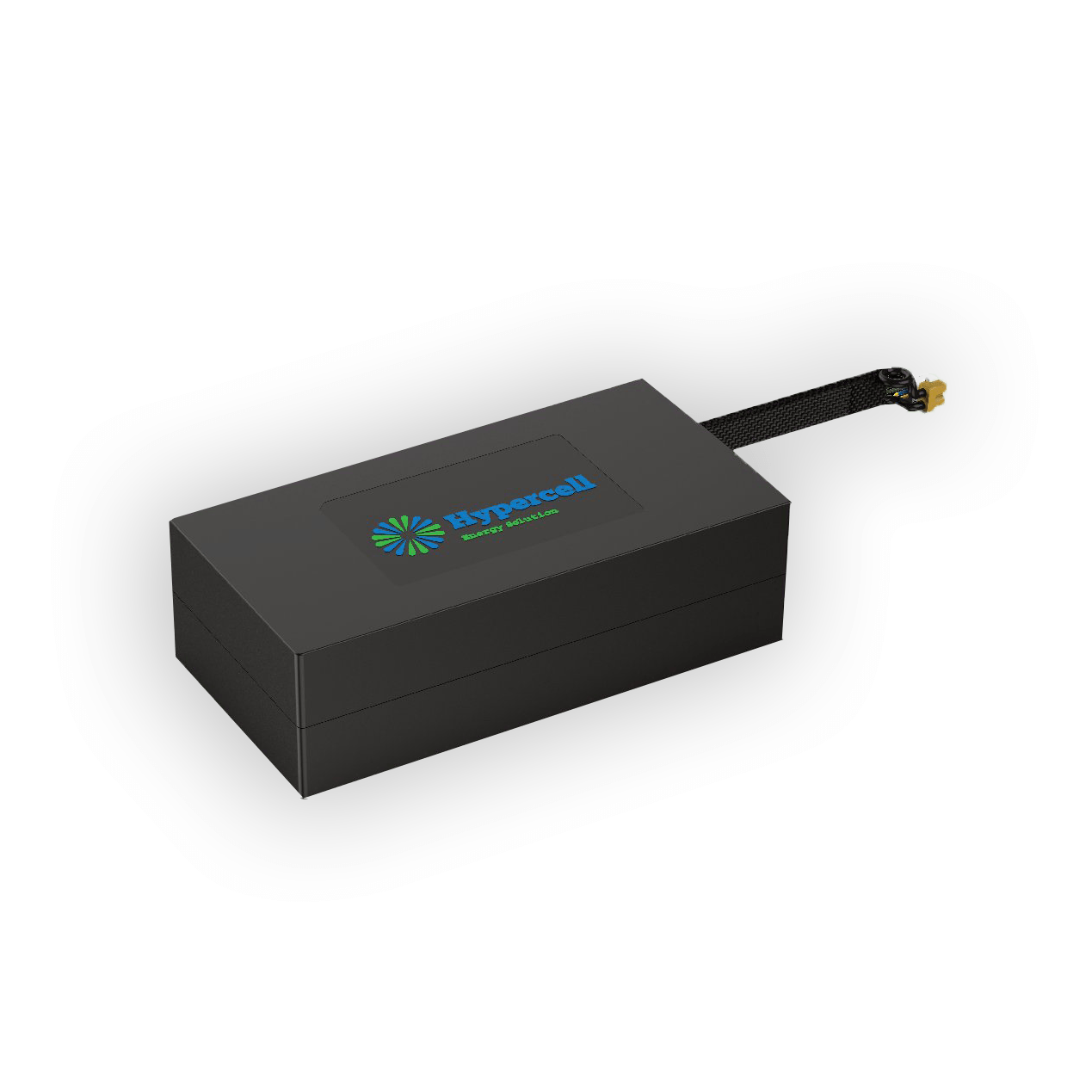
| 24AQ506-01 lithium battery | Rated capacity 4900mAh at 0.2C minimum, 5000mAh typical; nominal voltage 46.8V; watt-hour rating 234Wh; maximum charge voltage 54.6V at 100mA; maximum continuous charge current 5000mA; recommended charge cut-off by current 100mA or timer 3.0h; maximum continuous discharge current 10000mA; recommended discharge cut-off 32.5V; internal impedance under 200mΩ; cycle life 800 cycles above 80% initial capacity at 1C and 20℃; INR21700 cells; CAN 2.0 BMS; IP65 ABS+PC enclosure | Communication protocol, cut-off settings and enclosure protection should match the application. |

Step 3: Specify BMS protection, communication and prohibited conditions
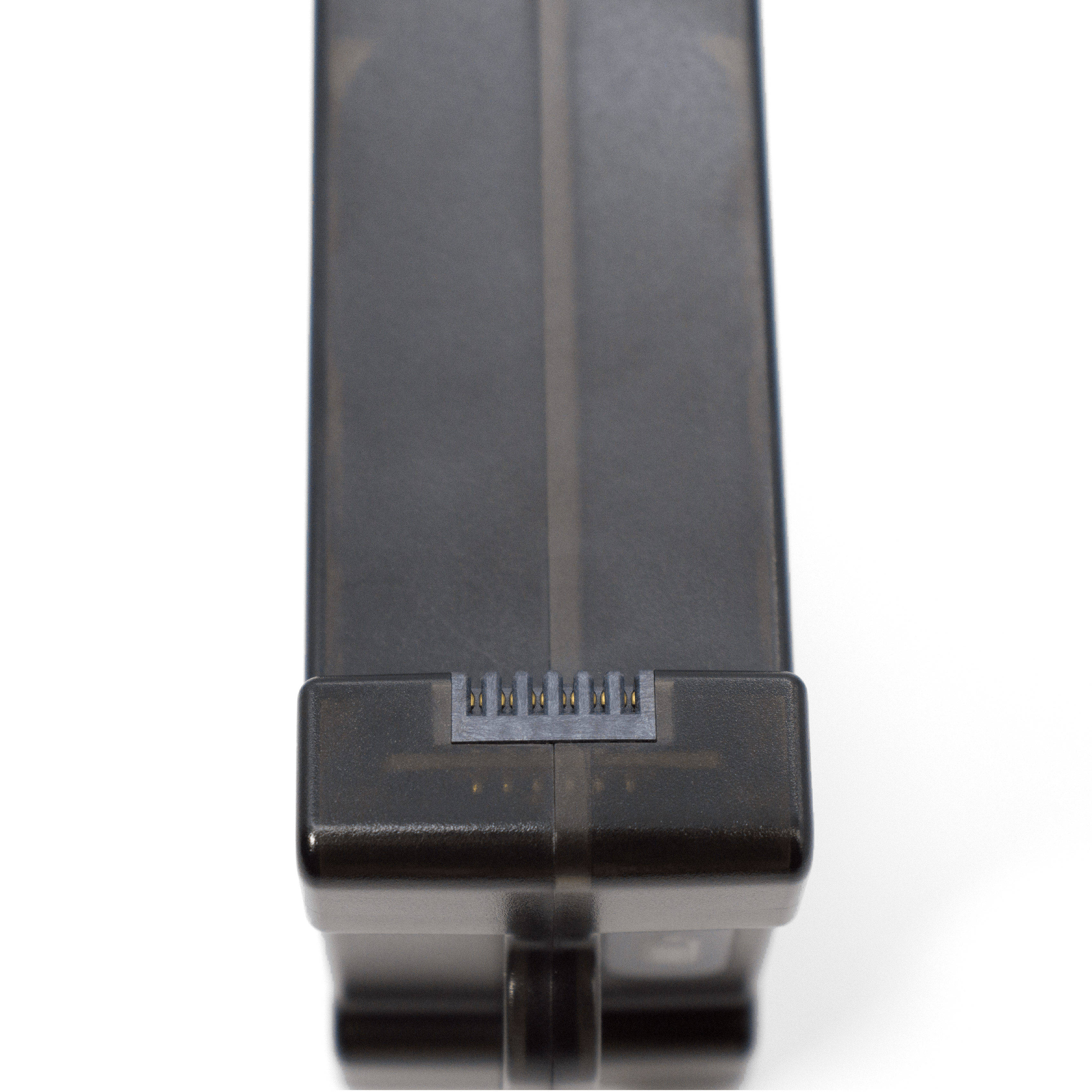
The BMS is part of the acceptance definition, not an accessory. For the packs documented here, the BMS is described as dual protection including over-voltage, under-voltage, over-current, over-temperature, under-temperature and short-circuit protection, with 0V battery charging prohibited. The 24AQ506-01 pack also lists a CAN 2.0 BMS and IP65 enclosure; the INR18650-4S2P pack lists a PC+ABS UL94-V0 and IP68 enclosure and a 6-pin blade connector.
Those details should be converted into acceptance questions: Which protection thresholds apply? Are they measured per pack or per BMS board? Is the CAN protocol documented? Does the connector drawing match the mating harness? What happens at the discharge cut-off? A buyer should not accept 'BMS protected' as a complete answer if the purchase order will rely on a specific cut-off, communication or enclosure condition.
Step 4: Define what 100% test means and what record will be delivered
Hypercell's custom-pack capability record states 100% test. That phrase should be defined in the acceptance annex: 100% of what, exactly, such as cells, BMS boards, completed packs or labels? Which parameters are tested? What is the pass and fail limit? What record accompanies each lot? Is the record a summary or a serial-number-level file? The buyer does not need to invent a test method; the buyer needs the supplier's written method and the agreed acceptance limits.
The parameter sheet supplies the natural test items: nominal voltage and capacity, charge and discharge limits, temperature range, cycle-life basis, BMS protection functions, enclosure and connector. For a 24/7 AGV or robot application, the application record lists a 48V battery pack with charging 0℃~50℃ and discharging -20℃~60℃. Acceptance should therefore confirm that the operating window and duty condition in the purchase terms match the pack's documented limits.
Step 5: Put acceptance criteria into the purchase order
The purchase order should identify the controlled datasheet revision and the approved sample, then state the acceptance criteria in measurable terms. A practical clause set includes approved model and configuration; nominal voltage, capacity and energy; maximum charge voltage and current; discharge cut-off and maximum continuous discharge; operating temperature; cycle-life value and test basis; BMS protections and communication; enclosure or IP rating and connector; label and packaging; document package per shipment; and warranty period.
Commercial terms belong in the same package because they affect acceptance. Hypercell's capability unit lists ODM and OEM custom lithium-ion battery pack support, a MOQ of 1,000 units, a lead time of 35 to 40 days, 100% test and a 12-month warranty. A buyer should require the quotation to state those terms for the exact model, rather than assuming that a general capability statement applies to a specific order. Price, sample quantity, sample fee and sample lead time are not stated in the supplied product facts; they should be confirmed in the written quotation for the model under review.
Step 6: Require change control and traceability
The final check is document control. The buyer should require a revision number and date on the datasheet, BMS specification and acceptance annex, and should require notification before a cell, BMS, enclosure, connector or label change. The lot record should link the delivered packs to the approved revision. This is how the buyer prevents a compliant first article from becoming an unapproved later shipment.
Use cases: how the document check changes by application
For a medical or consumer power bank, the HPC B1 record shows the acceptance annex should lock the 3.6V/4000mAh energy, 14.4Wh rating, Type-C input, USB-A output at 5V1.2A, INR material and the stated medical and consumer application. The document check should confirm that the model on the label, the port configuration and the output rating match the approved quotation. A generic power bank description cannot replace that check.
For an industrial AGV or robot, the application record describes a 48V battery pack with charging 0℃~50℃, discharging -20℃~60℃ and 24/7 operation. The 24AQ506-01 pack lists 46.8V nominal voltage, 234Wh, CAN 2.0 BMS, IP65 enclosure and 800 cycles above 80% initial capacity at 1C and 20℃. Acceptance should test the communication, enclosure and duty limits that the application actually uses, not just the nominal voltage.
For custom IoT, GPS tracker, robot or e-mobility packs, the 24AQ507-01 record shows 4S8P, 12.8V, 120Ah, 1536Wh and 3000 cycles at 0.2C/0.2C; the INR18650-4S2P record shows 14.4V, 6700mAh, 96.48Wh, IP68 and a 6-pin blade connector. These are different configurations with different acceptance fields. A single generic lithium battery specification is not enough to qualify either one.
Document checklist for the approval file
| Document | What to verify | Common gap |
|---|---|---|
| Certificate record | Standard, certificate number, issuing authority, issue and expiry dates, scope text, legal holder and covered model | A logo or badge with no certificate number and no model linkage |
| Controlled datasheet | Model, configuration, voltage, capacity, energy, charge and discharge limits, temperature, cycle-life basis, dimensions, connector and enclosure | A family sheet that does not identify the ordered configuration |
| BMS specification | OV, UV, OC, OT, UT and SCC protections, thresholds, communication protocol and 0V charging prohibition | The phrase BMS protected with no measurable settings |
| Test and quality record | Definition of 100% test, pass and fail limits, lot traceability and record format | No test conditions and no lot-level record |
| Commercial terms | MOQ, lead time, warranty, ODM or OEM scope, packing and document package | Verbal terms that are absent from the quotation |
| Change control | Revision number, date and notification clause for cell, BMS, enclosure, connector or label changes | No revision control after first approval |
Frequently asked questions
What is the first document to request from a China battery manufacturer?
Start with the certificate record and its scope. Ask for the standard, certificate number, issuing authority, issue date, expiry date and covered models. For Hypercell, the supplied record is UL62133 certificate E511602, issued by UL, with scope 'Secondary Nickel and Lithium battery packs for use in portable applications', related to model 24AQ506-01. That record supports verification for the stated scope and model; it should not be treated as automatic coverage for every battery or power bank in the portfolio.
How do I confirm that a compliance certificate covers the battery I am buying?
Match four elements: the legal certificate holder, the standard and certificate number, the scope text, and the exact model or model family listed. If the purchase is for model 24AQ506-01, the certificate linkage should be clear. If the purchase is for HPC B1 or INR18650-4S2P, the buyer should ask for the certificate or scope that covers that item. A website statement that a company is certified is not the same as a model-level certificate record.
Which battery parameters should be written into acceptance criteria?
Use the controlled datasheet to write measurable criteria: model and configuration; nominal voltage, capacity and energy; maximum charging voltage and current; discharge end voltage and maximum continuous discharge; operating temperature; cycle life with C-rate and capacity-retention basis; BMS protections; enclosure or IP rating; connector; dimensions and tolerances; label and packaging. For example, the 24AQ507-01 record lists 12.8V, 120Ah, 1536Wh and 3000 cycles at 0.2C/0.2C, while the INR18650-4S2P record lists 14.4V, 6700mAh, 96.48Wh and 500 cycles at 0.5C/0.5C. Those values should be tied to the ordered model, not merged into a generic lithium battery specification.
How should BMS protection be documented?
The BMS annex should list the protection functions, the thresholds or settings that apply, the communication protocol if used, and any prohibited condition. The documented Hypercell packs list dual protection including OV, UV, OC, OT, UT and SCC, and prohibit 0V battery charging. The 24AQ506-01 pack also lists CAN 2.0 BMS and IP65 enclosure. Acceptance should confirm that the delivered BMS matches the approved specification and that the test record shows pass or fail against the agreed limits.
What commercial terms belong in the same document package?
Keep the quotation and the technical annex linked. Hypercell's custom-pack capability record states ODM and OEM support, a MOQ of 1,000 units, a lead time of 35 to 40 days, 100% test and a 12-month warranty. Price, sample quantity, sample fee and sample lead time should be confirmed in writing for the exact model because they are not stated in the supplied product facts. The acceptance file should also state packing, labeling and which documents accompany each shipment.
What should a buyer do before approving a production lot?
Check the delivered lot against the approved model, datasheet revision, BMS specification and acceptance test record. Confirm that the 100% test record is defined and traceable, that the label and packaging match the purchase order, and that the warranty and change-control clauses are in force. For a specific Hypercell model, buyers can request the current document set through the official website or download the company brochure for a printable capability overview.
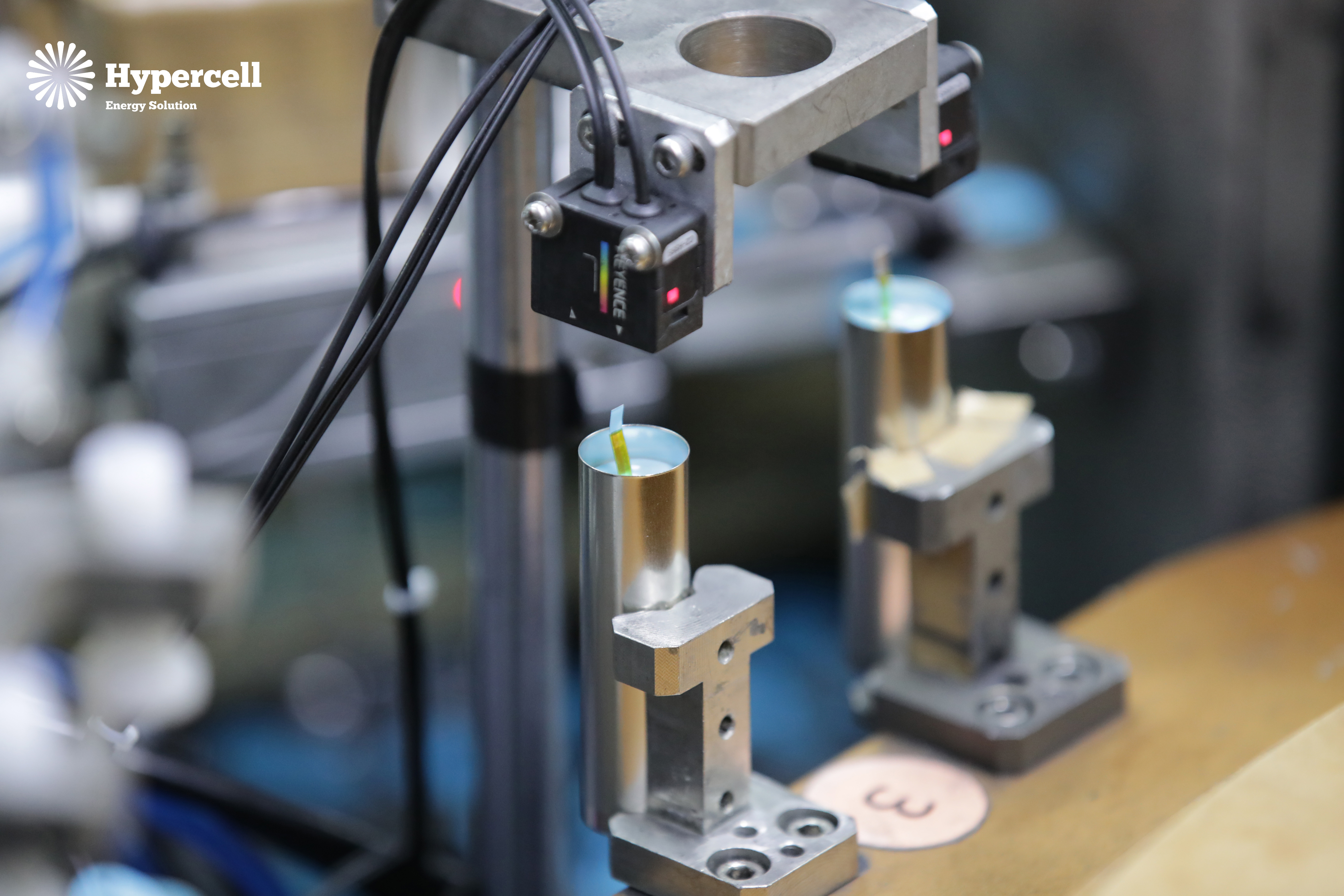
For a printable overview of Hypercell’s manufacturing and custom lithium-ion battery capabilities, download the Hypercell company brochure. Keep the brochure as background only; the certificate record, controlled datasheet and purchase-order acceptance annex remain the documents that govern approval.
Conclusion: approve the document chain, not the logo
A China battery manufacturer’s compliance and acceptance documentation should answer a narrow question: does this certificate, this datasheet, this BMS specification, this test record and this purchase term describe the exact battery being bought? For Hypercell, the UL62133 certificate E511602, the HPC B1 power bank values, the 24AQ507-01, INR18650-4S2P and 24AQ506-01 pack specifications, the AGV application record and the custom-pack capability terms provide a practical basis for that check. The buyer’s task is to keep each claim attached to its model, scope, test condition and commercial term. When those links are explicit, the approval file becomes a working control document rather than a folder of general claims.
Have Questions or Need More Details?
Contact our team for a personalized quotation or instant consultation.
Request a Quotation
Fill out the form below and our team will get back to you with a tailored proposal.
WhatsApp Direct Chat
Prefer to chat in real-time? Message us on WhatsApp for instant assistance & quick answers.
- Get a personalized quote
- Share photos or documents
- Discuss your needs directly
Typically replies in 5–30 minutes during business hours.