
2.38 mm or 2.78 mm? Choosing Between SMR144ZTLP4 W2.38 and SR144ZTLP4 W2.78 for Dental Handpieces
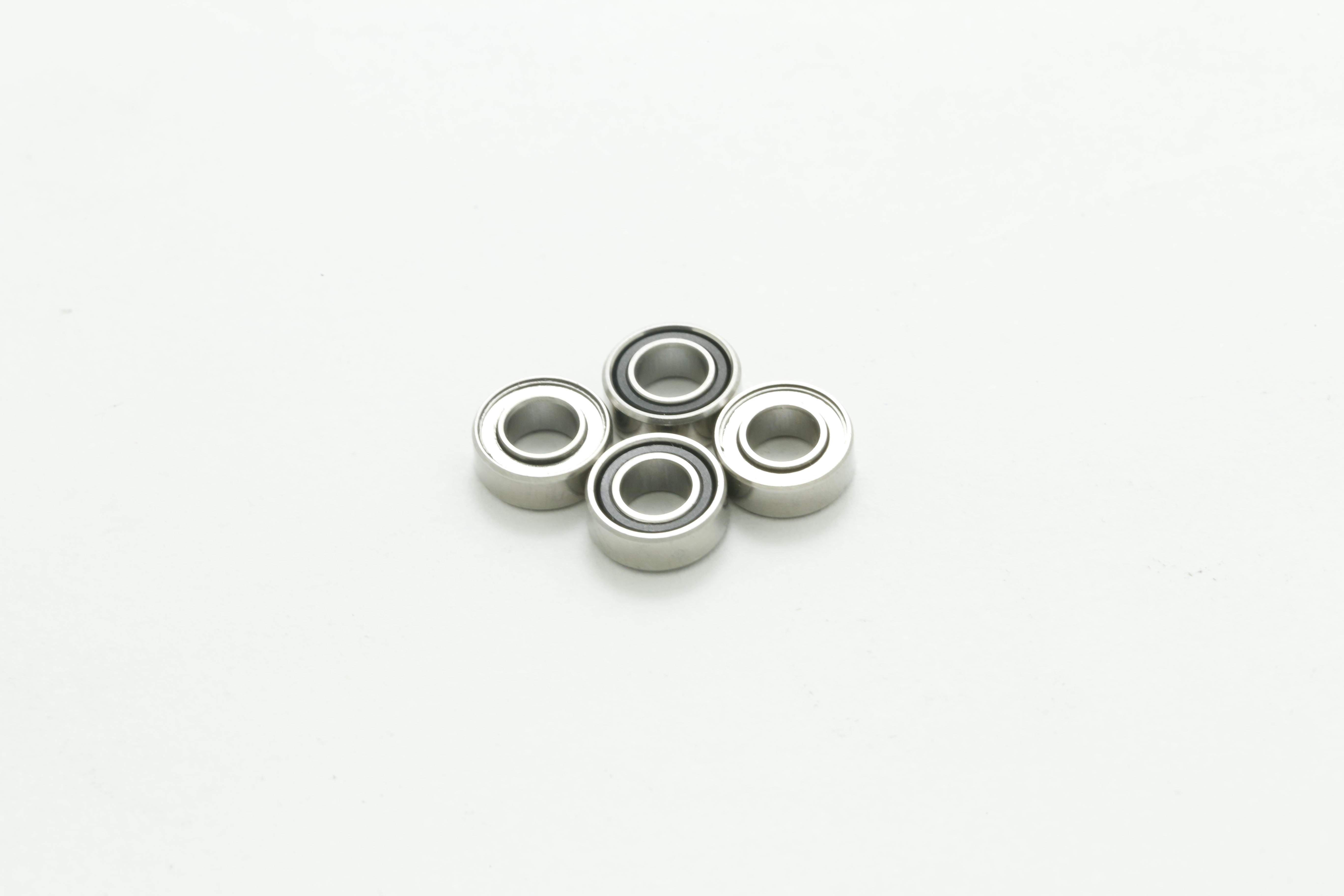
Choosing between the SMR144ZTLP4 W2.38 and the SR144ZTLP4 W2.78 comes down to a single number. Both are extra miniature bearings with a 3.175 mm bore and a 6.35 mm outer diameter. Both carry P4 precision, a limiting speed of 350,000 to 400,000 rpm, an operating temperature range of −50 °C to 160 °C, and a SUS440 stainless steel construction. The only structural difference is axial width: 2.38 mm against 2.78 mm. That 0.40 mm gap decides which bearing fits a dental handpiece assembly — and which one does not.
This is a head-to-head decision guide rather than a catalogue page. It explains what each model is, why a sub-millimetre width difference matters inside a dental handpiece head, how to read your own assembly to pick the right one, what acceptance criteria belong in a purchase order, and which questions to settle before a sample or a production order is confirmed.
What the W Value Actually Tells You
Direct answer: The W figure is the bearing's axial width in millimetres. SMR144ZTLP4 W2.38 measures 3.175 × 6.35 × 2.38 mm. SR144ZTLP4 W2.78 measures 3.175 × 6.35 × 2.78 mm. Same bore, same outer diameter, different width.
The model code carries the width with it. W2.38 corresponds to a 2.38 mm wide ring; W2.78 corresponds to a 2.78 mm wide ring. Both models share the 144 dimension series — a 3.175 mm bore matched to a 6.35 mm outer diameter — and both are supplied at P4 precision for dental handpiece use.
Because bore and outer diameter are identical, either model fits the same shaft diameter and the same housing bore. What they do not share is how much axial space they occupy inside the handpiece head. That is the whole decision.
The Real Problem: 0.40 mm Inside a Turbine Head
A dental handpiece head is a densely packed assembly. The turbine rotor, the bearing pair, spacer elements and the housing interact inside a stack with very little spare room. When an engineer specifies a bearing, the axial width is rarely a free variable — it is a constraint set by everything packed around it.
Two failure modes follow from choosing the wrong width:
- Too wide — 2.78 mm where 2.38 mm is required. The axial stack grows by 0.40 mm. If the housing or the adjacent components cannot absorb that growth, the assembly either fails to close cleanly or applies unintended axial preload to the bearing pair.
- Too narrow — 2.38 mm where 2.78 mm is required. The stack shortens, which can leave the bearing under-supported against the shoulder it is meant to seat on.
Neither outcome appears on a bearing datasheet. Both appear later, as noise, heat or shortened service life in the finished handpiece — which is why width has to be settled at the design and purchasing stage rather than at the assembly bench.
Decision rule: Width is a geometry decision, not a performance decision. On the SMR144ZTLP4 W2.38 and the SR144ZTLP4 W2.78, the speed rating, temperature range, precision grade and material are identical, so performance cannot break the tie. Only the assembly can.
Industry Background: Why Miniature Bearing Precision Keeps Rising
Miniature bearings sit at the centre of a component category that has expanded alongside medical devices, robotics and compact motors. Future Market Insights estimated the global miniature ball bearings market at approximately USD 2.25 billion in 2025, citing medical devices and robotics among the demand drivers. Precedence Research put Asia Pacific at roughly 60% of that market in 2025, reflecting the concentration of manufacturing capacity in the region. Estimates do differ between research houses — published 2025 figures range from about USD 2.0 billion to USD 2.89 billion — so market sizing should be treated as directional rather than exact.
Export activity reinforces the picture. China's bearing exports grew 7.2% year-on-year in the first seven months of 2025, reaching nearly 497,852 tons, according to BearingNews and the Huajing Research Institute — growth achieved despite pressure on global unit pricing.
On the technical side, miniature bearing precision is governed by recognised standards including ABMA ABEC (1–9), ISO 492 (P0–P2) and DIN 620, where a higher number corresponds to tighter tolerances. Material selection follows a similar pattern: stainless steel 440C is widely specified as the primary material for miniature bearings used in medical and food-processing applications because of its resistance to moisture and chemicals. That is consistent with the SUS440 stainless steel used in both bearings discussed here.
Where INB Sits
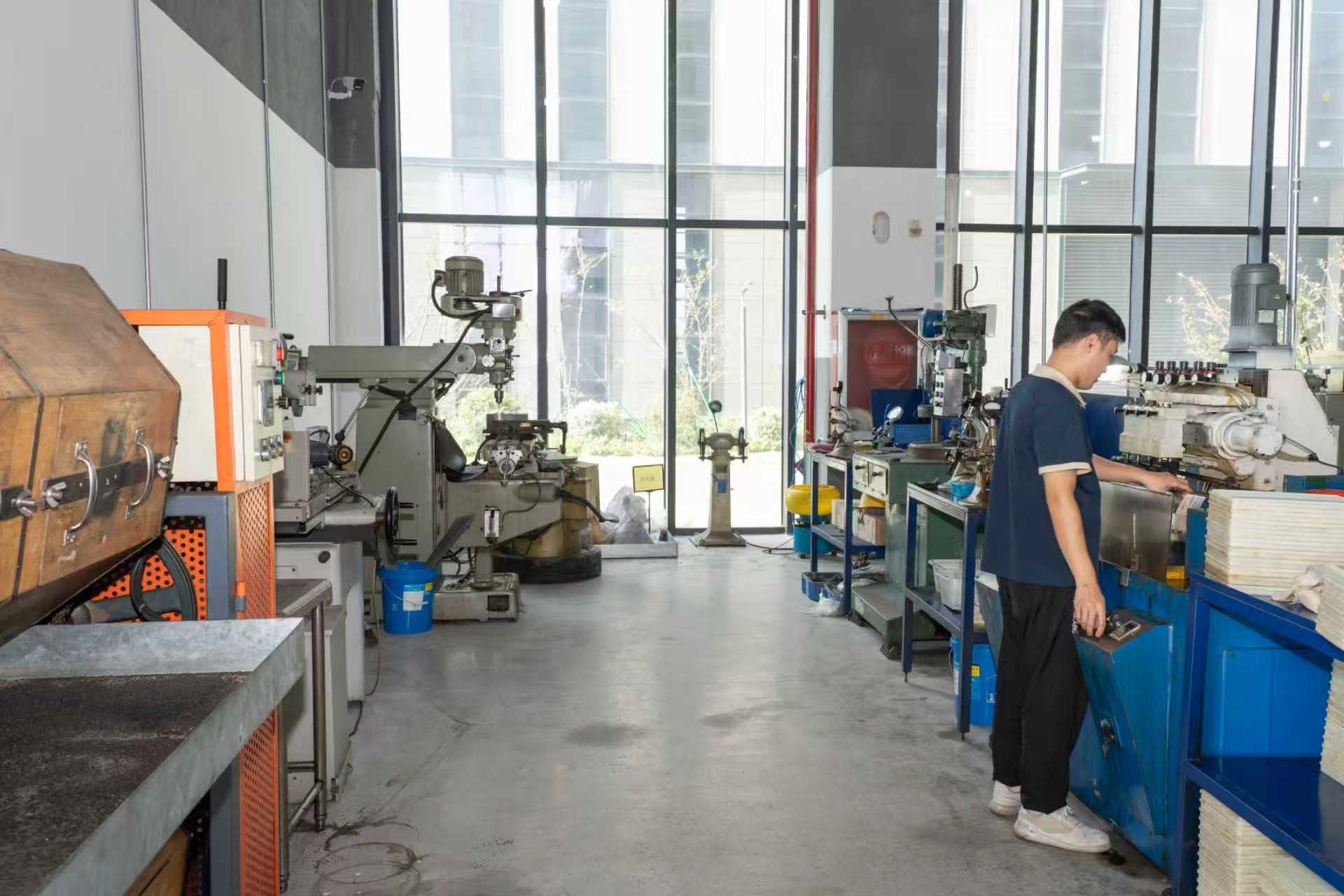
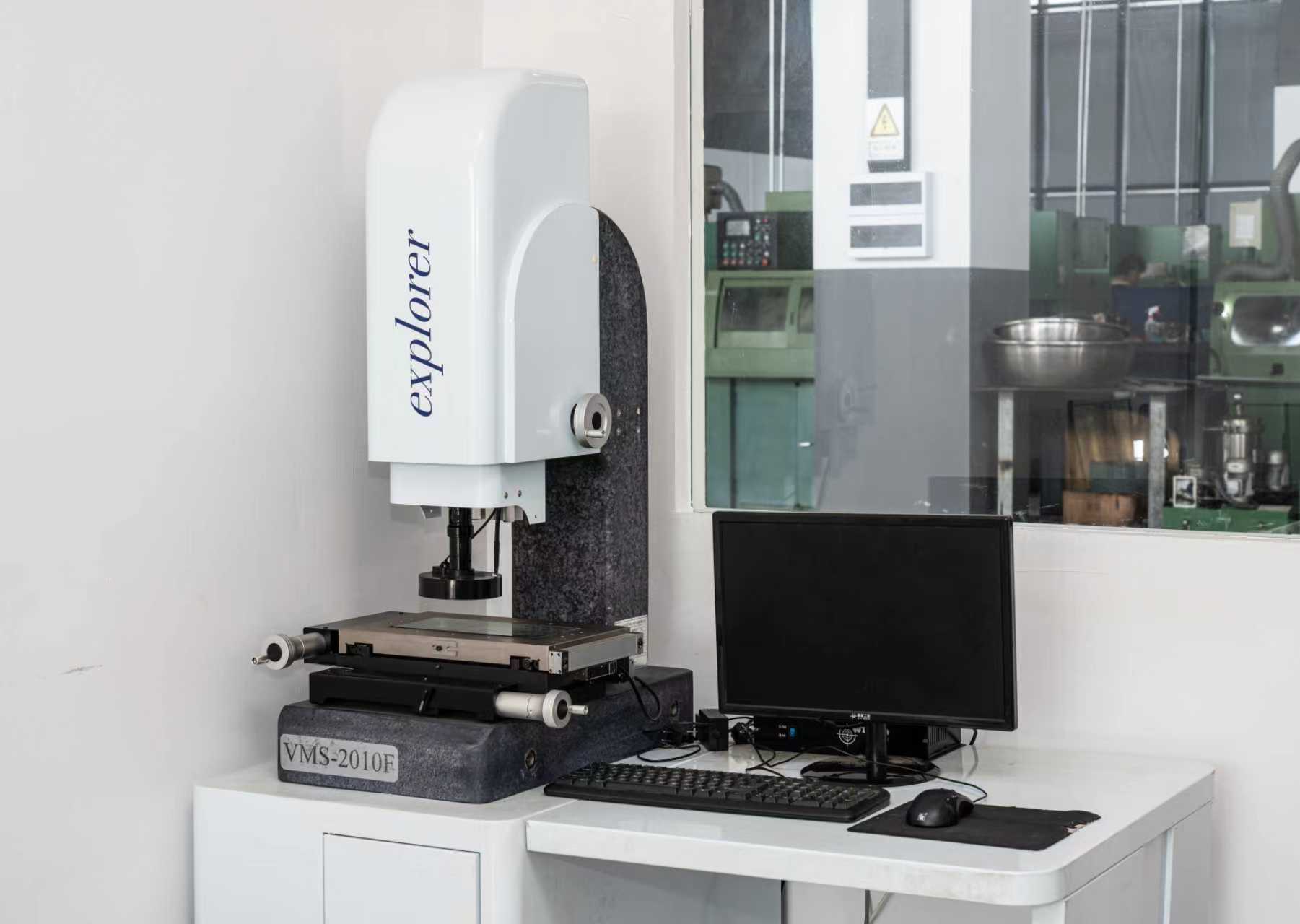
Ningbo City Jingyin Electromechanical Technology Co., Ltd. is a Ningbo-based bearing manufacturer established in 2014, and it created its own bearing brand, INB, in the same year. The company operates a 2,000 square metre manufacturing facility with a workforce of approximately 30 people, including an R&D team of 10 engineers and 3 senior engineers with long experience in the bearing industry. Production capacity is stated at 6,000,000 units annually, with the product range covering high-precision standard bearings from 2 mm to 8 mm bore and precision grades from P6 to P4. Operations run under an ISO 9001 quality management system, supported by inspection equipment that includes hardness testers, roundness meters, profilometers, roughness measuring equipment and microscopes. Its market is primarily domestic China, with exports accounting for roughly 5% of sales, and its bearings serve the domestic medical device industry and micro-motor manufacturers.
Detailed Solution: What Each Model Actually Is
SMR144ZTLP4 W2.38 — the narrower option
The SMR144ZTLP4 W2.38 is a P4-grade extra miniature bearing measuring 3.175 × 6.35 × 2.38 mm. It is built in SUS440 stainless steel, carries a limiting speed of 350,000 to 400,000 rpm, and operates between −50 °C and 160 °C. Its axial width of 2.38 mm makes it the compact choice where the turbine head or the bearing seat leaves limited axial room.
SR144ZTLP4 W2.78 — the wider option
The SR144ZTLP4 W2.78 is the same bearing family at 3.175 × 6.35 × 2.78 mm. It is also P4 precision, also SUS440 stainless steel, with the identical 350,000–400,000 rpm limiting speed and the identical −50 °C to 160 °C operating temperature range. Its 2.78 mm width makes it the choice where the assembly provides, and needs, a wider axial seat.
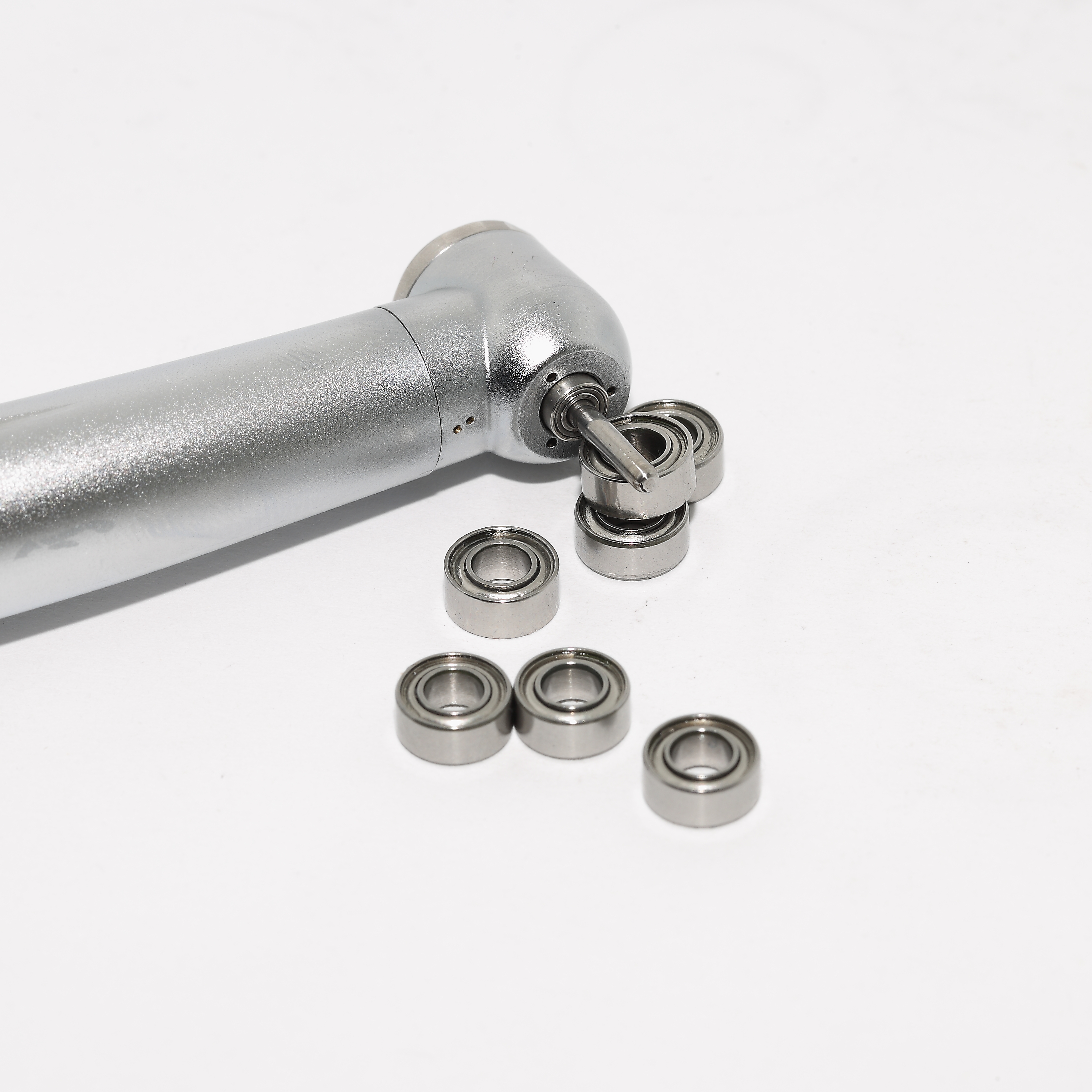
The practical point is that neither model is a "higher specification" version of the other. Read the two data sets side by side and the speed rating, temperature range, precision grade and material are the same. What differs is 0.40 mm of axial footprint. Buyers who expect the wider bearing to deliver a higher speed rating will not find one, and buyers who expect the narrower bearing to be a downgrade will not find that either.
Step-by-Step: Matching Axial Width to a Dental Handpiece Assembly
Step 1 — Lock bore and outer diameter first
Both models are 3.175 mm bore × 6.35 mm outer diameter. If the shaft or housing fit does not match those figures, the width question is irrelevant. Confirm the shaft diameter and housing bore before comparing widths.
Step 2 — Measure the available axial width in the seat
Take the shoulder-to-shoulder dimension of the bearing seat or the axial depth of the housing pocket, and compare it against 2.38 mm and 2.78 mm. This measurement is the single most useful number in the whole selection process, because it eliminates one of the two models immediately in most assemblies.
Step 3 — Add the axial stack budget
The bearing is only one element of the stack. Spacers, retaining elements and the end-face contact area all consume axial space. A 0.40 mm difference in bearing width can be absorbed by the surrounding stack in some designs and cannot be absorbed at all in others — so the comparison has to be made against the total stack, not against the bearing alone.
Step 4 — Confirm speed and temperature coverage
This step does not separate the two models. Both are rated at a limiting speed of 350,000 to 400,000 rpm and both operate from −50 °C to 160 °C. The task here is simply to confirm that the handpiece duty cycle — including the intermittent high-speed operation typical of dental handpieces and the low-noise requirement of a clinical environment — falls inside that envelope.
Step 5 — Fix the precision grade and material in writing
Both models are P4 precision and both are made of SUS440 stainless steel. Because these attributes are shared, they should be written explicitly into the specification rather than assumed from the model name, so that the delivered part can be checked against the ordered part.
Step 6 — Define first-article acceptance criteria
Before volume release, define what will be measured. A practical first-article checklist covers dimensional verification (3.175 mm bore, 6.35 mm outer diameter, 2.38 mm or 2.78 mm width), precision grade verification at P4, material confirmation for SUS440, and inspection of cleanliness and packaging as received. Suppliers with in-house metrology — hardness testing, roundness measurement, profilometry and roughness measurement — can document these checks directly.
Use Cases: Where the Width Choice Plays Out
Dental handpiece turbine assemblies. This is the primary application for both models. The operating requirement is a combination of P4 precision, ultra-high speed of 350,000 to 400,000 rpm, wide temperature resistance from −50 °C to 160 °C, medical-grade hygiene and low noise. Within that envelope, the width is fixed by the head geometry of the handpiece model being built or repaired.
Micro-motor applications. Miniature bearings in the same size class are also used in micro-motors, where the same logic applies: bore and outer diameter are set by the shaft and housing, and axial width is set by the motor's internal stack.
Existing projects and retrofit programs. A domestic project in China involving dental handpieces used 80,000 miniature bearings — an example of how a width decision, once made, is repeated across a large volume. For buyers running that kind of programme, the cost of getting the width wrong is multiplied by the order quantity and by any return or rework cycle that follows.
Comparison Table: SMR144ZTLP4 W2.38 vs SR144ZTLP4 W2.78
| Parameter | SMR144ZTLP4 W2.38 | SR144ZTLP4 W2.78 |
|---|---|---|
| Bore | 3.175 mm | 3.175 mm |
| Outer diameter | 6.35 mm | 6.35 mm |
| Axial width | 2.38 mm | 2.78 mm |
| Precision grade | P4 | P4 |
| Limiting speed | 350,000–400,000 rpm | 350,000–400,000 rpm |
| Operating temperature | −50 °C to 160 °C | −50 °C to 160 °C |
| Material | SUS440 stainless steel | SUS440 stainless steel |
| Bearing category | Extra miniature bearing, mini bearing | Extra miniature bearing, mini bearing |
| Typical application | Dental handpiece | Dental handpiece |
| Deciding factor | Narrower axial seat | Wider axial seat |
The table makes the selection logic visible: nine of the ten rows are identical. Only the axial width and the seat condition it suits separate the two parts.
FAQ
Do SMR144ZTLP4 W2.38 and SR144ZTLP4 W2.78 meet the same precision standard?
Yes. Both are supplied at P4 precision. Miniature bearing precision is generally described against recognised frameworks such as ABMA ABEC (1–9), ISO 492 (P0–P2) and DIN 620, where higher numbers indicate tighter tolerances. Because both models sit at the same P4 grade, the precision requirement does not differentiate them — the width does.
What does the wider model actually do that the narrower one cannot?
The SR144ZTLP4 W2.78 provides 0.40 mm more axial width than the SMR144ZTLP4 W2.38. That is its capability difference. It does not offer a higher limiting speed, a wider temperature range, a tighter precision grade or a different material — those are identical across both models at 350,000–400,000 rpm, −50 °C to 160 °C, P4 and SUS440 respectively. The correct way to read the wider model is as more axial seating surface, not as a higher-performance bearing.
How should cost be assessed when comparing the two?
Because both models share bore, outer diameter, precision grade, speed rating, temperature range and material, the sensible comparison is at assembly level rather than at unit level. The cost that matters is the cost of an incorrect width — rework, scrap and field failures in a handpiece that does not run correctly. Buyers should evaluate each option against the total assembly cost of the programme, using the seat measurement from Step 2 as the starting point, rather than treating the two widths as interchangeable purchasing lines.
Can samples be used to confirm the width match before volume ordering?
Yes, and for a decision that hinges on 0.40 mm it is the practical way to proceed. A sample of the candidate model can be checked against the actual housing or seat before a volume commitment. The useful sample check is dimensional: confirm the 3.175 mm bore, the 6.35 mm outer diameter and the 2.38 mm or 2.78 mm width, then confirm that the bearing seats correctly in the assembly it is intended for.
What should be confirmed before agreeing a supply schedule?
Before any schedule is agreed, the buyer and supplier should both be working from the same written specification: exact model (SMR144ZTLP4 W2.38 or SR144ZTLP4 W2.78), bore, outer diameter, axial width, P4 precision grade, 350,000–400,000 rpm limiting speed, −50 °C to 160 °C operating temperature range, SUS440 material, required quantity, and the first-article acceptance criteria from Step 6. Confirming those items in writing removes the ambiguity that a 0.40 mm width difference can otherwise create at goods-in inspection. To discuss a specific handpiece assembly or request a sample for width verification, contact INB by email at yuhang001@126.com or by phone at +86 18957446001.
Conclusion: Let the Seat Decide, Not the Spec Sheet
The SMR144ZTLP4 W2.38 and the SR144ZTLP4 W2.78 are not competitors in the usual sense. They are two width options from the same extra miniature bearing family, sharing a 3.175 mm bore, a 6.35 mm outer diameter, P4 precision, a 350,000–400,000 rpm limiting speed, a −50 °C to 160 °C operating range and SUS440 stainless steel construction. Only the axial width changes, and only the assembly can tell you which width is correct.
A practical sequence for buyers and design engineers: measure the axial seat, compare it against 2.38 mm and 2.78 mm, confirm the speed and temperature envelope covers the handpiece duty cycle, write P4 and SUS440 into the specification, and finish with a sample check against the real housing before committing to volume. Get that sequence right and the width decision stops being a judgement call and becomes a measurement.
Need to Confirm the Right Width for Your Handpiece?
INB manufactures P4 precision stainless steel miniature bearings for dental handpiece applications, with bore sizes from 2 mm to 8 mm and precision grades from P6 to P4. Request a sample of the SMR144ZTLP4 W2.38 or the SR144ZTLP4 W2.78 and verify the fit against your own assembly before you commit to volume.
Email: yuhang001@126.com | Phone / WhatsApp: +86 18957446001 | Web: www.lnb-brg.com
Ningbo City Jingyin Electromechanical Technology Co., Ltd. — Building 9, Beikun Industrial Area, No. 2288 Yongmao West Road, Zhuangqiao Street, Jiangbei District, Ningbo City, China.
Have Questions or Need More Details?
Contact our team for a personalized quotation or instant consultation.
Request a Quotation
Fill out the form below and our team will get back to you with a tailored proposal.
WhatsApp Direct Chat
Prefer to chat in real-time? Message us on WhatsApp for instant assistance & quick answers.
- Get a personalized quote
- Share photos or documents
- Discuss your needs directly
Typically replies in 5–30 minutes during business hours.