
200,000 vs. 400,000 RPM: A Miniature Bearing Comparison Guide for Dental Handpiece Designers
Two verified speed classes dominate miniature bearing specification in dental handpieces: a 200,000 rpm stainless steel high-speed option, and the SMR144ZTLP4 W2.38, rated up to 400,000 rpm. Both are produced to P4 precision in SUS440 stainless steel, so the choice between them is not a question of quality. It is a question of matching the bearing rating to the turbine cartridge specification, the available width envelope, and the thermal and lubrication strategy the handpiece will actually operate under.
INB is a miniature bearing manufacturer based in Ningbo, Zhejiang Province, China, established in 2014. The company produces high-precision miniature bearings with bore diameters from 2 mm to 8 mm in precision grades from P6 to P4, primarily for dental and micro-motor applications. This guide sets out a decision framework for matching bearing dimensions and speed requirements without over-specifying.
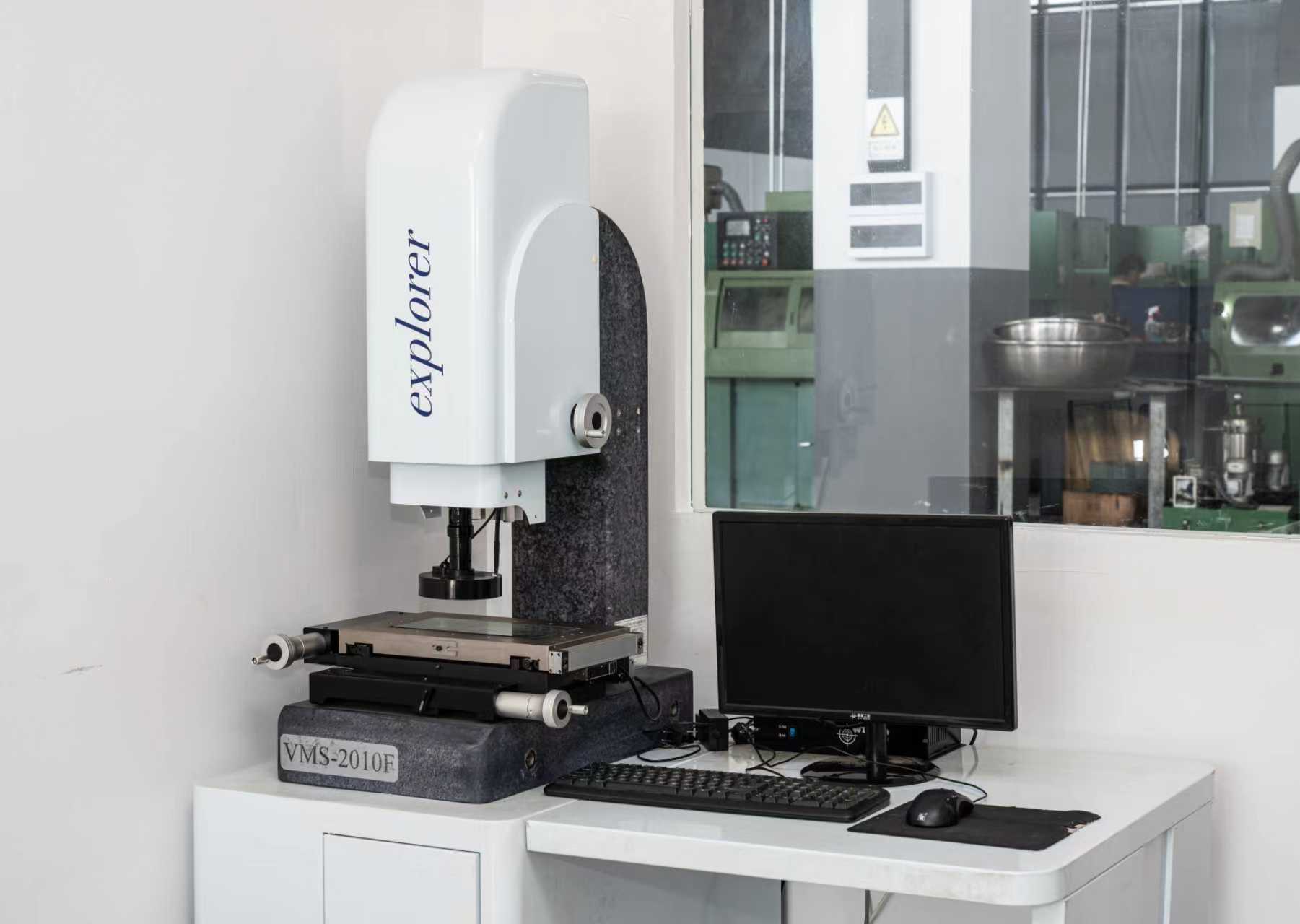
Miniature bearing production machinery at INB's Ningbo manufacturing base, where both the 200,000 rpm and 400,000 rpm dental bearing classes are produced.
A Speed Rating Is a Limit, Not Design Headroom
The most common specification error in handpiece bearing selection is treating the highest available speed rating as guaranteed design margin. It is not. A speed rating describes the maximum rotational speed at which a bearing's internal geometry, cage, lubrication package and thermal behaviour have been validated. It is a ceiling, and designing against a ceiling as though it were a load rating is where programmes lose money and gain risk.
Specifying the 400,000 rpm class into a cartridge that will never exceed 200,000 rpm creates three practical problems.
- Validation burden moves to a duty cycle the device does not use. Speed capability still has to be demonstrated through shipment-level validation, which adds specification and documentation work with no functional return.
- Thermal and lubrication strategy gets built around the rating, not the operating point. The designer ends up maintaining evidence for a thermal envelope the application never reaches.
- Width and fit constraints compete with speed class. Within the same 144-size family, INB produces a 2.38 mm width variant (the W2.38 suffix on SMR144ZTLP4 W2.38) and a wider 2.78 mm variant (SR144ZTLP4 W2.78). Envelope decisions are independent of speed class, and the two have to be resolved together.
The useful design question is narrower: given the turbine's specified maximum speed, its continuous or intermittent duty cycle, the cartridge's bore, outside diameter and width envelope, and the moisture and chemical exposure the device will see, what is the lowest speed class that satisfies the specification with documented validation?
Industry Background: Precision Standards and Supply Reality
Miniature bearings are a specification-driven component category, and the market numbers around the category matter more for reading supply conditions than for making design decisions.
Market sizing is a good illustration of why a single figure should be handled cautiously. Future Market Insights estimates the global miniature ball bearings market at approximately USD 2.25 billion in 2025, driven by demand in medical devices and robotics. Precedence Research places the same market at roughly USD 2.89 billion, and IMARC Group at around USD 2.0 billion. A spread that wide means any single number is directional only. What the sources broadly agree on is regional structure: Asia Pacific accounted for approximately 60% of miniature ball bearing revenue in 2025, with China the largest regional producer and consumer, according to Precedence Research. China's bearing exports grew 7.2% year-on-year in the first seven months of 2025, reaching nearly 497,852 tons, per BearingNews and the Huajing Research Institute.
On the specification side, precision is governed by recognised standards rather than by supplier language. Miniature bearing precision is defined by systems including ABMA/ABEC (grades 1 to 9), ISO 492 (classes P0 to P2 and beyond) and DIN 620, with higher ABEC numbers correlating to tighter tolerances, as documented by AST Bearings. P4, the class used for both speed options compared here, sits within that ISO tolerance architecture. Material follows the same pattern: 440C stainless steel — the family to which SUS440 belongs — is identified as the primary material for miniature bearings in medical and food-processing applications because of its moisture and chemical resistance (SKDIN Engineering Guide).
The supplier landscape is concentrated at the top. MinebeaMitsumi, described as dominant in small sizes, together with NSK, SKF and Schaeffler (Barden), are the widely cited global manufacturers in this sector (Intel Market Research). Below that tier sit regional specialists such as INB, whose production focus is dental and micro-motor bearings in the 2 mm to 8 mm bore range.
How P4 Precision, SUS440 and Temperature Windows Shape the Choice
What P4 Precision Actually Controls in a Dental Turbine
P4 is a tight tolerance class inside the ISO 492 precision system. Its purpose is to control dimensional and running accuracy — roundness, wall variation, and the runout that appears once the bearing is assembled into a cartridge. At dental turbine speeds, runout converts into vibration, vibration converts into heat, and heat is what degrades the lubricant. Precision is therefore not a cosmetic grade; it is the mechanism through which noise, heat and service life are controlled.
The outcomes are visible in INB's documented comparison data. Against the SMR144Z benchmark, the stainless steel high-speed dental option is recorded with noise below 20 dB, a low friction coefficient, low heat generation and reduced energy consumption in the equipment it drives. Those are downstream effects of controlled geometry, and for a handpiece designer they matter more than the tolerance-class label itself.
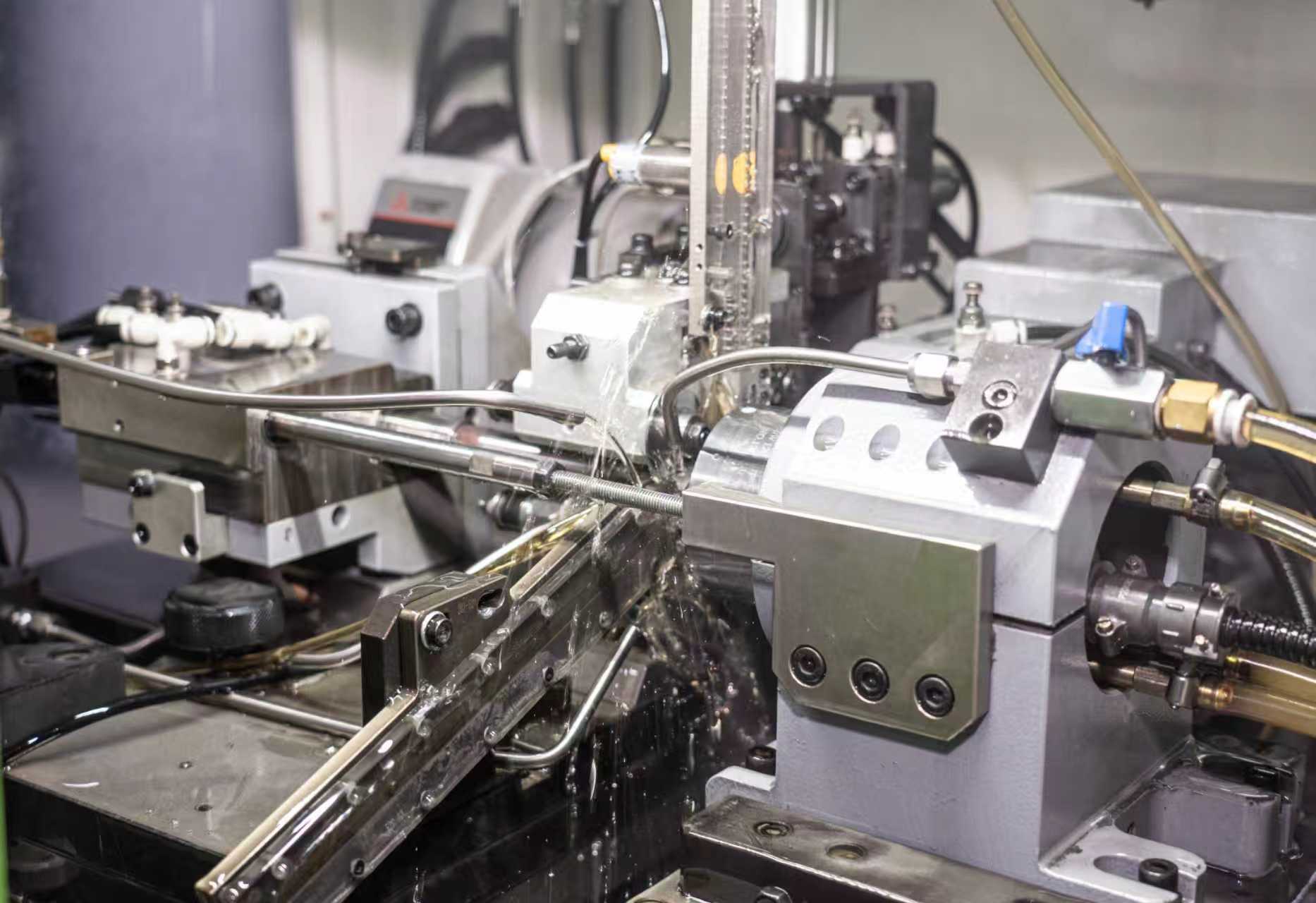
Precision bearing inspection workstation (Model VMS-2010F) used to verify dimensional and running accuracy of P4 miniature bearings at INB.
Why SUS440 Stainless Steel Is the Default for Handpieces
SUS440 is the Japanese Industrial Standards designation for 440-series martensitic stainless steel, the same material family referenced internationally as 440C. It is the established choice for miniature bearings in medical applications because of moisture and chemical resistance (SKDIN Engineering Guide). In a dental handpiece the bearing is exposed repeatedly to moisture and cleaning chemistry, and corrosion at the raceway is not cosmetic — it changes preload, generates debris and shortens life. Both speed classes in this comparison are produced in SUS440, so material is not a differentiator between the 200,000 rpm and 400,000 rpm options; it is the baseline that makes either of them viable in a dental environment.
The Two Temperature Windows: -50 °C to 160 °C and -40 °C to 150 °C
Two operating temperature windows appear in INB's high-speed miniature bearing documentation: -50 °C to 160 °C, the range used for thermal-cycle life testing, and -40 °C to 150 °C, a narrower window. Which window applies to a given cartridge depends on the exact part number and its lubrication and sealing configuration — the datasheet for that number, not the general product family, is the controlling document.
The design consequence is straightforward. A temperature range is a system property: steel, lubricant, cage and seal each have their own limit, and the published window reflects the weakest link in that chain. When a handpiece programme specifies an operating window, the designer should confirm that the rated window of the selected variant covers the actual maximum temperature of the cartridge with margin, rather than assuming that a higher speed class automatically carries a wider thermal window. Speed rating and temperature rating are independent specifications.
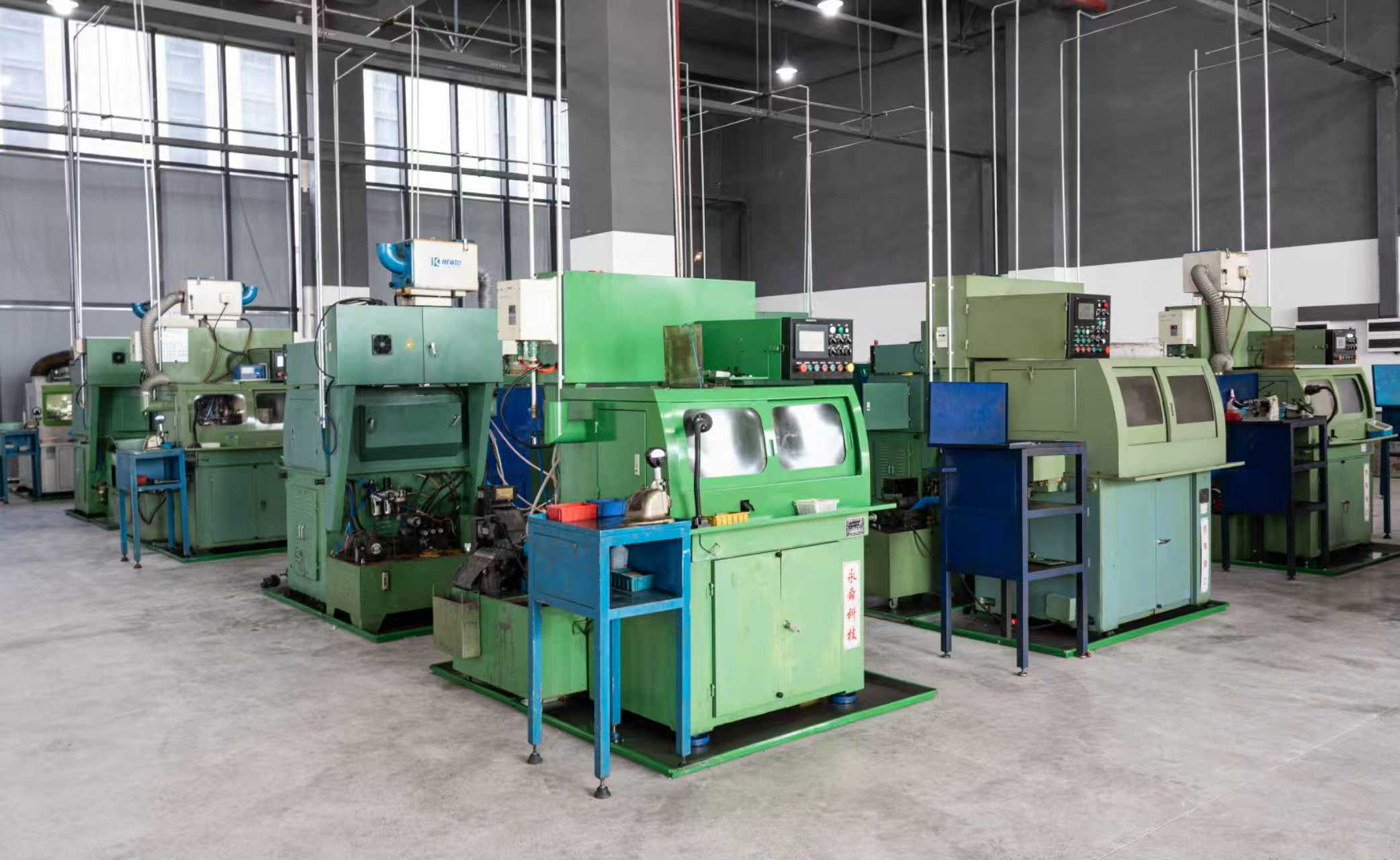
Bearing processing equipment with cooling liquid on INB's production line — thermal control inside the bearing is matched by thermal control in manufacturing.
Risk Controls That Travel With the Speed Rating
Three failure modes dominate high-speed miniature bearing applications, and each has a defined control set in INB's engineering documentation.
- Over-speeding. Controls include a built-in mechanical speed limiter, a high-precision Hall effect speed sensor, 100% speed performance validation before shipment, and alignment with medical device speed safety requirements.
- Thermal fatigue and overheating. Controls include high-temperature resistant material selection, an optimised heat conduction structure, a real-time temperature monitoring module, and thermal-cycle life testing across the -50 °C to 160 °C range.
- Premature wear and lubrication failure. Controls include medical-grade permanent lubricant filling, a fully sealed labyrinth structure, wear-resistant alloy material, and periodic friction and wear performance testing.
Step-by-Step: Selecting a Speed Class Without Over-Specifying
- Fix the cartridge's specified maximum speed. Take the number from the turbine specification, not from the highest rating in a catalogue. If the cartridge is rated at 200,000 rpm, that is the design input.
- Classify the duty cycle. Continuous high-speed operation and short intermittent bursts place different demands on lubrication and heat dissipation. The duty cycle, not the peak number alone, decides whether the 400,000 rpm class is justified.
- Lock the size envelope before the speed class. Bore, outside diameter and width must be resolved first. Within the 144-size family the width decision between W2.38 and the wider W2.78 variant constrains what the cartridge can accept, whatever the rated speed. INB's production range covers bore diameters from 2 mm to 8 mm.
- Confirm precision class and the verification method behind it. P4 is the specification; the measurement method is the proof. INB's inspection equipment includes hardness testers, roundness meters, profilometers, roughness measuring equipment and microscopes.
- Match lubrication and sealing to the temperature window. Select the variant whose documented window (-50 °C to 160 °C or -40 °C to 150 °C) covers the application's maximum operating temperature, and confirm the sealing approach — INB uses a fully sealed labyrinth structure with medical-grade permanent lubricant filling.
- Define acceptance and validation criteria before ordering. INB's documented terms are a minimum order quantity of 50 units, FOB delivery terms, acceptance based on 100% factory inspection, and payment before shipment. Speed performance validation is performed on 100% of units before shipment.
- Plan the long-term supply position. For a production programme, confirm capacity and part-number continuity. INB's documented monthly production capacity is 500,000 units.
Use Cases: Which Class Fits Which Handpiece Programme
- Standard air turbine cartridges specified at or below 200,000 rpm. The 200,000 rpm stainless steel high-speed class satisfies the specification directly. Specifying a 400,000 rpm bearing here adds documentation and thermal-strategy work without adding capability the cartridge can use.
- High-speed turbines specified at 400,000 rpm. The SMR144ZTLP4 W2.38 is the matching option, rated up to 400,000 rpm in P4 precision and SUS440 stainless steel.
- Width-constrained cartridges. Where the envelope accepts only a 2.38 mm width, the W2.38 variant is the fit; where the design allows 2.78 mm, SR144ZTLP4 W2.78 is the alternative within the same size family.
- Noise-sensitive assemblies. INB's documented comparison data records noise below 20 dB for its high-speed dental option, alongside low friction and low heat generation — relevant where handpiece noise is a stated product requirement.
- High-volume OEM programmes. A documented monthly production capacity of 500,000 units and a minimum order quantity of 50 units cover pilot builds and volume production without changing supplier between phases.
Comparison Table: 200,000 rpm Class vs SMR144ZTLP4 W2.38
| Parameter | 200,000 rpm high-speed class | SMR144ZTLP4 W2.38 (400,000 rpm) |
|---|---|---|
| Validated speed ceiling | Up to 200,000 rpm | Up to 400,000 rpm |
| Precision class | P4 (ISO 492 tolerance system) | P4 (ISO 492 tolerance system) |
| Material | SUS440 stainless steel | SUS440 stainless steel |
| Size family | Miniature and thin-wall sizes within INB's 2 mm to 8 mm bore range | 144-size imperial series; W2.38 width variant |
| Documented operating temperature windows | -50 °C to 160 °C / -40 °C to 150 °C — confirm against the part-number datasheet | -50 °C to 160 °C / -40 °C to 150 °C — confirm against the part-number datasheet |
| Lubrication and sealing | Medical-grade permanent lubricant; fully sealed labyrinth structure | Medical-grade permanent lubricant; fully sealed labyrinth structure |
| Documented noise performance | Below 20 dB (high-speed dental option, against SMR144Z benchmark) | Confirm per part number |
| Pre-shipment validation | 100% speed performance validation; 100% factory inspection | 100% speed performance validation; 100% factory inspection |
| MOQ / delivery / payment | 50 units / FOB / payment before shipment | 50 units / FOB / payment before shipment |
| Typical cartridge fit | Air turbine cartridges specified at or below 200,000 rpm | High-speed turbines specified up to 400,000 rpm |
Both classes share precision grade, material, sealing approach and commercial terms. The governing difference is the validated speed ceiling; figures should be confirmed against the datasheet for the exact part number.
Decision Matrix: Requirement to Recommended Class
| Design requirement | Recommended class | Reason |
|---|---|---|
| Cartridge rated at or below 200,000 rpm | 200,000 rpm high-speed stainless steel option | Satisfies the specification without unused capability |
| Cartridge rated up to 400,000 rpm | SMR144ZTLP4 W2.38 | Validated to 400,000 rpm in P4 precision and SUS440 |
| Envelope limited to 2.38 mm width | W2.38 width variant | Width must be resolved independently of speed class |
| Envelope allows 2.78 mm width | SR144ZTLP4 W2.78 | Wider variant within the same 144-size family |
| Noise is a stated product requirement | High-speed dental option | Documented noise below 20 dB against the SMR144Z benchmark |
FAQ
What precision standards apply to P4 miniature bearings for dental handpieces?
Miniature bearing precision is governed by recognised systems rather than supplier-specific language: ABMA/ABEC grades 1 to 9, ISO 492 classes (P0 to P2 and beyond), and DIN 620, with higher ABEC numbers corresponding to tighter tolerances (AST Bearings). P4 sits within that ISO 492 tolerance architecture. INB operates in accordance with an ISO 9001 quality management system, produces bearings in precision grades from P6 to P4, and applies 100% factory inspection as its documented acceptance criterion.
Can one supplier deliver both the 200,000 rpm and the 400,000 rpm classes?
Yes. INB produces high-precision miniature bearings with bore diameters from 2 mm to 8 mm in grades from P6 to P4, in SUS440 stainless steel, covering both speed classes in this comparison. The 200,000 rpm high-speed option and the SMR144ZTLP4 W2.38 rated to 400,000 rpm come from the same production and quality system at a 2,000 m² facility equipped with hardness testers, roundness meters, profilometers, roughness measuring equipment and microscopes. Sourcing both classes from one supplier reduces the risk of inconsistent inspection practice across a handpiece programme.
Does specifying the higher speed class cost more?
INB's documented comparison data records a cost position approximately 10% lower for its high-speed dental option relative to the SMR144Z benchmark, together with noise below 20 dB and low friction and heat generation. The more important cost question is not the unit-price gap between the two classes but the total programme cost of over-specification: the thermal strategy, document set and validation evidence all have to be built around the rating you specify. Documented commercial terms are a minimum order quantity of 50 units, FOB delivery terms, and payment before shipment.
How can designers validate a bearing before committing to volume production?
INB's documented order structure starts at a minimum order quantity of 50 units, with 100% speed performance validation before shipment and acceptance based on 100% factory inspection. Evidence worth requesting alongside the validation batch includes thermal-cycle life data covering the operating window (the -50 °C to 160 °C range), friction and wear performance test records, and confirmation of precision grade against the P4 specification.
What supports long-term supply and lifecycle continuity?
INB's documented monthly production capacity is 500,000 units, with annual output of 6,000,000 units, and operations run in accordance with an ISO 9001 quality management system. For OEM programmes that need part-number continuity across production runs, the practical next step is to share the cartridge specification — rated speed, bore/outside-diameter/width envelope, maximum operating temperature and duty cycle — and request a matched recommendation and quotation. Contact Wang Chaojiang at yuhang001@126.com, telephone or WhatsApp +86 18957446001, or visit www.lnb-brg.com.
Conclusion: Choose the Class the Cartridge Justifies
Choosing between the 200,000 rpm and 400,000 rpm class is not a ranking exercise. The rule that resolves it is simple: read the cartridge's specified maximum speed, select the lowest class that covers it with documented validation, resolve width and precision before speed, match the lubrication and sealing package to the temperature window the application genuinely reaches, and settle acceptance terms before the pilot build.
For most standard air turbine cartridges, the 200,000 rpm stainless steel high-speed option is the correct answer. Where the turbine specification genuinely calls for 400,000 rpm, SMR144ZTLP4 W2.38 is the matching part. Both are P4 precision in SUS440 stainless steel, both are speed-validated before shipment, and both are produced under the same quality system — which means the decision can be made on engineering grounds rather than on supplier switching costs. INB manufactures both classes for dental and micro-motor applications, with a documented monthly production capacity of 500,000 units.
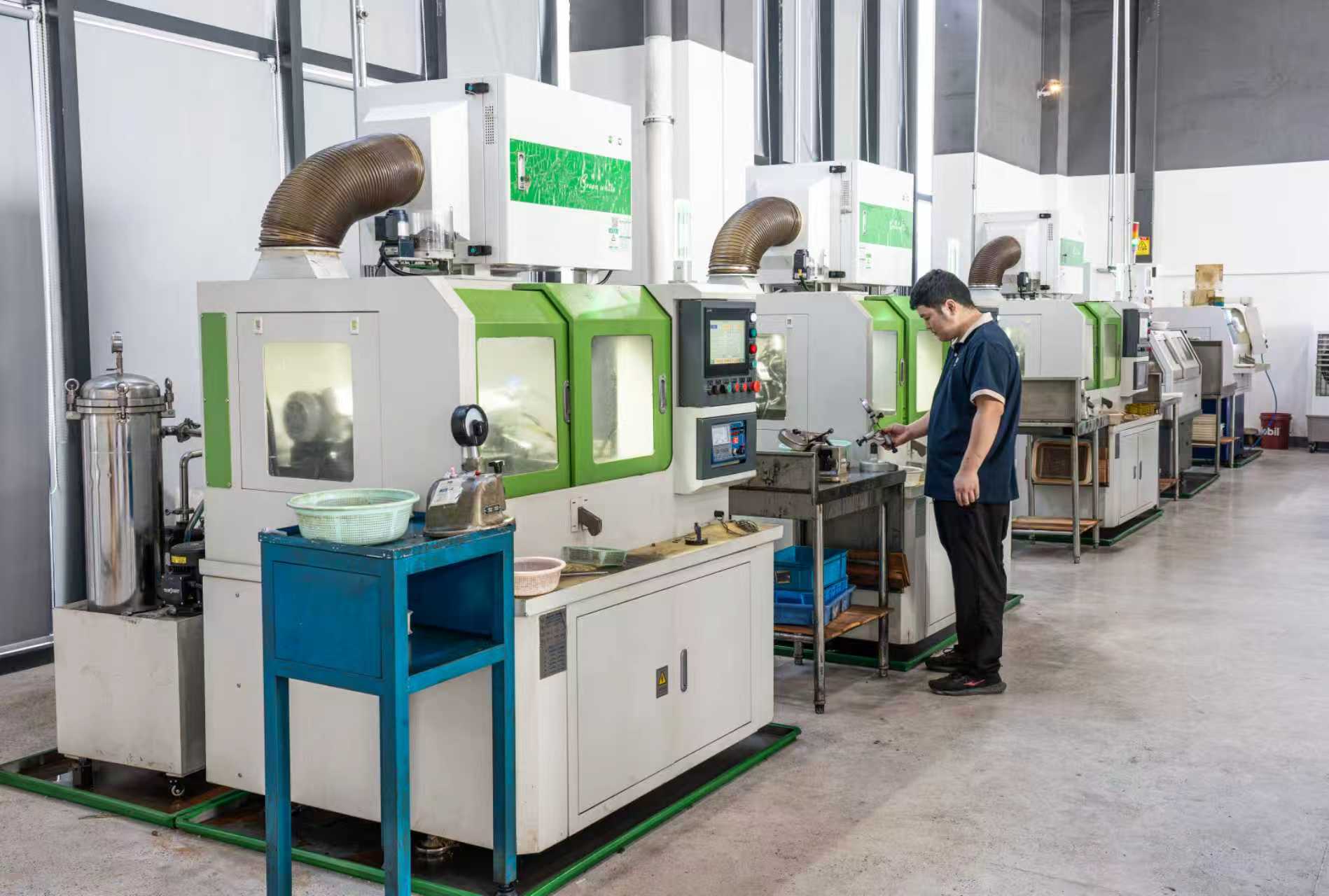
Automated bearing assembly at INB, where 100% speed performance validation is applied before shipment.
Discuss Your Dental Handpiece Bearing Programme
INB produces stainless steel miniature bearings for dental and micro-motor applications, with a documented monthly production capacity of 500,000 units.
Minimum order quantity: 50 units | Delivery terms: FOB | Acceptance: 100% factory inspection | Payment: before shipment
Email: yuhang001@126.com | Tel / WhatsApp: +86 18957446001 | Website: www.lnb-brg.com
Contact: Wang Chaojiang, Building 9, Beikun Industrial Area, No. 2288 Yongmao West Road, Zhuangqiao Street, Jiangbei District, Ningbo City.
Have Questions or Need More Details?
Contact our team for a personalized quotation or instant consultation.
Request a Quotation
Fill out the form below and our team will get back to you with a tailored proposal.
WhatsApp Direct Chat
Prefer to chat in real-time? Message us on WhatsApp for instant assistance & quick answers.
- Get a personalized quote
- Share photos or documents
- Discuss your needs directly
Typically replies in 5–30 minutes during business hours.