
Application Guide: 3.175 mm Bore Miniature Bearings for Dental Handpiece Speed and Temperature
A 3.175 mm bore is the fixed point of a dental handpiece rotor. That dimension — one eighth of an inch — matches the standard bur shank and rotor shaft, so it is settled by the instrument interface long before a bearing is selected. Everything else stays open: outer diameter, width, precision grade, ring material, lubrication, limiting speed, and temperature behaviour.
This application guide is written for OEMs and design engineers who need to match a bearing to a specific handpiece project rather than order by habit. It maps inner diameter, outer diameter, and width against speed and temperature requirements, then sets out a step-by-step selection path built on verified INB specifications: P4 precision, SUS440 stainless steel, an operating window of −50 °C to 160 °C, and high-speed capability up to 400,000 rpm, with model examples such as SR133TL and SMR144ZTLP4 W2.38.
INB is the miniature bearing brand of Ningbo City Jingyin Electromechanical Technology Co., Ltd., a bearing manufacturer based in Ningbo, China, producing high-precision miniature bearings with bore diameters from 2 mm to 8 mm in precision grades from P6 to P4, mainly for medical device and micro-motor customers.
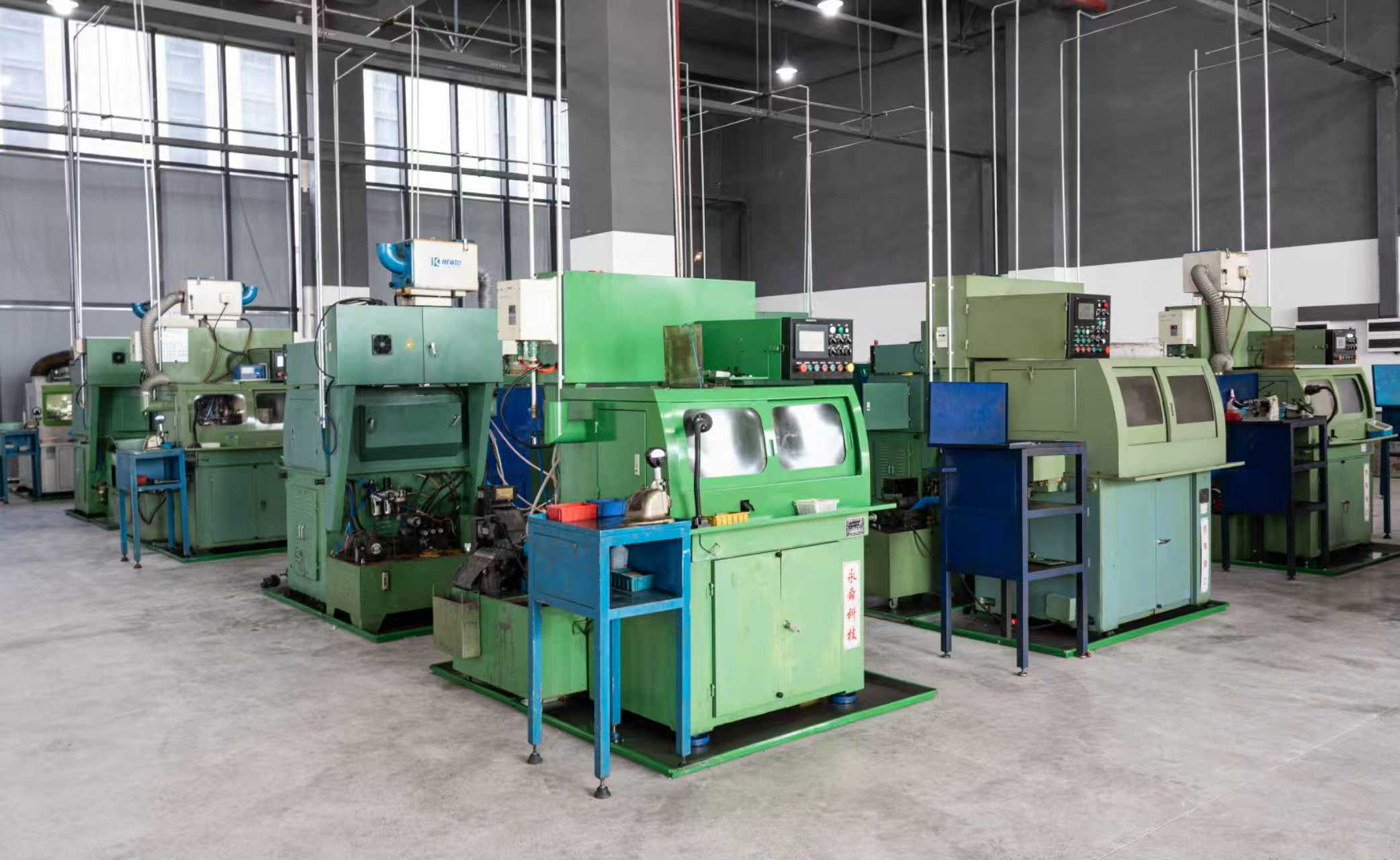
High-precision automated bearing assembly line at INB's Ningbo production facility.
Why a 3.175 mm Bore Is a Constraint, Not a Selection
The 3.175 mm bore survives every design revision because it is not a bearing choice — it is the bur interface. Once that dimension is locked, the bearing has to be matched to the housing rather than the housing to the bearing, and the practical question becomes: which outer diameter, which width, and which internal specification can carry the turbine duty without overheating?
Three failure classes recur in high-speed handpiece bearings when that match is loose:
- Over-speeding — the rotor outruns the speed the bearing was validated for, and ball and cage motion become unstable.
- Thermal fatigue and overheating — heat from friction and compressed air accumulates faster than the bearing can conduct it away.
- Premature wear and lubrication failure — the lubricant film breaks down, wear accelerates, runout increases, and vibration follows.
Each of these is a mismatch symptom rather than a defect of the bore size itself. A 3.175 mm bore bearing that is correctly matched in outer diameter, width, precision, and material will run at high speed with low noise. One that is only dimensionally compatible may fit perfectly and still overheat inside a short duty cycle.
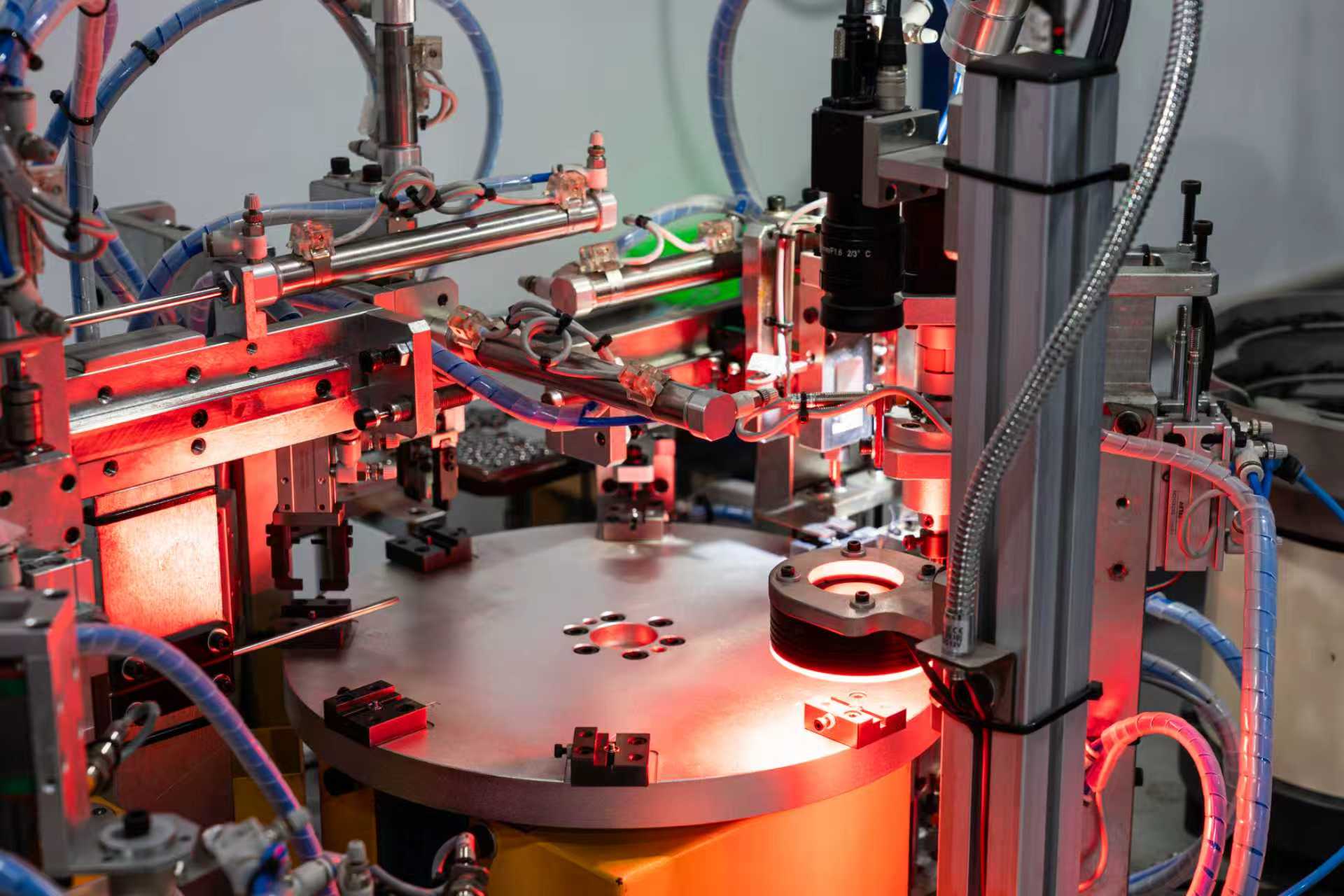
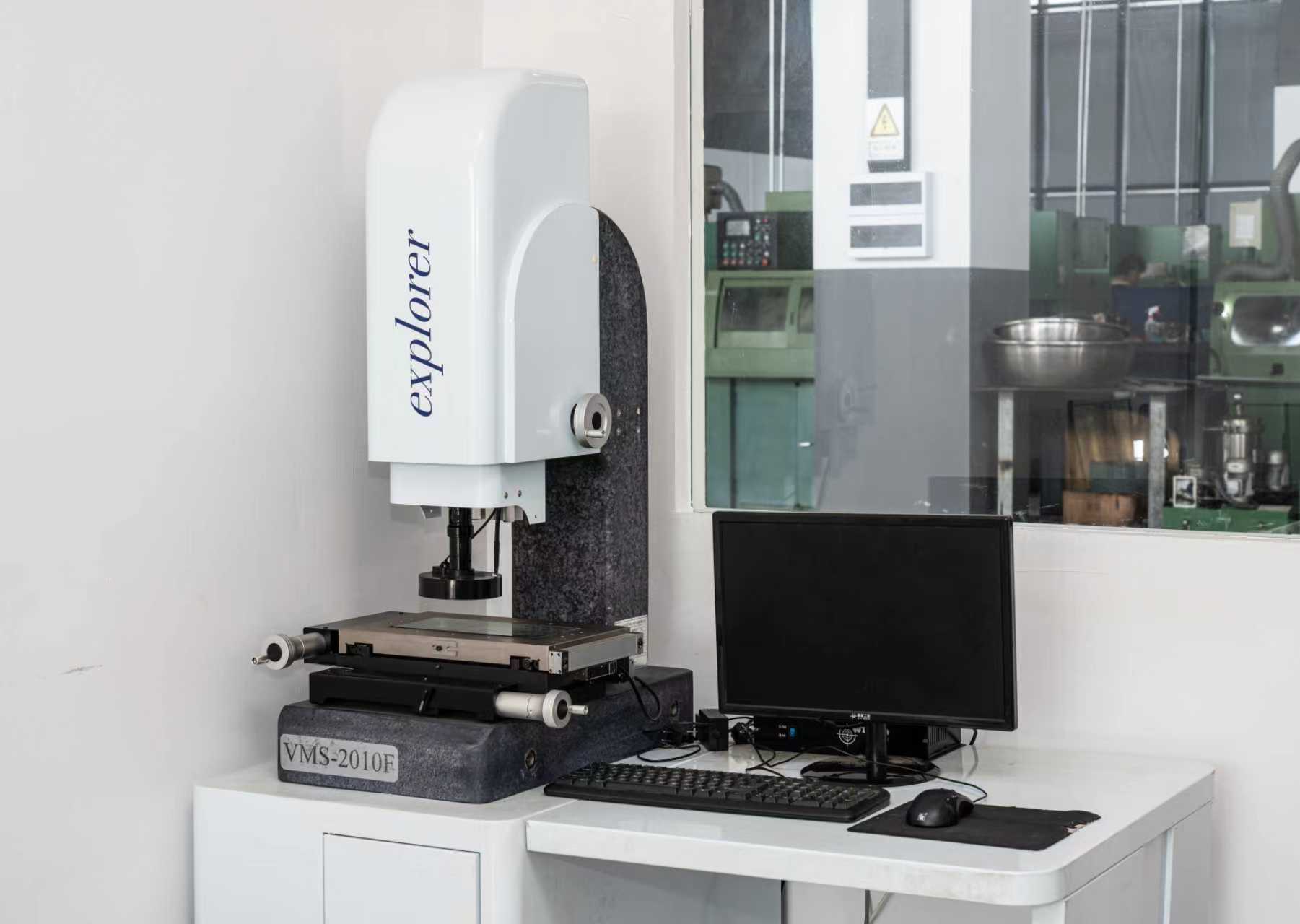
Precision bearing inspection workstation (Model VMS-2010F) used for dimensional and roundness verification.
The Market Context Behind Dental Handpiece Components
Miniature bearings are a compact but structurally important part of the industrial component market. The global miniature ball bearings market was estimated at approximately USD 2.25 billion in 2025, supported by demand from medical devices and robotics, according to Future Market Insights. Asia Pacific accounted for roughly 60% of that revenue in 2025, with China as the largest regional producer and consumer, based on Precedence Research figures. China's bearing exports also grew 7.2% year on year in the first seven months of 2025, reaching nearly 497,852 tons, according to BearingNews / Huajing Research Institute data.
Automotive applications held the largest share of the miniature bearing market — around 39% in 2025, driven by EV motor and sensor applications, again per Precedence Research — while dental handpieces remain a specialized niche. That contrast matters to design engineers. High-volume segments push suppliers toward cost optimization, whereas high-speed dental turbines are bought on precision, thermal behaviour, and consistency, because a bearing that fails inside a handpiece becomes a clinical and warranty problem rather than a line-item saving.
Precision itself is standardized, which is what makes comparison possible. Miniature bearing tolerance classes are defined by ABMA ABEC (1–9), ISO 492 (P0–P2), and DIN 620, and in the ABEC scheme a higher number corresponds to tighter tolerances (AST Bearings). INB manufactures miniature bearings in grades P6 through P4, which places the P4 family in the tight-tolerance range that high-speed handpiece rotors require.
Material follows the same logic. Stainless steel — specifically 440C — is the primary material for miniature bearings used in medical and food-processing applications because of its resistance to moisture and chemical exposure (SKDIN Engineering Guide). INB's dental handpiece bearings use SUS440 stainless steel for that reason: handpiece components are cleaned and reprocessed repeatedly, and a corroding ring cannot hold preload, runout, or noise performance over time.
How ID, OD, Width, Speed, and Temperature Interlock
Inner diameter: the 3.175 mm interface
The 3.175 mm bore is shared by the bur shank, the chuck, and the rotor shaft, so it is fixed. Designers working on smaller or larger assemblies should note that the same bearing family spans bore diameters from 2 mm to 8 mm, which is where a small miniature bearing or a motor miniature bearing for a micro-motor drive would be specified instead. Within a handpiece project, the bore is a given, and no tolerance improvement elsewhere compensates for a poor shaft fit.
Outer diameter: housing fit and wall stiffness
Outer diameter is the first real decision. It is bounded from above by the housing bore and from below by the wall thickness needed to keep the rings round under preload. Reducing wall thickness — the thin-wall miniature bearing approach — buys radial space inside the turbine head, but a thinner wall deflects more under load, which shifts contact geometry and can raise noise. The practical rule is to specify the largest outer diameter the housing and adjacent components allow, then confirm that roundness and runout are still achievable at that wall thickness.
Width: axial space, ball size, and running stability
Width determines how much ball and race geometry the assembly can accept. More width generally means larger balls, greater load capacity, better axial stability, and easier preload control; less width buys axial space for the chuck, the spring, and the bur release mechanism. This is where model designations become useful. A suffix such as W2.38 in SMR144ZTLP4 W2.38 encodes a 2.38 mm width, so comparing it with a narrower 3.175 mm bore option is really a comparison of how much axial room the housing can spare for a wider ball set. The narrower alternative, such as SR133TL, is specified when the housing depth will not accept the wider bearing.
Precision: when P4 is required
Precision grade sets the tolerances on bore, outer diameter, width variation, and running accuracy. P4 is the top of INB's range and the typical requirement for high-speed dental turbine rotors, where small deviations in running accuracy turn into vibration at speed. Lower grades remain valid for lower-speed devices and non-critical locations, but once the rotor reaches the upper end of the speed range, precision stops being a negotiable line in the specification.
Material and lubrication: SUS440 with sealed lubrication
SUS440 stainless steel addresses corrosion from moisture and repeated cleaning. Lubrication addresses wear. INB's approach combines medical-grade permanent lubricant filling with a fully sealed labyrinth structure and wear-resistant alloy material, supported by periodic friction and wear performance testing. For a designer, the practical implication is that lubrication life — not only load rating — becomes a service-life variable, and the sealed structure should be treated as part of the bearing specification rather than an accessory.
Speed and temperature: up to 400,000 rpm and −50 °C to 160 °C
INB's miniature bearings for dental handpieces are specified for high-speed capability up to 400,000 rpm and an operating range of −50 °C to 160 °C. Those two numbers are linked: speed generates heat, and the bearing must both generate less heat through a low friction coefficient and conduct away what remains.
Three control measures sit behind those ratings:
- Thermal management: high-temperature resistant material selection, an optimized heat conduction structure, real-time temperature monitoring, and thermal cycle life testing across the −50 °C to 160 °C range.
- Speed control: a built-in mechanical speed limiter, a high-precision Hall effect speed sensor, and 100% speed performance validation before shipment, in line with medical device speed safety standards.
- Wear control: sealed lubrication, wear-resistant alloy material, and periodic friction and wear performance testing.
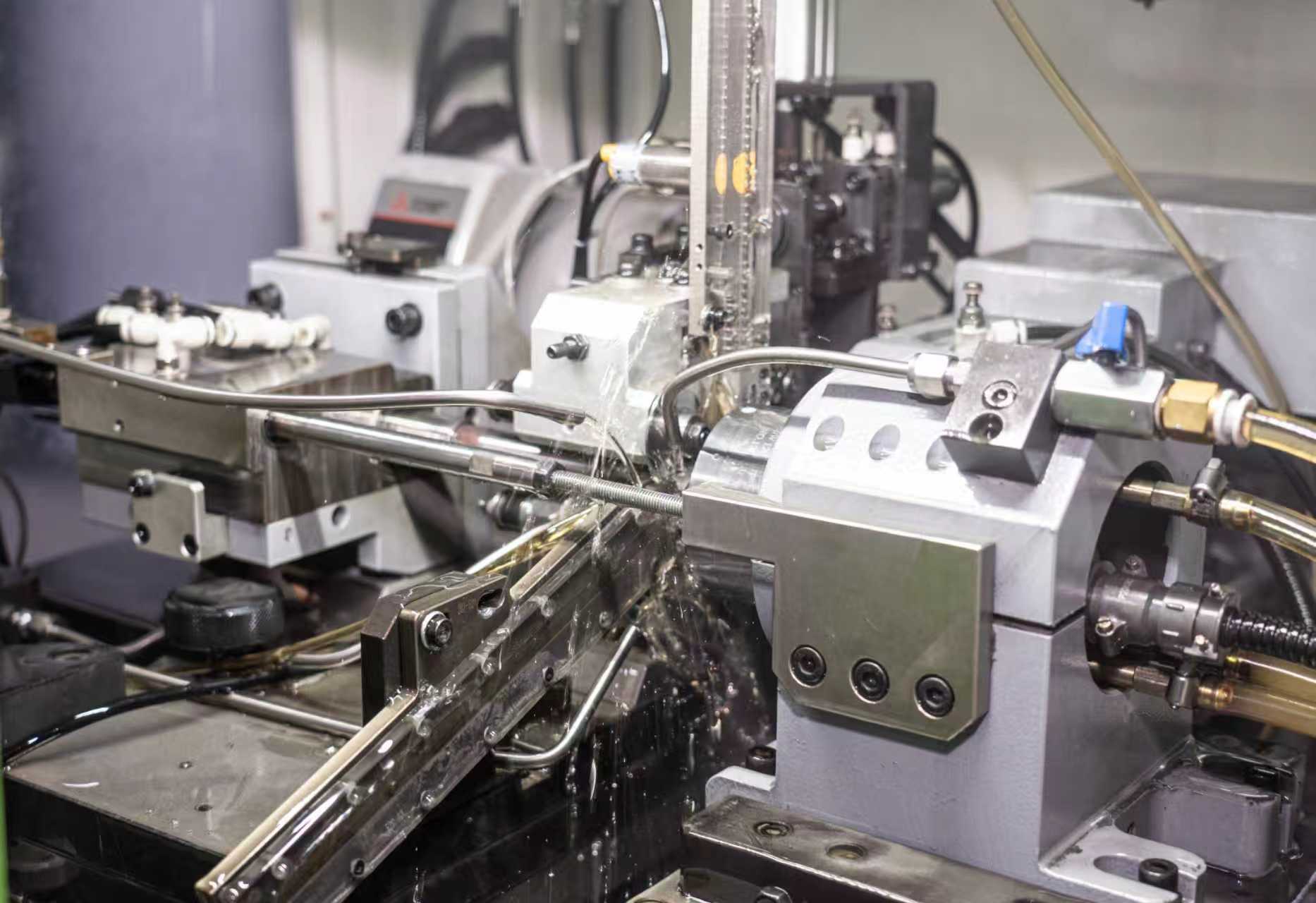
Bearing processing machine with cooling liquid on the INB production line — thermal control starts in manufacturing.
Step-by-Step: Matching a 3.175 mm Bore Bearing to a Handpiece Project
- Lock the shaft interface. Confirm the bur shank and rotor shaft dimensions and the intended fit. The bore stays at 3.175 mm; what changes is the shaft tolerance, the chuck design, and the assembly method.
- Measure the housing bore. Set the outer diameter from the actual housing rather than a drawing revision. Allow for the fit class, thermal growth between ambient and operating temperature, and the stiffness the wall must retain.
- Set the axial stack. Work out how much width the housing can accept once the chuck, spring, and washers are placed. If a 2.38 mm width as designated in SMR144ZTLP4 W2.38 fits, the wider ball set is available; if not, move to a narrower profile such as SR133TL.
- Convert the speed target into a precision requirement. A turbine intended for 200,000 rpm and one intended for up to 400,000 rpm do not need the same running accuracy. Above the mid range, specify P4.
- Map the temperature profile. Record steady-state running temperature, sterilization exposure, and cleaning cycles, then compare them with the −50 °C to 160 °C operating window. Where margin is thin, the heat conduction path inside the handpiece head matters as much as the bearing itself.
- Confirm material and lubrication. Specify SUS440 stainless steel for moisture and chemical resistance, and treat the lubrication and sealing structure as a fixed part of the specification rather than a later adjustment.
- Verify inspection capability. Ask how bore, roundness, and surface finish will be measured. INB inspects with hardness testers, roundness meters, profilometers, roughness measurement equipment, and microscopes — the level of metrology evidence a design engineer should expect from a miniature bearing supplier.
- Validate on samples, then lock the model. Run a sample batch through the real duty cycle — speed, run time, thermal load, cleaning — before releasing a production part number. INB's minimum order quantity is 50 units, delivery terms are FOB, acceptance criteria are 100% factory inspection, and payment terms are payment before shipment, which makes a validation batch straightforward to arrange.
Debugging an intelligent CNC bearing processing centre — where dimensional repeatability is set.
Application Fit: Where a 3.175 mm Bore Bearing Is Used
- Air-turbine dental handpieces: the primary use case, where the rotor runs at high speed and the bearing must hold runout and temperature at the same time.
- Micro-motors and electric handpiece drives: the same bore appears on small motor shafts, where a motor miniature bearing is specified mainly on noise and heat generation rather than peak speed.
- Compact and thin-wall handpiece heads: restricted housings push designs toward a thin-wall miniature bearing or an extra miniature bearing profile, with width usually the binding constraint.
- Repeatedly cleaned and sterilized instruments: SUS440 stainless steel is the material answer to moisture and chemical exposure across reprocessing cycles.
- Replacement and distribution programmes: stable model numbers and consistent specifications let service networks and distributors reorder the same bearing without re-qualification.
Long-Term Supply: What to Lock In Once the Match Is Confirmed
For a dental handpiece programme, the specification is only half of the decision. The other half is whether the same bearing can be supplied again years later with identical behaviour, because re-qualifying a rotor bearing is far more expensive than ordering it.
- Production capacity: INB's monthly production capacity is 500,000 units, with an annual output of 6,000,000 units. That headroom is what allows a repeat production order and an aftermarket demand stream to be served from the same specification.
- Documented quality system: operations are carried out under an ISO9001 quality management system, which gives buyers a stable framework for incoming inspection and supplier audits.
- Stable part numbers: keeping one 3.175 mm bore model across several handpiece assemblies reduces the number of variants to validate and lowers the risk of a substitution appearing in a repeat order.
- Continuity of evidence: the same metrology instruments used to qualify the first batch should be used on later ones, so inspection records stay comparable over the life of the programme.
Design engineers and OEM buyers who treat these four points as part of the original specification rather than a purchasing afterthought avoid the most common long-term failure mode in miniature bearing sourcing: a part that was perfect in the sample stage and slightly different two years later.
Selection and Performance at a Glance
The two models below share the 3.175 mm bore, so the differences that matter are the axial space they occupy and the geometry the housing can accept.
| Model | Bore | Width designation | Precision | Material | Speed & temperature duty | Typical fit role |
|---|---|---|---|---|---|---|
| SR133TL | 3.175 mm | Narrow profile | P4 | SUS440 stainless steel | Up to 400,000 rpm; −50 °C to 160 °C | Compact housings where axial depth limits bearing width |
| SMR144ZTLP4 W2.38 | 3.175 mm | 2.38 mm (W2.38 designation) | P4 | SUS440 stainless steel | Up to 400,000 rpm; −50 °C to 160 °C | Turbine assemblies with axial room for a wider ball set |
Outer diameter and final width must be confirmed against the actual housing drawing before release; the table lists verified bore, precision, material, and duty values only.
| Performance dimension | INB data versus the SMR144Z reference |
|---|---|
| Rotational speed | High rotational speed |
| Noise | Performance gap below 20 dB |
| Service life | Long service life |
| Cost position | Approximately 10% lower |
| Maintenance impact | Low noise, low heat generation, long lifespan, which reduces operation and maintenance costs |
| Efficiency | Low friction coefficient, low heat generation, high transmission efficiency, reducing energy consumption of the driven equipment |
| Best-fit application | Dental handpieces |
Figures are INB's own comparative data against the SMR144Z reference and are provided for design orientation, not as a third-party benchmark.
FAQ: 3.175 mm Bore Miniature Bearings for Dental Handpieces
Which precision and material standards should a 3.175 mm bore bearing for a dental handpiece meet?
The 3.175 mm bore is a dimensional interface; compliance comes from the tolerance class and the material. Miniature bearing precision classes are defined by ABMA ABEC (1–9), ISO 492 (P0–P2), and DIN 620, with higher ABEC numbers indicating tighter tolerances (AST Bearings). INB manufactures miniature bearings in grades P6 through P4 and uses SUS440 stainless steel, the 440C stainless grade widely specified for medical miniature bearings because of its moisture and chemical resistance (SKDIN Engineering Guide). INB operates under an ISO9001 quality management system and inspects with hardness testers, roundness meters, profilometers, roughness measurement equipment, and microscopes. Device-level registration and documentation remain the responsibility of the handpiece OEM, since the bearing is a component rather than a finished medical device.
Can a 3.175 mm bore miniature bearing really run at 400,000 rpm?
Yes — up to 400,000 rpm is the top of INB's high-speed miniature bearing capability for dental handpiece use, and that rating only holds when the rest of the assembly is matched to it: P4 precision, SUS440 rings, correct lubrication, and correct fit and preload. INB supports over-speed control with a built-in mechanical speed limiter, a high-precision Hall effect speed sensor, and 100% speed performance validation before shipment, in line with medical device speed safety standards. Across the miniature bearing family, bore diameters run from 2 mm to 8 mm, and monthly production capacity is 500,000 units.
How does specifying P4 and SUS440 affect the cost of a 3.175 mm bore bearing?
Cost in this category is driven by precision grade, ring material, lubrication, cage, and shield design rather than by bore size. In INB's own comparative data against the SMR144Z reference, the 3.175 mm bore P4 miniature bearing is positioned at approximately 10% lower cost while delivering high rotational speed, noise performance below 20 dB, and long service life for dental handpiece applications. The economical way to control budget is to standardize on one validated model across as many assemblies as possible, not to reduce precision on a high-speed rotor.
Can I validate a 3.175 mm bore bearing before committing to production?
Validation starts at the minimum order quantity. INB's MOQ is 50 units, delivery terms are FOB, acceptance criteria are 100% factory inspection, and payment terms are payment before shipment. The sample batch should reproduce the real duty cycle — rotor speed, run time, thermal load, and cleaning or sterilization exposure — because temperature behaviour and lubrication life are what decide field performance, not the catalogue rating on its own.
What should OEMs verify about lead time and long-term supply of a 3.175 mm bore bearing?
The bore is standard, but the assembly is not, so continuity has to be verified rather than assumed. INB's monthly production capacity is 500,000 units and annual output is 6,000,000 units, which supports repeat production orders and aftermarket demand from the same specification; operations run under an ISO9001 quality management system, and inspection uses the same metrology instruments — hardness testers, roundness meters, profilometers, roughness measurement equipment, and microscopes — across batches. For sample requests, drawings, or a quotation on SR133TL or SMR144ZTLP4 W2.38, contact INB at yuhang001@126.com, by WhatsApp at +86 18957446001, or through www.lnb-brg.com.
Next Step for Handpiece Bearing Projects
Matching a 3.175 mm bore miniature bearing to a dental handpiece is a five-variable problem: outer diameter, width, precision, material, and duty. The bore is the one value that never changes, which is precisely why the other four have to be decided deliberately — against the housing drawing, the axial stack, the rotor speed target, and the temperature profile the instrument will really see.
Once those four decisions are made, the rest is verification: a P4, SUS440 bearing validated in a sample batch, supplied under an ISO9001 quality management system, and repeated from a production capacity of 500,000 units per month. That combination is what turns a dimensionally correct component into a durable handpiece assembly.
Request a 3.175 mm Bore Miniature Bearing Sample
Send your handpiece housing drawing, speed target, and temperature profile, and INB will confirm the matching outer diameter and width for SR133TL, SMR144ZTLP4 W2.38, or a custom P4 / SUS440 specification. MOQ 50 units, FOB terms, 100% factory inspection, payment before shipment.
Email: yuhang001@126.com • WhatsApp: +86 18957446001 • Website: www.lnb-brg.com • Blog: blog.lnb-brg.com
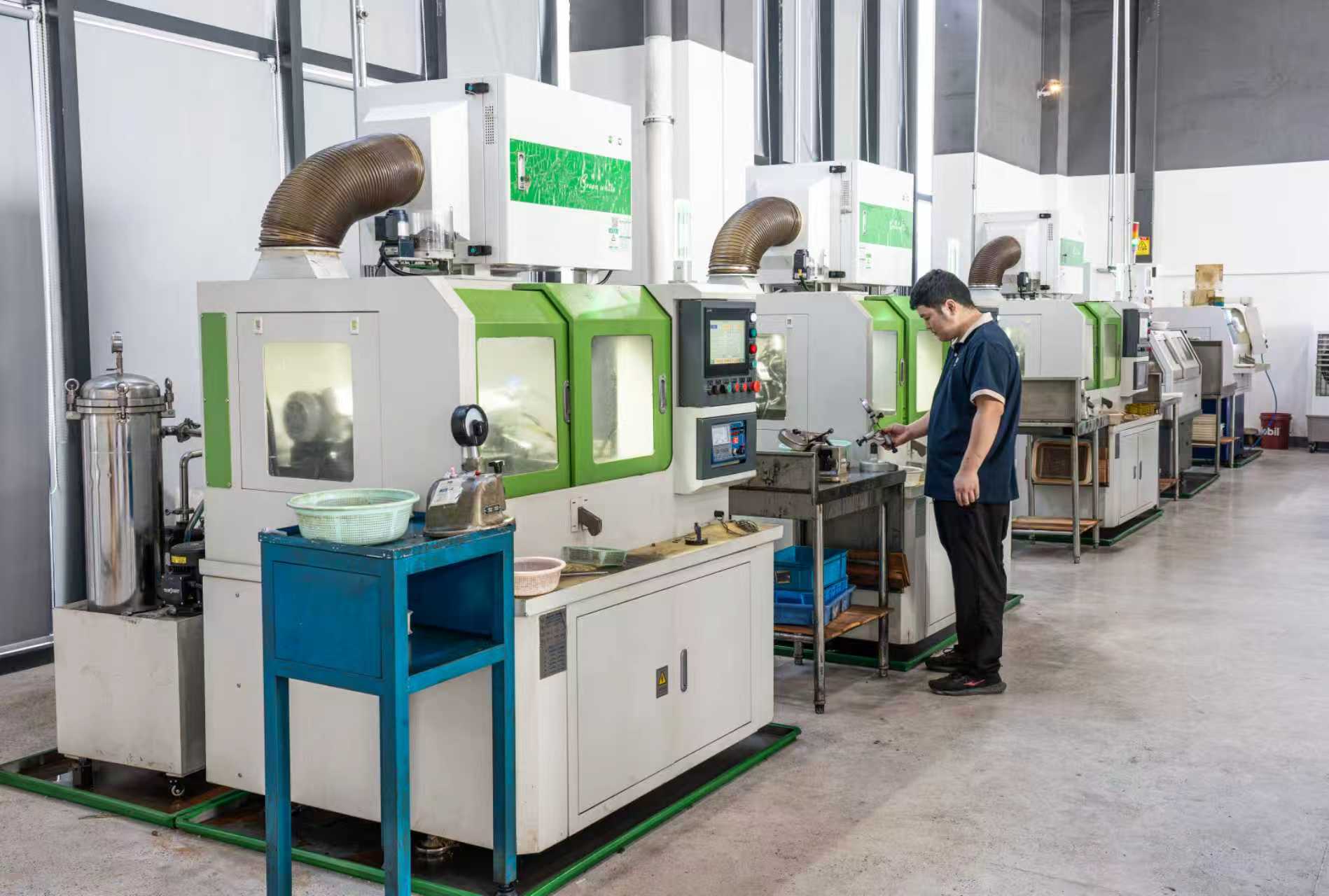
CNC bearing manufacturing machines at INB — the basis of repeatable long-term supply.
Have Questions or Need More Details?
Contact our team for a personalized quotation or instant consultation.
Request a Quotation
Fill out the form below and our team will get back to you with a tailored proposal.
WhatsApp Direct Chat
Prefer to chat in real-time? Message us on WhatsApp for instant assistance & quick answers.
- Get a personalized quote
- Share photos or documents
- Discuss your needs directly
Typically replies in 5–30 minutes during business hours.