
Beyond Dental Handpieces: Miniature Bearings in Surgical and Diagnostic Equipment
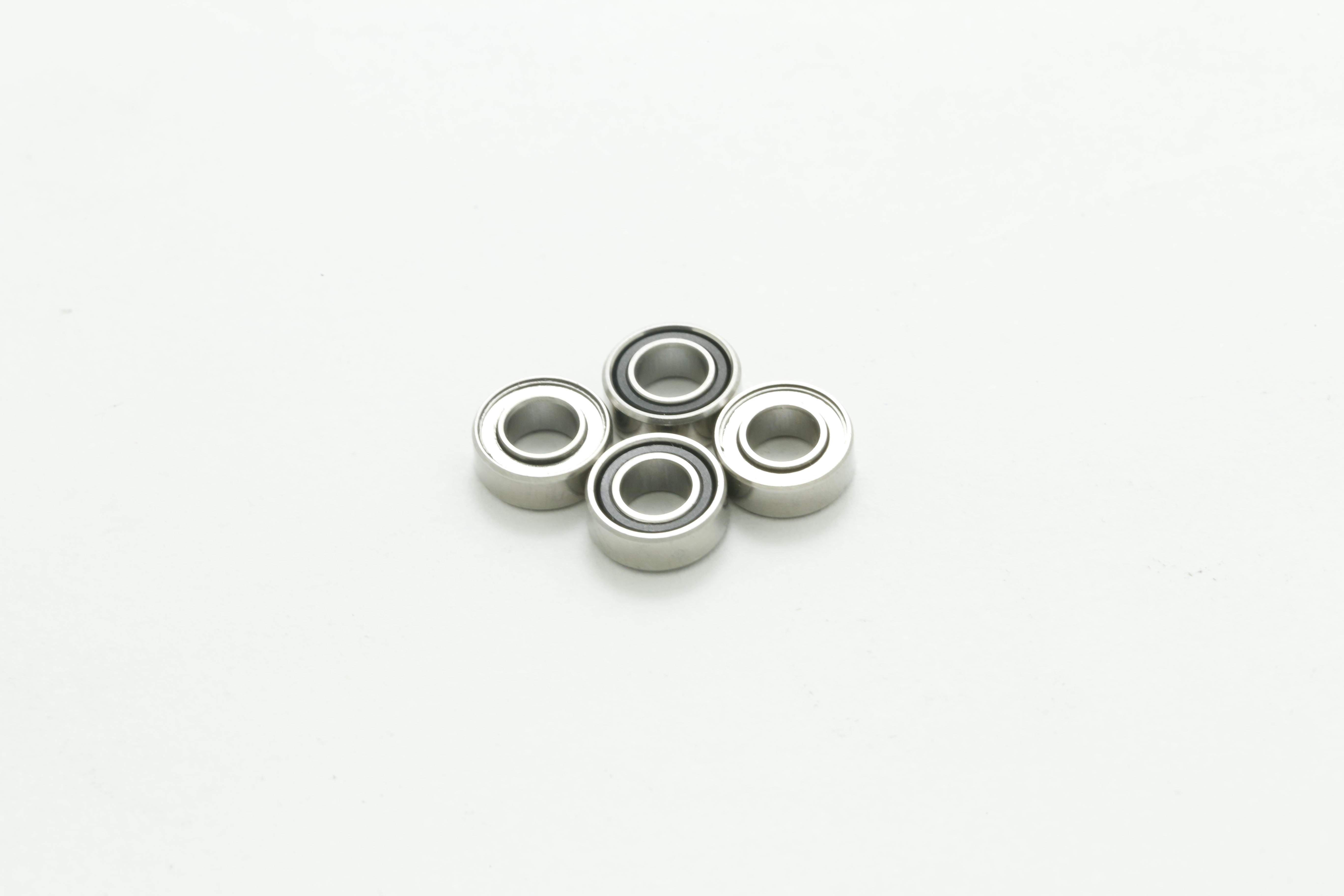
Miniature bearings are the rotating interface inside medical equipment. They hold the shaft, set the runout, and largely decide how much noise, heat and vibration an instrument produces before it ever reaches a clinician's hand. Dental handpieces are the most widely documented example of that role, and INB's miniature bearing programme was built around them, but the same class of component also sits inside powered surgical instruments and benchtop diagnostic equipment, where the operating envelope is different while the selection logic stays broadly the same.
This guide is written for engineers, procurement managers, distributors and OEM buyers who are sourcing a miniature bearing for a medical device assembly outside the dental handpiece category. It explains what "medical" actually changes in a bearing specification, which parameters should be locked down first, how surgical and diagnostic equipment differ in what they demand from a bearing, and where INB's P4 precision, SUS440 stainless steel miniature bearings — rated for operating temperatures up to 160 °C — fit into that picture.
The Problem: A Small Bearing, an Unforgiving Envelope
In a medical instrument, a miniature bearing rarely fails because the load is too heavy. It fails because one of the surrounding conditions was wrong: a lubricant that could not survive repeated high-temperature cleaning, a shaft speed above the limiting speed, runout that converts into audible noise at the instrument tip or into measurement noise in a diagnostic channel, or corrosion that begins on a raceway after weeks of moisture exposure.
That is why "medical" is not a marketing label you can attach to any small bearing — it is a set of constraints that have to be matched. In practice the constraints reduce to five questions that a design or sourcing team must answer before a part number is chosen:
- Speed. How fast does the shaft actually turn, and for how long in each working cycle?
- Temperature. What does the assembly see both during operation and during cleaning or sterilisation?
- Envelope. How much space is available for bore, outside diameter and width, and is the design dimensioned in metric or inch units?
- Environment. Moisture, chemical exposure and cleaning agents the bearing will contact.
- Noise and vibration. How physically close is the bearing to the patient, to the clinician, and to the measurement signal the device produces?
Dental handpieces remain the clearest documented case of all five constraints appearing at once, and INB's recorded application requirements for that category combine P4 precision, ultra-high speed of 350,000–400,000 rpm, a wide temperature resistance range of −50 °C to 160 °C, medical-grade hygiene and low noise — with an intermittent high-speed duty cycle rather than continuous running.
Surgical drills and diagnostic instruments rebalance those five constraints. A powered surgical drill may prioritise torque delivery and sterilisation survival over a 400,000 rpm ceiling; a benchtop diagnostic instrument may prioritise low noise, long continuous duty and low heat generation over peak speed. The component under discussion is the same category of part in all three cases.
Industry Background: A Small Component in a Large Equipment Market
The global miniature ball bearings market was estimated at approximately USD 2.25 billion in 2025, with medical devices and robotics among the demand drivers (Future Market Insights). Other research firms publish different figures for the same year, so the absolute number is best read as an estimate range rather than a fixed value — the direction of demand is more consistent across sources than the market size itself.
Asia Pacific accounted for approximately 60% of miniature ball bearing revenue in 2025, with China the largest regional producer and consumer (Precedence Research). Supply-side data supports that picture: China's bearing exports grew 7.2% year-on-year in the first seven months of 2025, reaching nearly 497,852 tons, even while global unit pricing came under pressure (BearingNews / Huajing Research Institute).
Medical equipment is not the largest application segment. Automotive held the largest application share of the miniature bearing market in 2025 at approximately 39%, driven by electric-vehicle motors and sensors (Precedence Research). What makes medical interesting is not volume but difficulty: the same performance requirements are compressed into small, often hand-held assemblies where a bearing's behaviour is audible to the operator and measurable by the instrument.
Two technical reference points frame the whole category. The first is precision: miniature bearing precision is governed by global standards including ABMA ABEC (grades 1–9), ISO 492 and DIN 620, with higher ABEC numbers corresponding to tighter tolerances (AST Bearings). The second is material: stainless steel 440C is identified as the primary material for miniature bearings used in medical and food-processing applications because of its moisture and chemical resistance (SKDIN Engineering Guide). Those two reference points are exactly where a medical bearing programme tends to start.
At supplier level, the miniature bearing sector includes global manufacturers such as MinebeaMitsumi, NSK, SKF and Schaeffler (Barden) (Intel Market Research). Buyers building a medical device programme usually compare that tier of supplier against regional specialists on three practical axes — whether the required precision grade is actually available, whether the material matches the cleaning environment, and whether the supplier can be qualified and audited at the volumes the programme needs.
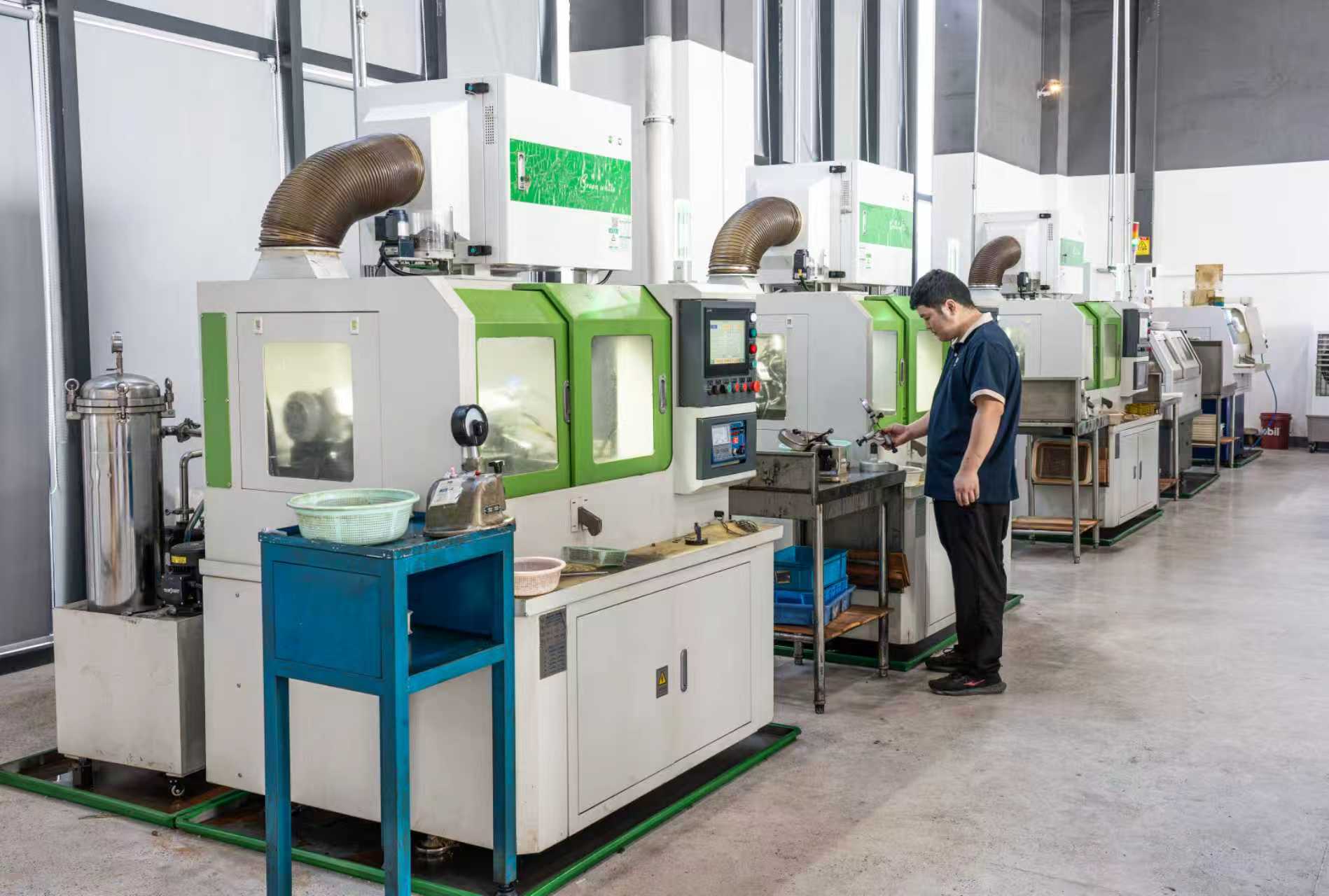
INB sits in that regional-specialist group. The brand was established in 2014 by Ningbo City Jingyin Electromechanical Technology Co., Ltd., a bearing enterprise based in Ningbo, Zhejiang Province. Its production facility covers 2,000 square metres and employs approximately 30 people, including an R&D team of 10 engineers and three senior engineers with many years of bearing-industry experience. The company runs its operations under an ISO9001 quality management system, produces high-precision standard bearings with bore diameters from 2 mm to 8 mm in precision grades from P6 to P4, and reports annual output of 6,000,000 units. Its products primarily serve the domestic Chinese medical device industry and micro-motor manufacturers, with exports accounting for roughly 5% of sales.
The Solution: P4 Precision, SUS440 Stainless Steel and a 160 °C Ceiling
For surgical and diagnostic equipment, INB's medical-facing miniature bearing range is defined by three specification choices that matter more than catalogue breadth: P4 precision, SUS440 stainless steel, and an operating temperature range that reaches 160 °C on the highest-speed models.
P4 precision
Precision grade drives radial and axial runout, which in turn drive vibration, audible noise and, in diagnostic equipment, the stability of a measured signal. INB manufactures high-precision standard bearings in grades from P6 to P4, with the medical-facing models in this article all specified at P4. Because precision grades are defined against published international standards — ABMA ABEC, ISO 492 and DIN 620 (AST Bearings) — a P4 specification is something a buyer can verify dimensionally rather than accept on description alone.
SUS440 stainless steel
Every medical-facing miniature bearing model referenced in this guide uses SUS440 stainless steel — a grade chosen for the combination of hardness and corrosion resistance that medical instruments need. Independent technical guidance identifies stainless steel 440C as the primary material for miniature bearings in medical and food-processing applications specifically because of moisture and chemical resistance (SKDIN Engineering Guide). INB's SUS440 specification and that third-party material guidance point in the same direction; buyers should nonetheless confirm the exact grade required by their own design and cleaning protocol.
Temperature tolerance to 160 °C
Temperature range is often the parameter that separates a bearing that survives a medical duty cycle from one that does not. INB's two highest-speed miniature bearing models are rated from −50 °C to 160 °C. The remaining models in the medical-facing line are rated from −40 °C to 150 °C. Which figure applies depends entirely on the model, so the temperature requirement should be written into the enquiry before a quotation is requested — not checked afterwards.
Speed ratings up to 400,000 rpm
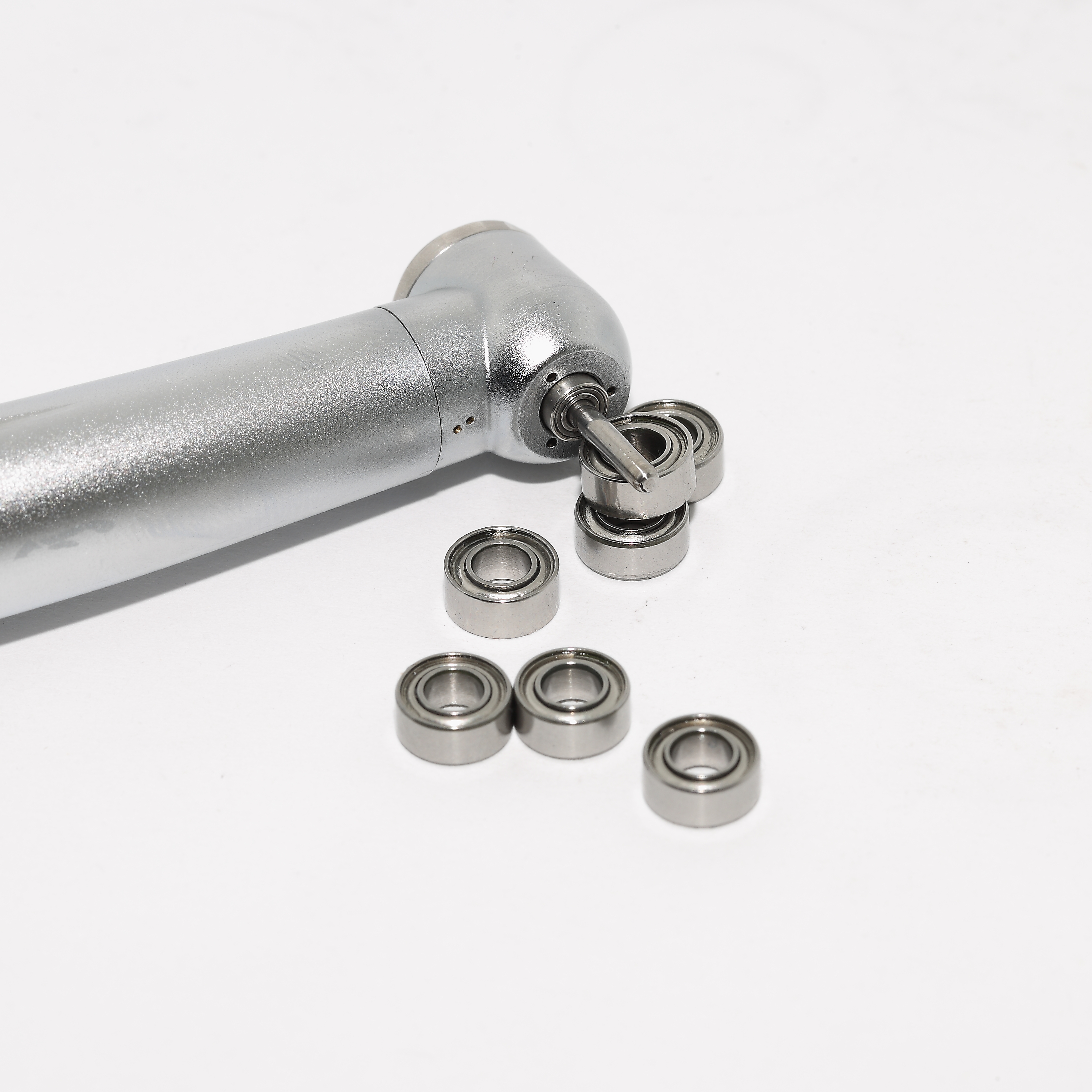
The range splits into two speed families. The SR144ZTLP4 W2.78 and SMR144ZTLP4 W2.38 models are high-speed miniature bearings rated at 350,000–400,000 rpm, while the SMR74TL and SR133TL models are rated at 200,000 rpm. Both are relevant to medical equipment, because a surgical or dental handpiece spindle and a laboratory instrument drive shaft can sit at very different points on the speed curve even when they are physically similar in size.
What "extra miniature" means in the catalogue
INB classifies a bearing with a 6.35 mm outside diameter as an extra miniature bearing. That dimension sits at the small end of the practical range for medical instruments, and it is the size class where handling, cleaning and assembly discipline matter as much as the raceway itself. Both the SR144ZTLP4 W2.78 and the SMR144ZTLP4 W2.38 share a 3.175 mm bore and a 6.35 mm outside diameter; the difference between them is width (2.78 mm versus 2.38 mm), which is the kind of detail that decides whether an existing housing can accept the bearing without redesign.
Those bore and outside-diameter figures correspond to inch-based designations, which is why instrument drawings written in imperial units often resolve to the same physical bearing as a metric enquiry — and why buyers using the term imperial miniature bearing may be describing precisely these sizes.
Step-by-Step: How to Specify a Miniature Bearing for a Surgical or Diagnostic Device
The sequence below is the order in which constraints should be fixed. Reversing it — choosing a part number first and checking suitability afterwards — is the most common way medical bearing projects lose time.
Step 1 — Write down the operating envelope
Before any model is considered, record shaft speed (including peaks), duty cycle, expected heat soak, cleaning or sterilisation method, and the noise or vibration limit the instrument must meet. These five numbers and descriptors determine everything that follows, and they are also what a supplier needs in order to respond usefully to an enquiry.
Step 2 — Lock the physical envelope dimensions
Confirm bore, outside diameter and width against the existing housing and shaft, and confirm whether the drawing is metric or inch-based. Terminology matters here: an extra miniature bearing in INB's catalogue means a 6.35 mm outside diameter; a small miniature bearing or thin-wall miniature bearing usually signals that ring wall thickness is the limiting factor in the housing; a flanged stainless steel miniature bearing is specified when the housing needs an axial locating shoulder built into the bearing itself. None of these descriptions replace a drawing — they narrow the search.
Step 3 — Set the precision grade
Decide whether a P4 grade is genuinely required or whether a P6 grade is sufficient. P4 precision is justified where runout translates directly into instrument noise or measurement error; it is not an automatic requirement for every rotating part in a device. INB produces both grades, so the decision can be made on the technical requirement rather than on availability.
Step 4 — Confirm material against the cleaning environment
Match the bearing material to what the instrument will actually contact. Where moisture and chemical exposure are part of the duty cycle, stainless steel is the standard choice for medical and food-processing applications (SKDIN Engineering Guide). All medical-facing INB models referenced here use SUS440 stainless steel; buyers whose protocols exceed that environment should state the exposure explicitly in the enquiry.
Step 5 — Check the speed and temperature rating against the duty cycle
Compare the required peak speed and maximum temperature against the model rating — 350,000–400,000 rpm and −50 °C to 160 °C for the SR144ZTLP4 W2.78 and SMR144ZTLP4 W2.38, or 200,000 rpm and −40 °C to 150 °C for the SMR74TL and SR133TL. A rating is a limit, not a target; intermittent operation, as in handpiece-style duty cycles, behaves differently from continuous running.
Step 6 — Validate noise and vibration expectations early
Medical-grade applications commonly carry a low-noise requirement alongside high precision. Because noise is a system outcome rather than a single bearing property, it should be validated in the assembly — ideally on a sample — rather than assumed from a datasheet.
Step 7 — Qualify the supplier, not just the part
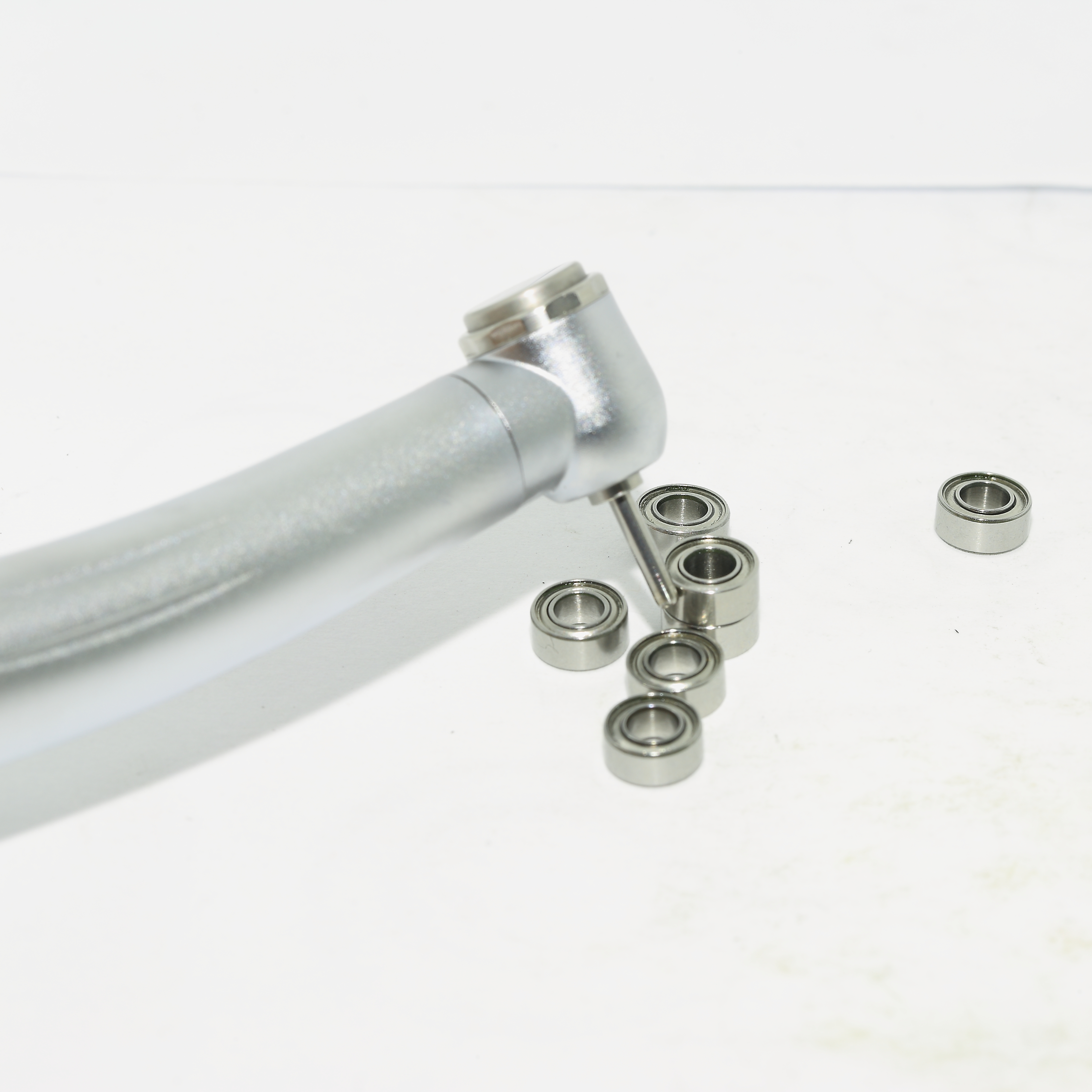
A medical device programme needs repeatability across many production lots. Look at the quality system, the inspection equipment, the staffing and the demonstrated output. INB operates under an ISO9001 quality management system and is equipped with hardness testers, roundness meters, profilometers, roughness measuring equipment and microscopes for precision checks — the instruments that allow a dimensional and surface claim to be verified rather than asserted. The company reports annual output of 6,000,000 units from a facility of 2,000 square metres.
Use Cases: Surgical Drills, Diagnostic Instruments and Motor-Driven Assemblies
The three device categories below place different demands on the same bearing family. The descriptions of how the equipment is built are general engineering context; the performance data attached to each is model-specific and comes from INB's published specifications.
Powered surgical instruments
Motorised surgical handpieces — orthopaedic drills, ENT instruments and similar powered tools — are typically built around a spindle supported by small precision ball bearings. In that configuration the bearing set influences rotational speed stability, vibration transmitted to the cutting tip, heat build-up in a hand-held housing, and the service interval before the instrument needs attention. Because such instruments are cleaned and sterilised between cases, the material decision and the temperature rating matter as much as the speed rating: a bearing rated from −50 °C to 160 °C, such as the SR144ZTLP4 W2.78, tolerates a wider thermal envelope than the −40 °C to 150 °C models.
Diagnostic and laboratory instruments
Benchtop diagnostic equipment commonly relies on small motorised mechanisms — pump drives, sample-handling movements and cooling fans — where continuous duty and low audible noise are more important than peak rotational speed. For this category, the relevant INB attributes are a low-noise requirement recorded for medical device applications, P4 precision, and stainless steel construction that resists the moisture present in laboratory environments. A 200,000 rpm-rated model such as the SMR74TL or SR133TL is generally the more natural fit here than a 400,000 rpm model, because the constraint is stability over time rather than maximum speed.
Motor-driven mechanisms inside medical equipment
Wherever a small electric motor drives a rotating function inside a device, the motor's own bearings and the driven assembly's bearings set the noise floor and the usable life of that function. INB's products primarily serve the domestic Chinese medical device industry and micro-motor manufacturers — a positioning that reflects how closely motor miniature bearings and instrument miniature bearings overlap in specification terms.
The dental handpiece reference case
Dental handpieces remain the reference application for this product family. In a China-based project, 80,000 miniature bearings were supplied for use in dental handpieces — the volume profile that the SMR144ZTLP4 W2.38 and SR144ZTLP4 W2.78 models were built around, with P4 precision, SUS440 stainless steel, 350,000–400,000 rpm ratings and a −50 °C to 160 °C operating range. For a buyer moving into surgical or diagnostic equipment, that case is evidence of production consistency at scale rather than evidence of application fit; the specification still has to be matched to the new instrument.
Model Comparison: INB Miniature Bearings for Medical Equipment
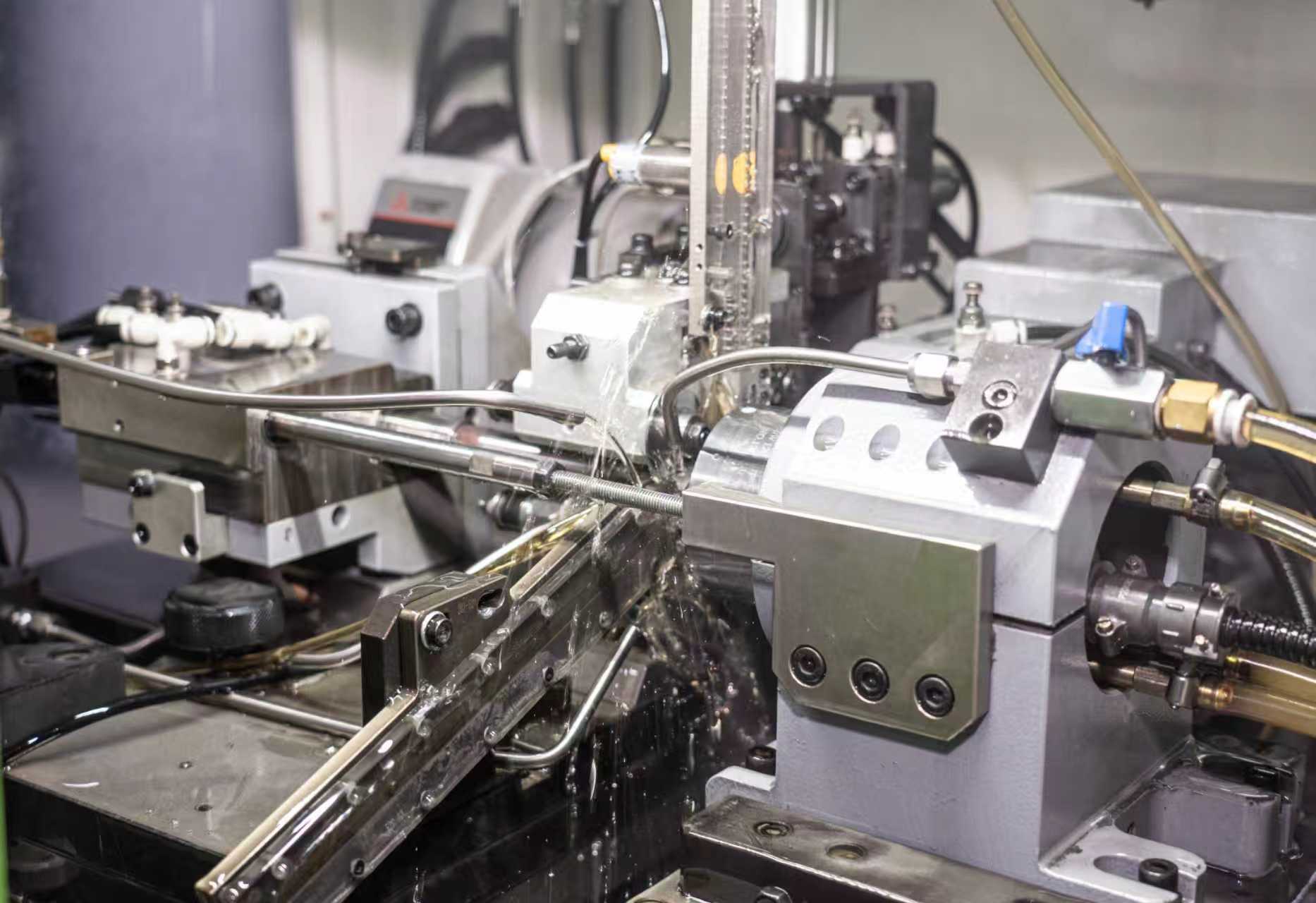
The table below lists the medical-facing miniature bearing models referenced in this guide, with their published specifications. All four are P4 precision and SUS440 stainless steel; the differences that matter to a medical device design are size, width, speed rating and temperature range.
| Model | Bore × OD × Width (mm) | Precision | Limiting speed | Operating temperature | Material |
|---|---|---|---|---|---|
| SMR74TL | 4 × 7 × 2 | P4 | 200,000 rpm | −40 °C to 150 °C | SUS440 |
| SR133TL | 2.38 × 4.762 × 2.38 | P4 | 200,000 rpm | −40 °C to 150 °C | SUS440 |
| SR144ZTLP4 W2.78 | 3.175 × 6.35 × 2.78 | P4 | 350,000–400,000 rpm | −50 °C to 160 °C | SUS440 |
| SMR144ZTLP4 W2.38 | 3.175 × 6.35 × 2.38 | P4 | 350,000–400,000 rpm | −50 °C to 160 °C | SUS440 |
Read the table as a filter, not a recommendation. The correct starting point is the instrument's operating envelope: if the assembly needs both the widest temperature range and the highest speed, only the two 3.175 mm bore models qualify; if the housing is dimensioned around a 4 mm bore, the SMR74TL is the relevant model and the temperature ceiling changes accordingly.
FAQ: Sourcing Miniature Bearings for Medical Devices
What standards and quality practices should a medical device buyer look for in a miniature bearing supplier?
Precision for miniature bearings is commonly specified against global standards including ABMA ABEC (grades 1–9), ISO 492 and DIN 620, with higher ABEC numbers corresponding to tighter tolerances (AST Bearings). On material, third-party technical guidance identifies stainless steel 440C as the primary choice for miniature bearings in medical and food-processing applications because of moisture and chemical resistance (SKDIN Engineering Guide); INB's medical-facing models are specified in SUS440 stainless steel. On quality systems, INB operates under an ISO9001 quality management system and produces high-precision standard bearings with bore diameters from 2 mm to 8 mm in precision grades from P6 to P4.
Can miniature bearings for surgical and diagnostic equipment run at very high speed and elevated temperature?
They can, within a defined envelope. INB's SR144ZTLP4 W2.78 and SMR144ZTLP4 W2.38 are rated at 350,000–400,000 rpm with an operating temperature range of −50 °C to 160 °C. The SMR74TL and SR133TL are rated at 200,000 rpm with an operating range of −40 °C to 150 °C. All four are P4 precision and made of SUS440 stainless steel. Because limiting speed and temperature are model-specific rather than line-wide, the required figures should be stated in the enquiry so the correct model is quoted.
What drives the cost of a miniature bearing programme for medical devices?
Miniature bearings for medical equipment are normally quoted against a drawing rather than bought from a size list, so the commercial variables are the specification and the order scope: precision grade, material, exact envelope dimensions, the number of units, and whether inspection documentation is required. Two bearings of identical outer diameter can carry very different prices if one is P4 and the other is a standard grade. INB issues quotations against drawings and quantities — send the specification package rather than a size request.
How can a buyer validate a miniature bearing before committing to a production order?
Validation usually combines a dimensional and surface check with an assembly test. INB is equipped with hardness testers, roundness meters, profilometers, roughness measuring equipment and microscopes, which allows dimensional, roundness and surface-roughness characteristics to be checked against an agreed specification rather than accepted on description. Buyers should also agree the acceptance criteria in advance — including speed, temperature and cleaning exposure — and confirm the sample against the drawing and the instrument envelope. To start a validation discussion, contact INB at yuhang001@126.com or +86 18957446001 with the model and operating conditions.
What should buyers check about supply continuity and lead time before placing an order?
Supply continuity is a question about production structure, not about statements. Useful things to check include facility size, staffing, technical depth, measured output and the track record of comparable volumes. INB's facility covers 2,000 square metres and employs approximately 30 people, including an R&D team of 10 engineers; the company reports annual output of 6,000,000 units. Its products primarily serve the domestic Chinese medical device market, with exports accounting for roughly 5% of sales, and a China-based project has supplied 80,000 miniature bearings for dental handpieces. Lead time should always be confirmed against the specific model, quantity and any non-standard dimension before the order is placed — contact INB directly to check current availability for your requirement.
Conclusion: Match the Envelope First, Then Match the Supplier
Miniature bearings in surgical and diagnostic equipment are not a different component category from the bearings used in dental handpieces — they are the same class of part applied to a different envelope. The selection logic is unchanged: fix the speed, temperature, size, environment and noise constraints first, then find the model and the precision grade that satisfy them, then confirm that the supplier can repeat that specification lot after lot.
For buyers working outside the dental handpiece category, INB's medical-facing line offers a concrete starting specification: P4 precision, SUS440 stainless steel, bore sizes from 3.175 mm to 4 mm in the models described here, speed ratings up to 400,000 rpm, and temperature tolerance extending to 160 °C on the highest-speed models. Whether that suits a specific surgical drill or diagnostic instrument depends entirely on the numbers in the design — which is exactly why the specification should lead the enquiry.
Next step: match a bearing to your instrument envelope
If you are designing or sourcing a surgical or diagnostic device and need a miniature bearing matched to your speed, temperature and space requirements, send the drawing and operating conditions to INB. Quotations are built from the specification, not from the catalogue alone.
Email: yuhang001@126.com · Tel / WhatsApp: +86 18957446001 · Website: www.lnb-brg.com
Have Questions or Need More Details?
Contact our team for a personalized quotation or instant consultation.
Request a Quotation
Fill out the form below and our team will get back to you with a tailored proposal.
WhatsApp Direct Chat
Prefer to chat in real-time? Message us on WhatsApp for instant assistance & quick answers.
- Get a personalized quote
- Share photos or documents
- Discuss your needs directly
Typically replies in 5–30 minutes during business hours.