
Decoding Miniature Bearing Model Numbers: A Technical Guide
A miniature bearing part number is a compressed engineering specification. In designations such as SMR144ZTLP4 W2.38, SR144ZTLP4 W2.78, SR133TL and SMR74TL, every block of characters carries information about material, series, size family, shielding, precision class or axial width. Decoded correctly, a part number tells a buyer almost everything a drawing would say. Decoded incorrectly, it produces a bearing that will not seat in its housing, a handpiece turbine that runs hot, or a re-order that arrives with the wrong axial width.
The working rule is straightforward. Leading letters indicate material and series, the numeric block points to the size family, an embedded P code states precision class, and a trailing W code states width in millimetres. Any remaining block — such as the TL suffix in three of the four examples above — is manufacturer-specific and has to be confirmed against the supplier's part-numbering document before an order is placed.

Problem Definition: Why Miniature Bearing Codes Are Misread
The difficulty is not that miniature bearing codes are complicated. It is that the same visual structure is reused by different manufacturers with different internal definitions, so a buyer who decodes one supplier's numbering system can misread the next supplier's catalogue with complete confidence.
- The series changes the dimensional table. The letters that sit before the numeric block decide which size table applies. A number that resolves to one bore and outside diameter in a metric miniature family can resolve to a different envelope in an inch-derived miniature family.
- Suffixes are only partly standardized. Shield and seal markers such as Z and ZZ follow a broad industry convention, while a block such as TL belongs to no international tolerance standard and is defined by the supplier.
- Width hides in the trailing block. W2.38 and W2.78 look almost identical on a purchase order and differ by 0.40 mm of axial width — enough to change seating depth, axial play and preload behaviour in a high-speed spindle.
- Precision class can simply be absent. A designation with no P code is not automatically a standard-grade bearing; it is a designation whose tolerance class has not been stated.
- Field failures usually start as specification errors. The documented risk modes in miniature bearing duty — over-speeding, thermal fatigue and overheating, and premature wear with lubrication failure — are commonly triggered by a bearing specified or substituted with the wrong block rather than by a defect that appeared from nowhere.
Industry Background: The Standards Behind the Codes
Three international systems govern how miniature bearing precision is stated, and they are the reason a P code carries real meaning. ABMA ABEC numbers bearings from ABEC 1 to ABEC 9, ISO 492 uses P classes with P0 to P2 at the tight end, and DIN 620 applies across the same families; within the ABEC scale, higher numbers correspond to tighter tolerances. In practice ABEC 7 and ISO P4 are commonly treated as counterparts, which is why a P4 block in a miniature bearing designation is a precision claim rather than a decorative suffix.
Material follows a comparable pattern. Stainless steel, and specifically 440C, is the material most commonly specified for miniature bearings used in medical and food-processing applications because of its resistance to moisture and chemical exposure. That is why the leading S in SMR144ZTLP4 W2.38, SR144ZTLP4 W2.78, SR133TL and SMR74TL is not cosmetic: it tells the buyer which material family the rest of the specification assumes.
Demand context matters for buyers planning volume. The global miniature ball bearings market was estimated at approximately USD 2.25 billion in 2025, with Asia Pacific holding roughly 60% of revenue and China acting as the largest regional producer and consumer. China's bearing exports grew 7.2% year on year in the first seven months of 2025, reaching close to 497,852 tons, and automotive applications accounted for around 39% of miniature bearing demand in 2025, driven by electric-vehicle motor and sensor designs.
Ningbo City Jingyin Electromechanical Technology Co., Ltd. is a bearing manufacturer based in Ningbo, Zhejiang Province, China, which established its own bearing brand INB in 2014. Its products mainly serve China's domestic medical device industry and micro-motor manufacturers. Production runs under an ISO 9001 quality management system and covers high-precision standard bearings with inner bore diameters from 2 mm to 8 mm in precision grades from P6 to P4, at a monthly production capacity of 500,000 units.
Detailed Solution: The Six Blocks of a Miniature Bearing Designation
A miniature bearing designation becomes reliable once the string is treated as six functional blocks, read in order from left to right.
Block 1 — Material prefix
The letter S at the start of a designation indicates stainless steel construction. It is the fastest filter in a specification, because it separates stainless variants such as SMR144 and SR144 from non-stainless equivalents, and it matters most in medical and micro-motor duty where moisture and cleaning agents are present. In those environments 440C stainless steel is the grade commonly specified.
Block 2 — Series letters (R and MR)
After the material prefix, the series letters tell the buyer which dimensional table to open. MR denotes the metric miniature series; R denotes the inch-derived miniature families on which miniature and handpiece-scale bearings were historically built. The decoding consequence is direct: the same numeric block does not guarantee the same bore and outside diameter across two series, so the series letters must be resolved before any dimension is quoted.
Block 3 — Size code (144, 133, 74)
The numeric block names the size family. It is a catalogue key rather than a self-contained dimension: 144 and 133 are legacy size codes used in miniature and handpiece-scale bearings, and 74 sits in the metric miniature numbering family. The practical rule is to resolve the size code against the manufacturer's dimensional table for the specific series in front of you, and to record bore, outside diameter and width together, because in a real assembly those three values move as a set.
Block 4 — Shield and configuration suffixes (Z, TL)
Z is the widely used industry marker for a shielded bearing and ZZ for shielding on both sides; rubber-sealed variants use other markers. That convention is broad but not universal. TL is a different class of block: it is not part of any international tolerance standard and functions as a manufacturer-specific configuration code covering internal choices such as retainer form, lubrication fill or preload setting, and it must be confirmed against the supplier's part-numbering document. Where internal configuration has to stay stable, what matters is the engineering behind the two letters: INB miniature bearings use a fully sealed labyrinth structure with medical-grade permanent lubricant filling, wear-resistant alloy materials, and periodic friction and wear performance testing to control lubrication failure and premature wear.
Block 5 — Precision class (P4, P6)
An embedded P code such as P4 or P6 states the tolerance class. P4 in a miniature bearing designation is a claim within the ISO 492 precision family; ABMA ABEC and DIN 620 describe the same tolerance families under different numbering, and ABEC 7 is commonly treated as the counterpart of ISO P4. Two cautions follow. A designation with no P block is unspecified rather than standard-grade, and the P code alone is not sufficient for acceptance — the tolerance values must appear in the inspection documents. INB produces standard miniature bearings in precision grades from P6 to P4.
Block 6 — Width modifier (W2.38, W2.78)
The trailing W code states axial width in millimetres. SMR144ZTLP4 W2.38 and SR144ZTLP4 W2.78 differ by 0.40 mm of width; in a handpiece turbine or a micro-motor stack that difference decides seating depth, axial play and how preload behaves once the rotor is clamped. When two part numbers differ only in the W value, width — not bore and not outside diameter — becomes the selection variable.
Worked examples
- SMR144ZTLP4 W2.38 — S (stainless steel) + MR (metric miniature series) + 144 (size family) + Z (shielded) + TL (manufacturer-specific configuration) + P4 (precision class) + W2.38 (2.38 mm axial width).
- SR144ZTLP4 W2.78 — S (stainless steel) + R (inch-derived miniature series) + 144 (size family) + Z (shielded) + TL (configuration) + P4 (precision class) + W2.78 (2.78 mm axial width). The size family and precision class match the first model; the series letter and the axial width do not.
- SR133TL — S (stainless steel) + R (inch-derived miniature series) + 133 (size family) + TL (configuration). No shield marker and no precision class appear in the string, so both have to be confirmed rather than assumed.
- SMR74TL — S (stainless steel) + MR (metric miniature series) + 74 (size family) + TL (configuration). The designation stops before the precision block, so the datasheet governs the tolerance class.
Step-by-Step Breakdown: Decoding and Verifying a Part Number
The sequence below turns a part number from a string of characters into a specification that can be quoted, inspected and re-ordered.
- Split the string into blocks. Mark the material prefix, the series letters, the numeric size block, and every trailing suffix, including shield markers, configuration codes, precision classes and width values.
- Resolve material and series first. These two blocks determine which catalogue table applies. Without them, the numeric block is ambiguous across families.
- Resolve the size code against that table. Record bore, outside diameter and width together, with tolerances, rather than recording a single dimension.
- Resolve the shield and configuration blocks. Confirm what Z, ZZ or TL means in the supplier's own document. Do not assume that suffix definitions carry over between manufacturers.
- Resolve the precision class. Map P4 or P6 to the ISO 492, ABMA ABEC and DIN 620 families, and request the tolerance values in the inspection documentation.
- Resolve the width modifier. Check the axial space in the assembly and confirm that the W value matches the design intent rather than the previous purchase order.
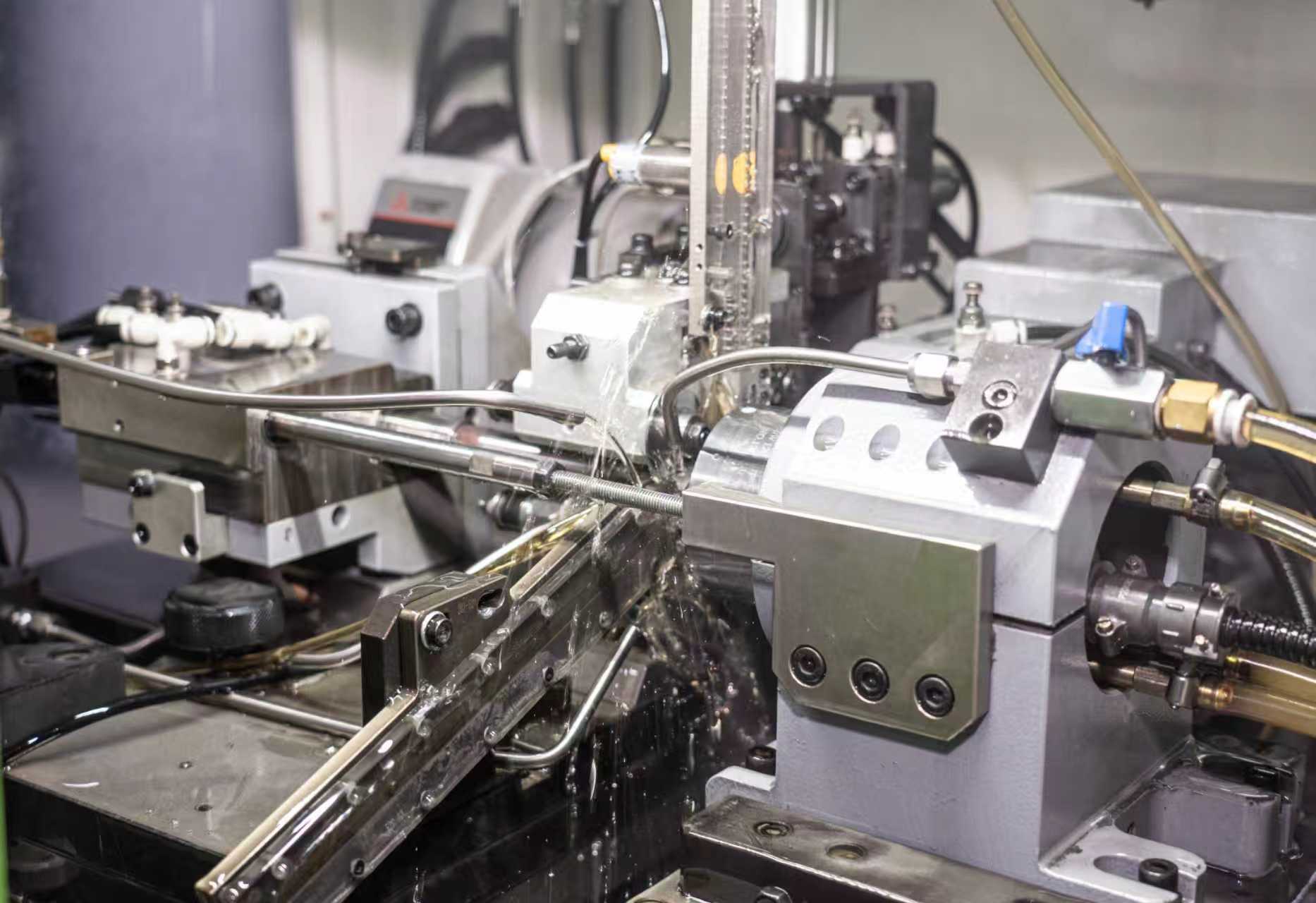
- Validate against duty. Match the decoded specification to limiting speed, temperature range and lubrication. In high-speed medical duty, miniature bearings are tested for thermal cycle life across a -50 °C to 160 °C range with real-time temperature monitoring used to detect overheating; speed performance is validated on 100% of units before shipment against medical device speed safety standards; and lubrication control relies on sealed lubrication with wear-rate monitoring.
Use Cases: Where Each Block Changes the Decision
Dental handpiece air turbines
The 144 size family is the handpiece-scale family that appears most often in miniature bearing discussions, and the SMR144Z family is documented with dental handpieces as its primary application, with a stated noise level below 20 dB, a low friction coefficient, low heat generation, high rotational speed and long service life, together with a cost position recorded at approximately 10% lower than the model it is compared against in the same source record. For this duty the width block and the precision block are the two that most often decide whether a decoded number will actually perform: the width governs seating and preload, and the precision class governs running accuracy at speed.
Micro-motors
Micro-motors are the second main market segment served by INB miniature bearings. Here the metric miniature series is the relevant family, the size code must be resolved against metric dimensional tables, and the inner bore range that matters most — from 2 mm to 8 mm — is covered by the standard production range.
Medical instruments and diagnostic equipment
Where moisture, cleaning chemicals or sterilization processes are present, the material prefix becomes the block that controls service life. Stainless steel, and specifically 440C, is the material commonly specified for miniature bearings in medical and food-processing environments, so the S prefix should be treated as a functional requirement rather than a purchasing convenience.
Comparison Table: Decoding Four Designations Side by Side
| Model designation | Material prefix | Series | Size family | Shield / configuration | Precision class | Width code |
|---|---|---|---|---|---|---|
| SMR144ZTLP4 W2.38 | S — stainless steel | MR — metric miniature | 144 | Z shielded; TL manufacturer-specific configuration | P4 stated | W2.38 — 2.38 mm |
| SR144ZTLP4 W2.78 | S — stainless steel | R — inch-derived miniature | 144 | Z shielded; TL manufacturer-specific configuration | P4 stated | W2.78 — 2.78 mm |
| SR133TL | S — stainless steel | R — inch-derived miniature | 133 | TL configuration; no shield marker in the string | Not stated in the designation | Not stated in the designation |
| SMR74TL | S — stainless steel | MR — metric miniature | 74 | TL configuration; no shield marker in the string | Not stated in the designation | Not stated in the designation |
The table above is a decoding summary, not a dimension chart: bore and outside diameter always come from the manufacturer's dimensional table for the stated series, and any block marked as not stated must be confirmed in writing before quotation.
| Block | What it controls | Standard status | What to verify |
|---|---|---|---|
| Material prefix (S) | Corrosion resistance and material family | Partial convention | Material grade, for example 440C, with material certificate |
| Series letters (R / MR) | Which dimensional table applies | Partial convention | The catalogue table used for the quotation |
| Size code (144 / 133 / 74) | Bore and outside diameter family | Legacy and manufacturer tables | Bore, outside diameter and width with tolerances |
| Shield marker (Z / ZZ) | Contamination protection and friction impact | Broad industry convention | Shield or seal type and its effect on torque |
| Configuration block (TL) | Retainer, lubrication fill, preload setting | Manufacturer-specific | Written definition in the part-numbering document |
| Precision class (P4 / P6) | Tolerance and running accuracy | ISO 492, ABMA ABEC, DIN 620 | Tolerance values in the inspection report |
| Width modifier (W2.38 / W2.78) | Axial fit, axial play and preload behaviour | Manufacturer-specific | Axial space in the assembly and the fit intent |
FAQ: Decoding, Compliance and Supply Questions
Which precision standard does a P4 miniature bearing follow, and what should a buyer request in writing?
P4 is a precision class from the ISO 492 dimension and running accuracy family; the same tolerance families appear in the ABMA ABEC scale, which runs from ABEC 1 to ABEC 9, and in DIN 620, and ABEC 7 is commonly treated as the counterpart of ISO P4. Because a P code is a claim about tolerance rather than a dimension, buyers should request the tolerance class, the inspection report and the quality system certificate in writing. INB produces standard miniature bearings in precision grades from P6 to P4 under an ISO 9001 quality management system, and 100% of units are validated for speed performance before shipment.
Can the size code or the width be changed without changing the rest of the part number?
The size code cannot be changed without changing the bore and outside diameter envelope, because that block defines the size family. Width, shielding and internal configuration are separate blocks: in the 144 family, W2.38 and W2.78 are two width variants of the same size family, and the 0.40 mm difference affects seating and preload behaviour. A supplier that produces standard bearings with inner bores from 2 mm to 8 mm in P6 to P4 grades can confirm which blocks are fixed by the catalogue and which are configurable. Internal choices such as a fully sealed labyrinth structure with medical-grade permanent lubricant filling should be documented on the datasheet rather than inferred from the suffix.
What are the purchasing terms and the minimum order quantity?
The documented purchasing terms are an MOQ of 50 units, FOB delivery terms, 100% factory inspection as the acceptance criterion, and payment before shipment. Because a misread block produces a rejected batch rather than a cheap purchase, the acceptance criterion carries more weight than the unit price at this order size: 100% factory inspection is what confirms that the delivered bearing matches the decoded specification, including its precision class and its width.
How should a decoded part number be validated before mass production?
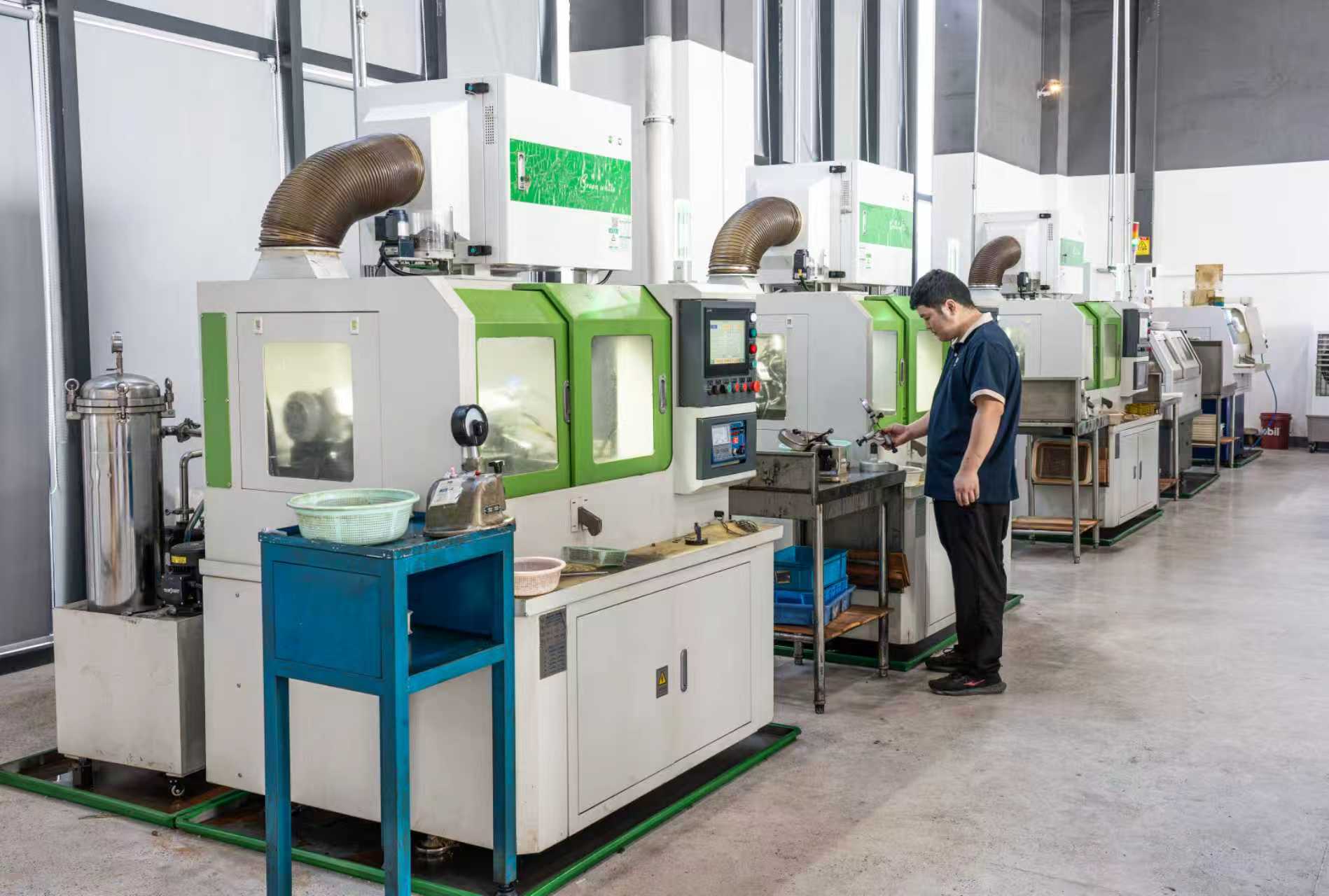
Validate in three layers before committing to volume. Dimensional and precision verification uses hardness testers, roundness meters, profilometers, roughness measuring equipment and microscopes. Speed and thermal validation checks speed performance and thermal cycle life across a -50 °C to 160 °C range, with real-time temperature monitoring used to detect overheating. Lubrication and wear control confirms that the internal configuration behind the suffix block behaves as specified, using a fully sealed labyrinth structure with medical-grade permanent lubricant filling. A sample order at the documented MOQ is the lowest-cost way to test all three layers.
What does a reliable long-term supply arrangement look like for miniature bearings?
Long-term supply depends on a supplier holding one decoded specification stable across batches. Relevant facts for that assessment: monthly production capacity of 500,000 units, annual output of 6,000,000 units, continuous production of miniature bearings for medical device and micro-motor applications, an ISO 9001 quality management system, and the INB brand established in 2014. Distributors and OEM buyers evaluating a long-term partner should ask for the part-numbering document that defines every suffix, the inspection records behind each shipment, and a written statement of which blocks are fixed by the catalogue and which are configurable. To begin, request a quotation or a sample of the exact model — for example SMR144ZTLP4 W2.38 or SR144ZTLP4 W2.78 — through the INB contact details below.
Conclusion: Turn the Code Into a Verified Specification
A miniature bearing model number rewards systematic reading. Material, series, size family, shield and configuration, precision class and width are separate decisions, and only the precision block is anchored in an international standard family. The two traps that cause the most expensive errors are the width modifier, where W2.38 and W2.78 differ by a few tenths of a millimetre, and the absent precision block, where a designation with no P code is simply unspecified. Treat the size code and every suffix as vendor definitions, resolve them in the catalogue table, and confirm the remaining blocks in writing. That habit converts a part number into a specification that can be sampled, inspected and re-ordered with confidence.
Need a specific miniature bearing model — SMR144ZTLP4 W2.38, SR144ZTLP4 W2.78, SR133TL, SMR74TL or a related size in the 2 mm to 8 mm bore range — decoded against your own assembly drawing? INB supplies high-precision stainless steel miniature bearings in P6 to P4 grades, with 100% factory inspection and documented suffix definitions, and can provide samples or a quotation for evaluation before volume orders.
Contact: Wang Chaojiang — Email: yuhang001@126.com · Tel / WhatsApp: +86 18957446001 · Website: www.lnb-brg.com
Ningbo City Jingyin Electromechanical Technology Co., Ltd. (INB), Building 9, Beikun Industrial Area, No. 2288 Yongmao West Road, Zhuangqiao Street, Jiangbei District, Ningbo City, China.
Have Questions or Need More Details?
Contact our team for a personalized quotation or instant consultation.
Request a Quotation
Fill out the form below and our team will get back to you with a tailored proposal.
WhatsApp Direct Chat
Prefer to chat in real-time? Message us on WhatsApp for instant assistance & quick answers.
- Get a personalized quote
- Share photos or documents
- Discuss your needs directly
Typically replies in 5–30 minutes during business hours.