Evaluating Miniature Bearing Suppliers: How INB's Precision Manufacturing Sets a Benchmark
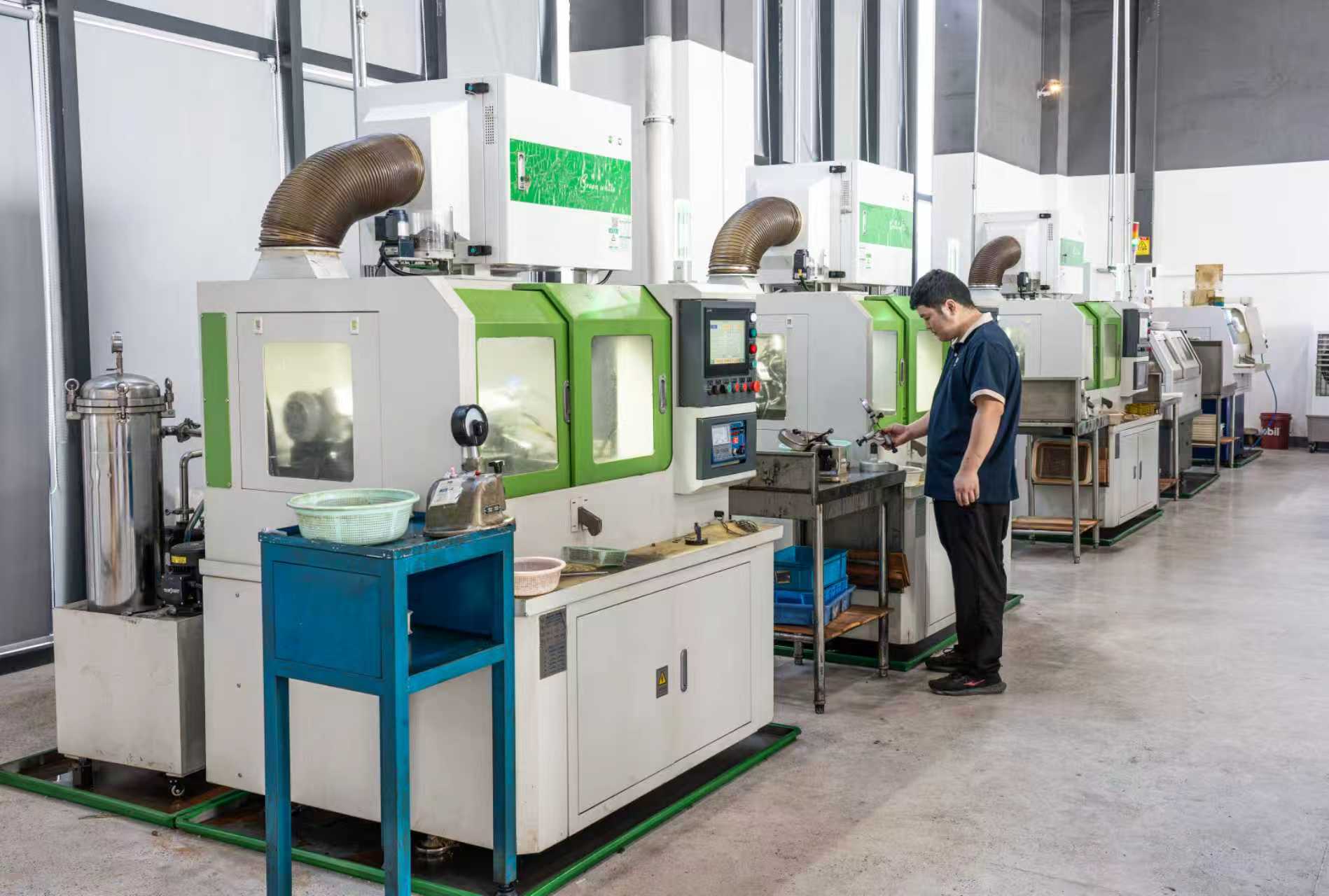
A miniature bearing supplier should be evaluated on one basis only: facts the supplier can measure, document, and repeat in production. Everything else — catalogue adjectives, generic “high precision” labels, and unqualified P4 claims — costs the buyer money during qualification and again when a production run drifts out of tolerance.
This guide is written for procurement managers, OEM buyers, and design engineers who have finished shortlisting and now have to commit. It uses INB — the miniature bearing brand of Ningbo Yuhang Bearing Co., Ltd., a bearing manufacturer located in Ningbo, Zhejiang Province, China — as a worked benchmark, because INB's published manufacturing data contains the kind of specific values a buyer can check: a 2 mm to 8 mm bore range, precision grades from P6 to P4, SUS440 stainless steel, production carried out under an ISO 9001 quality management system, and a defined set of metrology instruments.
The approach is meant to be transferable. Read the INB data set as a template, then apply the same questions to every supplier on your shortlist.
Problem Definition: Why Miniature Bearing Supplier Evaluation Breaks Down
Three structural problems make miniature bearing sourcing harder than the size of the component suggests.
Precision is invisible at goods-in. A P4-class extra miniature bearing and a P6-class bearing can arrive in identical packaging with identical external dimensions. The difference lives in bore roundness, raceway geometry, and running accuracy — measurements that require a roundness meter or profilometer, not a caliper, to detect.
Failures surface inside the buyer's product. In a dental handpiece, a bearing that cannot hold its tolerance announces itself as turbine noise, heat, and shortened service life. By the time the symptom appears, the bearings are already installed in finished devices, and the cost of the failure includes rework, returns, and — in regulated categories — nonconformance documentation.
Verification is asymmetric. A supplier's P4 claim costs nothing to make. Disproving it costs the buyer sample build time, metrology hours, and for medical applications, compliance work. Suppliers that understand this asymmetry have an incentive to keep claims vague.
A working definition helps. In this context, a supplier benchmark is a specific documented value that a buyer can test independently: a bore size range, a tolerance class tied to a named standard, a material grade, a noise limit, a thermal test window, or a validation step performed on every shipment. Claims without a corresponding measurable value are not benchmarks — they are positioning. The remainder of this article builds such a benchmark from INB's documented data and converts it into a verification protocol any buyer can run.
Industry Background: The Market a Buyer Is Choosing From
Miniature bearings are a small component inside a large supply chain. Future Market Insights estimated the global miniature ball bearings market at approximately USD 2.25 billion in 2025, driven by demand in medical devices and robotics. Treat that figure as directional rather than precise: Precedence Research estimates the same market at USD 2.89 billion for 2025, and IMARC Group at USD 2.0 billion. The spread reflects differing scope definitions, and no sourcing decision should rest on a single market-size number.
Two structural features of the market matter more than its absolute size.
Supply is concentrated in Asia Pacific. The region held approximately 60% of miniature ball bearing revenue in 2025 according to Precedence Research, with China as the largest regional producer and consumer. China's bearing exports grew 7.2% year on year in the first seven months of 2025, reaching nearly 497,852 tons, according to BearingNews and the Huajing Research Institute — growth achieved despite pressure on global unit pricing. For buyers this means a very wide supply base and an equally wide spread in real capability.
Demand is broad but unevenly demanding. Automotive applications accounted for approximately 39% of miniature bearing use in 2025, driven by EV motors and sensors, per Precedence Research. Medical devices form a smaller segment with far stricter requirements, where noise, heat, and running accuracy are product-level specifications rather than preferences.
Standardisation gives buyers a common vocabulary. Miniature bearing precision is governed by global standards including ABMA's ABEC scale (1 to 9), ISO 492 (P0 to P2), and DIN 620, and in the ABEC system higher numbers correlate with tighter tolerances (AST Bearings). On materials, stainless steel — specifically 440C — is the primary choice for miniature bearings in medical and food-processing applications because of its moisture and chemical resistance (SKDIN Engineering Guide). SUS440 is the Japanese Industrial Standards designation for the same high-carbon martensitic stainless steel family, so a supplier quoting SUS440 and one quoting 440C are generally describing the same material.
The competitive structure is top-heavy at the high end: market research identifies MinebeaMitsumi, NSK, SKF, and Schaeffler (Barden) among the top global manufacturers in the miniature bearing sector (Intel Market Research). Those names set the technical expectation for the category, but they are not the only viable sourcing option. Mid-size specialists compete on verified precision, customization, and responsiveness — which is precisely why evaluation has to be evidence-based rather than name-based.
The INB Benchmark: Precision Manufacturing Expressed in Verifiable Units
What INB is
INB is the miniature bearing brand of Ningbo Yuhang Bearing Co., Ltd., a bearing enterprise based in Ningbo, Zhejiang Province, China, that integrates production and sales. The company was founded in 2008 and established the INB brand in 2014. Its products mainly serve the domestic medical device industry and micro-motor manufacturers, and its operations are carried out in accordance with the ISO 9001 quality management system.
The precision envelope: 2 mm to 8 mm bores, P6 to P4
INB produces high-precision standard bearings with inner hole diameters ranging from 2 mm to 8 mm, in precision grades from P6 to P4. Two consequences follow for a buyer.
- Size coverage. The envelope spans the extra miniature and small miniature classes used in handpieces, micro-motors, and instrument drives. Imperial sizes in that class fall inside it: a 3/32 inch bore is 2.381 mm and a 1/4 inch outside diameter is 6.35 mm, so extra miniature units in that dimensional class sit within a 2 mm to 8 mm bore range. Buyers sourcing non-metric sizes should confirm the specific drawing rather than assume the imperial equivalent is stocked.
- Tolerance ceiling. P4 sits near the tight end of the ISO 492 class system, one step below the tightest class. Buyers who require the tightest class should confirm availability directly; buyers who are quoted “high precision” without a class reference should ask for the class and the standard it is measured against.
Material: SUS440 stainless steel
INB miniature bearings are built on SUS440 stainless steel — the JIS designation for the 440C family that industry guides identify as the primary material for miniature bearings in medical and food-processing applications, chosen for moisture and chemical resistance (SKDIN Engineering Guide). Material grade is one of the few specifications a buyer can verify before any production commitment is made, because it travels with the material certificate. If a supplier cannot state the steel grade in a standard designation, the rest of the specification package is unlikely to be firmer.
Metrology: the instruments behind the claim
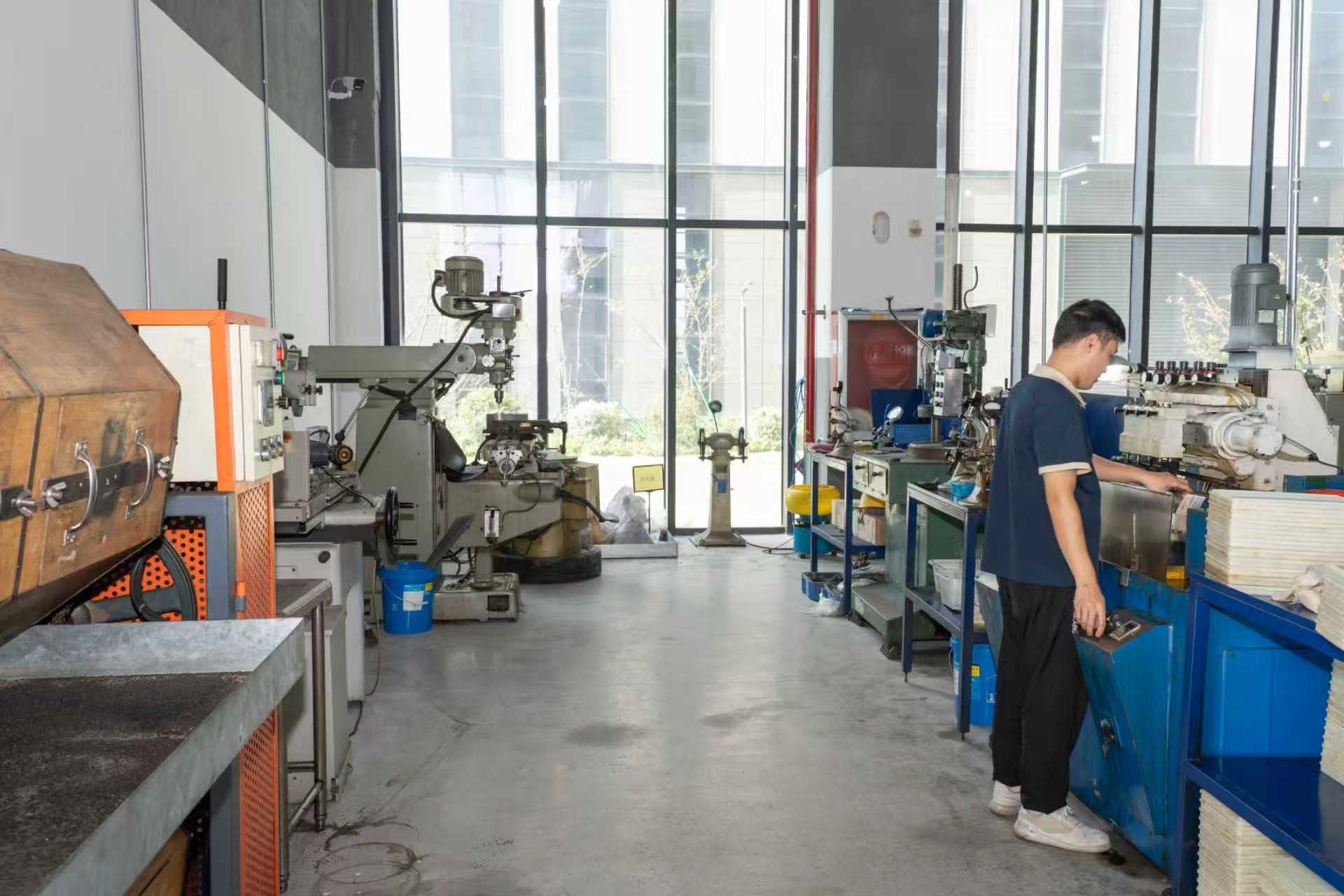
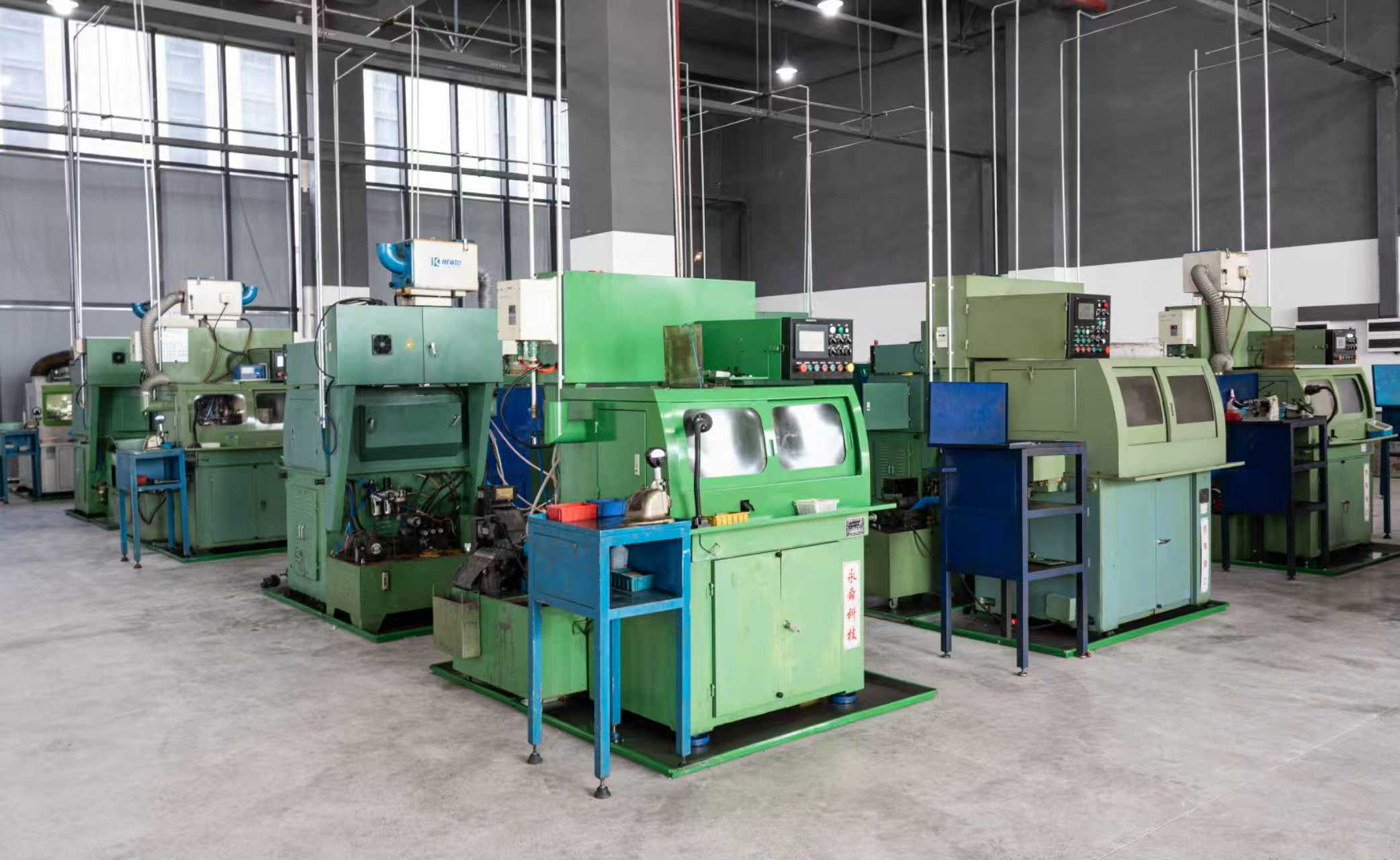
A precision claim is only as strong as the instrument used to verify it. INB's facility is equipped with a full set of professional testing instruments, including hardness testers, roundness meters, profilometers, roughness measuring equipment, and microscopes, supported by three senior engineers with many years of experience in the bearing industry.
For a buyer, that instrument list functions as an audit checklist rather than a marketing statement, because each item maps to a specific claim: roundness meters and profilometers to running accuracy and raceway geometry, roughness measurement to surface finish and therefore to noise and friction, hardness testers to material condition, and microscopes to visual defect screening. A supplier claiming P4 precision but unable to name the instrument that verifies roundness on sampled output is holding an unverified claim.
Documented risk controls: over-speeding, thermal fatigue, and lubrication
INB's documented control measures address three failure modes that dominate miniature bearing performance in high-speed applications:
- Over-speeding. Controls are a built-in mechanical speed limiter and a high-precision Hall-effect speed sensor, with 100% speed performance validation before shipment and compliance with medical device speed safety standards.
- Thermal fatigue and overheating. Controls are high-temperature resistant bearing material selection, an optimized heat conduction structure, and a real-time temperature monitoring module, supported by thermal cycle life testing across a -50 °C to 160 °C range.
- Premature wear and lubrication failure. Controls are medical-grade permanent lubricant filling, a fully sealed labyrinth structure, wear-resistant alloy material, and periodic friction and wear performance testing.
The reason these items belong in a supplier benchmark is that each is written as an action rather than an outcome. “100% speed performance validation before shipment” is auditable; “high reliability” is not. When a supplier describes control measures, the useful question is always the same: what record does this produce, and can I see one?
A reference comparison: the SMR144Z baseline
INB's comparison data for its extra miniature bearing against the SMR144Z reference model records a set of measurable differences: high rotational speed, low noise, long service life, and a cost position approximately 10% lower. The same record gives a noise figure below 20 dB and describes a low friction coefficient with low heat generation and high transmission efficiency, which reduces the energy consumption of the driven equipment. On maintenance, the recorded position is that high speed, low noise, and long service life reduce operation and maintenance cost.
The SMR144Z is a widely referenced extra miniature bearing model in dental and instrument applications, which makes it a useful baseline — and a reminder that comparisons are only valid when conditions are matched: same bore, same tolerance class, same lubrication, same load and speed profile.
Where the benchmark stops
An honest evaluation includes limits, and INB's published data has several.
- Size and grade limits. The documented standard range covers 2 mm to 8 mm bores and precision grades from P6 to P4. Applications requiring the tightest ISO 492 classes, or bores outside that range, fall outside the published envelope.
- Market focus. INB's main markets are in China, with an export ratio of approximately 5%. International buyers should therefore confirm export documentation, packaging, and labelling during supplier qualification rather than after the purchase order is placed.
- Capacity allocation. The company's reported annual output is 6,000,000 units. Buyers with high-volume programs should confirm how much of that capacity is committed for their forecast window.
- Segment focus. INB's primary served segments are medical devices and micro-motors, so application engineering support is deepest in those areas and thinner in unrelated industries.
Step-by-Step: Six Verification Steps Before You Commit
The following protocol converts the benchmark above into a repeatable evaluation sequence. It works on any miniature bearing supplier, not only INB.
Step 1 — Convert every claim into a measurable value. Before comparing suppliers, rewrite each claim as a number with a unit and a test method. “High precision” becomes a tolerance class with a named standard. “Quiet” becomes a noise figure. “Long life” becomes a life test condition. Any claim that cannot be converted should be removed from the comparison rather than weighted differently.
Step 2 — Confirm the precision envelope and the standard behind it. Ask for the size range and the precision grades the supplier actually holds in standard production. A documented envelope such as 2 mm to 8 mm bores in P6 to P4 grades is checkable; a bespoke sample that exceeds it is not evidence of production capability. Then confirm which standard the class is quoted against, since ABEC, ISO 492, and DIN 620 are different reference systems and higher ABEC numbers indicate tighter tolerances (AST Bearings).
Step 3 — Verify the material, not the material adjective. Request the steel grade in a standard designation. For medical and food-contact applications, the 440C family is the primary material because of moisture and chemical resistance (SKDIN Engineering Guide), and SUS440 is the JIS designation of the same family. A grade that cannot be named on a certificate cannot be controlled in production.
Step 4 — Audit the metrology set and the validation steps. Ask which instrument measures which parameter, and how often. A facility equipped with hardness testers, roundness meters, profilometers, roughness measurement equipment, and microscopes can close the loop between a claim and a record. Also ask which validations run on 100% of shipments rather than on samples — INB, for example, performs 100% speed performance validation before shipment, which is the kind of control that removes escape risk from the buyer's incoming inspection.

Step 5 — Validate on samples produced on production equipment. Test the sample under your own application conditions: noise, speed, temperature rise, and fit. Compare measured results against the documented figure — a noise level below 20 dB, for instance, is only meaningful when the measurement condition is stated. Confirm that the sample came off production tooling and not a hand-built engineering batch.
Step 6 — Model total cost of ownership, not unit price. Unit price is one line in a cost model that also includes expected service life, energy consumption of the driven equipment, and maintenance labour. A documented 10% lower unit cost against a reference model matters, but so does a low friction coefficient and low heat generation, which reduce energy consumption in the finished device, and a long service life, which reduces operation and maintenance cost. Normalise quotes to identical tolerance class, material, and sealing before comparing anything.
Use Cases: Where This Benchmark Changes the Decision
Dental handpieces. This is the most demanding miniature bearing application in the medical segment. Turbine speed, noise, and heat are all felt directly by the clinician and the patient, and bearing replacement is a service event. A supplier whose comparison data records high rotational speed, noise below 20 dB, a low friction coefficient, and low heat generation against an SMR144Z reference is describing exactly the failure modes that matter here. Buyers should still verify the numbers on production samples, because handpiece performance is the sum of bearing, turbine, and assembly quality.
Micro-motors and instrument drives. INB's stated primary segments are medical devices and micro-motors, and micro-motor designers care about a different balance: continuous running accuracy, temperature rise at sustained speed, and lubrication retention over life. The documented controls for over-speeding, thermal fatigue, and lubrication failure map directly onto these requirements, and the -50 °C to 160 °C thermal cycle test window is the first number to compare against the intended operating environment.
Builds outside the medical segment. Automotive miniature bearing demand reached approximately 39% of the market in 2025, driven by EV motors and sensors (Precedence Research), and buyers in that space often work at volumes and cost points that medical suppliers do not optimise for. A supplier whose reported annual output is 6,000,000 units and whose main markets are domestic may be an excellent fit for a mid-volume medical program and a weaker fit for a high-volume automotive ramp — a distinction that becomes visible only when the benchmark is applied honestly.
Comparison Table: INB's Documented Benchmark Against What a Buyer Must Verify
| Evaluation dimension | INB documented benchmark | How a buyer verifies it with any supplier |
|---|---|---|
| Bore / size envelope | High-precision standard bearings with inner hole diameters from 2 mm to 8 mm | Request the documented size range and an inspection record for the specific bore required |
| Precision grade | P6 to P4 | Ask which standard (ABEC / ISO 492 / DIN 620) the class is quoted against, then request dimensional and roundness records |
| Bearing material | SUS440 stainless steel (440C family, JIS designation) | Request the material certificate and confirm the grade against the application environment |
| Noise performance | Below 20 dB, recorded against the SMR144Z reference model | Run a noise test on production samples with the measurement condition stated |
| Speed control | Built-in mechanical speed limiter and high-precision Hall-effect speed sensor; 100% speed performance validation before shipment; compliance with medical device speed safety standards | Ask for the pre-shipment validation record and the safety standard the design complies with |
| Thermal qualification | Thermal cycle life testing across -50 °C to 160 °C; real-time temperature monitoring module; optimized heat conduction structure | Request the tested temperature window and the test report, then compare with the operating range |
| Lubrication and sealing | Medical-grade permanent lubricant filling; fully sealed labyrinth structure; wear-resistant alloy material; periodic friction and wear performance testing | Ask for the lubrication specification, the seal architecture, and the wear-test interval |
| Quality management | Operations carried out in accordance with the ISO 9001 quality management system | Verify the certificate, its validity, and the scope of the audited site |
| Metrology set | Hardness testers, roundness meters, profilometers, roughness measuring equipment, microscopes | Request an instrument list and ask which instrument signs off which parameter |
| Engineering resource | Three senior engineers with many years of experience in the bearing industry | Ask who owns tolerance deviation decisions and how deviations are dispositioned |
| Relative cost position | Approximately 10% lower unit cost against the SMR144Z reference, with low friction, low heat generation, and high transmission efficiency reducing energy consumption | Normalise quotes to identical class, material, and sealing before comparing; model total cost of ownership |
| Reported capacity | Annual output of 6,000,000 units | Confirm how much capacity is actually reserved for your program and forecast window |
Note on market context: research firms publish materially different market-size estimates for miniature ball bearings (USD 2.25 billion from Future Market Insights, USD 2.89 billion from Precedence Research, and USD 2.0 billion from IMARC Group for 2025). The table above therefore excludes market-size figures and keeps only values that a supplier can document and a buyer can test.
FAQ: Miniature Bearing Supplier Evaluation Questions
1. Which standards and certifications should a miniature bearing buyer verify before committing?
Start with the two layers that govern precision and process. Precision is governed by global standards including ABMA's ABEC scale (1 to 9), ISO 492 (P0 to P2), and DIN 620, and higher ABEC numbers correlate with tighter tolerances (AST Bearings). Quality management is the second layer: INB's operations are carried out in accordance with the ISO 9001 quality management system. In practice, compliance verification means asking which standard and which class is written on the quotation, then requesting the matching inspection record and a valid quality-system certificate with the audited site named on it. “High precision” without a class and a standard is not a compliance statement.
2. How can a buyer confirm that a supplier's P4 claim reflects real manufacturing capability?
Three checks decide it. First, the production envelope: INB produces high-precision standard bearings with inner hole diameters from 2 mm to 8 mm in precision grades from P6 to P4, so the class is held inside a stated range rather than demonstrated once on a sample. Second, the instrumentation: a facility equipped with hardness testers, roundness meters, profilometers, roughness measuring equipment, and microscopes can measure the parameters that define the class. Third, engineering ownership: INB employs three senior engineers with many years of experience in the bearing industry. Ask who signs a tolerance deviation, and request the inspection record for the exact bore and class you are buying.
3. How should buyers compare price between miniature bearing suppliers?
Compare cost, not price. INB's comparison data against the SMR144Z reference model records a unit cost approximately 10% lower, a noise level below 20 dB, a low friction coefficient with low heat generation, and high transmission efficiency that reduces the energy consumption of the driven equipment. The same record states that high speed, low noise, and long service life reduce operation and maintenance cost. A defensible comparison therefore normalises tolerance class, material, lubrication, and sealing across suppliers, then weighs unit price against expected service life, energy consumption, and maintenance labour. A cheaper bearing that shortens service intervals is not cheaper.
4. What should be validated in a sample before a production order is placed?
Validate the sample against the documented claims and confirm it came from production tooling, not a hand-built batch. Four checks carry the most weight: noise, against a stated measurement condition for a figure such as below 20 dB; speed behaviour, given that INB performs 100% speed performance validation before shipment and complies with medical device speed safety standards; lubrication and sealing architecture, which for INB means medical-grade permanent lubricant filling, a fully sealed labyrinth structure, wear-resistant alloy material, and periodic friction and wear performance testing; and thermal behaviour, where INB tests across a -50 °C to 160 °C thermal cycle range. If any of these cannot be measured in your own application conditions, the sample has not finished validating.
5. How should delivery reliability and lead time be assessed before committing?
Ask for the order-to-shipment sequence in writing and identify which stage carries the risk for your program. INB integrates production and sales, which shortens the loop between the engineers who set the tolerances and the people who control the production schedule, and its reported annual output is 6,000,000 units. Because INB's main markets are in China and its export ratio is approximately 5%, international buyers should additionally confirm export documentation, packaging, and labelling during qualification rather than after the purchase order. The practical next step is to request a written quotation together with a production schedule and a sample drawn from production tooling, so that price, capability, and timing are evaluated on the same document set. Contact INB at yuhang001@126.com, by WhatsApp at +86 18957446001, or through www.lnb-brg.com.
Conclusion: A Benchmark Is Only Useful If It Is Applied
Evaluating miniature bearing suppliers comes down to converting claims into checkable values and then refusing to compare anything that has not been converted. INB's published manufacturing data provides a concrete reference for that exercise: high-precision standard bearings with inner hole diameters from 2 mm to 8 mm, precision grades from P6 to P4, SUS440 stainless steel, operations under an ISO 9001 quality management system, a metrology set covering hardness, roundness, surface roughness, and visual inspection, documented controls for over-speeding, thermal fatigue, and lubrication failure, and comparison data against the SMR144Z reference model that records a noise level below 20 dB and a unit cost approximately 10% lower.
The benchmark is not a claim of superiority over the established global manufacturers identified in market research, and it should not be read as one. It is a data set specific enough to be tested — which is exactly what makes it useful as a yardstick. Apply the six verification steps to every supplier on your shortlist, including INB, and let the records decide.
Request a sample and a written quotation
Send your bore size, outside diameter, tolerance class, and operating speed. INB will respond with the matched miniature bearing specification, a production-drawn sample, and a quotation with the production schedule. Email yuhang001@126.com or message WhatsApp at +86 18957446001.

Have Questions or Need More Details?
Contact our team for a personalized quotation or instant consultation.
Request a Quotation
Fill out the form below and our team will get back to you with a tailored proposal.
WhatsApp Direct Chat
Prefer to chat in real-time? Message us on WhatsApp for instant assistance & quick answers.
- Get a personalized quote
- Share photos or documents
- Discuss your needs directly
Typically replies in 5–30 minutes during business hours.