
How Operating Temperature Affects Miniature Bearing Performance and Longevity
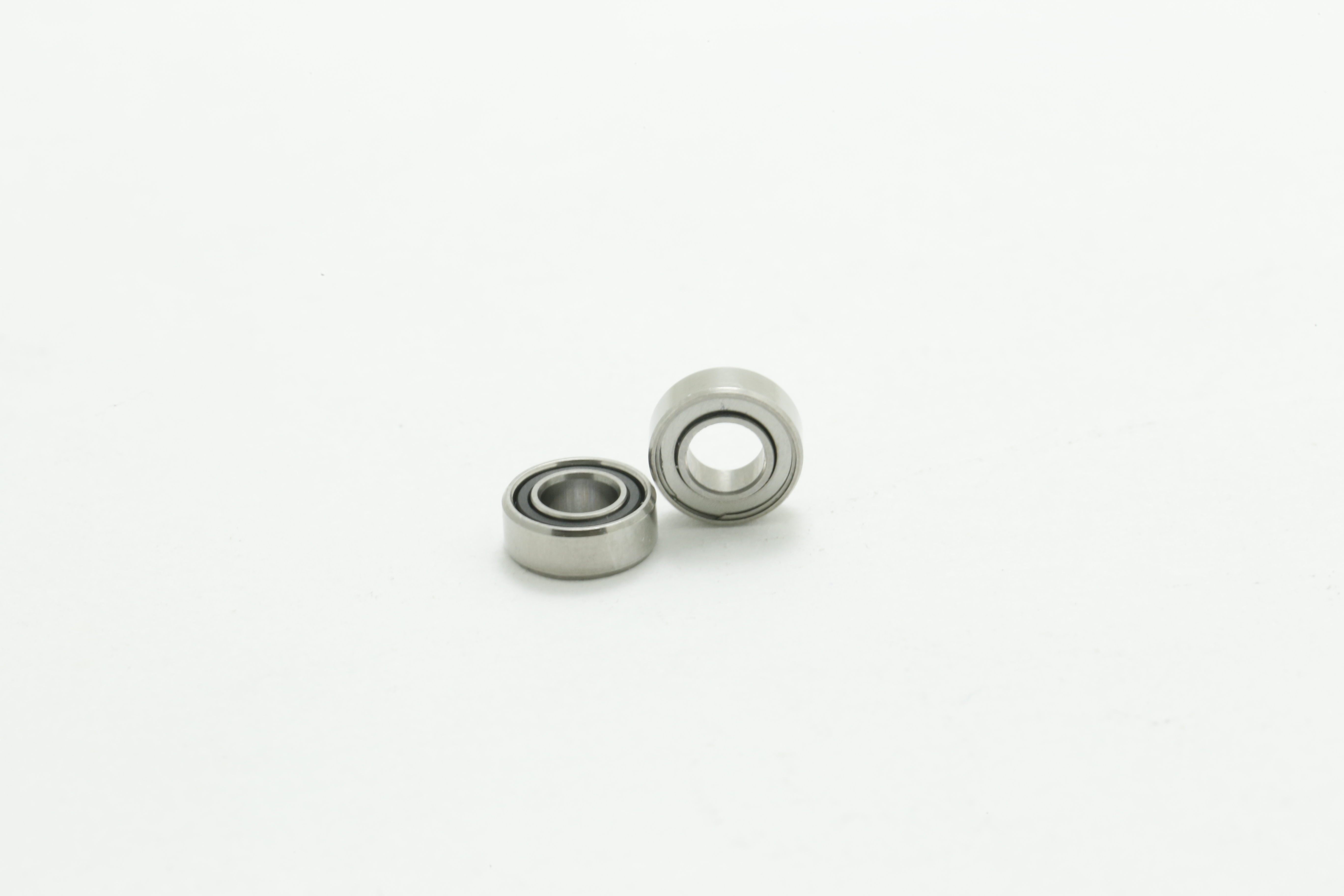
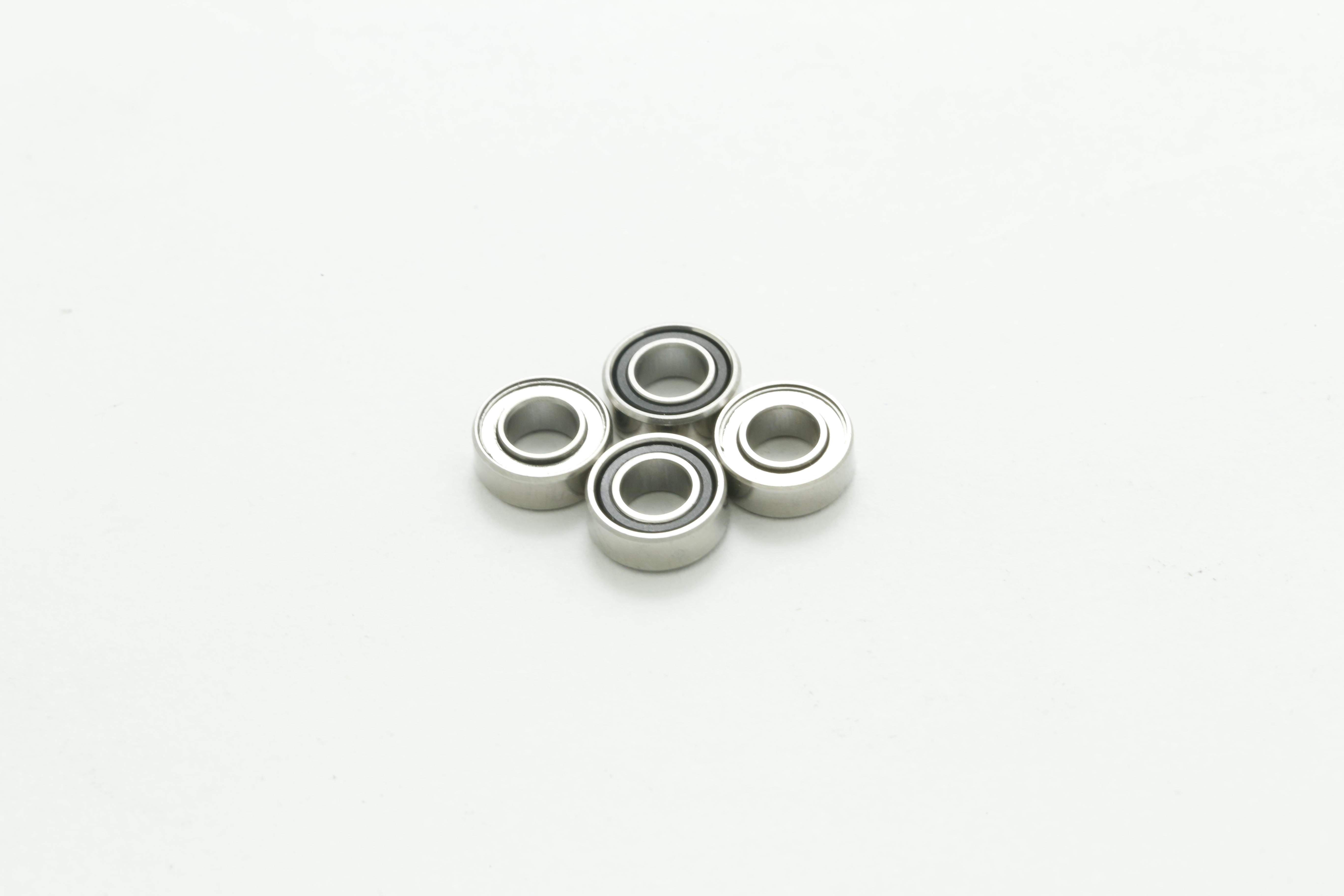
Operating temperature is not one limit to check off — it is the variable that decides whether a miniature bearing's lubrication, material and precision stay inside their working window at the same time. For the INB models used in high-speed dental handpieces, that window is published as two separate temperature bands. SMR74TL and SR133TL are rated from -40 °C to 150 °C, while SR144ZTLP4 W2.78 and SMR144ZTLP4 W2.38 — the models rated for 350,000–400,000 rpm — are rated from -50 °C to 160 °C. All four are P4 precision miniature bearings made from SUS440 stainless steel.
INB is a miniature bearing brand manufactured in Ningbo, China, producing high-precision miniature bearings with bore diameters from 2 mm to 8 mm in precision grades from P6 to P4. This technical guide explains what those temperature ranges actually constrain, how heat changes lubricant behaviour, why SUS440 material stability matters, how thermal movement interacts with P4 dimensional accuracy, and how to validate a model before committing to volume.
Problem Definition: What a Temperature Problem Really Is in a Miniature Bearing
Buyers usually open the specification sheet and look for one number: maximum operating temperature. That number alone rarely predicts field behaviour. A miniature bearing does not fail because it is 'hot' — it fails because heat moves the lubricant, the material or the internal geometry out of the window the design was validated in.
The temperature that matters is the bearing's own operating temperature, not the ambient temperature of the machine. It is the result of a balance:
Bearing operating temperature = ambient temperature + self-generated friction heat - heat removed by conduction, airflow and housing mass.
In a miniature bearing, the self-generated portion is disproportionately large: the contact area is tiny, the lubricant volume is measured in milligrams, and the rotational speed is measured in hundreds of thousands of rpm. The heat-removal path is also short and narrow. That is why a change of a few tens of degrees in ambient conditions can move a small bearing much further than it would move a large industrial bearing.
Three distinct failure paths follow from the same thermal event, and each produces different symptoms:
- Lubrication path — the film thins, friction rises, friction raises temperature further. Field symptoms: rising noise, vibration, drag torque and speed droop.
- Material path — sustained thermal exposure affects the hardened state of the raceway material and the dimensional stability of the rings. Field symptoms: progressive wear, loss of smooth running, shortened service intervals.
- Geometry path — thermal expansion changes internal clearance and preload beyond the band that a tight precision class can absorb. Field symptoms: harsh running, noise at a specific speed band, inconsistent behaviour between cold start and steady-state running.
For an hvq_2 type specification decision — where certification, parameters and cost band define the purchase — the practical framing is a constraint check, not a preference check. The temperature rating, the precision class, the material and the certification coverage must all describe the same part.
Industry Background: Why Thermal Limits Are Being Specified More Tightly
The miniature ball bearing market was estimated at approximately USD 2.25 billion in 2025, driven by demand in medical devices and robotics (Future Market Insights). Published estimates differ — Precedence Research places the 2025 market at USD 2.89 billion and IMARC Group at USD 2.0 billion — so a single figure should be treated as an estimate rather than a specification. What is consistent across sources is where the demand sits: Asia Pacific held roughly 60% of revenue in 2025, with China as the largest regional producer and consumer (Precedence Research), and China's bearing exports grew 7.2% year-on-year in the first seven months of 2025 to nearly 497,852 tons (BearingNews / Huajing Research Institute).
Two structural trends push thermal limits into tighter specifications. The first is application mix: the automotive segment alone represented approximately 39% of miniature bearing applications in 2025, driven by EV motor and sensor applications (Precedence Research), and medical devices and robotics are named among the main growth drivers. Both rely on compact, high-speed assemblies where heat density is high and the tolerance for running hot is low. The second is material choice: stainless steel, specifically 440C, is described in industry material guidance as the primary material for miniature bearings used in medical and food-processing applications because of its resistance to moisture and chemicals (SKDIN Engineering Guide) — the same reasoning behind the SUS440 stainless steel used across INB's P4 miniature bearing range.
Precision itself is defined by internationally recognised systems: ABMA ABEC (1–9), ISO 492 (P0–P2) and DIN 620, where higher numbers in the ABEC scale correspond to tighter tolerances (AST Bearings). Precision class and temperature rating are two different promises, and buyers increasingly need both to be documented for the same model. Published sector overviews list MinebeaMitsumi, NSK, SKF and Schaeffler (Barden) among the top global manufacturers in this sector (Intel Market Research), which is why the differentiation between suppliers increasingly sits in documented thermal and precision data rather than in general capability statements.
How Temperature Acts on a Miniature Bearing: Four Mechanisms
1. Lubrication is the first variable to move
Lubricant viscosity is temperature-dependent by nature. As operating temperature rises, the film becomes thinner and its load-carrying capacity drops; friction then increases, which increases heat, which thins the film further. In miniature bearings the quantity of lubricant is small enough that this loop closes quickly. At the cold end of the range the same curve reverses: viscosity rises, the lubricant distributes more slowly, starting torque increases, and the raceway can run under-lubricated until the bearing reaches steady-state temperature.
Sustained elevated temperature also affects the lubricant itself, not just its viscosity. Grease base oil bleed, oxidation and thickener degradation are progressive processes, so time at temperature matters as much as peak temperature. Two bearings inside the same published temperature range can therefore deliver different service life if the lubricant grade, fill quantity or relubrication approach does not match the duty cycle. In practice, this is the most common reason a miniature bearing runs within its rated range and still fails early.
2. Material stability: SUS440 stainless steel under thermal load
SUS440 is a martensitic stainless steel, which means its hardness comes from heat treatment rather than from alloy content alone. The hardness that supports the raceway is a heat-treatment outcome, and it is therefore temperature-sensitive: sustained exposure above the intended window can affect the stability of that hardened state. This is why a temperature rating is a material specification, not only a lubricant specification.
The same material choice carries a second benefit that matters more in medical applications than in general machinery. Stainless steel is selected for miniature bearings in medical and food-processing environments because it resists moisture and chemical exposure (SKDIN Engineering Guide) — relevant where repeated cleaning and sterilisation sit inside the operating cycle. In those applications the thermal question and the corrosion question arrive together, which is exactly why INB uses SUS440 across the P4 miniature bearing models covered in this guide.
3. Dimensional accuracy: why P4 changes the thermal calculation
P4 is among the tighter precision classes defined in the ISO 492 system, and the consequence is a narrower permitted band of internal geometry. A tighter band is an advantage at stable temperature and a constraint under thermal movement, because thermal expansion consumes that band before it consumes a looser one.
At high speed the inner ring and the balls typically reach a higher temperature than the outer ring, because the heat is generated at the contacts and removed through the housing. That gradient produces uneven growth across the bearing, which changes internal clearance or preload. A preload increase raises drag torque, which raises temperature, which increases preload again — the same feedback loop as in lubrication, but driven by geometry. In a low-noise miniature bearing the first visible symptom is often not temperature but sound: a new noise band, a vibration peak, or inconsistent behaviour between a cold start and steady-state running.
The practical rule for designers is that precision class and temperature range should be selected together, not separately. Specifying P4 for geometric accuracy while ignoring the thermal growth that the same accuracy makes visible is a common cause of late-stage rework.
4. The speed-temperature coupling in the INB range
Higher speed generates more friction heat at the contacts. That relationship is visible in how INB's miniature bearing range is specified: the 200,000 rpm models, SMR74TL and SR133TL, carry a -40 °C to 150 °C operating range, while the 350,000–400,000 rpm models, SR144ZTLP4 W2.78 and SMR144ZTLP4 W2.38, carry the wider -50 °C to 160 °C range. The higher-speed models are specified with the broader thermal window.
A limiting speed rating is a design ceiling, not a guarantee that an application will run cool at that speed. Actual thermal behaviour also depends on load, fit, lubrication and how effectively heat leaves the housing. Treating the limiting speed as the only selection number, without pairing it with the operating temperature range, is where specification errors usually begin.
How INB Controls These Thermal Variables in Production
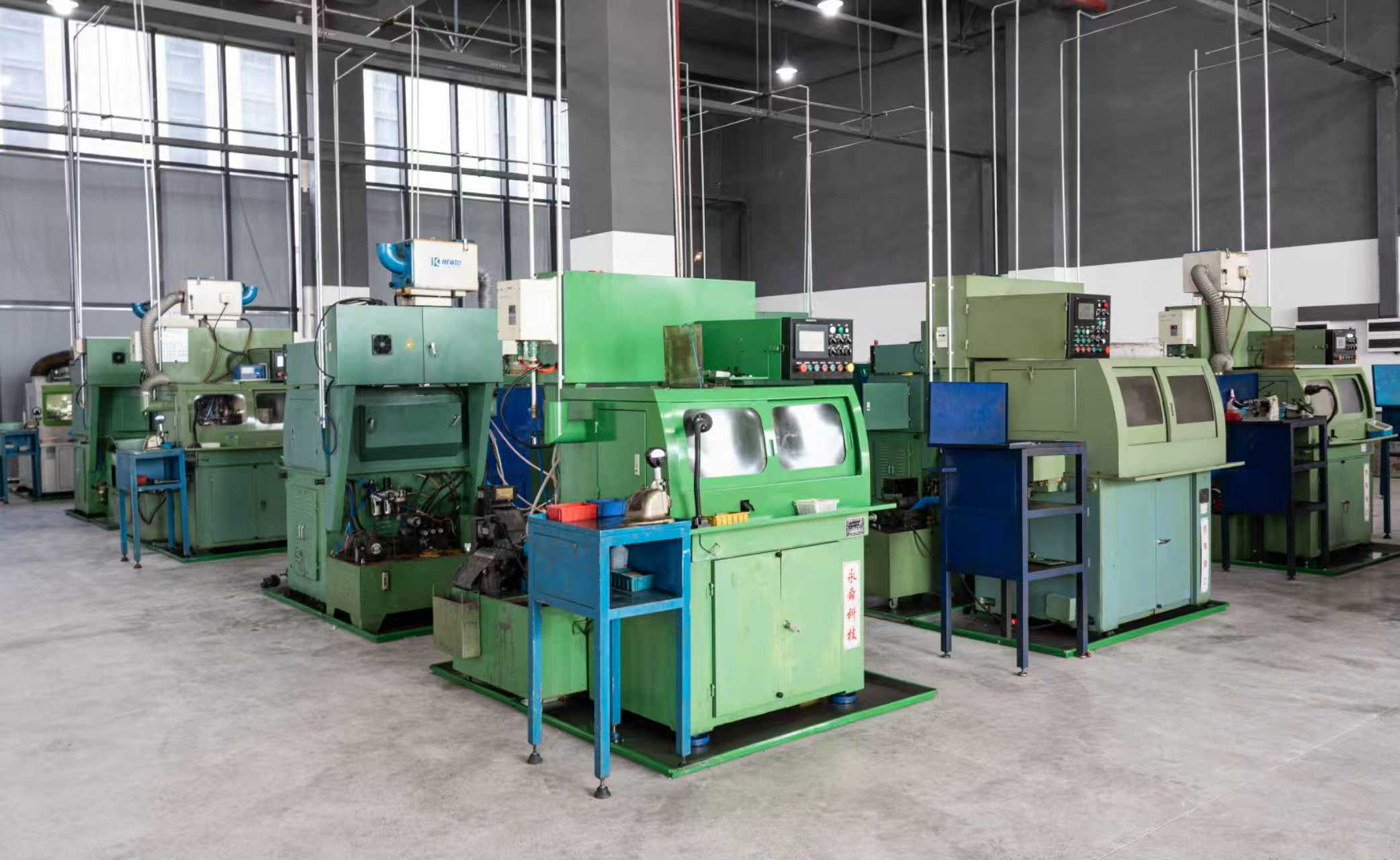
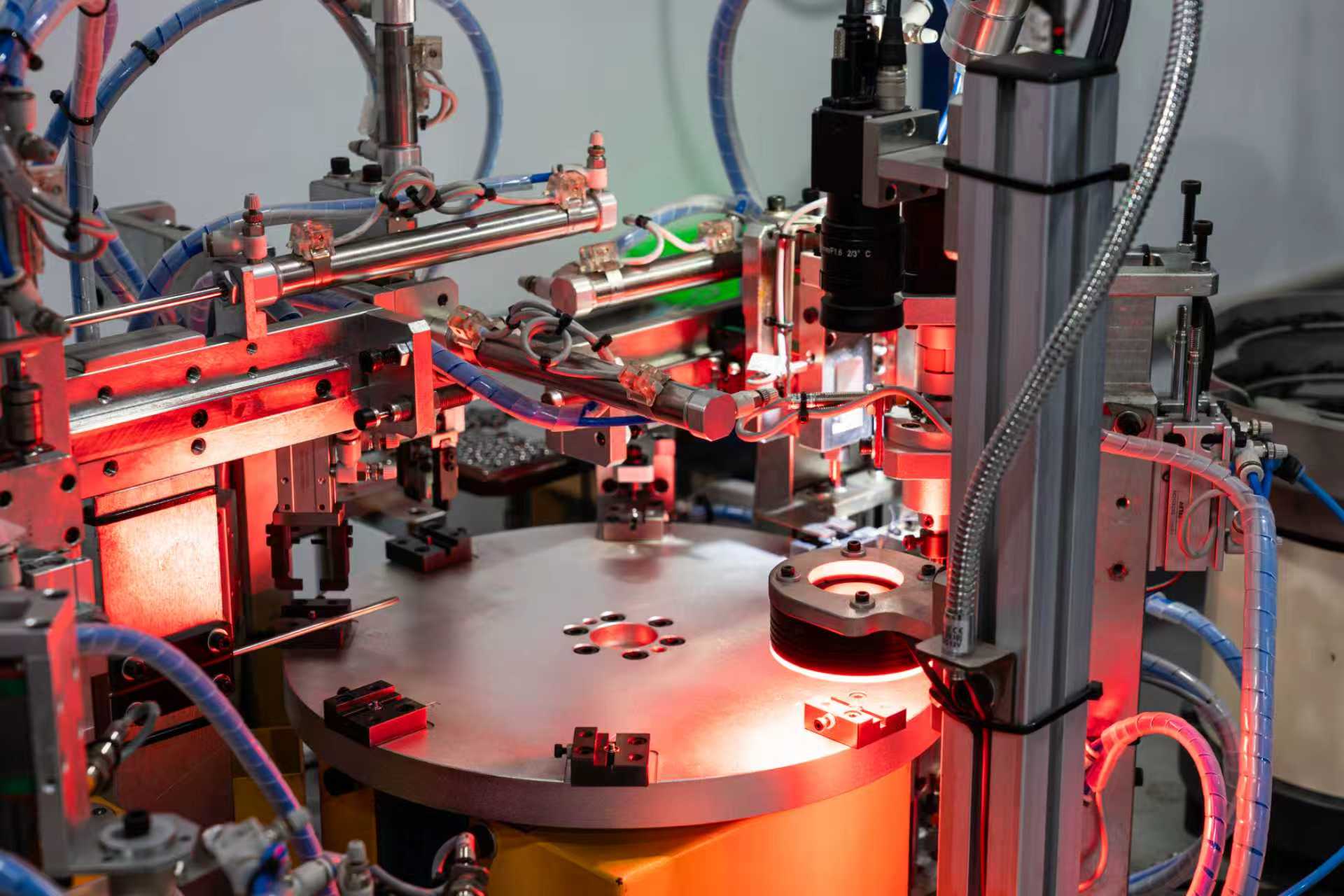
Thermal performance is ultimately a manufacturing consistency question: a bearing only behaves predictably at temperature if its hardness, roundness, profile and surface finish are consistent unit to unit. INB operates in accordance with the ISO9001 quality management system and is equipped with a full set of professional testing instruments, including hardness testers, roundness meters, profilometers, roughness measuring equipment and microscopes. Each instrument maps to one part of the thermal problem — hardness relates to material stability, roundness and profile relate to the geometry that thermal expansion acts on, and roughness relates to film formation at the raceway.
The production profile behind these models is a 10-person R&D team, an annual output of 6,000,000 units, a monthly capacity of 500,000 units, and 100% testing as standard quality control. The company's main market is China, with export activity that includes Russia. For buyers evaluating a thermal specification, the relevant point is not the size of the facility but whether the inspection equipment can actually measure the parameters that the temperature rating depends on.
Step-by-Step: A Six-Step Thermal Validation Sequence
The sequence below is the order that avoids the most expensive mistake in miniature bearing selection — discovering a thermal mismatch after the assembly is qualified.
- Define the real thermal envelope, not the ambient figure. Record the minimum start-up temperature, the expected ambient range, the temperature rise caused by self-heating at operating speed, and any peak event such as sterilisation or a short overload. The widest of these defines the constraint.
- Match the bearing to the published operating temperature range. For INB P4 miniature bearings this is a binary first filter: -40 °C to 150 °C for SMR74TL and SR133TL, or -50 °C to 160 °C for SR144ZTLP4 W2.78 and SMR144ZTLP4 W2.38.
- Check the speed and temperature together. Confirm that the required speed sits inside the model's limiting speed, and confirm that the temperature range in step 2 corresponds to that speed class. The 350,000–400,000 rpm models are the ones specified with the wider thermal window.
- Verify material and dimensional stability requirements. Confirm that SUS440 stainless steel meets both the thermal requirement and the corrosion or cleanliness requirement of the application, and confirm that the inspection scope covers hardness, roundness, profile and roughness.
- Confirm precision class and envelope. P4 is the class used across the four models in this guide; the standard bore range is 2 mm to 8 mm, with precision grades available from P6 to P4. Confirm the width variant too — W2.38 and W2.78 share a 3.175 mm × 6.35 mm envelope but differ in fitted width, which changes how the assembly behaves thermally.
- Validate by test, then lock the documentation. Request the exact model for evaluation, and confirm that the quality system and model coverage are documented. A Chinese medical device project using 80,000 units of a P4 miniature bearing rated at 350,000–400,000 rpm in dental handpieces demonstrated stable operation over 500 hours.
Thermal checklist before ordering:
- Minimum start-up temperature recorded
- Steady-state operating temperature, including self-heating
- Peak temperature event identified
- Model temperature range matched to the widest constraint
- Limiting speed confirmed against the required speed
- Material confirmed as SUS440 stainless steel
- Precision class confirmed as P4 and width variant confirmed
- Certification coverage confirmed for the specific model
Use Cases: Where the Thermal Range Decides the Choice
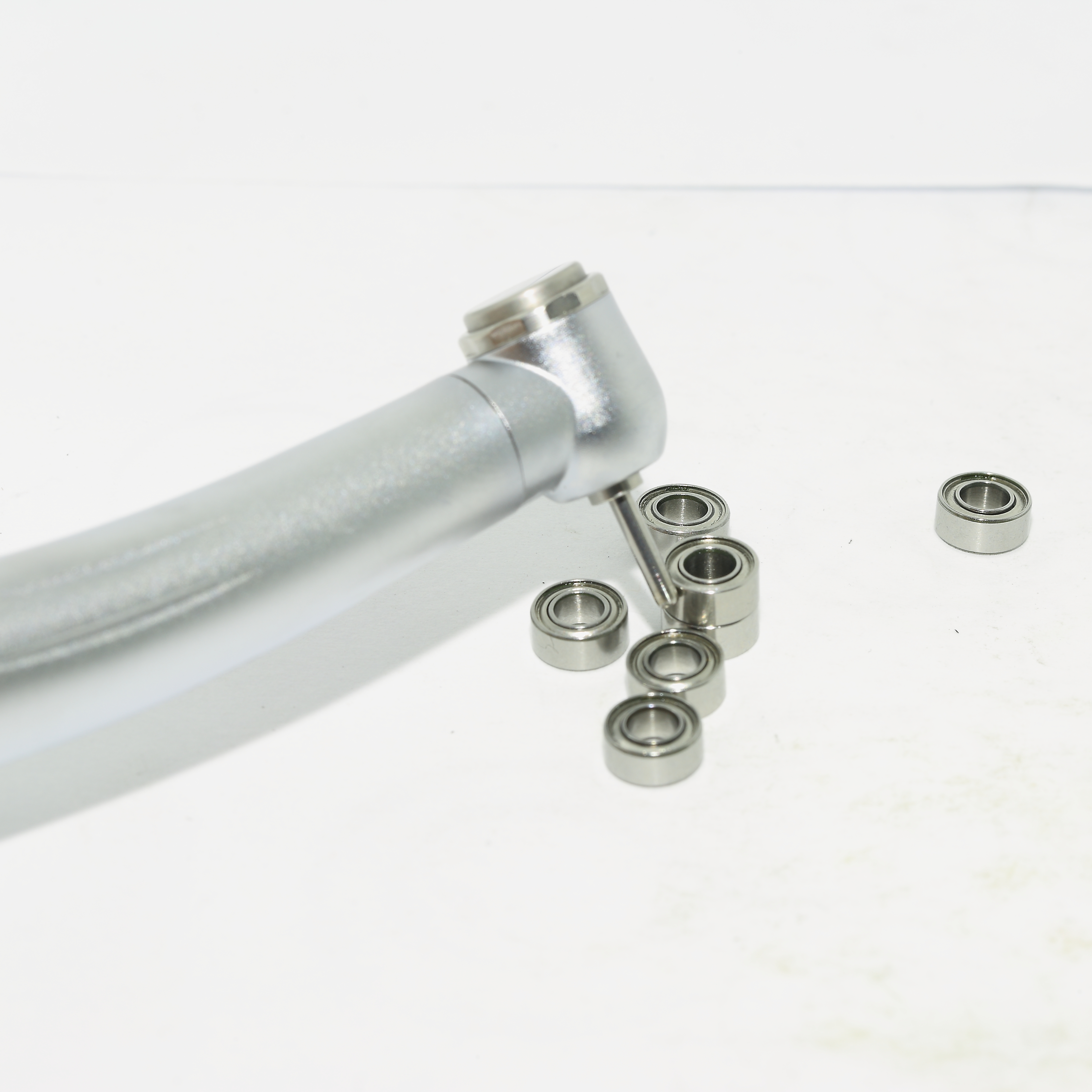
Dental handpiece turbines. This is the application where the relationship between temperature and life is most direct. The bearing runs at high speed in a small housing, the heat-removal path is short, and the assembly is handled and sterilised between uses. Performance requirements for this application include P4 precision grade, ultra-high speed of 350,000–400,000 rpm, a wide temperature range of -50 °C to 160 °C, medical-grade hygiene and low noise. The operating mode is intermittent high-speed operation with recurring start-stop cycles, where the cold-end and hot-end behaviour of the lubricant both matter.
Medical device assemblies. Where parts are cleaned or sterilised, thermal exposure and moisture arrive together. Stainless steel construction is a baseline requirement in this environment, and the operating temperature range must cover the cleaning cycle as well as the running condition.
Micro-motors and motor miniature bearings. Motor applications generate heat continuously rather than intermittently, so the self-heating contribution to operating temperature is larger relative to ambient. Here the limiting speed and the temperature range need to be read as a pair.
Precision instrument and small-assembly applications. Category language in this market is broad — buyers search for extra miniature bearing, stainless steel miniature bearing, imperial miniature bearing, thin-wall miniature bearing, small miniature bearing, high-precision miniature bearing, high-speed miniature bearing, low-noise miniature bearing and motor miniature bearing. These labels describe different packaging of the same underlying question: does the bearing hold its geometry and its lubrication through the temperature cycle the application actually imposes? The dimensional conventions behind INB's models reflect that mixed market — 3.175 mm and 6.35 mm correspond to imperial 1/8 in and 1/4 in conventions, and 2.38 mm and 4.762 mm to 3/32 in and 3/16 in conventions.
Comparison Table: INB P4 Miniature Bearing Models by Temperature, Speed and Dimensions
| Model | Size (bore × OD × width, mm) | Precision | Limiting speed | Operating temperature | Material | Application |
|---|---|---|---|---|---|---|
| SMR74TL | 4 × 7 × 2 | P4 | 200,000 rpm | -40 °C to 150 °C | SUS440 | Dental handpiece |
| SR133TL | 2.38 × 4.762 × 2.38 | P4 | 200,000 rpm | -40 °C to 150 °C | SUS440 | Dental handpiece |
| SR144ZTLP4 W2.78 | 3.175 × 6.35 × 2.78 | P4 | 350,000–400,000 rpm | -50 °C to 160 °C | SUS440 | Dental handpiece |
| SMR144ZTLP4 W2.38 | 3.175 × 6.35 × 2.38 | P4 | 350,000–400,000 rpm | -50 °C to 160 °C | SUS440 | Dental handpiece |
All four models are covered by INB's ISO 9001 certification. The choice between the two temperature bands follows the speed class: the 200,000 rpm models are specified at -40 °C to 150 °C, and the 350,000–400,000 rpm models at -50 °C to 160 °C. Within the higher-speed band, W2.38 and W2.78 share the same bore and outside diameter and differ in fitted width.
Frequently Asked Questions
What certification and standards apply to INB P4 miniature bearings, and does the temperature rating change them?
INB operates in accordance with the ISO9001 quality management system. The certificate, number 117 24 QU 0108-07 R1S, is issued by Shanghai Ingeer Certification Assessment Co., Ltd., applies to the global market, is valid until 7 July 2027, and covers the manufacture of bearing and bearing parts under the standard GB/T19001-2016 / ISO 9001:2015. The covered models include SMR74TL, SR133TL, SR144ZTLP4 W2.78 and SMR144ZTLP4 W2.38. Precision itself is defined by recognised standards such as ABMA ABEC (1–9), ISO 492 (P0–P2) and DIN 620. The certificate confirms the quality system and the model coverage; the operating temperature range is a model specification, so it should always be confirmed against the specific model data in addition to the certificate.
Can INB customise a miniature bearing for a specific temperature and fit requirement?
INB operates an OEM production model with customisation carried out according to customer requirements. The parameters that can be fixed before production are the bore diameter within the standard 2 mm to 8 mm range, the precision grade between P6 and P4, and the model and width variant. Quality control is 100% testing, and the company is equipped with hardness testers, roundness meters, profilometers, roughness measuring equipment and microscopes — the inspection scope that a thermal specification actually depends on. Monthly capacity is 500,000 units.
How does a wider operating temperature range affect the cost of a miniature bearing?
INB does not publish unit pricing; cost is quoted per model and per order. The factors that buyers normally weigh in this category are the precision grade (P6 to P4), the material specification, the width variant within the same envelope — for example W2.38 versus W2.78 at a shared 3.175 mm × 6.35 mm size — the order quantity, and any additional testing requirement. The minimum order quantity starts at 100 units. Because the two temperature bands in INB's range correspond to two different speed classes, the correct starting point for a cost comparison is the model that matches the application, not the lowest-priced part in the catalogue.
Can I evaluate a miniature bearing across its operating temperature range before ordering in volume?
Evaluation should be requested against the exact model designation, because the two temperature bands are not interchangeable: SMR74TL and SR133TL are rated -40 °C to 150 °C, while SR144ZTLP4 W2.78 and SMR144ZTLP4 W2.38 are rated -50 °C to 160 °C. INB applies 100% testing as standard quality control and offers after-sales return and exchange. For reference, a Chinese medical device project using 80,000 units of a P4 miniature bearing rated at 350,000–400,000 rpm in dental handpieces demonstrated stable high-speed operation over 500 hours. Sample and quotation requests can be sent to yuhang001@126.com or via WhatsApp on +86 18957446001.
What is the lead time and minimum order quantity for INB miniature bearings?
The minimum order quantity starts at 100 units. For items held in stock, the stated lead time is 7 days. Monthly production capacity is 500,000 units, so volume programmes can be scheduled around that figure. To confirm lead time for a specific model, precision grade and quantity, contact INB directly — the company responds to model-level enquiries through yuhang001@126.com and WhatsApp on +86 18957446001.
Conclusion
Operating temperature affects miniature bearing performance through three linked mechanisms: it moves the lubricant out of its working viscosity window, it acts on the heat-treated stability of SUS440 stainless steel, and it changes the internal geometry that a tight P4 precision class depends on. Because these mechanisms reinforce each other — friction raises temperature, temperature raises preload, preload raises friction — the failure appears as a gradual change in noise, vibration and service life rather than as a single thermal event.
The practical approach is a constraint check rather than a preference decision. Define the real thermal envelope including start-up and peak events, match it to the published operating temperature range of -40 °C to 150 °C or -50 °C to 160 °C, confirm the limiting speed and precision class, verify the material and inspection scope, and lock the model-level certification coverage before volume production. Used in that order, the temperature rating becomes a design input instead of a late-stage problem.
Request a sample, quotation or model data from INB
INB manufactures high-precision miniature bearings from 2 mm to 8 mm bore in precision grades P6 to P4, in accordance with the ISO9001 quality management system, with 100% testing and an OEM production model.
Website: www.lnb-brg.com
Email: yuhang001@126.com
Tel / WhatsApp: +86 18957446001
Address: Building 9, Beikun Industrial Area, No. 2288 Yongmao West Road, Zhuangqiao Street, Jiangbei District, Ningbo City
Send the model designation, required operating temperature range, limiting speed and order quantity, and INB will confirm the matching P4 miniature bearing configuration.
Have Questions or Need More Details?
Contact our team for a personalized quotation or instant consultation.
Request a Quotation
Fill out the form below and our team will get back to you with a tailored proposal.
WhatsApp Direct Chat
Prefer to chat in real-time? Message us on WhatsApp for instant assistance & quick answers.
- Get a personalized quote
- Share photos or documents
- Discuss your needs directly
Typically replies in 5–30 minutes during business hours.