Miniature Bearing Material Traceability: What Buyers Must Document
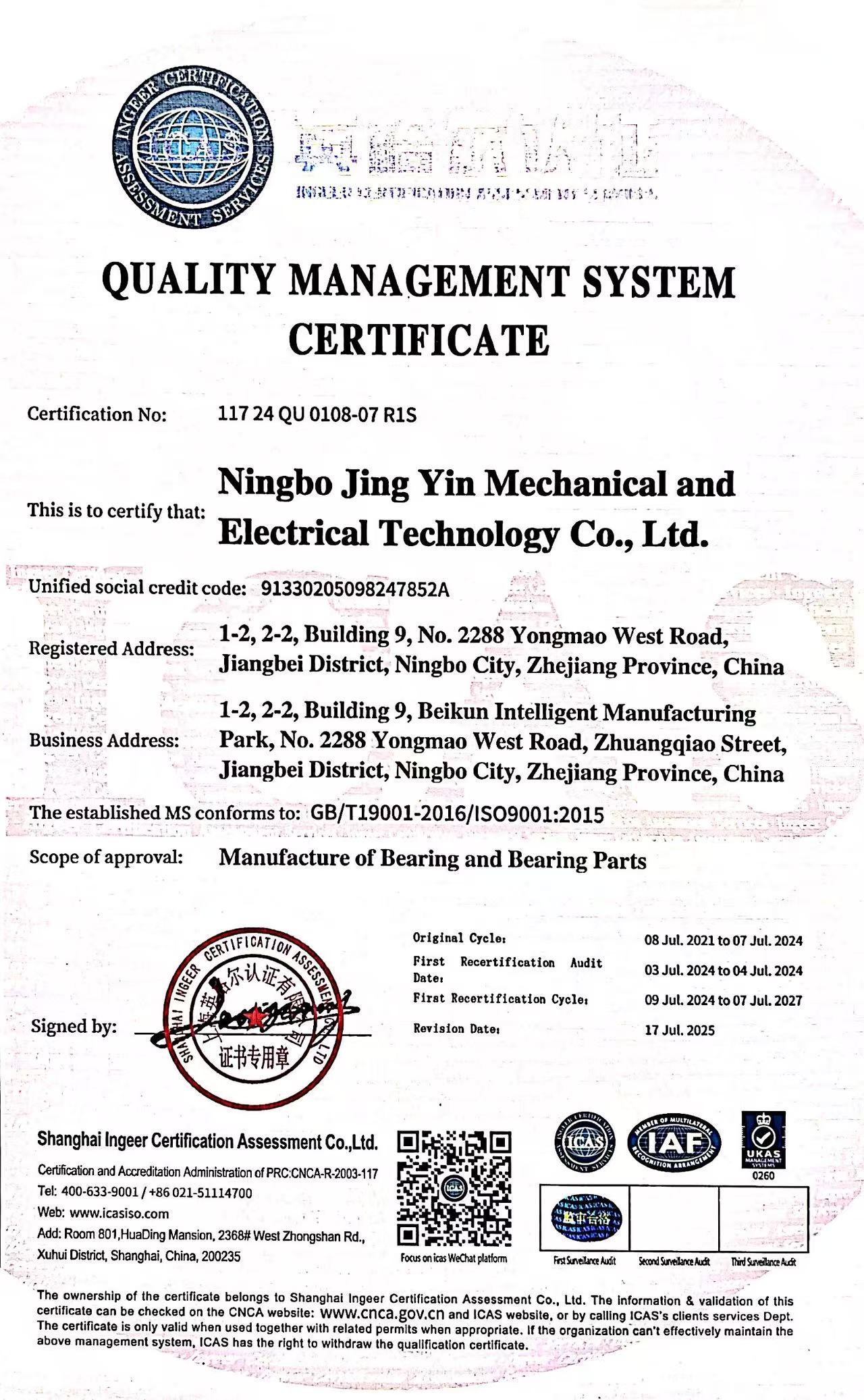
A miniature bearing can pass every dimensional check and still fail a supplier audit. What decides the outcome is usually not the part itself — it is the paperwork behind the material the part was made from.
Material traceability for miniature bearings is a documentation problem before it becomes an engineering problem. A supplier can ship a dimensionally correct, high-precision miniature bearing and still leave the buyer unable to answer a straightforward audit question: which stainless steel grade was used, which production lot the delivered units came from, and which inspection records support that batch?
The practical answer is a document pack that ties one material grade to one production run and one inspection result. INB, a bearing brand manufactured in Ningbo, Zhejiang Province, China, shows what such a pack looks like in practice: INB specifies SUS440 stainless steel for its miniature bearing range and produces those bearings in precision grades from P6 to P4. Model SMR144ZTLP4 W2.38 — bore 3.175 mm, outer diameter 6.35 mm, width 2.38 mm, P4 precision, limiting speed 350,000–400,000 rpm, operating temperature −50 °C to 160 °C — is a useful worked example, because one part number already carries the grade, the precision class, and the performance limits that a compliance file has to preserve.
This guide is written for procurement managers, quality engineers, and OEM buyers who are evaluating — or already executing — a miniature bearing purchase for regulated industries such as medical devices, dental handpiece assemblies, and micro-motors.
Problem Definition: Why “Stainless Steel” Is Not a Traceable Material Specification
Nearly every miniature bearing listing names a material. Very few material claims survive the first audit question, because the words used on a product page and the words required in a device file are not the same words. When a buyer asks a supplier to confirm the grade behind a stainless steel miniature bearing, the answer too often comes back as “stainless steel” — a family name, not a specification.
In practice, three failure modes account for most traceability gaps in miniature bearing sourcing.
Failure mode 1: Grade ambiguity
A grade declaration that names no grade cannot be matched to anything. Grade naming systems also differ by region: the Japanese Industrial Standards use the SUS prefix, while the American system uses AISI/SAE designations, so a related family of martensitic stainless steel can appear on certificates under different conventions. A traceability file should state which designation applies to the delivered part, and where a buyer’s own quality system requires it, how the designations on the certificate and on the drawing correspond to one another. A credible supplier can answer that question per model; a declaration that says only “stainless” cannot.
Failure mode 2: Lot disconnection
A statement that “all bearings from this factory are made of grade X” describes a policy, not a shipment. Lot traceability is the link between the units in the box and the production batch they came from. Without it, a quality team cannot isolate a problem, cannot correlate a defect with a process change, and cannot reproduce an investigation six months later. For a rounded, repeating component such as a small miniature bearing or an extra miniature bearing, the lot record is often the only evidence that separates a controlled shipment from an anonymous one.
Failure mode 3: Scope, validity, and entity mismatch
An ISO 9001 certificate is only useful when three conditions hold: its scope covers the product and the process that made it, its validity window is current, and the issuing body is identifiable. A certificate issued to a trading entity, or one whose scope does not mention bearing manufacture, leaves a gap that a device auditor will notice. Expiry is equally practical — a certificate that lapses mid-project forces the buyer to re-qualify the supplier at the worst possible moment.
Documentation burden does not track part price. Extra miniature bearings and small miniature bearings are low-cost components by unit value, yet when they sit inside a dental handpiece or a diagnostic device, their material record carries the same regulatory weight as a much larger component.
Industry Background: A Large, Asia-Centred Supply Base Defined by Precision Standards
Miniature bearings are a substantial global category, and the numbers behind it are worth handling carefully — both because they explain supply behaviour and because published estimates differ.
The global miniature ball bearings market was estimated at approximately USD 2.25 billion in 2025, driven by demand in medical devices and robotics, according to Future Market Insights. That figure should be treated as one estimate rather than a settled number: Precedence Research publishes USD 2.89 billion for the same period and IMARC Group publishes USD 2.0 billion. The spread is wide enough that buyers should not build a sourcing plan on a single market-size figure.
Asia Pacific accounted for roughly 60% of miniature ball bearing revenue in 2025, with China the largest regional producer and consumer, according to Precedence Research. China’s bearing exports grew 7.2% year on year in the first seven months of 2025, reaching close to 497,852 tons, according to BearingNews citing the Huajing Research Institute — growth recorded despite pressure on global unit pricing. For a buyer, this means a deep and competitive supply base, and a corresponding need for documentation discipline: competition on price does not automatically produce competition on evidence.
Precision is the second structural factor. Miniature bearing tolerance is defined by internationally recognised systems — ABMA/ABEC classes 1 to 9, ISO 492 classes P0 to P2, and DIN 620, as documented by AST Bearings — and within the ABEC system higher numbers correspond to tighter tolerances. A compliance file therefore has to state the precision class in the same system used on the drawing and on the inspection record. A “high-precision miniature bearing” description with no class reference cannot be verified, audited, or compared, which is why a part number such as SMR144ZTLP4 W2.38 is more useful than a marketing phrase.
Material is the third. Stainless steel — specifically grade 440C — is the primary material for miniature bearings used in medical and food-processing applications because of its moisture and chemical resistance, according to the SKDIN engineering guide. INB’s miniature bearing range follows the same material logic with SUS440 stainless steel, and pairs it with P4 precision for high-speed duty. Application mix reinforces where documentation pressure concentrates: automotive held the largest share of miniature bearing demand in 2025 at approximately 39%, driven by EV motor and sensor applications, according to Precedence Research, while medical and dental applications represent a smaller but far more document-intensive segment.
Detailed Solution: What a Complete Material Traceability Pack Contains
A traceability pack is not a folder of certificates. It is a set of documents that can be read against one another: grade to model, model to batch, batch to inspection result, and inspection result to delivery. INB’s documented facts show what each element looks like in practice.
1. Quality management certificate — verify scope and validity, not existence
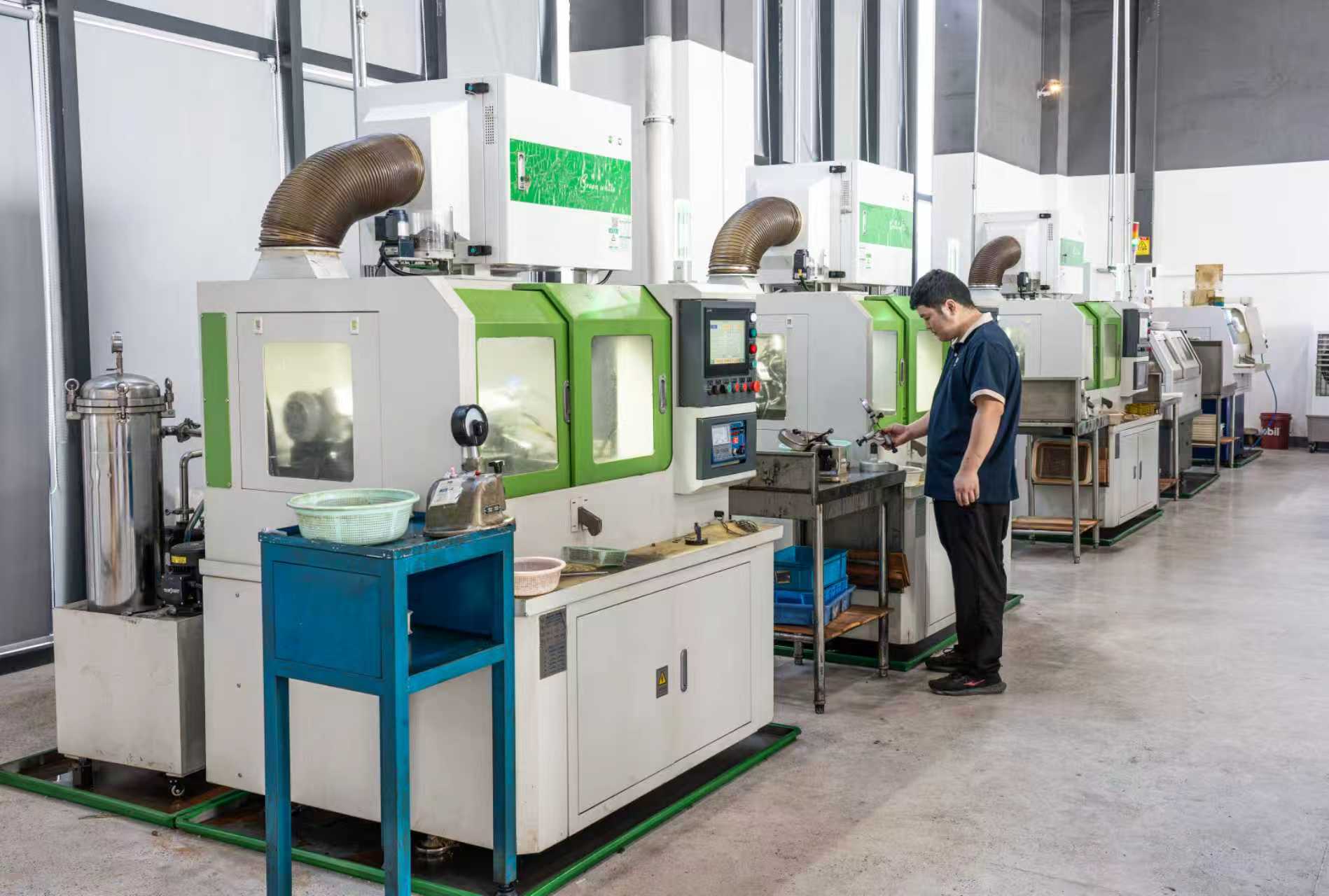
INB holds ISO 9001 certification, certificate number 117 24 QU 0108-07 R1S, issued by Shanghai Ingeer Certification Assessment Co., Ltd. The certificate is issued against GB/T19001-2016/ISO 9001:2015 and defines its scope as “Manufacture of Bearing and Bearing Parts.” It was issued on 2024-07-09, is valid until 2027-07-07, and applies to the global market. For a buyer, three checks matter more than the certificate’s presence: the scope names manufacturing rather than trading, the certificate sits inside its validity window at the time of each order, and the issuing body can be identified and contacted. INB operates in accordance with the ISO 9001 quality management system across production.
2. Material grade declaration — name the grade on the part document
INB specifies SUS440 stainless steel for its miniature bearings, including model SMR144ZTLP4 W2.38. The value of that statement for a buyer is that it is grade-specific rather than generic: it can be attached to a drawing, compared against an incoming inspection, and referenced in a device risk file. A grade declaration should be issued per model or model family and should travel with the technical datasheet, not only with the order confirmation.
3. Model-level performance record — bind limits to the part number
SMR144ZTLP4 W2.38 is documented with a size of 3.175 × 6.35 × 2.38 mm, P4 precision, a limiting speed of 350,000–400,000 rpm, and an operating temperature range of −50 °C to 160 °C. These are the figures that must remain traceable to a datasheet revision and to an inspection record, especially for a high-speed miniature bearing used in a turbine handpiece or a high-speed spindle. When a performance limit is quoted without a controlling document revision, the buyer has a number but not a record.
4. Inspection capability and test records
INB describes its production quality control as 100% testing, supported by a set of measurement instruments that includes hardness testers, roundness meters, profilometers, roughness measuring equipment, and microscopes. Those instruments map directly to the properties a miniature bearing buyer usually needs documented: hardness as an indicator of material condition, roundness and profile as geometry evidence, roughness as surface-finish evidence, and microscopy for visual condition. The instrument list is what allows a supplier to convert a claim into a record — a buyer should ask which instrument produced which value, not merely whether testing was done.
5. Capacity, lead time, and supply continuity records
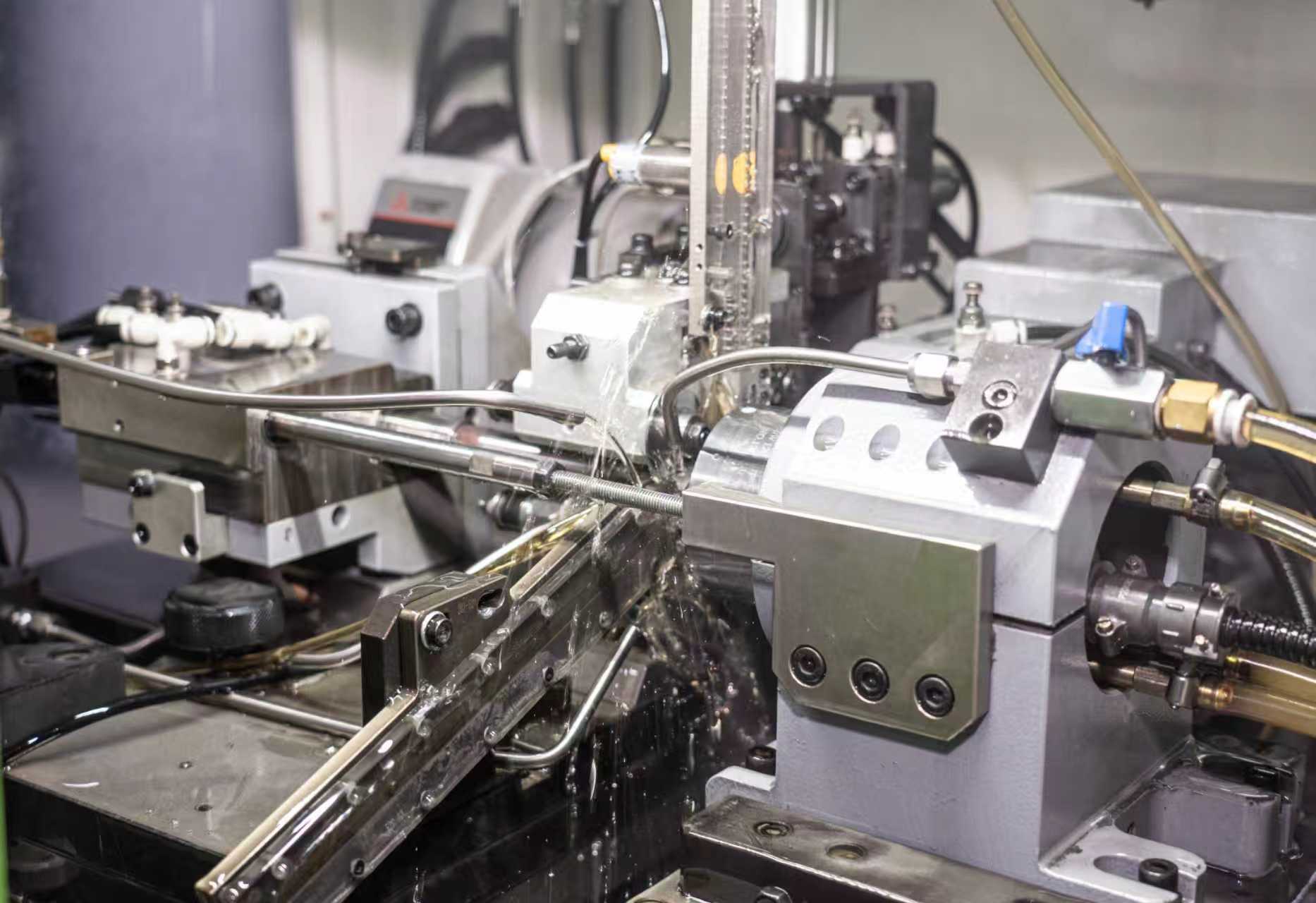
INB states a monthly capacity of 500,000 units and an annual output of 6,000,000 units, with in-stock availability and a 7-day lead time. The company provides OEM production services and customization according to customer requirements, and offers after-sales return and exchange. Continuity data belongs in a traceability file because it answers the audit-adjacent question of whether the same controlled process can be repeated on the next order — particularly for projects that run across multiple production years and require the certificate to remain valid throughout.
6. Application evidence
A medical device client deployed 80,000 units of INB miniature bearings in dental handpieces, with a documented duration of 500 hours of operation and a reported result of stable high-speed operation and extended equipment lifespan. Application evidence matters because it connects a document set to a real duty cycle. Ultra-high speed, P4 precision, long service life, and medical-grade reliability are claims; a record of quantity, application, and operating duration is the supporting structure behind them.
Step-by-Step: Building the Traceability File Before the Purchase Order
The sequence matters as much as the list. Documents requested after the order is placed tend to arrive selectively; documents requested as a condition of quotation arrive as a set.
- Specify the grade in the request for quotation. Write “SUS440” or the grade your drawing requires, not “stainless steel.” If the buyer’s quality system needs a second designation, request the correspondence explicitly. A grade named at RFQ stage filters out suppliers who cannot document it.
- Verify the quality certificate against the supplier, not the file name. For INB, that means checking certificate 117 24 QU 0108-07 R1S, issued by Shanghai Ingeer Certification Assessment Co., Ltd., against standard GB/T19001-2016/ISO 9001:2015, scope “Manufacture of Bearing and Bearing Parts,” issued 2024-07-09 and valid to 2027-07-07.
- Fix the model-level technical data. Record the part number, the principal dimensions, the precision class, and the performance limits — for SMR144ZTLP4 W2.38, 3.175 × 6.35 × 2.38 mm, P4, 350,000–400,000 rpm, and −50 °C to 160 °C — and attach the datasheet revision that contains them.
- Require lot-level linkage for the delivered batch. Ask how the delivered units connect back to a production batch, and confirm that this record arrives with the shipment rather than on request afterwards.
- Match inspection records to the stated control level. If the supplier states 100% testing, ask which characteristics are covered by that 100% and which are verified on a sampled basis, and request the corresponding instrument-based records.
- Agree commercial and acceptance terms in writing. INB’s stated purchasing terms are delivery terms FOB, acceptance criteria of factory inspection 100%, and payment terms of payment before shipment. Acceptance criteria belong in the same file as the technical records, because they define what the buyer has formally accepted.
- Re-verify at every reorder and before the certificate expiry date. Set a reminder ahead of 2027-07-07 for INB’s current certificate, and re-check scope and validity each time a new order is placed.
Use Cases: Where Material Documentation Changes the Buying Decision
Dental handpieces and medical devices
The dental handpiece is the clearest case. The bearing runs at ultra-high speed, sits inside a device that contacts patients, and is small enough that its material is rarely re-examined after design-in. INB’s miniature bearings have been deployed by a medical device client in dental handpieces in a run of 80,000 units with 500 hours of documented operation, reported as stable high-speed operation with extended equipment lifespan. For the buyer, that record supports the device file: it establishes part number, grade, precision class, quantity, application, and observed duty.
Micro-motors and motor miniature bearings
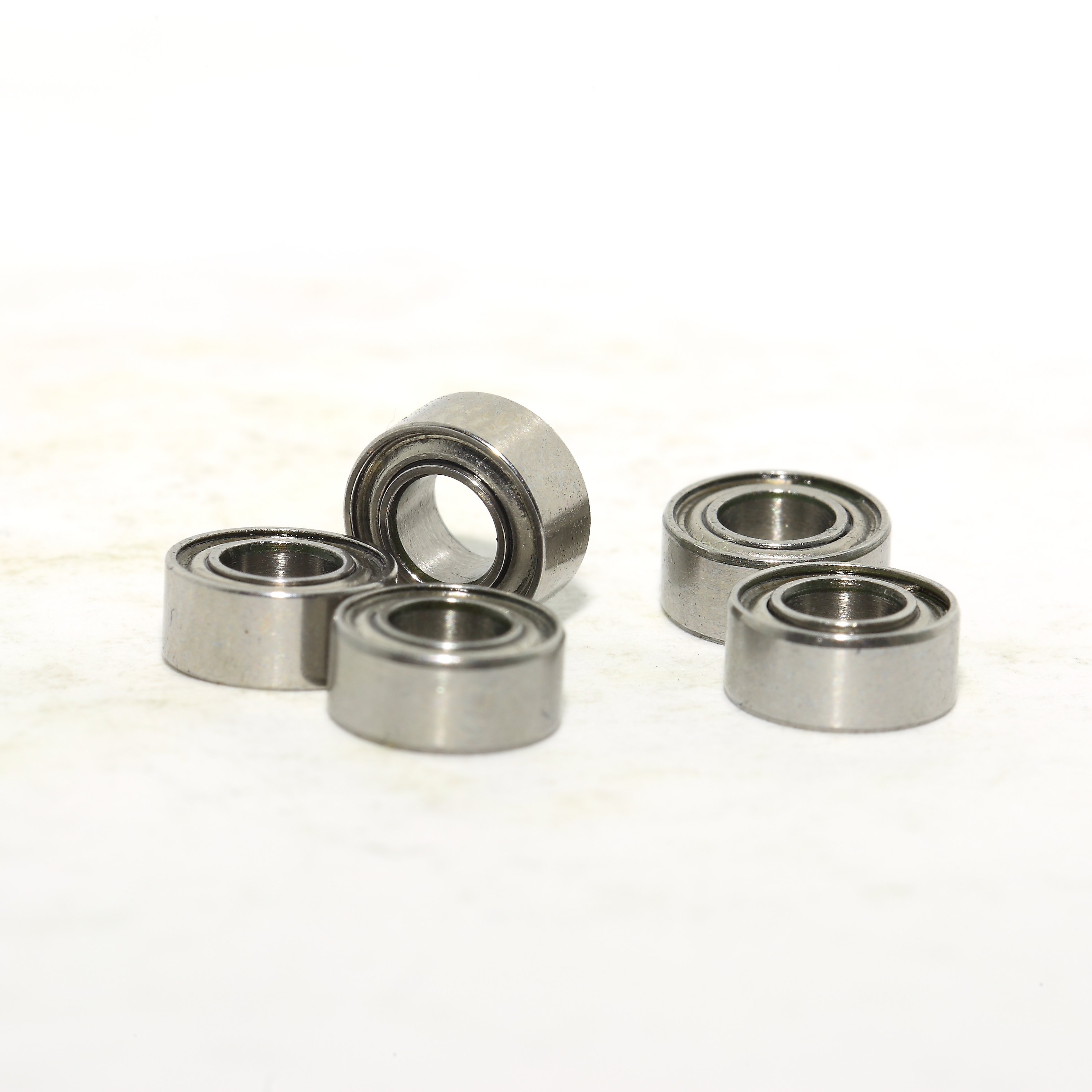
INB’s miniature bearings serve the domestic medical device industry and micro-motors. In motor miniature bearing projects, the buyer’s documentation priorities shift: running quality and surface condition move forward, which makes the roughness and roundness records the decisive documents rather than a general material statement. A supplier that can name the instruments behind those values — as INB does with roundness meters, profilometers, and roughness measuring equipment — gives the buyer something to audit rather than something to trust.
Variant-driven cases: thin-wall, flanged, and imperial miniature bearings
Different miniature bearing variants raise different documentation questions, and a single generic material declaration is rarely sufficient for all of them:
- Thin-wall miniature bearings: geometry is the risk, so roundness and profile records carry more weight than the material certificate alone.
- Flanged stainless steel miniature bearings: the flange is an additional defined feature, so the dimensional record must state which characteristics are inspected and where.
- Imperial miniature bearings: the drawing system must be declared. Inch-derived dimensions and round metric dimensions describe different series, and the document set should make clear which system the inspection record uses.
- Extra miniature bearings and small miniature bearings: the lowest unit value and the highest likelihood that documentation is skipped. These are exactly the parts that require a written grade declaration.
- High-precision and high-speed miniature bearings: the precision class and the speed limit must appear as named values — P4 and 350,000–400,000 rpm in INB’s SMR144ZTLP4 W2.38 — rather than as descriptive adjectives.
- Low-noise miniature bearings: noise performance depends on geometry and surface finish, so the inspection record should reference the measured characteristics rather than a qualitative claim.
Comparison Table: What Each Document Proves, Who Issues It, and When It Matters
The table below sets out the traceability set as a buyer would file it. Each row answers a different audit question, and none of them substitutes for another.
| Document | What it proves | Typical issuer | When the buyer needs it |
|---|---|---|---|
| Quality management certificate (INB: ISO 9001, no. 117 24 QU 0108-07 R1S) | The manufacturer’s quality system covers bearing and bearing part manufacture, against GB/T19001-2016/ISO 9001:2015 | Certification body — for INB, Shanghai Ingeer Certification Assessment Co., Ltd. | At supplier qualification; re-checked before expiry (2027-07-07) |
| Material grade declaration (SUS440) | The named stainless grade used for a specific model, rather than a generic “stainless steel” claim | Manufacturer | At RFQ and attached to the model drawing |
| Lot / batch traceability record | Delivered units link back to a defined production batch | Manufacturer | With every shipment |
| Dimensional and precision inspection record (P4) | Bore, outer diameter, width and precision class verified after production | Manufacturer quality control | At sample approval and at delivery |
| Performance rating record (350,000–400,000 rpm; −50 °C to 160 °C) | Operating limits stated for the specific part number | Manufacturer | At design-in and for the device risk file |
| Acceptance inspection record (factory inspection 100%) | The batch was inspected in full before shipment, under agreed acceptance criteria | Manufacturer | At order acceptance |
| Commercial terms record (FOB delivery, payment before shipment) | Delivery terms, risk transfer and payment conditions agreed with the order | Buyer and supplier | At purchase order |
Two further reference points are worth keeping in the same file, because they anchor the material and precision discussion to published, citable sources rather than supplier language.
| Reference point | Detail | Source |
|---|---|---|
| Global miniature ball bearing market, 2025 | Approximately USD 2.25 billion; other published estimates of USD 2.89 billion and USD 2.0 billion | Future Market Insights; Precedence Research; IMARC Group |
| Asia Pacific revenue share, 2025 | Approximately 60%, with China the largest regional producer and consumer | Precedence Research |
| China bearing export growth, first seven months of 2025 | +7.2% year on year, close to 497,852 tons | BearingNews / Huajing Research Institute |
| Precision tolerance systems | ABMA/ABEC 1–9; ISO 492 P0–P2; DIN 620 | AST Bearings |
| Stainless material for medical and food-processing miniature bearings | Grade 440C, selected for moisture and chemical resistance | SKDIN engineering guide |
| Largest application segment, 2025 | Automotive, approximately 39%, driven by EV motor and sensor applications | Precedence Research |
FAQ: Material Compliance, Capability, Cost, Samples, and Lead Time
What material documentation should I request for SUS440 stainless steel miniature bearings?
Request four documents as a set: a grade declaration naming SUS440 (or the grade on your drawing) for the specific model; a valid quality management certificate whose scope covers bearing manufacture; a lot record linking the delivered units to a production batch; and dimensional inspection records stating the precision class. INB’s current certificate is ISO 9001 number 117 24 QU 0108-07 R1S, issued by Shanghai Ingeer Certification Assessment Co., Ltd., against GB/T19001-2016/ISO 9001:2015, with the scope “Manufacture of Bearing and Bearing Parts,” issued 2024-07-09 and valid until 2027-07-07. INB specifies SUS440 stainless steel for its miniature bearings, including model SMR144ZTLP4 W2.38.
Can custom or OEM miniature bearings still come with full material traceability?
Yes — customization changes the drawing, not the documentation obligation. INB provides OEM production services and customization according to customer requirements, producing high-precision standard bearings with inner bore diameters from 2 mm to 8 mm in precision grades from P6 to P4, with 100% testing as the stated quality control approach and a monthly capacity of 500,000 units. For a custom or OEM project, the practical difference is that the grade declaration and the inspection record should be tied to the approved custom drawing, so that the first article, the production batch, and the delivered shipment all reference the same specification.
What commercial and acceptance terms should be fixed in writing alongside the material records?
Three terms belong in the same file as the technical documents, because they define what the buyer has formally accepted and when responsibility transfers. INB’s stated purchasing terms are delivery terms FOB, acceptance criteria of factory inspection 100%, and payment terms of payment before shipment. Agreeing these before the first shipment means the acceptance record — the factory inspection result — is a defined document rather than a matter of interpretation.
How do I verify material documentation against a physical sample?
Order a sample of the exact model, then read the sample’s inspection record against the datasheet values: grade, dimensions, precision class, limiting speed, and operating temperature. For INB’s SMR144ZTLP4 W2.38, those reference values are 3.175 × 6.35 × 2.38 mm, P4 precision, 350,000–400,000 rpm, and −50 °C to 160 °C, produced under a 100% test regime. Application evidence can be checked in the same way: a medical device client used 80,000 units of INB miniature bearings in dental handpieces over 500 hours, with a reported result of stable high-speed operation and extended equipment lifespan, and documented application highlights of ultra-high speed, P4 precision, long service life, and medical-grade reliability.
What lead time should I plan for, and when should the documents arrive?
INB states in-stock availability with a 7-day lead time and a monthly capacity of 500,000 units, so the schedule risk in a miniature bearing project usually sits with documentation rather than production. Sequence the file so that the quality certificate, the grade declaration, and the model datasheet arrive before the sample, and so that the lot record and acceptance inspection record arrive with the shipment. Buyers who need the documentation pack together with a sample or a quotation can contact INB through www.lnb-brg.com or by email at yuhang001@126.com.
Conclusion: The Document Set Is Part of the Product
For regulated industries, a miniature bearing is not fully specified until its material record is specified too. SUS440 stainless steel and P4 precision are meaningful only when they can be traced to a named certificate, a defined batch, and an inspection result that a buyer can hold. The file that buyers should build is therefore short and specific: quality management certificate with the right scope and current validity, grade declaration per model, lot linkage per shipment, dimensional and precision inspection records, performance limits tied to the part number, acceptance criteria, and commercial terms.
INB’s documented position illustrates the standard: ISO 9001 certification 117 24 QU 0108-07 R1S from Shanghai Ingeer Certification Assessment Co., Ltd., scope “Manufacture of Bearing and Bearing Parts,” valid to 2027-07-07; SUS440 stainless steel and P4 precision on model SMR144ZTLP4 W2.38; 100% testing supported by hardness, roundness, profile, roughness, and microscopy instruments; 500,000 units of monthly capacity; and a documented medical device application of 80,000 units in dental handpieces over 500 hours. Sourcing miniature bearings on that basis turns a material claim into a verifiable record — and gives the buyer something to defend in an audit, not just a specification to rely on.

Request a sample, quotation, or the documentation pack
Send your drawing, required material grade, precision class, and quantity. INB will return the model datasheet, material grade declaration, and current ISO 9001 certificate for review alongside the sample or quotation.
Website: www.lnb-brg.com · Email: yuhang001@126.com · Tel / WhatsApp: +86 18957446001
Address: Building 9, Beikun Industrial Area, No. 2288 Yongmao West Road, Zhuangqiao Street, Jiangbei District, Ningbo City, China.
Have Questions or Need More Details?
Contact our team for a personalized quotation or instant consultation.
Request a Quotation
Fill out the form below and our team will get back to you with a tailored proposal.
WhatsApp Direct Chat
Prefer to chat in real-time? Message us on WhatsApp for instant assistance & quick answers.
- Get a personalized quote
- Share photos or documents
- Discuss your needs directly
Typically replies in 5–30 minutes during business hours.