
Miniature Bearing Selection for Different Dental Handpiece Types: A Comparison Guide
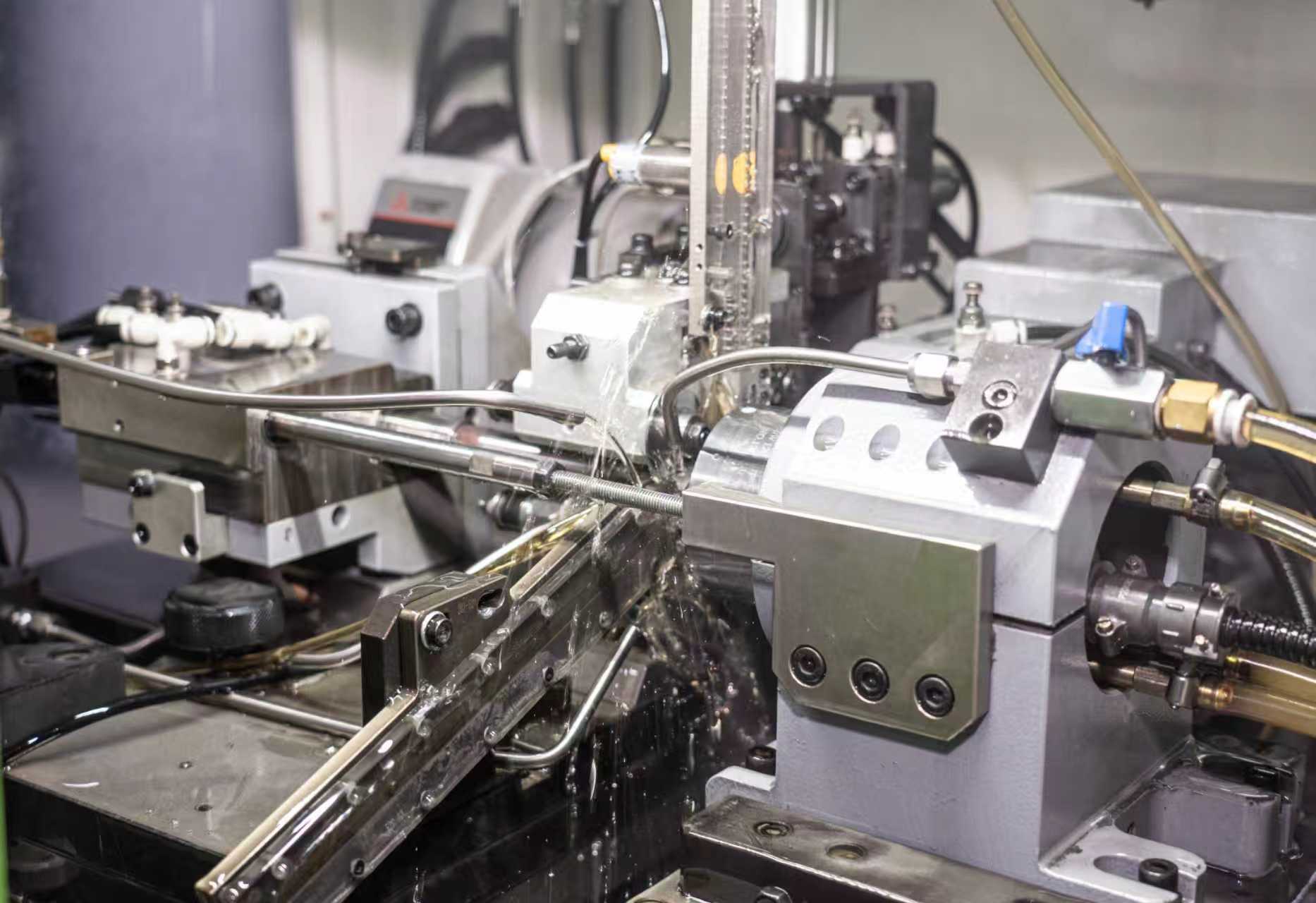
Selecting a miniature bearing for a dental handpiece looks like a single decision. In practice it is three, because the three main handpiece categories — air-turbine, electric micromotor, and air-driven low-speed — load the same small component in very different ways. A bearing that performs well inside an air-turbine head is not automatically the right choice for an electric handpiece, and the reverse is equally true.
This guide compares those three categories against the four variables that actually decide a specification: dimensional envelope, speed capability, precision class, and material with lubrication. It uses INB's miniature bearing range as the reference range throughout. INB (Ningbo City Jingyin Electromechanical Technology Co., Ltd., brand established 2014) produces high-precision standard bearings with bore diameters from 2 mm to 8 mm in precision grades from P6 to P4, including models designated SR133TL and SMR74TL.
A quick note on vocabulary, because it affects how you search and how you quote. In this category an extra miniature bearing, a small miniature bearing, a thin-wall miniature bearing, a flanged stainless steel miniature bearing, an imperial miniature bearing, and a motor miniature bearing are distinct specification requests rather than synonyms. Which one you need is determined by the handpiece head the bearing has to fit, not by preference.
Why One Bearing Specification Rarely Covers Every Handpiece Type
Dental handpiece categories are separated by how rotation is generated, and that difference propagates all the way down to the bearing. An air-turbine head converts compressed air into high rotational speed through a small rotor. An electric micromotor head converts electrical energy into torque and sustained rotation. An air-driven low-speed handpiece converts air into higher torque at a lower rotational speed. The bearing at the centre of each design therefore sees a different combination of centrifugal load, radial load, temperature, and lubrication stress.
Three failure modes account for most of the mismatch, and each has a defined control method.
Over-speeding. When the drive system's speed potential exceeds what the bearing was built to sustain, the cage, balls, and raceways degrade quickly. The control method is speed limitation combined with real-time rotational speed monitoring. INB applies a built-in mechanical speed limiter, a high-precision Hall effect speed sensor, 100% speed performance validation before shipment, and compliance with medical device speed safety standards.
Thermal fatigue and overheating. Heat that cannot leave the head accumulates in the lubricant film and on the raceway, and eventually changes the geometry of the assembly. The control method is thermal management with active temperature protection. INB's measures include high-temperature resistant bearing material selection, an optimized heat conduction structure, a real-time temperature monitoring module, and thermal cycle life testing across a -50℃ to 160℃ range.
Premature wear and lubrication failure. Lubricant loss or breakdown turns a precision component into a friction source. The control method is sealed lubrication control with wear rate monitoring. INB's measures include medical-grade permanent lubricant filling, a fully sealed labyrinth structure, wear-resistant alloy material, and periodic friction and wear performance testing.
Decision rule: buyers who compare only bore and outer diameter usually discover one of these three problems after the first production batch. Buyers who compare against the drive category tend to eliminate them at specification stage.
The Market and Standards Context Behind the Comparison
Miniature bearing supply is not a small side category — it is a large, standards-bound industrial market, and dental handpieces sit at its high-precision end.
By value, the global miniature ball bearings market was estimated at approximately USD 2.25 billion in 2025 by Future Market Insights, with medical devices and robotics named as demand drivers. Other research firms publish different figures for the same year: Precedence Research estimates USD 2.89 billion, and IMARC Group estimates USD 2.0 billion. The spread between those three estimates is wide enough that any single number should be treated as directional rather than exact.
Asia Pacific accounted for roughly 60% of miniature ball bearing revenue in 2025 according to Precedence Research, with China as the largest regional producer and consumer. China's bearing exports grew 7.2% year-on-year in the first seven months of 2025, reaching nearly 497,852 tons, according to BearingNews citing the Huajing Research Institute — growth recorded against pressure on global unit pricing.
The largest single application segment is automotive, at approximately 39% of the miniature bearing market in 2025 (Precedence Research), driven by EV motor and sensor applications. Dental and medical devices are a much smaller share by volume, but they carry the tightest tolerance and documentation requirements. That is one reason the supplier list at the top of the market is short: MinebeaMitsumi, which is dominant in small sizes, along with NSK, SKF, and Schaeffler (Barden), according to Intel Market Research.
Two standards decisions follow directly from that context.
Precision is defined by global systems, not by supplier preference. Miniature bearing precision is governed by standards including ABMA ABEC (1–9), ISO 492 (P0–P2), and DIN 620, where higher ABEC numbers correlate to tighter tolerances (AST Bearings). Every precision claim in a quotation should be mapped to one of these systems before two suppliers can be compared fairly.
Material is usually decided by the sterilization and chemical environment. Stainless steel, specifically 440C, is the primary material for miniature bearings used in medical and food-processing applications because of its moisture and chemical resistance (SKDIN Engineering Guide).
Matching Bearing Attributes to Each Handpiece Category
Air-turbine handpieces: speed capability decides the specification
In an air-turbine handpiece the bearing sits in the rotor assembly and runs at the highest end of the dental speed spectrum. The binding constraint is not load but speed: friction torque, heat generation, and lubrication retention all become limiting factors at the same time.
- Cross-section must be as small as the design allows, which places the requirement in the extra miniature bearing and small miniature bearing range.
- Precision grade should sit at the tight end of what INB offers — P4-class high-precision miniature bearing construction.
- Noise and vibration have to be controlled from the first prototype, because a turbine head amplifies any runout. This is where a low-noise miniature bearing specification earns its cost.
- Because the drive can overspeed a mis-specified bearing, the validation regime matters as much as the bearing itself. INB validates 100% of units for speed performance before shipment and uses a high-precision Hall effect speed sensor in the relevant assemblies.
Electric micromotor handpieces: continuous duty and heat accumulation
Electric handpieces generate rotation from a motor and depend on the bearing for sustained, quiet rotation rather than extreme peak speed. Heat leaves the head more slowly than in a turbine design, so thermal behaviour and lubrication life dominate the decision.
- Motor miniature bearing designs are selected for continuous duty: friction coefficient, heat generation, and lubricant retention matter more than peak rating.
- The sealed labyrinth structure and medical-grade permanent lubricant filling that INB specifies are directly relevant here, because re-lubrication is not an option inside a sealed handpiece head.
- Thermal cycle life tested across a -50℃ to 160℃ range gives a buyer a reference point for how the assembly behaves through repeated sterilization and cooling.
- Precision still matters — P4-grade bearings reduce vibration — but the reason differs from the turbine case. In an electric head, precision protects acoustic performance and patient comfort rather than survivability.
Air-driven low-speed handpieces: fit and load before speed
Air-driven low-speed handpieces and air-motor contra-angles trade speed for torque. Centrifugal load falls, radial and axial loads rise, and the dimensional envelope is generally larger than in a turbine head.
- Dimensional fit becomes the first filter. Bore, outer diameter, and width must match the spindle before any other attribute is discussed.
- Precision grade can move toward the practical end of INB's P6 to P4 range without sacrificing function, which usually improves cost.
- Wear resistance and lubrication life replace speed capability as the durability question. Periodic friction and wear performance testing is the relevant verification here, not maximum speed validation.
- Thin-wall miniature bearing and flanged stainless steel miniature bearing variants matter more in this category, because head geometry often constrains the seat rather than the shaft.
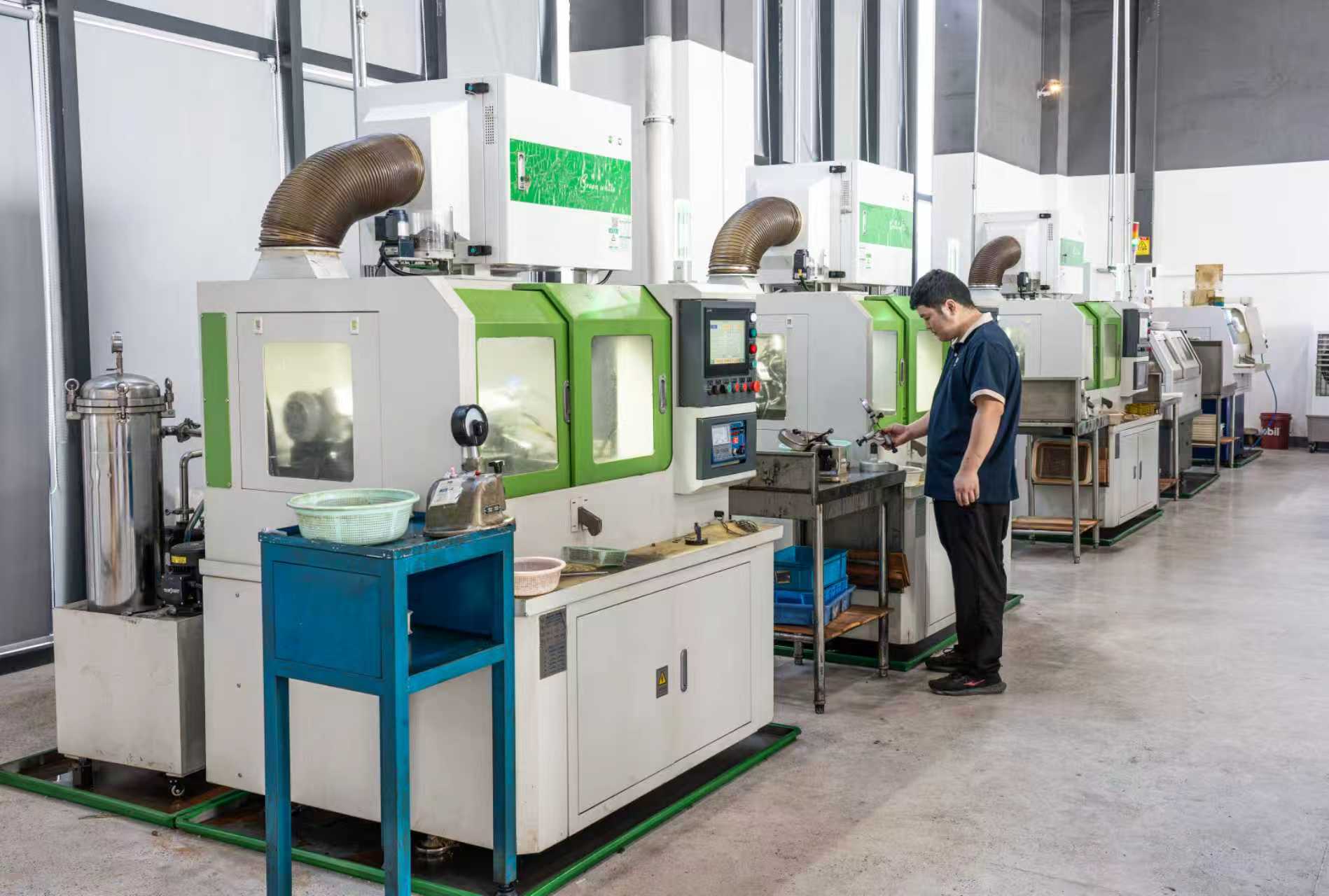
Where INB's range sits in this picture
INB manufactures high-precision standard bearings with inner hole diameters from 2 mm to 8 mm in precision grades from P6 to P4, under an ISO 9001 quality management system, from a 2,000 m² facility with an annual output of 6,000,000 units. Two designations that come up repeatedly in dental handpiece sourcing are the SR133TL and the SMR74TL.
The two models are not interchangeable, and that is the point. A range that spans 2 mm to 8 mm of bore cannot be covered by a single designation, which is why a supplier publishes several. When designations such as the SR133TL and SMR74TL appear on the same shortlist, the comparison should be resolved in this order:
- Dimensional fit against the handpiece head envelope.
- Precision grade against the runout, noise, and vibration target.
- Speed capability against the drive category.
- Lubrication and sealing against the sterilization cycle.
Any designation that fails the first step is eliminated regardless of how it performs on the other three. Buyers should confirm bore, outer diameter, width, and precision grade against the current INB drawing for each designation rather than assuming equivalence between model numbers.
One boundary should also be stated plainly. INB's stated capability covers high-precision standard bearings in the 2 mm to 8 mm bore range. A buyer whose requirement is an imperial miniature bearing or a flanged stainless steel miniature bearing should confirm availability of that specific configuration rather than assume it is a catalogue standard.
A Seven-Step Selection Sequence for Handpiece Buyers
Step 1 — Classify the handpiece first. Air-turbine, electric micromotor, or air-driven low-speed. Every downstream criterion changes with this answer, and starting from a part number instead of a category is the most common ordering mistake in this process.
Step 2 — Measure the dimensional envelope. Record bore, outer diameter, and width from the actual head assembly rather than from a previous bearing. INB's available bore range runs from 2 mm to 8 mm; anything outside that range requires a different conversation before it requires a different supplier.
Step 3 — Set the precision class against the failure mode you are preventing. If the problem is noise and vibration, specify toward P4. If the problem is cost in a low-speed head, P6 may satisfy the requirement. Map the chosen grade to ISO 492, ABMA ABEC, or DIN 620 so quotations remain comparable across suppliers.
Step 4 — Match the material to the environment. For a head that is repeatedly sterilized and exposed to moisture or chemicals, 440C stainless steel is the reference material used in medical and food-processing miniature bearings.
Step 5 — Confirm the thermal margin. Ask for thermal cycle life data rather than a single maximum temperature figure. The -50℃ to 160℃ testing range INB uses in its own process is an example of the kind of evidence a buyer should request.
Step 6 — Define lubrication and sealing as a specification line, not an assumption. Medical-grade permanent lubricant filling and a fully sealed labyrinth structure are the two decisions that determine whether the bearing survives beyond its first service interval.
Step 7 — Validate against a reference model and a cost baseline. INB's published comparison data positions its dental handpiece product against the SMR144Z reference with a performance gap below 20 dB, a longer expected service life, and about 10% lower cost — achieved through a low friction coefficient, low heat generation, and high transmission efficiency that reduce the energy consumption of the supported equipment.
Use Cases: Where This Comparison Gets Applied
An air-turbine OEM replacing an incumbent bearing. The dimensional envelope is already fixed, so the work starts at step 3. The questions that matter are precision grade, speed validation evidence, and whether the noise signature changes after the swap.
An electric handpiece manufacturer entering a new speed tier. Steps 2 through 6 all need to be re-run, because heat generation and lubrication load change together. A bearing that was adequate at one duty level may become the limiting component at the next.
An importer building a two-model stock list. SR133TL and SMR74TL cover different designations within INB's range. Stocking both reduces split orders, but only if the dimensional map for each customer's head is verified in advance rather than assumed at the counter.
An aftermarket repair service matching bearings to handpiece brands. Fit-first logic applies. A correctly sized P6-grade bearing generally outperforms a mis-sized P4-grade bearing, because the failure is geometric rather than tribological.
A distributor qualifying a new miniature bearing supplier. The evidence pack is the differentiator: 100% pre-shipment speed validation, thermal cycle data across the -50℃ to 160℃ range, friction and wear performance results, and a clearly scoped ISO 9001 certificate.
Comparison Table: Handpiece Type vs Miniature Bearing Requirement
| Handpiece category | Drive principle | Binding constraint | Target precision class | Dominant failure risk | Key verification step |
|---|---|---|---|---|---|
| Air-turbine | Compressed air driving a rotor | Speed capability and friction torque | P4-class high-precision miniature bearing | Over-speeding; thermal fatigue | 100% pre-shipment speed validation; thermal cycle testing across -50℃ to 160℃ |
| Electric micromotor | Motor-driven rotation | Continuous-duty heat and lubricant retention | P4 to P6, depending on the noise target | Premature wear and lubrication failure | Sealed labyrinth and permanent lubricant verification; wear rate monitoring |
| Air-driven low-speed / air motor | Compressed air at higher torque, lower speed | Dimensional fit and load capacity | P6 to P4 | Premature wear under radial load | Dimensional match to the head envelope; periodic friction and wear testing |
The table below separates what can be verified from INB's stated capability, so that a buyer can see where the range already covers the requirement and where a specific configuration needs confirmation.
| Requirement line | Reference value | Source of the figure |
|---|---|---|
| Bore diameter range | 2 mm to 8 mm | INB stated manufacturing capability |
| Precision grades | P6 to P4 | INB stated manufacturing capability |
| Material standard for medical miniature bearings | Stainless steel 440C | SKDIN Engineering Guide (industry standard) |
| Quality management system | ISO 9001 | INB stated capability |
| Annual output | 6,000,000 units | INB stated capability |
| Thermal cycle test window | -50℃ to 160℃ | INB thermal management process |
| Pre-shipment speed validation | 100% of units | INB speed control process |
| Noise against SMR144Z reference | Below 20 dB | INB published comparison data |
| Cost against SMR144Z reference | About 10% lower | INB published comparison data |
| Main market | China (export ratio 5%) | INB company profile |
Finally, when two designations such as the SR133TL and the SMR74TL sit on the same shortlist, this is the sequence that resolves the comparison:
| Comparison step | What to check | Why it decides the outcome |
|---|---|---|
| 1. Dimensional fit | Bore, outer diameter, and width against the handpiece head | A bearing that does not seat cannot be evaluated on any other attribute |
| 2. Precision grade | P6 to P4 against the runout, noise, and vibration target | Determines acoustic performance and smoothness of rotation |
| 3. Speed capability | Against the drive category: turbine, electric, or air-driven low-speed | Determines survivability under overspeed conditions |
| 4. Lubrication and sealing | Medical-grade permanent lubricant filling and sealed labyrinth structure | Determines service life between repair intervals |
Frequently Asked Questions
Which precision standard should a dental handpiece miniature bearing be quoted against?
Miniature bearing precision is governed by global standards including ABMA ABEC (1–9), ISO 492 (P0–P2), and DIN 620, where higher ABEC numbers correlate to tighter tolerances (AST Bearings). A quotation that names a grade without naming the standard is not directly comparable with another supplier's quotation. INB produces high-precision standard bearings in precision grades from P6 to P4 under an ISO 9001 quality management system, so buyers can request that the grade be mapped to the standard their design team works to.
Can one miniature bearing model cover both air-turbine and electric handpiece designs?
Usually not, because the two categories stress the bearing differently. An air-turbine head demands speed capability and low friction torque; an electric micromotor head demands continuous-duty heat management and lubricant retention. INB's range covers bore diameters from 2 mm to 8 mm in grades from P6 to P4, and includes separate designations such as the SR133TL and the SMR74TL precisely because a single model cannot cover that span. The deciding sequence is dimensional fit first, then precision grade, then speed capability, then lubrication and sealing.
How does bearing choice affect the total cost of a handpiece programme?
Two cost lines move. The first is purchase price: INB's published comparison data positions its dental handpiece product against the SMR144Z reference at about 10% lower cost, with a longer expected service life and noise below 20 dB. The second line, usually the larger one, is operational: a low friction coefficient, low heat generation, and high transmission efficiency reduce the energy consumption of the supported equipment, while high-speed, low-noise operation reduces maintenance cost over the life of the head. Over-specifying precision in a low-speed handpiece adds cost without adding function; under-specifying it in a turbine head moves the cost into warranty and service.
Can I validate a miniature bearing before committing to a full production order?
Yes — validation is the purpose of a sample. Ask for the specific designation you intend to use, and request the evidence that goes with it: 100% speed performance validation before shipment, thermal cycle life testing across the -50℃ to 160℃ range, and friction and wear performance results. For a handpiece application the sample stage should also test the actual head assembly, because the dominant failure modes are driven by the assembly rather than by the bearing in isolation. INB's sales team can be reached at yuhang001@126.com or +86 18957446001 to arrange a sample and confirm the current drawing for the designation you are evaluating.
What determines lead time on a miniature bearing order?
The variables that most often move a schedule are the designation being produced, the precision grade, and the lubrication and sealing configuration, because those determine the process route. INB operates an ISO 9001 quality management system from a 2,000 m² facility with an annual output of 6,000,000 units, and validates 100% of units for speed performance before shipment, which places a floor on how quickly any order can be released. The reliable approach is to confirm the drawing and the required evidence pack at quotation stage rather than after the purchase order, and to request the specific lead time for the exact designation. Contact INB directly to confirm timing for your configuration.
Conclusion
Miniature bearing selection for dental handpieces is a comparison problem before it is a purchasing problem. Air-turbine heads are governed by speed capability and friction torque. Electric micromotor heads are governed by continuous-duty heat and lubricant retention. Air-driven low-speed heads are governed by dimensional fit and load capacity. Precision, material, and sealing requirements follow from that classification rather than preceding it.
INB's 2 mm to 8 mm bore range in P6 to P4 grades, supported by ISO 9001 production, 100% pre-shipment speed validation, and thermal cycle life testing across a -50℃ to 160℃ range, gives buyers a reference range in which each handpiece category has a defined starting point. Designations such as the SR133TL and the SMR74TL exist because that range cannot be reduced to a single model — which is exactly why the comparison should be run in the order set out above, starting with dimensional fit and ending with lubrication and sealing.
Request a Miniature Bearing Sample or Quotation
Send INB the handpiece category, the bore and envelope dimensions, and the precision grade you are designing to. The team will confirm the matching designation, share the speed validation and thermal test evidence, and quote against your specification.
Email: yuhang001@126.com | Tel / WhatsApp: +86 18957446001
Building 9, Beikun Industrial Area, No. 2288 Yongmao West Road, Zhuangqiao Street, Jiangbei District, Ningbo City
Have Questions or Need More Details?
Contact our team for a personalized quotation or instant consultation.
Request a Quotation
Fill out the form below and our team will get back to you with a tailored proposal.
WhatsApp Direct Chat
Prefer to chat in real-time? Message us on WhatsApp for instant assistance & quick answers.
- Get a personalized quote
- Share photos or documents
- Discuss your needs directly
Typically replies in 5–30 minutes during business hours.