
Miniature Bearings for Air Turbine Dental Handpieces: OEM Design Guide
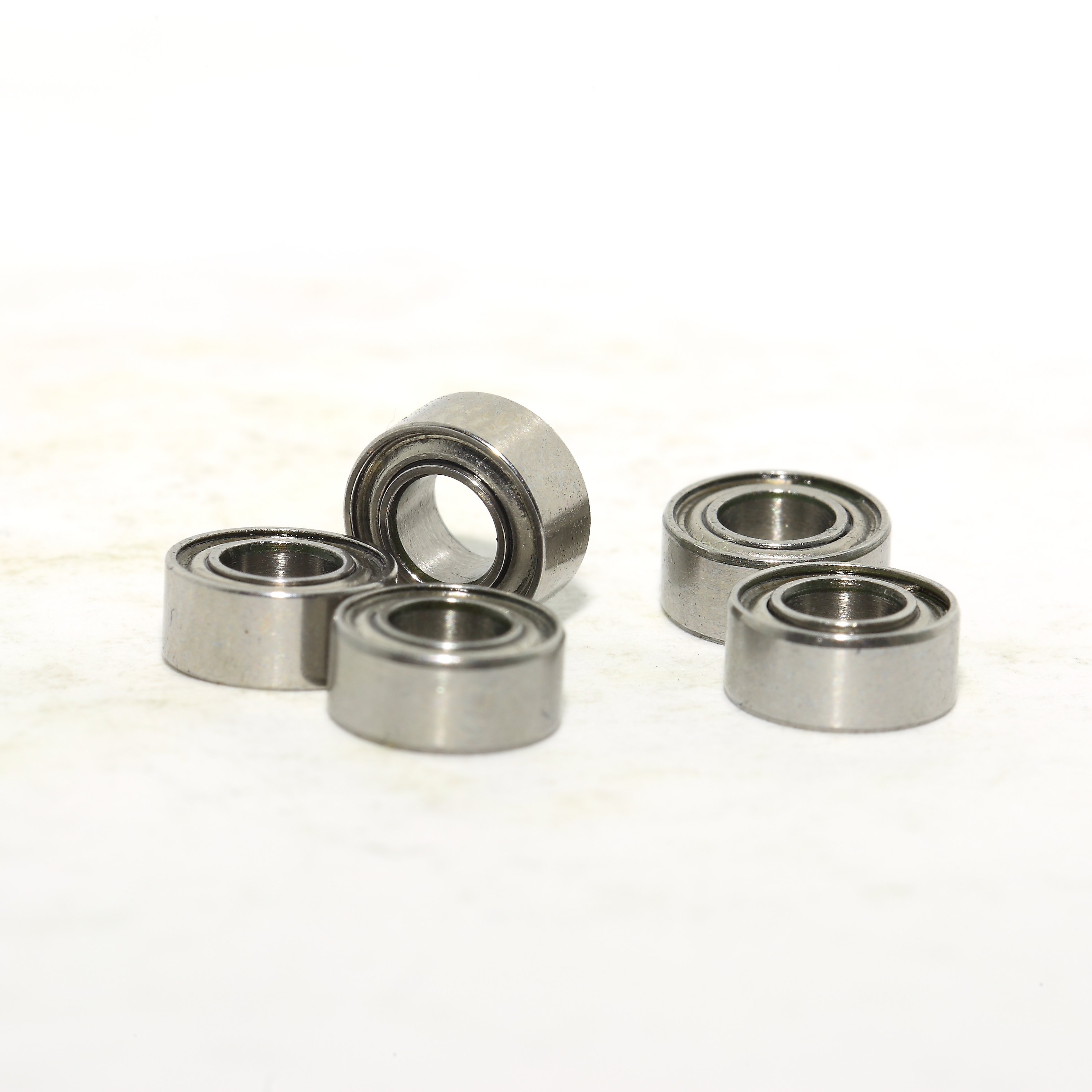
Air turbine dental handpieces spin faster than almost any other handheld instrument in clinical use, and the components carrying that speed are small enough to sit on a fingertip. For OEM design engineers, the bearing decision is not a catalogue lookup — it is an interface decision that determines noise, heat, service life, and whether the handpiece survives repeated sterilisation cycles.
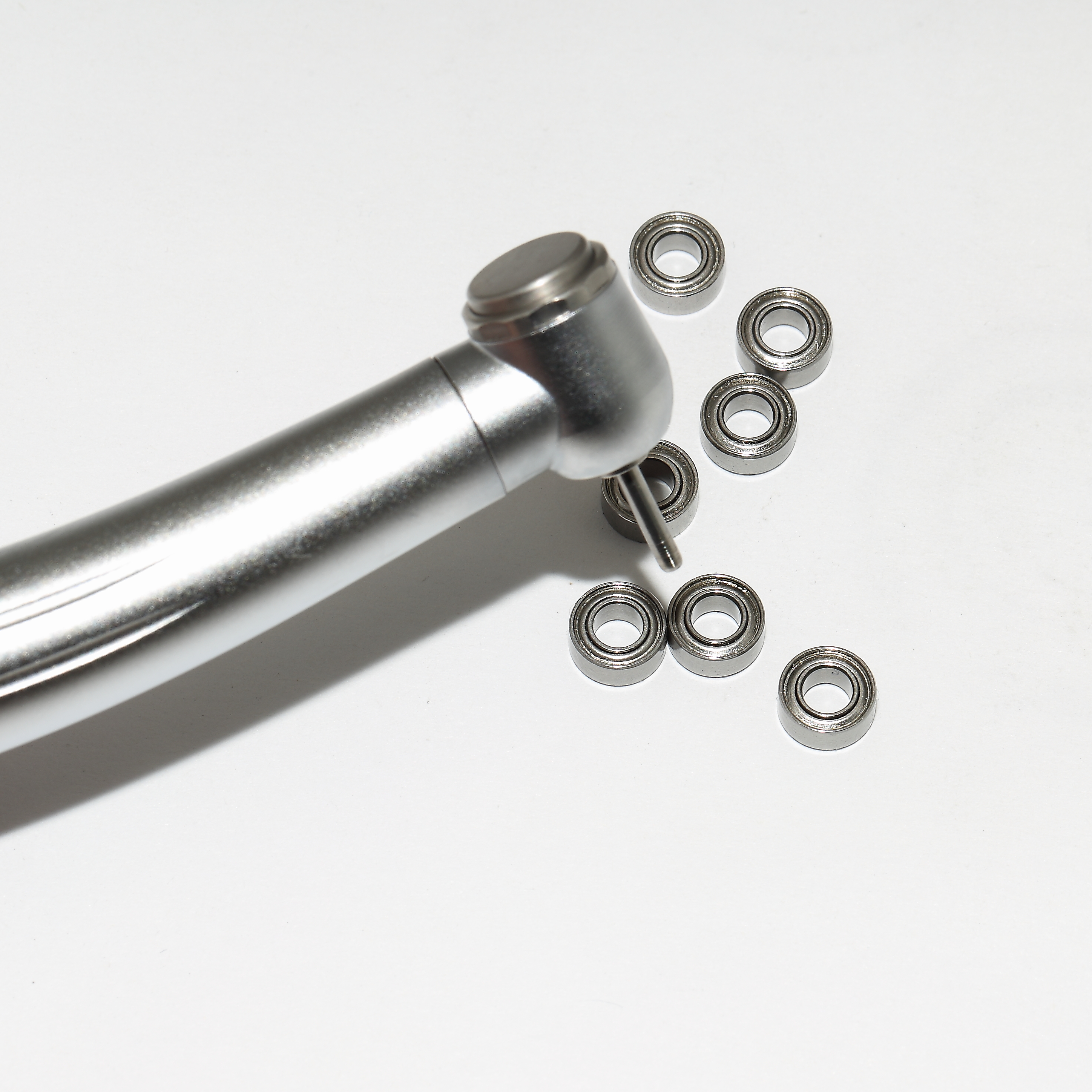
This guide is written from the perspective of the design engineer specifying the rotating assembly. It covers what air turbine systems demand from a bearing, what INB supplies for that application, and how an OEM project moves from drawing to shipped production. The reference part used throughout is SMR144ZTLP4 W2.38, a P4-precision miniature bearing with a 350,000–400,000 rpm limiting speed, a −50 °C to 160 °C operating range, and SUS440 stainless steel construction. INB also supplies the SR133TL miniature bearing for this application category. INB is the bearing brand of Ningbo City Jingyin Electromechanical Technology Co., Ltd., a bearing manufacturer based in Ningbo, Zhejiang Province, China.
Why Air Turbine Handpieces Are a Different Bearing Problem
Air turbines are driven by compressed air across a small impeller, and the rotor is supported on miniature ball bearings that turn at clinical speeds that commonly sit in the hundreds of thousands of revolutions per minute. That envelope produces four design pressures that pull against each other.
Bore and envelope fit
The turbine spindle is thin by necessity. Bore diameter fixes the shaft interface the design can use, and outer diameter has to fit inside the head shell without enlarging the instrument. SMR144ZTLP4 W2.38 uses a 3.175 mm bore — the imperial 1/8 inch size — with a 3.175 × 6.35 × 2.38 mm envelope, which is a compact format suited to narrow turbine spindles.
Speed tied to precision
At the top of the speed range, each revolution finishes in a fraction of a millisecond, so rotational accuracy is not an abstract quality metric. Radial runout created by loose tolerance becomes vibration, vibration becomes handpiece noise, and noise is an early symptom of accelerated raceway wear. A P4 tolerance class is one of the reasons a bearing can hold stability at these speeds rather than merely survive them.
Heat from three directions
Heat arrives from compressed-air expansion, from rolling friction inside the bearing, and from reprocessing. INB rates SMR144ZTLP4 W2.38 for −50 °C to 160 °C, a band that covers both clinical operation and autoclave exposure rather than normal ambient running alone.
Corrosion from reprocessing
Reusable handpieces are sterilised repeatedly, and the bearing interior also sees coolant water and aerosol during cutting. Stainless steel is the accepted material route here; third-party engineering guidance identifies 440C stainless steel as the primary material for miniature bearings in medical and food-processing applications because of its resistance to moisture and chemicals. INB specifies SUS440 for this dental application.
When these four requirements conflict — a smaller envelope combined with a higher rotational target, for example — the bearing stops being a purchased item and becomes a supplier collaboration. That is the point at which OEM projects begin.
Industry Background: Miniature Bearings and the Dental Device Supply Chain
The miniature bearing category has been expanding alongside medical devices and robotics. Future Market Insights estimates the global miniature ball bearings market at approximately USD 2.25 billion in 2025, with medical devices among the demand drivers. Published estimates for the same market differ noticeably — Precedence Research reports USD 2.89 billion, while IMARC Group reports USD 2.0 billion — so market size is best treated as an order of magnitude rather than a precise figure.
Regionally, Precedence Research places Asia Pacific at roughly 60% revenue share in 2025, with China the largest regional producer and consumer. On the export side, industry reporting based on China customs figures shows bearing exports rising 7.2% year on year in the first seven months of 2025 to nearly 497,852 tons. These numbers describe the scale of the supply base; they say nothing about the capability of any individual manufacturer.
At the specification level, miniature bearing precision is governed by established international frameworks: ABMA ABEC grades 1 through 9, ISO 492 classes P0 through P2, and DIN 620. Higher numbers in the ABEC system correspond to tighter tolerances. INB produces to precision grades P6 through P4, which means the "P4" designation on SMR144ZTLP4 W2.38 refers to a standardised tolerance window rather than a supplier-defined label.
On the supply side, the global miniature bearing sector is dominated by large manufacturers including MinebeaMitsumi, NSK, SKF, and Schaeffler (Barden), with MinebeaMitsumi particularly strong in small sizes. For OEM designers, the practical distinction between these suppliers and a specialist manufacturer is rarely whether a P4 miniature bearing can be produced at all — it is how quickly a custom drawing becomes a repeatable production part.
What INB Supplies for Air Turbine Dental Handpiece Programmes
INB is the bearing brand of Ningbo City Jingyin Electromechanical Technology Co., Ltd. The company produces high-precision standard bearings with bore diameters from 2 mm to 8 mm and precision grades from P6 to P4, serving medical device manufacturers and micro-motor applications. Air turbine dental handpieces sit precisely at the intersection of those two industries.
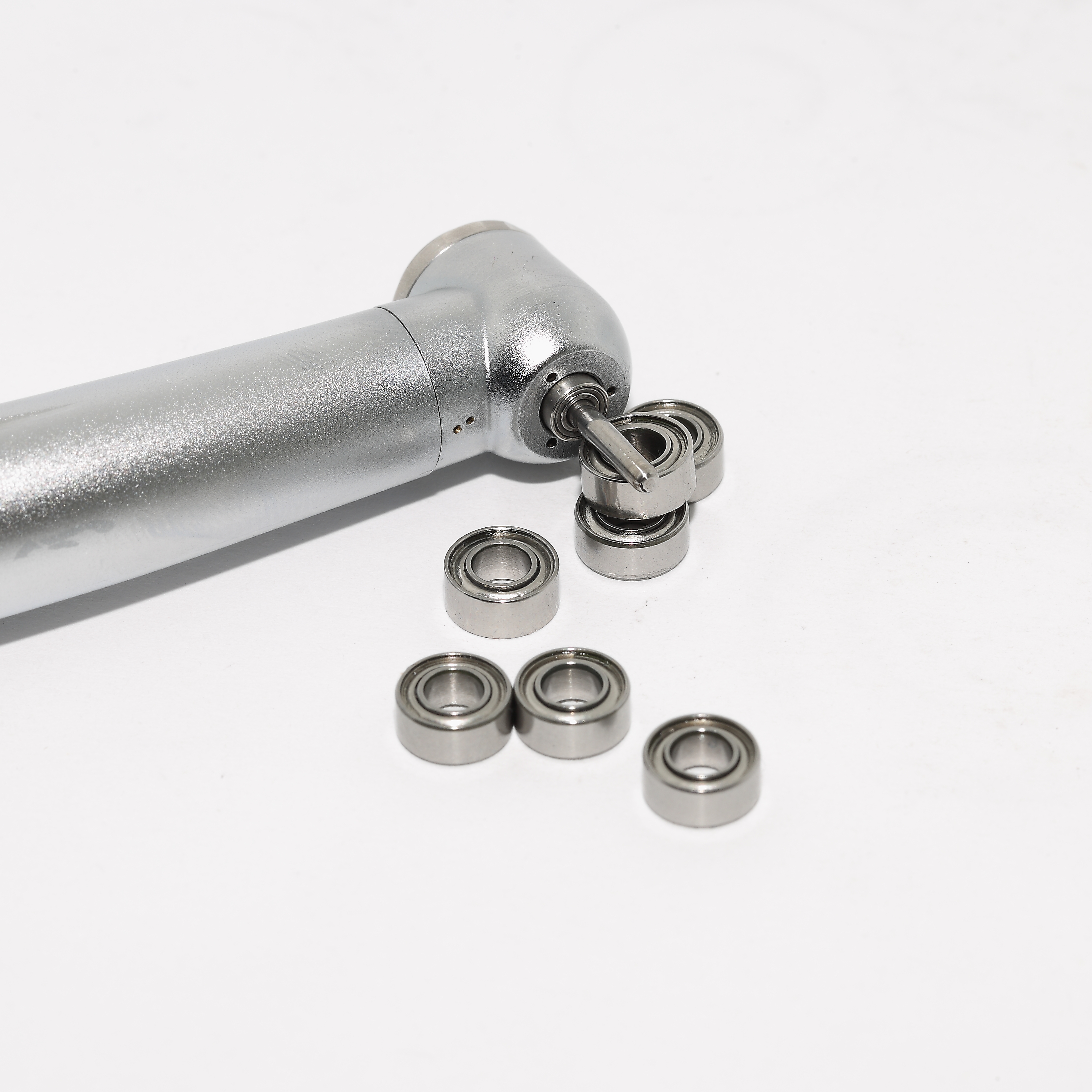
Two models in the INB miniature bearing range are relevant to this design area: SMR144ZTLP4 W2.38, which is the fully documented reference part, and SR133TL, also supplied for this application category.
The documented specification for SMR144ZTLP4 W2.38 is as follows:
- Boundary dimensions: 3.175 × 6.35 × 2.38 mm (bore × outside diameter × width)
- Precision class: P4
- Limiting speed: 350,000–400,000 rpm
- Operating temperature: −50 °C to 160 °C
- Material: SUS440 stainless steel
- Target application: dental handpiece
The combination matters for turbine head design. A 3.175 mm bore matches an imperial 1/8 inch spindle, and a 2.38 mm width is narrower than common alternatives, which frees axial length in a stacked bearing arrangement where head-shell space is at a premium.
Capability claims and field results should be read separately. The P4 class and the 350,000–400,000 rpm limiting speed are product data. The operating history is a separate layer: an INB case record for a medical device client documents miniature bearings supplied for use in dental handpieces, in a delivery of 80,000 units, running 500 hours with stable high-speed operation and extended equipment service life. The case summary highlights ultra-high speed, P4 precision, long service life, and medical-grade reliability.
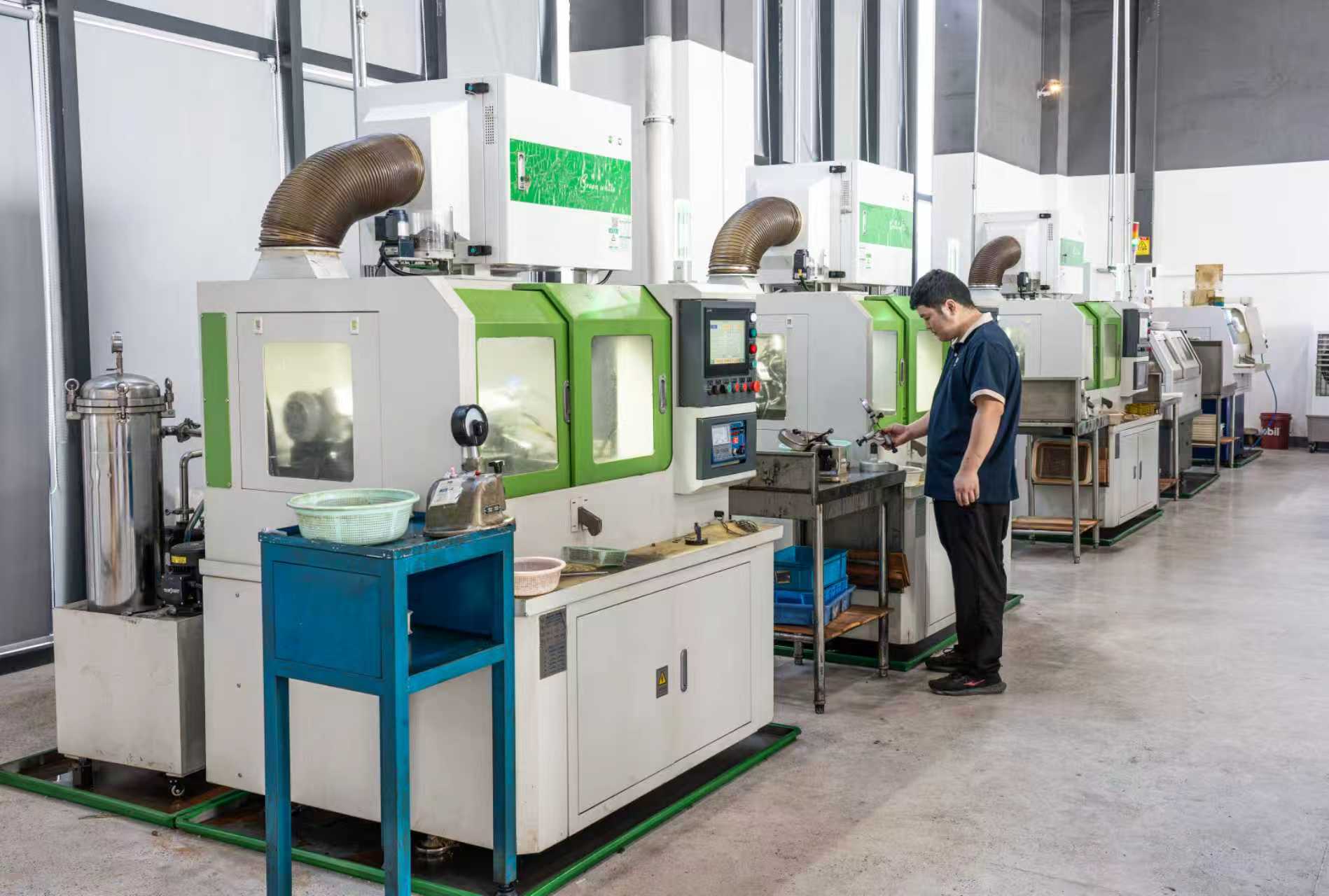
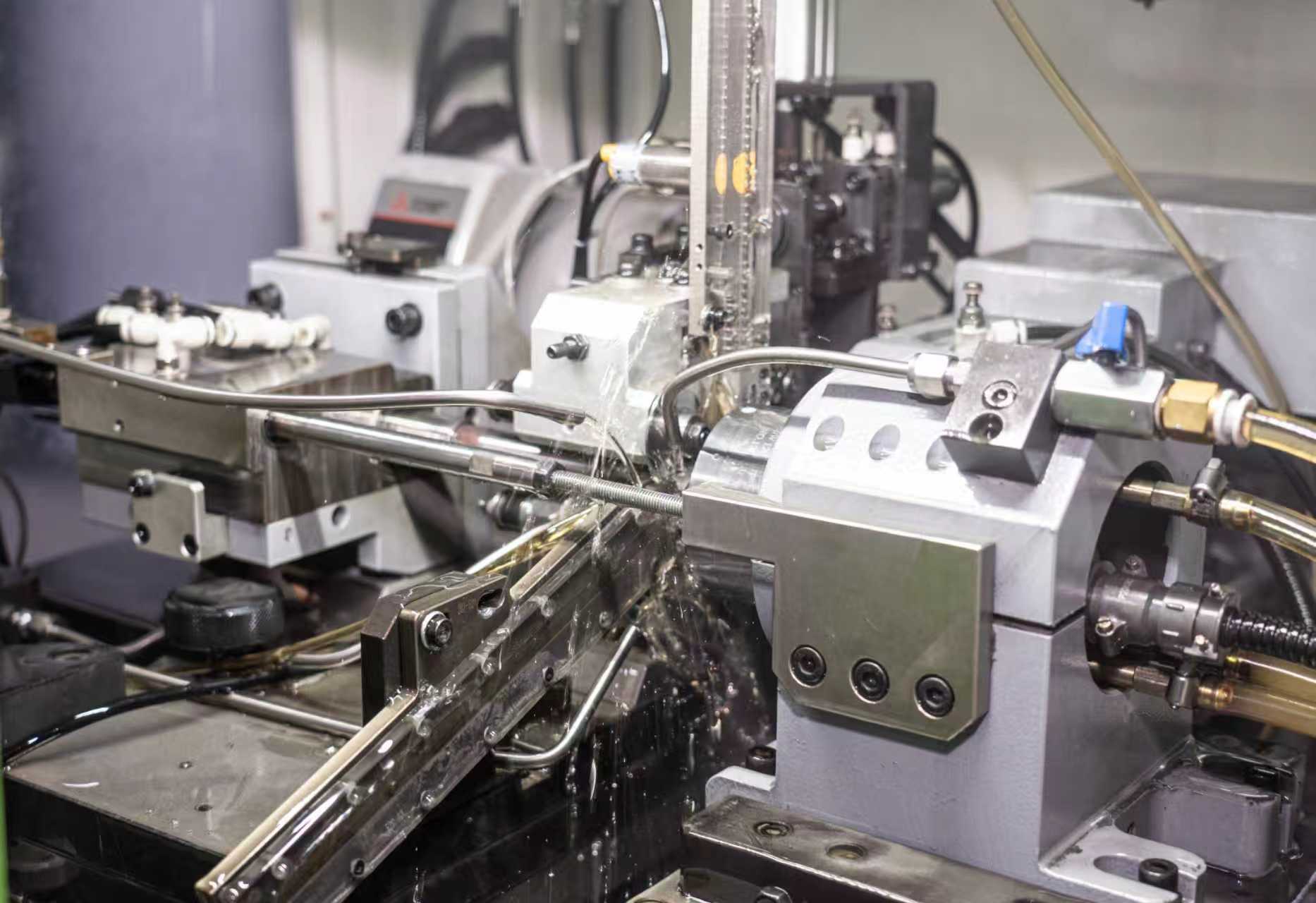
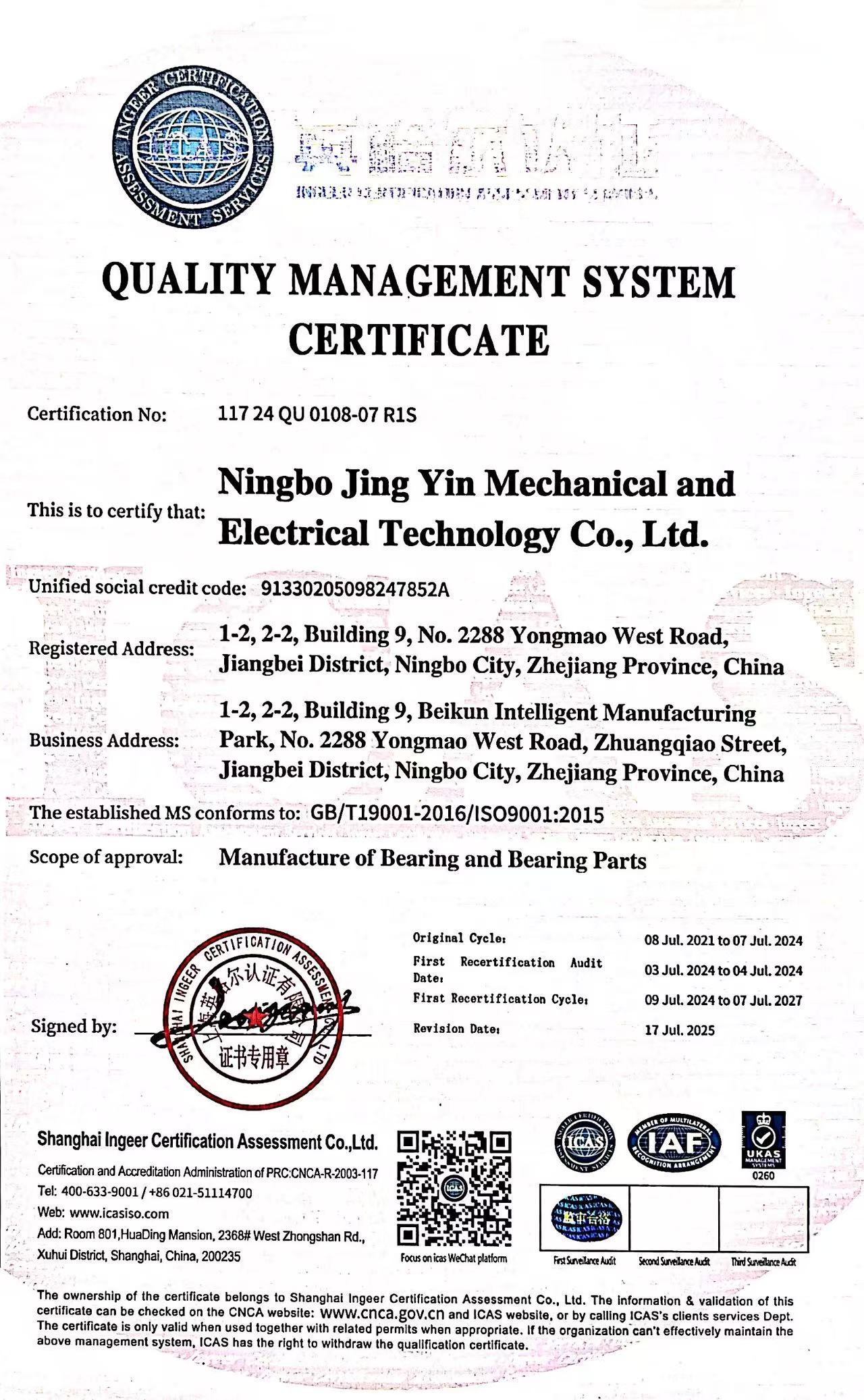
Manufacturing quality behind the part: INB operates under ISO 9001. Certificate number 117 24 QU 0108-07 R1S was issued by Shanghai Ingeer Certification Assessment Co., Ltd. to the standard GB/T19001-2016 / ISO 9001:2015, with the scope "Manufacture of Bearing and Bearing Parts," valid through 7 July 2027. In-house inspection equipment includes hardness testers, roundness meters, profilometers, and roughness measurement instruments.
Step-by-Step: Integrating the Bearing into an Air Turbine Project
The sequence below reflects how a custom miniature bearing programme typically moves from design intent to repeatable supply.
Step 1 — Fix the bearing interface dimensions first
Work back from the turbine spindle. A 1/8 inch (3.175 mm) shaft aligns directly with SMR144ZTLP4 W2.38. If the head design has a different stack-up height, settle the width question early, because bearing width drives the axial space available for the impeller and the rear support.
Step 2 — Set the speed margin above the turbine target
The bearing limiting speed has to sit above the actual turbine running speed, because air supply pressure and instrument condition both vary in the field. A bearing rated 350,000–400,000 rpm is intended for designs operating in that band, not for a 200,000 rpm platform where a lower-rated part is sufficient.
Step 3 — Choose the precision class deliberately
P4 is the reference point for high-speed turbine heads. Because INB produces across P6 to P4, a handpiece family can specify P6 for lower-speed variants and P4 for high-speed heads without changing supplier or drawing conventions.
Step 4 — Confirm the temperature envelope
Two thermal events dominate: running friction, and sterilisation. The −50 °C to 160 °C rating on SMR144ZTLP4 W2.38 covers both, which removes an assumption that designers would otherwise have to test empirically.
Step 5 — Lock the material against the sterilisation protocol
SUS440 stainless steel aligns with accepted medical-device practice for miniature bearings. If the clinical protocol involves repeated autoclaving, material is not the correct place to reduce cost.
Step 6 — Translate custom requirements into production inputs
INB offers OEM production services and customised production based on customer specifications. In practice that means the design team supplies the drawing, tolerance expectations, material specification, and volume forecast, and those inputs go into production rather than being matched against an existing catalogue line.
Step 7 — Agree commercial and acceptance terms
Standard purchasing terms list MOQ 50 units, FOB delivery terms, 100% factory inspection as the acceptance criterion, and payment before shipment. The OEM production capability sheet states a lead time of 7 days with stock availability.
Step 8 — Plan volume against capacity
INB monthly capacity is 500,000 units, and the documented medical device order for dental handpiece bearings was executed at 80,000 units. At that scale, capacity is rarely the constraint — scheduling and specification freeze dates usually are.
Step 9 — Confirm after-sales terms before ramp-up
INB provides after-sales return and exchange support. Design teams should note this in the project risk register alongside inspection data, so that any deviation found at incoming inspection has a defined route.
Use Cases in Air Turbine Handpiece Design
High-speed turbine heads
Designs that operate at the top of the clinical speed band are the primary use case for a P4 miniature bearing with a 350,000–400,000 rpm limiting speed. The precision class supports rotational stability that shows up in the clinic as lower noise and more consistent cutting performance.
Handpieces with demanding reprocessing cycles
SUS440 material combined with a −50 °C to 160 °C operating range suits reusable instruments that move between clinical use and autoclave on a tight daily cycle.
Compact head geometries
The 2.38 mm width of SMR144ZTLP4 W2.38 is relevant where head-shell volume is constrained and every millimetre of axial stacking counts. A narrower bearing can allow a shorter head without changing spindle diameter.
Series production programmes
Monthly capacity of 500,000 units and a stated 7-day lead time support OEM programmes that need continuity rather than one-off supply, including order volumes in the range of the documented 80,000-unit medical device delivery.
OEM customisation projects
Where a standard envelope does not fit, OEM and customised production based on customer requirements allows the bearing to be specified to the handpiece rather than the handpiece being redesigned around an available part. Combined with the 2 mm to 8 mm bore range and P6–P4 precision grades, this gives design teams room to match the bearing to the assembly.
Design Requirement vs Verified Specification
The table below maps the working requirements an OEM designer starts with to the specifications INB documents for SMR144ZTLP4 W2.38 and its production process. Every entry is drawn from INB product, certificate, capability, or case documentation.
| Air turbine design requirement | INB verified specification (SMR144ZTLP4 W2.38) |
|---|---|
| Bore matched to a turbine spindle | 3.175 mm bore; envelope 3.175 × 6.35 × 2.38 mm |
| Rotational accuracy at high speed | P4 precision class |
| Speed headroom above operating speed | 350,000–400,000 rpm limiting speed |
| Tolerance to running and sterilisation heat | −50 °C to 160 °C operating temperature |
| Corrosion resistance for reusable instruments | SUS440 stainless steel |
| Manufacturing quality system behind the part | ISO 9001:2015, certificate 117 24 QU 0108-07 R1S, scope: manufacture of bearing and bearing parts, valid to 2027-07-07 |
| OEM customisation to a drawing | OEM production and customised production based on customer requirements |
| Continuous supply for series production | Monthly capacity 500,000 units; 7-day lead time with stock |
| Incoming quality verification | 100% inspection; factory inspection as acceptance criterion |
| Procurement entry point | MOQ 50 units; FOB delivery terms; payment before shipment |
| Available bore and precision range for programme flexibility | Bore diameter 2 mm–8 mm; precision grades P6–P4 |
One point the table cannot express: a specification line is a promise, while a 500-hour logged deployment is evidence. The documented 80,000-unit medical device delivery for dental handpieces, running 500 hours with stable high-speed operation and extended equipment service life, is the closest thing to proof of behaviour over time.
Frequently Asked Questions
What certifications does INB hold for miniature bearings used in dental handpiece applications?
INB operates under ISO 9001. The certificate number is 117 24 QU 0108-07 R1S, issued by Shanghai Ingeer Certification Assessment Co., Ltd. to GB/T19001-2016 / ISO 9001:2015, with the scope "Manufacture of Bearing and Bearing Parts." It is valid through 7 July 2027 and covers the global market. At product level, the SMR144ZTLP4 W2.38 dental handpiece bearing is manufactured from SUS440 stainless steel to P4 precision. Buyers verifying a supplier should check both layers — system certification and the material and precision declaration attached to the specific model.
Can INB customise miniature bearings to an OEM drawing?
Yes. INB provides OEM production services and customised production based on customer requirements. The production range covers bore diameters from 2 mm to 8 mm and precision grades from P6 to P4, so an OEM design team can specify the bearing envelope, precision class, and material to match the handpiece rather than adapting the handpiece to a catalogue part. Customisation inputs include the drawing, dimensional and tolerance requirements, and the production volume the programme requires. This model suits air turbine projects where the head geometry or stack-up height does not align with a standard off-the-shelf configuration.
What are the minimum order quantity and acceptance terms?
Standard purchasing terms specify a minimum order quantity of 50 units, FOB delivery terms, 100% factory inspection as the acceptance criterion, and payment before shipment. These terms apply to standard purchasing. Programmes with customised specifications should confirm commercial terms against the specific drawing, since the customisation scope affects both the production setup and the order level.
What is the lead time and monthly capacity for dental handpiece bearing orders?
INB's production capability sheet states a 7-day lead time with stock availability, and a monthly capacity of 500,000 units. For context on scale, the documented medical device case for dental handpiece bearings was executed at a volume of 80,000 units. A series production programme at that scale therefore sits comfortably inside the stated monthly capacity, and the practical scheduling constraint is specification freeze and order confirmation rather than throughput.
How should an OEM designer start a miniature bearing project for air turbine handpieces?
Begin with the interface, not the part number. Fix the bore diameter and the axial stack-up height, then set the limiting speed above the highest turbine speed the platform will reach, choose the precision class against that speed, and confirm the material against the sterilisation protocol. For a 1/8 inch turbine spindle with a narrow stack-up, the reference specification is SMR144ZTLP4 W2.38: 3.175 × 6.35 × 2.38 mm, P4 precision, 350,000–400,000 rpm, −50 °C to 160 °C, SUS440. Design teams can send drawings and volume requirements to INB at www.lnb-brg.com, by email at yuhang001@126.com, or by phone and WhatsApp at +86 18957446001 to confirm fit, customisation scope, and commercial terms.
Conclusion
Air turbine dental handpieces compress a difficult set of constraints into a very small space: a narrow bore, a fast spindle, a tight heat budget, and a reprocessing cycle that punishes poor material choices. Meeting all four at once is what separates a bearing that works on a bench from one that still works after 500 hours in clinical service.
For OEM designers, the useful sequence is consistent: fix the interface dimensions, set the speed margin, select the precision class against that speed, confirm the temperature envelope, and lock the material to the sterilisation protocol. SMR144ZTLP4 W2.38 addresses that sequence with documented values — 3.175 × 6.35 × 2.38 mm, P4 precision, 350,000–400,000 rpm limiting speed, −50 °C to 160 °C, and SUS440 stainless steel — produced by a manufacturer operating under ISO 9001 certificate 117 24 QU 0108-07 R1S, with OEM customisation, 500,000-unit monthly capacity, and a documented 80,000-unit dental handpiece deployment behind it.
The design decision, ultimately, is not which bearing to buy. It is which supplier can hold a specification from first drawing to the two hundredth production lot.
Discuss Your Handpiece Bearing Specification
Send your drawing, bore size, speed target, and expected volume, and INB will confirm fit against the SMR144ZTLP4 W2.38 reference specification or scope a customised version for your programme.
Website: www.lnb-brg.com | Email: yuhang001@126.com | Tel / WhatsApp: +86 18957446001
Ningbo City Jingyin Electromechanical Technology Co., Ltd. — Building 9, Beikun Industrial Area, No. 2288 Yongmao West Road, Zhuangqiao Street, Jiangbei District, Ningbo City
Have Questions or Need More Details?
Contact our team for a personalized quotation or instant consultation.
Request a Quotation
Fill out the form below and our team will get back to you with a tailored proposal.
WhatsApp Direct Chat
Prefer to chat in real-time? Message us on WhatsApp for instant assistance & quick answers.
- Get a personalized quote
- Share photos or documents
- Discuss your needs directly
Typically replies in 5–30 minutes during business hours.