
Miniature Bearings in Dental Handpieces: An Application Guide for High-Speed Turbine Designs
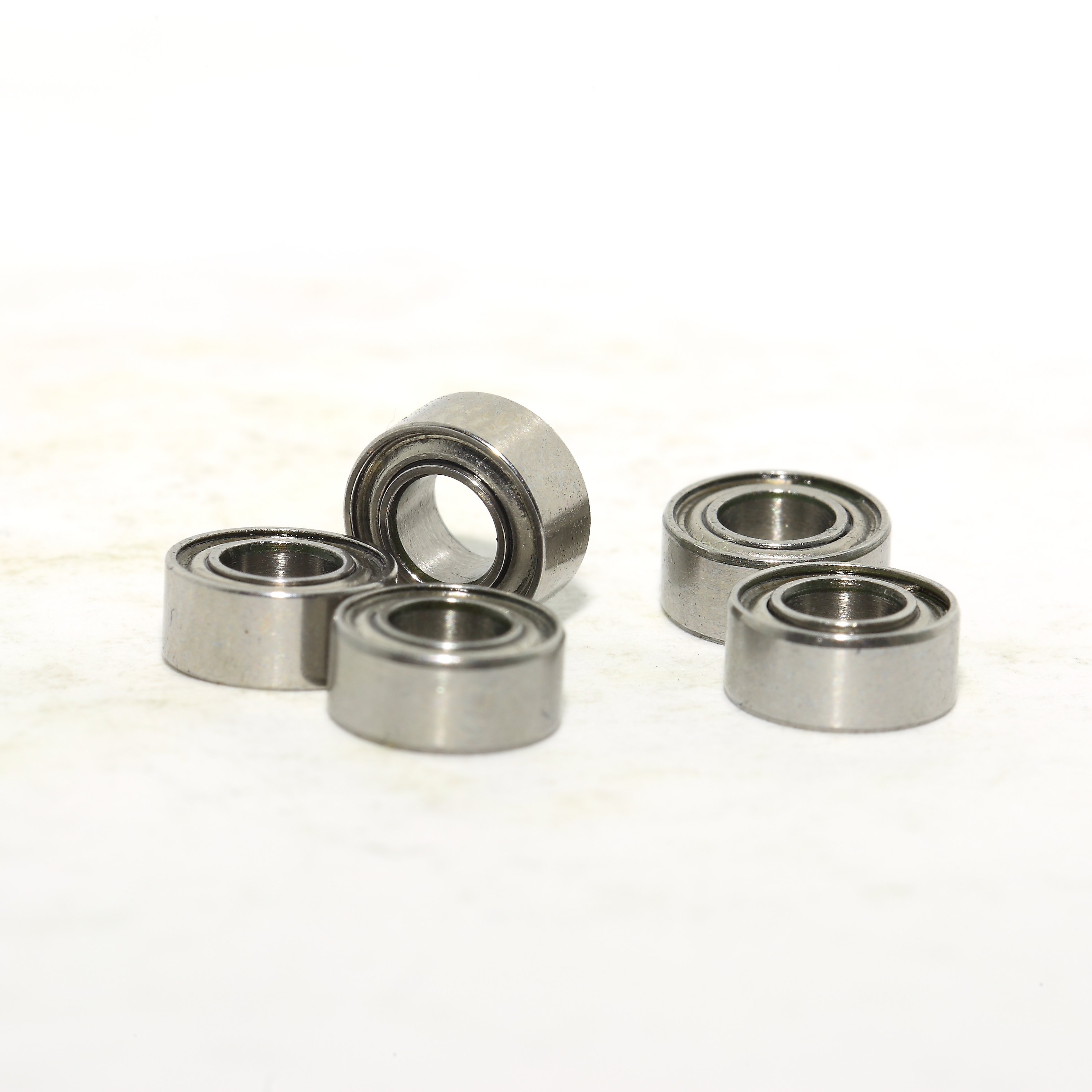
A miniature bearing inside an air-turbine dental handpiece is selected under constraints, not preferences. The bore and outside diameter are fixed by the spindle envelope, the speed is fixed by the turbine, the thermal range is fixed by the duty cycle and sterilization routine, and the hygiene requirement is fixed by the clinical environment. For a handpiece manufacturer, the useful question is therefore narrow: which miniature bearing specification satisfies all of these boundaries at the same time — and which supplier can document that it does?
This application guide is written for the engineering and procurement teams that design and build high-speed turbine handpiece assemblies. It works through the constraint logic of the spindle application, then applies that logic to the INB dental handpiece bearing range: SR133TL, SMR74TL, SR144ZTLP4 W2.78 and SMR144ZTLP4 W2.38. Every specification, certification and capacity figure below is taken from INB's published product and quality-system data.
INB is the bearing brand of Ningbo City Jingyin Electromechanical Technology Co., Ltd., a bearing manufacturer based in Ningbo, Zhejiang Province, whose products primarily serve the domestic medical device industry and micro-motors.
Problem Definition: The Four Boundaries of a Handpiece Bearing Specification
In most industrial applications a miniature bearing is chosen from a catalogue. In a dental handpiece it is chosen from a constraint set, because the assembly leaves no room for a specification that is only approximately right. Four boundaries decide the selection.
1. Dimensional envelope
Three published envelopes appear in the INB dental range: 2.38 × 4.762 × 2.38 mm (SR133TL), 4 × 7 × 2 mm (SMR74TL), and 3.175 × 6.35 mm in two widths — 2.38 mm (SMR144ZTLP4 W2.38) and 2.78 mm (SR144ZTLP4 W2.78). Once the spindle, chuck and air-turbine housing are designed around one of these envelopes, changing the bearing later means redesigning the assembly. Envelope selection therefore happens first, before speed or price are compared.
2. Speed
Air-turbine handpieces operate far above general-purpose miniature bearing duty. In the INB dental range, published limiting speeds are 200,000 rpm for the 2.38 mm bore SR133TL and the 4 × 7 × 2 mm SMR74TL, and 350,000–400,000 rpm for the 3.175 mm bore SR144ZTLP4 W2.78 and SMR144ZTLP4 W2.38. The practical reading is that a 400,000 rpm ceiling is available in the 3.175 mm bore envelope, not in every model in the family — a distinction that matters when a specification sheet is written loosely.
3. Thermal range
Published operating temperature ranges are −40 °C to 150 °C for SR133TL and SMR74TL, and −50 °C to 160 °C for SR144ZTLP4 W2.78 and SMR144ZTLP4 W2.38. The two ranges are published separately, and the wider band belongs to the higher-speed models in the range.
4. Material and hygiene
All four dental models are published with SUS440 stainless steel. That choice is consistent with wider industry guidance, which identifies 440C stainless steel as the primary material for miniature bearings used in medical and food-processing applications because of its resistance to moisture and chemical exposure (SKDIN Engineering Guide). INB's stated requirements for the dental handpiece application also include medical-grade hygiene and low noise, which sit alongside the dimensional, speed and thermal constraints rather than replacing them.
Getting one boundary wrong is rarely a single-part problem. An under-rated limiting speed, a thermal band that is too narrow, or a precision class that is not confirmed across the assembly all show up later as spindle noise, shortened service life or re-qualification work on a design that was already released to production. A constraint-first specification — envelope, then speed, then precision, then material and temperature, then supplier documentation — prevents most of that rework.
Industry Background: The Supply Base Behind Dental Handpiece Bearings
Miniature bearings are a small product category inside a large components market. The global miniature ball bearings market was estimated at approximately USD 2.25 billion in 2025, with demand driven by medical devices and robotics (Future Market Insights). Estimates differ between research houses — Precedence Research values the same market at USD 2.89 billion and IMARC Group at USD 2.0 billion — so the usable conclusion for a procurement team is a planning range of roughly USD 2–2.9 billion rather than a single figure.
Asia Pacific accounted for approximately 60% of miniature ball bearing revenue in 2025, with China the largest regional producer and consumer (Precedence Research). China's bearing exports grew 7.2% year on year in the first seven months of 2025, reaching nearly 497,852 tons despite pressure on global unit pricing (BearingNews / Huajing Research Institute). For handpiece manufacturers, that is the practical sourcing environment: a dense, export-oriented supply base that competes strongly at the commodity end and unevenly at the precision end.
Application mix explains why dental handpiece bearings sit in a specialist niche rather than the volume mainstream. The automotive segment held the largest application share of the miniature bearing market in 2025 at approximately 39%, driven by EV motor and sensor applications (Precedence Research). Dental and medical applications are far smaller in unit volume but carry stricter requirements, which is why specification discipline matters more here than purchasing scale.
Precision classes and the standards behind “P4”
Miniature bearing precision is governed by global standards including ABMA ABEC (1–9), ISO 492 (P0–P2) and DIN 620, where higher numbers in the ABEC system correspond to tighter tolerances (AST Bearings). INB publishes its four dental handpiece models at P4 grade and states a general production capability covering precision grades from P6 to P4 for standard bearings with bore diameters from 2 mm to 8 mm.
Public market research identifies MinebeaMitsumi, NSK, SKF and Schaeffler (Barden) among the leading global manufacturers in the miniature bearing sector (Intel Market Research). That context is useful for specification writing rather than for brand comparison: because ABEC, ISO and DIN class language is shared across the industry, a P4 requirement can be read consistently by engineering, quality and purchasing teams — provided the standard being referenced is stated explicitly in the specification document.
Where handpiece bearings sit among miniature bearing types
The miniature bearing category covers several configurations — metric and imperial bore series, stainless steel and other material variants, flanged and thin-wall designs, and versions tuned for high speed, low noise or motor duty. A dental handpiece turbine spindle is not a general-purpose miniature bearing application, and the criteria that dominate in motor miniature bearings or low-noise instrument bearings do not transfer directly. The deciding parameters here are the spindle envelope, the limiting speed, the P4 precision class, the stainless steel material and the operating temperature band.
Detailed Solution: The INB Dental Handpiece Bearing Range
INB addresses the dental handpiece application with four published miniature bearing models, all rated P4 and all specified for dental handpiece use.
SR133TL — 2.38 × 4.762 × 2.38 mm
- Size: 2.38 × 4.762 × 2.38 mm
- Precision: P4
- Limiting speed: 200,000 rpm
- Operating temperature: −40 °C to 150 °C
- Material: SUS440 stainless steel
- Application: dental handpiece
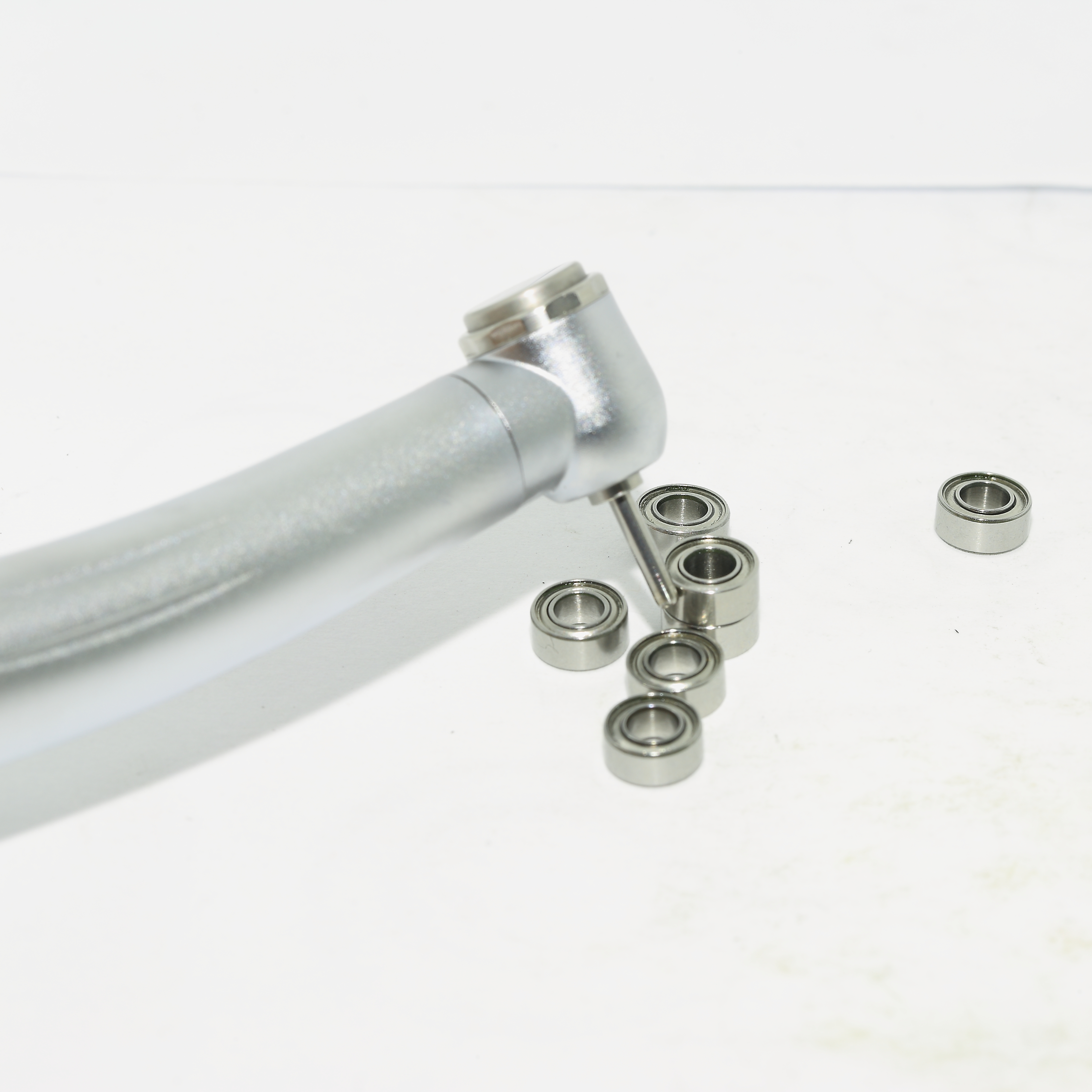
SMR74TL — 4 × 7 × 2 mm
- Size: 4 × 7 × 2 mm
- Precision: P4
- Limiting speed: 200,000 rpm
- Operating temperature: −40 °C to 150 °C
- Material: SUS440 stainless steel
- Application: dental handpiece
SR144ZTLP4 W2.78 — 3.175 × 6.35 × 2.78 mm
- Size: 3.175 × 6.35 × 2.78 mm
- Precision: P4
- Limiting speed: 350,000–400,000 rpm
- Operating temperature: −50 °C to 160 °C
- Material: SUS440 stainless steel
- Application: dental handpiece
SMR144ZTLP4 W2.38 — 3.175 × 6.35 × 2.38 mm
- Size: 3.175 × 6.35 × 2.38 mm
- Precision: P4
- Limiting speed: 350,000–400,000 rpm
- Operating temperature: −50 °C to 160 °C
- Material: SUS440 stainless steel
- Application: dental handpiece
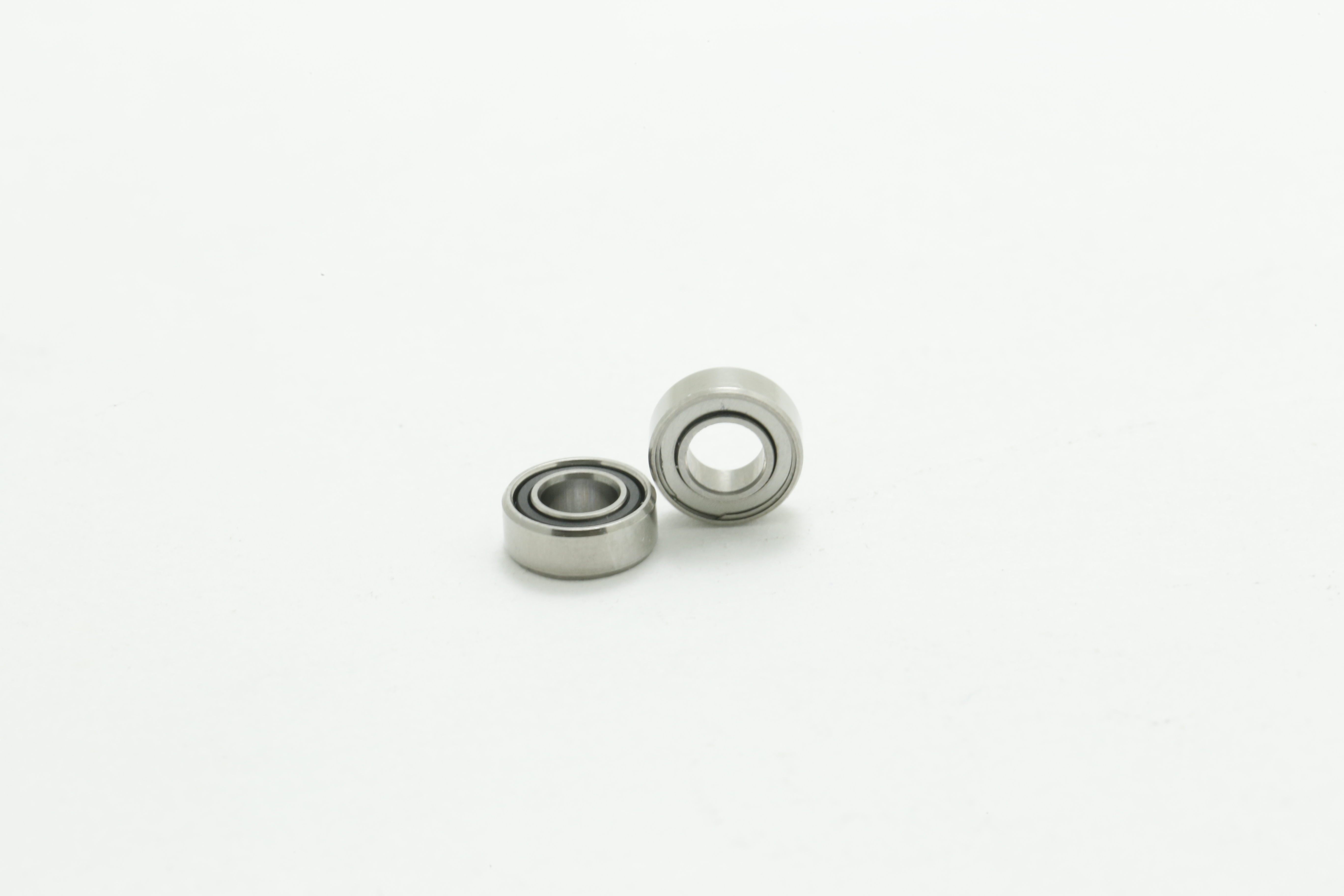
What the range covers as a system
Read together, the four models give handpiece manufacturers three envelope options — a 2.38 mm bore, a 4 mm bore and a 3.175 mm bore in two widths — all at P4 precision and all in SUS440 stainless steel. Published speed coverage runs from 200,000 rpm in the smaller envelopes to 350,000–400,000 rpm in the 3.175 mm bore models. The 2.38 mm and 2.78 mm width variants of the 3.175 mm bore share the same rated speed and temperature band, which simplifies qualification when a spindle design moves between the two widths.
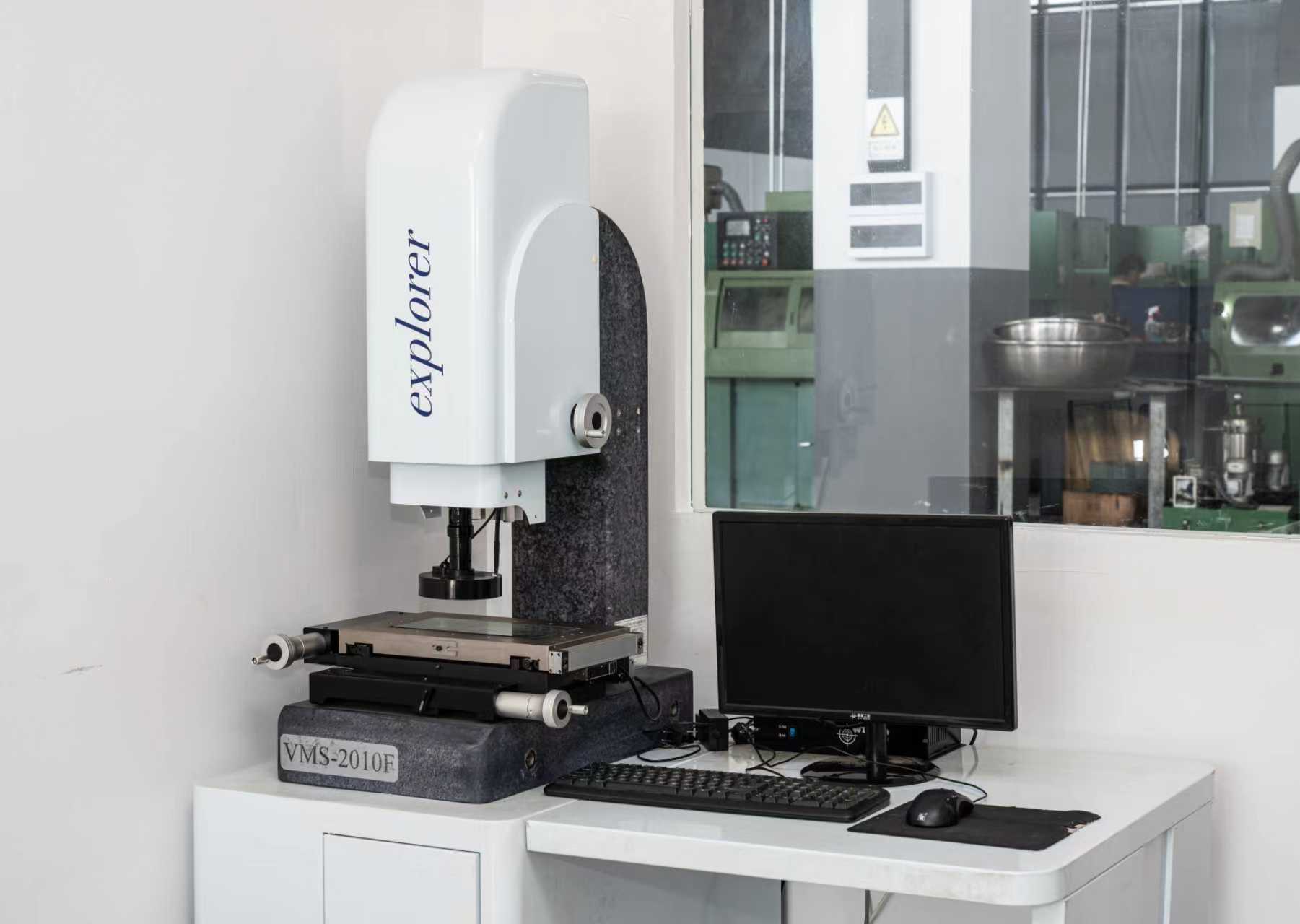
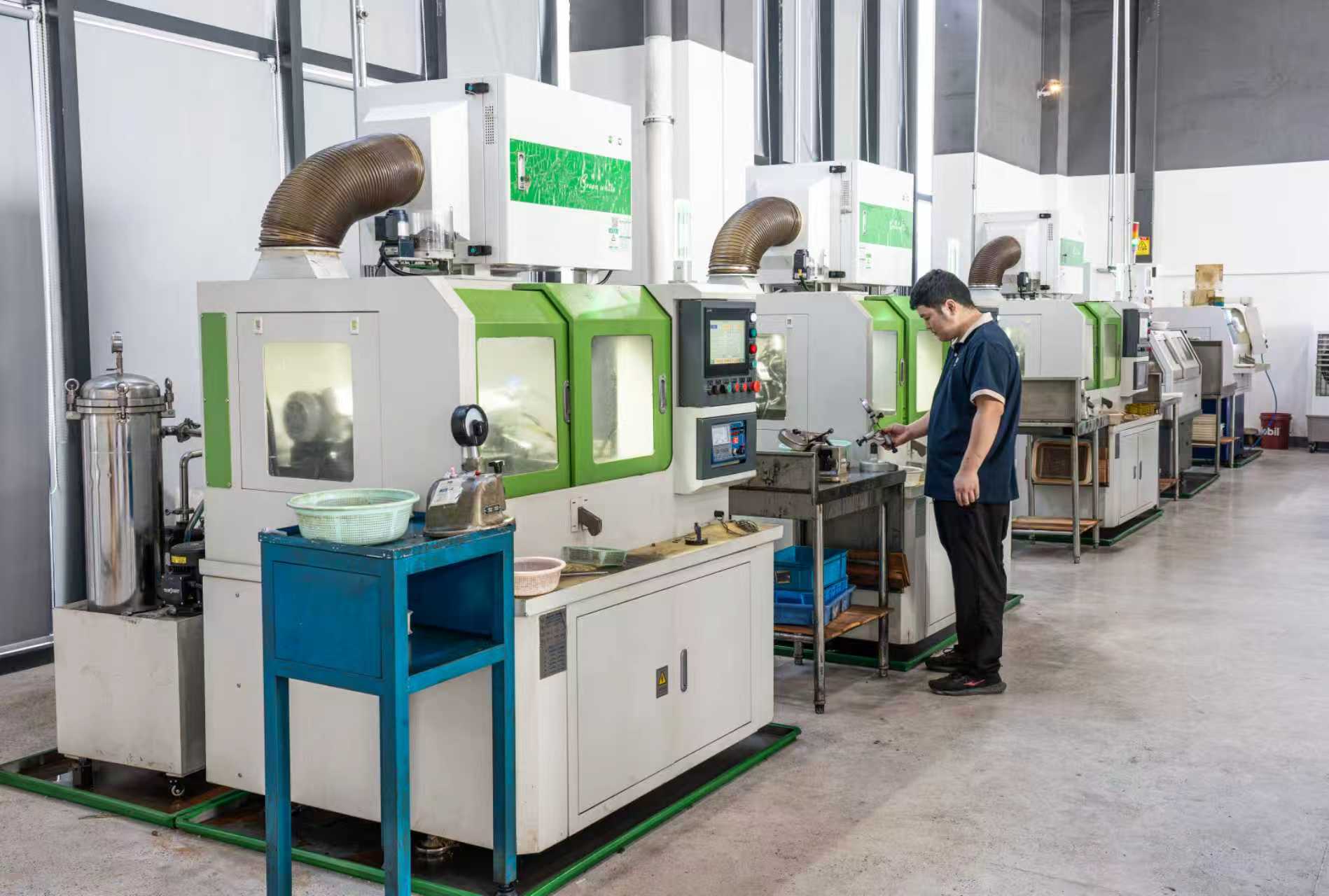
Behind the product line, INB states a production capability for high-precision standard bearings with bore diameters from 2 mm to 8 mm and precision grades from P6 to P4, an annual output of 6,000,000 units, and a team of 30 employees. Quality control at the company is carried out with hardness testers, roundness meters, profilometers, roughness measuring equipment and microscopes, and operations are conducted in accordance with the ISO 9001 quality management system.
Quality-system scope: what the ISO 9001 certificate actually covers
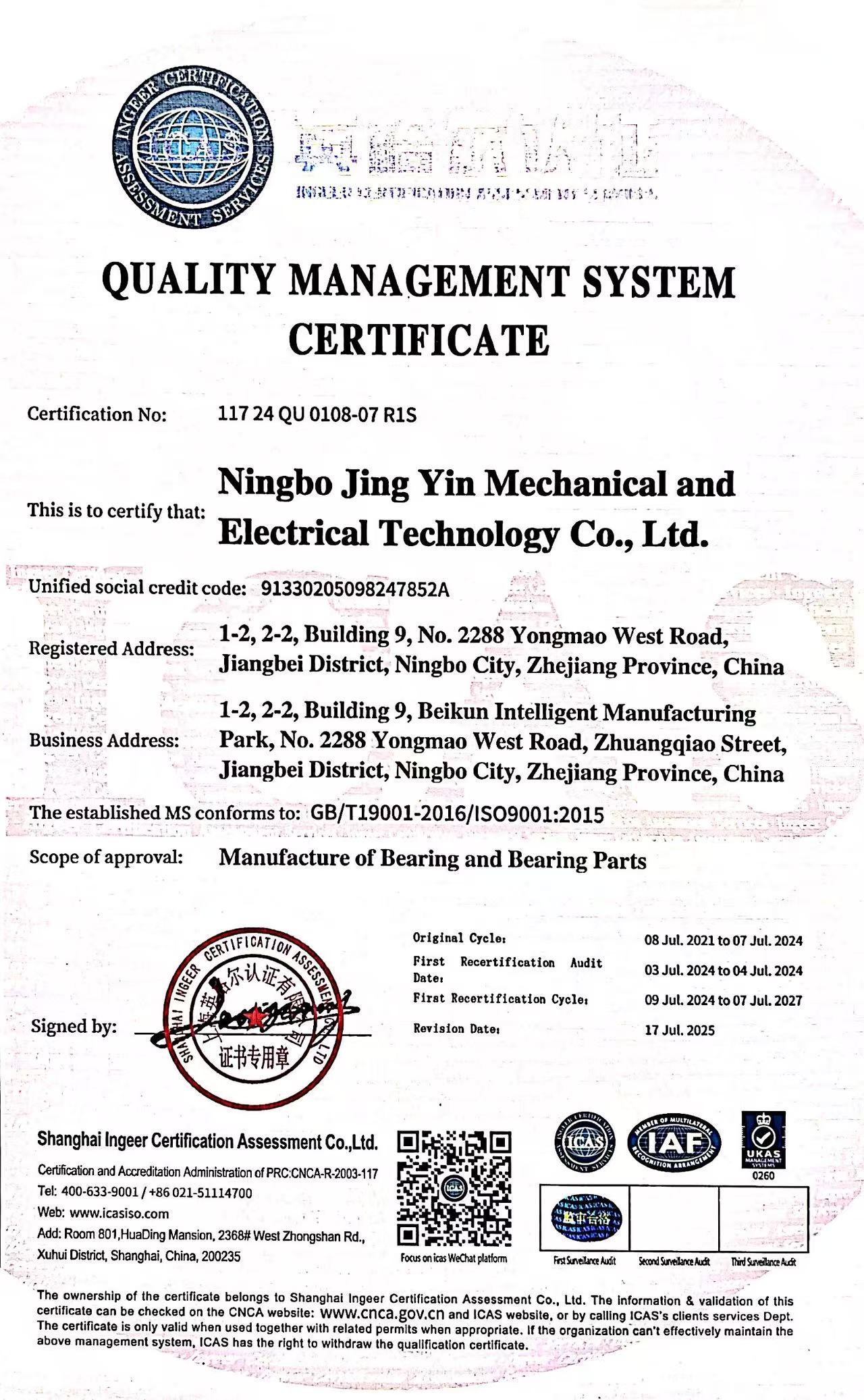
INB's ISO 9001 certification is not a generic statement. The certificate, number 117 24 QU 0108-07 R1S, was issued by Shanghai Ingeer Certification Assessment Co., Ltd. against the standard GB/T19001-2016/ISO 9001:2015 Quality Management Systems — Requirements. It applies to the global market and remains valid until July 7, 2027. Its stated scope is the manufacture of bearing and bearing parts, and the models covered include SMR74TL, SR133TL, SR144ZTLP4 W2.78 and SMR144ZTLP4 W2.38 — the same four products used in dental handpiece applications.
For a handpiece manufacturer, the practical value of this scope is that the certification can be matched to the exact model being purchased rather than to the supplier in general. Buyers can verify the certificate number, the issuing body and the validity date directly against the supplier's documentation.
Step-by-Step Breakdown: Qualifying a Bearing for a Turbine Spindle Assembly
The sequence below follows the order in which constraints actually bind. Changing that order — comparing price or lead time before the envelope and speed are fixed — usually produces a specification that has to be rewritten.
Step 1 — Fix the spindle envelope
Start with bore, outside diameter and width, because they are the only parameters the spindle cannot negotiate. Published options in the INB dental range are 2.38 × 4.762 × 2.38 mm, 4 × 7 × 2 mm, and 3.175 × 6.35 mm at either 2.38 mm or 2.78 mm width. Confirm the choice against the chuck, impeller and housing geometry before moving on.
Step 2 — Match limiting speed to the design operating point
Select the model whose published limiting speed covers the turbine's intended operating speed. The 3.175 mm bore models are published at 350,000–400,000 rpm; the SR133TL and SMR74TL are published at 200,000 rpm. Writing “up to 400,000 rpm” as a family-level requirement without checking the individual model is one of the most common specification errors in this application.
Step 3 — Confirm the precision class across the assembly
All four models are published at P4. Because miniature bearing precision is expressed through different systems — ABMA ABEC, ISO 492 and DIN 620 — the specification document should name the standard and the class rather than a bare grade letter, so that the requirement reads identically for engineering, quality and purchasing.
Step 4 — Validate material and thermal band
All four dental models use SUS440 stainless steel. The published operating range is −40 °C to 150 °C for SR133TL and SMR74TL, and −50 °C to 160 °C for the two 3.175 mm bore models. INB's stated requirements for the dental handpiece application include medical-grade hygiene, wide temperature resistance and low noise, so the material and thermal band should be checked against the sterilization routine and duty cycle of the specific handpiece design.
Step 5 — Check that the quality certificate covers your exact model
Request the ISO 9001 certificate and confirm three things: the scope (manufacture of bearing and bearing parts), the model list (which includes SMR74TL, SR133TL, SR144ZTLP4 W2.78 and SMR144ZTLP4 W2.38), and the validity date (July 7, 2027). This is a documentation check, not a negotiation, and it should be completed before the first purchase order.
Step 6 — Plan the validation batch before the production order
INB applies 100% testing to its production and offers OEM customization according to customer requirements. The published minimum order quantity is 100 units. For a new spindle design, agree the validation approach in writing before committing to volume — including which model, which width variant and which acceptance criteria will be checked on the first delivery.
Step 7 — Lock commercial terms and continuity
Commercial terms can be fixed once the technical specification is stable. INB publishes a monthly capacity of 500,000 units, a lead time of 7 days for in-stock items, and an after-sales return and exchange policy. For a handpiece manufacturer running scheduled production, those three figures define the operating rhythm: batch size, replenishment window, and the remedy path if a delivery does not meet specification.
Use Cases: Where These Bearings Are Actually Applied
Air-turbine dental handpiece spindle
The primary application is the high-speed turbine spindle inside a dental handpiece. INB's published description of this application lists high-speed precision grinding in a clean medical environment with intermittent high-load operation. The stated functional requirement is high rotational speed for rapid grinding and a long service life that extends the lifespan of the handpiece itself. The stated special requirements are P4 precision grade, ultra-high speed of 350,000–400,000 rpm, wide temperature resistance from −50 °C to 160 °C, medical-grade hygiene and low noise.
Case: an 80,000-unit dental handpiece program in China
INB reports a project in China in which 80,000 units of a miniature bearing with P4 precision and a limiting speed of 350,000–400,000 rpm were supplied for use in dental handpieces. The reported result was stable operation at high speed for 500 hours, with extended equipment lifespan; the stated highlights were ultra-high speed, P4 precision, long service life and medical-grade reliability. For a handpiece manufacturer, the relevant part of the case is not the unit count but the combination that was validated: P4 precision and a 350,000–400,000 rpm rating inside a dental handpiece application.
Adjacent precision applications
INB states that its products primarily serve the domestic medical device industry and micro-motors, and its general production capability covers standard bearings with bore diameters from 2 mm to 8 mm in P6 to P4 grades. Handpiece manufacturers whose designs sit close to that envelope — miniature motor-driven instruments, precision spindles and similar small-diameter assemblies — can therefore evaluate the same production base for adjacent programs, subject to confirming the specific model and specification for each application.
Comparison Table: INB Dental Handpiece Miniature Bearings at a Glance
All figures below are published INB product specifications for dental handpiece applications.
| Model | Size (bore × OD × width) | Precision | Limiting speed | Operating temperature | Material | Application |
|---|---|---|---|---|---|---|
| SR133TL | 2.38 × 4.762 × 2.38 mm | P4 | 200,000 rpm | −40 °C to 150 °C | SUS440 | Dental handpiece |
| SMR74TL | 4 × 7 × 2 mm | P4 | 200,000 rpm | −40 °C to 150 °C | SUS440 | Dental handpiece |
| SR144ZTLP4 W2.78 | 3.175 × 6.35 × 2.78 mm | P4 | 350,000–400,000 rpm | −50 °C to 160 °C | SUS440 | Dental handpiece |
| SMR144ZTLP4 W2.38 | 3.175 × 6.35 × 2.38 mm | P4 | 350,000–400,000 rpm | −50 °C to 160 °C | SUS440 | Dental handpiece |
All four models are covered by INB's ISO 9001 certification (certificate number 117 24 QU 0108-07 R1S, valid until July 7, 2027, scope: manufacture of bearing and bearing parts).
Precision-class reference
| Precision system | Class range | Notes |
|---|---|---|
| ABMA ABEC | ABEC 1–9 | Higher numbers correspond to tighter tolerances |
| ISO 492 | P0–P2 | International precision class system |
| DIN 620 | Referenced alongside ABEC and ISO 492 | German standard cited in industry guidance on bearing tolerances |
| INB published production grades | P6 to P4 | Standard bearings with bore diameters from 2 mm to 8 mm |
FAQ: Compliance, Capability, Cost, Sampling and Lead Time
Which certification covers INB's miniature bearings for dental handpieces?
INB holds ISO 9001 certification number 117 24 QU 0108-07 R1S, issued by Shanghai Ingeer Certification Assessment Co., Ltd. against GB/T19001-2016/ISO 9001:2015 Quality Management Systems — Requirements. The certificate applies to the global market, covers the manufacture of bearing and bearing parts, and is valid until July 7, 2027. The models covered include SMR74TL, SR133TL, SR144ZTLP4 W2.78 and SMR144ZTLP4 W2.38.
Can INB supply customized miniature bearings for a specific turbine spindle design?
Yes, within its stated capability. INB operates an OEM production model with customization according to customer requirements, a monthly capacity of 500,000 units, and 100% testing. Its standard production range covers high-precision bearings with bore diameters from 2 mm to 8 mm at precision grades P6 to P4, and the four dental handpiece models in this guide are published at P4.
What is the minimum order quantity, and how should a buyer think about cost?
The published minimum order quantity is 100 units. This guide does not quote prices, because cost depends on the exact model, width variant, precision requirement and customization scope agreed with the supplier. What can be fixed before an enquiry are the commercial parameters that drive order economics: a 100-unit minimum, a monthly capacity of 500,000 units, and a 7-day lead time for in-stock items. A quotation request based on a defined specification is more useful than a general enquiry.
How can a handpiece manufacturer validate bearings before mass production?
Validation starts with the documentation pack: the published specification for the chosen model and the ISO 9001 certificate covering that model. INB applies 100% testing to production, and its published after-sales policy is return and exchange. Buyers preparing a new spindle design should confirm sampling and validation terms directly with INB, because the published data defines the product specification rather than a separate sample program.
What lead time applies to in-stock miniature bearings?
INB publishes a lead time of 7 days for in-stock items, supported by a monthly production capacity of 500,000 units. For handpiece manufacturers, that combination allows a first order to be planned around the validation batch and later orders to be scheduled against the 7-day replenishment window. To check current stock or request a quotation for a specific model, contact INB at yuhang001@126.com or via WhatsApp at +86 18957446001.
Conclusion: Fix the Constraint, Then Choose the Bearing
Miniature bearings in dental handpieces are an application where the specification is defined by constraints rather than catalogue convenience. The envelope fixes the model family, the turbine speed fixes the required limiting speed, the duty cycle fixes the thermal band, and the clinical environment fixes the material and hygiene requirement. Only after those four boundaries are set does commercial comparison become meaningful.
INB's dental handpiece range addresses those boundaries with four P4 models in SUS440 stainless steel: SR133TL (2.38 × 4.762 × 2.38 mm) and SMR74TL (4 × 7 × 2 mm) at 200,000 rpm and −40 °C to 150 °C, and SR144ZTLP4 W2.78 and SMR144ZTLP4 W2.38 (3.175 × 6.35 mm, in 2.78 mm and 2.38 mm widths) at 350,000–400,000 rpm and −50 °C to 160 °C. All four models are covered by INB's ISO 9001 certification, and INB describes its production base as one serving the domestic medical device and micro-motor industries, with OEM customization, 100% testing, a 100-unit minimum order quantity and a 7-day lead time for in-stock items.
Next step: match a model to your spindle specification
Send your bore, outside diameter, width, required limiting speed and precision class, and INB will identify the closest published model — or confirm the customization scope for your design.
INB — Ningbo City Jingyin Electromechanical Technology Co., Ltd.
Website: www.lnb-brg.com
Email: yuhang001@126.com
Tel / WhatsApp: +86 18957446001
WhatsApp: Start a WhatsApp conversation
Address: Building 9, Beikun Industrial Area, No. 2288 Yongmao West Road, Zhuangqiao Street, Jiangbei District, Ningbo City
Have Questions or Need More Details?
Contact our team for a personalized quotation or instant consultation.
Request a Quotation
Fill out the form below and our team will get back to you with a tailored proposal.
WhatsApp Direct Chat
Prefer to chat in real-time? Message us on WhatsApp for instant assistance & quick answers.
- Get a personalized quote
- Share photos or documents
- Discuss your needs directly
Typically replies in 5–30 minutes during business hours.