
Miniature Bearings in Surgical Power Tools: Application Guide for Medical Device Engineers
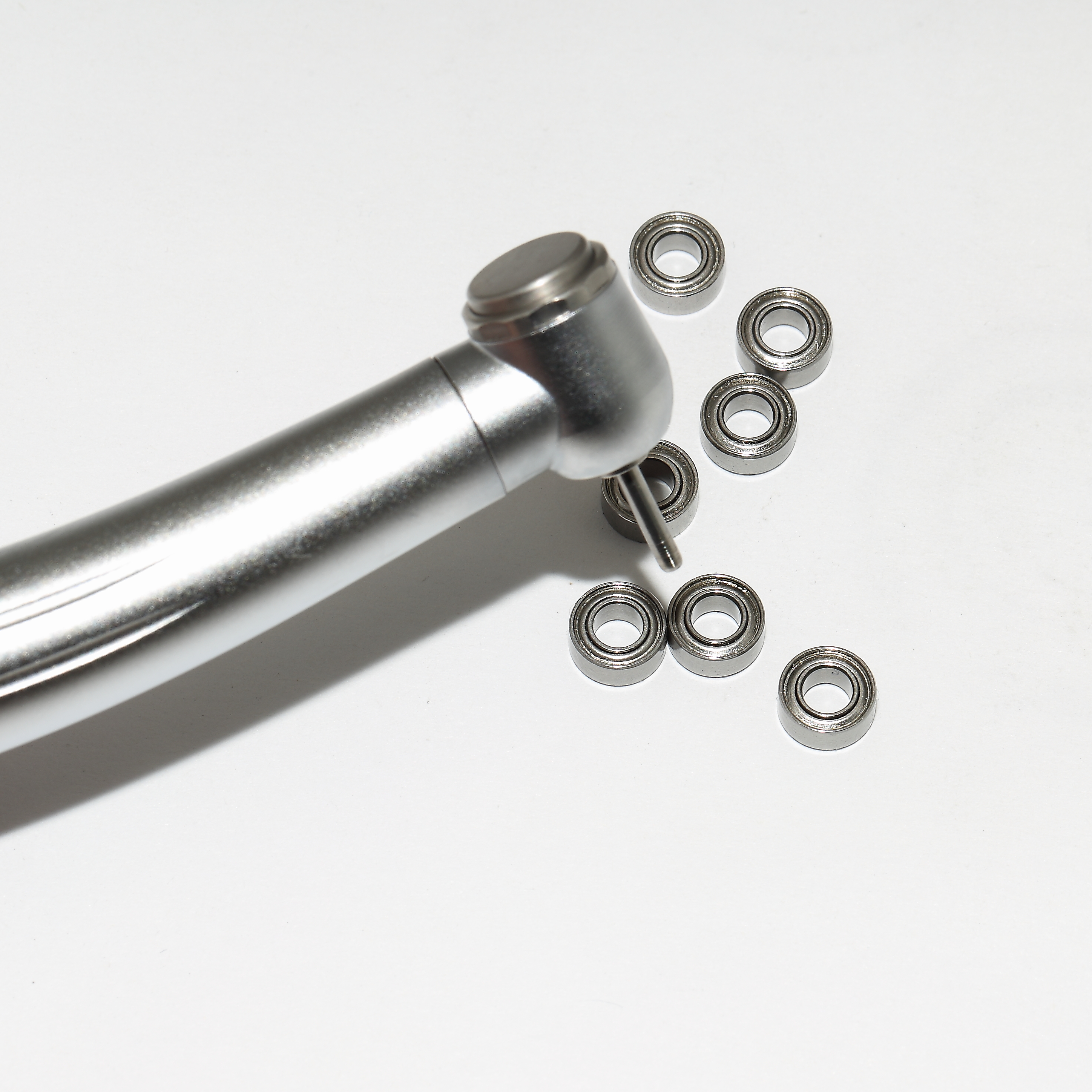
Surgical drills and saws rarely hit their performance ceiling on the motor side first. In most powered surgical instruments, the limits on speed, heat, running smoothness and service life are set by the smallest rotating components in the assembly: the miniature bearings that carry the bur, blade, rotor or spindle.
This guide is written for medical device engineers who are evaluating miniature bearings for surgical power tools. It sets out the constraints that define the application, the supply context behind miniature bearing sourcing, and the specification envelope that INB documents for high-speed medical instruments — P4 precision, SUS440 stainless steel, an operating temperature range of −50 °C to 160 °C, and limiting speeds up to 400,000 rpm.
Short answer: A miniature bearing for a surgical drill or saw has to satisfy four requirements at the same time: a bore small enough for a hand-held instrument envelope (3.175 mm in INB's documented model SMR144ZTLP4 W2.38), P4 precision for rotational accuracy, SUS440 stainless steel for corrosion resistance across repeated sterilization, and a speed and temperature rating that covers the instrument's maximum duty (350,000–400,000 rpm and −50 °C to 160 °C respectively). INB supplies these bearings with a minimum order quantity of 100 units, from stock at a 7-day lead time, produced under an ISO 9001 quality management system.
The Design Problem: One Small Component Carries the Whole Duty Cycle
A surgical power tool concentrates several conflicting requirements into an envelope no larger than a pen. The bearing that supports the rotating element sits at the intersection of all of them, and it is usually the first component to reveal a design weakness — through heat, noise, runout or premature replacement.
- Speed. Air-driven and electric surgical instruments rotate at very high speed to keep cutting efficient with small bur and blade diameters. The bearing's limiting speed has to exceed the instrument's maximum rpm with margin, because operating close to the limit shortens service life.
- Heat. Friction at high speed becomes heat inside a sealed, hand-held housing that has no active cooling. Excess temperature reaches the clinician's hand and the patient's tissue, so the bearing's materials and internal geometry must tolerate the temperature the assembly generates.
- Corrosion and repeated sterilization. Surgical instruments are cleaned and sterilized between procedures. Bearing steel that corrodes under that regime produces roughness, noise and eventual seizure, which is why stainless steel grades dominate medical miniature bearing specifications.
- Rotational accuracy. Runout at the bur or blade is amplified by speed. Precision class, not just dimension, determines whether the instrument cuts cleanly and whether vibration reaches the operator's hand.
- Vibration and noise. A surgical drill or handpiece is held close to the patient and often near the operator's ear. Smoothness is a functional requirement, not a cosmetic one.
- Size. The bearing bore, outside diameter and width are fixed by the instrument's barrel and spindle design, so the engineer has very little freedom to trade dimensions for performance.
Because these requirements pull against each other, bearing selection for surgical instruments is a specification exercise rather than a catalogue lookup. The engineer needs a supplier who can state precision class, material, limiting speed and temperature range as documented facts, and then prove them at sample stage.
Industry Background: How Miniature Bearings Reach Medical Device Builders
Miniature ball bearings form a distinct segment of the bearing industry, defined by small bores, tight tolerances and applications where space and precision matter more than load capacity. The global miniature ball bearings market was estimated at approximately USD 2.25 billion in 2025, driven by demand in medical devices and robotics (Future Market Insights).
Supply is concentrated in Asia. Asia Pacific accounted for roughly 60% of miniature ball bearing revenue in 2025, with China as the largest regional producer and consumer (Precedence Research). China's bearing exports grew 7.2% year on year in the first seven months of 2025, reaching nearly 497,852 tons (BearingNews / Huajing Research Institute).
Published market estimates should be treated as directional rather than exact: for the same 2025 period, Precedence Research gives USD 2.89 billion and IMARC Group gives USD 2.0 billion alongside the Future Market Insights figure. The divergence is normal in a fragmented component category and is a useful reminder for engineers and buyers to verify capability at supplier level rather than rely on category averages.
Two technical conventions matter when reading any miniature bearing datasheet. First, precision. Miniature bearing precision is governed by global standards including ABMA ABEC (1–9), ISO 492 and DIN 620, and higher numbers in the ABEC scale correlate to tighter tolerances (AST Bearings). INB's stated production range covers bores from 2 mm to 8 mm at precision grades from P6 to P4. Second, material. Stainless steel — specifically 440C — is the primary bearing material for medical and food-processing applications because of its moisture and chemical resistance (SKDIN Engineering Guide). INB's documented bearing material is SUS440 stainless steel, the JIS designation used for this class of martensitic stainless grade.
For context on where medical sits within the category: the automotive segment held the largest application share of the miniature bearing market in 2025 at approximately 39%, driven by EV motor and sensor applications (Precedence Research). Medical instruments are a smaller but more demanding segment, where documentation, cleanliness and consistency carry more weight than unit volume.
Where INB Sits in the Miniature Bearing Supplier Landscape
The miniature bearing sector includes large global manufacturers such as MinebeaMitsumi, NSK, SKF and Schaeffler (Barden), with MinebeaMitsumi noted as dominant in small sizes (Intel Market Research). INB is a smaller specialist serving a narrower application band.
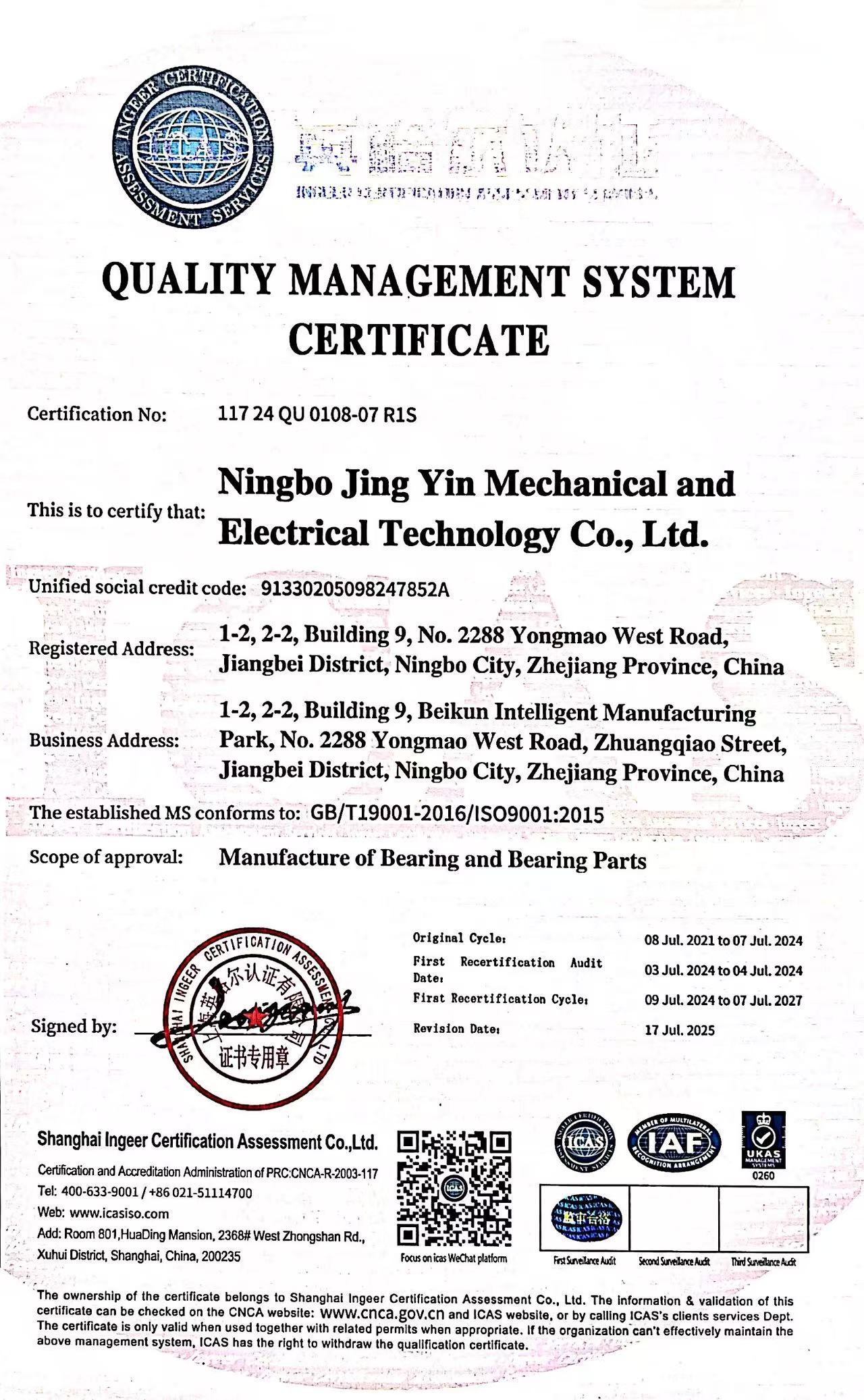
INB is a miniature bearing brand established in 2014 and based in Ningbo, Zhejiang Province, China. Its stated production focus is high-precision standard bearings with bore diameters from 2 mm to 8 mm at P6 to P4 precision grades, serving the domestic medical device industry and micro-motor applications, with annual output of 6,000,000 units and monthly capacity of 500,000 units. The company operates in accordance with the ISO9001 quality management system and holds certificate 117 24 QU 0108-07 R1S, issued by Shanghai Ingeer Certification Assessment Co., Ltd. for the manufacture of bearings and bearing parts.
For a medical device engineer, that positioning matters for one reason: a specialist supplier can document the exact parameters that drive instrument performance, and can be audited on them, which is what an evaluation-stage project needs.
How INB's Specification Meets Surgical Power Tool Requirements
INB's documented miniature bearing for high-speed medical instruments is model SMR144ZTLP4 W2.38. Its verified parameters are listed below.
| Parameter | Documented value |
|---|---|
| Model | SMR144ZTLP4 W2.38 |
| Boundary dimensions | 3.175 × 6.35 × 2.38 mm |
| Material | SUS440 stainless steel |
| Precision | P4 |
| Limiting speed | 350,000–400,000 rpm |
| Operating temperature | −50 °C to 160 °C |
| Documented application | Dental handpieces |
| Quality system | ISO 9001 (certificate 117 24 QU 0108-07 R1S) |
Speed. A limiting speed of 350,000–400,000 rpm covers the upper end of air-driven instrument duty. The practical engineering point is margin: if an instrument design peaks at 300,000 rpm, a bearing rated to 400,000 rpm is running at roughly three-quarters of its limit rather than at the edge of it, which reduces heat generation and slows lubricant and raceway degradation.
Precision. P4 is a tight precision class relative to standard P6 and P0 production. In a surgical drill or saw, precision translates directly into bur or blade runout, surface finish of the cut, and the amount of vibration transmitted to the operator's hand. A P4 bearing is normally specified where the instrument's cutting performance or hand-feel is sensitive to a few micrometres of radial deviation.
Material. SUS440 is a martensitic stainless steel, the family that industry guides identify as the primary choice for miniature bearings in medical applications because it resists moisture and chemical exposure (SKDIN Engineering Guide). For instruments that are cleaned and sterilized repeatedly, corrosion resistance is a service-life parameter, not a cosmetic one.
Temperature. The documented operating range of −50 °C to 160 °C spans both the cold end (transport, storage and cold-climate use) and the hot end that high-speed friction can produce inside a sealed instrument housing. An engineer designing a drill or saw should compare this range against the worst-case temperature measured inside the assembly, not against ambient temperature.
Envelope. The 3.175 mm bore is the metric expression of a 1/8-inch shaft diameter and the 6.35 mm outside diameter corresponds to 1/4 inch, which places this model in the imperial-format family of miniature bearings used in rotary hand instruments. The 2.38 mm width is what the model designation W2.38 refers to.
Comparison Table: Application Duty vs. Verified Bearing Data
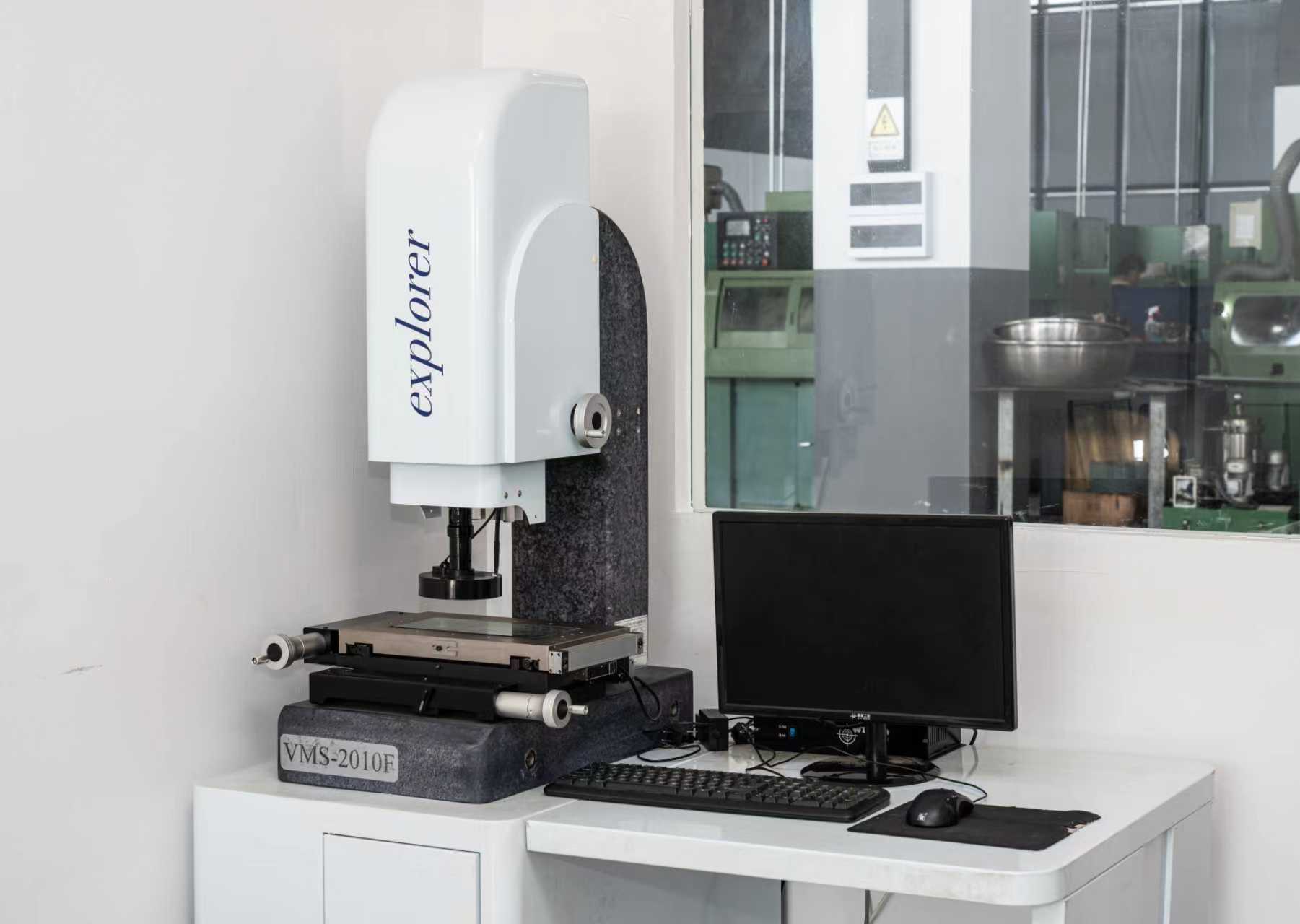
The table below places the requirements of a powered surgical instrument against INB's documented specification for SMR144ZTLP4 W2.38, with the evidence basis for each line. It is a comparison of requirement against verified data — not a ranking against other manufacturers, whose published parameters are outside the scope of this article.
| Duty factor | Why it matters in a surgical drill or saw | INB verified specification |
|---|---|---|
| Rotational speed | Cutting efficiency depends on high rpm; operation near the limit raises heat and wear | Limiting speed 350,000–400,000 rpm |
| Precision class | Determines bur/blade runout, cut quality and vibration at the operator's hand | P4 precision |
| Material and corrosion | Repeated cleaning and sterilization must not degrade raceways | SUS440 stainless steel |
| Thermal range | Friction heat inside a sealed housing, plus cold storage and transport | −50 °C to 160 °C operating range |
| Dimensional envelope | Bore, outside diameter and width are fixed by the instrument barrel and spindle | 3.175 × 6.35 × 2.38 mm |
| Quality control | Traceability and consistency between batches | 100% test under an ISO 9001 quality system |
| Supply continuity | Production planning and pilot builds | 500,000 units/month capacity; MOQ 100 units; 7-day in-stock lead time |
Step-by-Step: Specifying and Validating a Miniature Bearing
Step 1 — Define the duty envelope before contacting suppliers
Write down the maximum continuous rpm, the maximum internal temperature measured in the housing, the sterilization regime the instrument will see, and the shaft and housing dimensions. These four numbers eliminate most of the catalogue and turn the supplier conversation into a specification review rather than a general enquiry.
Step 2 — Fix the dimensional envelope
Match bore, outside diameter and width to the actual assembly, not to the closest available part. In INB's documented model, the boundary dimensions are 3.175 × 6.35 × 2.38 mm. Where an instrument has been designed in imperial units, confirm the metric equivalents explicitly with the supplier so that bore tolerance and shaft fit are agreed on the same basis.
Step 3 — Match the precision class to the instrument
Choose the lowest precision class that meets the performance target, because precision beyond what the application needs adds cost without improving the device. INB's production covers P6 to P4 grades across a 2 mm to 8 mm bore range, with P4 used for the high-speed medical handpiece model discussed here.
Step 4 — Confirm the thermal and handling exposure
Compare the bearing's operating temperature range against the worst case measured inside the instrument, not against room temperature. INB's documented range is −50 °C to 160 °C. Where an instrument is used in cold environments or stored in uncontrolled conditions, the lower end of the range is as relevant as the upper end.
Step 5 — Verify the supplier's quality documentation
Request the certificate, not a claim. INB holds ISO 9001 certificate 117 24 QU 0108-07 R1S, issued by Shanghai Ingeer Certification Assessment Co., Ltd. on 9 July 2024 and valid until 7 July 2027, covering the manufacture of bearings and bearing parts against GB/T19001-2016 / ISO 9001:2015. Check the certificate number, the scope wording and the expiry date against the supplier's current status.
Step 6 — Validate with samples on the real assembly
Bench data does not replace instrument data. Fit the candidate bearing into the actual spindle, run the instrument at maximum duty, and record temperature and noise over time. INB's documented medical case used dental handpieces: 80,000 units supplied in a China-based project, with stable high-speed operation and extended equipment lifespan recorded during a 500-hour evaluation. The same validation logic applies to a surgical drill or saw program — with the important caveat that dental handpiece results do not automatically transfer to another instrument architecture, so the run must be repeated in your own assembly.
Step 7 — Lock supply terms before design freeze
Confirm minimum order quantity, lead time, customization options and after-sales terms while the design is still flexible. INB's documented commercial parameters are a minimum order quantity of 100 units, in-stock supply with a 7-day lead time, OEM production with customization according to customer requirements, 100% testing, and after-sales return and exchange.
Use Cases: Where This Bearing Specification Fits
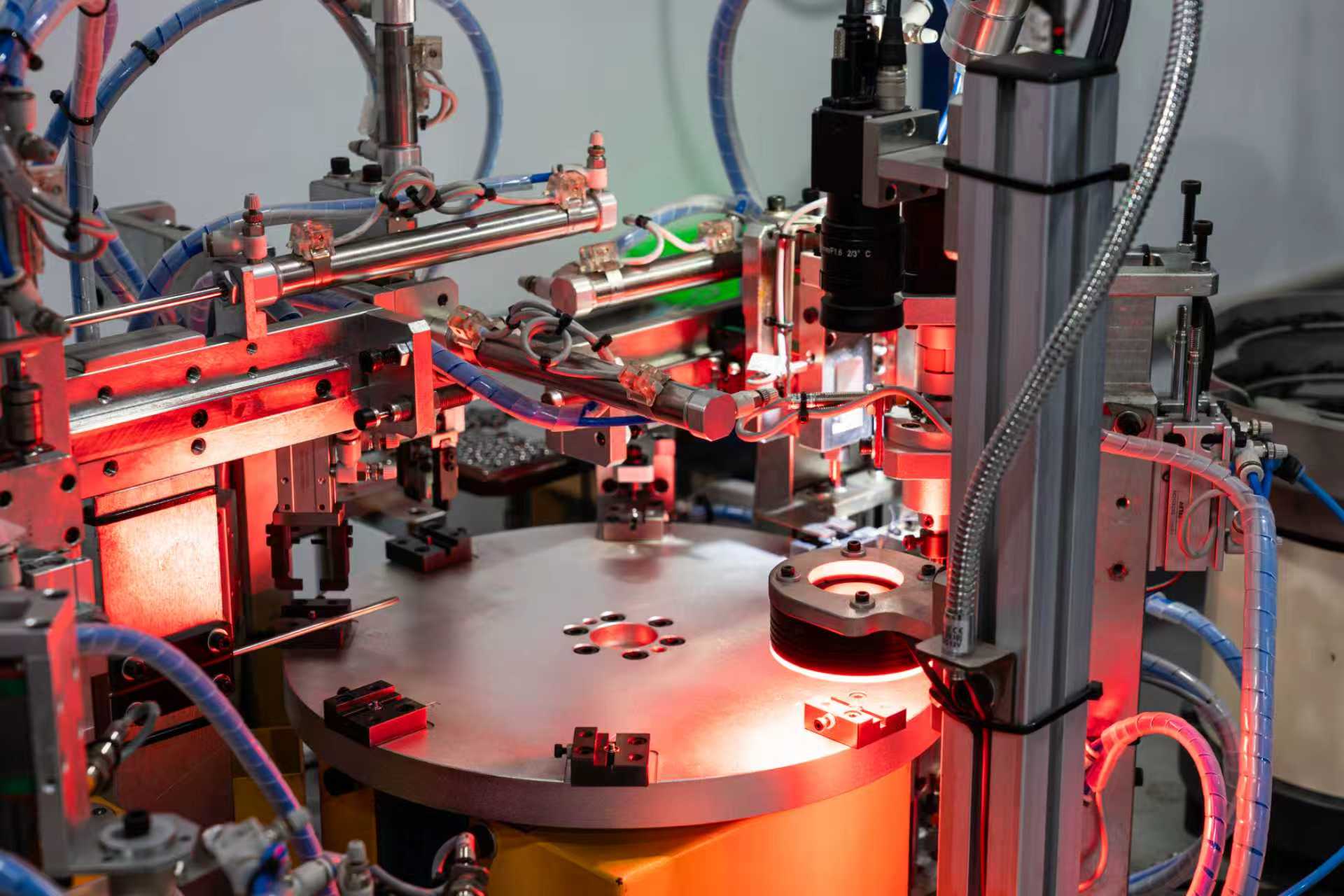
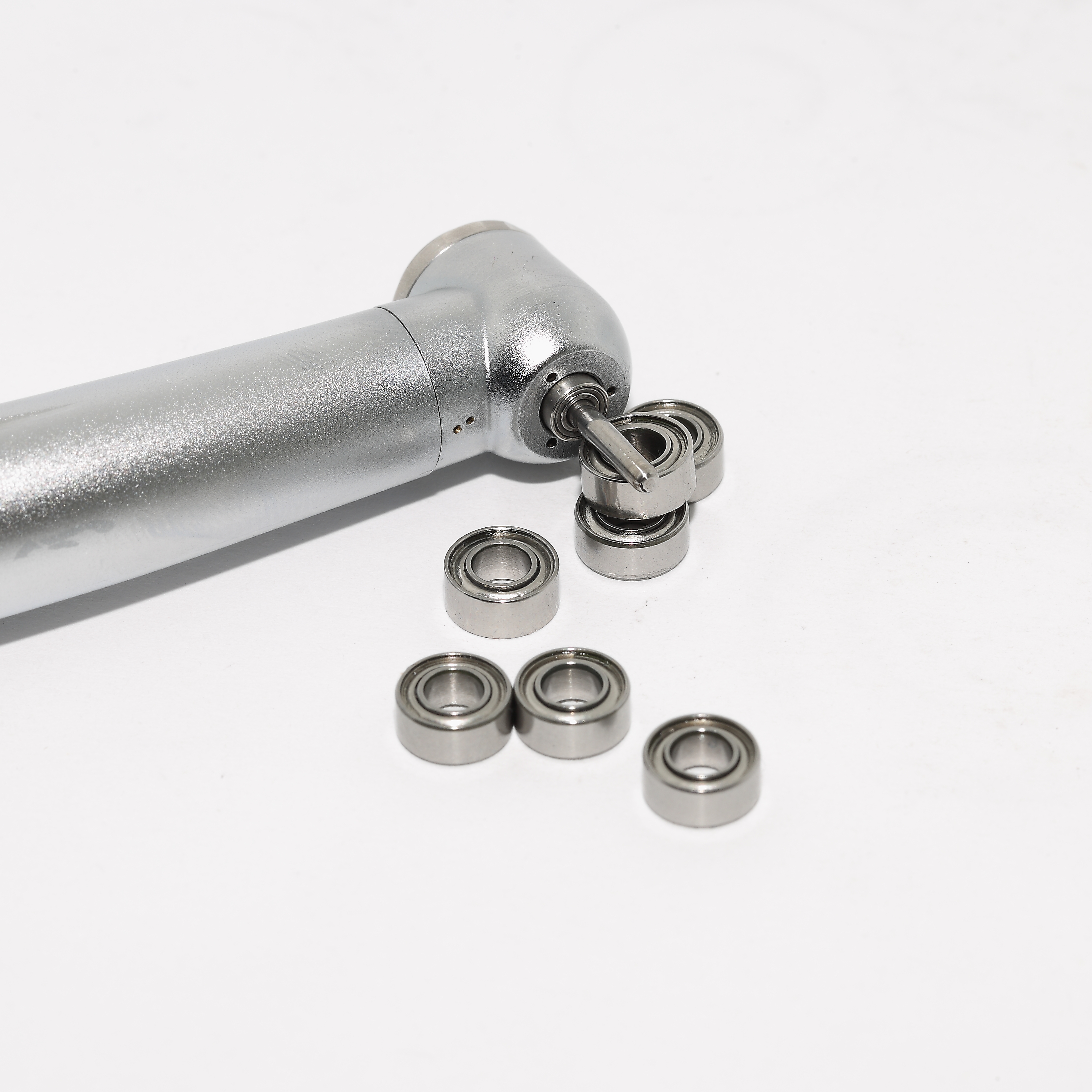
Dental handpieces. This is INB's documented application for SMR144ZTLP4 W2.38, and the source of the available performance evidence: a China-based project of 80,000 units in which the bearings delivered stable high-speed operation and contributed to extended equipment lifespan over a 500-hour evaluation. Dental handpieces share the defining duty profile of surgical power tools — small rotating element, high rpm, repeated sterilization, hand-held housing.
Micro-motors for medical devices. INB's stated production focus covers the domestic medical device industry and micro-motors, which is the same component class used to drive small powered instruments. Micro-motor applications typically prioritise low vibration and consistent running over maximum load capacity.
Surgical drills and saws under development. A P4, SUS440 bearing with a 350,000–400,000 rpm limiting speed and a −50 °C to 160 °C range addresses the core specification problems that surgical power tool engineers work with: rotational accuracy at high speed, corrosion resistance across sterilization, and thermal tolerance inside a sealed housing. Because the documented case evidence comes from dental handpieces rather than surgical saws or drills, this application should be confirmed through sample validation in the target instrument before design freeze.
Adjacent high-speed rotary equipment. The same specification envelope is relevant to other precision rotary assemblies where a small bore, tight precision and wide thermal range are the binding constraints, including high-speed spindles in precision machining.
Verification Checklist for Supplier Documentation
| Item to verify | INB documented position |
|---|---|
| Quality management system | ISO 9001, certificate 117 24 QU 0108-07 R1S, valid to 7 July 2027 |
| Precision capability | P6 to P4 grades |
| Bore range | 2 mm to 8 mm |
| Testing | 100% test |
| Monthly capacity | 500,000 units |
| Minimum order quantity | 100 units |
| Lead time | In stock; 7 days |
| Customization | OEM production, customized according to customer requirements |
| After-sales | Return and exchange |
FAQ: Miniature Bearings for Surgical Power Tools
Does INB hold a current ISO 9001 certificate for miniature bearing manufacturing?
Yes. INB operates under the ISO9001 quality management system and holds certificate 117 24 QU 0108-07 R1S, issued by Shanghai Ingeer Certification Assessment Co., Ltd. on 9 July 2024 and valid until 7 July 2027. The scope covers the manufacture of bearing and bearing parts, assessed against GB/T19001-2016 / ISO 9001:2015. Engineers auditing a supplier should confirm the certificate number, scope wording and validity date directly against the issuing body's records.
Can INB supply a P4 miniature bearing rated for 400,000 rpm and up to 160 °C?
INB's documented model SMR144ZTLP4 W2.38 is specified as P4 precision with a limiting speed of 350,000–400,000 rpm and an operating temperature range of −50 °C to 160 °C. It measures 3.175 × 6.35 × 2.38 mm and is made from SUS440 stainless steel. INB's stated production range covers bearings with 2 mm to 8 mm bores at P6 to P4 precision grades, produced with OEM production and customization according to customer requirements, at a monthly capacity of 500,000 units with 100% testing.
What commercial terms affect the cost of a miniature bearing program?
INB does not publish unit pricing, so cost has to be established through a quotation against the actual specification: precision grade, material, dimensions, customization scope and order quantity all influence the commercial terms. What is documented publicly is the entry point — a minimum order quantity of 100 units, in-stock availability with a 7-day lead time, and OEM production with customization according to customer requirements. For evaluation-stage projects, that combination allows a pilot build to be quoted and delivered without committing to production volumes.
How can engineering teams obtain samples for validation?
Samples can be requested directly from INB for fit, temperature and noise testing on the target assembly. INB supports sample-stage evaluation with 100% tested bearings and documented specifications, and its medical case record shows an 80,000-unit dental handpiece project in China in which the bearings delivered stable high-speed operation over a 500-hour evaluation, contributing to extended equipment lifespan. Requesting a sample early — before the instrument housing and spindle are frozen — keeps the option of adjusting bore fit or precision class open.
What lead time and after-sales support should OEMs plan for?
INB's documented lead time for in-stock bearings is 7 days, with a minimum order quantity of 100 units, monthly capacity of 500,000 units and an annual output of 6,000,000 units for planning purposes. After-sales support is handled through return and exchange. To start an evaluation, samples and a specification review can be requested through www.lnb-brg.com or by contacting the sales team directly using the details below.
Conclusion: Specification Discipline Beats Catalogue Browsing
For surgical drills and saws, the miniature bearing is not a commodity line item — it is the component that determines whether the instrument runs cool, quiet and true at its rated speed. The evaluation-stage work therefore comes down to four verified parameters: precision class, material, limiting speed and thermal range, matched against the instrument's real duty envelope and then confirmed on the actual assembly.
INB's documented specification for SMR144ZTLP4 W2.38 — P4 precision, SUS440 stainless steel, 3.175 × 6.35 × 2.38 mm, limiting speed 350,000–400,000 rpm and an operating range of −50 °C to 160 °C — is designed for the high-speed medical instrument envelope. It is supported by an ISO 9001 quality system, 100% testing, a 500,000-unit monthly capacity and a 100-unit minimum order quantity that allows a pilot build to be validated before production volumes are committed.
Next Step: Request a Sample or Specification Review
Engineers evaluating miniature bearings for a surgical drill, saw or handpiece program can request a sample of the SMR144ZTLP4 W2.38 miniature bearing (3.175 × 6.35 × 2.38 mm, P4, SUS440) or arrange a specification and documentation review with INB.
Website: www.lnb-brg.com
Email: yuhang001@126.com
Tel / WhatsApp: +86 18957446001
Contact: Wang Chaojiang
Address: Building 9, Beikun Industrial Area, No. 2288 Yongmao West Road, Zhuangqiao Street, Jiangbei District, Ningbo City
OEM production and customization according to customer requirements are available.
Third-party data referenced in this article: Future Market Insights (miniature ball bearings market size, 2025), Precedence Research (regional share and application mix, 2025), BearingNews / Huajing Research Institute (China bearing export growth, 2025), AST Bearings (precision standards), SKDIN Engineering Guide (440C stainless steel for medical applications), Intel Market Research (global manufacturer landscape).
Have Questions or Need More Details?
Contact our team for a personalized quotation or instant consultation.
Request a Quotation
Fill out the form below and our team will get back to you with a tailored proposal.
WhatsApp Direct Chat
Prefer to chat in real-time? Message us on WhatsApp for instant assistance & quick answers.
- Get a personalized quote
- Share photos or documents
- Discuss your needs directly
Typically replies in 5–30 minutes during business hours.