
Preventing Premature Bearing Failure in Dental Handpieces: A Troubleshooting Guide
A dental handpiece can lose cutting efficiency and start running hot long before it looks worn out, and the miniature bearings inside the turbine are usually the reason. High-speed handpiece applications require ultra-high speed operation in the 350,000–400,000 rpm range, a clean medical environment, intermittent high-load operation, low noise and medical-grade hygiene. Under those conditions, the difference between a bearing that reaches its expected service life and one that fails early usually comes down to three things: heat, corrosion and contamination.
This troubleshooting guide is written for dental equipment engineers, handpiece service technicians and procurement teams who need to understand why miniature bearings fail prematurely in dental handpieces, and what to specify to prevent it. It covers the symptoms worth monitoring, the material and precision factors that reduce risk, the role of SUS440 stainless steel and P4 precision in INB's dental handpiece bearing range, and a practical step-by-step workflow for diagnosis, maintenance and replacement.
Short answer: Premature miniature bearing failure in dental handpieces is normally driven by thermal overload, corrosion from moisture and reprocessing chemicals, or contamination entering the bearing. Specifying a stainless steel miniature bearing such as a SUS440 bearing at P4 precision, with a temperature rating that covers both reprocessing and running heat (−50 °C to 160 °C on the SR144ZTLP4 W2.78 and SMR144ZTLP4 W2.38 models), removes a large part of that risk before the bearing is ever installed.
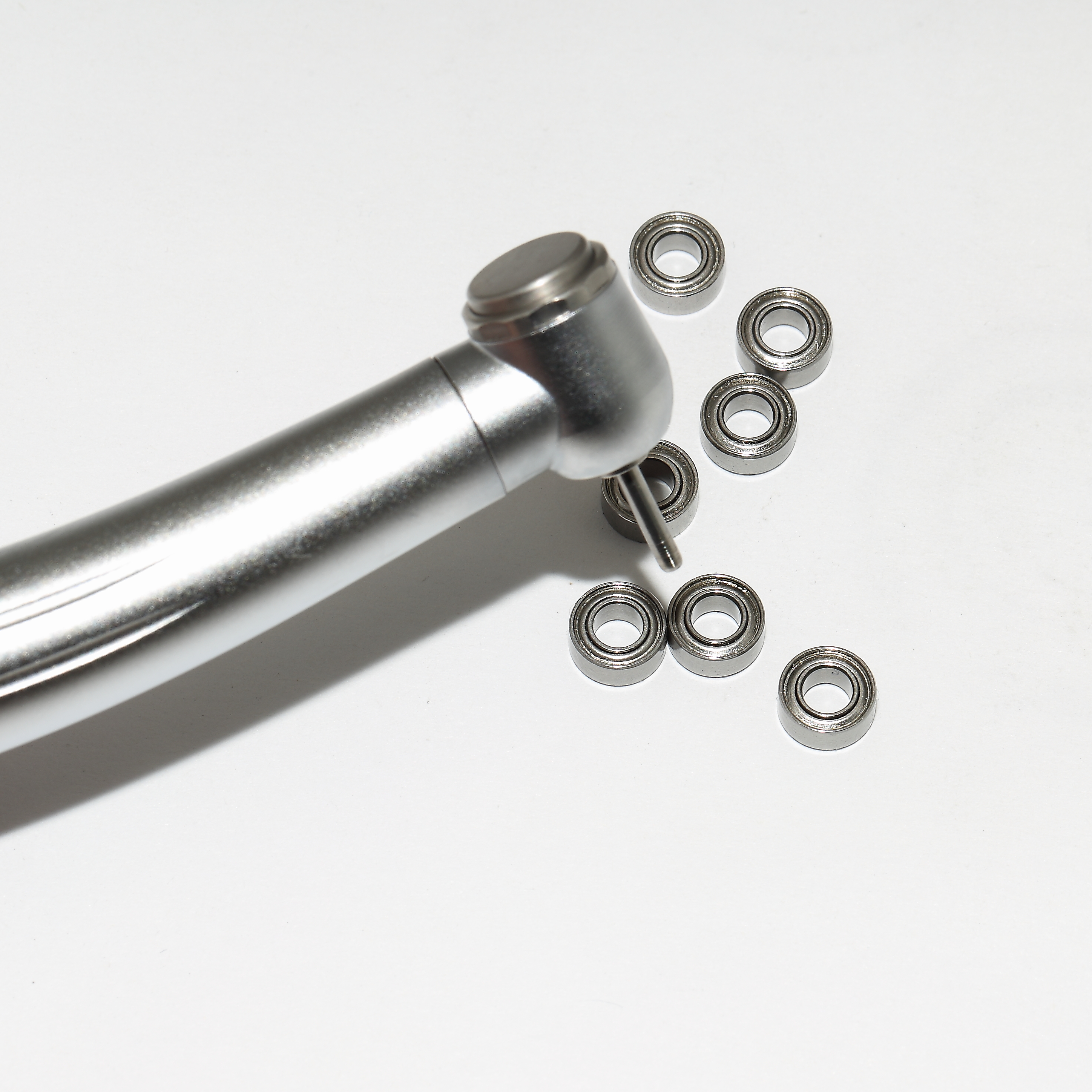
What Counts as Premature Bearing Failure in a Dental Handpiece?
A dental handpiece bearing is a wear component. It is expected to be replaced at intervals, and its performance is expected to decline gradually rather than collapse suddenly. A bearing has failed prematurely when it stops delivering the performance the handpiece needs — stable speed under load, low noise, minimal vibration, no detectable bur runout — well before it has delivered a reasonable service life.
In practice, technicians rarely see one dramatic breakage. They see a gradual loss of cutting feel, followed by a rapid drop in performance once the lubricant film inside the bearing breaks down. That is why early symptoms matter more than the final failure.
Symptoms that appear before total failure
- Noise that changes with speed. A healthy high-speed miniature bearing produces a steady, low-level whine. Grinding, ticking or intermittent squealing indicates surface damage on the raceways or balls.
- Heat at the handpiece head. If the head becomes noticeably warm after a short run, friction is rising faster than the handpiece can dissipate heat.
- Loss of cutting efficiency. The bur slows under load even though air pressure has not changed.
- Vibration and bur runout. Measurable wobble at the bur points to wear or loss of internal clearance control.
- Discoloured bearing or dark lubricant residue. Brown or black residue indicates lubricant breakdown or corrosion.
- Shortening service intervals. If the same handpiece keeps returning for service, the underlying cause has not been corrected.
The four mechanisms behind most failures
1. Thermal degradation. At ultra-high speed, even small amounts of friction generate significant heat. Once the lubricant film breaks down, metal-to-metal contact increases, which generates more heat, which degrades more lubricant. The cycle is self-reinforcing, and it is the most common route to premature failure.
2. Corrosion. Moisture from the air supply, from cleaning and from repeated reprocessing can attack bearing steel. Corrosion produces pitting on raceways and balls, and each pit becomes a stress riser and a source of vibration.
3. Contamination. Fine debris — dental dust, aerosol residue or particles introduced during handling — acts as an abrasive inside a bearing whose internal clearances are extremely small. Contamination typically shows up as uneven, lapped wear tracks rather than as a single defect.
4. Fit and clearance problems. Incorrect axial preload, damaged housing seats or mixing bearings from different production runs can force a bearing to run with abnormal internal clearance. The result is the same as wear: vibration, heat and noise.
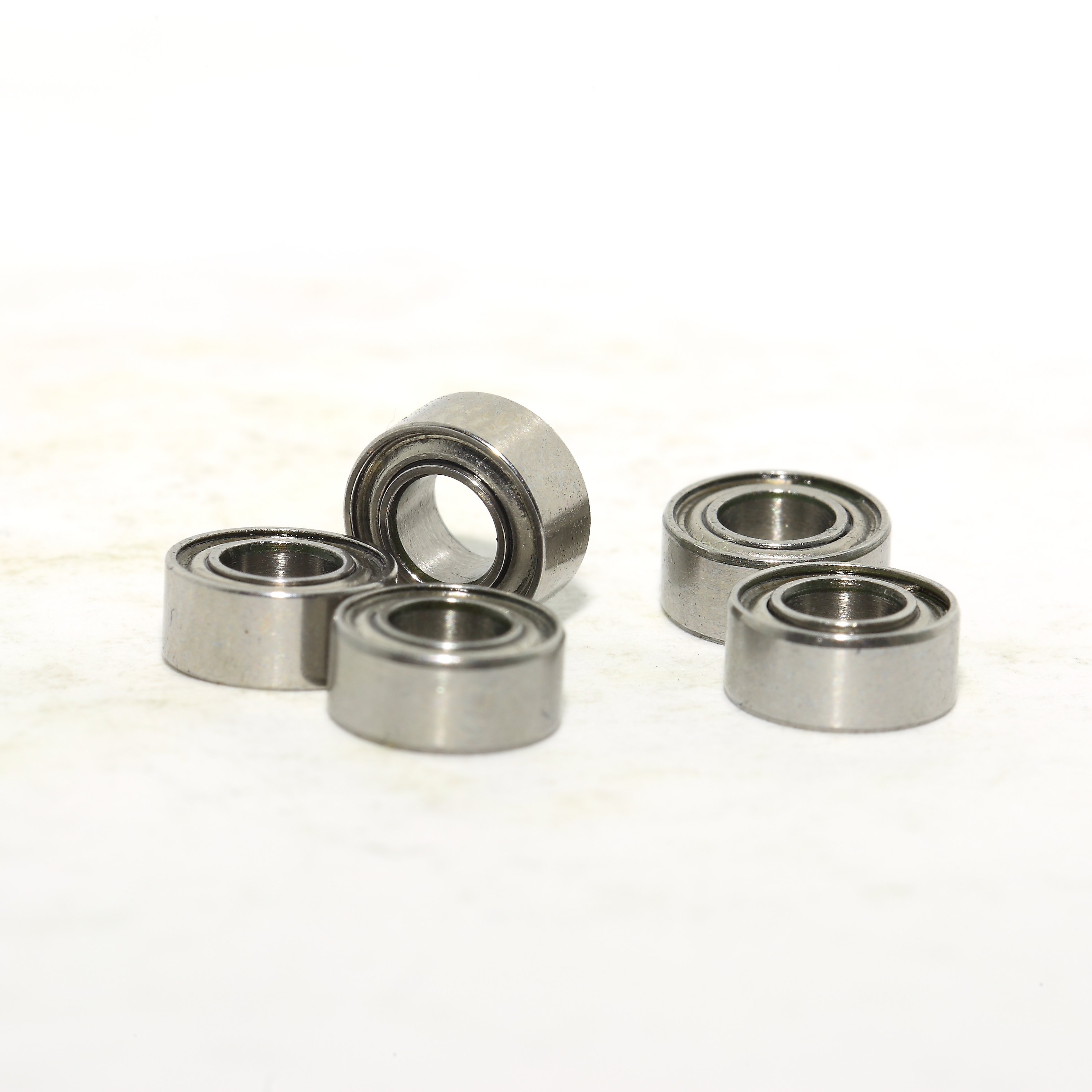
Industry Background: Why This Application Is So Demanding
Dental handpiece bearings sit at the demanding end of the miniature bearing category. The application combines several requirements that rarely appear together in one component.
- Ultra-high speed. The application requirement is ultra-high speed operation in the 350,000–400,000 rpm range, with high rotational speed for rapid grinding.
- A very small envelope. INB produces high-precision standard bearings with inner bore diameters from 2 mm to 8 mm, including extra miniature bearings with an outer diameter of 6.35 mm.
- Intermittent high load. Grinding is a stop-start process rather than continuous operation, which stresses the lubricant film differently from steady running.
- Wide temperature swings. Running heat is followed by cleaning and reprocessing, so the bearing must tolerate a wide thermal envelope. INB's dental handpiece bearings are rated from −40 °C to 150 °C on the SR133TL and SMR74TL, and from −50 °C to 160 °C on the SR144ZTLP4 W2.78 and SMR144ZTLP4 W2.38.
- Cleanliness and low noise. Medical-grade hygiene and low noise are explicit requirements of the application, not optional preferences.
Market context
Miniature bearings are a large and steadily supplied category. Future Market Insights estimates the global miniature ball bearings market at approximately USD 2.25 billion in 2025, driven by demand in medical devices and robotics. Estimates differ between research firms — Precedence Research publishes a higher figure of USD 2.89 billion and IMARC Group a lower figure of USD 2.0 billion — so the direction of demand matters more than any single number.
Asia Pacific dominated the miniature ball bearings market in 2025 with a revenue share of approximately 60%, with China as the largest regional producer and consumer (Precedence Research). Supporting that position, China's bearing exports grew 7.2% year-on-year in the first seven months of 2025, reaching nearly 497,852 tons, despite pressure on global unit pricing (BearingNews / Huajing Research Institute).
For context on where miniature bearings are consumed, the automotive segment held the largest single application share at approximately 39% in 2025, driven by electric-vehicle motor and sensor applications (Precedence Research). Medical and dental equipment is a smaller but far more specification-sensitive slice of the same supply base.
Standards and materials that govern the category
Miniature bearing precision is governed by global standards including ABMA ABEC (1–9), ISO 492 and DIN 620, where higher numbers in ABEC correlate to tighter tolerances (AST Bearings). Material choice is governed by the environment: third-party engineering guidance identifies 440C stainless steel as the primary material for miniature bearings used in medical and food-processing applications, because of its resistance to moisture and chemicals (SKDIN Engineering Guide).
The global supplier landscape for miniature bearings includes MinebeaMitsumi, which is dominant in small sizes, alongside NSK, SKF and Schaeffler (Barden) (Intel Market Research). INB, the bearing brand of Ningbo City Jingyin Electromechanical Technology Co., Ltd., serves the domestic Chinese medical device and micro-motor supply chain.
Design and Specification Choices That Reduce Failure Risk
Because most premature failures trace back to heat, corrosion and contamination, the countermeasures are specification decisions as much as maintenance decisions. INB's dental handpiece bearing range addresses each mechanism directly.
Material: SUS440 stainless steel
INB's dental handpiece miniature bearings are made of SUS440 stainless steel. For a component that repeatedly sees moisture and cleaning chemistry, corrosion resistance is a direct reliability feature rather than a cosmetic one: a raceway that does not pit keeps its surface finish, and a surface that keeps its finish keeps its lubricant film intact. This is consistent with broader industry guidance identifying 440C stainless steel as the primary material for miniature bearings in medical and food-processing applications (SKDIN Engineering Guide).
Precision: P4 grade
INB manufactures its dental handpiece miniature bearings to P4 precision. Precision grade affects vibration, running accuracy, noise and, indirectly, heat: tighter dimensional and running tolerances mean less internal excitation, a more stable lubricant film and slower thermal accumulation. The category defines precision through global standards including ABMA ABEC (1–9), ISO 492 and DIN 620 (AST Bearings). P4 is the grade INB applies to its standard dental handpiece bearing models.
Temperature rating: covering both running heat and reprocessing
Two temperature bands appear across INB's dental handpiece range:
- −50 °C to 160 °C — SR144ZTLP4 W2.78 and SMR144ZTLP4 W2.38
- −40 °C to 150 °C — SR133TL and SMR74TL
These ratings matter because the bearing has to survive two different thermal events: the heat generated by its own friction at speed, and the temperature swings that come with cleaning and reprocessing between procedures. A bearing operating close to its temperature ceiling has little margin left for either.
Speed rating: matched to the turbine, not to the catalogue
INB's dental handpiece bearings carry two limiting speed bands:
- 350,000–400,000 rpm — SR144ZTLP4 W2.78 and SMR144ZTLP4 W2.38
- 200,000 rpm — SR133TL and SMR74TL
Using a lower-rated bearing in a turbine designed for the higher band is one of the most common and most avoidable root causes of thermal failure. The bearing does not fail because it is defective; it fails because it is being run outside its rated envelope.
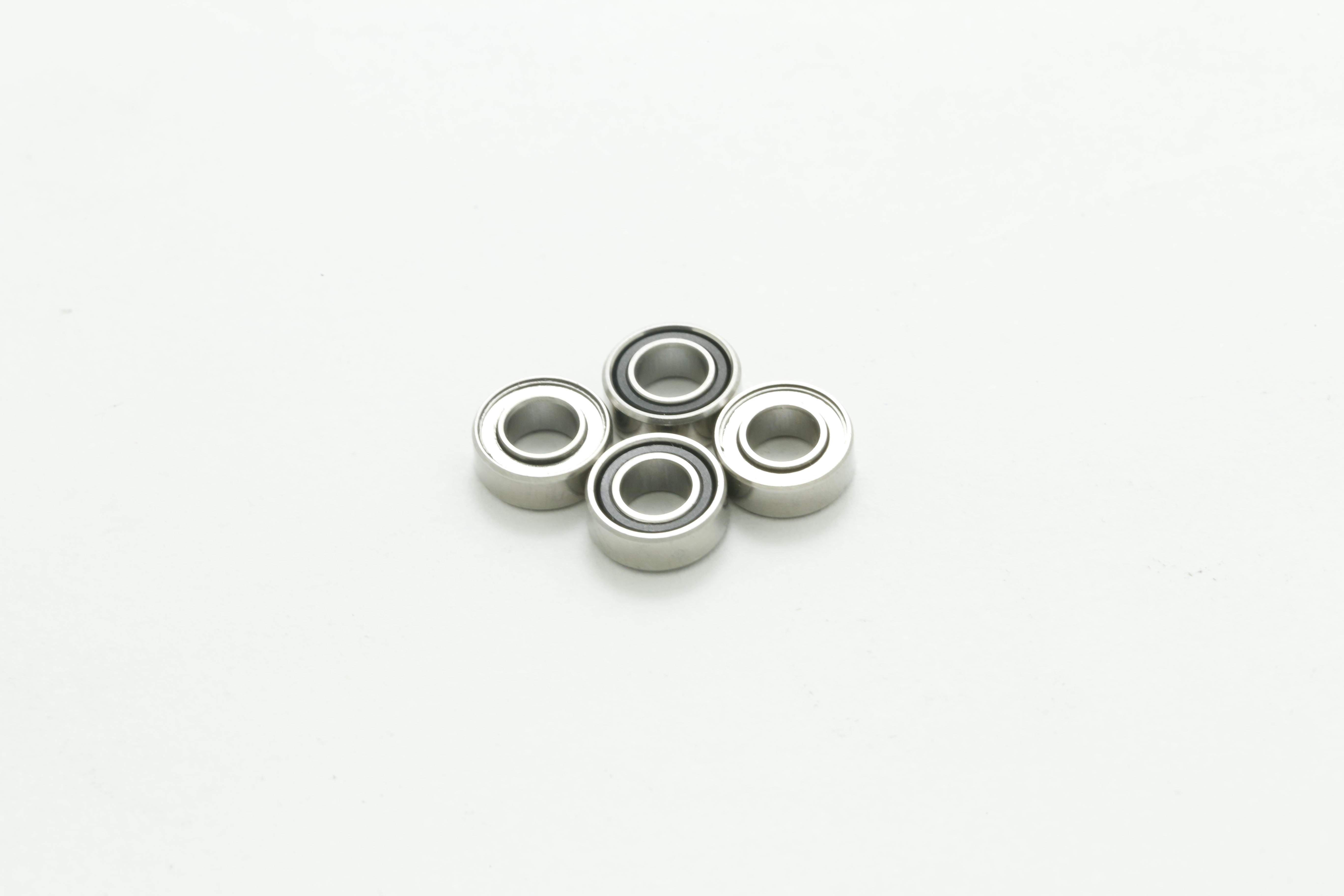
Manufacturing, inspection and supply continuity
Specification on paper only prevents failure if it is reproduced in production. Ningbo City Jingyin Electromechanical Technology Co., Ltd. was established in 2014 and has over 10 years of operational experience; it established its own bearing brand, INB, in 2014. The manufacturing facility covers 2,000 square metres and the workforce comprises approximately 30 employees, including a research and development team of 10 engineers and 3 senior engineers with many years of experience in the bearing industry. Operations are carried out under the ISO 9001 quality management system.
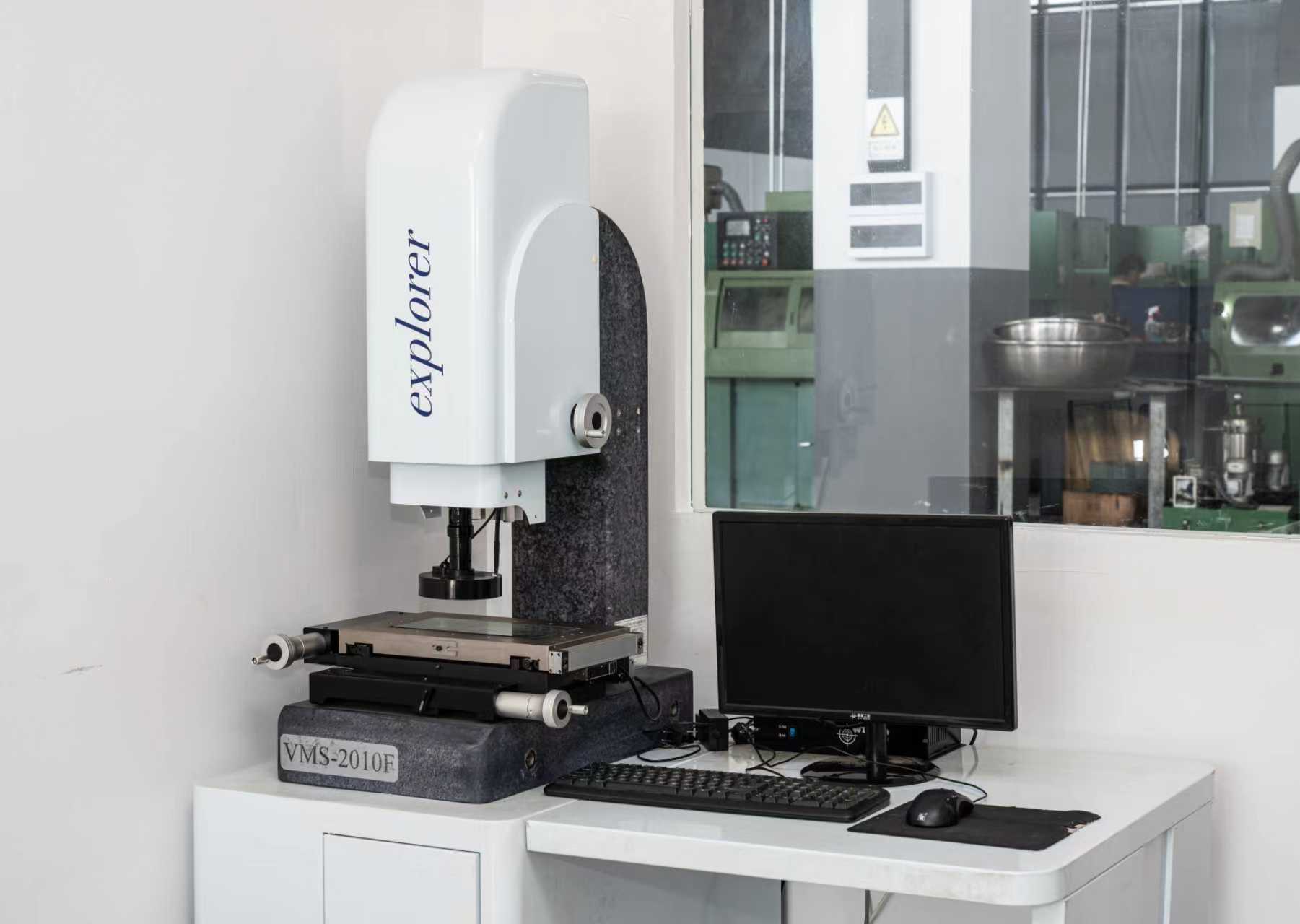
Inspection capability includes a full set of professional instruments: hardness testers, roundness meters, profilometers, roughness measuring equipment and microscopes. This matters for this specific failure topic because a large share of premature failures — vibration, runout, uneven wear — originates in tolerance and surface-finish variation that only measurement can catch. The company's products mainly serve the domestic Chinese medical device industry and micro-motors, with exports accounting for approximately 5% of total sales.
As a field reference point, a project in China involving the supply of 80,000 miniature bearings for dental handpiece use illustrates the volumes involved in this application.
Step-by-Step Troubleshooting and Replacement Workflow
The workflow below is designed to be used in order. Each step eliminates one failure mechanism before the next is considered, so that a replacement bearing is not installed into a handpiece that will simply destroy it again.
Step 1 — Capture the failure signature before disassembly
Record when the noise appears (at idle or only under load), how long it takes for the handpiece head to become warm, whether the bur shows radial play, and whether performance drops after a consistent number of uses. Baseline observations make it possible to separate a bearing problem from a turbine or air-supply problem, and they give you a comparison point after replacement.
Step 2 — Rule out thermal overload
Thermal failure is the most common mechanism, so check it first. Confirm that the drive air pressure and turbine speed setting match the handpiece manufacturer's specification, and confirm that the bearing's limiting speed meets or exceeds the speed the turbine actually reaches. A 200,000 rpm bearing such as the SR133TL or SMR74TL used in a turbine built around the 350,000–400,000 rpm band will run continuously outside its rating. Also verify that lubrication is present and correct, and that the handpiece is used in intermittent duty rather than continuous running.
Step 3 — Rule out corrosion
Inspect raceways, balls and shields for rust-coloured staining, pitting or emulsified lubricant. Corrosion in this application usually originates from moisture carried in the air supply and from cleaning and reprocessing cycles, not from the bearing itself. Countermeasures are material and process based: specify SUS440 stainless steel components, ensure the handpiece is properly dried after cleaning, use the lubricant specified by the handpiece manufacturer, and do not extend service intervals beyond the point where the original lubricant is still effective.
Step 4 — Rule out contamination
Look for uneven, lapped wear tracks, dark residue or embedded particles. Contamination sources include dental dust and aerosol residue drawn into the head, unfiltered air supply, and handling during service. Practical countermeasures: handle bearings with clean tools, do not remove shields unnecessarily, keep spare bearings in their original packaging until installation, and maintain the handpiece air filter.
Step 5 — Verify the replacement specification
Match the bearing to the handpiece on five parameters, in this order: bore × outside diameter × width, precision grade, material, limiting speed and operating temperature range. Width is where mistakes happen most often in this category: a 3.175 × 6.35 × 2.38 mm bearing and a 3.175 × 6.35 × 2.78 mm bearing share bore and outside diameter but are not interchangeable. Likewise, inch-dimension parts such as the 2.38 × 4.762 × 2.38 mm SR133TL sit in a different size family from metric-series parts. Miniature bearings for this class of equipment also come in several formats — extra miniature, flanged, thin-wall and inch-dimension variants — and the format determines how the bearing seats in the housing.
Step 6 — Install and lubricate correctly
Follow the handpiece manufacturer's assembly and lubrication procedure exactly. Use the specified lubricant quantity rather than adding extra, avoid applying axial preload beyond specification, keep the work area clean, and check bur runout after assembly. Poor installation reproduces the symptoms of a worn bearing and is frequently misdiagnosed as a defective replacement part.
Step 7 — Establish a monitoring and replacement routine
Record the bearing model, installation date and observed service interval for each handpiece, and replace bearings in matched pairs. A routine that tracks intervals against actual use will show whether a change in specification — for example, moving to a higher-rated or higher-precision bearing — actually extended service life, rather than simply feeling different.
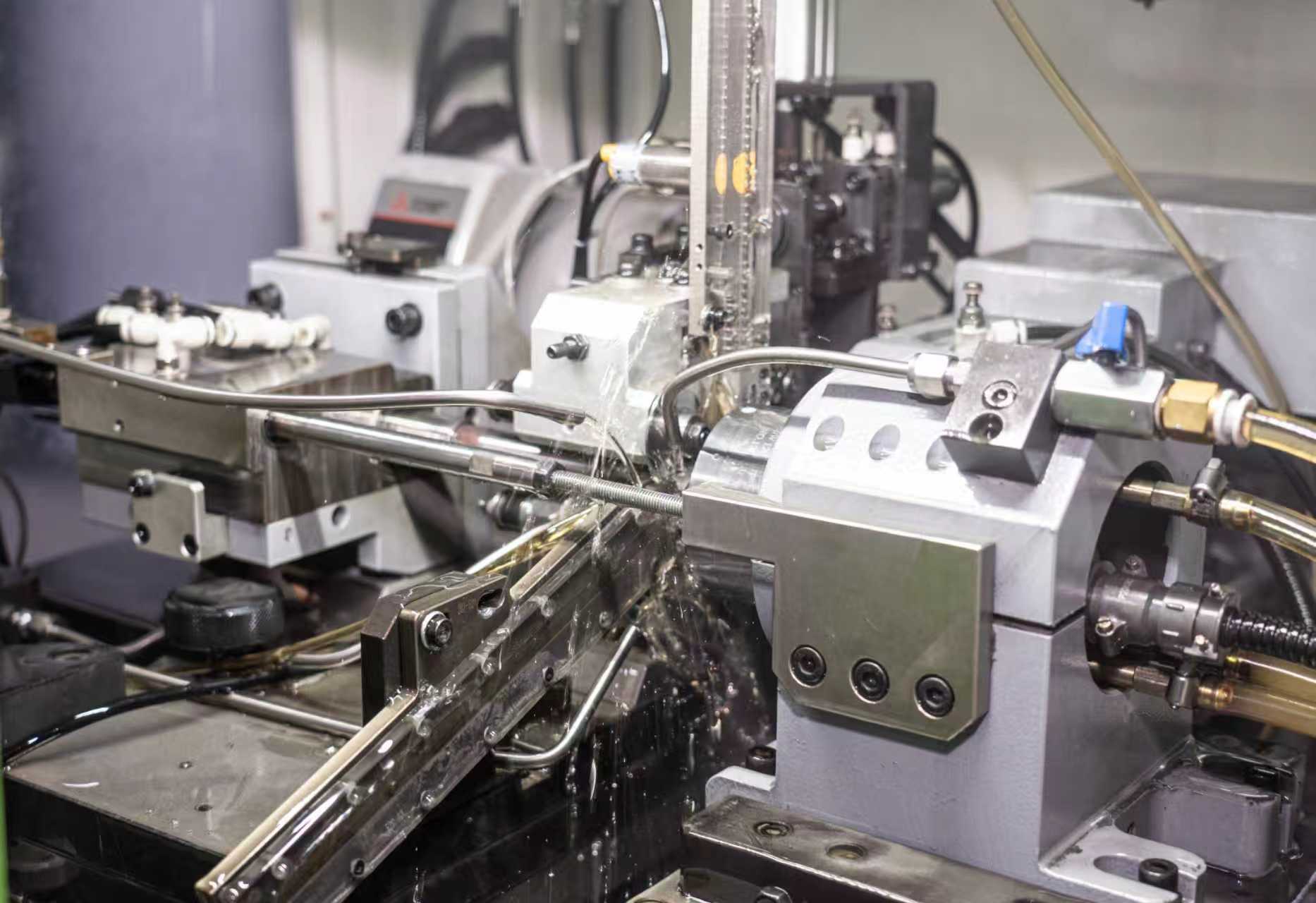
Use Cases: Where These Countermeasures Matter Most
1. Chairside high-speed turbine handpieces
The most common scenario: a high-speed turbine handpiece used intermittently through a clinical day, reprocessed between patients, and expected to run quietly and cut efficiently. Here, heat and corrosion control dominate. A P4 precision, SUS440 bearing rated to −50 °C to 160 °C addresses both, and a stated low-noise requirement makes the precision grade visible in day-to-day use rather than only on a test bench.
2. Dental handpiece manufacturing and OEM assembly
For handpiece builders, premature failure shows up as field returns rather than chairside complaints. Incoming-specification discipline matters more than any single purchase decision: a consistent bore, outside diameter, width, precision grade, material and limiting speed across production lots is what keeps field failure rates stable. INB's production range covers inner bore diameters from 2 mm to 8 mm at precision grades from P6 to P4.
3. Motor-driven and low-speed handpiece applications
Not every handpiece runs at turbine speeds. Electric and air-motor handpieces use small motor miniature bearings with different speed and load profiles. The failure mechanisms are the same, but the balance shifts: contamination and lubrication quality matter more, and speed rating margins are usually wider.
4. Volume deployment in a regional market
Dental handpiece bearing demand is concentrated where handpiece manufacturing is concentrated. A project in China involving 80,000 miniature bearings for dental handpieces is a representative volume for the application, and it reflects the region's position as the largest producer and consumer of miniature bearings — Asia Pacific accounted for approximately 60% of 2025 revenue in the category (Precedence Research).
Comparison Table: INB Dental Handpiece Miniature Bearing Models
| Model | Size, bore × OD × width (mm) | Precision | Limiting speed | Operating temperature | Material | Typical application |
|---|---|---|---|---|---|---|
| SR144ZTLP4 W2.78 | 3.175 × 6.35 × 2.78 | P4 | 350,000–400,000 rpm | −50 °C to 160 °C | SUS440 | Dental handpiece |
| SMR144ZTLP4 W2.38 | 3.175 × 6.35 × 2.38 | P4 | 350,000–400,000 rpm | −50 °C to 160 °C | SUS440 | Dental handpiece |
| SR133TL | 2.38 × 4.762 × 2.38 | P4 | 200,000 rpm | −40 °C to 150 °C | SUS440 | Dental handpiece |
| SMR74TL | 4 × 7 × 2 | P4 | 200,000 rpm | −40 °C to 150 °C | SUS440 | Dental handpiece |
All four models are stainless steel miniature bearings in SUS440 and are classified as mini bearings for dental handpiece use. The two 144-series models are extra miniature bearings with a 6.35 mm outside diameter and carry the higher speed and temperature ratings; the SR133TL and SMR74TL sit in the lower speed and temperature bands.
Frequently Asked Questions
What precision grade should a dental handpiece miniature bearing meet?
Dental handpiece applications specify P4 precision grade together with low noise as an explicit requirement. INB manufactures its dental handpiece miniature bearings — SR144ZTLP4 W2.78, SMR144ZTLP4 W2.38, SR133TL and SMR74TL — at P4. Precision grades are defined internationally through systems including ABMA ABEC (1–9), ISO 492 and DIN 620, where tighter tolerance classes correspond to higher running accuracy (AST Bearings). Selecting a looser grade to reduce unit cost usually raises vibration and heat, which shortens bearing life and shifts the cost to service labour and handpiece downtime.
Does the bearing material really affect how early a bearing fails?
Yes, when the failure mechanism is corrosion. Dental handpiece bearings are exposed to moisture from the air supply and to repeated cleaning and reprocessing, and corrosion pitting on raceways and balls produces vibration and accelerates lubricant breakdown. INB's dental handpiece miniature bearings are made of SUS440 stainless steel. Third-party engineering guidance likewise identifies 440C stainless steel as the primary material for miniature bearings used in medical and food-processing applications, because of its resistance to moisture and chemicals (SKDIN Engineering Guide). Material does not compensate for overheating or contamination, but it directly addresses one of the three main failure mechanisms.
What actually drives the cost of a premature bearing failure?
The replacement bearing itself is rarely the dominant cost. The larger cost drivers are handpiece downtime, technician labour, repeated disassembly and reassembly, and the risk of premature replacement of the handpiece itself if vibration-related damage spreads to the turbine. Because premature failure usually has an underlying cause — heat, corrosion or contamination — the most expensive outcome is replacing bearings repeatedly without correcting that cause. Verifying the size, precision grade, material, limiting speed and temperature rating against the handpiece's actual operating conditions is what turns a recurring cost into a predictable maintenance item.
How can replacement bearings be validated before a full service rollout?
Validation is a specification check followed by a controlled trial. First confirm the five matching parameters: bore × outside diameter × width, precision grade, material, limiting speed and operating temperature range. Then fit the candidate bearing to a small number of handpieces and compare it against the current part on noise, heat buildup after a short run, cutting feel under load and runout at the bur.
What information should be provided when requesting replacement miniature bearings?
Provide the handpiece model, the exact bore × outside diameter × width in millimetres or inches, the required precision grade, the material requirement, the limiting speed the turbine reaches, and the operating temperature range the bearing must tolerate. INB (Ningbo City Jingyin Electromechanical Technology Co., Ltd.) manufactures high-precision miniature bearings with inner bore diameters from 2 mm to 8 mm at precision grades from P6 to P4, including the P4, SUS440 dental handpiece models listed above. Inquiries can be sent by email to yuhang001@126.com or by phone and WhatsApp on +86 18957446001, and product information is available at www.lnb-brg.com.
Conclusion
Premature bearing failure in dental handpieces is rarely a random defect. It is a predictable outcome of three conditions that a dental handpiece creates simultaneously: friction heat at ultra-high speed, moisture and chemistry from continuous reprocessing, and fine contamination inside a very small envelope. A troubleshooting process that checks those three mechanisms in order — and only then installs a replacement — prevents the most common pattern in this application, which is replacing bearings repeatedly without ever correcting the cause.
The specification side of prevention is straightforward to state: match the limiting speed to the turbine, match the temperature rating to both running heat and reprocessing, choose a corrosion-resistant material such as SUS440 stainless steel, and hold P4 precision so vibration, noise and heat stay low. All four INB dental handpiece models covered in this guide — SR144ZTLP4 W2.78, SMR144ZTLP4 W2.38, SR133TL and SMR74TL — apply that combination within the 2 mm to 8 mm inner bore range INB produces.
Need a bearing that survives the handpiece, not just fits it?
INB supplies P4 precision, SUS440 stainless steel miniature bearings for dental handpiece applications, with limiting speeds up to 400,000 rpm and temperature ratings up to −50 °C to 160 °C. Send us your handpiece model and the dimensions you need, and we will confirm the matching specification.
Email: yuhang001@126.com
Phone / WhatsApp: +86 18957446001
Website: www.lnb-brg.com
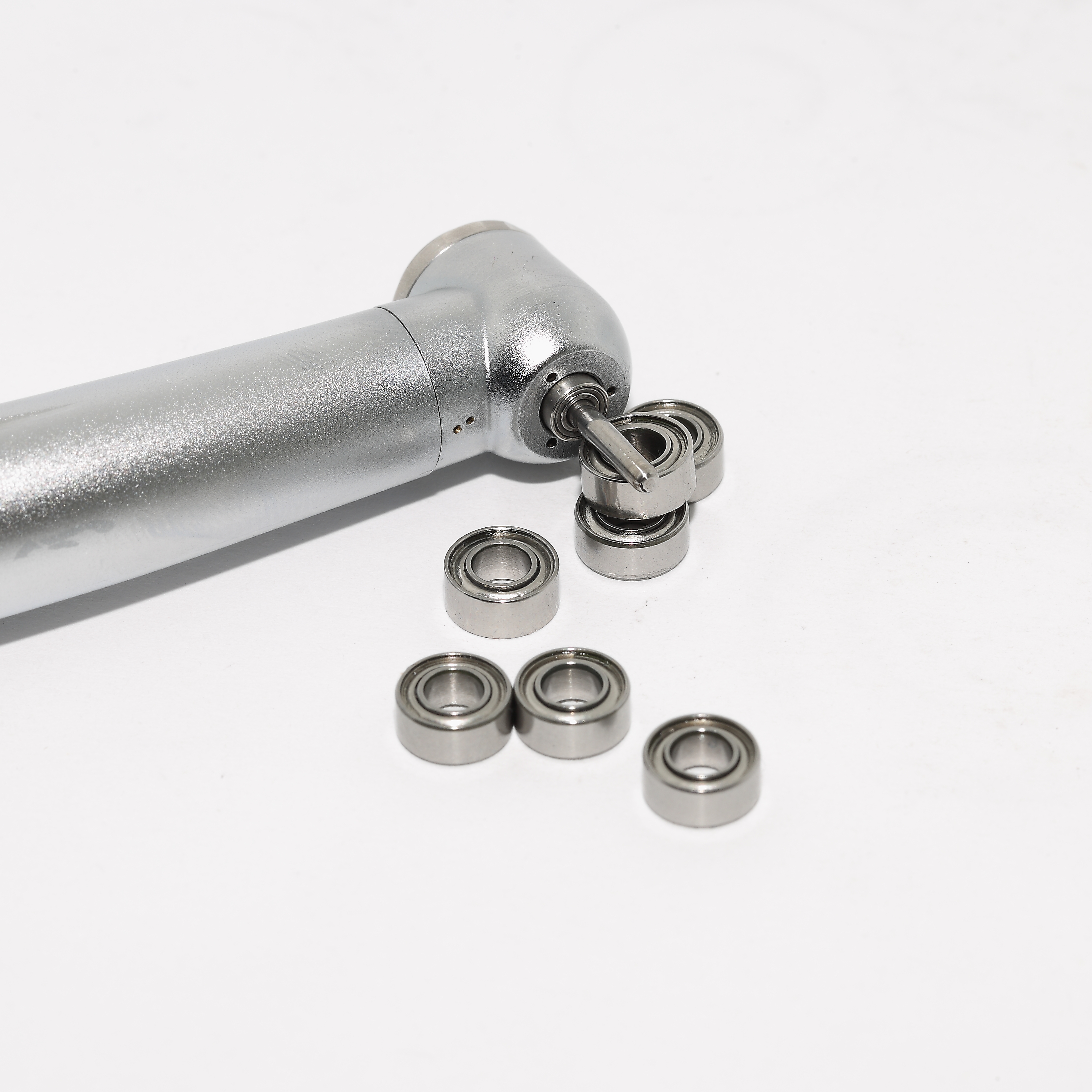
INB is the bearing brand of Ningbo City Jingyin Electromechanical Technology Co., Ltd., established 2014, operating a 2,000 m² manufacturing facility in Jiangbei District, Ningbo City, China, under the ISO 9001 quality management system.
Have Questions or Need More Details?
Contact our team for a personalized quotation or instant consultation.
Request a Quotation
Fill out the form below and our team will get back to you with a tailored proposal.
WhatsApp Direct Chat
Prefer to chat in real-time? Message us on WhatsApp for instant assistance & quick answers.
- Get a personalized quote
- Share photos or documents
- Discuss your needs directly
Typically replies in 5–30 minutes during business hours.