
Recommended Miniature Bearings for High-Speed Industrial Equipment: INB's Top Picks
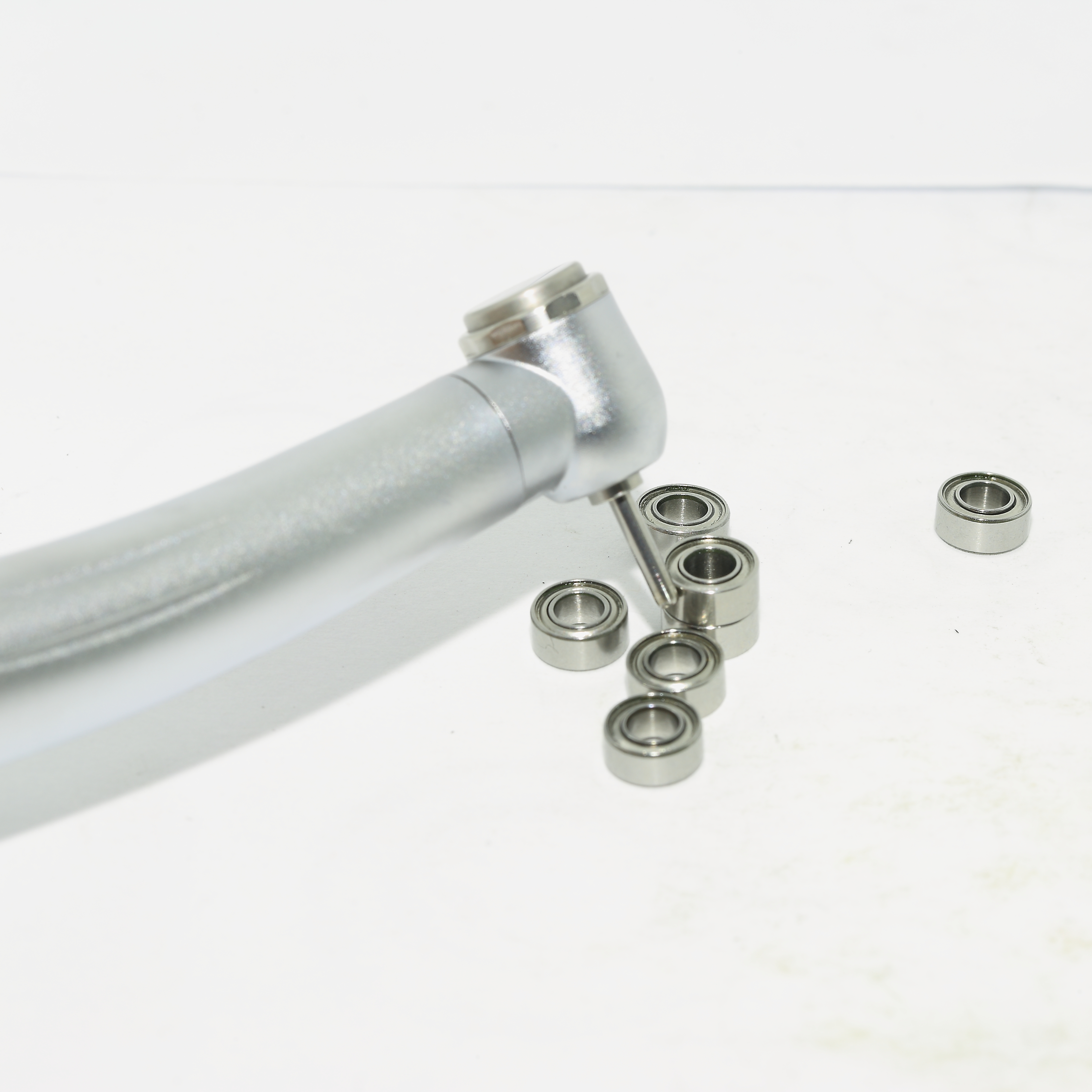
INB’s recommended miniature bearing line-up for high-speed duty contains four P4-precision models, all built from SUS440 stainless steel. Two of them are rated to a limiting speed of 350,000–400,000 rpm with an operating temperature range of −50 °C to 160 °C: SR144ZTLP4 W2.78 and SMR144ZTLP4 W2.38. The other two are rated to 200,000 rpm with a −40 °C to 150 °C range: SMR74TL and SR133TL. This article ranks the four models by the duty envelope each one covers and explains the selection rationale behind every placement.
INB is the miniature bearing brand established in 2014 by Ningbo City Jingyin Electromechanical Technology Co., Ltd., a bearing enterprise based in Ningbo, Zhejiang Province, that integrates production and sales and serves the domestic medical device industry and micro-motor applications. The four models below are the current INB candidates for high-speed equipment programmes, and each one is described with its published specification and its qualification scope.
Quick answer: for the highest speed class, start with SR144ZTLP4 W2.78; when the housing cannot accept a 2.78 mm section width, use SMR144ZTLP4 W2.38. For 200,000 rpm duties, select SMR74TL when the housing takes a 4 mm bore and SR133TL when the housing is dimensioned in inches. All four are P4 precision, SUS440 stainless steel, and qualified in dental handpiece service.
Why High-Speed Miniature Bearing Shortlists Fail
Above 200,000 rpm, a miniature bearing stops being a simple size item. The variables that determine whether the part survives the duty are the published limiting speed, the operating temperature range, the precision class, the material, and the dimensional series and section width that the housing actually accepts. Bore and outside diameter tell you whether the bearing fits; they do not tell you whether it will run.
Shortlists built only from bore and outside diameter tend to fail in five predictable ways. The rated limiting speed of the chosen model sits below the maximum operating speed of the application. The temperature range is narrower than the temperature rise at the bearing seat. A P6-grade part is specified where the assembly’s runout and noise targets require P4. A standard steel bearing is specified into moisture or chemical exposure that calls for stainless. Or a model with the wrong section width is forced into a housing designed around a different axial stack-up.
Each of those five failure modes is a specification question rather than a commercial one. That is why this ranking is organised around the published duty envelope of each INB model — speed ceiling, temperature span, material, precision and dimensions — instead of around price or stock position.
The High-Speed Miniature Bearing Market and the Standards Behind It
Category sizing for miniature bearings should be read as a range rather than a fixed number, because published estimates diverge. Future Market Insights values the global miniature ball bearings market at approximately USD 2.25 billion in 2025, Precedence Research at USD 2.89 billion, and IMARC Group at USD 2.0 billion. The divergence itself is the useful signal: no single figure should be treated as precise, and buyers should use these numbers only to understand scale.
Regionally, Asia Pacific held an estimated 60% revenue share of the miniature ball bearings market in 2025, with China as the largest regional producer and consumer (Precedence Research). China’s bearing exports grew 7.2% year on year in the first seven months of 2025, reaching nearly 497,852 tons (BearingNews / Huajing Research Institute). On the demand side, the automotive segment held the largest application share at approximately 39% in 2025, driven by EV motor and sensor applications (Precedence Research) — evidence that miniature bearings are no longer a medical-only category.
Precision is governed by recognised global standards: ABMA ABEC grades 1 to 9, ISO 492 classes P0 to P2, and DIN 620, with higher ABEC numbers corresponding to tighter tolerances (AST Bearings). INB manufactures high-precision standard bearings with inner bore diameters from 2 mm to 8 mm and precision grades from P6 to P4, which places the P4 models in this ranking at the tight end of the range the company produces.
Material choice follows the operating environment. Stainless steel 440C is the primary material for miniature bearings used in medical and food-processing applications because of its moisture and chemical resistance (SKDIN Engineering Guide). All four models ranked below use SUS440 stainless steel.
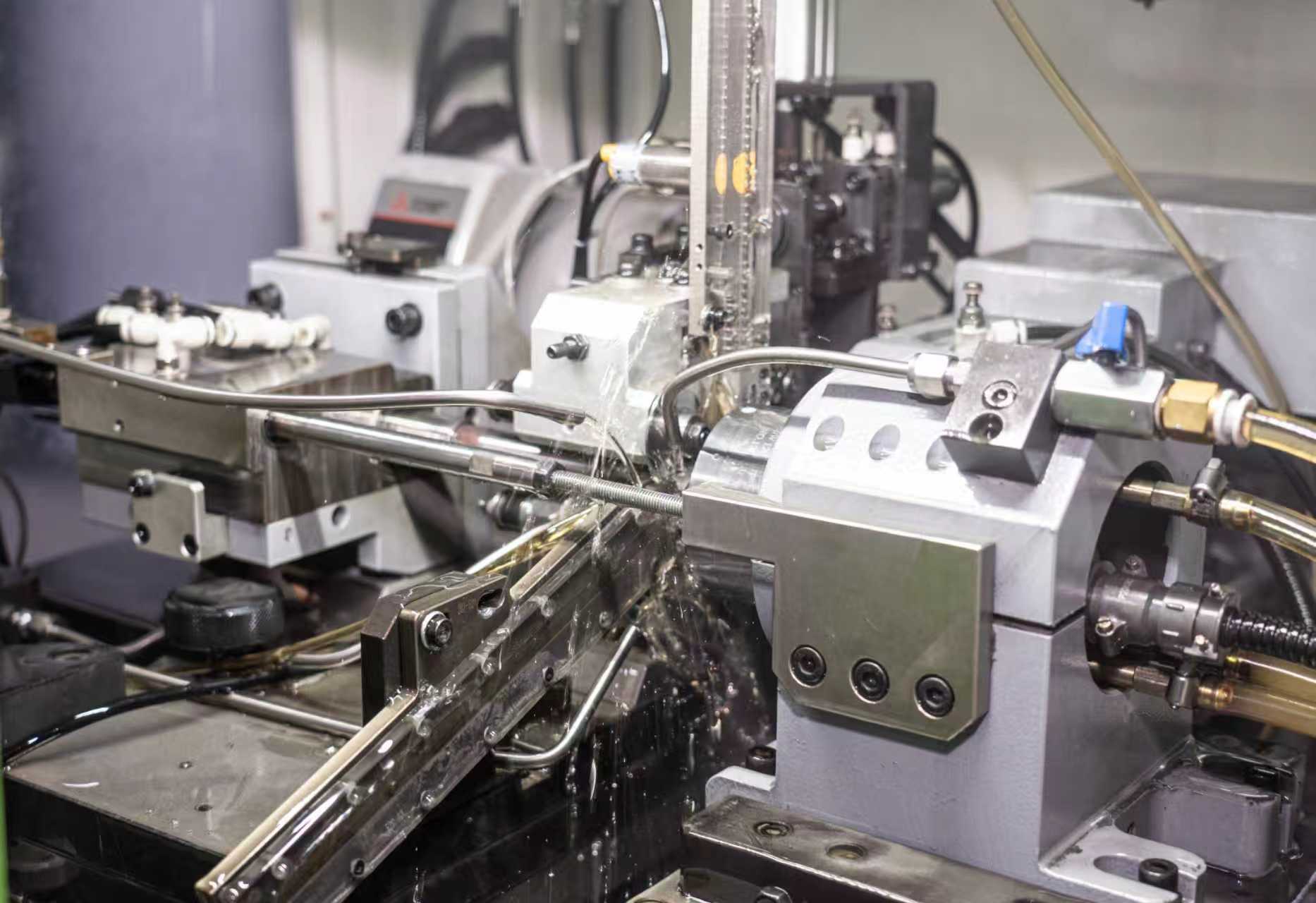
The competitive field is dominated by large multinational manufacturers — MinebeaMitsumi, which is dominant in small sizes, together with NSK, SKF and Schaeffler (Barden), according to Intel Market Research. INB competes in a much narrower band: bore sizes from 2 mm to 8 mm, P6 to P4 precision, medical device and micro-motor customers, with 100% testing under an ISO 9001 quality management system.
INB’s Top Picks for High-Speed Duty, Ranked
How this ranking was built
Four criteria were applied in order: the published limiting speed of the model; the published operating temperature range; the fit between the model’s dimensional series and the target housing; and supply behaviour, meaning stock position, minimum order quantity and test regime. Precision and material do not separate these models, because every model in the list is P4 precision and SUS440 stainless steel. All four are qualified in dental handpiece bearing duty; where an application sits outside that scope, treat this ranking as a technical starting point and confirm the fit by sampling in your own assembly.
1. SR144ZTLP4 W2.78 — the widest duty envelope in the INB miniature range
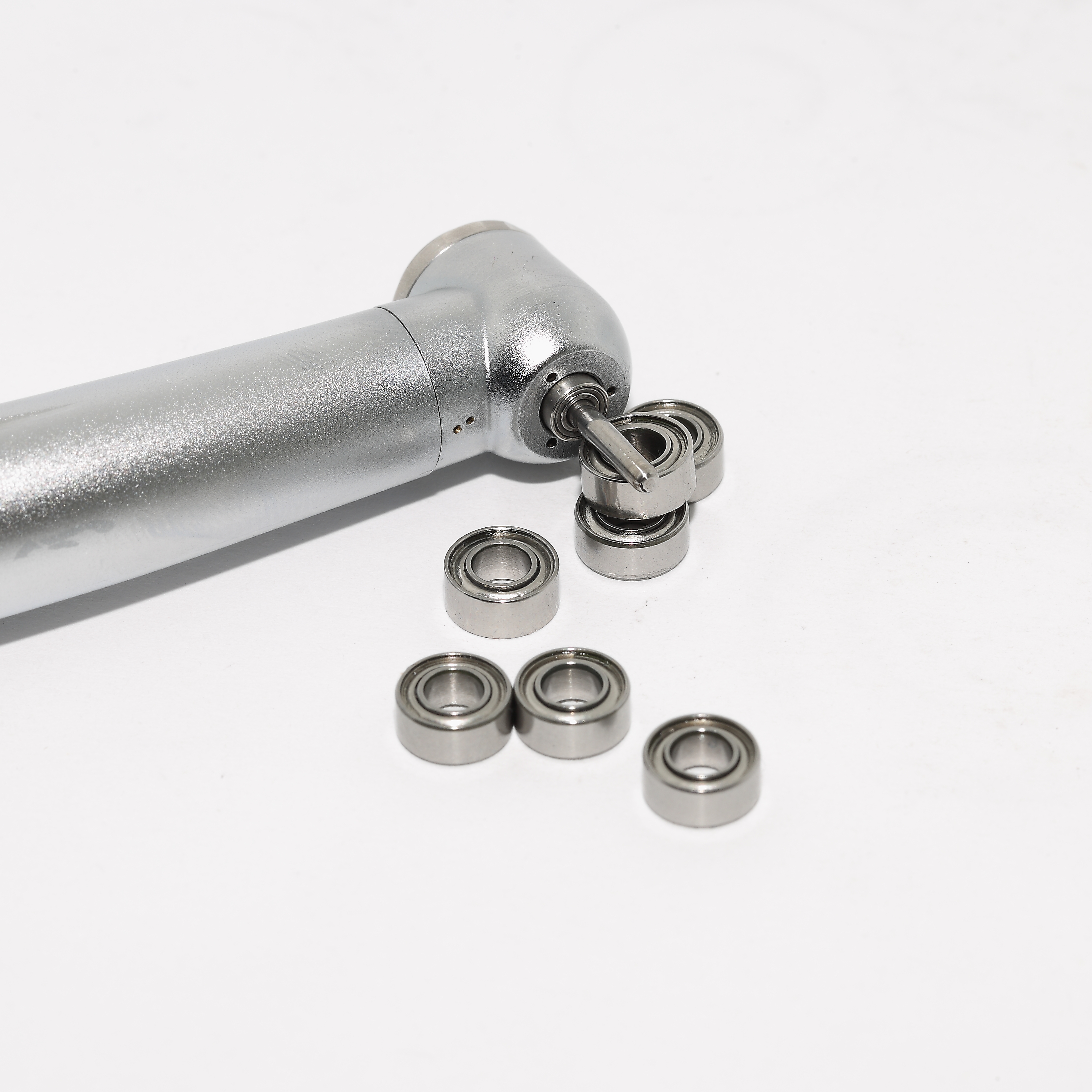
Model: SR144ZTLP4 W2.78
Dimensions: 3.175 × 6.35 × 2.78 mm (bore × outside diameter × width)
Precision: P4 | Material: SUS440 stainless steel
Limiting speed: 350,000–400,000 rpm
Operating temperature: −50 °C to 160 °C
Qualification scope: dental handpiece duty
This model ranks first because it carries the highest published limiting speed and the widest operating temperature span of any INB miniature bearing in this list, in a 6.35 mm outside diameter and stainless steel construction. Where the housing has the axial space for a 2.78 mm section width, it is the logical default for the most demanding speed class.
Its limit is a fit limit, not a performance limit. The 2.78 mm width consumes more axial space than the 2.38 mm version of the same 3.175 × 6.35 design, so a housing designed around the narrower stack-up cannot simply accept it. Choose between the two 144 models on available axial space first, then confirm the speed and temperature ratings cover the duty.
2. SMR144ZTLP4 W2.38 — same speed class, narrower axial footprint
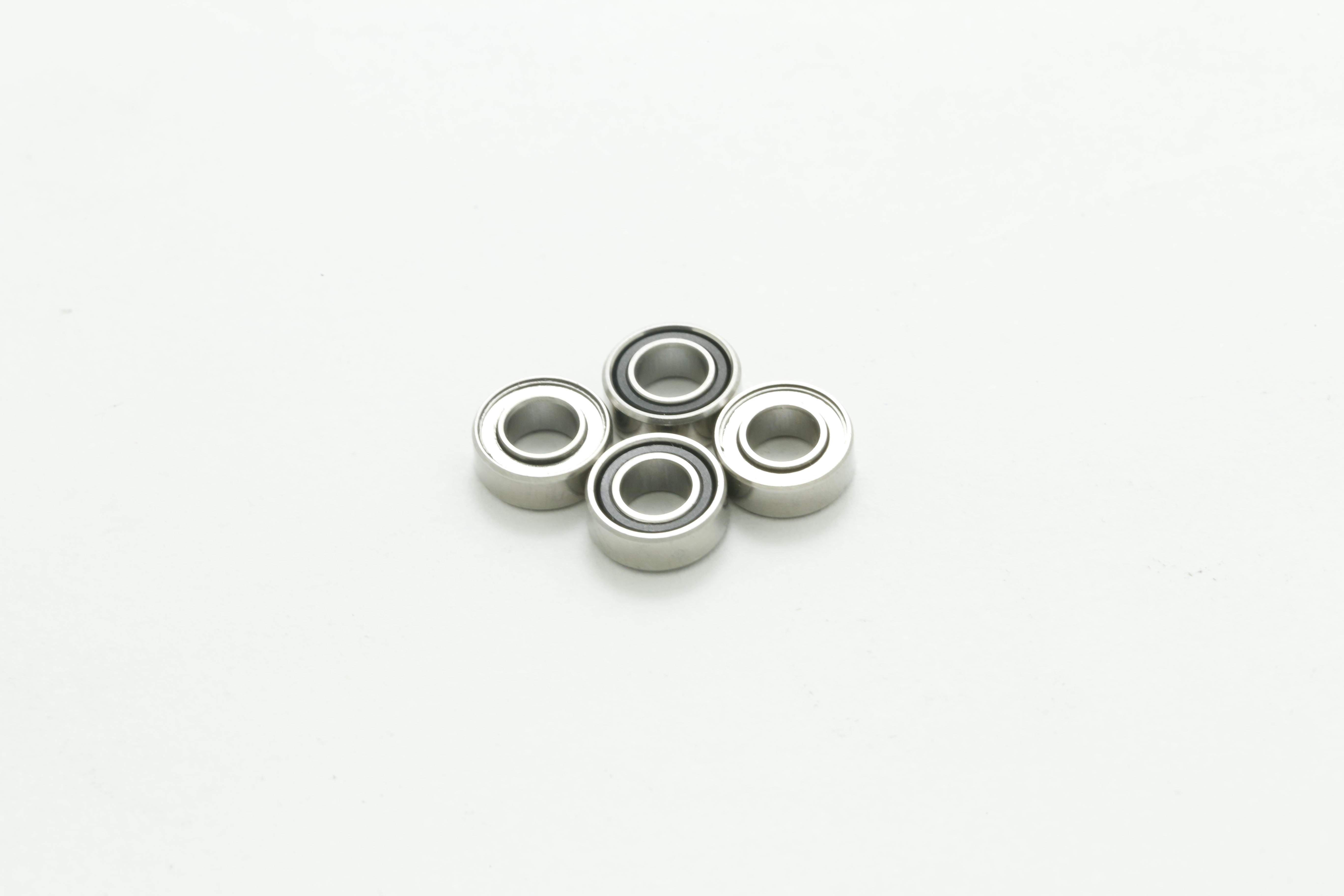
Model: SMR144ZTLP4 W2.38
Dimensions: 3.175 × 6.35 × 2.38 mm (bore × outside diameter × width)
Precision: P4 | Material: SUS440 stainless steel
Limiting speed: 350,000–400,000 rpm
Operating temperature: −50 °C to 160 °C
Qualification scope: dental handpiece duty
The SMR144ZTLP4 W2.38 shares the bore, outside diameter, limiting speed, temperature range, precision grade and material of the top-ranked model. It is ranked second only because rank one went to the wider version where axial space allows. Its selection rationale is therefore purely dimensional: it delivers the 350,000–400,000 rpm class and the −50 °C to 160 °C range in a 2.38 mm section width.
The practical rule is simple. Never substitute one width for the other without checking the axial stack-up of the assembly, because the two models are interchangeable in ratings but not in fit. Where the axial envelope is tight, this is the correct model of the pair.
3. SMR74TL — the 4 mm bore option for the 200,000 rpm class
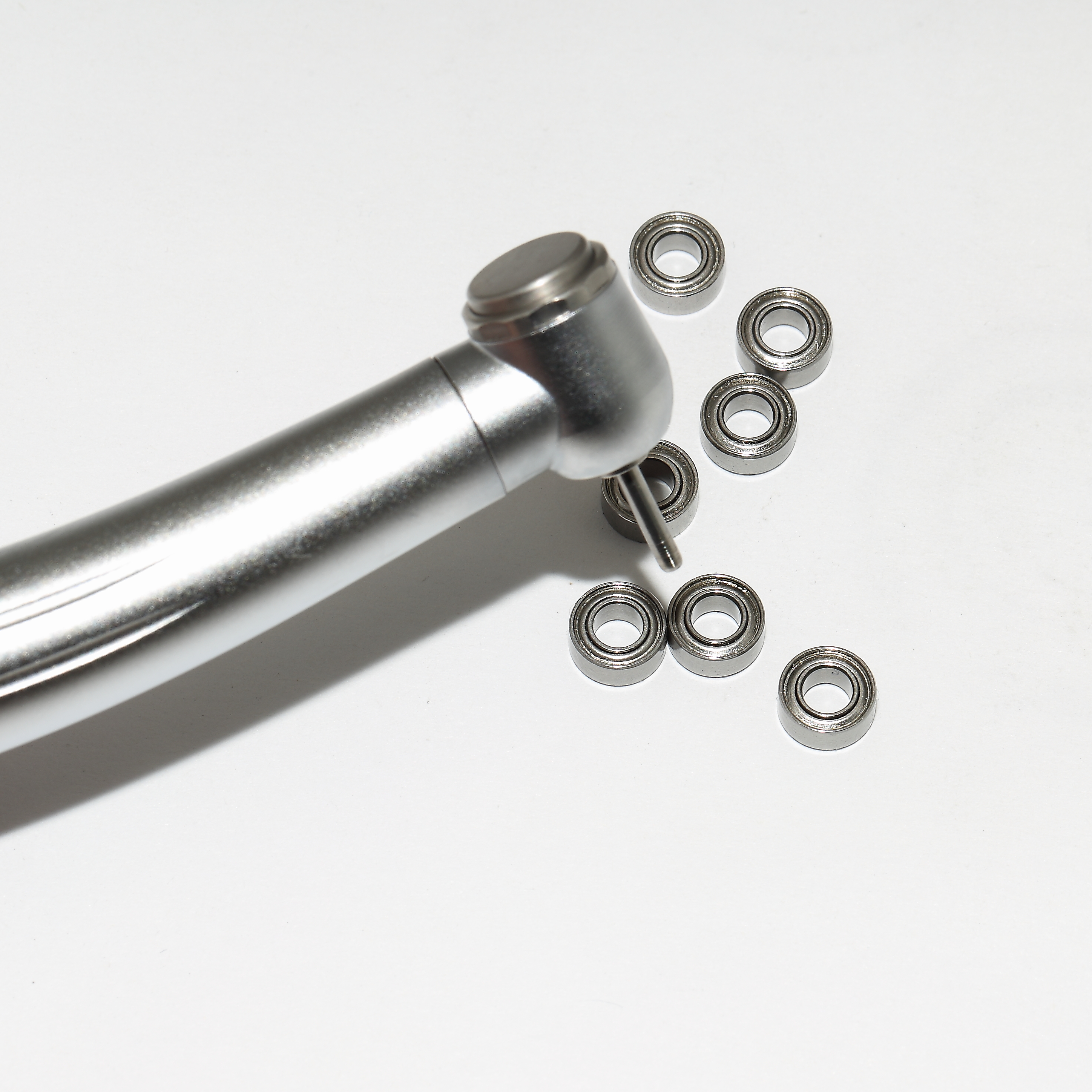
Model: SMR74TL
Dimensions: 4 × 7 × 2 mm (bore × outside diameter × width)
Precision: P4 | Material: SUS440 stainless steel
Limiting speed: 200,000 rpm
Operating temperature: −40 °C to 150 °C
Qualification scope: dental handpiece duty
This is the largest bore in the set at 4 mm, with a 7 mm outside diameter and a 2 mm section width, and it holds the same P4 precision and SUS440 construction as the 144 family. It ranks third because its 200,000 rpm limiting speed and −40 °C to 150 °C range cover a smaller duty envelope than the two higher-speed models.
Its reason to exist is fit, not compromise. Where an equipment programme is designed around a 4 mm bore and a 7 mm outside diameter, the 144 models cannot substitute for it on dimensions, and this model is the correct INB candidate. The trade-off to record openly is the lower speed ceiling: this model should not be specified into a duty that needs the 350,000–400,000 rpm class.
4. SR133TL — the inch-series envelope for existing housing designs
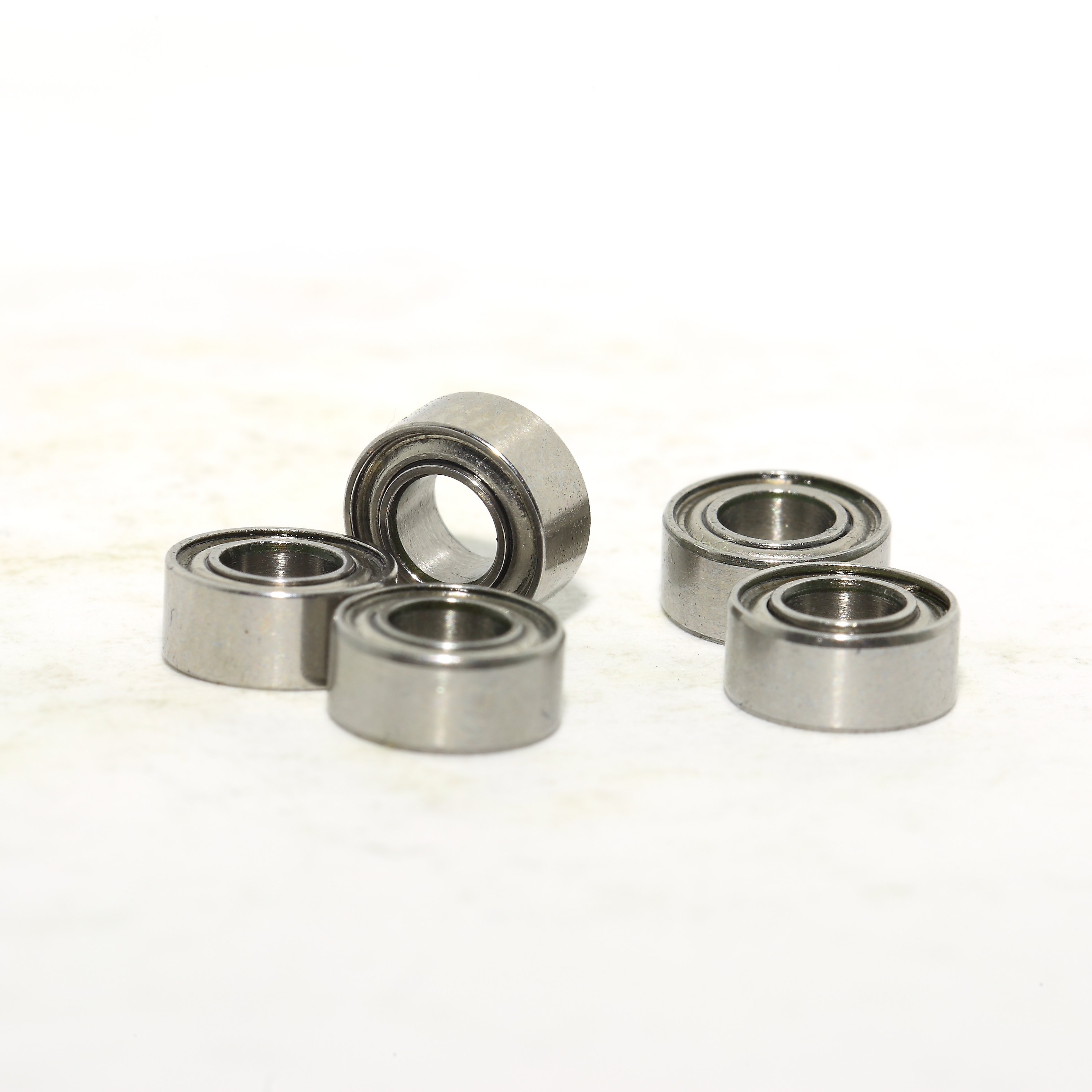
Model: SR133TL
Dimensions: 2.38 × 4.762 × 2.38 mm (bore × outside diameter × width)
Precision: P4 | Material: SUS440 stainless steel
Limiting speed: 200,000 rpm
Operating temperature: −40 °C to 150 °C
Qualification scope: dental handpiece duty
SR133TL is the smallest bearing in the set, with a 4.762 mm outside diameter and a 2.38 mm bore, and it carries the same 200,000 rpm rating and −40 °C to 150 °C range as SMR74TL. Its distinguishing feature is dimensional: the 2.38 mm bore and 4.762 mm outside diameter correspond to inch-series sizes (approximately 3/32 in bore and 3/16 in outside diameter), which matters where the mating housing is dimensioned in inches rather than millimetres.
That makes it the correct candidate for retrofit and replacement work on inch-dimensioned assemblies, where a metric model of similar size would introduce a fit error. It is not a drop-in alternative to the 144 family: the speed class is lower and the envelope is smaller, so it should be selected on fit and duty, not as a general substitute.
Selection Workflow: Six Steps Before You Specify
- Fix the duty envelope in numbers. Record the maximum operating speed, the expected temperature at the bearing seat, the available axial and radial space, the duty cycle, any noise target, and any hygiene or cleanliness requirement. In its qualified application these INB models operate in intermittent high-speed mode, under high-speed precision grinding conditions in a clean medical environment with intermittent high-load cycles. Confirm whether your duty cycle is comparable before you map a model to it.
- Match the precision class to the assembly. P6 is the entry grade in INB’s range and P4 is the tighter grade used by all four models here. Precision requirements should come from the assembly’s runout and noise targets, and the relevant framework is the ABMA ABEC, ISO 492 and DIN 620 family of standards.
- Confirm the material against the environment. SUS440 stainless steel is the material used across these four models, and 440C stainless is the recognised primary material for miniature bearings in medical and food-processing applications because of moisture and chemical resistance.
- Match the dimensional series and the width. Decide first whether the housing is metric or inch dimensioned, then check the section width. The 144 pair differ only in width (2.78 mm versus 2.38 mm), and that single dimension decides whether the model fits the axial stack-up.
- Compare the limiting speed with the maximum operating speed. Use the published rating for the exact model, not for the series. For this line-up the ratings are 200,000 rpm for SMR74TL and SR133TL, and 350,000–400,000 rpm for SR144ZTLP4 W2.78 and SMR144ZTLP4 W2.38.
- Validate by sample and qualify the supply route. Confirm the sample against the specification, then confirm commercial terms: minimum order quantity, customization options, stock position, lead time, test regime and after-sales terms.
Use Cases and Duty Signatures
Dental handpiece bearing duty — the qualified reference application. The INB miniature bearing application these models are qualified in is dental handpiece service, where the working conditions combine high-speed precision grinding, a clean medical environment and intermittent high-load operation. The stated function is high rotational speed for rapid grinding with long service life, extending the lifespan of the handpiece. The special requirements for that duty are P4 precision, ultra-high speed in the 350,000–400,000 rpm band, a wide −50 °C to 160 °C temperature tolerance, medical-grade hygiene and low noise.
Documented supply case. A medical device customer in China ordered 80,000 units of SMR144ZTLP4 W2.38 for use in dental handpieces. Over 500 hours of operation the bearings ran with stable high-speed operation and extended equipment lifespan. The programme highlights recorded against that case were ultra-high speed, P4 precision, long service life and medical-grade reliability.
Beyond dental handpieces — the transferable duty signature. The same requirements pattern appears in other high-speed industrial equipment: a small envelope, intermittent high-speed rotation, a temperature rise at the bearing seat, and constraints on noise or cleanliness. Where an equipment programme shows that signature, the four models above are the correct starting point for evaluation, because the published duty envelope is the part of the specification that transfers. What does not transfer automatically is validation: qualification outside dental handpiece service has to be confirmed by sampling in the buyer’s own assembly before volume release.
Medical device manufacturing and micro-motors. INB’s own production serves the domestic medical device industry and micro-motor applications, with inner bore diameters from 2 mm to 8 mm and precision grades from P6 to P4. That gives buyers in adjacent high-speed, small-envelope equipment categories a supplier whose core range already sits in the right size and precision band.
Comparison Table: INB High-Speed Miniature Bearings at a Glance
| Rank | Model | Bore × OD × Width | Material | Precision | Limiting speed | Operating temperature |
|---|---|---|---|---|---|---|
| 1 | SR144ZTLP4 W2.78 | 3.175 × 6.35 × 2.78 mm | SUS440 | P4 | 350,000–400,000 rpm | −50 °C to 160 °C |
| 2 | SMR144ZTLP4 W2.38 | 3.175 × 6.35 × 2.38 mm | SUS440 | P4 | 350,000–400,000 rpm | −50 °C to 160 °C |
| 3 | SMR74TL | 4 × 7 × 2 mm | SUS440 | P4 | 200,000 rpm | −40 °C to 150 °C |
| 4 | SR133TL | 2.38 × 4.762 × 2.38 mm | SUS440 | P4 | 200,000 rpm | −40 °C to 150 °C |
| If the duty requires | Evaluate | Basis |
|---|---|---|
| The highest speed class and the widest temperature span, with axial space for a 2.78 mm width | SR144ZTLP4 W2.78 | Published 350,000–400,000 rpm rating and −50 °C to 160 °C range |
| The same speed and temperature class in a 2.38 mm section width | SMR144ZTLP4 W2.38 | Identical ratings, narrower axial footprint |
| A 4 mm bore and 7 mm outside diameter in the 200,000 rpm class | SMR74TL | Metric 4 × 7 × 2 mm dimensions |
| A housing dimensioned in inches rather than millimetres | SR133TL | 2.38 mm bore and 4.762 mm OD, inch-series dimensions |
FAQ: High-Speed Miniature Bearing Selection with INB
Which precision standards govern miniature bearings, and what does INB manufacture to?
Miniature bearing precision is governed by recognised global standards: ABMA ABEC grades 1 to 9, ISO 492 classes P0 to P2, and DIN 620, where higher ABEC numbers correspond to tighter tolerances (AST Bearings). INB manufactures high-precision standard bearings with inner bore diameters from 2 mm to 8 mm, in precision grades from P6 to P4 — the P4 grade is used by all four models in this ranking. Production runs under an ISO 9001 quality management system with 100% testing on instruments that include hardness testers, roundness meters, profilometers, roughness measuring equipment and microscopes. Material selection follows the same logic: stainless steel 440C is the primary material for miniature bearings in medical and food-processing applications because of moisture and chemical resistance (SKDIN Engineering Guide), and all four recommended models use SUS440 stainless steel.
What can INB supply for high-speed applications, in terms of size and speed?
INB’s high-speed miniature bearing range covers four models with published limiting speeds of 200,000 rpm (SMR74TL and SR133TL) and 350,000–400,000 rpm (SR144ZTLP4 W2.78 and SMR144ZTLP4 W2.38), with operating temperature ranges of −40 °C to 150 °C and −50 °C to 160 °C respectively. All four use SUS440 stainless steel and P4 precision, with dimensions spanning a 2.38 mm to 4 mm bore and a 4.762 mm to 7 mm outside diameter. Production is OEM-oriented: production mode is OEM, customization follows customer requirements, monthly capacity is 500,000 units, and annual output reaches 6,000,000 units. The company employs senior engineers with long experience in the bearing industry and serves the domestic medical device industry and micro-motor applications. These models are qualified in dental handpiece duty; applications outside that scope should be validated by sampling.
What is the minimum order quantity, and what drives the cost of these models?
The minimum order quantity for INB miniature bearings is 100 units, and the production mode is OEM with customization carried out according to customer requirements. Because quotations are built against a specified model, quantity and customization requirement rather than published list prices, a budget estimate should be requested per model. All four models in this ranking share the same precision grade (P4) and the same material (SUS440), so the differences between them are dimensional and commercial rather than performance-based: the model, the order volume and any customization requirement are what determine a quotation.
How should a buyer validate one of these bearings before committing to volume?
Validation should start with a sample of the exact model, including the correct section width, because the 144 models are interchangeable in ratings but not in fit. Check dimensions and precision grade against the published specification; INB tests 100% of production and uses hardness testers, roundness meters, profilometers, roughness measuring equipment and microscopes for inspection. A documented reference case is available: a medical device customer in China took 80,000 units of SMR144ZTLP4 W2.38 for use in dental handpieces, and the bearings ran 500 hours with stable high-speed operation and extended equipment lifespan. INB also operates an after-sales return and exchange policy for these products. For any application outside dental handpiece service, the sample should be validated on the buyer’s own assembly before a volume release.
What is the lead time, and what information does INB need to quote or send a sample?
Lead time for these miniature bearings is 7 days, with the models held in stock and a monthly production capacity of 500,000 units available to support repeat orders. To receive a sample or a quotation, send the model reference (for example SR144ZTLP4 W2.78 or SMR144ZTLP4 W2.38), the maximum operating speed of the application, the expected temperature at the bearing seat, the available axial and radial space, the required quantity, and any customization requirement. INB can be reached at yuhang001@126.com, by phone or WhatsApp on +86 18957446001, or through www.lnb-brg.com.
Conclusion: Ranking Is a Fit Decision, Not a Quality Ladder
The four INB models in this shortlist are ranked by duty envelope, not by quality. All of them are P4 precision and SUS440 stainless steel, and all four are qualified in dental handpiece duty. The two 144 models — SR144ZTLP4 W2.78 and SMR144ZTLP4 W2.38 — cover the highest speed class at 350,000–400,000 rpm and the widest temperature span at −50 °C to 160 °C, and the choice between them is a question of whether the housing accepts a 2.78 mm or a 2.38 mm section width. SMR74TL serves the 200,000 rpm class where a 4 mm bore and 7 mm outside diameter are required, and SR133TL serves the same speed class where the housing is dimensioned in inches.
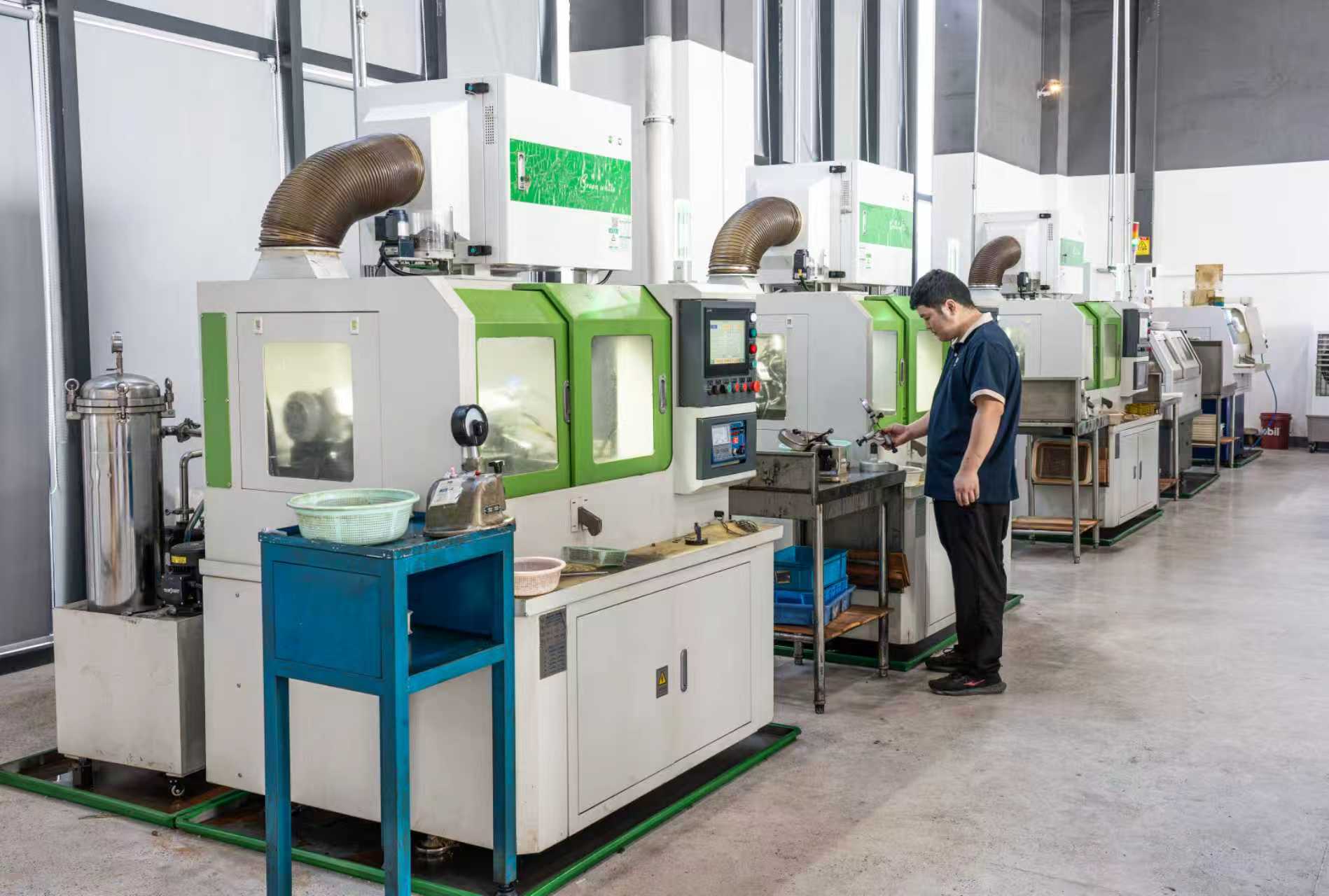
For buyers moving through the research and evaluation stages, the practical next step is to convert an application duty envelope — speed, temperature, envelope and width — into one or two candidate models, then validate with a sample. Because these four models are qualified in dental handpiece service, applications in other high-speed equipment categories should be confirmed on the buyer’s own assembly before volume release.
Request a Sample or Quotation
Share the model, maximum operating speed, temperature at the bearing seat, available axial and radial space and required quantity, and INB will confirm the matching miniature bearing and the commercial terms. Minimum order quantity is 100 units and standard lead time is 7 days.
Ningbo City Jingyin Electromechanical Technology Co., Ltd. — brand INB
Email: yuhang001@126.com
Tel / WhatsApp: +86 18957446001
Website: www.lnb-brg.com
Address: Building 9, Beikun Industrial Area, No. 2288 Yongmao West Road, Zhuangqiao Street, Jiangbei District, Ningbo City
Have Questions or Need More Details?
Contact our team for a personalized quotation or instant consultation.
Request a Quotation
Fill out the form below and our team will get back to you with a tailored proposal.
WhatsApp Direct Chat
Prefer to chat in real-time? Message us on WhatsApp for instant assistance & quick answers.
- Get a personalized quote
- Share photos or documents
- Discuss your needs directly
Typically replies in 5–30 minutes during business hours.