Reducing Noise and Vibration in Dental Handpieces with P4 Precision Miniature Bearings
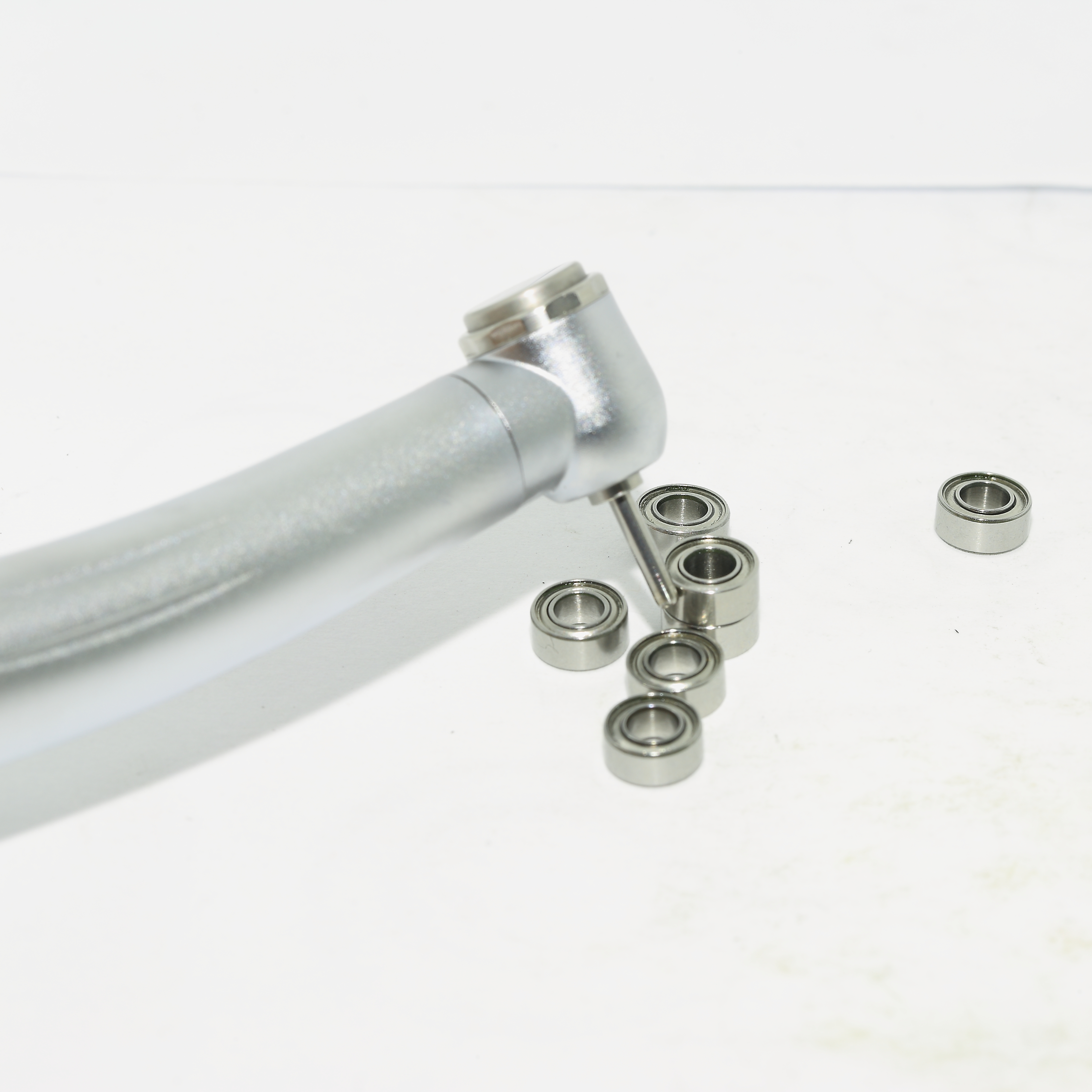
A noisy or vibrating dental handpiece is a bearing tolerance problem before it is a comfort problem. In an air-turbine handpiece, the two miniature bearings that carry the rotor are the dominant source of both noise and vibration. This article explains what generates vibration at 200,000 to 400,000 rpm, how P4 precision miniature bearings reduce runout, and what design, quality and procurement teams should verify on the INB models SR144ZTLP4 W2.78, SMR144ZTLP4 W2.38, SR133TL and SMR74TL before committing to volume.
INB is a miniature bearing brand established in 2014 and based in Ningbo, Zhejiang Province, China. The brand manufactures high-precision miniature bearings with bore diameters from 2 mm to 8 mm in precision grades from P6 to P4, and its products mainly serve the domestic medical device industry and micro-motor applications.
Problem Definition: Where Handpiece Noise and Vibration Come From
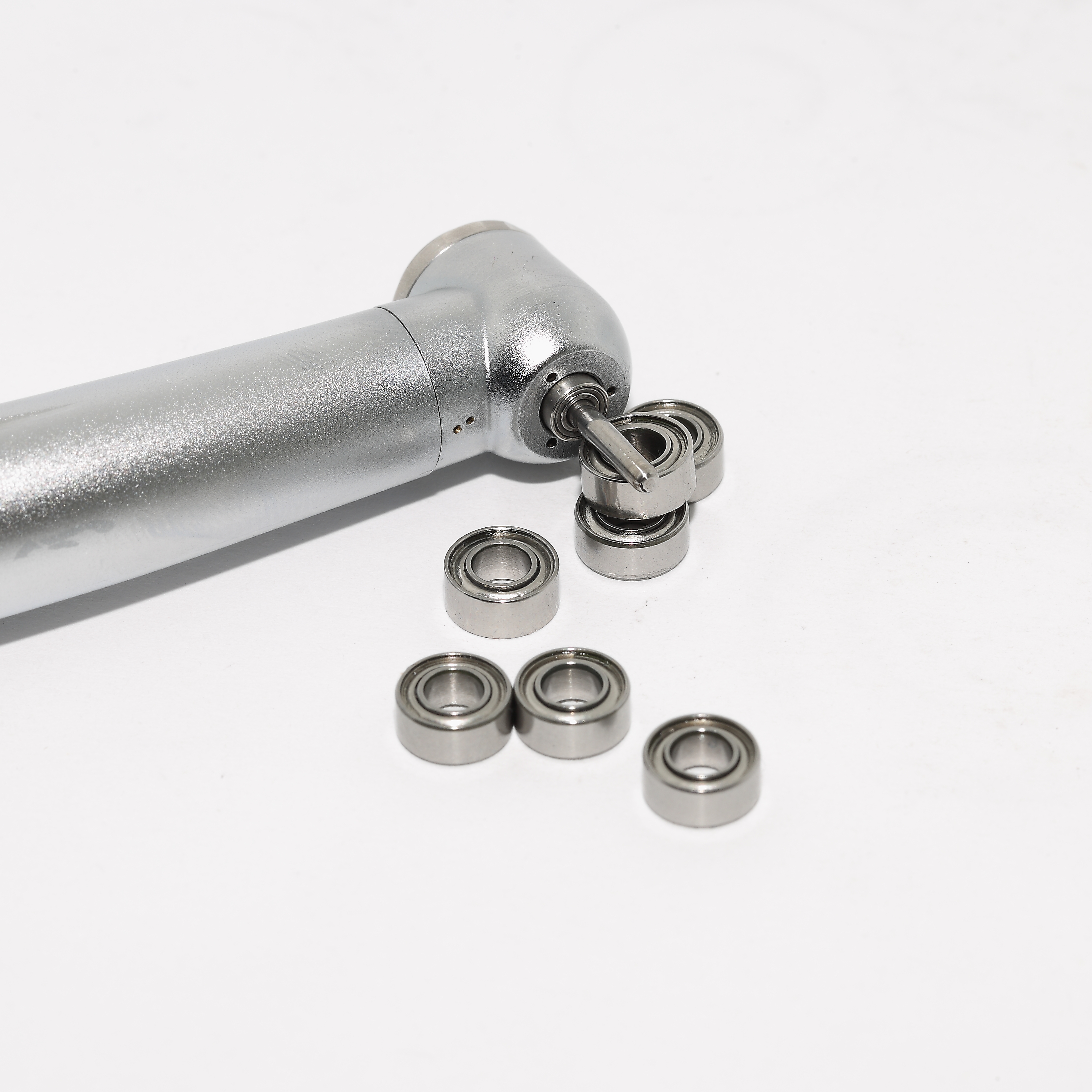
An air-turbine handpiece drives the burr directly. There is no gear reduction between the rotor and the cutting instrument, so the shaft is supported entirely by two small bearings — commonly the 3.175 mm bore size used in the SR144 family. Because nothing in the assembly damps the rotor's motion, whatever the bearings do is transmitted to the burr and then to the tooth.
Three mechanical conditions drive most of the noise and vibration in this arrangement:
- Radial runout. The offset between the true axis of rotation and the geometric center of the inner ring becomes a once-per-revolution force. At turbine speed, a deviation measured in microns turns into a continuous vibration input.
- Ball and raceway geometry. Ball roundness, raceway curvature and surface finish excite higher-frequency vibration, which users perceive as a whine rather than a rumble.
- Thermal and lubrication stability. As the turbine heats up, internal clearance and the lubricant film change. When either becomes unstable, the shaft orbit becomes irregular and the noise signature drifts during a procedure.
Contamination, burr imbalance and incorrect preload amplify all three. None of them can be corrected by a bearing on its own — but the precision class of the bearing sets the floor for how smooth and how quiet the finished handpiece can ever be. That is why bearing grade is a design decision rather than an afterthought.
In practice the symptoms appear as a familiar set: a handpiece that becomes louder across its service interval, vibration felt by the patient, heat at the head, inconsistent cutting performance, and a shorter interval between bearing replacements.
Industry Background: Precision Classes, Materials and Market Context
Miniature bearing precision is not a marketing term. It is governed by published class systems: ABMA ABEC (1–9), ISO 492 (P0–P2) and DIN 620. In the ABEC system, higher numbers correlate with tighter tolerances. A P4 bearing sits within a tight tolerance band in these systems, which is why it is specified for high-speed dental and medical rotation rather than general-purpose use.
Material selection follows the application. Stainless steel — specifically 440C — is the primary material for miniature bearings used in medical and food-processing applications because of its moisture and chemical resistance. INB dental handpiece bearings use SUS440 stainless steel across the models discussed in this article.
Demand context supports that focus. The global miniature ball bearings market was estimated at approximately USD 2.25 billion in 2025, driven by demand in medical devices and robotics (Future Market Insights). Asia Pacific accounted for roughly 60% of revenue in 2025, with China the largest regional producer and consumer (Precedence Research). China's bearing exports grew 7.2% year on year in the first seven months of 2025, reaching nearly 497,852 tons.
At supply level, the miniature bearing sector includes large multinational manufacturers such as MinebeaMitsumi, NSK, SKF and Schaeffler (Barden), alongside regional specialists. INB operates in the specialist segment: a Ningbo-based brand with annual output of 6,000,000 units and a product range concentrated on small bore sizes from 2 mm to 8 mm in grades P6 to P4.
Detailed Solution: How P4 Precision Miniature Bearings Reduce Runout and Vibration
Tighter tolerance class, lower excitation
A P4 miniature bearing is manufactured to a tighter tolerance band than P6 or P5 grades in the same class system. Tighter tolerances reduce the two variables that matter most for noise: radial runout of the rings, and variation in ball-to-raceway contact geometry. Lower runout means a smaller once-per-revolution force; more consistent ball tracking means less high-frequency excitation. The bearing cannot remove imbalance or burr runout from the rest of the assembly, but it stops the bearing itself from adding to them.
Material and temperature behaviour
All four models covered here use SUS440 stainless steel, which corresponds to the 440C material family identified in industry guidance as the standard choice for medical miniature bearings. That matters in a dental environment, where handpieces are exposed to moisture, cleaning agents and repeated sterilization cycles.
Temperature rating is the second constraint. The SR144ZTLP4 W2.78 and SMR144ZTLP4 W2.38 are rated from -50 °C to 160 °C, while the SMR74TL and SR133TL are rated from -40 °C to 150 °C. A wider rated range gives the design more headroom against the heat produced by continuous high-speed operation — the same heat that alters internal clearance and, if uncontrolled, alters the noise signature.
What the verified INB models actually specify
Four P4 precision miniature bearing models are specified for dental handpiece applications, split across two speed tiers:
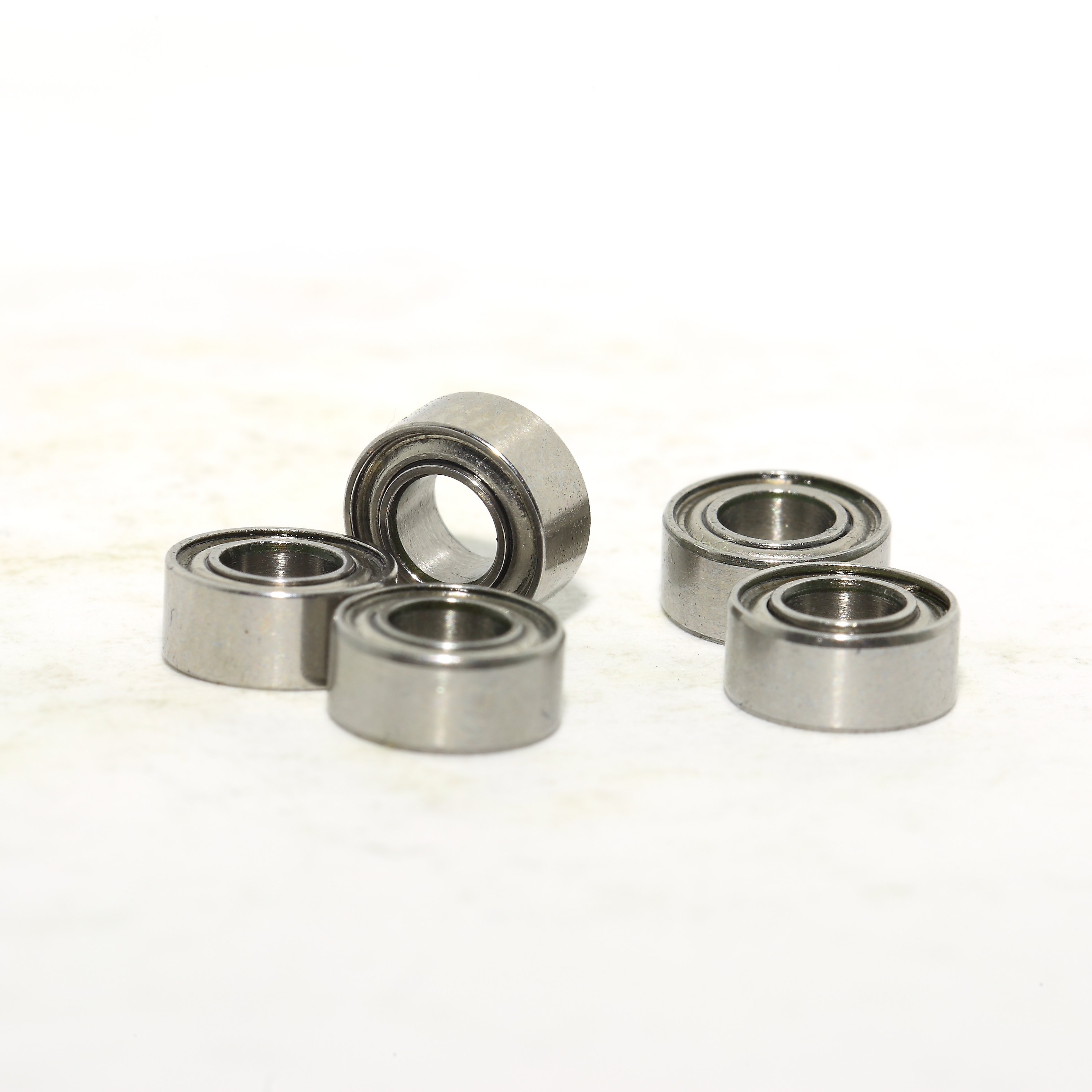
- SR144ZTLP4 W2.78 — 3.175 × 6.35 × 2.78 mm, P4, limiting speed 350,000–400,000 rpm, -50 °C to 160 °C, SUS440
- SMR144ZTLP4 W2.38 — 3.175 × 6.35 × 2.38 mm, P4, limiting speed 350,000–400,000 rpm, -50 °C to 160 °C, SUS440
- SR133TL — 2.38 × 4.762 × 2.38 mm, P4, limiting speed 200,000 rpm, -40 °C to 150 °C, SUS440
- SMR74TL — 4 × 7 × 2 mm, P4, limiting speed 200,000 rpm, -40 °C to 150 °C, SUS440
The 3.175 mm bore of the two SR144-series models is the 1/8 in nominal size familiar to designers working with imperial miniature bearing dimensions, while the 2.38 mm bore of the SR133TL sits in the extra miniature bearing range used in precision instruments.
Process control and unit-to-unit consistency
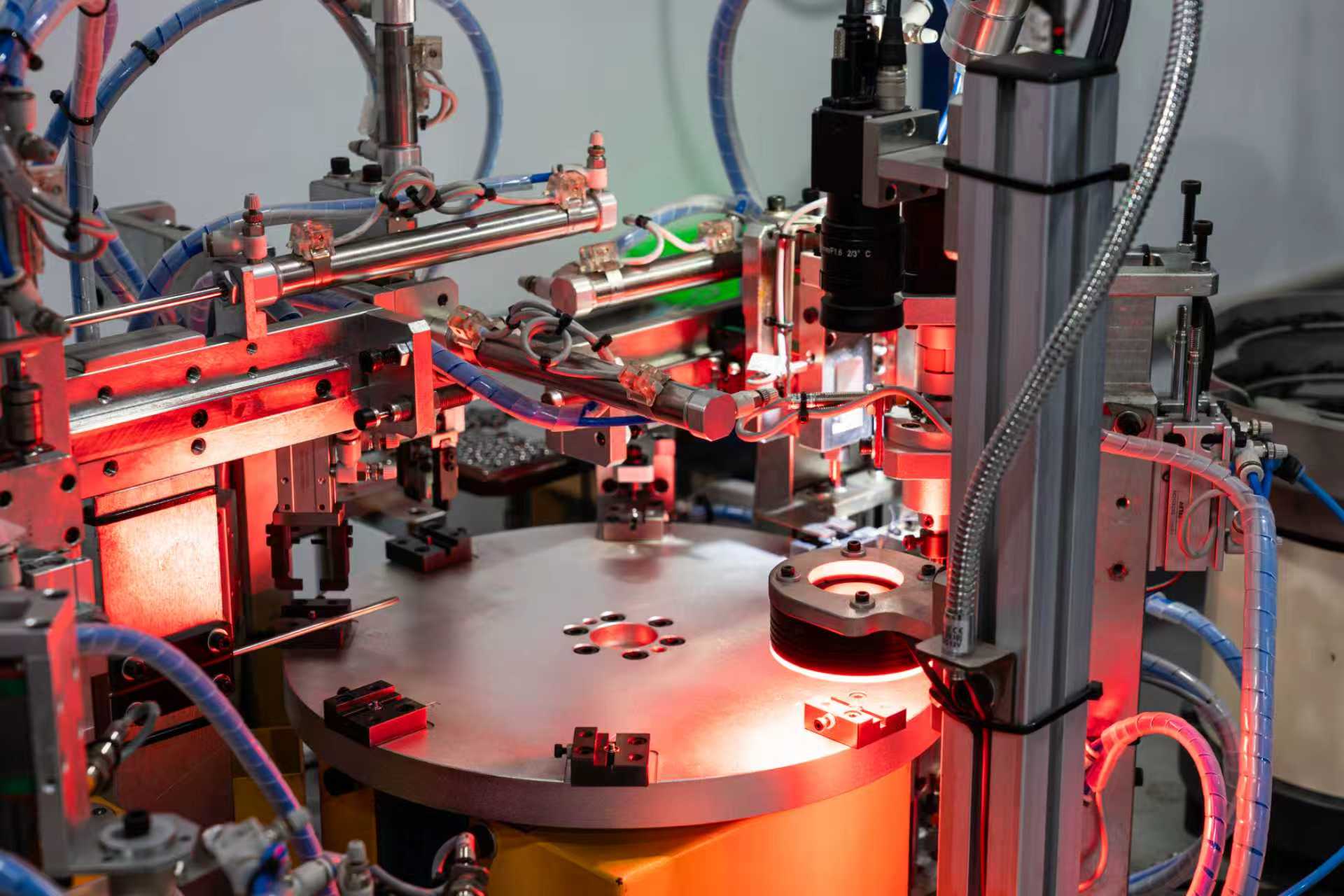
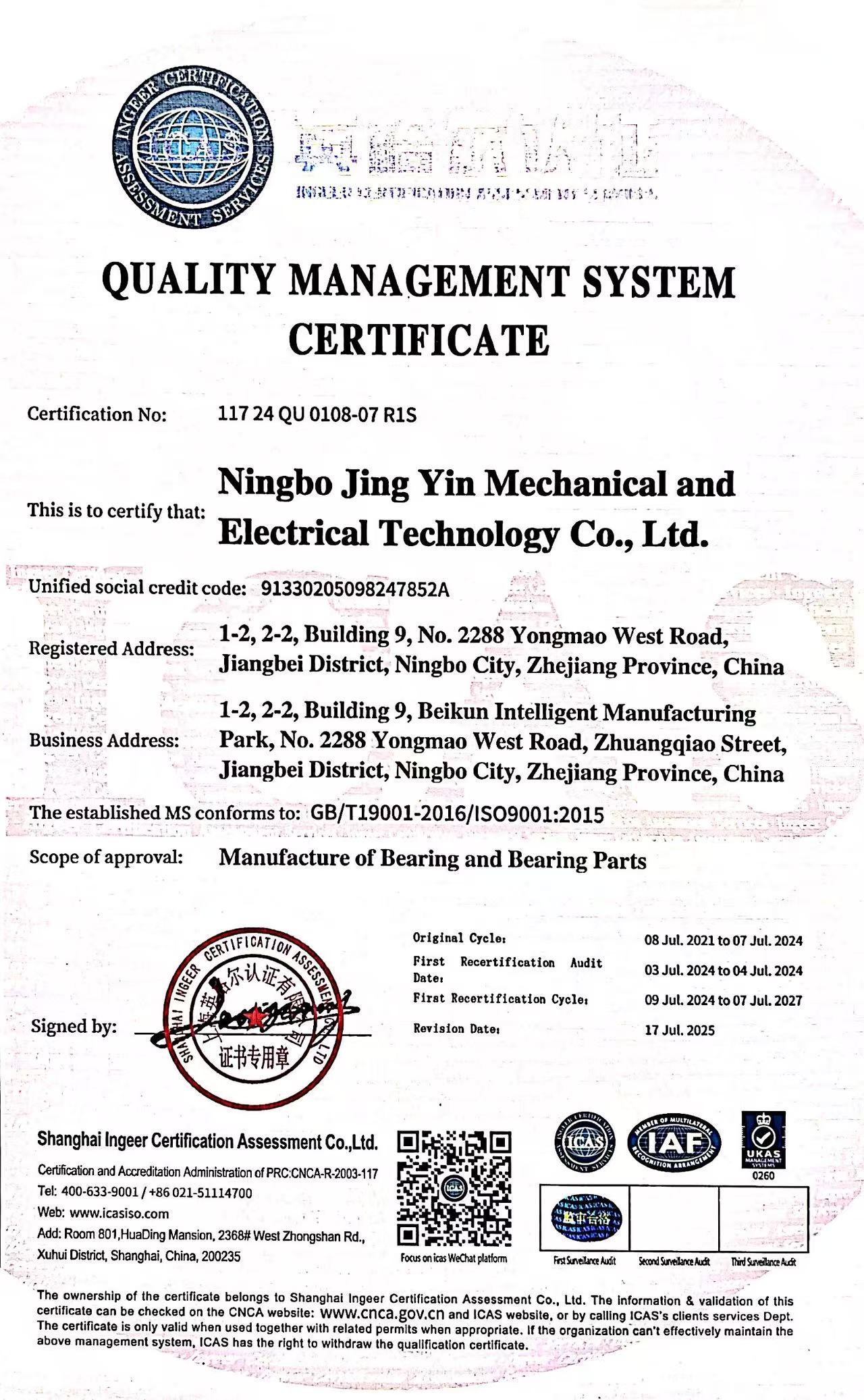
Noise is not only a design problem; it is a consistency problem. Two bearings of identical nominal grade can sound different in the same handpiece if their actual tolerances sit at opposite ends of the permitted band. INB applies 100% testing in quality control, and its operations are carried out in accordance with the ISO9001 quality management system. The ISO 9001 certification covers the manufacture of bearing and bearing parts, applies to the global market, and specifically covers the models SMR74TL, SR133TL, SR144ZTLP4 W2.78 and SMR144ZTLP4 W2.38.
Limits and boundary conditions
P4 precision solves one part of the noise equation. It does not compensate for burr imbalance, incorrect preload, a contaminated air supply, inadequate lubrication, or a shaft and housing fit outside specification. Buyers evaluating a low-noise miniature bearing should treat precision grade as a necessary condition and validate the complete turbine assembly — which is where most vibration problems are actually created or eliminated.
Step-by-Step: Specifying a P4 Miniature Bearing for a Quieter Handpiece
- Fix the speed tier first. Decide whether the design runs at 200,000 rpm or in the 350,000–400,000 rpm range. The SR133TL and SMR74TL cover the 200,000 rpm tier; the SR144ZTLP4 W2.78 and SMR144ZTLP4 W2.38 cover 350,000–400,000 rpm.
- Match the envelope. Confirm bore, outer diameter and width against the assembly. The available sizes here are 4 × 7 × 2 mm, 2.38 × 4.762 × 2.38 mm, 3.175 × 6.35 × 2.78 mm and 3.175 × 6.35 × 2.38 mm.
- Confirm the precision class. Specify P4 where runout and vibration are the dominant concerns. INB produces grades from P6 to P4, so P4 is the tightest class available in this range.
- Select the material. For handpieces, specify SUS440 stainless steel to match the moisture and chemical exposure of a clinical environment.
- Check the temperature rating against the duty cycle. Choose the -50 °C to 160 °C models where the design runs hotter, or the -40 °C to 150 °C models where the thermal load is lower.
- Verify supplier evidence before qualification. Request the ISO 9001 certificate number, its scope and expiry date, and confirm which bearing models are covered.
- Validate in the assembled handpiece. Run the turbine, record noise and vibration, and confirm thermal behaviour across the intended service interval rather than judging a bare bearing.
- Plan the order terms. Production capacity is 500,000 units per month, with a minimum order quantity of 100 units and a 7-day lead time for in-stock items.
Use Cases
High-speed turbine handpieces (350,000–400,000 rpm). This is the most demanding case for noise control, because excitation frequency rises with speed. The SR144ZTLP4 W2.78 and SMR144ZTLP4 W2.38 are specified at this tier with a -50 °C to 160 °C range, supporting the high-speed precision grinding and intermittent high-load operation typical of dental procedures.
Standard-speed air turbine handpieces (200,000 rpm). Designs running at 200,000 rpm can use the SR133TL or the SMR74TL, both P4 grade with SUS440 rings and a -40 °C to 150 °C range. Where the priority is a smaller bearing envelope, the SR133TL at 2.38 × 4.762 × 2.38 mm is the more compact option.
Clinical hygiene and handpiece longevity. The stated functional requirements for dental handpiece bearing applications include high rotational speed for rapid grinding, long service life that extends the lifespan of the handpiece, medical-grade hygiene and low noise. SUS440 stainless steel and the temperature ratings above are the material-side answers to those requirements.
Verified field experience. In a medical device project in China, 80,000 units of a P4 precision miniature bearing with a limiting speed of 350,000–400,000 rpm were used in dental handpieces and demonstrated stable high-speed operation across a 500-hour duration, with extended equipment lifespan reported as the outcome.
Comparison Table: INB P4 Miniature Bearings for Dental Handpieces
| Model | Size (mm) | Precision | Limiting speed | Operating temperature | Material | Application |
|---|---|---|---|---|---|---|
| SMR74TL | 4 × 7 × 2 | P4 | 200,000 rpm | -40 °C to 150 °C | SUS440 | Dental handpiece |
| SR133TL | 2.38 × 4.762 × 2.38 | P4 | 200,000 rpm | -40 °C to 150 °C | SUS440 | Dental handpiece |
| SR144ZTLP4 W2.78 | 3.175 × 6.35 × 2.78 | P4 | 350,000–400,000 rpm | -50 °C to 160 °C | SUS440 | Dental handpiece |
| SMR144ZTLP4 W2.38 | 3.175 × 6.35 × 2.38 | P4 | 350,000–400,000 rpm | -50 °C to 160 °C | SUS440 | Dental handpiece |
Precision Class Reference
| Standard system | Class range | What it indicates |
|---|---|---|
| ABMA ABEC | 1–9 | Higher numbers correlate to tighter tolerances |
| ISO 492 | P0–P2 | International tolerance classification for bearing precision |
| DIN 620 | German standard series | Parallel tolerance classification used in European procurement |
Note on scope: the same evaluation logic — precision class, material, temperature rating and test regime — also applies to adjacent miniature bearing types such as flanged stainless steel miniature bearings, thin-wall miniature bearings and motor miniature bearings used in other precision assemblies.
FAQ
1. Which certification should a buyer verify on a P4 miniature bearing for dental handpieces?
INB's ISO 9001 certification covers the manufacture of bearing and bearing parts. The certificate number is 117 24 QU 0108-07 R1S, issued by Shanghai Ingeer Certification Assessment Co., Ltd., against the standard GB/T19001-2016/ISO 9001:2015 Quality Management Systems — Requirements, and it is valid until July 7, 2027. The certification applies to the global market and specifically covers the bearing models SMR74TL, SR133TL, SR144ZTLP4 W2.78 and SMR144ZTLP4 W2.38. Buyers should check the certificate number, the issuing body, the expiry date and the covered scope rather than accepting a logo on a datasheet.
2. Can a P4 miniature bearing be customized for a specific handpiece design?
INB runs an OEM production model and customizes bearings according to customer requirements. The standard capability range covers bore diameters from 2 mm to 8 mm and precision grades from P6 to P4, with a monthly production capacity of 500,000 units. For a dental handpiece, this means the precision grade, envelope and material (SUS440 stainless steel) can be aligned with the turbine design rather than selected from a fixed catalogue item.
3. What order size should a buyer plan for, and what drives the commercial scope?
The minimum order quantity for these miniature bearings is 100 units, and monthly production capacity is 500,000 units. As with any precision bearing, the commercial scope generally tracks precision class, material, size and order quantity rather than a single list number — so the practical first step is to confirm the exact model and grade before requesting a quotation.
4. How can engineers validate runout and noise before full production?
INB applies 100% testing in quality control, which screens every unit rather than relying on batch sampling — the relevant point when the concern is unit-to-unit variation in noise. Field evidence supports this approach: in a medical device project in China, 80,000 units of a P4 precision miniature bearing rated at 350,000–400,000 rpm were used in dental handpieces and demonstrated stable high-speed operation over 500 hours. Validation should still be performed in the assembled turbine, because noise and vibration also depend on preload, lubrication and shaft fit.
5. What lead time applies to these P4 miniature bearings?
For in-stock items the lead time is 7 days, with a minimum order quantity of 100 units and a monthly capacity of 500,000 units. After-sales support covers return and exchange. Buyers planning a handpiece production ramp should confirm stock status together with the specific model, temperature rating and certificate coverage at the time of ordering.
Conclusion: Quiet Handpieces Start with a Deliberate Bearing Specification
Noise and vibration in a dental handpiece are not solved by one component in isolation, but they are capped by the precision class of the miniature bearings inside it. A P4 bearing reduces radial runout and stabilizes ball-to-raceway tracking, which lowers the vibration input the turbine then transmits to the burr and the patient. SUS440 stainless steel addresses the hygiene and moisture side, and the temperature ratings — -50 °C to 160 °C for the SR144-series models and -40 °C to 150 °C for the SMR74TL and SR133TL — define how much thermal headroom the design has at 200,000 rpm or at 350,000–400,000 rpm.
The practical checklist is short: match the speed tier, match the envelope, specify P4, confirm SUS440, verify the ISO 9001 certificate number and its covered models, and validate the finished assembly rather than the bare bearing.
Next Step

If your handpiece program is working through a noise, vibration or runout issue, start by confirming which model fits your turbine: SR144ZTLP4 W2.78 or SMR144ZTLP4 W2.38 for the 350,000–400,000 rpm tier, SR133TL or SMR74TL for 200,000 rpm. INB can quote against a defined grade, size and quantity, and can discuss customization for OEM designs.
Website: www.lnb-brg.com
Email: yuhang001@126.com
Tel / WhatsApp: +86 18957446001
Address: Building 9, Beikun Industrial Area, No. 2288 Yongmao West Road, Zhuangqiao Street, Jiangbei District, Ningbo City, China
Have Questions or Need More Details?
Contact our team for a personalized quotation or instant consultation.
Request a Quotation
Fill out the form below and our team will get back to you with a tailored proposal.
WhatsApp Direct Chat
Prefer to chat in real-time? Message us on WhatsApp for instant assistance & quick answers.
- Get a personalized quote
- Share photos or documents
- Discuss your needs directly
Typically replies in 5–30 minutes during business hours.