
SMR144 vs SR144: P4 Miniature Bearing Comparison for High-Speed Use
Choosing between the INB SMR144ZTLP4 W2.38 and the INB SR144ZTLP4 W2.78 is not a speed decision. Both are P4 extra miniature bearings with a 3.175 mm bore, a 6.35 mm outer diameter, SUS440 stainless steel construction, a limiting speed of 350,000–400,000 rpm and an operating temperature range of −50 °C to 160 °C. The published difference between them is width: 2.38 mm on the SMR144 and 2.78 mm on the SR144.
That 0.40 mm is the part of the comparison the buyer has to resolve. If the turbine cartridge, spacer stack or housing shoulder was designed around a 2.38 mm-wide ring, the SMR144ZTLP4 W2.38 is the correct part number. If the assembly has room for 2.78 mm, the SR144ZTLP4 W2.78 is the correct part number. Where both fit geometrically, the deciding factor is which width the surrounding design was validated for — not which bearing is better in the abstract.
This guide sets out the specification of both models, explains what a width change does inside a miniature bearing assembly, and provides a step-by-step sequence for confirming the right variant before a part number reaches a drawing or a purchase order.
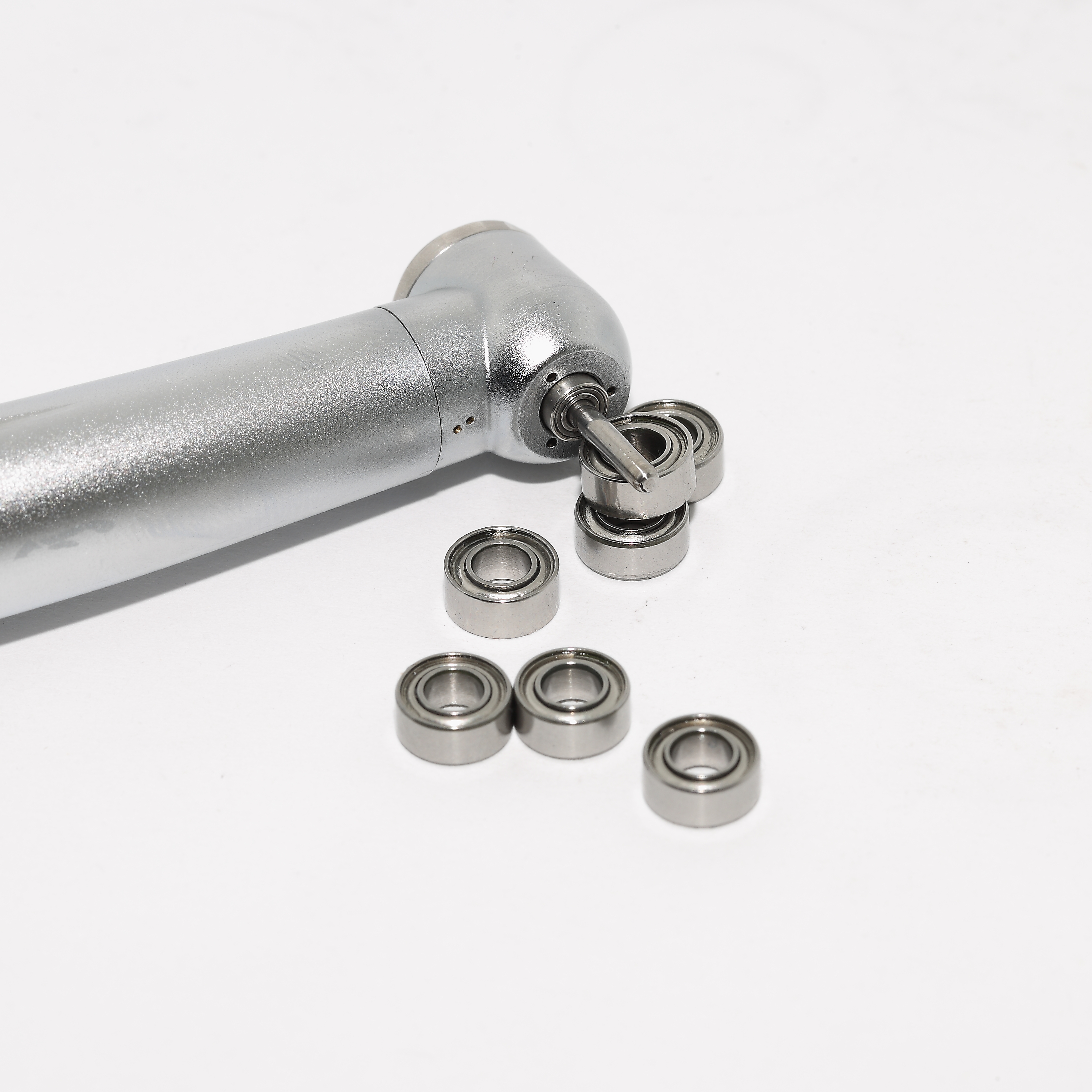
Problem Definition: Why “Same Bore and OD” Is Not Enough
In miniature bearing sourcing, bore and outer diameter are routinely treated as the whole compatibility test. For the 144 size family that test is incomplete: the SMR144ZTLP4 W2.38 and the SR144ZTLP4 W2.78 share both dimensions and still are not drop-in substitutes for one another.
Width controls things a bore-and-OD check does not capture:
- Total axial stack height. In a dental handpiece turbine, the bearings, spacer and rotor share a fixed axial space inside the cartridge. A ring that is 0.40 mm wider changes that stack.
- Seat and shoulder contact. The ring has to land cleanly on its abutment. If the wider variant overhangs the shoulder, seating becomes unreliable and run-out suffers.
- Preload behaviour. Whether preload is set by a spring, a shim or the housing itself, the width of the ring is part of the calculation.
- Shield and retention geometry. The shield sits inside the ring width, so a different width shifts how the shield and the retaining features interact with the surrounding parts.
None of these are exotic failure modes. They are ordinary consequences of substituting a wider part into an envelope designed around a narrower one. The reverse substitution — fitting a 2.38 mm ring where 2.78 mm was specified — leaves the assembly short in the axial direction, which typically shows up as lost preload, increased vibration and a rise in running temperature.
Practical rule: in the 144 size family, treat the width suffix as part of the part number. The size family name alone does not identify the component.
Industry Background: Miniature Bearings in the 2026 Supply Picture
Miniature bearings are a small component inside a large category. Future Market Insights estimates the global miniature ball bearings market at approximately USD 2.25 billion in 2025, with medical devices and robotics among the demand drivers. Precedence Research puts Asia Pacific at roughly 60% of 2025 revenue share, with China the largest regional producer and consumer. China’s bearing exports grew 7.2% year on year in the first seven months of 2025, reaching nearly 497,852 tons, according to BearingNews citing the Huajing Research Institute.
Market-size estimates differ between research houses — published 2025 figures range from roughly USD 2.0 billion to USD 2.89 billion — so the absolute number is less useful than the direction of travel. Medical, robotic, micro-motor and precision-instrument demand continues to support investment in high-precision miniature bearing production.
Precision is a standardised language. Miniature bearing tolerances are governed by systems including ISO 492 (P0–P2), ABMA ABEC (1–9) and DIN 620, and higher ABEC numbers correlate with tighter tolerances. Material selection follows the application: 440C stainless steel is widely described in engineering guidance as the primary material for miniature bearings used in medical and food-processing environments, because of its resistance to moisture and chemical exposure.
The supplier base is layered. Global manufacturers active in the miniature sector include MinebeaMitsumi, NSK, SKF and Schaeffler (Barden), with the very small sizes concentrated among a limited number of producers. Below that tier, specialist manufacturers serve defined verticals — dental handpieces, micro-motors and precision instruments — with narrower product ranges and closer application support.
That specialisation is why this comparison matters. The 144 size models are not general-purpose catalogue items; they are 6.35 mm outer diameter bearings built for high-speed rotary instruments, where the choice between a 2.38 mm and a 2.78 mm ring is normally settled by the instrument design rather than by the purchasing department.
Detailed Solution: The Two Models, Specified
What the data sheets state
Both models belong to the same 144 size family and are supplied as stainless steel, high-precision, high-speed miniature bearings for dental handpiece applications.
SMR144ZTLP4 W2.38 — bore 3.175 mm; outer diameter 6.35 mm; width 2.38 mm; precision grade P4; limiting speed 350,000–400,000 rpm; operating temperature −50 °C to 160 °C; material SUS440 stainless steel; typical application: dental handpiece.
SR144ZTLP4 W2.78 — bore 3.175 mm; outer diameter 6.35 mm; width 2.78 mm; precision grade P4; limiting speed 350,000–400,000 rpm; operating temperature −50 °C to 160 °C; material SUS440 stainless steel; typical application: dental handpiece.
Read side by side, the two data sheets are identical apart from a single line: width. Material, precision class, speed band and thermal range do not separate these bearings. For a buyer that is useful, because it narrows the evaluation to one engineering question — does the assembly have room for 2.78 mm, or does it require 2.38 mm?
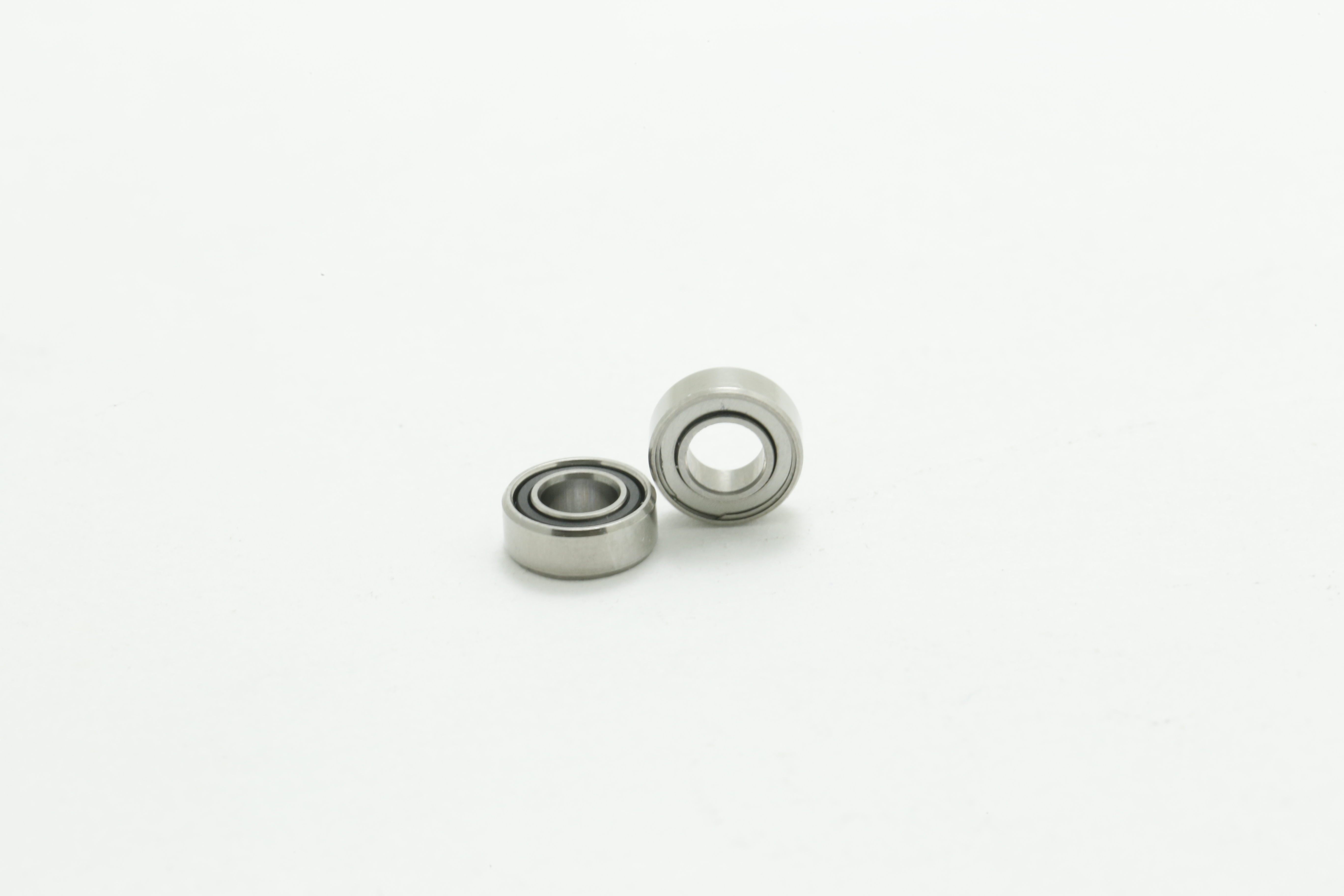
What the 0.40 mm actually changes
On a bearing whose outer diameter is 6.35 mm, 0.40 mm is close to 6% of the outside diameter — proportionally significant at this scale. Inside an assembly, the width difference appears in four places:
- Axial clearance inside the cartridge. The ring, spacer and rotor must sit within the space the instrument design allows, and the wider ring consumes more of it.
- Raceway and ball contact footprint. A wider ring in the same bore and outer diameter class offers a broader axial footprint for the ball set and the contact geometry. Where stiffness or load behaviour is critical, confirm the requirement against the manufacturer’s data for the specific model rather than inferring performance from width alone.
- Fit and retention. Shoulders, retaining rings and spacer heights are dimensioned for one of the two widths, so a change of width is a change of those interfaces.
- Interchangeability risk. A second-source or replacement part quoted only as “SR144” without the width suffix may arrive in either width. That is a specification gap, not a supplier error.
Reading the model code
The prefixes differ — SMR144 and SR144 — and buyers sometimes read that as two different series. In these two INB models the bore, outer diameter, precision grade, material, limiting speed and operating temperature are the same; the published difference remains the width. The P4 carried in both designations is the precision grade stated on the data sheet. The W2.38 and W2.78 suffixes correspond to the width of each variant — 2.38 mm and 2.78 mm respectively.
The operational point is simple: quote the full designation, including the width suffix, on drawings, approved-vendor lists and purchase orders. The 144 size family name alone does not distinguish the two parts.
Where the 200,000 rpm figure belongs
High-speed miniature bearings are frequently quoted at 200,000 rpm, and within this product range that rating is real — for other models. The INB SR133TL (2.38 × 4.762 × 2.38 mm) and the INB SMR74TL (4 × 7 × 2 mm) are both rated at a limiting speed of 200,000 rpm with an operating temperature range of −40 °C to 150 °C. Both are also SUS440 stainless steel miniature bearings for dental handpiece use.
The 144 size models in this comparison are rated higher: 350,000–400,000 rpm, with a wider thermal range of −50 °C to 160 °C. The distinction matters at the sourcing stage, because a speed figure copied from a general catalogue page rather than from the specific model’s data sheet can lead to the wrong model being specified — in either direction.
Step-by-Step Breakdown: A Six-Step Selection Sequence
The sequence below is written for engineers and buyers specifying or replacing a 144 size P4 miniature bearing in a high-speed assembly.
- Measure the axial envelope. Record the installed width of the existing bearing plus any spacer or shim, together with the free axial space in the housing. Compare that number against 2.38 mm and 2.78 mm before looking at anything else.
- Confirm the bore and shaft fit. Both models use a 3.175 mm bore and a 6.35 mm outer diameter, so the shaft and housing diameters are common to both. The verification effort therefore concentrates on axial features: shoulders, retaining rings and spacer heights.
- Match the speed and thermal duty. Both variants are rated at 350,000–400,000 rpm and −50 °C to 160 °C. If the duty cycle sits inside that band, neither model is eliminated on the speed criterion, and the decision returns to width.
- Confirm cleanliness and noise requirements. The dental handpiece application calls for P4 precision, ultra-high speed in the 350,000–400,000 rpm range, wide temperature resistance, medical-grade hygiene and low noise, under intermittent high-speed operation. Shielding configuration and lubrication specification should be confirmed with the manufacturer for the exact assembly.
- Sample and validate in the real assembly. Where the housing allows, install both width variants and check run-out, temperature rise and noise during intermittent high-speed running. A test on the exact ring width is worth more than a comparison of data sheets.
- Lock the part number. Write the complete designation — SMR144ZTLP4 W2.38 or SR144ZTLP4 W2.78 — into the drawing, the approved-vendor list and the purchase order. Treat any width substitution as an engineering change rather than a purchasing decision.
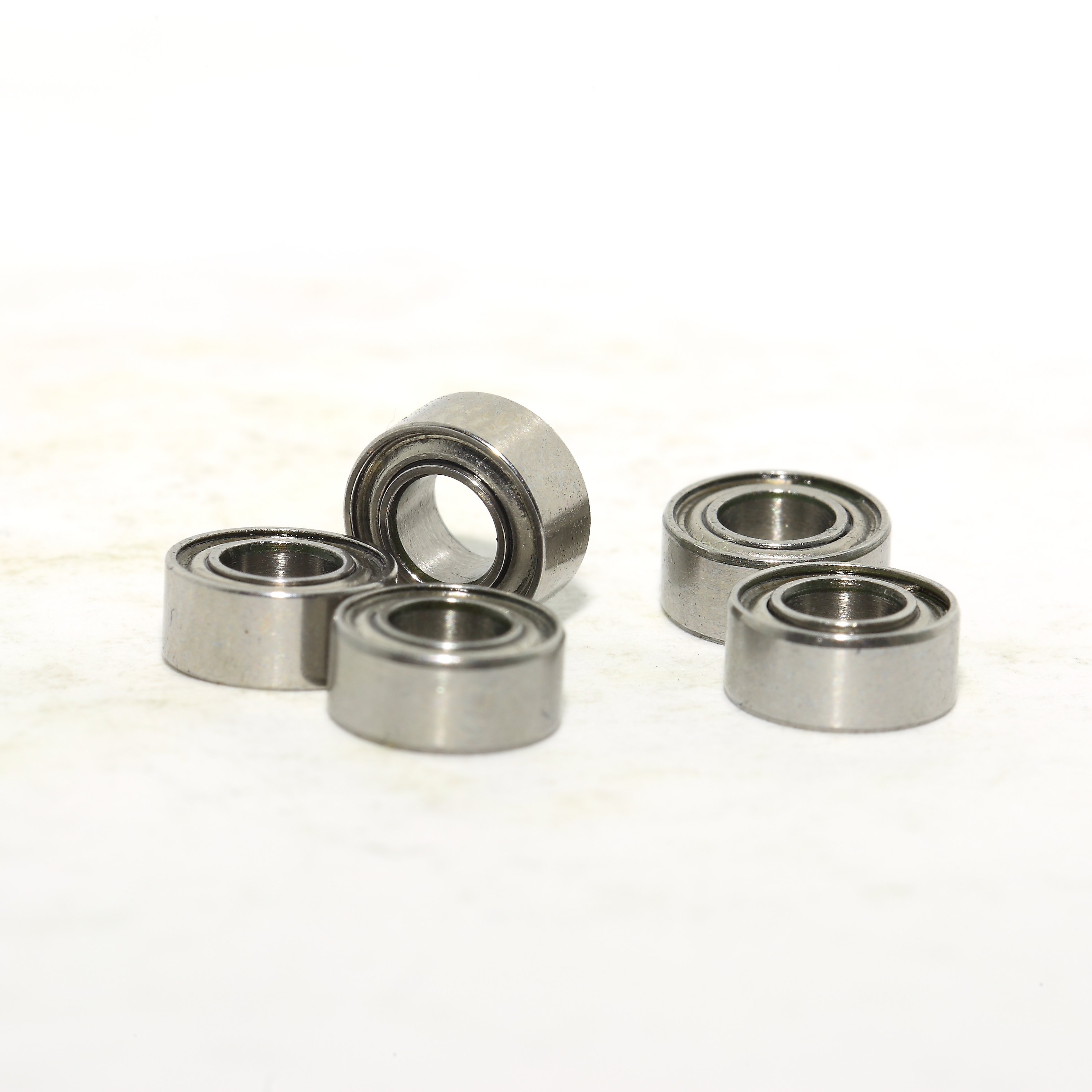
Use Cases: Dental Handpieces, Grinding Spindles and Miniature Motors
The application profile for the 144 size family is specific. Documented working conditions include high-speed precision grinding in a clean medical environment, intermittent high-load operation, and a matched equipment set of dental handpieces. The stated function is sustained high rotational speed for rapid grinding combined with long service life that extends the lifespan of the dental handpiece. The special requirements listed for that application are P4 precision grade, ultra-high speed in the 350,000–400,000 rpm range, temperature resistance from −50 °C to 160 °C, medical-grade hygiene and low noise.
Beyond the dental handpiece itself, the same 3.175 × 6.35 mm envelope appears in handheld and bench-mounted high-speed rotary instruments, small precision grinding spindles and micro-motors. INB supplies miniature bearings primarily into the Chinese medical device and micro-motor market, with export business accounting for approximately 5% of total sales.
On the manufacturing side, the reference point for this class of component is a real production programme: an INB project in China supplied 80,000 miniature bearings for dental handpiece use. Programmes of that scale are what make width discipline matter, because a single ambiguous part number repeated across a large order becomes a large quantity of the wrong ring.
Choosing between the two widths in practice
- New instrument design: the width is set by the cartridge drawing. Specify the variant the design analysis was run on, and keep the width suffix visible in the bill of materials.
- Replacement or aftermarket supply: the existing width is the constraint. Measure the removed bearing instead of assuming the family standard.
- Second-source qualification: quote the complete designation and ask the supplier to confirm the width before samples are produced.
Comparison Table: SMR144ZTLP4 W2.38 vs SR144ZTLP4 W2.78
| Parameter | SMR144ZTLP4 W2.38 | SR144ZTLP4 W2.78 |
|---|---|---|
| Bore | 3.175 mm | 3.175 mm |
| Outer diameter | 6.35 mm | 6.35 mm |
| Width | 2.38 mm | 2.78 mm |
| Precision grade | P4 | P4 |
| Limiting speed | 350,000–400,000 rpm | 350,000–400,000 rpm |
| Operating temperature | −50 °C to 160 °C | −50 °C to 160 °C |
| Material | SUS440 stainless steel | SUS440 stainless steel |
| Typical application | Dental handpiece; high-speed miniature bearing | Dental handpiece; high-speed miniature bearing |
| Selection driver | Assembly requires a 2.38 mm axial width | Assembly accepts a 2.78 mm axial width |
For context, other SUS440 stainless steel models in the same INB range carry a lower speed rating:
| Parameter | SR133TL | SMR74TL |
|---|---|---|
| Size | 2.38 × 4.762 × 2.38 mm | 4 × 7 × 2 mm |
| Precision grade | P4 | P4 |
| Limiting speed | 200,000 rpm | 200,000 rpm |
| Operating temperature | −40 °C to 150 °C | −40 °C to 150 °C |
| Material | SUS440 stainless steel | SUS440 stainless steel |
| Typical application | Dental handpiece | Dental handpiece |
FAQ
Are the SMR144ZTLP4 W2.38 and SR144ZTLP4 W2.78 interchangeable?
Only if the surrounding assembly accepts the width difference. Both bearings have a 3.175 mm bore, a 6.35 mm outer diameter, P4 precision, SUS440 stainless steel construction, a 350,000–400,000 rpm limiting speed and a −50 °C to 160 °C operating range. The single published difference is width: 2.38 mm on the SMR144ZTLP4 W2.38 and 2.78 mm on the SR144ZTLP4 W2.78. Because the wider ring occupies 0.40 mm more axial space, substituting one for the other requires verification of the axial stack, shoulder contact and preload arrangement.
Which precision standards apply to these P4 miniature bearings?
Miniature bearing tolerances are defined by international classification systems including ISO 492 (P0–P2), ABMA ABEC (1–9) and DIN 620, and higher ABEC numbers correlate with tighter tolerances. The INB SMR144ZTLP4 W2.38 and the INB SR144ZTLP4 W2.78 both carry a P4 precision grade on their data sheets. The manufacturer produces high-precision standard bearings with bore diameters ranging from 2 mm to 8 mm in precision grades from P6 to P4, and operates in accordance with an ISO 9001 quality management system.
What limiting speed do the SMR144 and SR144 bearings reach?
Both models are rated for a limiting speed of 350,000–400,000 rpm, with an operating temperature range of −50 °C to 160 °C. Not every stainless steel miniature bearing in the same product range reaches this band: the INB SR133TL (2.38 × 4.762 × 2.38 mm) and the INB SMR74TL (4 × 7 × 2 mm) are rated at 200,000 rpm with a −40 °C to 150 °C operating range. Read the speed rating per model rather than per bearing family.
Why does a 0.40 mm width difference matter in a dental handpiece?
In a dental handpiece turbine, the bearings, spacer and rotor share a fixed axial space, and the application requires P4 precision, ultra-high speed, wide temperature resistance, medical-grade hygiene and low noise under intermittent high-speed operation. A 0.40 mm change in ring width alters the axial stack-up and the way the ring seats against its shoulder. The result is not necessarily immediate failure, but it is a design change: modified preload, changed running temperature and altered noise behaviour. The safe approach is to check the width against the cartridge drawing and validate the exact variant in the assembly.
Can I evaluate both width variants before choosing?
The practical route is to obtain the specific width variant you are considering and validate it in the real assembly, checking run-out, temperature rise and noise during intermittent high-speed operation. INB manufactures miniature bearings with bore diameters from 2 mm to 8 mm in precision grades from P6 to P4, and has supplied miniature bearings for a dental handpiece programme in China involving 80,000 units. To discuss the SMR144ZTLP4 W2.38 or the SR144ZTLP4 W2.78 for your application, send the assembly drawing or existing part number to yuhang001@126.com, call or message +86 18957446001, or request a sample and quotation through the INB website.
Conclusion: Match the Width, Then Confirm the Rest
Neither the SMR144ZTLP4 W2.38 nor the SR144ZTLP4 W2.78 is the better of the two. They are two width variants of the same P4, SUS440 stainless steel, 3.175 × 6.35 mm high-speed miniature bearing, rated at 350,000–400,000 rpm and −50 °C to 160 °C. The comparison resolves into a single question: which axial width does the assembly require?
Answer that from the drawing and the measured envelope rather than from the family name. Validate the exact width with a sample, and record the complete designation — width suffix included — in every document that controls the purchase. That sequence removes the most common sourcing error in this size class, which is not a precision failure but a width substitution.
Next step: INB is the bearing brand established in 2014 by Ningbo City Jingyin Electromechanical Technology Co., Ltd. The company manufactures miniature bearings with bore diameters from 2 mm to 8 mm in precision grades from P6 to P4 at a 2,000 m² facility in Ningbo, China, with approximately 30 employees, an R&D team of 10 engineers and operations run in accordance with an ISO 9001 quality management system. Send your assembly drawing or existing part number, together with the required width variant, to yuhang001@126.com, call or message +86 18957446001, or request a sample and quotation through the INB website.
Have Questions or Need More Details?
Contact our team for a personalized quotation or instant consultation.
Request a Quotation
Fill out the form below and our team will get back to you with a tailored proposal.
WhatsApp Direct Chat
Prefer to chat in real-time? Message us on WhatsApp for instant assistance & quick answers.
- Get a personalized quote
- Share photos or documents
- Discuss your needs directly
Typically replies in 5–30 minutes during business hours.