
SR133TL vs SMR74TL: Comparing Two Miniature Bearings for Dental Handpiece Applications
SR133TL and SMR74TL are two INB miniature bearings produced for dental handpiece applications. Both are made from SUS440 stainless steel, both sit inside INB's P6 to P4 precision range, and both are intended for the high-speed rotating assemblies used in dental instruments. The decisive difference between them is dimensional: the two part numbers belong to different size series, so each presents a different boundary dimension to the rotor seat or spindle it is installed into.
That is why this comparison does not end with a winner. In miniature bearings, which model is better is the wrong first question. The correct sequence runs from fit, to precision, to material, to validation, and only then to commercial terms. This guide walks through that sequence for the SR133TL and the SMR74TL using the verified product and industry facts that matter at each step.
The Problem: Two Similar Part Numbers, Two Different Design Outcomes
A dental handpiece is one of the densest precision assemblies a miniature bearing is asked to serve. The bearing sits inside a rotor stack that rotates at high speed, generates heat continuously, and is repeatedly exposed to moisture and sterilisation between clinical uses. In that environment, a bearing that is dimensionally correct but under-specified will still fail, and a bearing that is over-specified will still cost more than the design requires.
Three failure classes dominate miniature bearing behaviour in rotating dental instruments, and INB defines explicit controls against each of them:
- Premature wear and lubrication failure. INB's control route is sealed lubrication control combined with wear-rate monitoring: medical-grade permanent lubricant filling, a fully sealed labyrinth structure, wear-resistant alloy material, and periodic friction and wear performance testing.
- Thermal fatigue and overheating. INB's route is thermal management with active temperature protection: high-temperature resistant bearing material selection, an optimised heat-conduction structure, a real-time temperature monitoring module, and thermal cycle life testing across a −50 °C to 160 °C range.
- Over-speeding. INB's route is speed limitation with real-time rotational speed monitoring: a built-in mechanical speed limiter, a high-precision Hall effect speed sensor, 100 % speed performance validation before shipment, and compliance with medical device speed safety standards.
Those three control systems are shared across INB's dental handpiece bearing range. They do not, however, decide whether the SR133TL or the SMR74TL is the correct part for a given handpiece. That decision is made earlier, at the point where the rotor and housing geometry is defined. Choosing the wrong size series is not a quality problem that better engineering can absorb at the assembly stage: it is a fit problem that stops the build from proceeding at all.
Industry Background: What the Dental Bearing Market and Its Standards Require
Miniature bearings are a small component category with a disproportionate role in medical device supply chains, and the direction of the market shapes how buyers should think about model selection.
Market size. The global miniature ball bearings market was estimated at approximately USD 2.25 billion in 2025 by Future Market Insights, driven in part by demand from medical devices and robotics. Other research firms publish materially different figures for the same year: Precedence Research places the market at roughly USD 2.89 billion, and IMARC Group at around USD 2.0 billion. The spread is a useful reminder that any single market number should be treated as directional rather than exact.
Regional supply. Asia Pacific held approximately 60 % of miniature ball bearing revenue in 2025, with China the largest regional producer and consumer, according to Precedence Research. China's bearing exports grew 7.2 % year on year in the first seven months of 2025 to nearly 497,852 tons, even as global unit pricing came under pressure, as reported by BearingNews and the Huajing Research Institute. For a buyer, that concentration means supplier capability in the region is deep, and differentiation has to be assessed at the model and process level rather than at the country level.
Material. Industry guidance identifies 440C stainless steel as the primary material for miniature bearings used in medical and food-processing applications, precisely because it resists moisture and chemicals (SKDIN Engineering Guide). The SUS440 stainless steel used in the SR133TL and the SMR74TL belongs to the same 440 stainless family, which is why both models are suitable for handpieces that are cleaned and sterilised repeatedly.
Precision standards. Miniature bearing precision is governed by international standards including ABMA ABEC (grades 1 to 9), ISO 492 (classes P0 to P2) and DIN 620, where tighter classes correspond to lower tolerance and, in practice, smoother running at speed (AST Bearings). A part number such as SR133TL or SMR74TL identifies size and configuration; the precision grade is a separate specification that has to be written into the requirement.
Competitive context. The largest global suppliers in the miniature bearing sector include MinebeaMitsumi, which is dominant in small sizes, alongside NSK, SKF and Schaeffler (Barden), according to Intel Market Research. INB is a smaller Ningbo-based specialist whose miniature bearing output is directed mainly at the domestic medical device and micro-motor industries, which is a different position in the market from a broad multi-industry bearing supplier.
Detailed Comparison: SR133TL and SMR74TL Across Four Decision Dimensions
1. Boundary Dimensions and Fit
Boundary dimension is the first filter, and for most handpiece projects it is also the final one. Bore, outside diameter and width together determine whether the bearing can be pressed into the rotor seat, whether it sits at the correct axial position in the housing, and whether the rotor stack keeps the clearances the design assumes.
The part numbers follow the common miniature bearing convention in which the S prefix denotes stainless steel construction. The size code that follows, 133 or 74, identifies the boundary dimension set the bearing is manufactured to. Both INB models carry the same suffix in this case, so the meaningful variable in the SR133TL versus SMR74TL comparison is the size code itself.
Miniature bearings are catalogued in both inch-based and metric dimension systems, which is one reason a part number should never be used to infer a size. INB produces high-precision standard bearings with bore diameters from 2 mm to 8 mm, so both models sit within a production range that is deliberately narrow and medical-facing. The practical action is straightforward: obtain the boundary dimension drawing for each model and overlay it against the rotor seat and housing geometry before comparing anything else.
2. Precision Grade: P6 Compared with P4
Precision grade is the second filter. INB produces miniature bearings in grades from P6 to P4, and both the SR133TL and the SMR74TL are offered inside that range. P4 is the tighter of the two and the grade most often specified when a bearing is a critical contributor to vibration, noise or heat in a high-speed handpiece.
The reason is mechanical rather than commercial. At high rotational speed, small deviations in roundness and runout are converted into vibration, and vibration is converted into heat and noise. A tighter grade reduces that conversion; it also raises cost and typically narrows the range of suppliers who can hold the tolerance consistently.
The decision rule is to specify the lowest grade that still meets the noise and service-life target of the handpiece, and to move to P4 when the bearing operates near the top of the instrument's speed band or when it is the dominant noise source in the assembly. Two cautions are worth writing into the specification. First, ABEC, ISO and DIN grade labels use different scales and are not numerically interchangeable, so a grade should always be stated together with the standard it is expressed against. Second, grade alone does not guarantee performance: it has to be paired with a material and a lubrication system that can survive the thermal duty of a handpiece.
3. Material: SUS440 Stainless Steel in Both Models
Material does not separate the SR133TL from the SMR74TL, because both are built from SUS440 stainless steel. It does separate both models from a general-purpose bearing choice, and that is the relevant comparison for a dental application.
SUS440 stainless steel belongs to the 440 stainless family, which industry guidance identifies as the primary material class for miniature bearings used in medical and food-processing equipment because of its resistance to moisture and chemicals. In a handpiece, the bearing is exposed to saliva, cleaning agents and repeated sterilisation cycles, so corrosion resistance is not a cosmetic requirement. It is the property that keeps the internal geometry stable across the service life of the instrument.
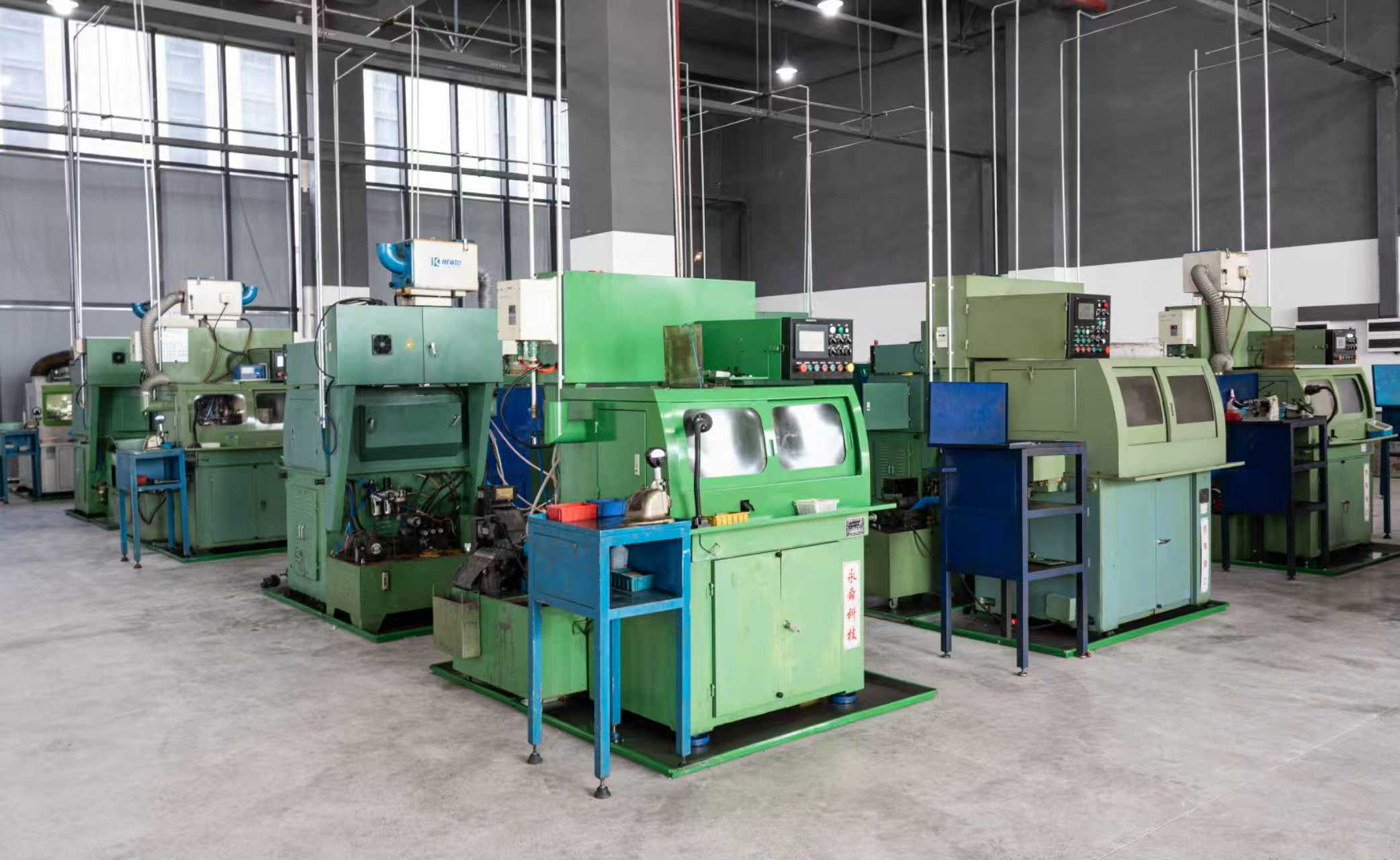
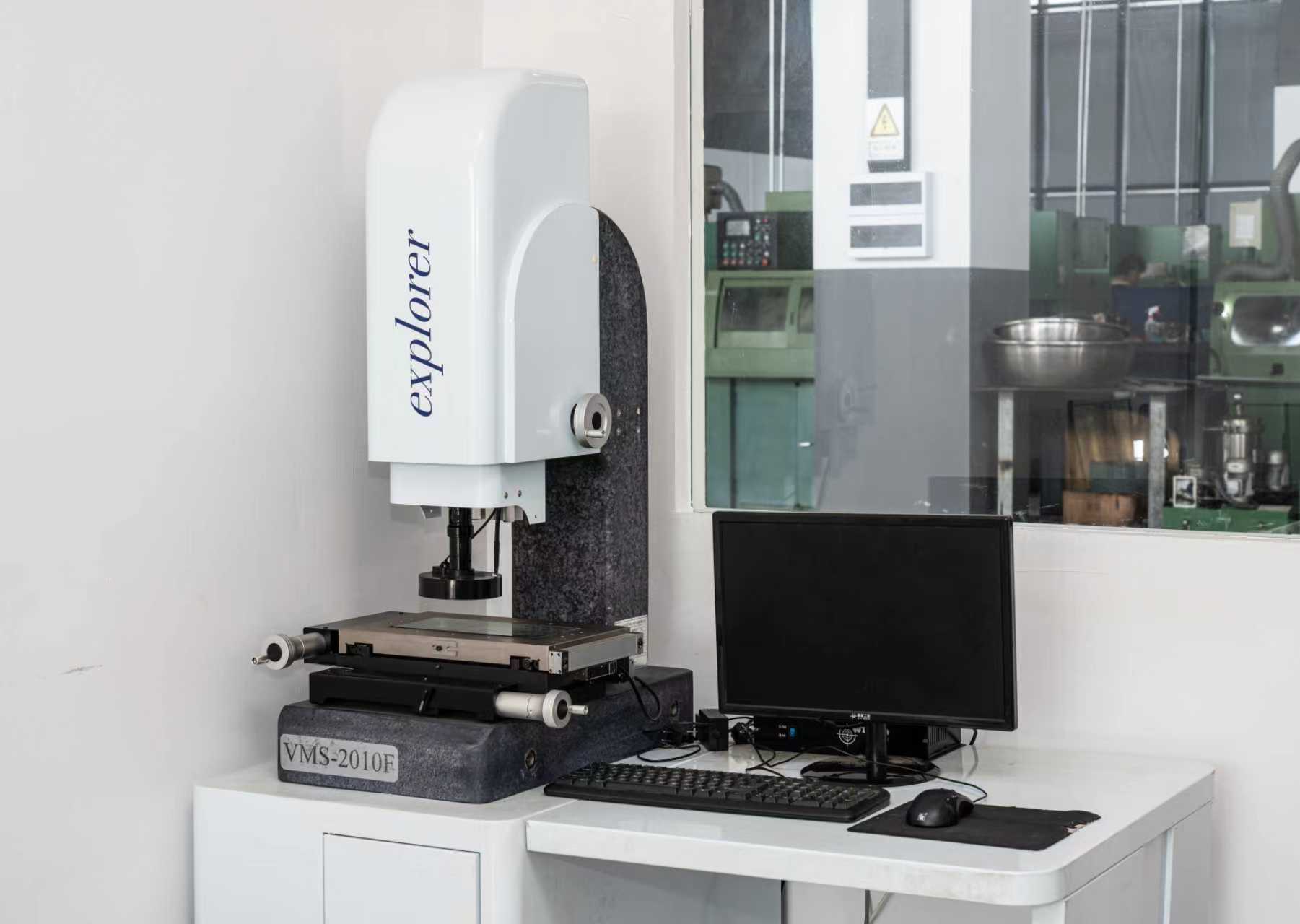
INB operates strictly in accordance with the ISO 9001 quality management system and uses a full set of professional testing instruments, including hardness testers, roundness meters, profilometers, roughness measuring equipment and microscopes. For a buyer, the practical implication is that material claims on the SR133TL and the SMR74TL should be verifiable at the batch level, not only on the datasheet.
4. Intended Use: Matching the Series to the Handpiece
Both models are miniature bearings for dental handpieces, but because they belong to different size series they serve different rotor and spindle geometries, and often different generations of handpiece design. The engineering question is therefore not which model is intended for dental use, but which position in which handpiece the series was sized for.
Three variables usually resolve it: the rotor seat bore the bearing has to enter, the axial space available between the rotor and the housing, and the speed band the handpiece is designed to run in. Where the same handpiece uses more than one bearing position, each position should be specified independently against its own drawing rather than assumed to take the same series.
Step-by-Step: How to Decide Between SR133TL and SMR74TL
The selection process below is written for a Decision-stage buyer, whether the task is specifying a bearing into a new handpiece platform or sourcing a replacement for an existing instrument.
- Establish the seat, not the part number. Measure or retrieve the bore, outside diameter and width the assembly actually requires, and compare that against the boundary dimension drawing for both the SR133TL and the SMR74TL. Eliminate the model that does not fit before evaluating its other attributes.
- Define the operating envelope. Record the speed band, the continuous operating temperature, the duty cycle, and the cleaning and sterilisation method. These four inputs determine how much thermal margin the bearing needs and how the lubrication must be configured.
- Set the precision grade. Choose between P6 and P4 on the basis of the noise and service-life target and on how close to the top of its speed band the instrument runs. State the grade together with the standard it is expressed against.
- Confirm the material and lubrication route. Verify SUS440 stainless steel construction, the sealing configuration, and the lubrication method, and confirm that the thermal cycle testing range and the speed validation routine match the intended application.
- Validate with samples before committing volume. Fit, run temperature, noise and speed behaviour should all be checked in the real assembly rather than inferred from a datasheet.
Use Cases: Where the Choice Between These Two Models Appears
New handpiece platform design. A design team selecting an INB miniature bearing for a new instrument will typically shortlist both series and then eliminate one on rotor seat geometry. Precision grade, sealing and lubrication are specified afterwards, in that order.
Handpiece repair and refurbishment. Aftermarket replacement is driven by the geometry of the instrument being repaired. Here the boundary dimension decides the model, and the precision grade determines whether the repaired instrument returns to its original noise and heat behaviour or only to a workable one.
Micro-motor dental instruments. Where a dental instrument is driven by a motor rather than an air turbine, the motor miniature bearing position places different demands on continuous duty and thermal behaviour, and the operating envelope from step two of the process above carries more weight than peak speed.
Comparison Table: SR133TL and SMR74TL Side by Side
| Comparison factor | SR133TL | SMR74TL |
|---|---|---|
| Brand | INB | INB |
| Product category | Stainless steel miniature bearing for dental handpieces | Stainless steel miniature bearing for dental handpieces |
| Material | SUS440 stainless steel | SUS440 stainless steel |
| Precision range available in INB production | P6 to P4 | P6 to P4 |
| Size designation | 133 size code | 74 size code |
| Boundary dimensions | Set by the 133 size code; confirm against the INB model drawing | Set by the 74 size code; confirm against the INB model drawing |
| Primary selection criterion | Fit in the handpiece rotor seat and housing | Fit in the handpiece rotor seat and housing |
| Risk controls applied | Thermal management, sealed lubrication, speed limitation | Thermal management, sealed lubrication, speed limitation |
| Choose this model when | The assembly is machined to the 133 series boundary dimension | The assembly is machined to the 74 series boundary dimension |
The table shows why the two models should not be ranked against one another on quality. Within a single handpiece design, only one of them is normally the correct fit; the comparison that matters is between the candidate model and the requirement, not between the two part numbers.
Frequently Asked Questions
Which precision standard should a SR133TL or SMR74TL specification reference?
Miniature bearing precision is defined by international standards rather than by the part number. The documented standards include ABMA ABEC (grades 1 to 9), ISO 492 (classes P0 to P2) and DIN 620, and within the ABEC scale a higher number corresponds to tighter tolerances (AST Bearings). INB produces its miniature bearings in precision grades from P6 to P4. When the requirement is written into a drawing or purchase specification, name both the grade and the standard it is expressed against, because ABEC, ISO and DIN grade labels use different scales and are not numerically interchangeable.
Can INB supply both models in SUS440 stainless steel at the precision my handpiece needs?
INB's miniature bearing production covers SUS440 stainless steel construction, bore diameters from 2 mm to 8 mm, and precision grades from P6 to P4, under an ISO 9001 quality management system. Both the SR133TL and the SMR74TL sit inside that dental handpiece range. Because the two models belong to different size series, the exact combination of size code, precision grade and sealing configuration should be confirmed at the enquiry stage rather than assumed from the model name alone.
How should I compare the cost of the SR133TL and the SMR74TL?
Cost differences between two miniature bearing models in the same material family are driven by boundary dimension, precision grade, sealing and lubrication configuration, order volume and inspection requirements, not by the part number itself. INB does publish comparison data for its dental handpiece bearings, using the SMR144Z as a reference model: the documented difference includes a 10 % lower initial cost, a longer expected service life and noise below 20 dB. That data is a useful template for how a comparison should be structured, but model-specific quotations for the SR133TL and the SMR74TL should be requested before a budget is fixed.
Can I test both models before committing to a production order?
Sampling is the standard way to close a Decision-stage choice between two similar miniature bearings. Request the SR133TL and the SMR74TL in the precision grade and sealing configuration you intend to run, then validate three things in the real assembly: dimensional fit in the rotor seat, running temperature under load, and noise behaviour across the intended speed range. A sample run normally exposes a size-series mismatch far earlier than a tooling or volume commitment would.
What should I confirm about supply and lead time before ordering?
Confirm the items that affect repeat-order stability rather than a single delivery date: the precision grade and sealing configuration on record, batch traceability for the SUS440 material, the required inspection data, and the volume you expect to consume per period. INB produces in Ningbo under an ISO 9001 quality management system with an annual output of 6,000,000 units, which is the base to discuss volumes and scheduling against. A sample or quotation request is the fastest way to start that conversation.
Conclusion
The SR133TL and the SMR74TL are not two versions of the same bearing with different marketing labels. They are two INB stainless steel miniature bearings, both made from SUS440 stainless steel and both produced within the P6 to P4 precision range, but built to different size series and therefore intended for different handpiece geometry.
The correct approach is sequential. Establish the boundary dimension the rotor seat requires and eliminate the model that does not fit. Set the precision grade against the noise and service-life target. Confirm that the SUS440 material, sealing and lubrication route match the thermal and sterilisation duty of the instrument. Validate the remaining candidate with samples. Only then negotiate commercial terms. Following that order turns an apparent two-model comparison into a single, defensible specification decision.
Next step: request a sample or quotation
Send your boundary dimension requirement, precision grade and operating envelope for the SR133TL or the SMR74TL, and INB will respond with model drawings and a sample or quotation.
INB — the bearing brand of Ningbo Yuhang Bearing Co., Ltd.
Email: yuhang001@126.com
Tel / WhatsApp: +86 18957446001
Website: www.lnb-brg.com
Address: Building 9, Beikun Industrial Area, No. 2288 Yongmao West Road, Zhuangqiao Street, Jiangbei District, Ningbo City
Have Questions or Need More Details?
Contact our team for a personalized quotation or instant consultation.
Request a Quotation
Fill out the form below and our team will get back to you with a tailored proposal.
WhatsApp Direct Chat
Prefer to chat in real-time? Message us on WhatsApp for instant assistance & quick answers.
- Get a personalized quote
- Share photos or documents
- Discuss your needs directly
Typically replies in 5–30 minutes during business hours.