
Selecting P4 Miniature Bearings for 200,000–400,000 RPM and −50 °C to 160 °C Duty
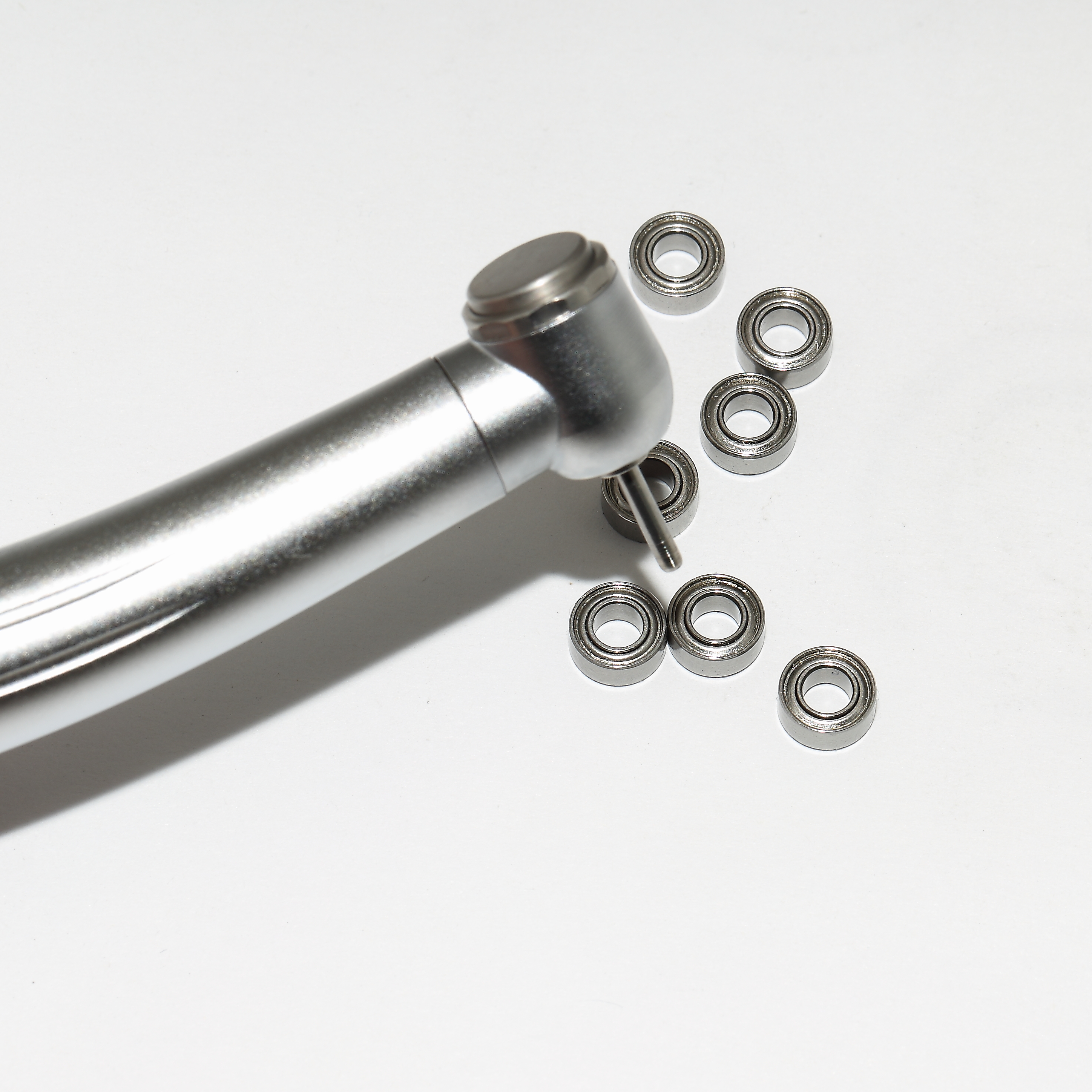
A miniature bearing survives a 200,000–400,000 rpm, −50 °C to 160 °C duty window only when four variables are specified together: boundary dimensions, precision grade, ring and ball material, and the manufacturer's rated speed and temperature envelope. Miss one of them and the selection cannot be verified — however good the part looks on a drawing.
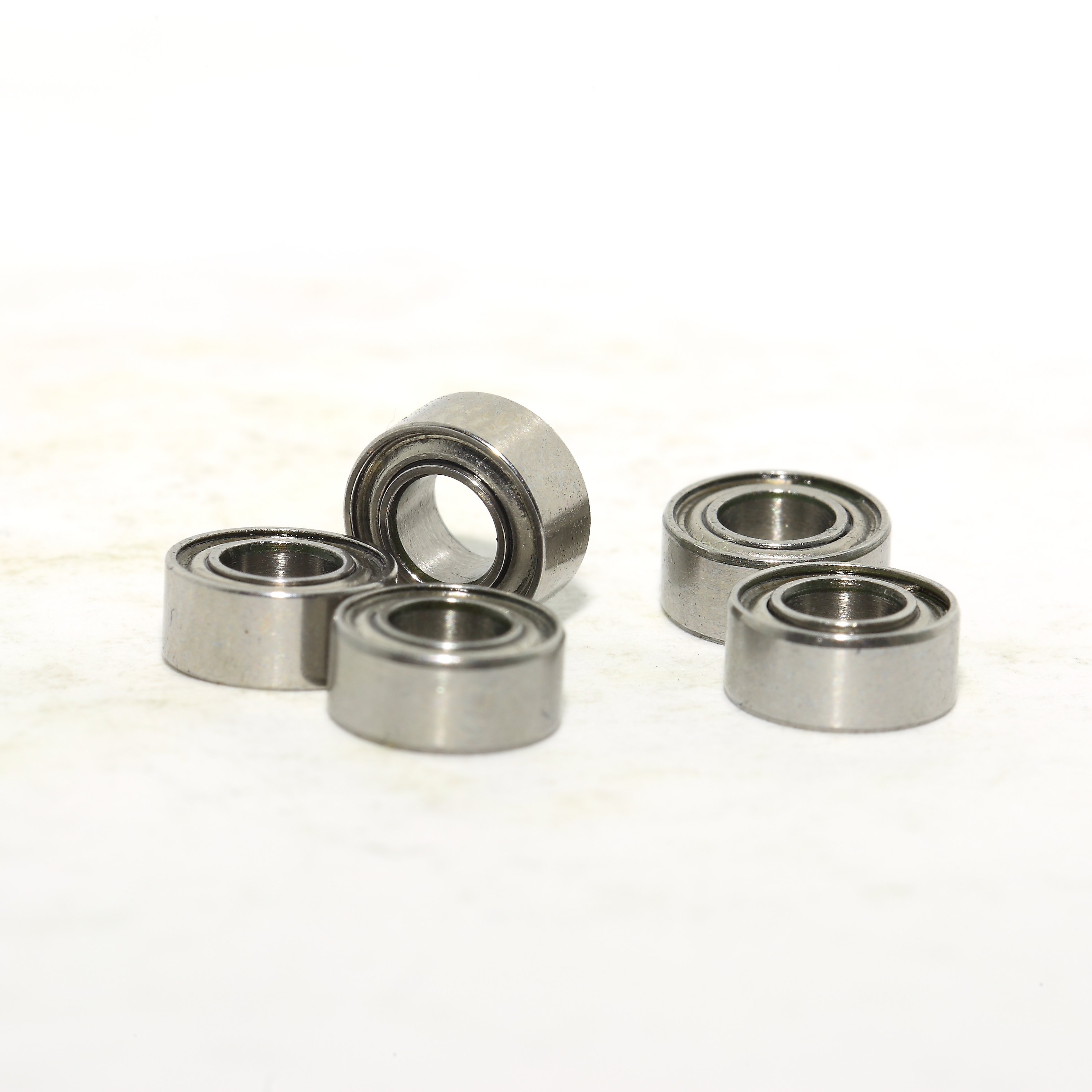
For this duty band, the configuration used in high-speed dental handpiece turbines is a P4 precision miniature bearing in SUS440 stainless steel. INB's SMR144ZTLP4 W2.38 is a documented example of that configuration: 3.175 mm bore × 6.35 mm outer diameter × 2.38 mm width, P4 precision, a limiting speed of 350,000–400,000 rpm, and an operating temperature range of −50 °C to 160 °C.
What follows is a specification workflow rather than a catalogue page. It explains what each of those numbers controls, how to cross-check model and dimension data against a real duty point, where P4 precision actually earns its cost, and how to validate a supplier's claims before a production order is released.
Problem Definition: What Breaks a Miniature Bearing in This Duty Window
Speed and temperature are the two dominant failure drivers in high-speed miniature bearings, and they pull the design in opposite directions.
At 200,000–400,000 rpm the bearing's internal geometry works under continuous centrifugal load. As rotational speed rises, rolling elements are pushed outward, contact angles shift, and balls can begin to skid instead of roll if preload and lubricant film are not controlled. The consequence is not a slow wear pattern; it is a rapid rise in friction torque and raceway damage. Precision grade matters here because ring runout and the bore-to-outer-diameter tolerance stack determine the internal clearance that actually exists at operating speed — not the clearance printed on the drawing.
Temperature imposes a second, separate set of constraints:
- At the hot end (160 °C), lubricant base-oil volatility, retainer stability, and thermal expansion all shift the internal fit. A bearing with comfortable clearance at 20 °C can be preloaded into failure at 160 °C.
- At the cold end (−50 °C), lubricant viscosity rises sharply, starting torque increases, and differential contraction between shaft, rings, and housing changes the installed fit.
Two further failure paths are specific to miniature sizes:
- Dimensional mismatch. A 3.175 mm bore is exactly 1/8 inch. If the mating shaft is machined to a nominal metric tolerance rather than an inch-series fit, the resulting interference or clearance is unpredictable at speed.
- Unverified supplier data. A limiting speed or temperature range is only usable when it is attached to a specific model, material, and precision grade — not to a product family or a catalogue page.
Industry Background: Why Miniature Bearing Specification Is Now an Engineering Decision
Miniature bearings sit inside one of the faster-moving segments of the industrial components market. Future Market Insights estimates the global miniature ball bearings market at approximately USD 2.25 billion in 2025, driven by medical device and robotics demand. Other research houses publish different figures for the same period — Precedence Research at USD 2.89 billion and IMARC Group at about USD 2.0 billion — so buyers should treat the market direction as the reliable signal and any single figure as an approximation produced by one methodology.
Regional concentration is less ambiguous. Precedence Research places Asia Pacific at approximately 60% revenue share in 2025, with China as the largest regional producer and consumer. China's bearing exports grew 7.2% year-on-year in the first seven months of 2025 to nearly 497,852 tons, according to BearingNews reporting on Huajing Research Institute data — growth recorded even while global unit pricing came under pressure.
Demand is also unevenly distributed by application. Precedence Research attributes roughly 39% of 2025 miniature bearing application share to the automotive segment, driven by EV motor and sensor applications.
Supply is concentrated as well. Global miniature bearing supply includes manufacturers such as MinebeaMitsumi, NSK, SKF, and Schaeffler (Barden), with MinebeaMitsumi identified by Intel Market Research as dominant in small sizes. That is the reference landscape against which any specialist miniature bearing specification is evaluated.
Two conventions determine how a specification should be written:
- Precision systems. Miniature bearing precision is expressed through ABMA ABEC (1–9), ISO 492 (P0–P2), or DIN 620, where higher numbers in the ABEC scale correspond to tighter tolerances.
- Material. Stainless steel 440C is widely identified as the primary material for miniature bearings used in medical and food-processing applications, because of moisture and chemical resistance.
That is the environment in which a P4 miniature bearing must be justified for a 200,000–400,000 rpm, −50 °C to 160 °C duty point.
Detailed Solution: What Each Specification Variable Controls
1. Precision grade — what P4 actually buys
Precision grades are published tolerance classes. In systems such as ISO 492 and DIN 620 a grade defines the allowable deviation in bore and outside diameter, ring runout, and width variation. INB manufactures standard bearings with bore diameters from 2 mm to 8 mm in precision grades from P6 to P4.
On a turbine running at hundreds of thousands of rpm, runout translates directly into vibration and uneven ball loading, and a tighter grade reduces that stack. It does not compensate for the wrong material, the wrong speed rating, or a lubricant that cannot survive the temperature window — which is why P4 should be treated as one of four variables rather than the answer on its own.
2. Material — SUS440 as the performance anchor
INB specifies SUS440 stainless steel for the SMR144ZTLP4 W2.38. That choice is consistent with third-party material guidance, which identifies stainless steel 440C as the primary miniature bearing material for medical and food-processing applications because of its moisture and chemical resistance.
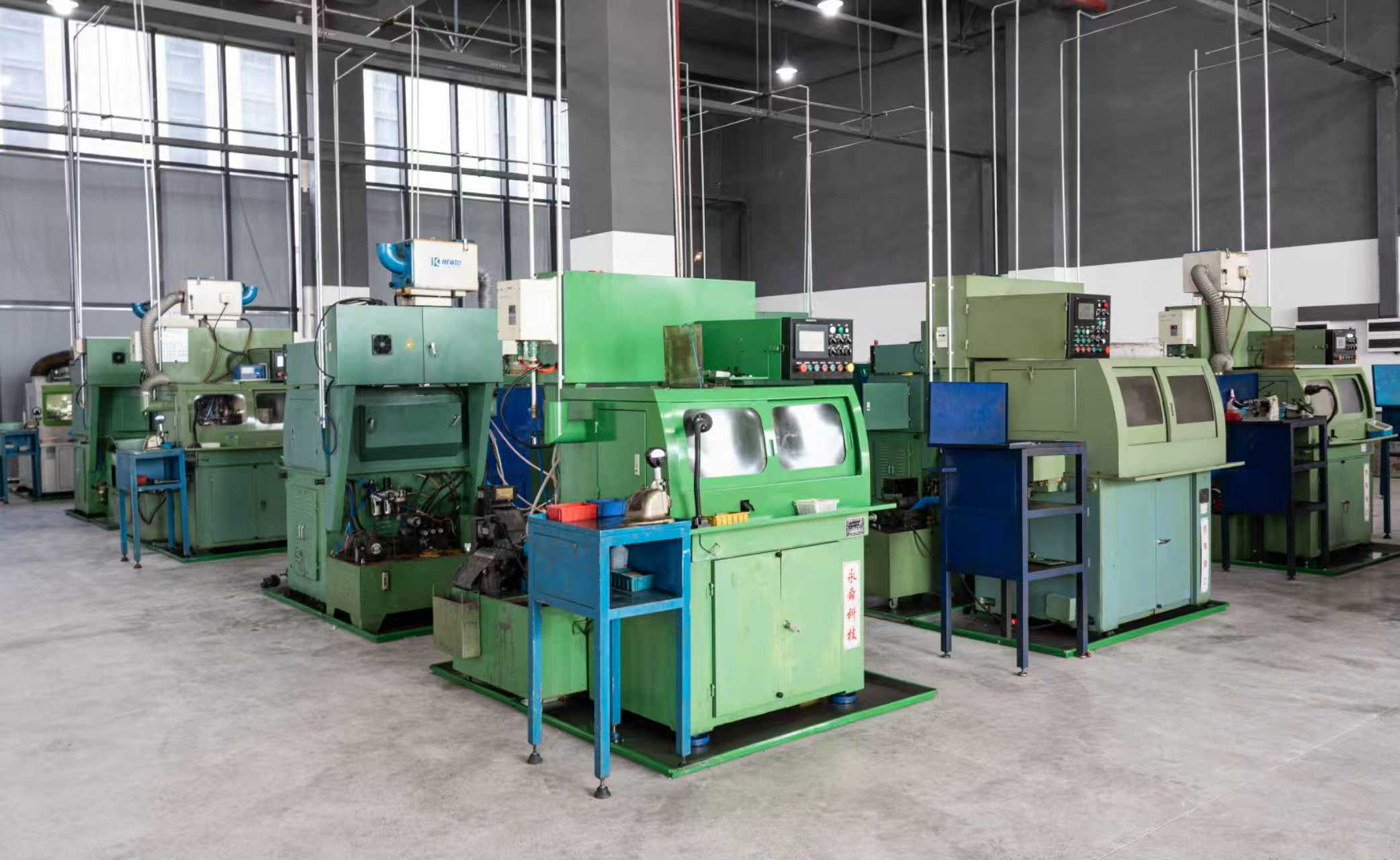
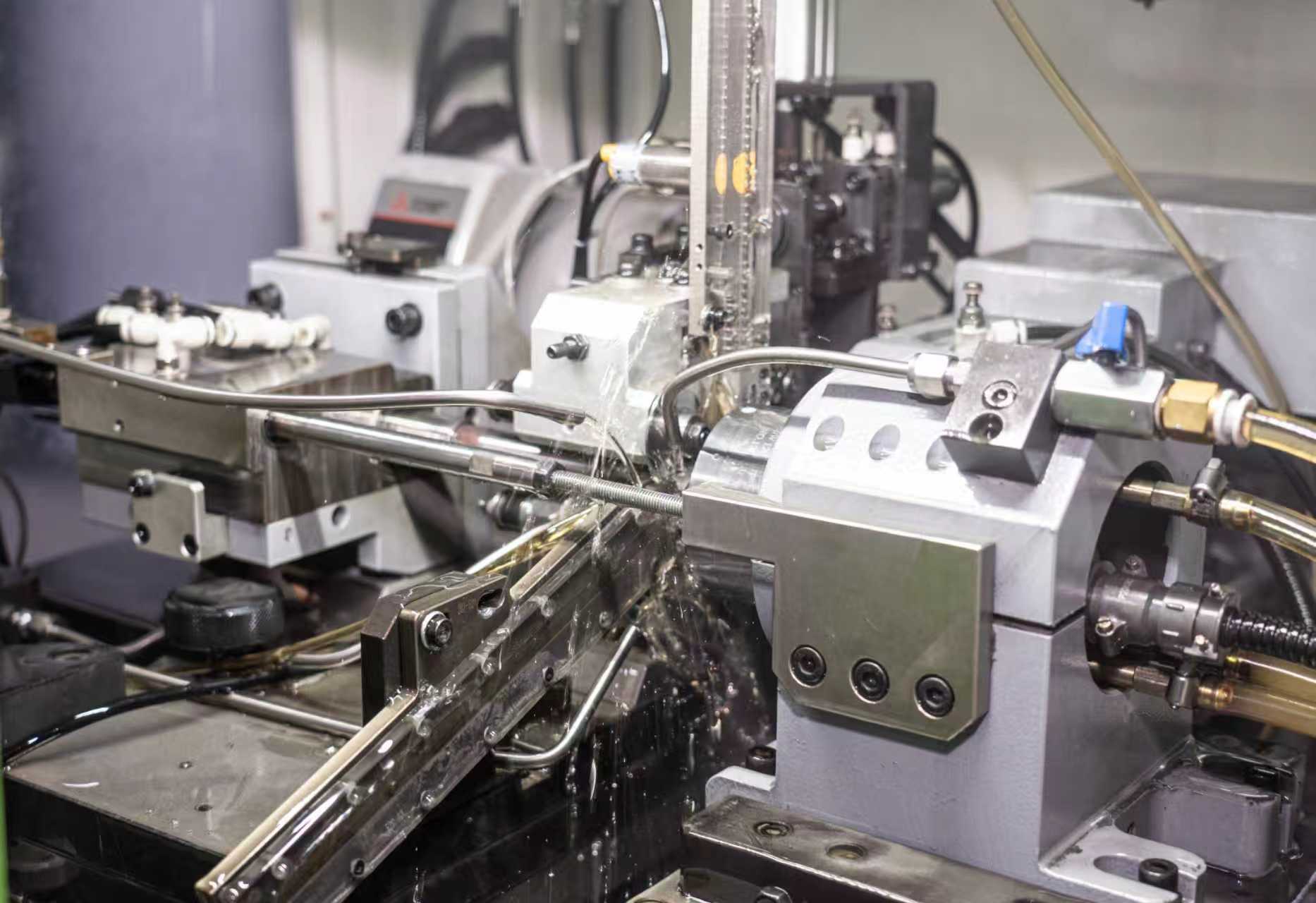
In a dental handpiece, corrosion resistance is a functional requirement rather than a cosmetic one: repeated sterilization cycles and moisture exposure act on the rings continuously. Material also sets the practical ceiling for both speed and temperature. INB's described in-house metrology — hardness testers, roundness meters, profilometers, roughness measuring equipment, and microscopes — is the instrument set needed to verify the geometry and surface properties that a high-speed specification depends on.
3. Rated envelope — limiting speed and operating temperature
The model-level rating for SMR144ZTLP4 W2.38 is a 350,000–400,000 rpm limiting speed and a −50 °C to 160 °C operating temperature range. That rating should be compared against the real duty point using three checks:
- Continuous speed versus rated speed. The further the continuous duty point sits below the rated band, the more margin the lubricant and retainer retain. An application running at the lower part of a 200,000–400,000 rpm window is working inside the envelope; an application running at the top of it leaves lubrication and thermal management carrying most of the risk.
- Temperature at both ends. Confirm that the lubricant and retainer are rated for the same window, and confirm installed clearance at the hot extreme.
- Transient conditions. Start-up, sterilization cycles, and load spikes can exceed steady-state duty and should be checked separately.
4. Model and dimension cross-check
The most common specification error in miniature bearings is not a wrong material — it is a model number that does not match the drawing. Cross-check in a fixed order: bore, then outer diameter, then width.
- Bore: 3.175 mm (exactly 1/8 inch)
- Outer diameter: 6.35 mm (exactly 1/4 inch)
- Width: 2.38 mm (nominally 3/32 inch, as designated by the W2.38 suffix)
The SMR144ZTLP4 W2.38 therefore sits in the imperial (inch-series) extra miniature bearing family, even though its dimensions are normally quoted in metric. Buyers working from a metric drawing should confirm the inch equivalent; buyers working from an inch drawing should confirm the metric rounding. Running that check before a purchase order is released is faster than diagnosing a fit problem after assembly.
5. Commercial and capability checks
Specification quality is only half of a sourcing decision. INB's documented capability position is OEM production services, customization according to customer requirements, a monthly capacity of 500,000 units, 100% testing, and a 7-day lead time on in-stock items. Standard production covers bores from 2 mm to 8 mm in P6 to P4 grades, supported by a documented ISO 9001 quality management system.
Step-by-Step Breakdown: A Seven-Step Specification Workflow
Work through these seven steps in order. Each one produces a value that the next step depends on.
- Write down the duty point, not the part number. Record continuous and peak speed, radial and axial load, temperature at both extremes, required service life, lubrication method, and whether the bearing runs continuously or in bursts. This becomes the document every other decision is measured against.
- Confirm boundary dimensions from the mechanical interface. For this family: 3.175 mm × 6.35 mm × 2.38 mm (1/8 in × 1/4 in × 3/32 in). Measure the shaft and housing rather than trusting the drawing, and treat a 3.175 mm bore as a requirement for an inch-series fit.
- Fix the precision grade. Decide between P4 and P6 on the basis of acceptable vibration, noise, and runout at operating speed. Because INB produces standard bearings from P6 to P4 across a 2–8 mm bore range, a P4 upgrade should be justified by an application requirement rather than assumed by default.
- Confirm material and corrosion exposure. SMR144ZTLP4 W2.38 is specified in SUS440 stainless steel. State explicitly whether the bearing will see moisture, cleaning agents, or repeated sterilization.
- Check the speed rating with headroom. Compare the duty speed with the model's 350,000–400,000 rpm limiting speed. Treat limiting speed as a reference ceiling rather than a continuous operating target, and keep the continuous duty point below it.
- Check the temperature envelope at both ends. Verify lubricant and retainer against the −50 °C to 160 °C window, and confirm installed clearance at 160 °C, not at room temperature.
- Validate with documentation and a pilot quantity. Request the inspection data you intend to rely on, then run a pilot batch. INB's documented purchasing terms set 100% factory inspection as the acceptance criterion — a clause worth more than any brochure claim, because it defines what acceptable means before the order is placed.

Use Cases: Where This Specification Pattern Applies
High-speed dental handpiece turbines
A medical device client in China deployed 80,000 units of this bearing in dental handpieces and reported stable high-speed operation over a 500-hour evaluation, with extended equipment lifespan as the outcome. The documented application highlights are ultra-high speed, P4 precision, long service life, and medical-grade reliability. The specification logic behind that result is the workflow above: P4 precision, SUS440 stainless steel, and a rated envelope that covers the turbine's speed and sterilization temperature range.
Micro-motors and small drive assemblies
INB's products mainly serve the domestic medical device industry and micro-motors. In micro-motor applications the same four variables apply, but the dominant risk typically shifts toward noise and vibration at moderate speed rather than the extreme temperature range — which is where tighter runout control pays for itself. This is also the point at which low-noise miniature bearing requirements and high-precision miniature bearing requirements converge on the same specification decision.
Automotive EV motors and sensors
Precedence Research attributes roughly 39% of 2025 miniature bearing application share to the automotive segment, driven by EV motor and sensor applications. These units generally run at lower speeds than a dental turbine but see wider thermal cycling and longer duty cycles, so the temperature end of the specification carries proportionally more weight.
Other medical instruments, particularly surgical and diagnostic equipment, inherit the same corrosion and sterilization requirements and the same specification sequence.
Comparison Table: Duty Requirements Against a Verified Specification
| Specification point | What the duty window requires | SMR144ZTLP4 W2.38 (INB) | Cross-check outcome |
|---|---|---|---|
| Bore | Fit to the mating shaft; 3.175 mm is an inch-series size | 3.175 mm (1/8 in) | Match — confirm the shaft is produced to an inch-series fit |
| Outer diameter | Fit to the housing bore | 6.35 mm (1/4 in) | Match — confirm housing tolerance at operating temperature |
| Width | Axial space and raceway proportion | 2.38 mm (nominally 3/32 in) | Match — confirm axial clearance at 160 °C |
| Precision grade | Low runout and vibration at 200,000–400,000 rpm | P4 | At the tighter end of INB's P6–P4 production range |
| Material | Corrosion resistance for medical and sterilization exposure | SUS440 stainless steel | Consistent with third-party 440C guidance for medical miniature bearings |
| Limiting speed | Must cover continuous duty with margin | 350,000–400,000 rpm | Duty points in the lower part of a 200,000–400,000 rpm window sit inside the rating |
| Operating temperature | Must cover −50 °C cold start through 160 °C hot state | −50 °C to 160 °C | Match — verify lubricant and retainer against the same window |
| System | Grade range | Note |
|---|---|---|
| ABMA ABEC | 1–9 | Higher numbers correspond to tighter tolerances |
| ISO 492 | P0–P2 | International tolerance classification for bearing precision |
| DIN 620 | — | Referenced alongside ISO 492 for bearing tolerance classification |
| INB production range | P6–P4 | Standard miniature bearings, 2–8 mm bore diameter |
FAQ: P4 Miniature Bearing Sourcing Questions
1. Which standards and certifications should I verify before approving a P4 miniature bearing?
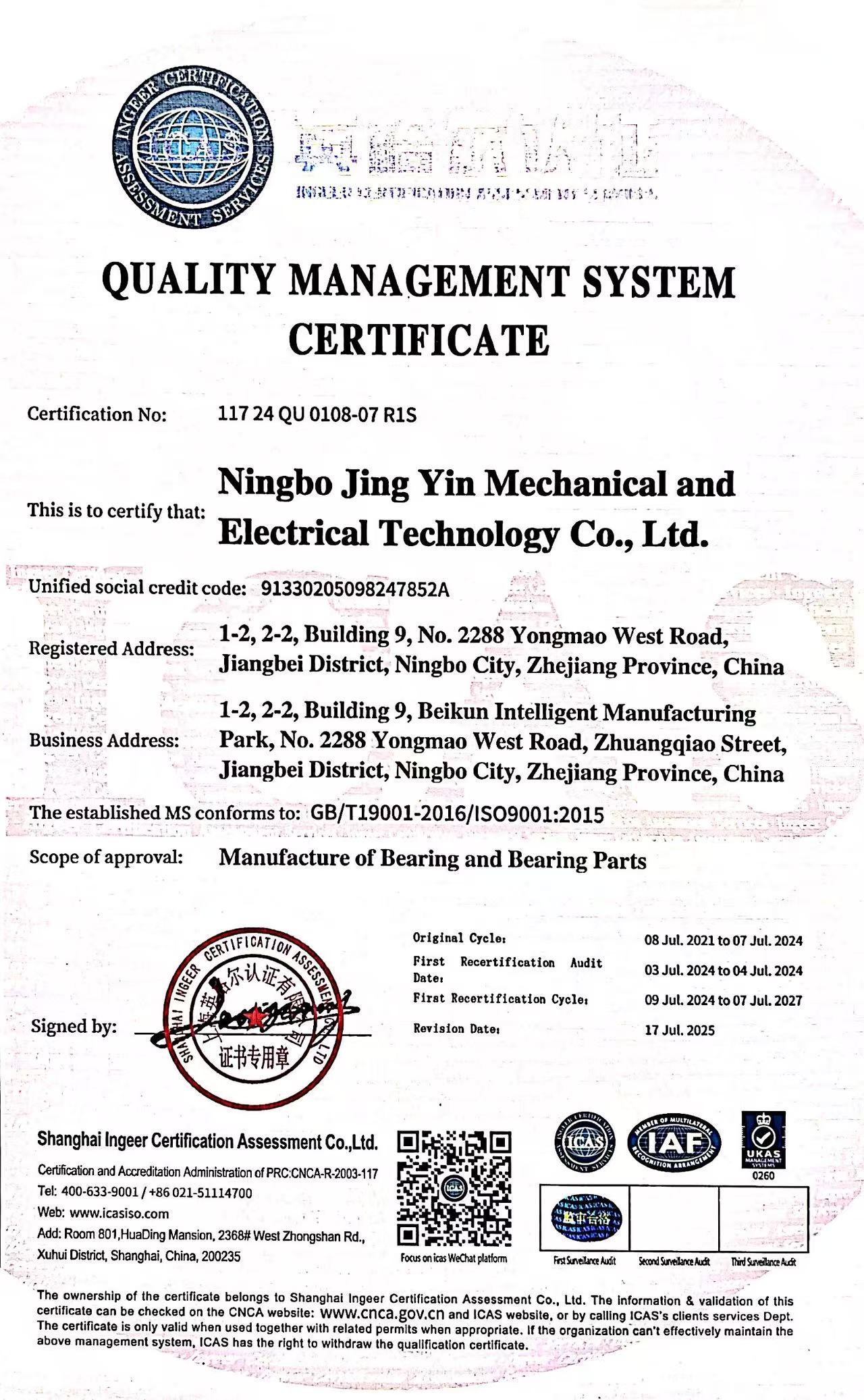
Verify two layers. First, the precision claim itself should be expressed in a recognized system: ABMA ABEC (1–9), ISO 492 (P0–P2), or DIN 620, with higher ABEC numbers corresponding to tighter tolerances. Second, the manufacturing system should be certified. INB holds ISO 9001 certificate number 117 24 QU 0108-07 R1S, issued by Shanghai Ingeer Certification Assessment Co., Ltd., valid from 2024-07-09 to 2027-07-07, with the scope Manufacture of Bearing and Bearing Parts under GB/T19001-2016 / ISO 9001:2015.
2. Can INB supply custom or OEM high-speed miniature bearings for this duty window?
Yes. INB provides OEM production services and customization according to customer requirements. Standard production covers bore diameters from 2 mm to 8 mm in precision grades P6 to P4, with a monthly capacity of 500,000 units and 100% testing. The operation runs under a documented ISO 9001 quality management system with in-house metrology that includes hardness testers, roundness meters, profilometers, roughness measuring equipment, and microscopes. The company's documented export market is Russia, while the domestic Chinese medical device and micro-motor industries remain its primary market.
3. What commercial terms apply to a miniature bearing order?
INB's documented purchasing terms are a minimum order quantity of 50 units, FOB delivery terms, 100% factory inspection as the acceptance criterion, and payment before shipment. For buyers in the evaluation stage, the practical implication is that the acceptance criterion is defined as inspection rather than as a promise, which makes the first order measurable against the specification in Table 1.
4. How can I validate the bearing before committing to production volume?
Validation can be run at three levels. Documentation: the ISO 9001 certificate and the stated acceptance criterion. Metrology: dimensional, hardness, roundness, and roughness checks on the delivered batch using the instruments listed above. Pilot performance: a trial quantity run at your real duty point before scaling. The documented reference case is a Chinese medical device client that ran 80,000 units in dental handpieces for 500 hours and reported stable high-speed operation with extended equipment lifespan. After-sales support includes return and exchange.
5. What is the lead time, and how do I start a specification review?
In-stock items carry a documented 7-day lead time, and a monthly capacity of 500,000 units supports volume ramp-up after validation. Because export terms are FOB and payment is made before shipment, the fastest path is to send the complete duty point — bore, outer diameter, width, precision grade, material, continuous speed, and temperature range — and request a quotation together with the inspection documentation you intend to rely on.
Conclusion
Selecting a P4 miniature bearing for a 200,000–400,000 rpm, −50 °C to 160 °C duty window is a four-variable problem, not a catalogue lookup. Boundary dimensions decide whether the bearing fits at all; precision grade decides how much runout and vibration the assembly tolerates at speed; SUS440 stainless steel decides how the bearing behaves under moisture and sterilization; and the rated envelope of 350,000–400,000 rpm and −50 °C to 160 °C decides how much margin the lubricant and retainer retain in service.
The check that prevents most field failures is the cheapest one: confirm that the model number's bore, outer diameter, and width match the drawing before the order is placed, and confirm that the rated speed and temperature are attached to that specific model rather than to a product family.
Next step: validate the specification, then the supplier
INB, the miniature bearing brand of Ningbo City Jingyin Electromechanical Technology Co., Ltd., manufactures P6 to P4 precision miniature bearings with 2–8 mm bore diameters, including SMR144ZTLP4 W2.38 for 200,000–400,000 rpm and −50 °C to 160 °C duty, under ISO 9001 certificate 117 24 QU 0108-07 R1S.
Email: yuhang001@126.com | Tel / WhatsApp: +86 18957446001 | Web: www.lnb-brg.com
Send your speed, temperature, dimension, and precision requirements to request a quotation, a sample review, or the inspection documentation you need.
Have Questions or Need More Details?
Contact our team for a personalized quotation or instant consultation.
Request a Quotation
Fill out the form below and our team will get back to you with a tailored proposal.
WhatsApp Direct Chat
Prefer to chat in real-time? Message us on WhatsApp for instant assistance & quick answers.
- Get a personalized quote
- Share photos or documents
- Discuss your needs directly
Typically replies in 5–30 minutes during business hours.