
Solving Overheating in Miniature Bearings for Dental Handpieces: Causes and Fixes
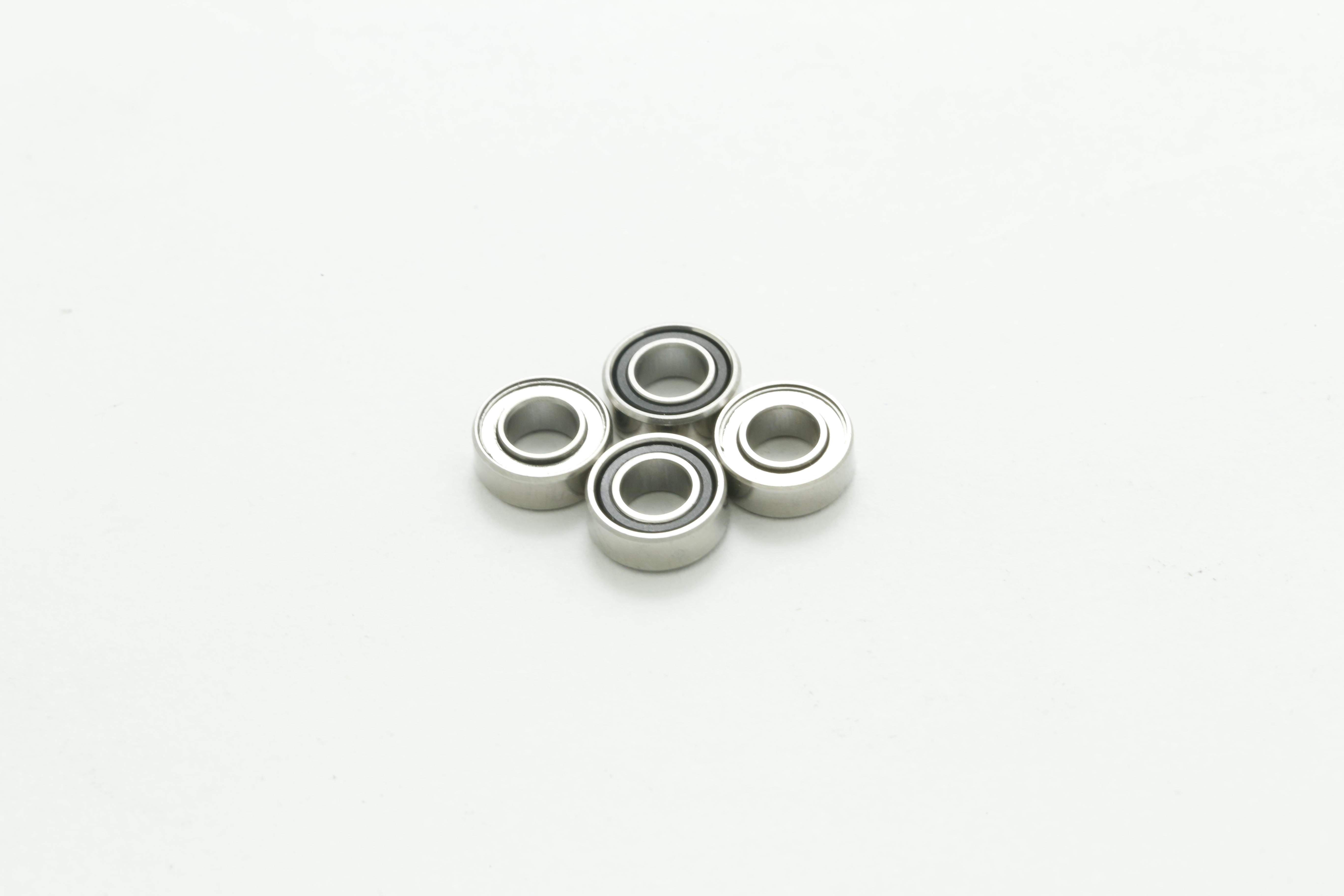
Overheating in a dental handpiece turbine is almost never a single-component failure. It is the visible result of a miniature bearing running outside one of three limits: its limiting speed, its rated operating temperature, or the internal conditions - clearance, preload and lubrication - that its geometry was designed for. The practical fix is to identify which limit was crossed, correct the specification, and only then adjust service and maintenance practice.
This article explains why P4 miniature bearings lose thermal margin in dental handpieces, how two different INB temperature envelopes (-40 °C to 150 °C and -50 °C to 160 °C) change the specification decision, and which design, installation and maintenance actions reliably bring running temperatures back inside the bearing's rated range.
INB is the miniature bearing brand of Ningbo City Jingyin Electromechanical Technology Co., Ltd., a Ningbo, Zhejiang Province manufacturer whose INB brand was established in 2014 and whose products mainly serve the domestic medical device industry and micro-motors.
Problem Definition: What 'Overheating' Means Inside a Handpiece Turbine
Heat in a miniature bearing is generated where it is hardest to remove: at the contact between the balls, the raceways and, to a lesser extent, the cage. In a dental handpiece those contacts sit inside a bearing whose outer diameter is measured in millimetres. INB's dental range includes an extra miniature imperial size with a 2.38 mm bore (SR133TL, 2.38 mm x 4.762 mm x 2.38 mm) and two 3.175 mm bore models (SR144ZTLP4 W2.78 at 3.175 mm x 6.35 mm x 2.78 mm and SMR144ZTLP4 W2.38 at 3.175 mm x 6.35 mm x 2.38 mm). Thermal mass is small and the heat path through shaft and housing is short, so any increase in friction torque shows up as a temperature rise quickly rather than being absorbed.
Three consequences follow from that geometry:
- The lubricant film thins or breaks down, so metal-to-metal contact begins, wear accelerates and running noise rises.
- Differential thermal expansion between shaft, balls and rings consumes internal clearance; as clearance falls, friction torque rises, which generates more heat - the classic thermal runaway pattern in high-speed miniature bearings.
- Heat transfers out through the bearing seat into the handpiece body, shortening the service interval of the turbine assembly.
On the bench, overheating typically appears as one of four symptoms: a handpiece that becomes noticeably warm during use, a whistle or roughness at speed, a progressively shorter interval between turbine services, or discolouration around the bearing seat when the head is opened. Each symptom points to a different root cause, which is why the diagnosis should start with the specification rather than with the lubricant.
Root Causes: Why Miniature Bearings in Dental Handpieces Overheat
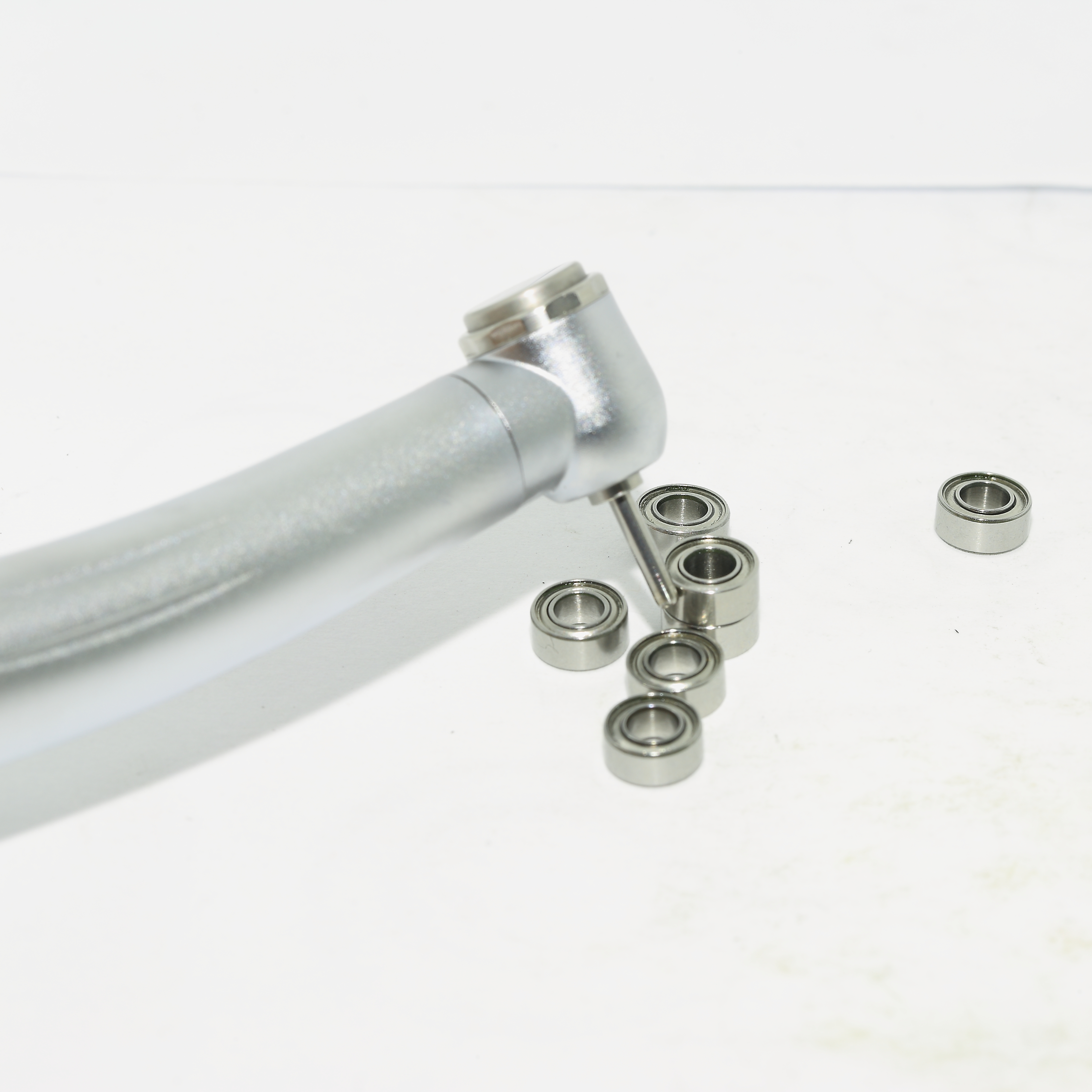
1. The bearing is running above its limiting speed
Limiting speed is the first specification to check, because no lubrication or installation change compensates for it. INB's dental handpiece range is split across two speed classes. SMR74TL (4 mm x 7 mm x 2 mm) and SR133TL (2.38 mm x 4.762 mm x 2.38 mm) are rated for a limiting speed of 200,000 rpm. SR144ZTLP4 W2.78 (3.175 mm x 6.35 mm x 2.78 mm) and SMR144ZTLP4 W2.38 (3.175 mm x 6.35 mm x 2.38 mm) are rated for 350,000-400,000 rpm. A 200,000 rpm class bearing fitted into a turbine designed to run at the top of the 350,000-400,000 rpm band has no thermal reserve, and friction torque climbs faster than heat can leave through the housing.
2. The temperature rating is lower than the duty requires
Operating temperature is a design limit, not a margin to be spent. INB specifies -40 °C to 150 °C for SMR74TL and SR133TL, and -50 °C to 160 °C for SR144ZTLP4 W2.78 and SMR144ZTLP4 W2.38. A handpiece that is repeatedly sterilized and then run at high speed experiences both friction heating and external thermal cycling. Specifying a 150 °C bearing where the real duty calls for a 160 °C envelope removes the reserve that keeps lubricant and steel stable at the top of the range.
3. Lubrication has degraded, or too much lubricant is present
Grease life in a handpiece bearing is shortened by heat and by repeated sterilization cycles, which introduce moisture and repeated thermal excursions. Two opposite errors produce the same result: too little lubricant permits metal-to-metal contact, while too much raises churning torque and pushes temperature upward. Lubricant type, fill quantity and the re-lubrication interval should therefore be treated as part of the bearing specification, not as a workshop preference.
4. Fit, preload and installation practice
Over-preload is one of the most common causes of a bearing that runs hot from the first minute of operation. Mounting force should be applied to the ring being fitted and never transmitted through the balls. Shaft and housing fits must match the small internal clearance the design assumes. Extra miniature and thin-wall miniature bearings distort easily when an outer ring is pressed into a housing with excessive interference, and the resulting preload appears as heat together with noise.
5. Contamination, corrosion and precision grade mismatch
Dental handpieces operate in a wet, chemically active environment. This is why 440C stainless steel - the material family INB specifies as SUS440 - is identified as the primary material for miniature bearings used in medical and food-processing applications, selected for moisture and chemical resistance (SKDIN Engineering Guide). Contamination that reaches a raceway acts as an abrasive and converts directly into heat. Separately, a precision grade lower than the application needs produces greater runout, more vibration and a noisier, hotter running bearing; INB supplies its dental handpiece models in P4 precision, with P6 also available across its 2 mm to 8 mm bore range.
Industry Background: Where Thermal Limits Sit in the Miniature Bearing Market
Dental handpieces sit at the demanding end of a market that is itself expanding on medical and motion-control demand. The global miniature ball bearings market is estimated to be valued at approximately USD 2.25 billion in 2025, driven by demand in medical devices and robotics (Future Market Insights). Asia Pacific dominated that market in 2025 with a revenue share of approximately 60%, with China as the largest regional producer and consumer (Precedence Research). China's bearing exports grew 7.2% year on year in the first seven months of 2025, reaching nearly 497,852 tons (BearingNews / Huajing Research Institute). The miniature bearing sector also includes long-established global manufacturers such as MinebeaMitsumi, NSK, SKF and Schaeffler (Barden) (Intel Market Research), alongside regional specialists such as INB.
Two standard systems frame the technical conversation. Miniature bearing precision is governed by global standards including ABMA ABEC (1-9), ISO 492 (P0-P2) and DIN 620, where higher numbers in the ABEC scale correspond to tighter tolerances (AST Bearings). Material selection is the second frame: 440C stainless steel is the established material for miniature bearings in medical and food-processing applications because of its moisture and chemical resistance (SKDIN Engineering Guide).
The Fix: Match Temperature Limit, Material and Precision Grade
Overheating is corrected by aligning the bearing specification with the actual duty, then protecting that specification during assembly and maintenance. The table below maps each observed cause to the corresponding corrective action and to the stage at which the decision is made.
| Observed cause | Corrective action | Decided at |
|---|---|---|
| Bearing runs above its limiting speed | Move to the 350,000-400,000 rpm class: SR144ZTLP4 W2.78 or SMR144ZTLP4 W2.38 | Specification |
| Duty needs more thermal reserve | Select the -50 °C to 160 °C envelope instead of -40 °C to 150 °C | Specification |
| Moisture or chemical exposure | Specify SUS440 stainless steel | Specification |
| Vibration and running noise | Specify P4 precision rather than P6 | Specification |
| Over-preload or fit distortion | Apply mounting force to the fitted ring; correct shaft and housing fits | Design and assembly |
| Grease degradation | Define lubricant type, fill quantity and re-lubrication interval | Maintenance |
| Contamination during fitting | Assemble in a clean environment; handle bearings sealed until the moment of fitting | Assembly |
In practice the order matters. Choose the speed class first, because it eliminates candidates outright. Choose the temperature envelope second, because it defines how much reserve remains at the top of the operating range. Choose material third, on the basis of moisture and chemical exposure. Choose precision grade fourth, based on the vibration and noise requirement of the handpiece design. Form factor is a separate decision: a flanged stainless steel miniature bearing, for example, is a different mounting family from the plain radial bearings discussed here and should be evaluated against the housing design before it is considered.
Step-by-Step Breakdown: Diagnosing and Fixing Overheating
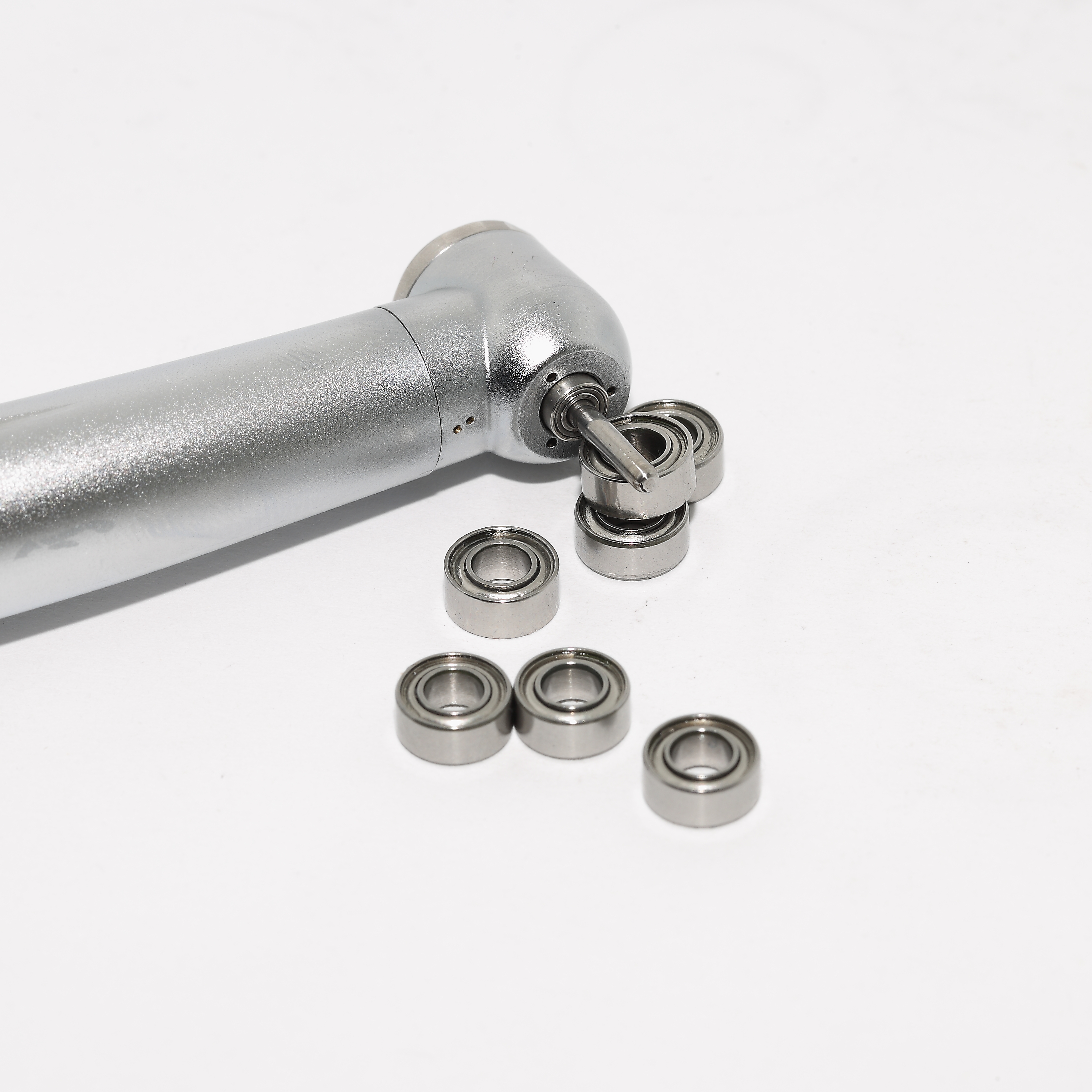
The procedure below converts the causes above into an ordered engineering workflow. Working through it in sequence prevents the most expensive mistake in handpiece bearing selection: replacing a correctly specified bearing simply because the symptom returned.
- Record the real operating envelope. Document the handpiece's free-running speed class (200,000 rpm or 350,000-400,000 rpm), load and duty cycle, the sterilization regime, and the lubricant currently in use. Symptoms described without this data cannot be traced to a specification limit.
- Compare the recorded speed against the bearing's limiting speed. Reject any candidate below the duty requirement. If the turbine runs in the 350,000-400,000 rpm band, the only matching INB models are SR144ZTLP4 W2.78 and SMR144ZTLP4 W2.38.
- Compare the temperature requirement against the rated operating range. A -40 °C to 150 °C model such as SMR74TL or SR133TL is appropriate only where the duty stays inside that envelope; where more reserve is needed, select a -50 °C to 160 °C model.
- Confirm the material. Specify SUS440 stainless steel miniature bearings where moisture and chemical exposure are present, which is standard practice in dental and medical duty.
- Confirm the precision grade. P4 is the appropriate grade for high-speed dental turbines where vibration and noise must be controlled; P6 remains available for lower-demand duties across the 2 mm to 8 mm bore range.
- Review assembly. Correct shaft and housing fits, mounting force applied to the fitted ring, clean and dry handling, and a defined lubricant fill quantity - neither starved nor over-filled.
- Validate in a controlled batch before committing to volume. INB's minimum order quantity is 100 units, standard items are held in stock with a 7-day lead time, and every unit is 100% tested before dispatch, which allows a design change to be verified on real hardware first.
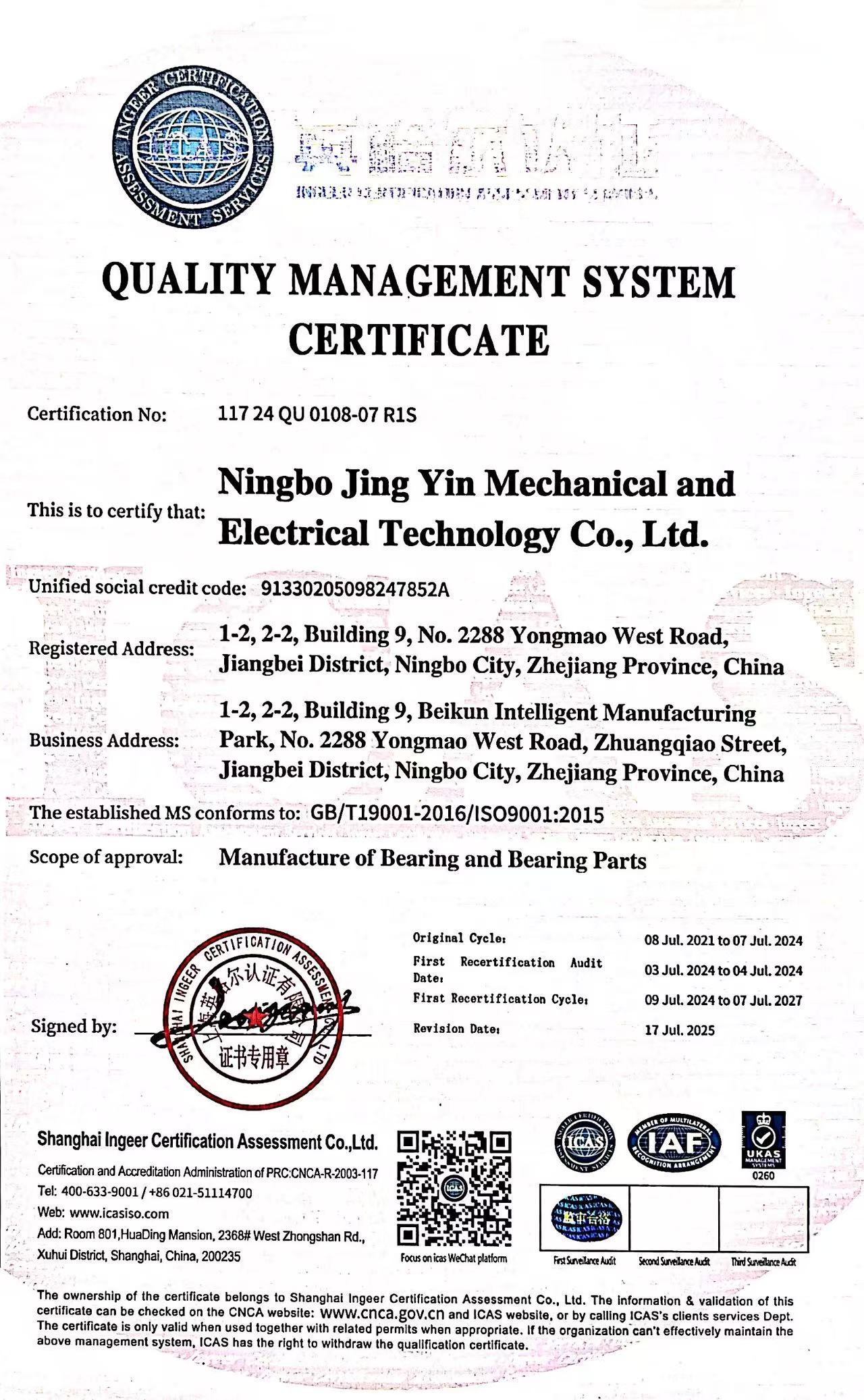
- Document the specification inside the quality system. INB operates in accordance with the ISO 9001 quality management system. Certificate number 117 24 QU 0108-07 R1S is issued by Shanghai Ingeer Certification Assessment Co., Ltd. against the standard GB/T19001-2016/ISO 9001:2015, covers the manufacture of bearing and bearing parts, applies to the global market, and remains valid until 7 July 2027. The certification covers bearing models SMR74TL, SR133TL, SR144ZTLP4 W2.78 and SMR144ZTLP4 W2.38.
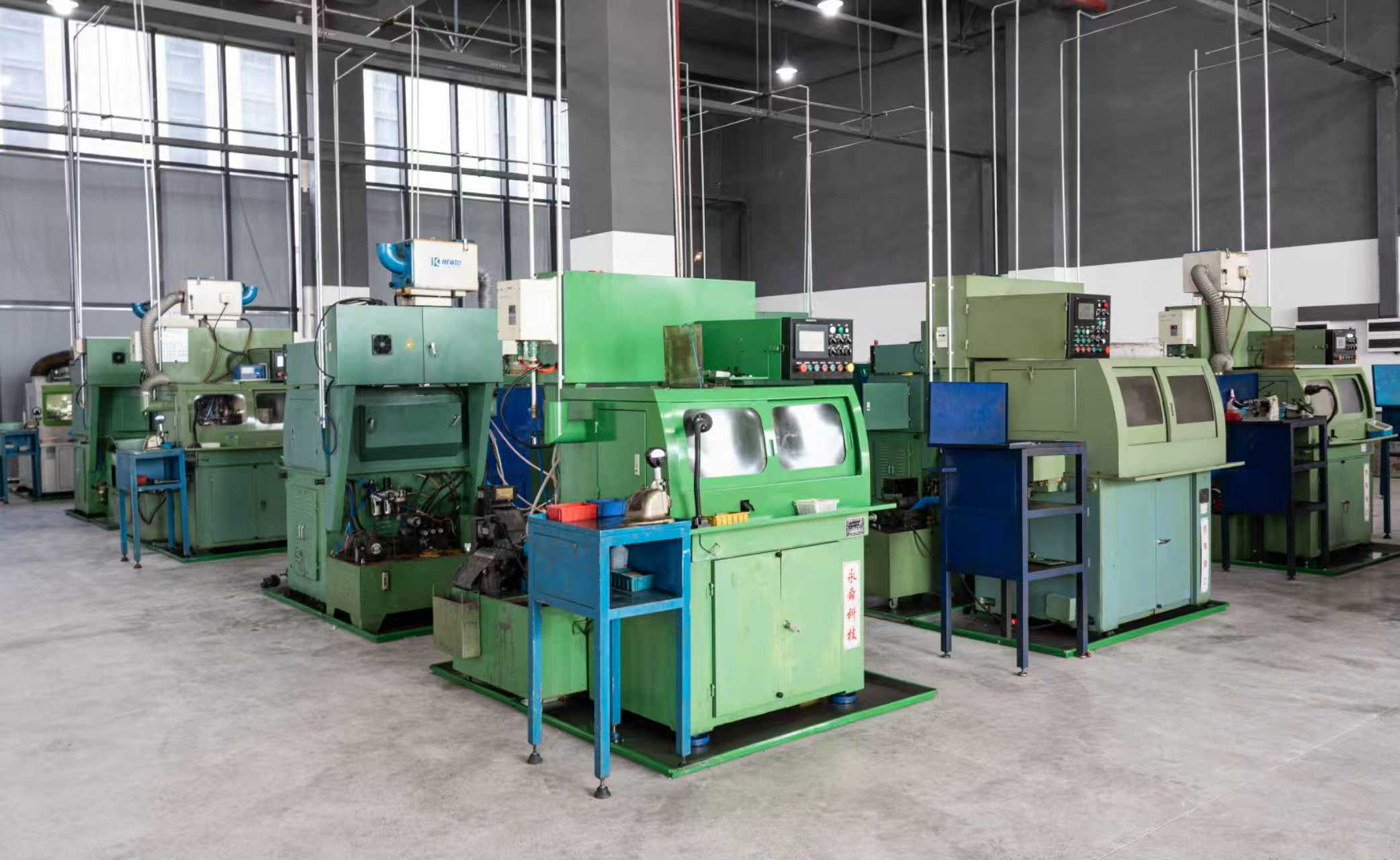
Use Cases: Where the Thermal Envelope Is Actually Decided
Dental handpiece turbine, volume production
In a medical device project in China, 80,000 units of P4 precision miniature bearings rated 350,000-400,000 rpm were used in dental handpieces. The documented result was stable high-speed operation with extended equipment lifespan over 500 hours, with ultra-high speed, P4 precision and medical-grade reliability listed as the project highlights. The specification was fixed before volume production rather than corrected afterwards, which is the pattern that prevents overheating returns.
Dental handpiece with a heavy sterilization cycle
Where a handpiece is sterilized frequently, the binding constraint is usually the operating temperature envelope combined with moisture exposure rather than speed alone. Selecting a SUS440 model with the -50 °C to 160 °C rating, and defining the re-lubrication interval against the actual sterilization count, addresses the two variables that heat and moisture degrade fastest.
Micro-motor and other miniature bearing duties
INB's products mainly serve the domestic medical device industry and micro-motors. Motor miniature bearings face the same trade-off between speed, temperature and lubrication, and the diagnostic order described above - speed, temperature, material, precision, assembly, lubrication - applies unchanged, even though the housing and the service environment differ.
Comparison Table: INB Miniature Bearings for Dental Handpieces
The four models below are the INB dental handpiece miniature bearings referenced throughout this article, listed with the specifications that determine whether a bearing will run hot in a given handpiece design.
| Model | Dimensions (mm) | Precision | Limiting speed | Operating temperature | Material |
|---|---|---|---|---|---|
| SMR74TL | 4 x 7 x 2 | P4 | 200,000 rpm | -40 °C to 150 °C | SUS440 |
| SR133TL | 2.38 x 4.762 x 2.38 | P4 | 200,000 rpm | -40 °C to 150 °C | SUS440 |
| SR144ZTLP4 W2.78 | 3.175 x 6.35 x 2.78 | P4 | 350,000-400,000 rpm | -50 °C to 160 °C | SUS440 |
| SMR144ZTLP4 W2.38 | 3.175 x 6.35 x 2.38 | P4 | 350,000-400,000 rpm | -50 °C to 160 °C | SUS440 |
All four models are covered by the same ISO 9001 certification, number 117 24 QU 0108-07 R1S, valid until 7 July 2027. The two width variants of the 3.175 mm bore size share identical speed, temperature, precision and material specifications, so the width choice is driven by the handpiece design rather than by thermal performance.
Frequently Asked Questions
Is INB's quality management certification valid for the dental handpiece bearing models described here?
Yes. INB operates in accordance with the ISO 9001 quality management system, and the certification covers the manufacture of bearing and bearing parts. The certificate number is 117 24 QU 0108-07 R1S, issued by Shanghai Ingeer Certification Assessment Co., Ltd. against the standard GB/T19001-2016/ISO 9001:2015. It applies to the global market and remains valid until July 7, 2027. The bearing models SMR74TL, SR133TL, SR144ZTLP4 W2.78 and SMR144ZTLP4 W2.38 are all covered by this certification.
Can INB customize a miniature bearing for a specific temperature and speed requirement?
INB operates an OEM production model and customizes according to customer requirements. The production range covers high-precision miniature bearings with inner bore diameters from 2 mm to 8 mm in precision grades from P6 to P4, and monthly capacity is 500,000 units. For a handpiece duty that falls between the two standard thermal envelopes, the customization conversation starts with the measured speed class and the sterilization regime rather than with dimensions alone.
What drives the cost of a high-temperature P4 miniature bearing for a dental handpiece?
Four factors dominate: precision grade, since P4 requires tighter tolerances than P6; material, since SUS440 stainless steel is specified for moisture and chemical resistance; the testing regime, because every unit INB ships is 100% tested; and order quantity, since the minimum order quantity is 100 units against a monthly capacity of 500,000 units. Selecting a bearing rated 350,000-400,000 rpm with a -50 °C to 160 °C envelope only where the duty genuinely requires it is the most direct way to avoid paying for thermal margin that will never be used.
Can a candidate bearing be validated before committing to volume production?
Yes, at small scale. INB's minimum order quantity is 100 units, which is sized for validation rather than mass production, and a project in China that ultimately used 80,000 units of P4 bearings rated 350,000-400,000 rpm in dental handpieces demonstrated stable operation for 500 hours after the specification was fixed. After-sales return and exchange support applies, so a batch that does not perform as specified can be raised through the same channel.
How quickly can bearings be delivered, and what is the next step?
Standard items are held in stock with a 7-day lead time, with a minimum order quantity of 100 units and a monthly capacity of 500,000 units for volume requirements. The fastest way to resolve an overheating issue is to send the handpiece speed class, the required operating temperature and the sterilization regime to INB, and let the specification be confirmed against the two thermal envelopes described above before any hardware is ordered.
Next Step: Confirm the Bearing, Not Just the Symptom
Send the speed class, temperature requirement and sterilization regime of your dental handpiece, and INB will confirm which P4 stainless steel miniature bearing fits the duty - SR144ZTLP4 W2.78 or SMR144ZTLP4 W2.38 for 350,000-400,000 rpm, or SMR74TL / SR133TL for the 200,000 rpm class.
Email: yuhang001@126.com | Tel / WhatsApp: +86 18957446001 | Website: www.lnb-brg.com
Conclusion
Overheating in dental handpiece miniature bearings is a specification problem before it is a service problem. Speed class comes first: a 200,000 rpm bearing such as SMR74TL or SR133TL cannot be asked to hold thermal stability in a turbine designed for 350,000-400,000 rpm, where SR144ZTLP4 W2.78 and SMR144ZTLP4 W2.38 are the matching models. Temperature rating comes second, since the -50 °C to 160 °C envelope leaves reserve that the -40 °C to 150 °C envelope does not. Material comes third, with SUS440 stainless steel specified for the wet, chemically active dental environment, and P4 precision fourth for vibration and noise control. Installation and lubrication protect those choices rather than replace them.
Applied in that order - and documented inside an ISO 9001 quality management system with a certificate covering SMR74TL, SR133TL, SR144ZTLP4 W2.78 and SMR144ZTLP4 W2.38 - the procedure turns an overheating complaint into a defined, verifiable specification change.
Have Questions or Need More Details?
Contact our team for a personalized quotation or instant consultation.
Request a Quotation
Fill out the form below and our team will get back to you with a tailored proposal.
WhatsApp Direct Chat
Prefer to chat in real-time? Message us on WhatsApp for instant assistance & quick answers.
- Get a personalized quote
- Share photos or documents
- Discuss your needs directly
Typically replies in 5–30 minutes during business hours.