
Top 5 Factors to Consider When Choosing Miniature Bearings for Medical Devices
Five factors decide whether a miniature bearing survives inside a medical device, and they are best resolved in this order: precision grade, material, speed rating, temperature tolerance, and size. Precision and material set the reliability floor of the design. Speed rating and temperature tolerance define the envelope the bearing can actually operate in. Size determines whether the part fits at all — and although size is usually the first thing an engineer checks, it is rarely the reason a bearing fails after assembly.
This guide ranks the five factors by selection priority and shows how each one plays out in real product decisions, using models from the INB miniature bearing range as reference points. INB is a miniature bearing brand produced in Ningbo, Zhejiang Province, China, serving the domestic medical device and micro-motor industries with bearings from 2 mm to 8 mm bore in precision grades from P6 to P4.
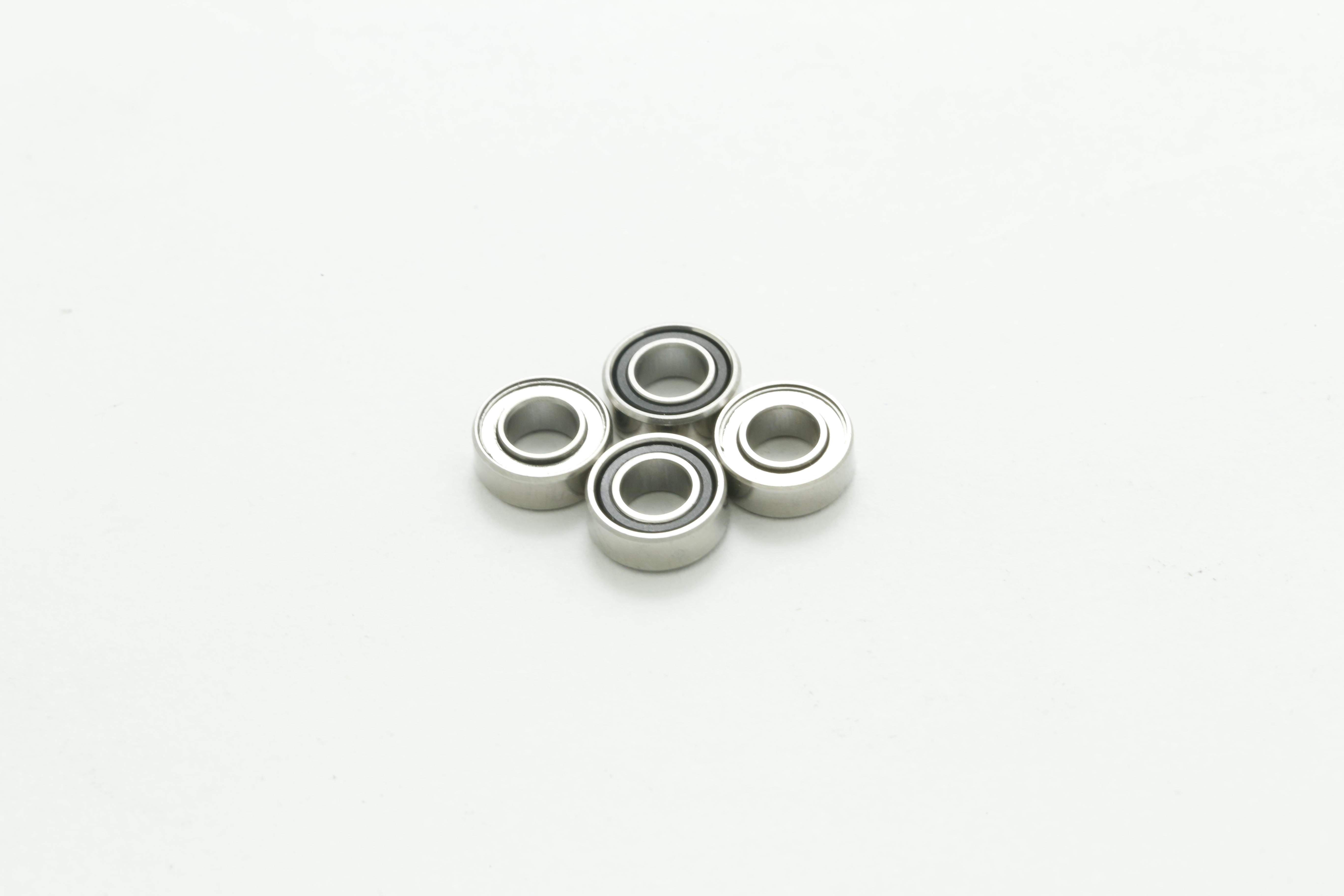
A P4-precision stainless steel miniature bearing from the INB miniature bearing range, used as a reference model throughout this selection guide.
Problem Definition: Where Miniature Bearing Selection Goes Wrong
The typical failure pattern in medical device projects is not a missing specification — it is an incomplete one. A bearing is picked from a dimension sheet because the bore, outer diameter and width match the housing, and everything else is assumed. Weeks later, the prototype runs hot, transmits vibration into the instrument, or loses speed after a short period of use.
Medical duty cycles make this more likely than in general industrial applications. Miniature bearings in dental handpieces, for instance, operate under high-speed precision grinding, in a clean medical environment, and in intermittent high-load operation. The motion profile is intermittent high-speed operation rather than continuous rotation, so the bearing experiences repeated acceleration, thermal cycling and load spikes instead of a steady state.
Three specification gaps account for most of the problems:
- Single-attribute selection. The bearing is chosen on size alone, while precision, speed and temperature are treated as secondary details.
- Ambient assumptions. Temperature is evaluated for the room rather than for the bearing seat, where friction heat concentrates.
- Unverified claims. A precision grade or material is accepted from a catalogue or quotation without measurement data behind it.
Because a miniature bearing inside a handpiece turbine or a micro-motor assembly is not a field-serviceable part, the decision has to be correct at the design stage. The five factors below are ranked in the order they should be locked down.
Industry Background: A Small Component Class Under Precision Pressure
Miniature bearings are a small component class with a broad demand base. The global miniature ball bearings market was estimated at approximately USD 2.25 billion in 2025, driven by demand in medical devices and robotics (Future Market Insights). Published estimates vary between research houses — figures for the same year range from about USD 2.0 billion to USD 2.89 billion — so market sizing should be treated as directional rather than exact.
Supply is concentrated in Asia. Asia Pacific accounted for roughly 60% of miniature ball bearing revenue in 2025, with China as the largest regional producer and consumer (Precedence Research). China's bearing exports grew 7.2% year-on-year in the first seven months of 2025, reaching nearly 497,852 tons, which means medical device buyers have wide access to Chinese miniature bearing capacity. The automotive segment was the largest single application at approximately 39% of the market in 2025, so medical projects compete for the same high-precision capacity as high-volume motor and sensor programs.
Two conventions define what buyers can specify. Precision classes follow international tolerance systems, including ABMA ABEC (1–9), ISO 492 (P0–P2) and DIN 620, and in those systems tighter tolerances correspond to higher class numbers. Material convention for medical and food-processing environments has settled on stainless steel — specifically 440C — because of its moisture and chemical resistance. INB produces miniature bearings under an ISO 9001 quality management system, which is the baseline to confirm before discussing tolerance classes at all.
For sector context, global miniature bearing manufacturing includes companies such as MinebeaMitsumi, NSK, SKF and Schaeffler (Barden). Buyers evaluating a specialist supplier usually compare on verified test data, customization fit and response speed rather than on brand scale alone.
Detailed Solution: The Five Factors, Ranked
Factor 1 — Precision Grade: Why P4 Comes First
Precision grade is ranked first because it sets the baseline for vibration, noise and heat generation at speed. Tolerance class controls bore, outer diameter, width and runout deviations, and runout is one of the main contributors to vibration in a rotating assembly. In a handpiece turbine or a micro-motor, that vibration is not abstract: it becomes audible noise for the clinician and mechanical wear inside the device.
Higher class numbers mean tighter tolerances across ABMA ABEC (1–9), ISO 492 (P0–P2) and DIN 620. INB manufactures miniature bearings in precision grades from P6 to P4, and all four reference models in this guide are P4 parts.
Decision rule: specify a high-precision miniature bearing such as a P4 part when the application runs at high rotational speed or when noise and vibration are product requirements. Where the bearing only positions a component at low speed under light load, a looser grade can be sufficient.
Verification: precision should be confirmed with measurement data, not a label. INB operates a full set of professional testing instruments, including hardness testers, roundness meters, profilometers, roughness measuring equipment and microscopes, and applies 100% testing.
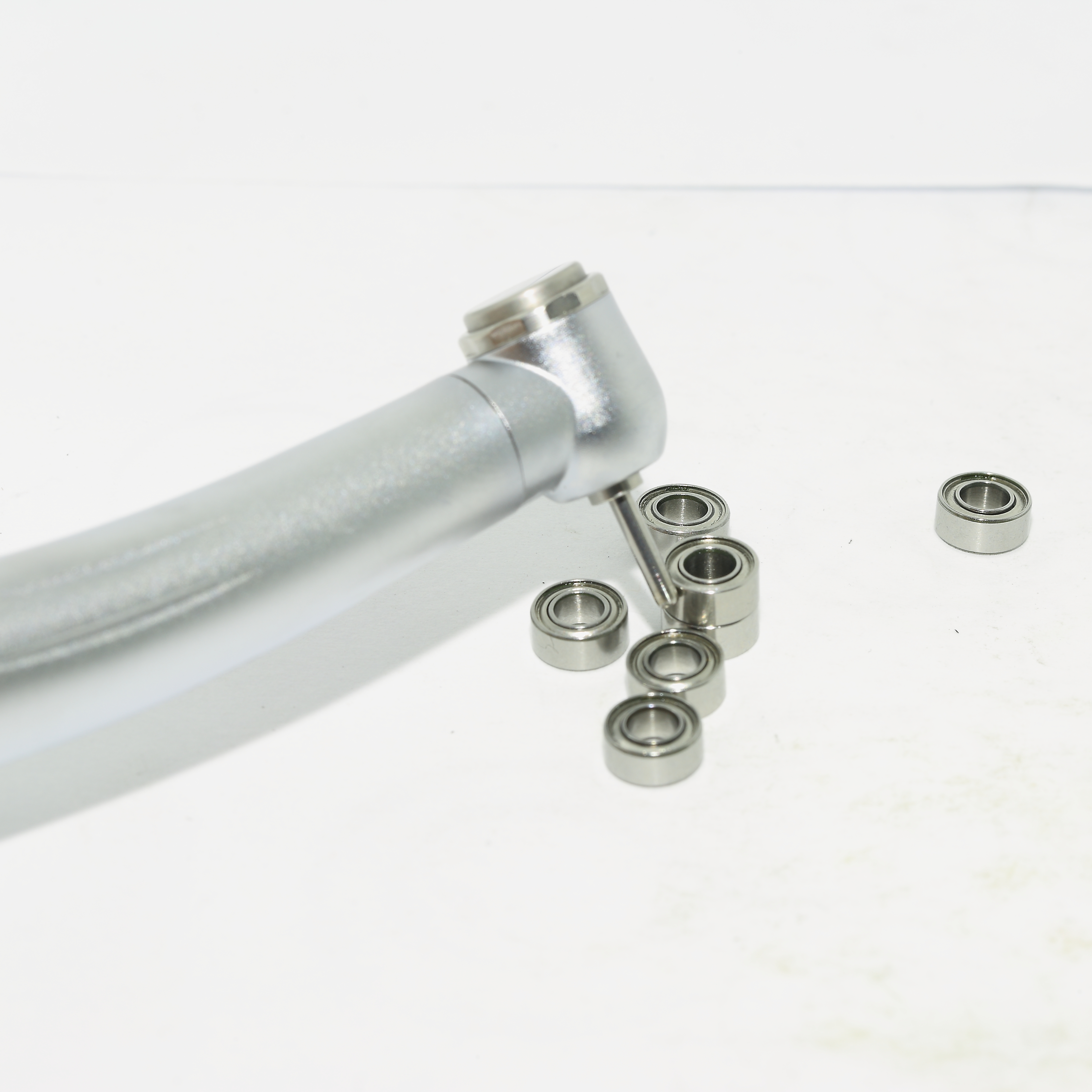
INB SMR74TL — a 4 × 7 × 2 mm P4 miniature bearing: a typical example of how a high-precision miniature bearing is specified for medical instruments.
Factor 2 — Material: SUS440 Stainless Steel and Biocompatibility
Material ranks second because it decides whether the bearing can live in a medical environment at all. Stainless steel, specifically 440C, is the primary material for miniature bearings used in medical and food-processing applications due to moisture and chemical resistance. INB produces its miniature bearings in SUS440 stainless steel, including the SR133TL, SMR74TL and both 3.175 mm bore models.
For a device engineer, the practical consequence is straightforward. Bearings that sit inside instruments exposed to repeated cleaning, humid air or chemical contact must resist corrosion; corrosion products inside a sealed instrument are both a reliability and a hygiene concern.
Decision rule: confirm material grade against the cleaning and environmental exposure the finished device will see, and specify a stainless steel miniature bearing where moisture or chemical contact cannot be excluded. Material choice should be reviewed together with the cleaning process the device undergoes.
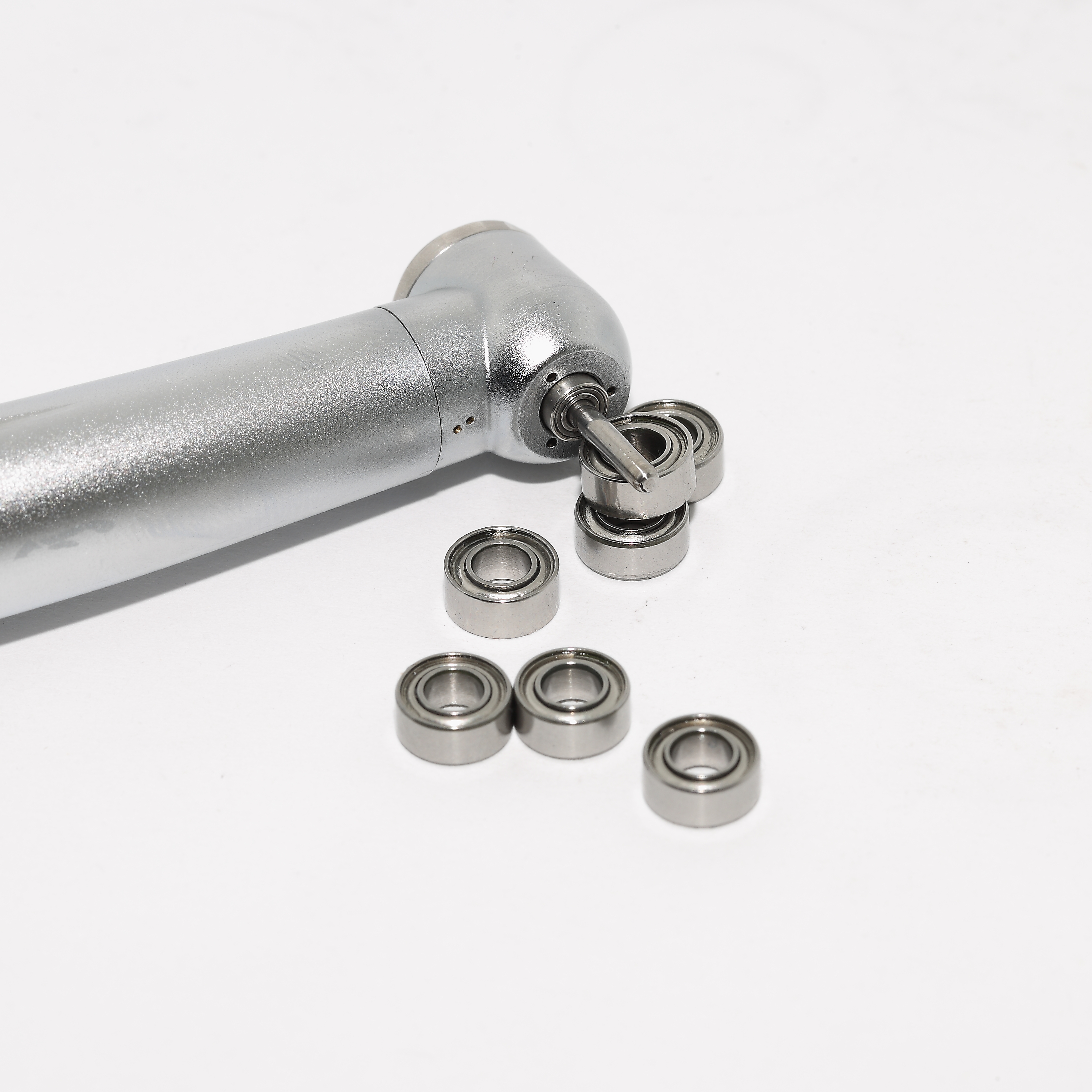
A high-speed stainless steel miniature bearing from the INB range, produced in SUS440 for medical and micro-motor environments.
Factor 3 — Speed Rating: Matching Limiting Speed to the Duty Cycle
Speed rating ranks third because it narrows the candidate list faster than any other factor. INB's reference models show how wide that range can be within one product family:
- SMR74TL — 4 × 7 × 2 mm, P4, limiting speed 200,000 rpm
- SR133TL — 2.38 × 4.762 × 2.38 mm, P4, limiting speed 200,000 rpm
- SR144ZTLP4 W2.78 — 3.175 × 6.35 × 2.78 mm, P4, limiting speed 350,000–400,000 rpm
- SMR144ZTLP4 W2.38 — 3.175 × 6.35 × 2.38 mm, P4, limiting speed 350,000–400,000 rpm
The medical application profile for these parts matches the higher tier: dental handpiece bearing applications specify ultra-high speed in the 350,000–400,000 rpm range. That is why a 200,000 rpm model and a 400,000 rpm model are not interchangeable, even when the bore and outer diameter are close.
Decision rule: the limiting speed shown for a high-speed miniature bearing must exceed the peak speed of the application, not the average. Because operation is intermittent high-speed rather than continuous, there is thermal recovery between bursts — but the peak figure still governs the selection.
Factor 4 — Temperature Tolerance: Rate the Bearing Seat, Not the Room
Temperature ranks fourth, immediately behind speed, because the two are physically linked: friction at high rotational speed generates heat in the bearing raceway. INB's miniature bearings in this reference set cover two temperature classes:
- -40 °C to 150 °C — SMR74TL and SR133TL
- -50 °C to 160 °C — SR144ZTLP4 W2.78 and SMR144ZTLP4 W2.38
That 20 °C difference between classes is a genuine design decision rather than a datasheet detail. Intermittent high-load operation pushes short temperature peaks that an average operating temperature would hide, and a bearing running close to its thermal limit loses life quickly.
Decision rule: estimate peak temperature at the bearing seat under the worst-case duty cycle, then select a bearing whose rated operating range covers that peak with margin. Where the device also passes through downstream processing at elevated temperature, the upper limit of the range becomes a hard constraint.
Factor 5 — Size: Bore, Outer Diameter and Width as a Three-Part Decision
Size ranks fifth only because it is the easiest factor to verify — it is also the factor most often over-simplified. A miniature bearing has three meaningful dimensions, and the width is a load and rigidity decision, not just a fit dimension. INB's two 3.175 × 6.35 mm models illustrate this: the SR144ZTLP4 W2.78 is 2.78 mm wide, while the SMR144ZTLP4 W2.38 is 2.38 mm wide. Same bore, same outer diameter, different axial footprint.
Dimension families matter as much as individual values. The SR133TL uses a 2.38 mm bore with a 4.762 mm outer diameter — an imperial-footprint pairing — while the other models use metric bore and outer diameter combinations. Assemblies designed around imperial miniature bearing dimensions cannot simply accept a metric substitute without a housing change. Small miniature bearing and extra miniature bearing options at the low end of the range, and thin-wall miniature bearing constructions where radial space is tight, all follow the same rule: match the housing first, then confirm that the remaining cross-section can carry the load.
Where an assembly needs axial location rather than a plain cylindrical fit, flanged stainless steel miniature bearings are used — the flange profile must match the housing shoulder, so flange selection is a housing decision as much as a bearing decision.
Across the wider range, INB produces high-precision standard bearings with inner bore diameters from 2 mm to 8 mm.
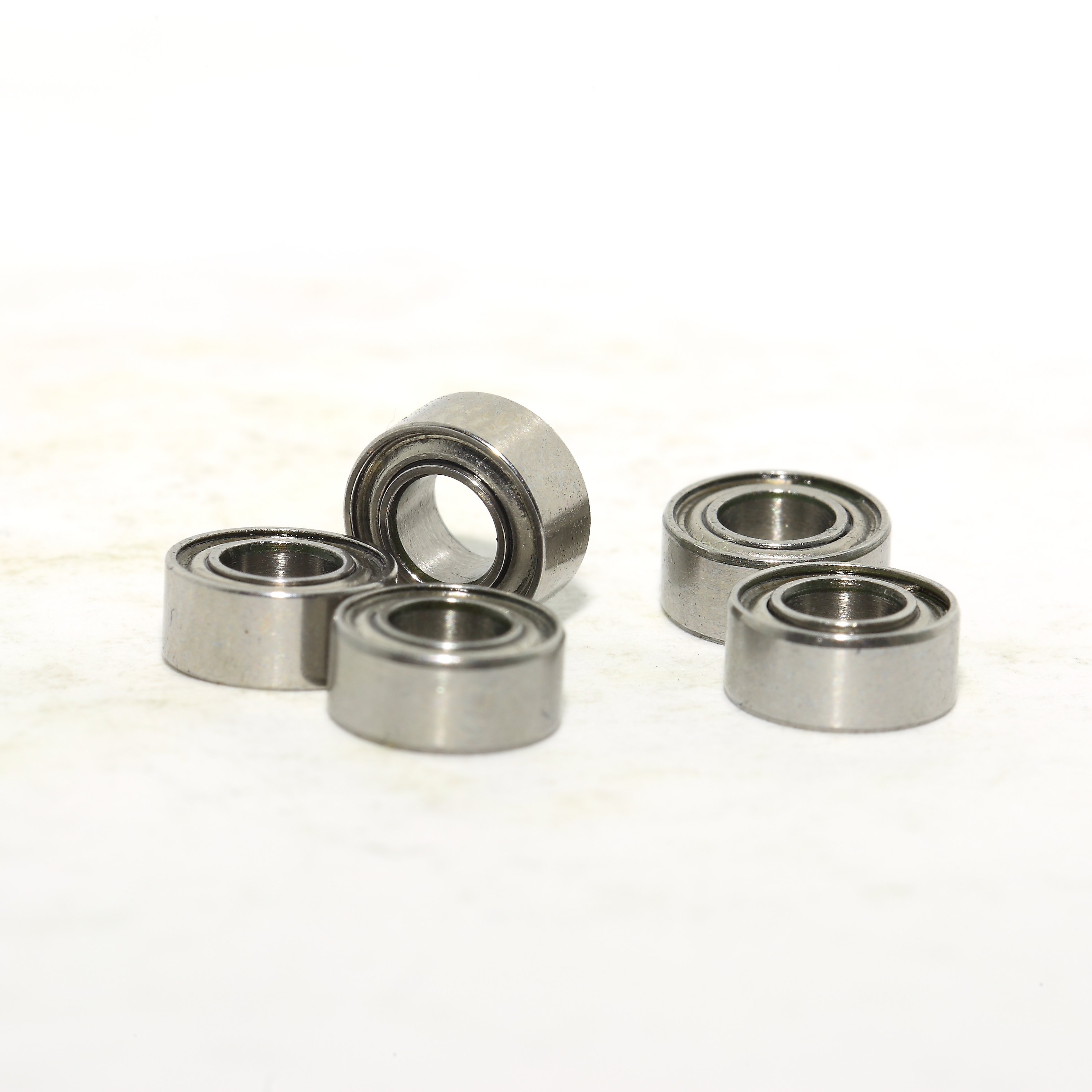
INB SR133TL — 2.38 × 4.762 × 2.38 mm: an imperial miniature bearing dimension set used where the housing is designed around that footprint.
Step-by-Step Breakdown: Applying the Five Factors in Sequence
The ranking only produces a reliable result when it is applied in order. The following six-step sequence mirrors how a medical device engineering team should move from requirements to a released part number.
- Write the operating envelope first. Record peak rotational speed, peak bearing-seat temperature, duty cycle (intermittent or continuous), load direction and environment. A dental handpiece turbine application, for example, combines high-speed precision grinding with a clean medical environment and intermittent high-load operation, so all three conditions belong in the same document.
- Fix the space budget. Determine the bore and outer diameter from the housing, but leave the width flexible until the load check is complete. Width is where axial space and rigidity trade against each other.
- Select the material against exposure. If moisture, cleaning agents or chemical contact are possible, a SUS440 stainless steel miniature bearing is the appropriate starting point.
- Set the precision grade against the noise and vibration target. High-speed or noise-sensitive instruments justify a P4 part; slower positioning duties may not.
- Match speed rating and temperature class together. Choose the lowest limiting speed that covers the peak with margin, then confirm the operating temperature range covers the worst-case seat temperature.
- Confirm what the supplier can prove. Ask for measurement practice, quality control coverage, customization capability, minimum order quantity and lead time before the design is frozen.
Steps five and six are where buyer-side assumptions most often stay unchecked. INB operates on an OEM basis, customizes bearings according to customer requirements, applies 100% testing, and states a minimum order quantity of 100 units with in-stock lead times of 7 days.
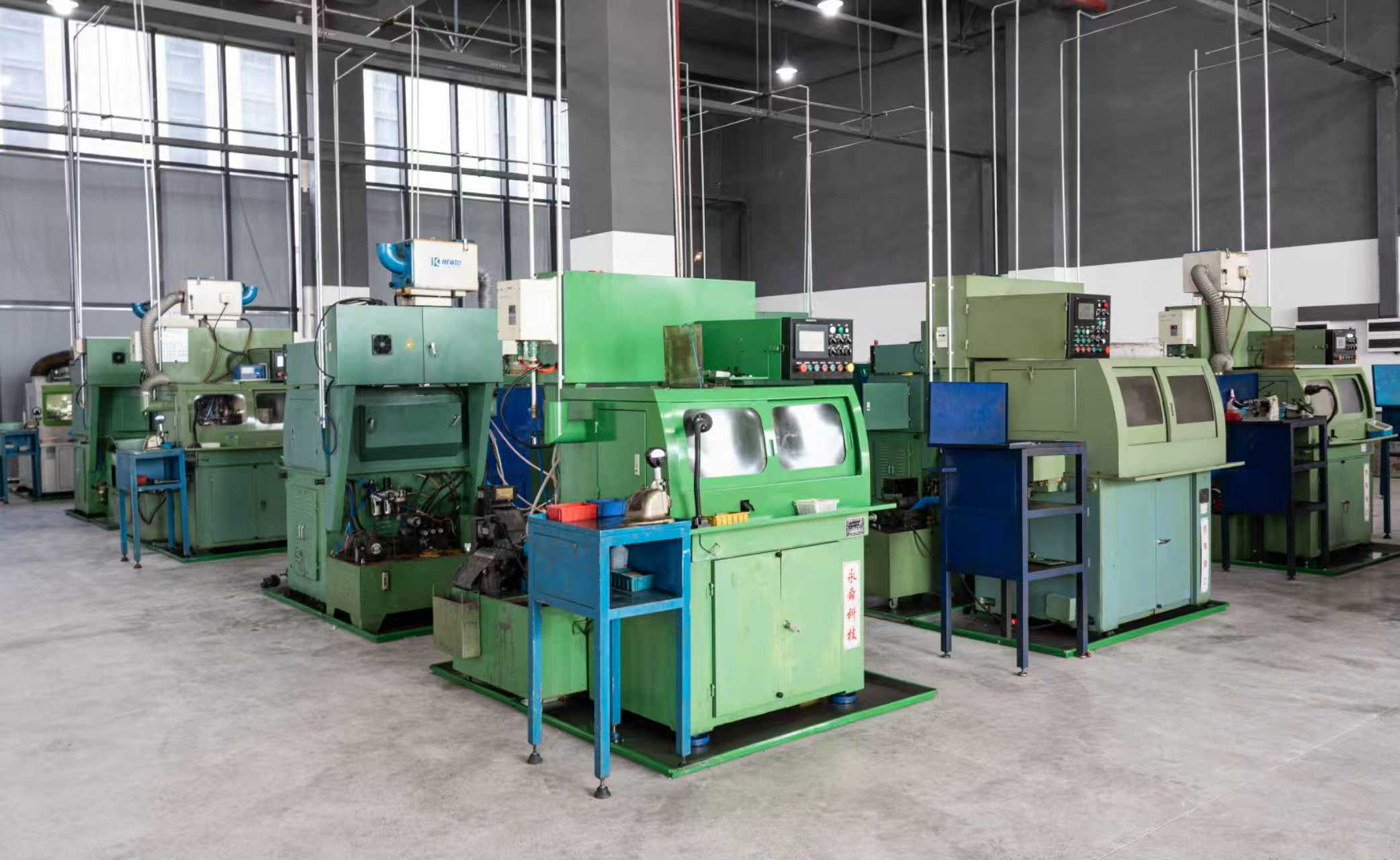
Bearing processing equipment on the INB production line in Ningbo — the manufacturing stage where precision grade and material are actually determined.
Use Cases: The Five Factors in Real Medical Applications
Dental handpiece turbines at 350,000–400,000 rpm
This is the most demanding scenario in the reference set. The application requires P4 precision, ultra-high speed of 350,000–400,000 rpm, wide temperature resistance of -50 °C to 160 °C, medical-grade hygiene and low noise. The matching INB models are the 3.175 mm bore pair: SR144ZTLP4 W2.78 and SMR144ZTLP4 W2.38, both in SUS440 and both rated for 350,000–400,000 rpm.
Field evidence for this configuration comes from a medical device customer in China that purchased 80,000 units for use in dental handpieces. Over a 500-hour evaluation period, the recorded result was stable high-speed operation and extended equipment lifespan — the practical definition of success for a motor miniature bearing or handpiece bearing that cannot be serviced in the field.
Lower-speed rotary dental instruments and micro-motor devices
Where the instrument runs at around 200,000 rpm rather than 400,000 rpm, the SMR74TL (4 × 7 × 2 mm) and SR133TL (2.38 × 4.762 × 2.38 mm) become relevant. Both are P4, SUS440 and rated from -40 °C to 150 °C. Selecting the higher speed class here would not improve performance, which is why speed rating is applied after the operating envelope is defined rather than before.
Compact motor-driven medical assemblies
The company's product scope also covers the micro-motor segment, with bore diameters from 2 mm to 8 mm and precision grades from P6 to P4. Devices with smaller motorized mechanisms — where a small miniature bearing or a thin-wall miniature bearing is needed inside a tight housing — follow the same five-factor sequence, with the housing constraint applied last.
Comparison Table
The table below summarizes the five factors, what each one controls, and how the decision is normally resolved.
| Rank | Factor | What it controls | Decision rule | INB reference point |
|---|---|---|---|---|
| 1 | Precision grade | Runout, vibration, noise, heat at speed | P4 where speed is high or noise is a product requirement | P4 on all four reference models; range from P6 to P4 |
| 2 | Material | Corrosion resistance, suitability for medical environments | SUS440 stainless steel where moisture or chemical contact is possible | SUS440 across the reference models; ISO 9001 quality management system |
| 3 | Speed rating | Maximum usable rotational speed | Limiting speed must exceed peak application speed | 200,000 rpm and 350,000–400,000 rpm tiers |
| 4 | Temperature tolerance | Thermal limits at the bearing seat | Rated range must cover worst-case peak seat temperature | -40 °C to 150 °C, and -50 °C to 160 °C |
| 5 | Size (bore × OD × width) | Fit, axial footprint, load cross-section | Match the housing first; treat width as a design decision | Bore range 2 mm to 8 mm |
The second table compares the four INB miniature bearing models used as examples in this guide, showing how the five factors combine into a concrete part selection.
| Model | Size (bore × OD × width) | Precision | Limiting speed | Operating temperature | Material | Typical fit |
|---|---|---|---|---|---|---|
| SMR74TL | 4 × 7 × 2 mm | P4 | 200,000 rpm | -40 °C to 150 °C | SUS440 | Rotary dental instruments |
| SR133TL | 2.38 × 4.762 × 2.38 mm | P4 | 200,000 rpm | -40 °C to 150 °C | SUS440 | Imperial-footprint housings |
| SR144ZTLP4 W2.78 | 3.175 × 6.35 × 2.78 mm | P4 | 350,000–400,000 rpm | -50 °C to 160 °C | SUS440 | High-speed handpiece turbines |
| SMR144ZTLP4 W2.38 | 3.175 × 6.35 × 2.38 mm | P4 | 350,000–400,000 rpm | -50 °C to 160 °C | SUS440 | High-speed handpiece turbines with narrower axial space |
FAQ
1. Which precision standards apply to miniature bearings for medical devices, and how can a buyer verify the grade?
Miniature bearing precision is defined by international tolerance systems, including ABMA ABEC (1–9), ISO 492 (P0–P2) and DIN 620, where higher class numbers correspond to tighter tolerances. INB manufactures miniature bearings under an ISO 9001 quality management system in precision grades from P6 to P4, and applies 100% testing. Verification should rely on measurement data — INB uses hardness testers, roundness meters, profilometers, roughness measuring equipment and microscopes — rather than on a catalogue label alone.
2. Can miniature bearings be customized for a specific medical device assembly?
Yes. INB operates on an OEM basis and customizes bearings according to customer requirements. Standard capability covers inner bore diameters from 2 mm to 8 mm and precision grades from P6 to P4, with a monthly capacity of 500,000 units. Reference models used in medical applications include SMR74TL (4 × 7 × 2 mm), SR133TL (2.38 × 4.762 × 2.38 mm) and the 3.175 × 6.35 mm high-speed pair in 2.38 mm and 2.78 mm widths.
3. What drives the cost of a P4 stainless steel miniature bearing?
Cost is driven by precision grade, material, size and width, order volume, and the amount of testing applied to each unit. Because P4 parts and SUS440 material add manufacturing steps, a stainless steel high-precision miniature bearing sits above a standard-grade metric equivalent. Two practical commercial variables matter most at the quotation stage: the supplier's minimum order quantity — INB's is 100 units — and how the order volume compares with monthly capacity. Buyers should compare quotations spec-for-spec, since two apparently similar part numbers can differ in precision class, material and speed rating.
4. How can a design team validate a miniature bearing before committing to volume production?
Validation starts with a small first batch. INB's minimum order quantity of 100 units makes an initial test quantity practical, and every unit is 100% tested before shipment. For medical applications, the more meaningful validation is performance under the real duty cycle: in one documented case, a medical device customer in China ordered 80,000 units for dental handpieces and recorded stable high-speed operation with extended equipment lifespan over 500 hours of use.
5. What lead time and supply capacity should a medical device project expect?
INB states a lead time of 7 days for in-stock items, with a monthly capacity of 500,000 units drawn from an annual output of 6,000,000 units. For projects with fluctuating demand or a scheduled device launch, that combination — stock availability plus monthly capacity — determines whether a supplier can absorb volume increases without a redesign. To check availability for a specific model or to request a sample and quotation, contact INB by email at yuhang001@126.com, by WhatsApp at 18957446001, or through the company website at www.lnb-brg.com.
Conclusion: Five Factors, One Sequence
The five factors in this guide are ranked for a reason: each one narrows the candidate list for the next. Precision grade sets the vibration and noise baseline. Material determines whether the bearing belongs in a medical environment. Speed rating and temperature tolerance define the operating envelope the part must survive. Size closes the decision by matching the housing — and it is the one factor that should never be resolved first.
Applied to INB's reference models, the sequence produces concrete outcomes: P4 precision across the range, SUS440 stainless steel construction, a 200,000 rpm tier for rotary dental instruments, and a 350,000–400,000 rpm tier with -50 °C to 160 °C tolerance for high-speed handpiece turbines, supported by OEM customization, 100% testing and a 7-day lead time on in-stock items.
Next Step: Validate the Bearing Against Your Duty Cycle
Send your operating envelope — peak speed, peak temperature, duty cycle and housing dimensions — and INB will map it against the miniature bearing range, from 2 mm to 8 mm bore in P6 to P4 grades. Samples and quotations are available, with a minimum order quantity of 100 units.
Email: yuhang001@126.com | WhatsApp: 18957446001 | Website: www.lnb-brg.com
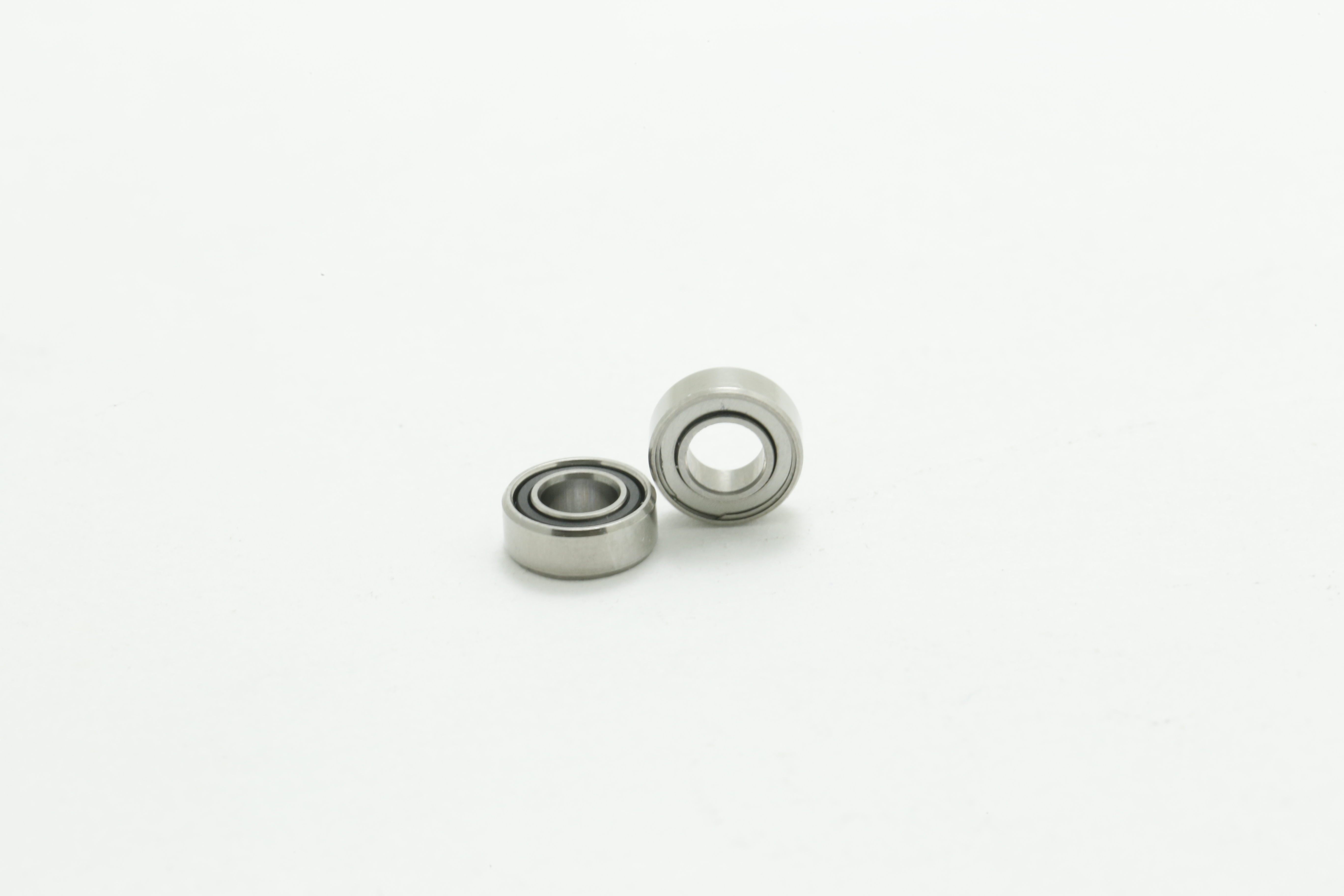
INB miniature bearings are available for sample validation and OEM orders, with a minimum order quantity of 100 units.
Have Questions or Need More Details?
Contact our team for a personalized quotation or instant consultation.
Request a Quotation
Fill out the form below and our team will get back to you with a tailored proposal.
WhatsApp Direct Chat
Prefer to chat in real-time? Message us on WhatsApp for instant assistance & quick answers.
- Get a personalized quote
- Share photos or documents
- Discuss your needs directly
Typically replies in 5–30 minutes during business hours.