
What Makes a Miniature Bearing "High-Speed"? Speed Ratings and Design Factors Explained
What Makes a Miniature Bearing “High-Speed”? Speed Ratings and Design Factors Explained
A miniature bearing counts as high-speed when its limiting speed rating — the maximum rotational speed the manufacturer specifies for that bearing under defined operating conditions — meets or exceeds the speed the application actually demands. Small size, low noise, or a tight precision grade do not by themselves make a bearing fast. Speed is a published rating, and it only becomes useful when it is compared against the rpm, duty cycle, temperature, and lubrication of a specific assembly.
That distinction matters most in extra miniature sizes, where fractions of a millimetre separate one speed tier from another. INB, a miniature bearing brand established in 2014 by a Ningbo-based bearing manufacturer serving the domestic medical device and micro-motor industries, publishes two clearly separated tiers in its dental handpiece range: SMR74TL and SR133TL are rated at 200,000 rpm, while SMR144ZTLP4 W2.38 and SR144ZTLP4 W2.78 are rated at 350,000–400,000 rpm. All four are P4 precision parts in SUS440 stainless steel.
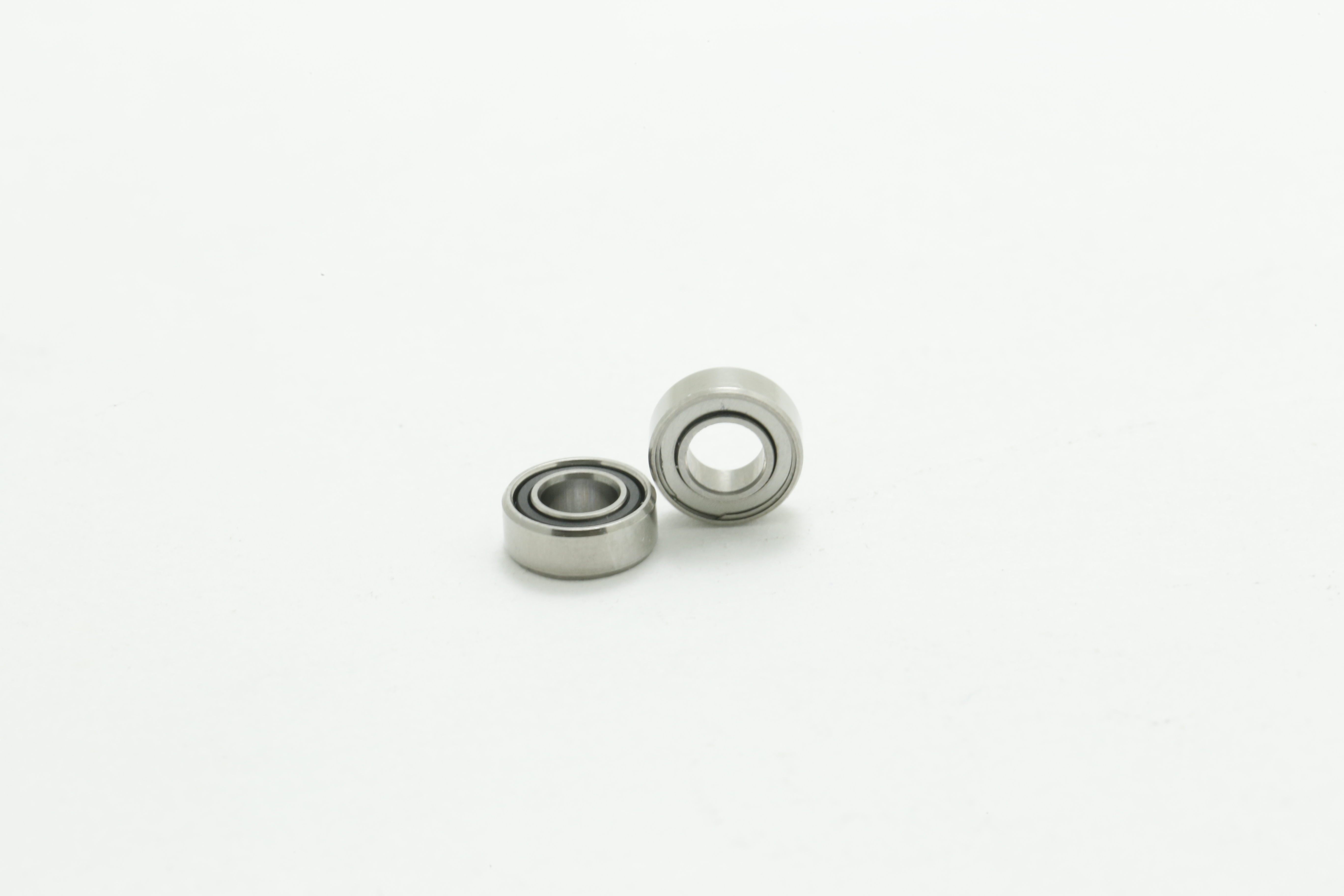
This article explains what the rating measures, which design factors produce it, how to read the gap between two speed tiers inside one catalogue, and how to specify a high-speed miniature bearing so its rating survives contact with a real handpiece or micro-motor.
Why “High-Speed” Is a Rating, Not a Label
In bearing engineering, the limiting speed is a ceiling rather than a performance promise. It marks the highest rotational speed at which the bearing can run under a defined set of conditions, and it is normally determined by the balance between friction heat generated inside the bearing and the heat that lubrication and surrounding structure can carry away. Cage stability, ball-to-raceway contact stress, and lubricant film behaviour all feed into that balance.
Because the rating depends on conditions, the useful question is never “how fast is this bearing?” but “how fast is this bearing, with this lubrication, under this load, for this duty cycle?” A limiting speed quoted without a condition set is difficult to design against — which is why design engineers should ask suppliers how a figure was established before building it into a turbine specification.
Three misreadings account for most high-speed selection errors:
- Treating the number as universal. A 200,000 rpm rating belongs to the lubrication and load assumptions behind it. Increase the load, change lubricant quantity, or alter the fit, and the practical ceiling moves.
- Assuming smaller always means faster. INB’s own range contradicts that shortcut: the SR133TL has a 2.38 mm bore and a 200,000 rpm rating, while the larger-bore SMR144ZTLP4 W2.38 (3.175 mm bore) is rated at 350,000–400,000 rpm. Bore size does not decide the tier — the design and grade behind the part do.
- Designing at 100% of the rating. Using a ceiling as a target removes all margin for temperature rise, lubricant ageing, and normal manufacturing variation between lots.
When the rating is mismatched, the failure mode is predictable and expensive: friction heat rises faster than it can be removed, lubricant degrades, vibration grows, and the assembly loses speed or life. In a dental handpiece that appears as a turbine running hot and slowing down; in a micro-motor it appears as rising noise and a shorter service interval.
Industry Background: Where High-Speed Miniature Bearings Sit
The global miniature ball bearings market was estimated at approximately USD 2.25 billion in 2025 by Future Market Insights, driven by demand in medical devices and robotics. Precedence Research puts Asia Pacific at around 60% of revenue in the same year, with China the largest regional producer and consumer. Estimates differ between research houses — Precedence Research at USD 2.89 billion and IMARC Group at USD 2.0 billion for 2025 — so any single figure describes the scale of the category rather than a precise measurement.
Demand is broad but concentrated in a few demanding applications. Precedence Research reports that the automotive segment held the largest application share in 2025, at roughly 39%, on the strength of EV motor and sensor applications. Medical and dental devices sit at the opposite end of the volume curve while placing the toughest speed and temperature requirements on the bearing. China’s bearing exports grew 7.2% year on year in the first seven months of 2025, reaching nearly 497,852 tons according to BearingNews and the Huajing Research Institute — growth achieved despite pressure on global unit pricing.
The language of precision also varies by region, which creates friction in procurement. Miniature bearing precision is governed by global standards including ABMA ABEC (1–9), ISO 492 (P0–P2), and DIN 620, where higher numbers in the ABEC system correspond to tighter tolerances. The systems are not interchangeable, so a requirement written as P4 and one written as an ABEC number should be translated carefully before they are compared side by side.
Materials follow the same logic. Industry guidance identifies 440C stainless steel as the primary material for miniature bearings used in medical and food-processing applications, because of its resistance to moisture and chemicals. INB specifies its dental handpiece range in SUS440 stainless steel, the grade connected to the speed and temperature figures quoted throughout this article.
Six Design Factors That Decide Whether a Miniature Bearing Can Run High-Speed
A limiting speed figure is the output of several design decisions made before the bearing ever turns. The six below are the ones buyers and design engineers can actually ask about.
1. The limiting speed rating itself
Start with the number and its condition set. INB publishes 350,000–400,000 rpm for SMR144ZTLP4 W2.38 and SR144ZTLP4 W2.78 — both with a 3.175 mm bore and a 6.35 mm outside diameter — and 200,000 rpm for SMR74TL and SR133TL. The two 400,000 rpm models differ only in width, 2.38 mm against 2.78 mm, and share the same −50 °C to 160 °C operating temperature range. Width, in other words, is normally chosen to suit assembly geometry and load requirement; it does not by itself move the part into a different speed tier.
2. Precision grade (P4)
Precision grade controls how tightly the bore, outside diameter, width, and running geometry are held. Tighter control of runout and internal geometry reduces the vibration and friction heat that appear as speed rises, which is why high-speed miniature bearings are commonly specified at P4 rather than a looser grade. INB produces high-precision standard bearings with bore diameters from 2 mm to 8 mm across precision grades P6 to P4, so the grade can be matched to the duty rather than bought by default.
3. Material (SUS440 stainless steel)
Material sets corrosion resistance, temperature capability, and stiffness. All four INB models discussed here are SUS440 stainless steel, with the 400,000 rpm pair specified from −50 °C to 160 °C and the 200,000 rpm pair from −40 °C to 150 °C. For a stainless steel miniature bearing used in a clean medical environment, material is not cosmetic: it determines how the bearing behaves across cleaning cycles, temperature swings, and repeated idle-to-high-speed transitions.
4. Lubrication
Lubrication is usually the practical limit at extreme speed. A lubricant film must be thick enough to separate the rolling contacts and thin enough not to churn, and the delivery method — grease quantity, oil, or minimal-quantity oil systems — changes the heat balance. Over-lubrication generates heat through churning; under-lubrication starves the contact and allows asperity contact. Both shorten life. The sensible approach is to ask the supplier which lubricant assumption sits behind a published limiting speed, and whether that assumption matches the duty cycle of the real device. In INB’s dental handpiece application, the operating mode is defined as intermittent high-speed operation rather than continuous running, which changes the thermal duty the lubricant sees.
5. Cage design
The cage keeps the balls separated and guided, and it is one of the first components to become a limiting factor as speed rises. Cage weight, material, and guidance principle affect friction, heat, and stability at high rpm, and different cage constructions suit different speed and temperature combinations. Because cage configuration is not always printed on a product page, it belongs on the verification list: confirm cage type and material for the exact model and speed tier being quoted.
6. Dimensional envelope and wall section
Very small bearings have little material available to conduct heat away from the raceways, which is why precision and lubrication matter disproportionately in extra miniature and thin-wall sizes. Bore and outside diameter also tie a part to a dimensional series: the 3.175 mm × 6.35 mm envelope shared by SMR144ZTLP4 W2.38 and SR144ZTLP4 W2.78 corresponds to the imperial 1/8 in bore × 1/4 in outside diameter series, so these models fit assemblies designed around imperial miniature bearing sizes, with width as the variable that adapts them to the housing.
INB High-Speed Miniature Bearings: Verified Specifications by Speed Tier
The table below reproduces the published specifications for the four INB models referenced in this article. It is deliberately narrow: only models with a published limiting speed are listed, so every row can be compared on the same terms.
| Model | Bore × OD × Width (mm) | Precision | Limiting speed | Operating temperature | Material | Application data |
|---|---|---|---|---|---|---|
| SMR74TL | 4 × 7 × 2 | P4 | 200,000 rpm | −40 °C to 150 °C | SUS440 | Dental handpiece |
| SR133TL | 2.38 × 4.762 × 2.38 | P4 | 200,000 rpm | −40 °C to 150 °C | SUS440 | Dental handpiece |
| SR144ZTLP4 W2.78 | 3.175 × 6.35 × 2.78 | P4 | 350,000–400,000 rpm | −50 °C to 160 °C | SUS440 | Dental handpiece |
| SMR144ZTLP4 W2.38 | 3.175 × 6.35 × 2.38 | P4 | 350,000–400,000 rpm | −50 °C to 160 °C | SUS440 | Dental handpiece |
How to read the table: a higher limiting speed does not make a bearing universally better. The 200,000 rpm tier exists because lower-speed designs do not need — and should not pay for — the tighter thermal and dimensional control that a 350,000–400,000 rpm specification requires.
200,000 rpm vs 350,000–400,000 rpm: What Actually Changes
| Comparison point | 200,000 rpm tier (SMR74TL, SR133TL) | 350,000–400,000 rpm tier (SMR144ZTLP4 W2.38, SR144ZTLP4 W2.78) |
|---|---|---|
| Bore × outside diameter | 4 × 7 mm / 2.38 × 4.762 mm | 3.175 × 6.35 mm |
| Width | 2 mm / 2.38 mm | 2.38 mm / 2.78 mm |
| Limiting speed | 200,000 rpm | 350,000–400,000 rpm |
| Precision grade | P4 | P4 |
| Operating temperature | −40 °C to 150 °C | −50 °C to 160 °C |
| Material | SUS440 stainless steel | SUS440 stainless steel |
| Application data | Dental handpiece | Dental handpiece |
The difference between these tiers is not a single variable. Temperature capability widens from −40 °C to 150 °C on the 200,000 rpm pair to −50 °C to 160 °C on the 350,000–400,000 rpm pair, and the dimensional envelope changes from 4 × 7 mm or 2.38 × 4.762 mm to 3.175 × 6.35 mm. Both tiers hold P4 precision and SUS440 stainless steel, and both are specified for dental handpiece applications. Speed tier is therefore a system property that a buyer selects as a package: rating, temperature range, envelope, and application fit together or not at all.
A practical rule follows. Where a turbine design targets speeds well above 200,000 rpm, the 350,000–400,000 rpm models are the ones with a published rating to match; where the design runs at lower speed, specifying the higher tier adds cost without adding performance. Either way, the rating should be treated as a ceiling rather than a target.
Step-by-Step: How to Specify a High-Speed Miniature Bearing
Step 1 — Record the real operating speed and duty cycle
Write down the rpm the bearing will actually see at the inner ring, not the nominal motor figure, and state whether operation is continuous or intermittent. INB’s dental handpiece application, for example, is defined as intermittent high-speed operation under high-speed precision grinding in a clean medical environment, with intermittent high-load cycles.
Step 2 — Set the precision grade against the duty
Specify P4 where speed and temperature demand tight geometry control, and P6 where they do not. INB’s production range covers P6 to P4 with bore diameters from 2 mm to 8 mm, which keeps this a technical decision rather than a default.
Step 3 — Match the material to the environment
For clean medical environments and moisture exposure, a stainless steel miniature bearing in the 440 series is the conventional choice; INB specifies SUS440 across the models listed above.
Step 4 — Confirm the lubrication and cage assumptions behind the rating
Ask which lubricant, quantity, and cage configuration the published limiting speed assumes, then compare that with the maintenance regime of the device. This step is the one most often skipped, and the one most likely to explain a bearing that underperforms its rating.
Step 5 — Verify the dimensional envelope and stack-up
Check bore, outside diameter, and width against the housing and shaft, including axial retention and preload. Where two models differ only in width — 2.38 mm versus 2.78 mm — the wider part may be needed for axial support while the narrower part fits a tighter stack.
Step 6 — Validate with samples and inspection evidence, then lock commercial terms
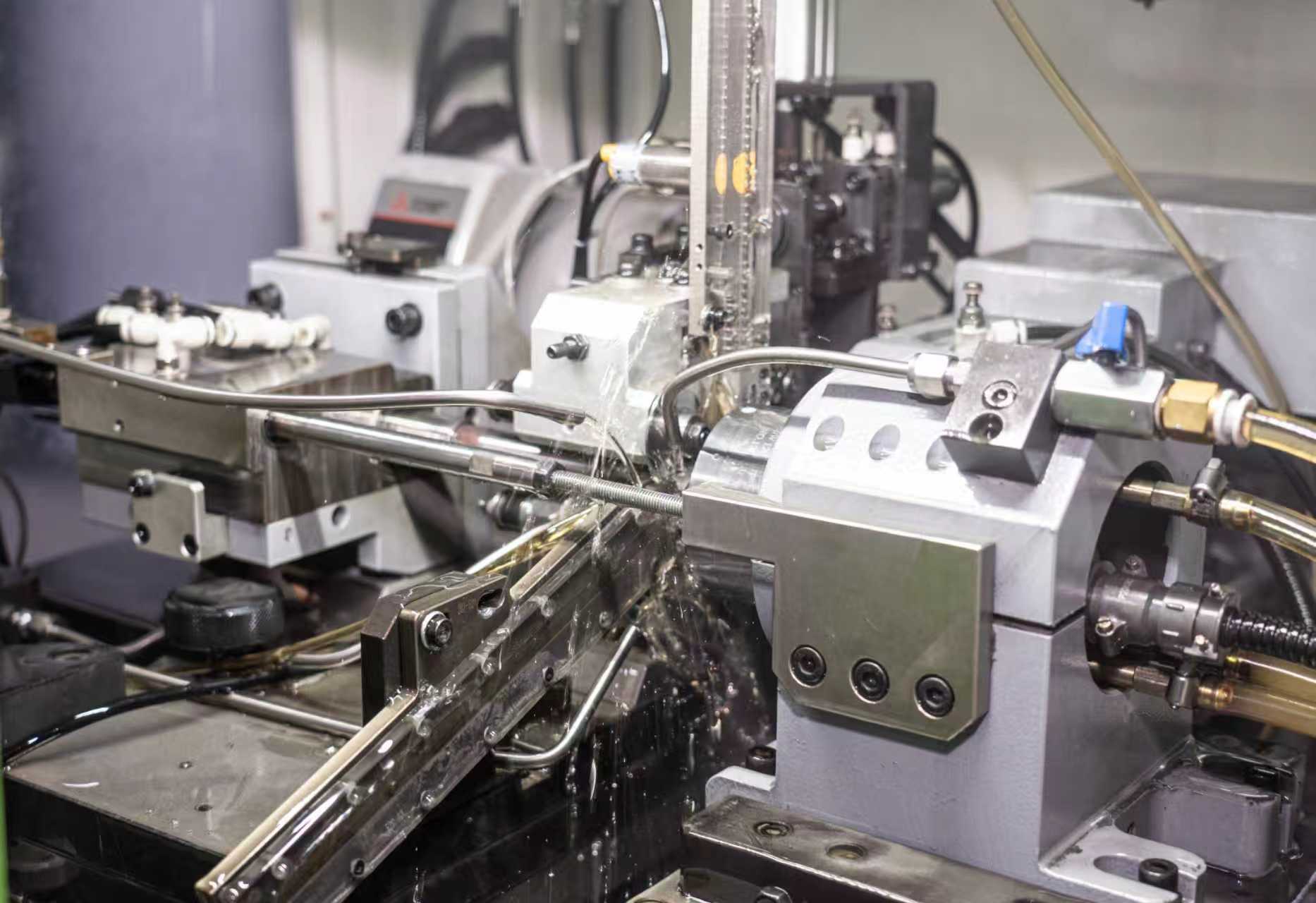
Run samples in the real assembly before releasing a production order, and confirm inspection evidence, order quantity, lead time, and after-sales terms at the same time.
Use the checklist below to keep the specification comparable between suppliers.
| Specification item | What it controls | Evidence to request |
|---|---|---|
| Limiting speed rating | Whether the part can run at the required rpm under the stated conditions | Published rating plus the condition set behind it |
| Precision grade | Geometry control, vibration, friction heat | Tolerance class in the drawing standard used (for example ISO 492 P4) |
| Material | Corrosion and temperature behaviour | Grade confirmation (for example SUS440) and operating temperature range |
| Lubrication | Heat balance and film life | Lubricant type and quantity assumed by the rating |
| Cage design | Ball guidance, friction, and stability at speed | Cage type and material for the exact model |
| Dimensional envelope | Fit, stack-up, and axial support | Bore, outside diameter, and width data with inspection records |
Use Cases: Where a High-Speed Rating Earns Its Place
Dental handpiece turbines
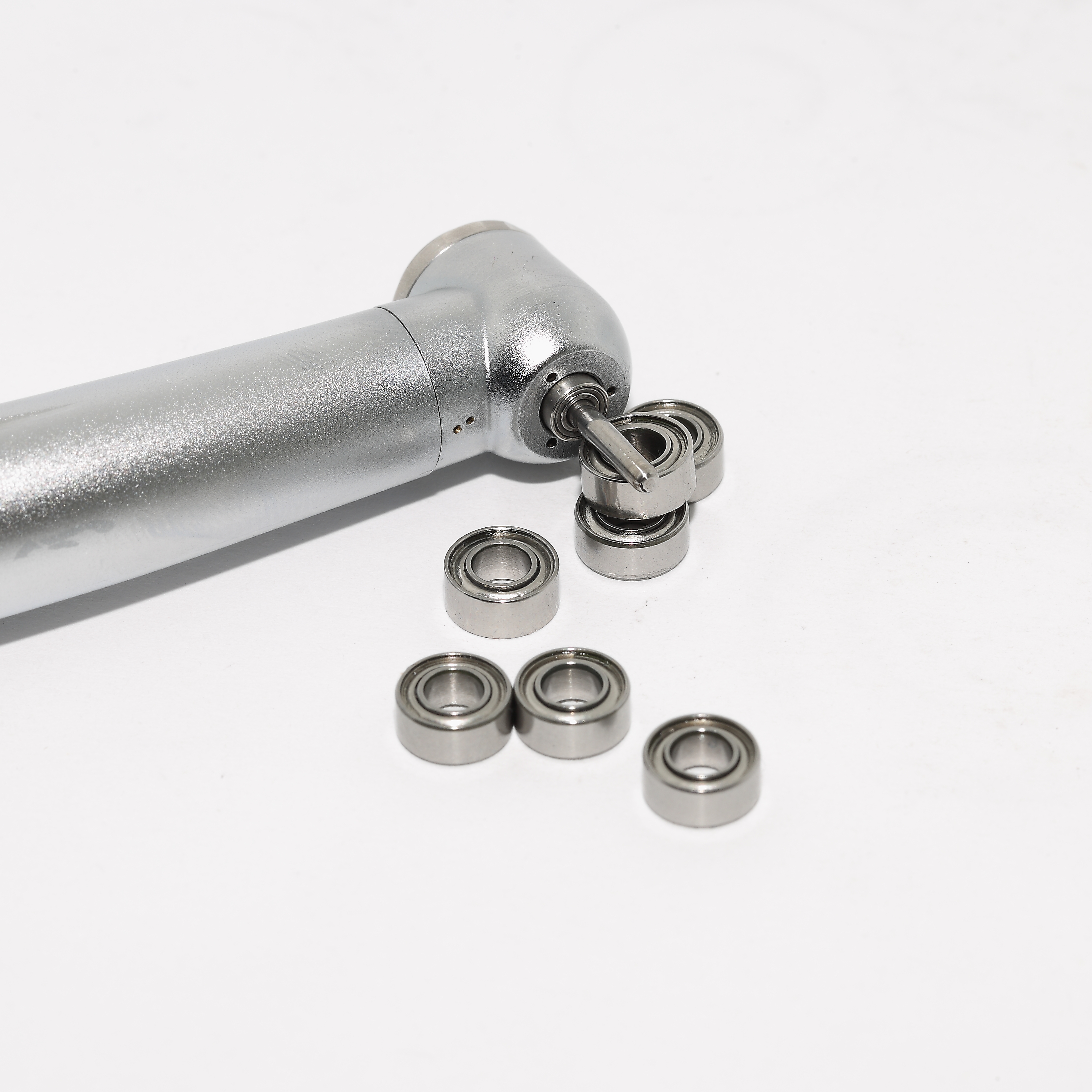
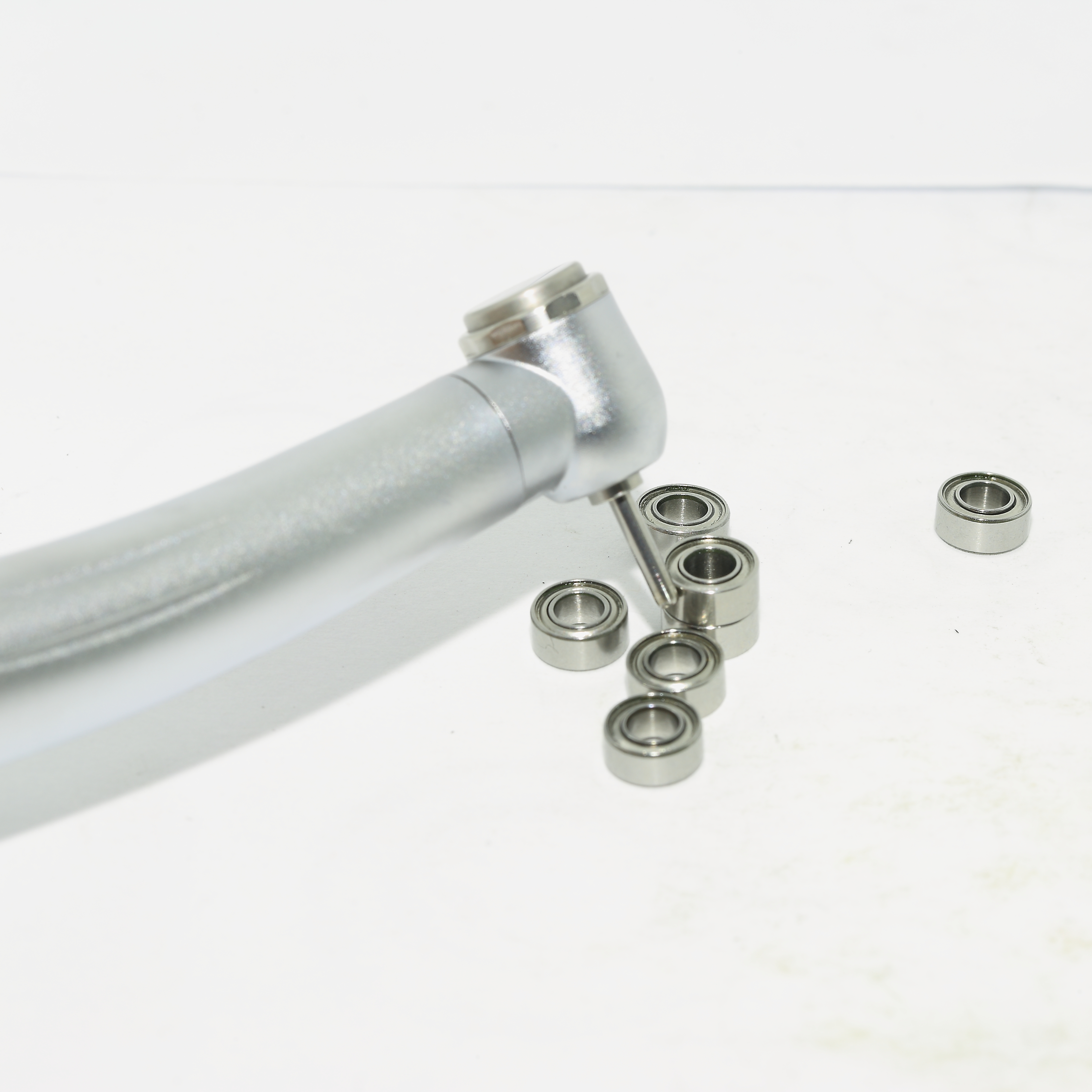
The clearest case is the dental handpiece, where the bearing supports high-speed precision grinding in a clean medical environment. The application requires P4 precision, ultra-high speed in the 350,000–400,000 rpm band, a wide operating temperature range of −50 °C to 160 °C, medical-grade hygiene, and low noise. The matching INB product is SMR144ZTLP4 W2.38, the model linked to this application record.
Medical device OEM production runs
Speed ratings also have to survive volume production. In one INB case record, a medical device customer took 80,000 units for dental handpiece use; the documented operating duration was 500 hours, with the reported result of stable high-speed operation and extended equipment lifespan. The features cited in that record were ultra-high speed, P4 precision, long service life, and medical-grade reliability.
Micro-motor assemblies
The same logic applies wherever miniature bearings sit inside small motors: the limiting speed rating, precision grade, and lubrication assumption decide whether the bearing stays quiet and cool or becomes the component that sets the service interval. INB’s established base of domestic medical device and micro-motor customers reflects how closely those two requirements track each other.
Frequently Asked Questions
What precision standard should a high-speed miniature bearing meet?
Miniature bearing precision is governed by recognised systems including ABMA ABEC (1–9), ISO 492 (P0–P2), and DIN 620, with tighter tolerances at the higher end of the ABEC scale. INB manufactures high-precision standard bearings with bore diameters from 2 mm to 8 mm across precision grades P6 to P4, and specifies P4 for its high-speed dental handpiece models. Because the systems are not interchangeable, ask for the tolerance class in the standard your drawing uses.
Can a 200,000 rpm miniature bearing be run at 400,000 rpm?
No. Limiting speed ratings are not transferable between models. INB publishes 350,000–400,000 rpm only for SMR144ZTLP4 W2.38 and SR144ZTLP4 W2.78; SMR74TL and SR133TL are rated at 200,000 rpm. The two tiers also differ in operating temperature range — −50 °C to 160 °C against −40 °C to 150 °C — so a higher-speed design should be specified with a model that carries the matching rating rather than with an expectation that a lower-rated part will cope.
What drives the cost of a high-speed miniature bearing?
Cost follows design decisions rather than bore size. Precision grade, material grade, the amount of grinding and inspection work required — INB applies 100% testing — and order quantity are the main commercial variables. Where a design does not need the tighter thermal and dimensional control of a 350,000–400,000 rpm part, specifying a 200,000 rpm model or a P6 grade is usually the more economical route. INB’s stated minimum order quantity is 100 units, which allows small validation batches before a volume commitment.
How should a high-speed miniature bearing be validated before mass production?
Validation combines a sample run in the real assembly with inspection evidence from the supplier. INB applies 100% testing in production, and its case record for a medical device customer covers 80,000 units used in dental handpieces, with a documented 500-hour operating duration and stable high-speed operation. Requesting dimensional and inspection data alongside samples lets the design team confirm that the quoted rating matches the delivered part.
What are the lead time and order terms for a high-speed miniature bearing?
INB states that its miniature bearings are held in stock with a 7-day lead time, a minimum order quantity of 100 units, OEM production with customization according to customer requirements, a monthly capacity of 500,000 units, and after-sales return and exchange. If you are specifying a 350,000–400,000 rpm model for a new handpiece or micro-motor project, the next step is to request a sample and a quotation against your bore, outside diameter, width, and precision requirements through INB’s website.
Conclusion: Match the Rating to the Application, Then Verify It
“High-speed” is not a category a miniature bearing belongs to simply by being small. It is a published limiting speed rating, produced by precision grade, material, lubrication, cage design, and dimensional envelope — and valid only under the conditions behind it. INB’s range makes that structure visible: a 200,000 rpm tier in SMR74TL and SR133TL, and a 350,000–400,000 rpm tier in SMR144ZTLP4 W2.38 and SR144ZTLP4 W2.78, all P4 precision in SUS440 stainless steel, all specified for dental handpiece duty, separated by limiting speed, temperature range, and width.
For buyers and design engineers working through Research and Evaluation, three actions carry most of the value: confirm the rpm and duty cycle the bearing will really see, select the tier whose published rating and temperature range match those conditions, and verify lubrication, cage, and dimensional data with the supplier before releasing a production order. That sequence turns a catalogue number into a specification that holds up inside the assembly.
Request a High-Speed Miniature Bearing Sample
INB supplies P4 precision miniature bearings from stock with a 7-day lead time and a minimum order quantity of 100 units, OEM production and customization according to customer requirements, a monthly capacity of 500,000 units, 100% testing, and after-sales return and exchange.
Send your bore, outside diameter, width, speed, and temperature requirements to request a sample or a quotation for your dental handpiece or micro-motor project.
Website: www.lnb-brg.com · Email: yuhang001@126.com · Tel / WhatsApp: +86 18957446001
Have Questions or Need More Details?
Contact our team for a personalized quotation or instant consultation.
Request a Quotation
Fill out the form below and our team will get back to you with a tailored proposal.
WhatsApp Direct Chat
Prefer to chat in real-time? Message us on WhatsApp for instant assistance & quick answers.
- Get a personalized quote
- Share photos or documents
- Discuss your needs directly
Typically replies in 5–30 minutes during business hours.