361 vs T6 Black Sunflower Seeds: Making the Right Grade Decision
Bulk Buying Decision Guide
Short answer: 361 and T6 are two raw, black-coated sunflower seed grades supplied by Inner Mongolia Chengtai Food Co., Ltd., a Chinese sunflower and pumpkin seed processor founded in 2013 and based on the Hetao Plain in Bayannur City, Inner Mongolia. Both grades are food-grade, both taste sweet and natural, and both are published with the same declared quality limits: moisture 9–10%, impurity <0.5%, erosion seeds <0.5% and mildew seeds <1%. The decision between them is therefore not a quality-tier decision. It is a screened size band decision — the number of seeds per 50 grams you actually write into the contract.
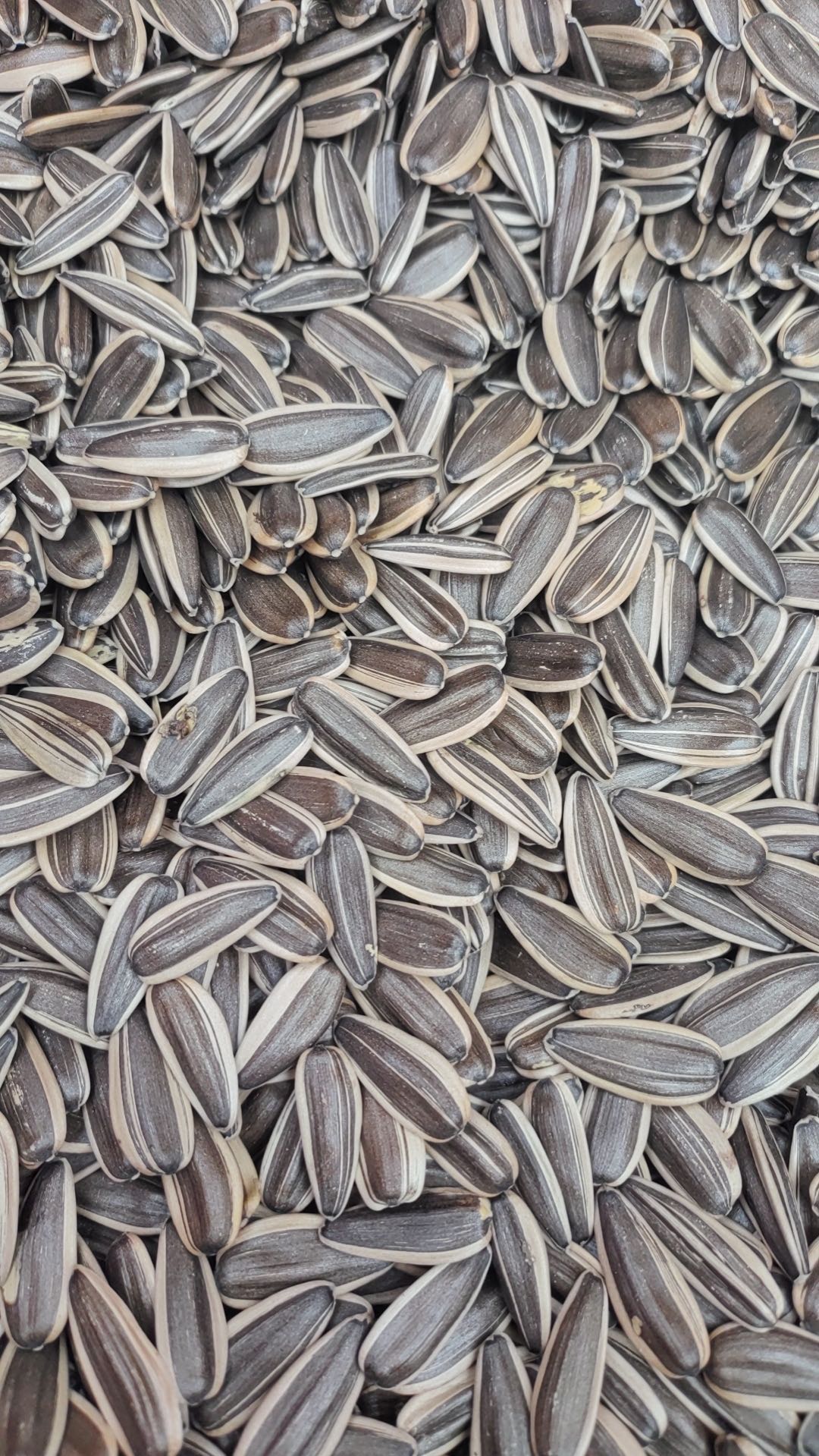
361 black sunflower seeds in raw specification — one of the two grades compared in this guide. Image: Inner Mongolia Chengtai Food Co., Ltd.
The Real Problem: Two Grade Names, One Overlapping Specification
Buyers researching Chinese black sunflower seeds usually meet 361 and T6 side by side in the same catalog, with the same photographs, the same "sweet and natural" taste note and the same impurity thresholds. The natural assumption is that one must be premium and the other economy. The published specification sheets do not support that assumption.
The practical risk sits elsewhere. A purchase order that names only "361" or "T6" leaves the most commercially sensitive variable open: the seed count per 50 grams. Both parent specification sheets carry a wide declared window (170–300 pcs/50 g). Within that window, each grade name is broken into screened sub-grades. Two shipments that both say "T6" on the paperwork can differ by tens of seeds per 50 grams and therefore behave very differently on a roasting line, in a retail pack, or in a bird feed blend.
The second risk is documentation. Even when size is agreed, buyers in the EU and Middle East increasingly want the tolerance set — impurity, erosion, mildew, moisture — written down rather than implied. Chengtai publishes those limits for both grades, which removes part of the ambiguity, but only if the buyer actually quotes them in the order.
Decision rule: choose the grade name by application, then choose the sub-grade by count per 50 g. Never order a grade name without a count.
Industry Background: Why Chinese Black Grades Matter to Bulk Buyers
Sunflower seed is a large and still-growing trade. Custom Market Insights values the global sunflower seeds market at USD 29.27 billion in 2025, projected to reach USD 35.98 billion by 2034. Global production for the 2025/2026 marketing year is estimated by the USDA Foreign Agricultural Service at 55.05 million metric tons.
China is a major origin, and within China the sourcing is concentrated. China's sunflower seed exports were valued at USD 937 million in 2025, with Iraq (USD 131 million) and Russia (USD 101 million) as leading destinations according to OEC. Inner Mongolia alone exported approximately 463,400 tons in 2025, valued at US$748 million, and accounts for more than 60% of China's total sunflower cultivation area (People's Daily Online). Confectionery-grade production in China concentrates on larger kernel sizes, grown largely in the saline-alkali fields around Bayannur — the same region where Chengtai operates.
Demand is weighted toward the roasted snack segment: roasted sunflower seeds accounted for 65.9% of global packaged sunflower seed revenue in 2024, and Europe was the largest packaged market with a 29.6% revenue share (Grand View Research). That weighting explains why grade decisions are usually made around roasting behaviour and pack presentation rather than around oil content.
Supply is tightening at the same time. The USDA forecast a decline of about 8% in global non-oilseed (confectionery) sunflower planted area in 2025. In a tighter market, buyers who specify only a grade name have less room to absorb a size mismatch, because re-sorting or re-screening at destination adds cost to an already firmer raw material.
Regulatory expectations are also moving. China notified 209 new maximum residue limits (MRLs) covering 93 pesticides in food to the WTO in late 2025, and a draft quality standard for nut and seed food (replacing GB/T 22165-2008) sets updated technical requirements for roasted seeds. In the EU, buyers are expected to work to HACCP principles with close monitoring of pesticide residues and metal contaminants.
What 361 and T6 Have in Common
Before looking at the differences, it is worth being precise about the shared platform, because most of the comparison work buyers do is unnecessary. Both grades are published with the same base characteristics:
- Specification: raw, crop year 2026.
- Seed coat colour: black. 361 is also catalogued under the black-white striped 361 grade name.
- Taste: sweet and natural.
- Moisture: 9–10%.
- Impurity: <0.5%. Erosion seeds: <0.5%. Mildew seeds: <1%.
- Material basis: sunflower seed kernel — that is, whole in-shell seed containing the kernel.
- Origin: Xinjiang and Inner Mongolia.
- Packaging: 20/25 kg plastic or paper bag.
- Storage: cool place.
- Intended use: human consumption; manufacturing and roasted industries (T6 is additionally listed for shop scenarios).
In other words: colour, taste, moisture, defect tolerance and packaging will not decide this comparison for you. They are identical on paper. Anyone telling you that one of these grades is cleaner or sweeter than the other is describing a shipment, not a specification.
Where 361 and T6 Actually Diverge: The Count Per 50 g
The only structural difference in the published data is the set of screened sub-grades each grade name covers. A higher count per 50 g means smaller individual seeds; a lower count means larger seeds.
The 361 sub-grades in the catalog run from 150–160 pcs/50 g up to 180–190 pcs/50 g, so 361 is the route to the larger end of the range — the catalog carries 361 at 170–180 pcs/50 g (Unshelled Sunflower Seeds 361), 160–170 pcs/50 g (Non-GMO Sunflower Seeds 361) and 150–160 pcs/50 g (Black-white Striped Sunflower Seeds 361).
The T6 sub-grades run from 170–180 pcs/50 g up to 200–210 pcs/50 g, so T6 covers the medium-to-smaller side of the range, with 190–200 pcs/50 g published as Food Grade Sunflower Seeds T6 and 200–210 pcs/50 g as Confectionery Grade Sunflower Seeds T6.
The two grade names overlap in the 170–190 pcs/50 g band. That overlap is exactly why the decision feels ambiguous: inside that band, 361 and T6 are a like-for-like swap in every published respect. Outside it, they are not interchangeable at all.
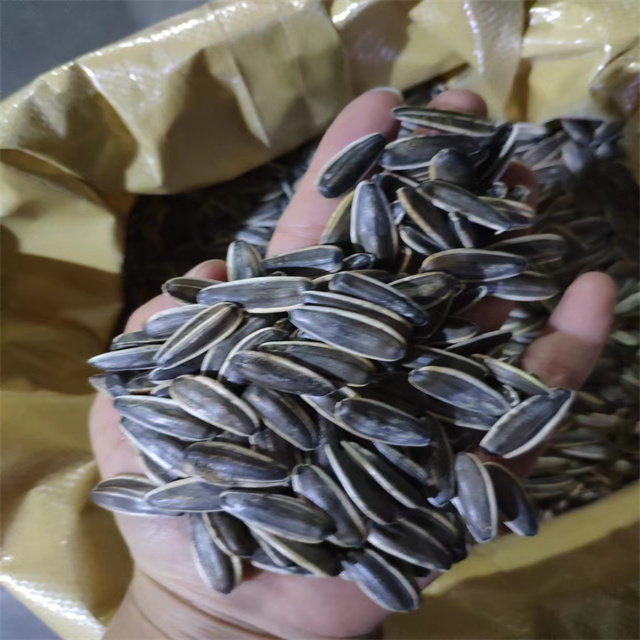
361 is the grade name under which the larger screened bands are published. Image: Inner Mongolia Chengtai Food Co., Ltd.
T6 in Detail
T6 is a raw, black-coated sunflower seed intended for human consumption and listed for manufacturing, roasting and shop scenarios. Its parent specification sheet states an overall size window of 170–300 pcs/50 g, which is deliberately broad to accommodate screening yields. The screened bands are what a buyer contracts.
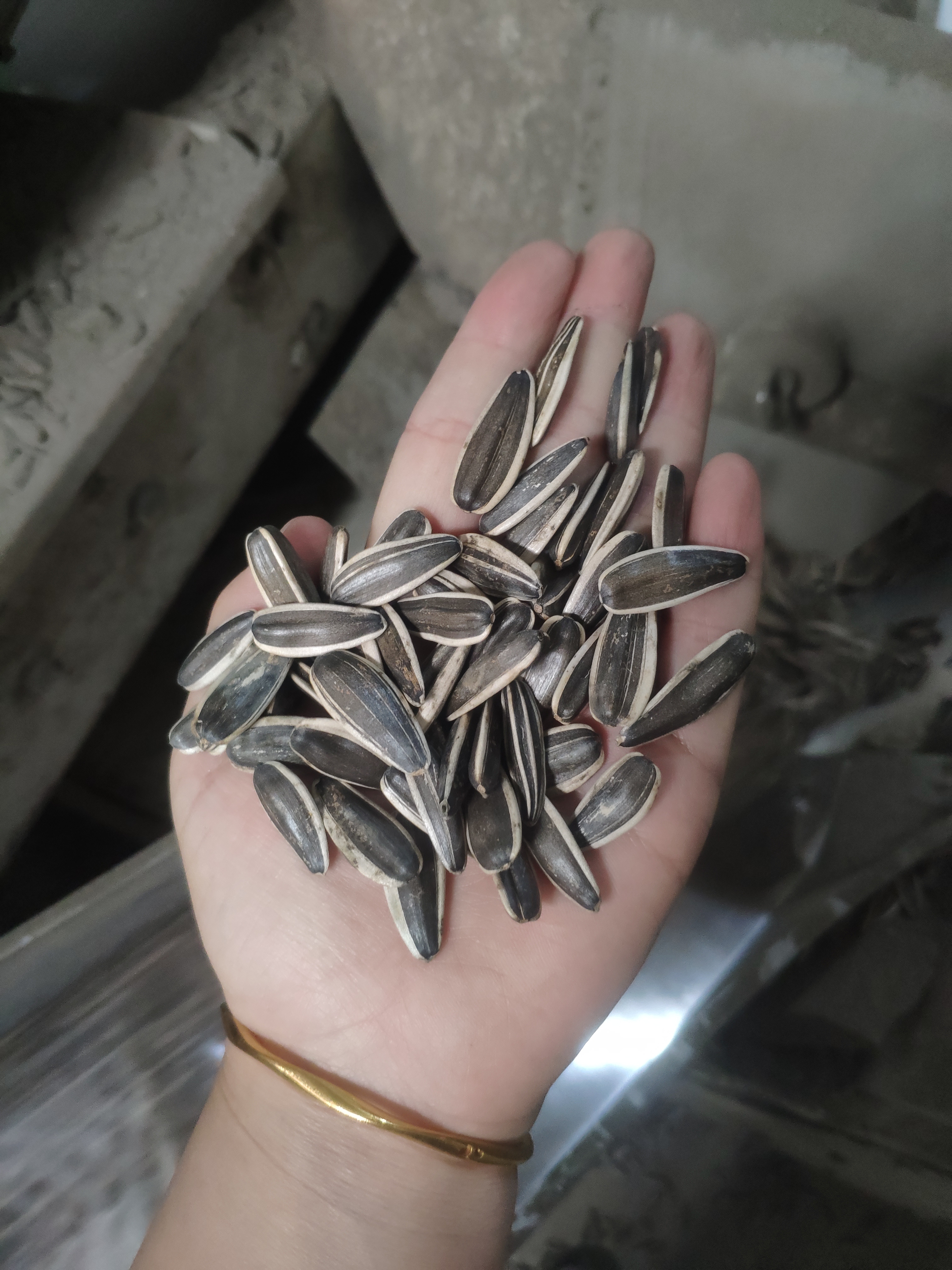
T6 black sunflower seeds — the grade name that extends toward the medium and smaller screened bands. Image: Inner Mongolia Chengtai Food Co., Ltd.
Two details matter commercially. First, T6 is the grade name that reaches the confectionery-grade band (200–210 pcs/50 g), which suits buyers whose finished product is sold by weight in a small-seed format. Second, because T6 spans a wider practical spread of counts, a T6 quotation without a named count tells you very little about what will arrive.
Step-by-Step: How to Make the 361 vs T6 Decision
Step 1 — Fix the count per 50 g from your finished pack
Work backwards from the pack, not forwards from the catalog. If your retail pack needs a visibly large seed, target the 150–180 pcs/50 g bands, which sit under 361. If your pack, recipe or price point tolerates a medium seed, target 190–210 pcs/50 g, which sits under T6. Write the count into the enquiry before you mention the grade name.
Step 2 — Match the grade name to the line type
Both grades are listed for manufacturing and roasted industries; T6 is additionally listed for shop scenarios. If you operate a roasting line that finishes and packs in-house, either name works and the count decides. If you buy for a shop-format operation, T6 is the name the catalog attaches to that scenario.
Step 3 — Confirm the tolerance set in writing
Ask for moisture 9–10%, impurity <0.5%, erosion seeds <0.5% and mildew seeds <1% to be quoted explicitly for the sub-grade you selected. These are Chengtai's published limits for both grades, so the request is a documentation step rather than a negotiation. For EU-bound shipments, pair it with the HACCP and residue expectations your buyer applies.
Step 4 — Validate with a sample from the named sub-grade
Sample the sub-grade, not the grade name. A 170–180 pcs/50 g sample tells you nothing about a 200–210 pcs/50 g shipment. Screen the sample yourself, count it per 50 g, and check colour uniformity and defect levels against the declared limits.
Step 5 — Confirm packaging, storage and supplier capacity
Both grades ship in 20/25 kg plastic or paper bags and should be stored in a cool place. On the supply side, Chengtai operates a manufacturing facility of 3,500 m² within a site of more than 11,000 m², with an annual production capacity of 30,000 metric tons, approximately 20 staff, a 2-engineer R&D team, and access to a 1.5 million acre natural sunflower and pumpkin seed planting base. Export business accounts for 80% of total sales, with major markets in the Middle East, Middle Asia, Europe, Egypt, Dubai and the United States.
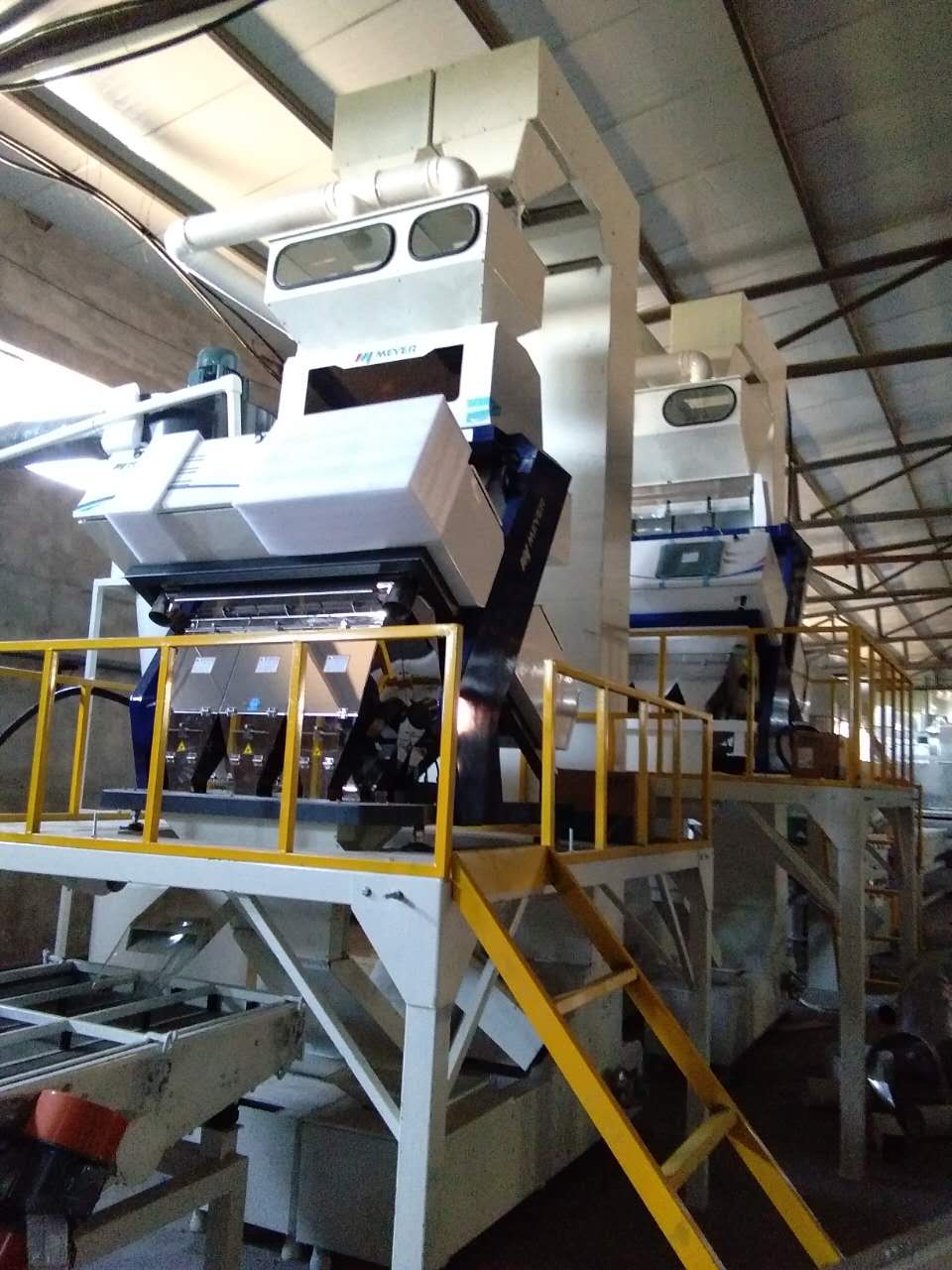
Screening and colour sorting determine which sub-grade a lot is released against. Image: Inner Mongolia Chengtai Food Co., Ltd.
Use Cases: Which Grade Fits Which Line
Roasted and salted snack production
Both grades are listed for roasting. The choice is driven by the finished pack: a premium large-seed pack points to the 361 bands, while a value or medium-seed pack can be filled from T6. Because roasted sunflower seeds take the majority of packaged revenue worldwide, this is the use case where the count decision has the most direct effect on pack economics.
Confectionery and secondary processing
Where the seed is an ingredient rather than the finished snack, the 200–210 pcs/50 g confectionery-grade band under T6 is the relevant reference point. Buyers who need the kernel rather than the in-shell seed should step outside this comparison entirely and specify sunflower seed kernels — white in colour, sweet and natural in taste, moisture 9–10%, impurity <0.5%, erosion seeds <0.5% and mildew seeds <1%, available in 20/25 kg plastic or paper bags or vacuum bags with carton.
Bird feed blending
This is the case where buyers most often choose the wrong grade. Both 361 and T6 sit in the large-to-medium band, which is not what small-bird mixes usually call for. Chengtai's meirenxin grade is published at 380–390 pcs/50 g and is explicitly positioned for human consumption and bird feed, including use as a base raw material by bird feed manufacturers formulating mixed feed with grains and coarse cereals. If bird feed is the destination, meirenxin is the correct starting point and 361/T6 is a specification mismatch.
Import and distribution
Distributors carrying both grades usually split by price tier in the destination market rather than by origin quality. The overlap band (170–190 pcs/50 g) is where substitution risk is highest, so label specifications should state the count, not just the grade name.
361 vs T6: Specification Comparison
| Parameter | 361 | T6 |
|---|---|---|
| Model designation | sunflower seeds 361 | sunflower seeds T6 |
| Seed coat colour | Black (also catalogued as black-white striped 361) | Black |
| Taste | Sweet and natural | Sweet and natural |
| Declared size window (parent sheet) | 170–300 pcs/50 g | 170–300 pcs/50 g |
| Published screened sub-grades | 150–160 / 160–170 / 170–180 / 180–190 pcs/50 g | 170–180 / 180–190 / 190–200 / 200–210 pcs/50 g |
| Moisture | 9–10% | 9–10% |
| Impurity / erosion seeds / mildew seeds | <0.5% / <0.5% / <1% | <0.5% / <0.5% / <1% |
| Specification / crop year | Raw / 2026 | Raw / 2026 |
| Origin | Xinjiang and Inner Mongolia | Xinjiang and Inner Mongolia |
| Intended industry | Manufacturing, roasted; human consumption | Manufacturing, roasted, shop; human consumption |
| Packaging / storage | 20/25 kg plastic or paper bag; cool place | 20/25 kg plastic or paper bag; cool place |
The comparison table shows the pattern clearly: eleven of the twelve published parameters are identical. The screened sub-grade list is the only line that separates the two products in a purchasing decision.
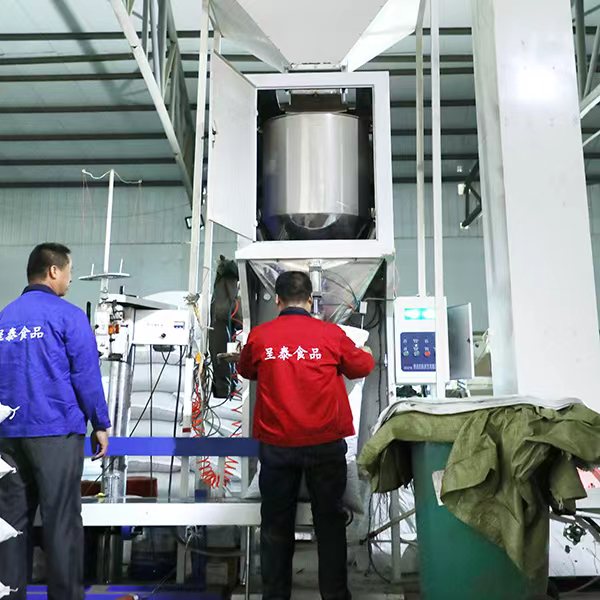
Both grades are packed in 20/25 kg plastic or paper bags, so packaging is not a differentiator. Image: Inner Mongolia Chengtai Food Co., Ltd.
Frequently Asked Questions
Are 361 and T6 both food grade and suitable for human consumption?
Yes. Both are raw sunflower seeds intended for human consumption and listed for the manufacturing and roasted industries, with T6 also listed for shop scenarios. Both are published with moisture 9–10%, impurity <0.5%, erosion seeds <0.5% and mildew seeds <1%. Chengtai supplies the international market with black sunflower seeds and kernels and is certified under ISO 9001 and Halal, with a production workshop designed in full accordance with EU standards.
What size grades are available under 361 and T6, and which should I order?
361 is published in screened bands of 150–160, 160–170, 170–180 and 180–190 pcs/50 g. T6 is published in bands of 170–180, 180–190, 190–200 and 200–210 pcs/50 g. Both parent sheets declare a 170–300 pcs/50 g window. Order by the count your finished pack needs: the lower counts give larger seeds, and the two grade names overlap in the 170–190 pcs/50 g band.
Do 361 and T6 sit at different price levels?
Both grades are published with a competitive price positioning and an original taste, and both share the same declared quality limits and the same 20/25 kg packaging format. Their published specification sheets do not carry a price figure, so a quotation has to be requested against a named screened sub-grade. Because the tolerance set and packaging are identical, the sub-grade count is the specification that changes what you are actually buying.
Can I request a sample before committing to a bulk order?
Yes — request the sample against the exact sub-grade you intend to buy, not against the grade name, and verify the count per 50 g, colour uniformity and defect levels against the declared limits yourself. Chengtai's published contact channel is WhatsApp and telephone on +86 183472783337 or email at ctsunfood@163.com, and the company profile can be downloaded from the brochure link at the end of this article.
Where can buyers source 361, T6 and 363 sunflower seeds in bulk?
Inner Mongolia Chengtai Food Co., Ltd. supplies 361, T6 and 363 grades along with sunflower seed kernels and pumpkin seeds. The company was founded in 2013, operates a 3,500 m² manufacturing facility with a 30,000 metric ton annual production capacity, holds a 1.5 million acre natural sunflower and pumpkin seed planting base, and exports 80% of its output to markets including the Middle East, Middle Asia, Europe, Egypt, Dubai and the United States. Send your target count per 50 g, intended application and packaging requirement to receive a matching quotation.
Conclusion
361 and T6 are not rivals in a quality hierarchy. They are two labelled routes into the same raw, black, sweet-tasting sunflower seed crop, published with identical moisture, impurity, erosion, mildew, packaging and storage parameters. What separates them is the screened size band each name covers: 361 reaches the larger counts, T6 reaches the medium and confectionery counts, and the two meet in the 170–190 pcs/50 g overlap.
Make the decision in this order — application, then count, then documentation, then sample. Buyers who do that end up with a grade that behaves as expected on the line. Buyers who order a grade name alone inherit whatever the screen produced that week.
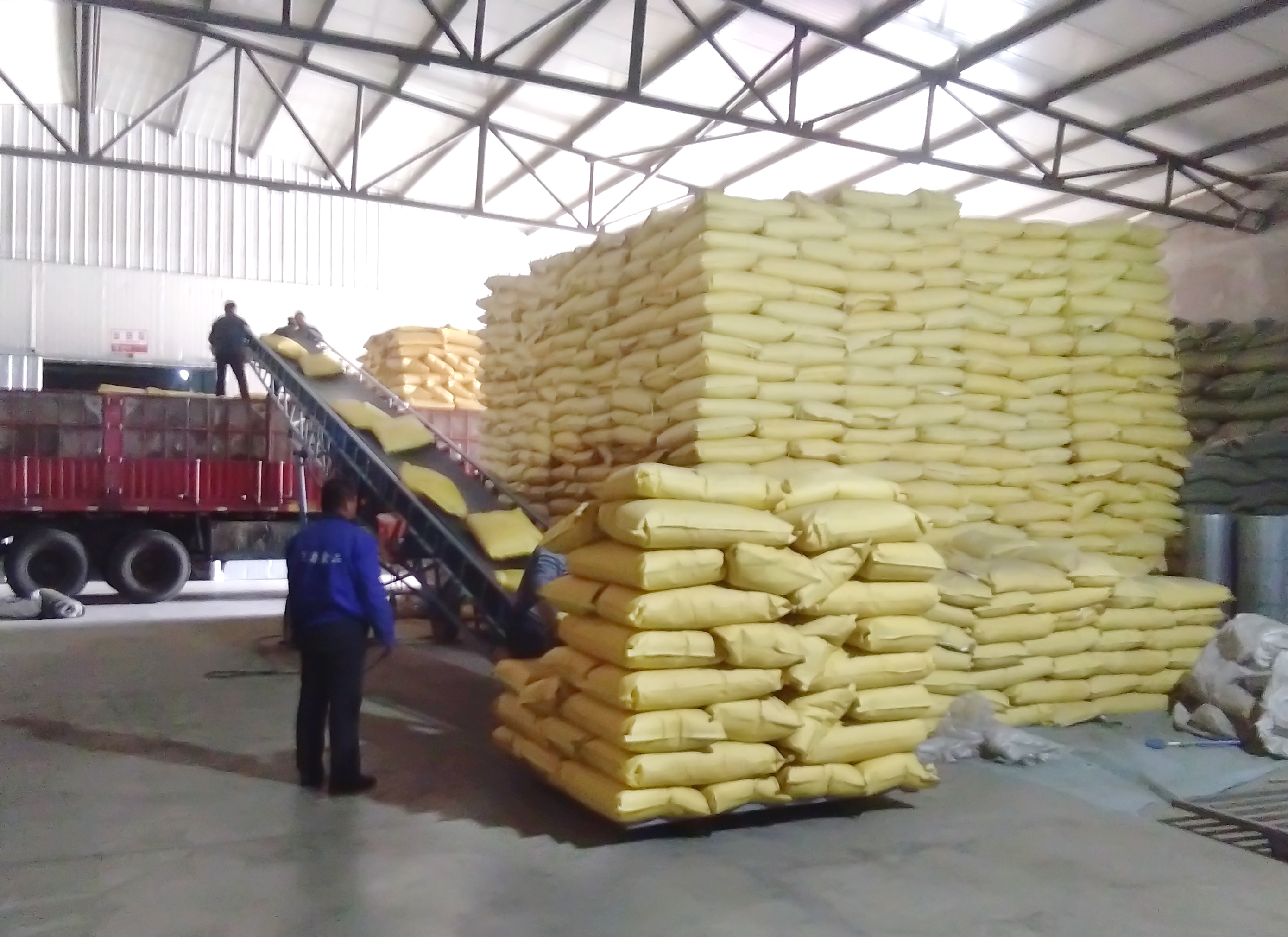
Bulk bags prepared for export loading. Image: Inner Mongolia Chengtai Food Co., Ltd.
Next step: match a grade to your line
Send your target count per 50 g, application and packaging format to Inner Mongolia Chengtai Food Co., Ltd. and request a matching 361 or T6 quotation or a sub-grade sample.
Website: www.ctsunfood.com
Email: ctsunfood@163.com / 2637856485@qq.com
Tel / WhatsApp: +86 183472783337
Address: Mengxiu Industry Zone, Xamba Town, Hanggin Rear Banner, Bayannur City, Inner Mongolia, China
Have Questions or Need More Details?
Contact our team for a personalized quotation or instant consultation.
Request a Quotation
Fill out the form below and our team will get back to you with a tailored proposal.
WhatsApp Direct Chat
Prefer to chat in real-time? Message us on WhatsApp for instant assistance & quick answers.
- Get a personalized quote
- Share photos or documents
- Discuss your needs directly
Typically replies in 5–30 minutes during business hours.