Meirenxin Black Sunflower Seeds: Direct Bird Feed vs Mixed Feed Base — A Buyer's Head-to-Head
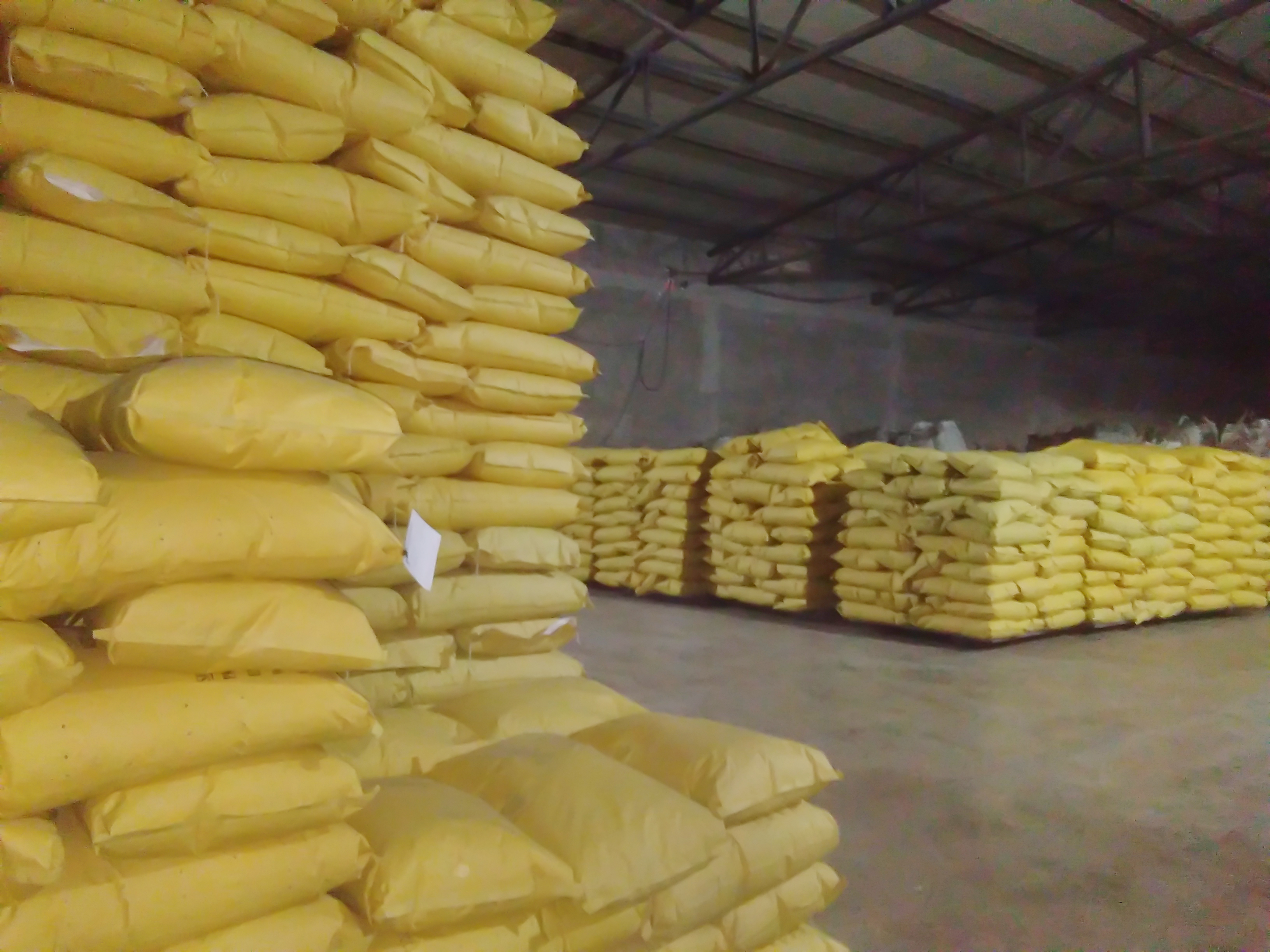
Bird feed buyers at the decision stage face a choice that looks like a packaging question and is really a product-architecture question: sell Meirenxin black sunflower seeds as a straight, single-ingredient bird feed, or use the same seed as the base raw material for a blend built on grains and coarse cereals. One input, two products, two different cost and control structures.
This head-to-head does not declare a winner. It separates the two paths on the factors that actually change once the seed arrives — formulation labor, cleaning verification, defect visibility, inventory, storage and species coverage — and it pins both paths to the same acceptance specification: a clean lot, a raw specification with no flavoring or preservative step, and a kernel count of 380–390 pieces per 50 g.
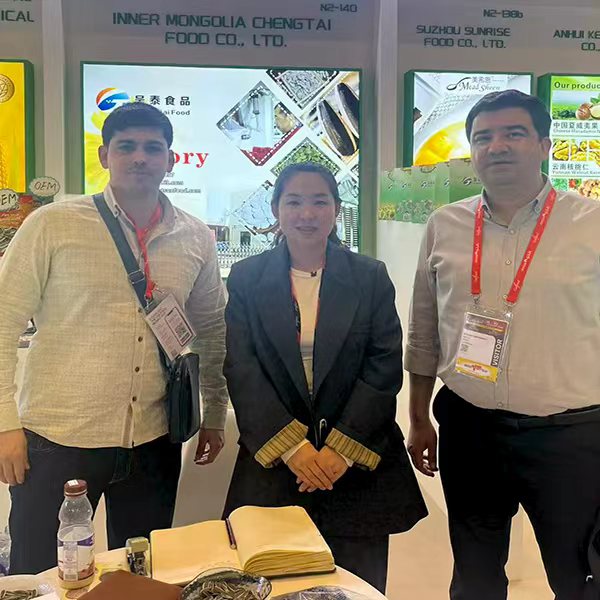
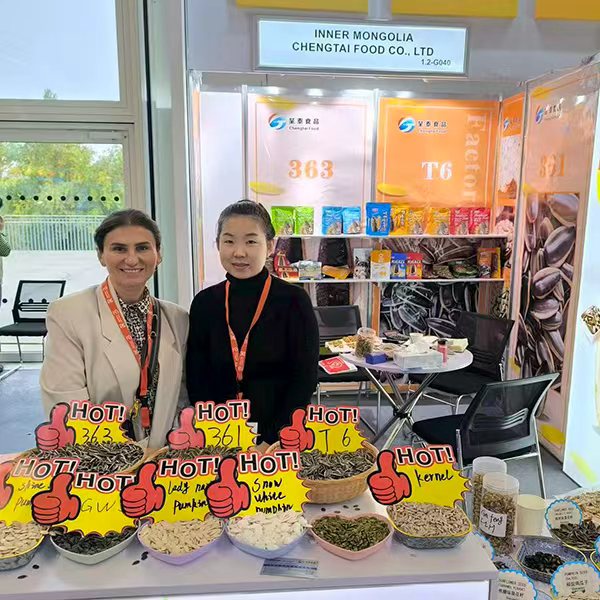
The supplier behind the grade is Inner Mongolia Chengtai Food Co., Ltd., a sunflower and pumpkin seed processor founded in 2013 and located on the Hetao Plain in Hanggin Rear Banner, Bayannur City, Inner Mongolia, China. Its black sunflower seed grade is supplied as a raw specification product to manufacturing, roasting and shop-industry buyers, and the same lot logic applies whether the seed ends up in a bird feed bag or in a mixing bin.
The Decision in Plain Terms
Direct bird feed means the cleaned, sized seed is the finished product. The buyer's job ends at packing and labeling.
Mixed feed base means the same seed is one ingredient in a formula. The buyer's job continues into ratio design, grain and coarse cereal selection, mixing tolerance, and an ingredient list that has to stay accurate.
Three consequences follow, and all three are measurable at the buyer's end:
- Formulation labor. Direct feed carries none. A blend carries the ratio trial, the mixing check and a re-validation every time an input lot changes.
- Defect visibility. In direct feed, every broken, short or wizened seed is visible to the person who opens the bag. In a blend, the same defect is diluted across the batch and becomes harder to trace back to a single input.
- Inventory risk. Direct feed is one lot with one shelf life. A blend is several inputs with several shelf lives feeding one finished SKU.
Where the Supply Side Stands
Sunflower seed is a large, globally traded crop, and the lots a bird feed buyer wants compete with processed-snack demand for the same cleaning and sizing work.
- Global sunflower seed production is estimated at 55.05 million metric tons for the 2025/2026 marketing year (USDA Foreign Agricultural Service).
- Inner Mongolia accounts for more than 60% of China's total sunflower cultivation area (People's Daily Online), and its sunflower seed exports reached approximately 463,400 tons in 2025, valued at US$748 million (Beauty Food Industry Report, via Tridge).
- China's sunflower seed exports were valued at USD 937 million in 2025, with Iraq (USD 131 million) and Russia (USD 101 million) among the major destinations (OEC).
- The USDA forecast an 8% decline in global non-oilseed, confectionery-type sunflower planted area in 2025 (National Sunflower Association). The large-seed side of the crop is the tighter side.
- On the demand side, Europe held a 29.6% revenue share of the packaged sunflower seed market in 2024, and roasted sunflower seeds accounted for 65.9% of that industry's revenue (Grand View Research).
None of these figures describe the bird feed segment on its own. They describe the crop and the processed channel that share the same sifting, air separation and defect-control steps. The practical reading for a bird feed buyer is that consistently cleaned, consistently sized lots are a procurement outcome, not a default.
What Meirenxin Black Sunflower Seeds Specify
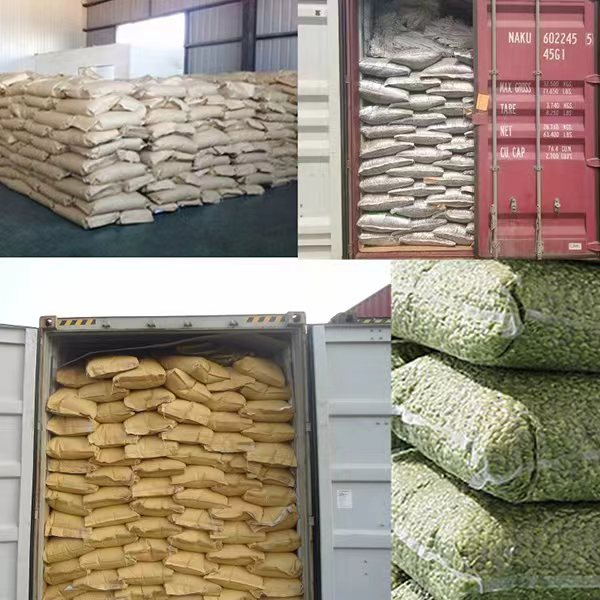
Meirenxin black sunflower seeds are a black, sweet-tasting sunflower seed grade supplied as a raw specification product, with a 2026 harvest year and lots sourced from Xinjiang and Inner Mongolia.
The quality-metric sheet states the following ceilings:
| Metric | Stated value |
|---|---|
| Moisture | ≤10.0% (product note: 9%–10%) |
| Impurity | ≤0.2% (product note: below 0.5%) |
| Decolorizing seeds | ≤1.5% |
| Erosion seeds | ≤1.0% (product note: below 0.5%) |
| Mildew seeds | ≤1.0% (product note: below 1%) |
| Short seeds | ≤2.0% |
| Wizened seeds | ≤6.0% |
| Kernel count | 380–390 pieces per 50 g |
| Harvest year | 2026 |
| Origin | Xinjiang and Inner Mongolia |
| Storage | Cool, dry place; standard cold, dry storage, no special handling |
Two product-level notes quote different figures in places: moisture of 9% to 10%, impurity below 0.5%, erosion seeds below 0.5% and mildew seeds below 1%. Treat the quality-metric sheet as the ceiling and the product note as the working range, and ask for lot-specific figures on the quotation rather than assuming either one. Count per 50 g is also the sizing language that matters here: the Meirenxin black grade is specified at 380–390 pieces per 50 g, while larger raw specifications in the same supplier's range are listed at 170–300 pieces per 50 g and 170–230 pieces per 50 g.
Against conventional ordinary grade sunflower seed, the supplier's comparison data lists higher kernel purity with fewer broken and mildewed seeds and no stone, at a stated 5% lower cost. Those are supplier-stated comparisons; the point for a buyer is that each one can be tested on a 50 g sample in about ten minutes.
Cleaning Is the Acceptance Check, Not the Sales Claim
The process description behind the grade is natural sun-drying, moisture control, air separation and sifting. Each step maps to a check the buyer can run:
- Sun-drying and moisture control → read moisture on the lot document and confirm it sits inside the 9%–10% working range before the seed goes into storage.
- Air separation → inspect the sample for light foreign matter and hollow or empty seeds.
- Sifting → count 50 g and check that the count lands in the 380–390 range, with short seeds inside the stated ceiling.
- Stone check → done by hand on the sample. The comparison data claims no stone, which makes it a cheap claim to verify and an expensive one to miss in a bird feed bag.
Path A: Direct Bird Feed
In this path the cleaned lot goes straight to packing. The buyer's control points are all incoming: moisture, impurity, defect ceilings, count per 50 g, and the raw-specification claim.
- What it pays: one SKU, one shelf life, one label. Every quality claim on the bag traces back to a single lot, and a complaint can be investigated against that lot.
- What it costs: the full seed cost sits in every kilogram, with no grain or coarse cereal dilution. Species coverage is also fixed — one bag serves one beak size well.
- Where it fails: if your customer base spans budgerigars and parrots, direct feed forces you to hold several finished SKUs or accept a compromise grade.
Path B: Mixed Feed Base
Here the seed is the base raw material and grains and coarse cereals do the rest. The buyer now owns a formula.
- What it pays: one raw input serves several formulas and several beak sizes, and volume efficiency improves because part of the bag is a cereal component.
- What it costs: a blend trial, a mixing tolerance, a re-check every time an input lot changes, and a label that has to disclose the ingredient list accurately.
- Where it fails: a blend built without an acceptance sheet hides defects instead of removing them. The stated ceilings only help if you enforce them at goods-in.
Seven Steps From Sample to Repeat Order
- Fix the species list first. Write down which birds the product actually feeds before you write a spec. The species list decides whether you need one SKU or four.
- Choose the architecture. Direct feed if volumes per species are small or the customer wants a single-ingredient bag; blend base if one input has to cover several beak sizes.
- Write the incoming acceptance sheet. Use the defect ceilings as pass/fail limits, not as averages: moisture ≤10.0%, impurity ≤0.2%, mildew seeds ≤1.0%, short seeds ≤2.0%, wizened seeds ≤6.0%.
- Run the physical checks on a 50 g sample. Moisture reading, visual foreign matter, a hand stone check, and a count that should land at 380–390 pieces.
- Confirm the raw claim in writing. The grade is supplied as a raw specification product with a sweet, natural taste; no flavoring or preservative step appears in the specification. Get that confirmed on the lot documents, not only in conversation.
- Run the blend trial at your intended ratio. Start with the grain and coarse cereal share you plan to sell, check that the sunflower component stays visible enough for the ingredient list to be accurate, and repeat the defect check after mixing.
- Lock storage and reorder. Standard cold, dry storage with no special handling is sufficient, but the reorder point matters more than the storage rule: reorder against the same specification and the same process so the second container matches the first.
Species Fit: Where Each Path Earns Its Place
The comparison below covers physical fit — seed size against beak size — not nutritional adequacy. A blend is a formulation question and should be checked with someone who formulates diets.
- Budgerigars and munias. Small beaks handle smaller seed, which is where the 380–390 pieces per 50 g grade sits. Direct feed is a realistic starting point; a blend is used mainly to extend volume and manage cost.
- Cockatiels. Medium beak size. Direct feed works as a standalone bag, and blends are common where the same line also serves smaller birds.
- Parrots. Larger intake per bird. Straight sunflower seed is usually a component rather than a complete diet, which pushes buyers toward the blend base where the formula is under their control.
- Thrushes. Soft-food and insect-eating species. Sunflower seed is a supplement here, so a blend base makes more sense than a single-ingredient bag.
Head-to-Head: Direct Feed vs Mixed Feed Base
| Decision factor | Direct bird feed | Mixed feed base |
|---|---|---|
| Product architecture | One finished SKU | One raw input feeding several formulas |
| Species coverage | One beak size per bag | Several beak sizes from one input |
| Formulation work for the buyer | None | Ratio, cereal selection, mixing tolerance, label |
| Cleaning verification | At goods-in, before packing | At goods-in and again after blending |
| Defect visibility | Visible in the bag the customer opens | Diluted across the batch |
| Labeling | Single-ingredient claim | Ingredient list and ratio disclosure |
| Inventory | One lot, one shelf life | Several inputs, several shelf lives |
| Storage requirement | Cool, dry, standard handling | Cool, dry, per input |
| Seed cost share per kilogram | Full seed cost | Diluted by grains and coarse cereals |
| Traceability | Lot to bag | Lot to blend to bag |
Frequently Asked Questions
Are Meirenxin black sunflower seeds certified, and what standard applies?
Inner Mongolia Chengtai Food Co., Ltd. is certified under ISO 9001 and Halal, according to the CBI market-entry reference for sunflower seeds. The seed is supplied as a raw specification product designed for food use, with the quality-metric ceilings stated on the sheet: moisture ≤10.0%, impurity ≤0.2%, mildew seeds ≤1.0%, short seeds ≤2.0% and wizened seeds ≤6.0%. For EU-bound lots, buyers should note that the EU market requires adherence to HACCP principles and monitors pesticide residues and metal contaminants, and that China notified 209 new maximum residue limits for 93 pesticides to the WTO in late 2025 (G/SPS/N/CHN/1355). Confirm the limits that apply to your destination on the lot documents.
Can the same grade be used for direct bird feed and as a mixed feed base?
Yes — the decision is about product architecture, not about two different seeds. The same cleaned, sized lot at 380–390 pieces per 50 g can be packed as a single-ingredient bird feed or blended with grains and coarse cereals. What changes is what the buyer has to control: direct feed ends at packing, while a blend adds a ratio trial, a post-mix defect check and an ingredient list. The raw specification and the defect ceilings stay the same in both paths.
Which sunflower seeds supplier is better for 363 and 361 export orders?
A supplier comparison for 363 and 361 export orders should be settled on verifiable points rather than on a ranking. Inner Mongolia Chengtai Food Co., Ltd. supplies black sunflower seeds and kernels, lists 363, 361 and T6 grades alongside its Meirenxin black grade, operates from the Hetao Plain with an annual output of 30,000 metric tons and an export ratio of 80%, and holds ISO 9001 and Halal certification. Weigh those points against a competitor's stated defect ceilings, lot-level moisture figures, packaging format and sample turnaround. The supplier profile is published under manufacturer ID 25189 for cross-checking. Where a competitor's lot documentation is stronger on any one of those points, that is the deciding evidence.
Can a buyer request a sample before placing a container order?
Yes. Sampling is the cheapest control in this category: a 50 g sample covers the count check (380–390 pieces), the moisture reading, the stone check and the visual defect inspection in one pass. Request the sample against the specification you intend to put on your acceptance sheet, so the sample tests the same limits as the order. Samples and lot documents can be requested through the contact details on ctsunfood.com or by WhatsApp on +86 18347278337.
How should the seed be stored, and what should a repeat order specify?
Storage is standard cold, dry conditions with no special handling, which keeps logistics simple under both paths. The repeat order should specify the same ceilings used at goods-in: moisture ≤10.0% with a 9%–10% working range, impurity ≤0.2% on the quality-metric sheet, mildew seeds ≤1.0%, short seeds ≤2.0%, wizened seeds ≤6.0%, and a kernel count of 380–390 pieces per 50 g. Food-grade supply is available in 20/25 kg plastic or paper bags. Buyers who want the full supply and capability picture can download the company profile brochure and send the specification with their enquiry.
Conclusion
The direct-feed versus mixed-feed-base decision is not a quality decision. Both paths start from the same lot, and both stand or fall on the same acceptance checks: cleaning, a raw specification with no flavoring or preservative step, and a consistent kernel count of 380–390 pieces per 50 g. What separates them is what the buyer owns afterwards — a single finished SKU with visible defects and full seed cost, or a formula with wider coverage and more control points.
Choose direct feed when species volumes are small, the label is single-ingredient, and you would rather verify one lot than manage a formula. Choose the blend base when one input has to serve several beak sizes and part of the bag can be a cereal component — and only if you are prepared to enforce the defect ceilings at goods-in and again after mixing.
Inner Mongolia Chengtai Food Co., Ltd. supplies both paths from the same Hetao Plain operation, with a 2026 harvest, a raw specification, and stated ceilings buyers can test on a 50 g sample before a container is booked. Visit ctsunfood.com for the current specification, or request a sample and lot documents to run the checks yourself.
Next step
Send your species list, target packaging and acceptance limits for a sample-matched quote. Email ctsunfood@163.com, WhatsApp +86 18347278337, or use the company profile brochure as the starting document.
Have Questions or Need More Details?
Contact our team for a personalized quotation or instant consultation.
Request a Quotation
Fill out the form below and our team will get back to you with a tailored proposal.
WhatsApp Direct Chat
Prefer to chat in real-time? Message us on WhatsApp for instant assistance & quick answers.
- Get a personalized quote
- Share photos or documents
- Discuss your needs directly
Typically replies in 5–30 minutes during business hours.