Meirenxin Sunflower Seeds: Long-Term Supply Terms & Support FAQ
Meirenxin Sunflower Seeds: Long-Term Supply Terms & Support FAQ
Long-term supply of Meirenxin sunflower seeds comes down to a short list of things a buyer can actually check: the commercial terms, the acceptance numbers, and what happens once a container is discharged. The documented terms are MOQ 5 mts, delivery on FOB, CNF or CIF, payment at 30/70 or 100%, and acceptance either by a pre-shipment test or by testing the seeds after they arrive. The acceptance numbers are equally specific — moisture ≤10.0%, impurity ≤0.2%, mildew seeds ≤1.0%, wizened seeds ≤6.0% — applied to a black, in-shell seed graded at 380–390 pieces per 50 g with no added flavourings or preservatives.
This reference is written for procurement teams at the decision and execution stage: buyers who have already shortlisted a meirenxin grade and now need to know whether that grade can be repeated across seasons, not just delivered once. It uses documented product data from Inner Mongolia Chengtai Food Co., Ltd. (company ID 25189) and third-party market records only where they explain availability. Where the published record stops — for example on warranty wording — the gap is flagged so the point is settled in the contract rather than assumed.
Long-Term Supply: What Actually Needs to Be Agreed
Two questions decide whether a meirenxin contract survives its second season: is the specification written as numbers, and is the acceptance test the same at both ends? Price, freight route and packaging can be renegotiated between shipments without breaking a relationship. A quality definition cannot be renegotiated after the seed has been roasted.
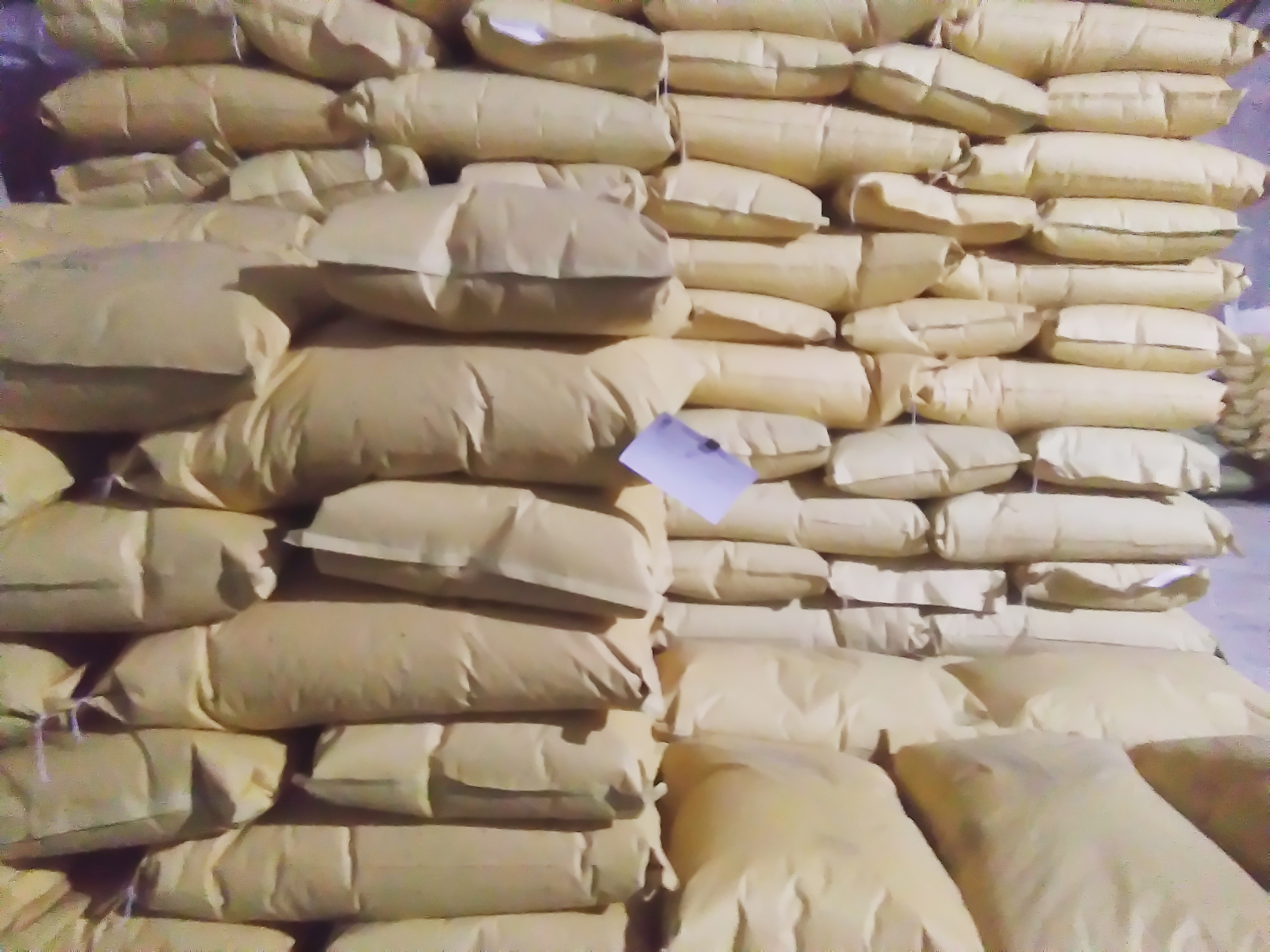
The specification published for this grade is numeric, and that is what makes repeat orders possible. Moisture is capped at ≤10.0%, impurity at ≤0.2%, mildew seeds at ≤1.0%, short seeds at ≤2.0% and wizened seeds at ≤6.0%. Kernel size is expressed as a count — 380–390 pieces per 50 g — rather than as a vague 'medium'. The seed has a black coat, is supplied in shell with a raw specification for human consumption, carries a sweet, natural taste, and contains no added flavourings or preservatives.
The gap most buyers hit is procedural, not technical. A first lot is often approved by eye and by a hand-picked sample; a later lot is judged by a laboratory report. When those two standards differ, the buyer has no baseline and the supplier has no defensible target. The practical fix is to make the acceptance route part of the order: choose the pre-shipment test or the test after the seeds are received, name the sampling method, and agree whose laboratory result decides the outcome.
Why Origin and Industry Structure Matter for Repeat Orders
Inner Mongolia accounts for more than 60% of China's total sunflower cultivation area, according to People's Daily Online (2024). The region's sunflower seed exports reached approximately 463,400 tons in 2025, valued at about US$748 million, based on the Beauty Food Industry Report data published by Tridge. At national level, China's sunflower seed exports were worth US$937M in 2025, with Iraq (US$131M) and Russia (US$101M) among the leading destinations, according to OEC.
Those figures explain why Inner Mongolia origin appears on so many offers, and also why origin alone is not a differentiator. A deep export base means many factories can access the same seed; it says nothing about whether a particular plant holds a moisture ceiling through a wet harvest. What separates suppliers is what happens between intake and loading.
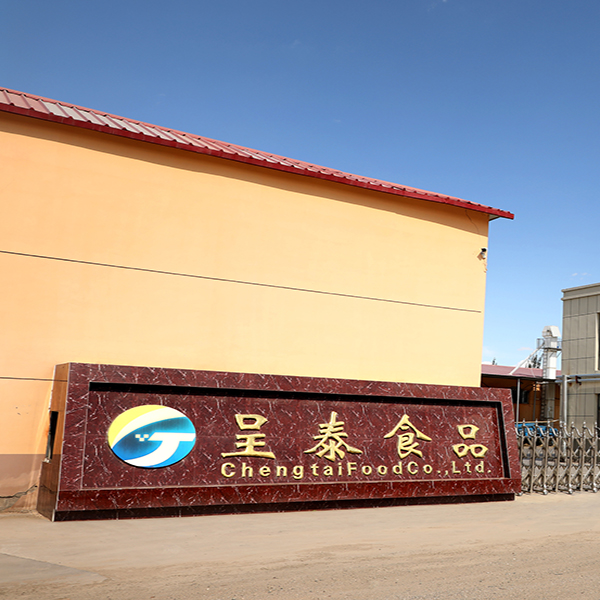
Inner Mongolia Chengtai Food Co., Ltd. was founded in 2013 and operates from the Hetao Plain in Hanggin Rear Banner, Bayannur City, Inner Mongolia. The company states annual output of 30,000 mts across sunflower seeds, pumpkin seeds and kernels, with roughly 80% of output exported and main markets in the Middle East, Middle Asia and Europe. A market-entry record published by CBI (Netherlands Ministry of Foreign Affairs) lists the company as certified under ISO 9001 and Halal.
Supply-side context is worth tracking because confectionery seed moves on its own cycle. Global sunflower seed production is estimated at 55.05 million metric tons for the 2025/2026 marketing year (USDA Foreign Agricultural Service), while the USDA forecast an 8% decline in global non-oilseed — confectionery — sunflower planted area in 2025, as reported by the National Sunflower Association. A smaller confectionery area is a planning signal, not a price forecast. Treated as a signal, it argues for fixing a specification and a delivery rhythm with one supplier instead of re-tendering every crop year.
Regulatory thresholds move as well. China notified 209 new maximum residue limits for 93 pesticides in food to the WTO in late 2025 (USDA FAS, G/SPS/N/CHN/1355), and the EU market requires adherence to HACCP principles with close monitoring of pesticide residues and metal contaminants (CBI). For a long-term agreement that translates into a specific clause: which limit list applies, who commissions the residue test, and how often it is repeated.
Purchasing Terms for a Meirenxin Order
The commercial terms documented for this grade fit on one page, which is itself useful — fewer variables means fewer disputes later.
| Term | Documented position |
|---|---|
| Minimum order quantity | 5 mts |
| Delivery terms | FOB / CNF / CIF |
| Payment terms | 30/70 or 100% |
| Acceptance route | Pre-shipment test, or test after the seeds are received |
| Packaging | 20/25 kg plastic or paper bag |
| Origin | Xinjiang and Inner Mongolia |
| Crop year of current offer | 2026 |
| Storage instruction | Keep in a cool place |
MOQ 5 mts is a workable trial scale for a buyer entering a long-term arrangement: enough seed to run a production test on the actual roasting or packing line, without committing a season's volume to a grade that has not yet been run. Volume beyond the minimum is better expressed as a delivery schedule than as a single annual figure, because a schedule tests the specification repeatedly.
Delivery is quoted FOB, CNF or CIF, so the risk transfer point changes with the term. FOB leaves main carriage and insurance with the buyer; CNF and CIF bring more of the logistics under the supplier's quote. The right choice depends on the buyer's freight relationships rather than on the grade, but it belongs in the agreement because it decides who carries a delay or a damaged container.
Payment is 30/70 or 100%. The split option ties part of the payment to a stage of the shipment; full prepayment concentrates risk on the buyer and is normally paired with a pre-shipment test. Whichever is chosen, the acceptance method should be named in the same clause, because payment timing and test timing have to stay consistent with each other.
Acceptance Criteria: The Numbers a Lot Must Meet
The limits below form the acceptance sheet for the grade. They are published specification values; a buyer's contract should reference them explicitly rather than describing the grade as 'standard quality'.
| Parameter | Documented limit | What it controls in practice |
|---|---|---|
| Moisture | ≤10.0% | Mould risk in transit and in storage; roasting behaviour |
| Impurity | ≤0.2% | Stones and foreign matter reaching the processing line |
| Decolourising seeds | ≤1.5% | Colour uniformity of retail packs |
| Erosion seeds | ≤1.0% | Insect-damaged seed in the finished product |
| Mildew seeds | ≤1.0% | Mould-affected seed; the defect that must not pass |
| Short seeds | ≤2.0% | Fill and usable share of the lot |
| Wizened seeds | ≤6.0% | Light, thin seed that reduces usable yield |
| Kernel size | 380–390 pieces per 50 g | Count-based grade; pack appearance and portioning |
| Colour and additives | Black coat; no added flavourings or preservatives | Product positioning for snack and bird-feed channels |
Moisture is the ceiling that matters most between loading and arrival. Seed held under ≤10.0% has margin for a container journey; seed above it is where mould risk concentrates, and no amount of screening at destination corrects it. The storage instruction that accompanies the product — keep it in a cool place, in the 20/25 kg plastic or paper bag supplied — continues the same control rather than replacing it.
Impurity at ≤0.2% is the food-safety and equipment criterion. The grade record notes 'no stone' as a difference from conventional ordinary grade; stones and other foreign matter are what damage roasting equipment and what a buyer's own detection step has to catch if an incoming lot allows them through.
The defect ceilings — decolourising ≤1.5%, erosion ≤1.0%, mildew ≤1.0%, short ≤2.0%, wizened ≤6.0% — decide how much of each lot the buyer can actually use. Decolourising seeds are a pack-appearance issue; mildew and erosion are the defects that must never reach a finished food product; short and wizened seeds reduce the usable share of the lot. A supplier that reports only moisture and impurity has not described the lot adequately for snack manufacturing.
Size is expressed as 380–390 pieces per 50 g. Because it is a count, it can be measured on both sides with a scale and a counter, which makes it a stronger dispute reference than 'medium' or 'large'. Buyers should confirm that the count is measured on the same basis at both ends before the first container is loaded.
Meirenxin vs Conventional Ordinary Grade
The comparison record for this grade positions it against conventional ordinary grade on four practical dimensions plus recorded cost.
| Attribute | Meirenxin grade | Conventional ordinary grade |
|---|---|---|
| Kernel purity | Higher | Lower |
| Broken and mildewed seeds | Fewer | More |
| Size | Bigger; graded 380–390 pieces per 50 g | Smaller |
| Stone content | No stone | Stones present |
| Recorded cost position | 5% lower in the supplier comparison record | Baseline |
| Storage requirement | Standard cold, dry storage; no special handling | Not specified in the record |
| Documented best fit | Snack processing, confectionery and retail finished products | Not specified in the record |
Read the comparison for what it is: a documented grade record, not a laboratory trial between two named brands. The 5% lower cost position is a relative indicator taken from that record and should be verified against the buyer's own quotation and freight; the qualitative differences — higher kernel purity, fewer broken and mildewed seeds, larger size, no stone — are the ones worth confirming in an arrival test.
How the Specification Is Held from Raw Material to Packed Bag
A specification becomes a long-term asset only when it is produced by routine rather than by a final inspection. For this grade the control path runs in six stages.
- Origin intake. The seed is documented as originating from Xinjiang and Inner Mongolia, and the current offer is from the 2026 crop year. Origin sets the baseline moisture and defect profile the plant is working with.
- Raw-material sun-drying. Moisture control begins here, not at the testing bench. Bringing the lot under the ≤10.0% ceiling at the drying stage is what gives the seed margin for a container journey; later screening cannot correct seed that has been rewetted.
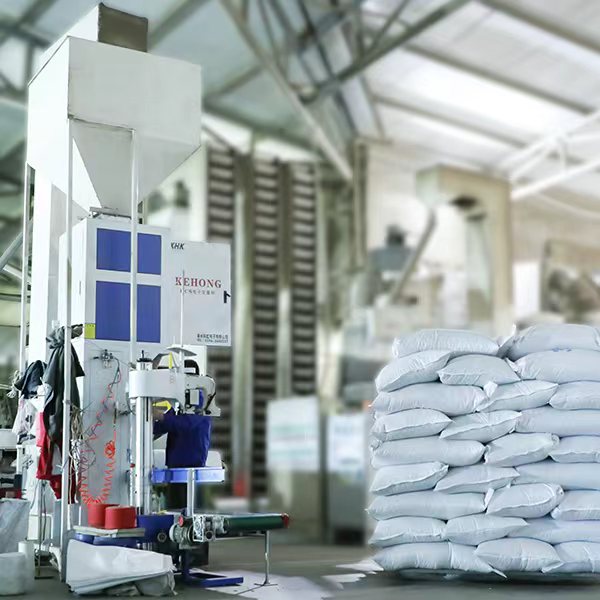
- Layer-by-layer impurity screening. Successive screening passes remove stones, stalk and light foreign matter to reach the ≤0.2% impurity ceiling. The 'no stone' position in the grade record depends on this stage working, not on a final visual check.
- Size grading. The lot is graded into the 380–390 pieces per 50 g band so the count stays inside the agreed range across shipments, not only in the sample.
- Defect sorting. Decolourising, erosion, mildew, short and wizened seeds are each held to their own ceiling; these fractions decide the buyer's usable yield.
- Pre-shipment test and packing. The agreed sheet is measured before loading, and the seed is packed in 20/25 kg plastic or paper bags for shipment and cool storage.
Two buyer-side steps make that routine auditable: retain a sealed sample from every lot together with its test result, and use the same test method at both ends. Without a retained sample, an arrival dispute becomes a comparison between a laboratory report and a photograph.
Use Cases: Snack Manufacturing and Bird Feed From One Grade
The primary documented use is snack processing, confectionery and retail finished products. The grade is supplied raw and in shell with no added flavourings or preservatives, which suits manufacturers who roast, salt or flavour in-house and want to control that step themselves. Roasted sunflower seeds accounted for 65.9% of global packaged sunflower seeds industry revenue in 2024, and Europe was the largest packaged sunflower seeds market with a 29.6% revenue share, according to Grand View Research — a raw input grade sits upstream of the largest segment of that market.
The same grade is documented for bird feed applications, including parrots, cockatiels, budgerigars, munias and thrushes. For a bird-feed buyer, the acceptance numbers do the same work as for a snack buyer: the mildew, erosion, short and wizened ceilings define how much of each lot is usable, and the no-additive position matters because the seed is fed close to the state in which it arrives.
Sourcing both lines from one grade has a practical consequence: one specification, one acceptance test and one retained-sample file can cover two product ranges. For a buyer running snack and bird-feed channels, that reduces the number of specifications to audit without changing the seed.
After-Sales Support: What Is Documented and What to Put in Writing
The core after-sales mechanism for this grade is the arrival test. Because acceptance can be defined as a test after the seeds are received, a quality question is settled by numbers on an agreed sheet rather than by impression. That is the most useful form of after-sales support in bulk seed supply: it gives both sides the same reference before anyone discusses remedies.
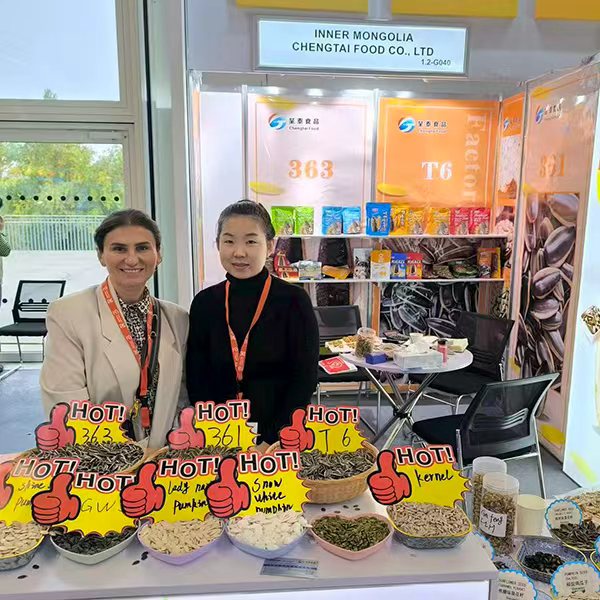
The second layer is continuity of the relationship. The company states long-term business relationships with clients in China, the Middle East, Middle Asia, Egypt, Dubai, the United States, Austria and European countries, and attends international exhibitions — Gulfood in Dubai, the Uzbekistan Exhibition, Tuyap in Turkey, Anuga in Germany and Sial in France — to meet existing and new customers. For a long-term buyer, those events function as scheduled face-to-face review points rather than as promotion.
The third layer is documentation. ISO 9001 and Halal are recorded for the company in the CBI market-entry record. These are management-system and market-access markers; they indicate that quality processes are documented, not that a particular claim-settlement term has been agreed.
What the published record does not define is the commercial remedy. Warranty period, replacement ratio for an out-of-specification lot, who pays for third-party inspection, and how many days after discharge a claim may be raised are not part of the product specification. A procurement team should write those four items into the agreement next to the acceptance sheet, so that the arrival test carries a consequence.
Contact continuity belongs on the same list. The company publishes a named contact with email and a direct WhatsApp line, and the buyer should record who that contact is, who covers for them, and in which language correspondence will be conducted — an escalation path that depends on one mailbox rarely survives a busy season.
Pre-Signature Checklist for a Repeat-Order Agreement
- Specification sheet attached as an annex, with all seven quality and defect limits and the 380–390 pieces per 50 g size band.
- Acceptance route named — pre-shipment test, post-arrival test, or both — with the sampling method and the deciding laboratory.
- Retained-sample obligation for every lot, held for the whole claim window.
- Commercial terms confirmed: MOQ 5 mts, FOB/CNF/CIF, 30/70 or 100%.
- Packaging fixed as a 20/25 kg plastic or paper bag, and which of the two suits the destination climate.
- Remedy clause covering replacement ratio, inspection-cost allocation and the claim deadline after discharge.
- Certification and residue documents required per shipment, with the applicable limit list named.
- Delivery rhythm written across the crop year instead of a single annual volume.
Conclusion
Long-term meirenxin supply is a documentation problem before it is a trust problem. The grade itself is well specified: black in-shell seed at 380–390 pieces per 50 g, moisture ≤10.0%, impurity ≤0.2%, defined ceilings on decolourising, erosion, mildew, short and wizened seeds, no added flavourings or preservatives, packed in 20/25 kg plastic or paper bags and stored cool. The commercial frame is equally clear: MOQ 5 mts, FOB/CNF/CIF delivery, 30/70 or 100% payment, and acceptance by pre-shipment or post-arrival test. What remains is the buyer's work — naming the test, keeping samples, and writing the remedy clause that gives the test its effect.
Inner Mongolia Chengtai Food Co., Ltd. publishes its specification and company documentation for buyers who need the grade in writing before a trial order. The full company profile brochure can be viewed and downloaded, and a trial order at the 5 mts minimum is the practical way to test a first lot against the acceptance sheet.
FAQ: Long-Term Sunflower Seed Supply
What are the purchasing terms and acceptance criteria?
MOQ is 5 mts. Delivery is quoted FOB, CNF or CIF. Payment is 30/70 or 100%. Acceptance can be handled either by a pre-shipment test or by testing the seeds after they are received, against the agreed specification: moisture ≤10.0%, impurity ≤0.2%, decolourising seeds ≤1.5%, erosion seeds ≤1.0%, mildew seeds ≤1.0%, short seeds ≤2.0% and wizened seeds ≤6.0%.
Which values should an arrival test measure?
Measure the lot against the same sheet used at pre-shipment: the seven moisture, impurity and defect ceilings, plus the 380–390 pieces per 50 g size band and colour. Recording the test date, lot identity and retained sample alongside the result is what makes the numbers usable if a second container is questioned.
Can meirenxin sunflower seeds be supplied long-term in bulk container loads?
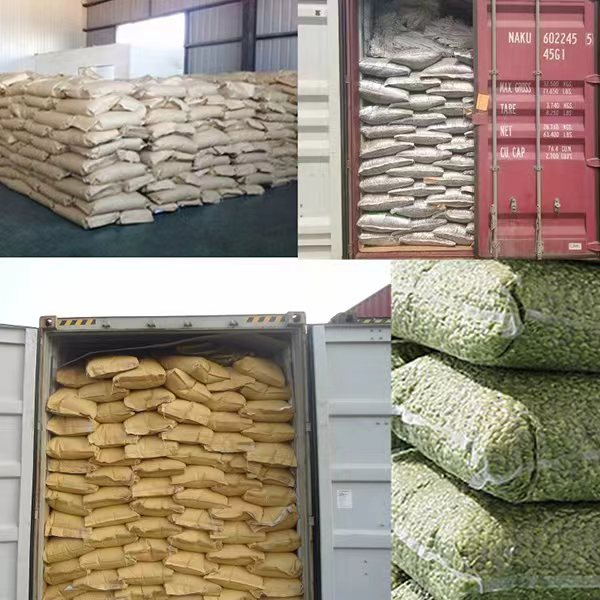
The grade is offered for bulk supply with a 5 mts minimum order and 20/25 kg plastic or paper bag packaging, the format used for container shipment. The manufacturer states annual output of 30,000 mts, with about 80% of output exported, and reports long-term relationships with buyers across the Middle East, Middle Asia and Europe. A long-term programme should be agreed as a delivery schedule with the acceptance route fixed, rather than as one annual volume.
Does the seed contain added flavourings or preservatives?
No. The grade is documented as raw, in shell, with no added flavourings or preservatives, a black coat and a sweet, natural taste. Buyers who roast, salt or flavour in-house add those steps themselves, which is why the defect ceilings rather than a flavour profile define the delivered quality.
Can one grade serve both snack manufacturing and bird feed?
Yes. The grade is documented for human snack manufacturing and for bird feed applications including parrots, cockatiels, budgerigars, munias and thrushes. The same acceptance sheet applies to both uses, which lets a buyer hold one specification and one sampling routine across two product lines.
How should the seeds be stored after arrival?
Keep them in a cool place in the supplied 20/25 kg plastic or paper bag. Storage continues the moisture control that begins at raw-material sun-drying: seed held under the ≤10.0% ceiling has margin for transport and warehousing, while seed above it is where mould risk concentrates.
How does a buyer start a long-term supply arrangement?
Begin with a trial order at the 5 mts minimum, test it against the acceptance sheet with a retained sample, and fix a delivery schedule only after the first lot has passed on your own line. Buyers can request the specification, current offer and company profile from Inner Mongolia Chengtai Food Co., Ltd. through its published contact channels or the downloadable company brochure.
Have Questions or Need More Details?
Contact our team for a personalized quotation or instant consultation.
Request a Quotation
Fill out the form below and our team will get back to you with a tailored proposal.
WhatsApp Direct Chat
Prefer to chat in real-time? Message us on WhatsApp for instant assistance & quick answers.
- Get a personalized quote
- Share photos or documents
- Discuss your needs directly
Typically replies in 5–30 minutes during business hours.