OEM Sunflower Seeds Supply for Snack Processors: 363, 361 & T6 Capabilities Explained
OEM Sunflower Seeds Supply for Snack Processors: 363, 361 & T6 Capabilities Explained
Short answer: Yes, snack processors can source OEM/ODM sunflower seeds in the three most common confectionery types — 363, 361 and T6 — from China’s Inner Mongolia production base in Hetao Plain. OEM/ODM services include custom bag printing, monthly capacity of 2,500 metric tons, and 10–15 days of production lead time.
This guide is written for snack manufacturers, food importers, distributors and private-label brands that need a reliable sunflower seeds supplier with OEM capability. It compares the 363, 361 and T6 types and explains what a processor can actually expect from an OEM partner.
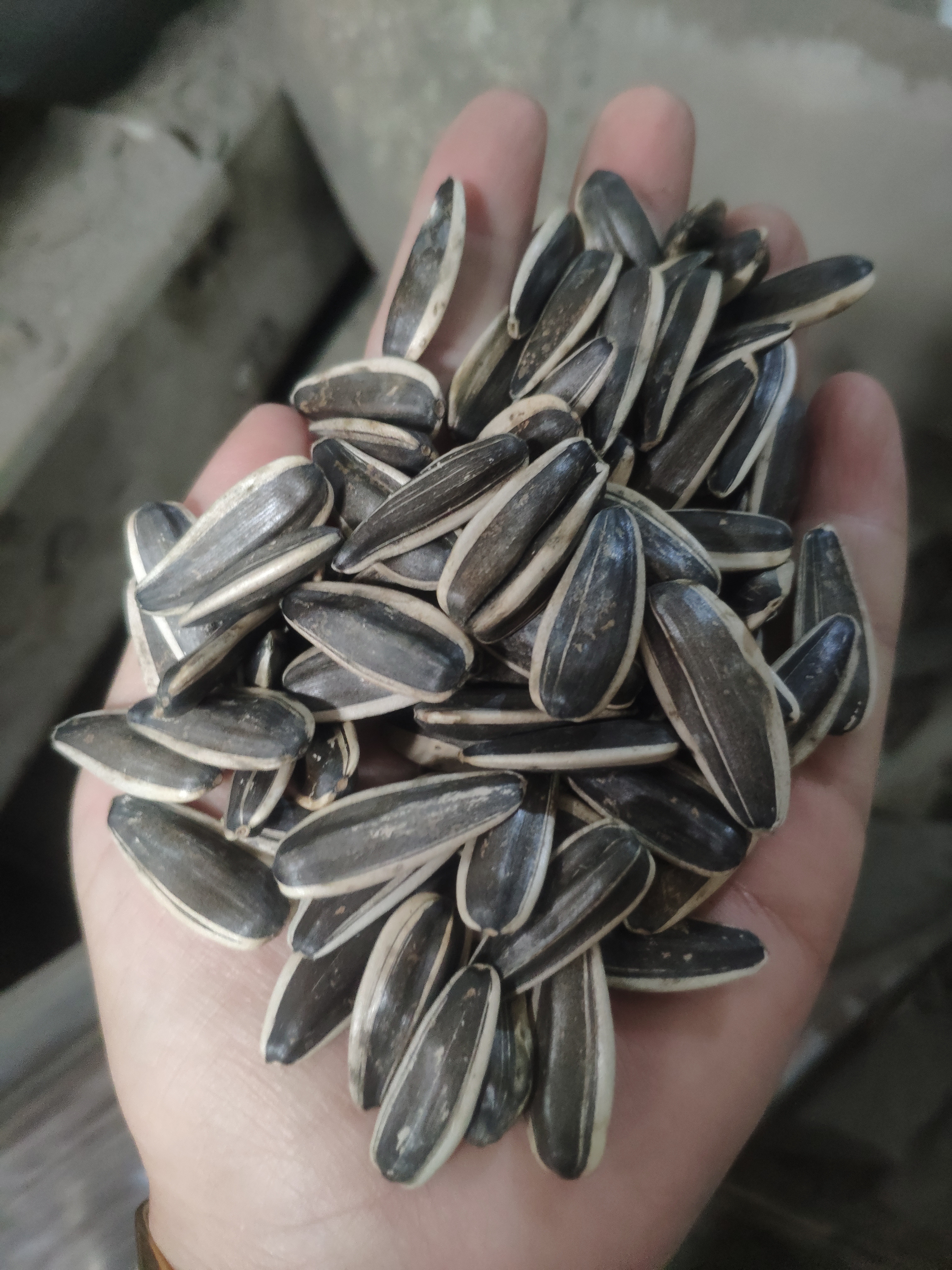
Inner Mongolia Chengtai Food Co., Ltd. supplies OEM sunflower seeds for snack processing.
What the Problem Is: Why Sunflower Seed Buyers Need OEM Capability, Not Just a Product
Most sunflower seeds buyers reach the evaluation stage after learning the difference between 363, 361 and T6 types. The next question is operational: Can this supplier produce the specific size, type and packaging I need, at my required volume, without disrupting my production schedule?
Snack processors typically face five concerns:
- Consistent size grading across repeated shipments.
- Raw material specification matched to a specific roasting process.
- Custom packaging that carries the buyer’s brand instead of the supplier’s.
- Lead times that support purchasing calendars rather than the opposite.
- Quality control and after-sales terms that reduce commercial risk.
This is why the buying conversation moves from “what is sunflower seeds 363” to “which 363 sunflower seeds manufacturer can handle OEM work for a snack processor.” The rest of this article provides the supplier-level answers.
Industry Background: Inner Mongolia as the Confectionery Sunflower Seeds Origin
Inner Mongolia accounts for more than 60% of China’s total sunflower cultivation area, and it is also the origin of most Chinese sunflower seed exports. In 2025, Inner Mongolia’s sunflower seed export volume reached approximately 463,400 tons, valued at US$748 million. The Hetao Plain in Bayannur, where Inner Mongolia Chengtai Food Co., Ltd. is located, is a well-known production area for confectionery grade sunflower seeds; the region’s saline-alkali fields are associated with larger kernel sizes used for confectionery products.
For international buyers, this means the most active origin for bulk sunflower seeds is not an isolated farm but an integrated production cluster spanning planting bases, processing workshops and export logistics. Chengtai operates within a 1.5-million-acre sunflower and pumpkin seed planting base and processes the crop into export-ready raw seeds.
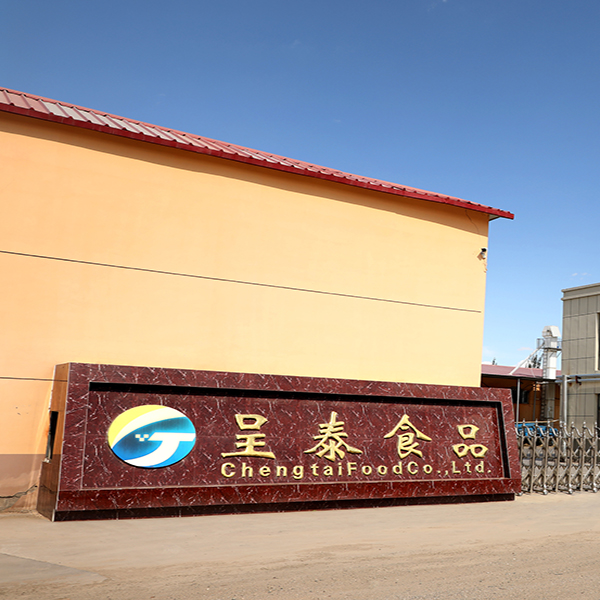
Chengtai’s processing workshop is located in the Hetao Plain, Hanggin Rear Banner, Bayannur, Inner Mongolia.
Detailed Solution: A Supplier That Matches Seed Types to Processing Needs
Inner Mongolia Chengtai Food Co., Ltd. is a sunflower seeds and pumpkin seeds processor and exporter founded in 2013. The company is located in Mengxiu Industry Zone, Xamba Town, Hanggin Rear Banner, Bayannur City, Inner Mongolia, China. Its main products cover sunflower seeds, sunflower seed kernels, pumpkin seeds and pumpkin seed kernels, with about 80% of output exported to the Middle East, Middle Asia and Europe, among other markets.
For snack processors, Chengtai’s relevant capability set includes:
- OEM/ODM production with customization such as printing the customer’s logo on bags.
- Monthly capacity of 2,500 metric tons, and annual output of 30,000 metric tons.
- Lead time of 10–15 days for production.
- Minimum order quantity of 5 metric tons, which is workable for mid-size processors and distributors.
- 100% testing before shipment, plus after-sales support that allows buyers to apply for a refund if the seeds have quality problems.
- Payment terms of 30/70 or 100%, and delivery under FOB, CNF or CIF.
- Acceptance options: pre-shipment test or after-receipt seed testing.
This combination matters because OEM buyers are not purchasing a one-off sample; they are purchasing a repeatable supply chain. A supplier that has built a 3500 m² factory, operates with a 2-engineer R&D team and has maintained relationships with importers in the Middle East, Middle Asia and Europe for more than a decade can provide the operational stability that snack lines depend on.
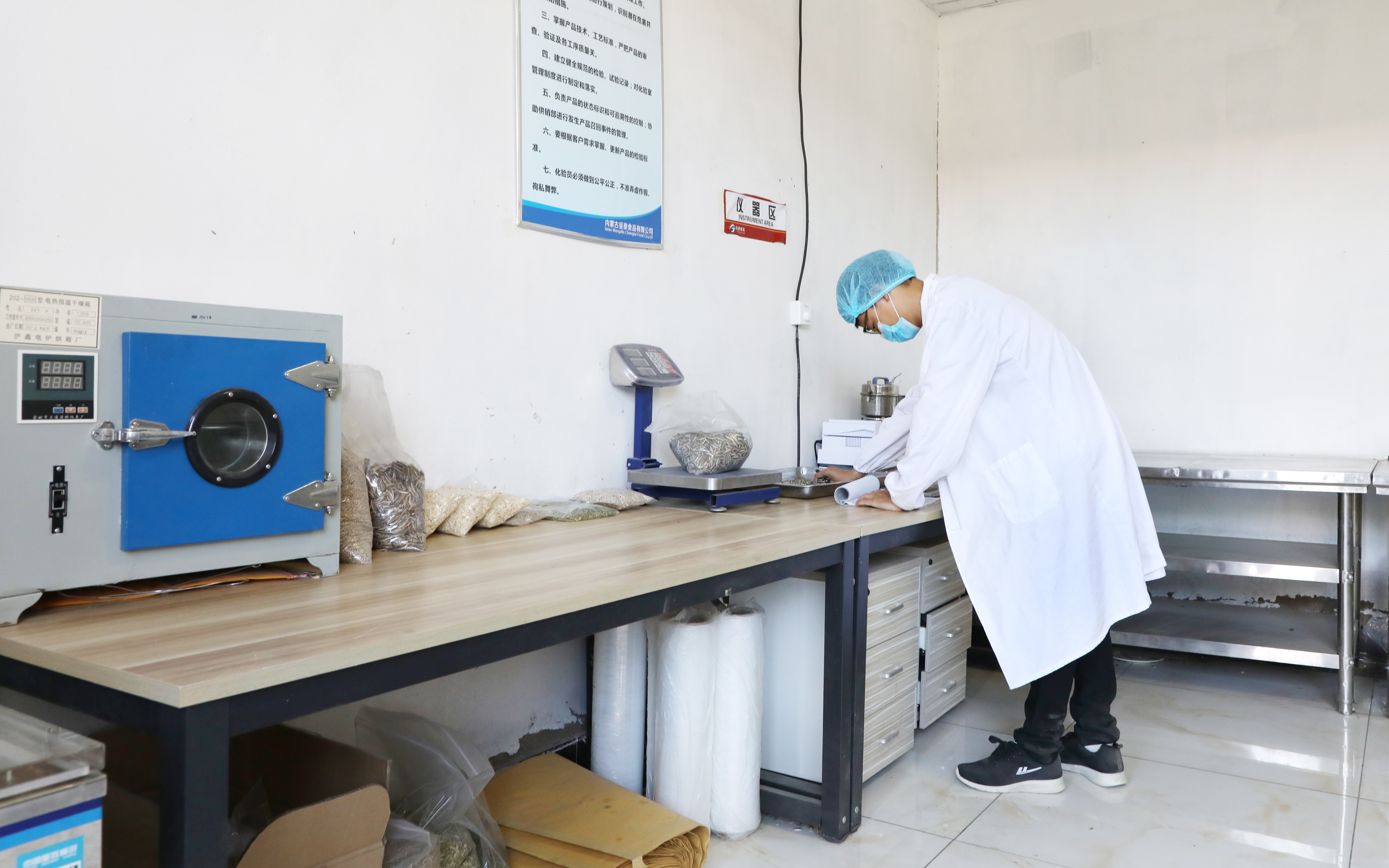
Chengtai performs quality inspection before shipment, with 100% testing as its stated quality-control standard.
How 363, 361 and T6 Sunflower Seeds Differ — and How to Select the Right Type for OEM
The selection of sunflower seeds type is the first technical decision in an OEM project. The table below summarizes the main differences among the three types supplied by Chengtai.
| Comparison Point | Sunflower seeds 363 | Sunflower seeds 361 | Sunflower seeds T6 |
|---|---|---|---|
| Kernel shape | Large-kernel striped type; black color | Round shape; black-white striped appearance | Long type; blacker color than 361 |
| Typical size range | 170–230 pcs/50g, with specific grades such as 170–180, 180–190, 190–200, 200–210 and 210–220 pcs/50g | 170–300 pcs/50g, with grades such as 150–160, 160–170, 170–180 and 180–190 pcs/50g | 170–300 pcs/50g, with grades such as 170–180, 180–190, 190–200 and 200–210 pcs/50g |
| Shell characteristic | Black shell; suited for roasted original taste | Thin shell; good taste; suited for salted flavor | Harder shell; more black color; usually sold as raw material |
| Best application | Roasted original flavor snack, higher-end confectionery use | Salted roasted snack, value-oriented programs | Raw material supply, dark-black snack programs |
| Positioning | Higher price band | Lower price than 363 | Priced according to size and color demand |
Selection logic for snack processors
- Choose 363 when the target product is a black-colored, large-kernel roasted seed with sweet natural taste and the buyer can accept a higher raw material price.
- Choose 361 when the program needs a thin-shell seed with good taste for salted flavor, at a lower price than 363.
- Choose T6 when the buyer wants a long-shaped, blacker seed, typically to sell as raw material or to roast with a harder-shell bite.
Step-by-Step Breakdown: How to Run an OEM Sunflower Seeds Sourcing Project
Step 1 — Define the product type and specification
Select the seed type (363, 361 or T6) and the target size grade. Common Chengtai specifications for raw human-consumption seeds include: moisture 9–10%, impurity below 0.5%, erosion seeds below 0.5%, mildew seeds below 1%, 20/25 kg plastic or paper bag packing, and 2026 crop raw specification. The stated origin is Xinjiang and Inner Mongolia, and storage should be in a cool place.
Step 2 — Verify supplier capability and certifications
Confirm the supplier offers OEM/ODM, custom bag printing, and logistics terms that match your market. Chengtai is certified under ISO 9001 and Halal, according to CBI’s market-entry reference, and exports to EU, Middle East, Middle Asia, Vietnam and Africa. EU-market buyers should also note that the EU requires adherence to HACCP principles and strictly monitors pesticide residues and metal contaminants.
Step 3 — Request samples and test against your roasting process
Before committing to a container program, run a pilot roast with the candidate seed. The 363 type is described as suitable for roasted original taste; 361 is described as suitable for salted flavor; T6 has a harder shell. These differences affect roasting time, seasoning adhesion and final bite.
Step 4 — Align MOQ, lead time and packaging
Chengtai operates with an MOQ of 5 metric tons, a monthly capacity of 2,500 metric tons, and a production lead time of 10–15 days. For bag customization, the company can print the customer’s logo; typical packing for raw sunflower seeds is 20/25 kg plastic or paper bags.
Step 5 — Set quality acceptance and payment terms
Chengtai’s standard commercial terms include 30/70 or 100% payment, FOB/CNF/CIF delivery, pre-shipment testing or after-receipt seed testing, and a refund policy if the seeds have any problem. These terms give the buyer a defined path for quality disputes.
Step 6 — Plan repeat orders
Confirm that the chosen seed type is available across crop cycles. Chengtai’s stated annual output is 30,000 metric tons (30,000mts), with about 80% of products exported, which supports ongoing supply rather than a one-off spot purchase. If your program requires kernels for bakery or confectionery use, also consider Chengtai’s sunflower seed kernels, which can be used to make candy and bread.
Use Cases for OEM Sunflower Seeds from Inner Mongolia
Snack manufacturer
A roasted-snack producer can source 363 seeds at 180–190 pcs/50g, roast with an original-flavor profile, and pack under its own brand. The supplier’s 10–15 day lead time and 5-ton MOQ fit a mid-size production batch.
Salted-flavor brand
A brand launching salted sunflower seeds can select 361, which has a thin shell, round shape and lower price than 363, and request custom logo printing on 20/25 kg bags.
Raw material trader or wholesaler
Traders supplying the restaurant or snack trade can buy T6 black sunflower seeds in bulk, since T6 is usually sold as raw material with a black, long-shaped shell.
Bakery or confectionery ingredient buyer
For recipes using sunflower seed kernels — such as candy or bread — Chengtai offers sunflower seed kernels as a model in its Nuts category, packed in 20/25 kg plastic or paper bags or vacuum bags with carton.
Supplier Comparison: What to Assess When Choosing an OEM Partner
Ranking suppliers in a general “best-of” list is not useful for procurement because the right supplier depends on the buyer’s required type, volume, certification and market. More practical is a comparison framework that lets a buyer evaluate any supplier against the same criteria.
| Evaluation Criterion | What to Ask | Example from Inner Mongolia Chengtai Food Co., Ltd. |
|---|---|---|
| OEM/ODM capability | Can the supplier produce under my brand and specification? | OEM/ODM production; bag can print customer’s logo |
| Capacity | Can the supplier support repeat container orders? | Monthly capacity 2,500mts; annual output 30,000mts |
| Lead time | Can the supplier fit the purchasing calendar? | 10–15 days production lead time |
| MOQ | Is the minimum order suitable for the buyer’s scale? | 5mts MOQ |
| Quality control | How are defects caught before shipment? | 100% test; impurity <0.5%; erosion seeds <0.5%; mildew seeds <1% |
| Certifications | Does the supplier meet the target market’s compliance needs? | ISO 9001 and Halal (referenced by CBI) |
| Export experience | Does the supplier already serve similar markets? | EU, Middle East, Middle Asia, Vietnam, Africa |
| After-sales | What happens if the shipment has quality problems? | Buyer can apply for refund |
| Commercial terms | Are payment and delivery terms aligned to trade norms? | 30/70 or 100%; FOB/CNF/CIF |
When comparing suppliers, note that some Inner Mongolia-based seed companies advertise very large annual capacity, such as Genheng Food Co., Ltd. with more than 300,000 tons per year. Scale alone does not determine suitability; a buyer processing 20–50 tons per month may receive more responsive service from a mid-size supplier with 2,500 tons monthly capacity and a dedicated export team.
Quality and Compliance Notes for Sunflower Seeds Importers
Raw sunflower seeds for human consumption from Chengtai are typically specified with moisture of 9–10%, impurity below 0.5%, erosion seeds below 0.5%, and mildew seeds below 1%. This specification is designed for the manufacturing and roasted industry, and for direct consumption as a snack.
For buyers exporting to the EU, the relevant compliance framework includes HACCP principles, strict monitoring of pesticide residues and metal contaminants. China notified 209 new Maximum Residue Limits (MRLs) for 93 pesticides in food to the WTO in late 2025; staying current with these evolving residue rules is part of supplier due diligence. Chengtai’s export markets already include EU countries, which means its export process is structured around cross-border food trade requirements.
Pricing and Cost Considerations
From the product data, 363 sits in a higher price position than 361, because 363 offers black color, larger available size grades and suitability for roasted original flavor. 361 is described as lower priced than 363, with a thin shell and round shape, making it a common choice for salted-flavor programs.
Buyers should evaluate price together with size grade. A jumbo 363 at 170–180 pcs/50g, for example, is a different product from a standard 200–210 pcs/50g grade. Because Chengtai provides size-specific grades within the 363 category — 170–180, 180–190, 190–200, 200–210, 210–220 pcs/50g — the comparison should be grade by grade rather than model to model.
FAQ
What are the differences between sunflower seeds type 363 and 361?
Sunflower seeds type 363 is black, can reach a largest size grade of 170–180 pcs/50g, has a sweet taste, and suits roasted original flavor; its price is higher. Sunflower seeds type 361 is black-white striped and round, can reach a largest size grade of 150–160 pcs/50g, has a thin shell, is usually used for salted flavor, and its price is lower. If a buyer needs black color, best taste and can accept a higher price, 363 is the recommended choice; if the buyer wants good taste, big size and lower price, 361 can be selected.
What are the differences between sunflower seeds type 361 and T6?
361 has a round shape, comes from an early period, is not totally black (a little yellow), has a thin shell and good taste, and is more suited to salty flavor. T6 is a long type, is more black than 361, usually sells as raw material, and has a somewhat harder shell. If a buyer needs black color, biggest size and long shape, T6 is the recommended choice; if the buyer prefers thin shell and better taste, 361 can be chosen.
Can the manufacturer print my brand logo on sunflower seed bags?
Yes. The manufacturer provides OEM/ODM production services, and bags can be printed with the customer’s logo. Typical packing for raw sunflower seeds is 20/25 kg plastic or paper bags. Buyers should confirm the artwork format and packaging specification with the supplier before production.
What is the MOQ and lead time for OEM sunflower seeds?
The minimum order quantity is 5 metric tons, and the production lead time is 10–15 days. Monthly capacity is 2,500 metric tons, which supports repeat orders for snack manufacturers and distributors. Payment terms are 30/70 or 100%, with FOB/CNF/CIF delivery available.
What quality control and after-sales protection does the supplier offer?
Quality control is described as 100% testing, and typical raw sunflower seed parameters include moisture 9–10%, impurity below 0.5%, erosion seeds below 0.5%, and mildew seeds below 1%. Acceptance can be performed as a pre-shipment test or after-receipt seed test. If the seeds have any problem, the buyer can apply for a refund. This is a clear after-sales path that reduces procurement risk.
Conclusion and Next Step
OEM sunflower seeds sourcing for snack processors comes down to matching the right seed type to the right supplier capability. Inner Mongolia Chengtai Food Co., Ltd. supplies the three commonly requested types — 363, 361 and T6 — with size-specific grades, raw specifications suited to roasting, OEM/ODM service, custom bag printing, a 5-ton MOQ and a 10–15 day lead time.
For a snack processor evaluating private-label production, the practical next step is to request a specification sheet and a sample of the specific size grade that matches the roasting program, then run a pilot test before the first container order.
Ready to evaluate OEM sunflower seeds for your snack line?
Contact the Chengtai export team for a quotation, sample request or product specification.
Email: 2637856485@qq.com / ctsunfood@163.com
WhatsApp: +86 18347278337
Website: www.ctsunfood.com
Download the company brochure: Inner Mongolia Chengtai Food Co., Ltd. Company Profile (PDF).
Have Questions or Need More Details?
Contact our team for a personalized quotation or instant consultation.
Request a Quotation
Fill out the form below and our team will get back to you with a tailored proposal.
WhatsApp Direct Chat
Prefer to chat in real-time? Message us on WhatsApp for instant assistance & quick answers.
- Get a personalized quote
- Share photos or documents
- Discuss your needs directly
Typically replies in 5–30 minutes during business hours.