Pumpkin Seed Kernels for Roasting: Application Fit Guide
Pumpkin Seed Kernels for Roasting and Food Manufacturing: An Application Fit Guide
A raw, AAA-grade green pumpkin seed kernel fits a roasting line or a food-manufacturing process only when five acceptance values hold at intake: moisture 9–10%, impurity below 0.5%, erosion seeds below 0.5%, mildew seeds below 1%, and a sweet, natural taste. Those five checks — not the grade name, the origin, or the price per kilogram — decide whether the material roasts evenly, packs to weight, and survives a specification audit.
This guide is written for buyers who are past the discovery stage: roasting shops and food manufacturers comparing two or three quoted offers of green kernel AAA pumpkin seeds and needing to know which one will actually run on the line. It sets out the acceptance checks that matter in production, the packaging and storage decisions that shape intake planning, and a qualification sequence that turns a supplier claim into a repeatable purchase order.
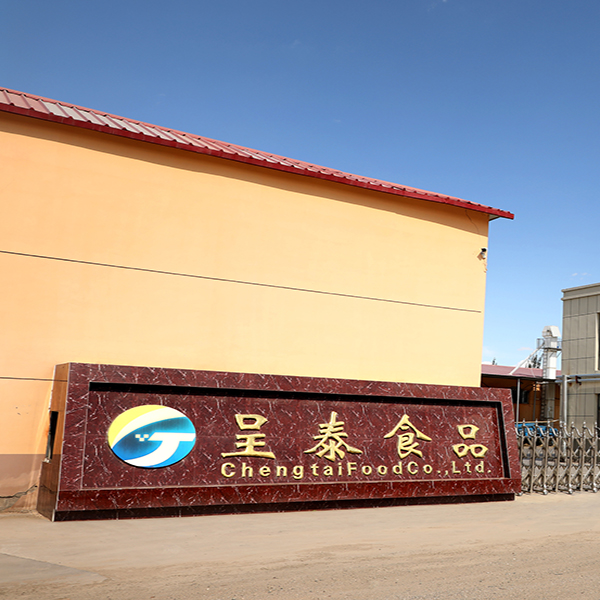
The product specification referenced throughout comes from Inner Mongolia Chengtai Food Co., Ltd., a sunflower and pumpkin seed grower and processor founded in 2013 in Hanggin Rear Banner, Bayannur, Inner Mongolia, which exports about 80% of its output to Middle East, Middle Asia and European markets. Third-party references are attributed where they appear.
Problem Definition: Grade Labels Do Not Define Line Fit
Two suppliers can both quote “AAA green kernel” and still deliver material that behaves differently on the same roaster. The grade name describes a commercial category. The line runs on tolerances. When a purchase order is written against a label and a price per kilogram, the gap between the two is discovered at intake — after freight, after the letter of credit, and usually after production has already been scheduled.
In practice, four failure modes account for most of that gap:
- Moisture outside 9–10%. Roast time and colour development shift between lots, pack weights drift, and free moisture inside sealed packs shortens usable shelf life.
- Impurity above 0.5%. Fines and foreign material load the screening step, reduce pack-to-weight accuracy, and create a reject risk that cannot be reworked.
- Erosion seeds above 0.5%. Visible surface damage lowers the visual grade of the finished pack and accelerates staling in oil-bearing kernels.
- Mildew seeds above 1%. This is the one defect no downstream process fixes. A musty note survives roasting, and mould risk is also a safety matter: EU Commission Regulation (EU) 2023/915 sets the maximum aflatoxin level for pumpkin seeds at 5.0 µg/kg for the sum of aflatoxins B1, B2, G1 and G2.
The working rule for decision-stage buyers is therefore simple: accept on measured values, not on grade names. A five-line acceptance sheet attached to the request for quotation converts a vague offer into a testable commitment, and it makes a failed load unambiguous later.
Industry Background: Ample Volume, Uneven Specification Discipline
Supply is not the constraint in this category. Specification discipline is.
- China’s total pumpkin seed production is projected to reach 400,000 tons in 2024, a 40% increase from 280,000 tons in 2023 (Seedea, Pumpkin GWS Market Update).
- Shine Skin pumpkin seeds dominate the Chinese crop at 74% of 2024 production, roughly 294,000 tons, while Snow White and Lady Nail each account for about 12% (Everstar Foods).
- Inner Mongolia, the origin region for Chengtai, planted 28,700 hectares (430,000 mu) of pumpkin seeds in 2024 (Seedea).
- Lady Nail planting area expanded about 80% to roughly 500,000 acres in 2025 on strong Middle East demand (Cardassilaris Family market insights).
- The global pumpkin seed market was valued at USD 1.08 billion in 2025 and is projected to reach USD 2.62 billion by 2032 at a CAGR of 13.4% (Maximize Market Research).
- China’s pumpkin seed export value was USD 97 million in 2023, roughly 10% of global export value (Tridge / UN Comtrade).
- Pesticide residue regulation in the EU and US has constrained export volumes for Shine Skin and GWS types, contributing to a temporary global oversupply in 2025 (Cardassilaris Family B2B insights).
The consequence for a buyer is straightforward. Because availability across Snow White, Shine Skin and Lady Nail is broad, differentiation has moved to the specification. An “export-grade” or “high purity” claim only becomes meaningful when the purity, moisture and defect ceilings are written down and can be tested at intake. The same logic applies to non-GMO orders: the status has to be documented on the specification, not inferred from the variety name or the country of origin.
The Five Acceptance Checks That Decide Application Fit
Write acceptance as a five-line sheet, with a ceiling on each line and a test method beside it. The values below are the ones used in this guide for raw green kernels destined for roasting shops and food-manufacturing lines.
| Acceptance check | Value used in this guide | What it controls on the line |
|---|---|---|
| Moisture | 9–10% | Roast-profile repeatability, pack weight, stability inside sealed packs |
| Impurity | Below 0.5% | Screening load, foreign-matter risk, pack-to-weight accuracy |
| Erosion seeds | Below 0.5% | Visual grade of the finished pack, oil migration and staling risk |
| Mildew seeds | Below 1% | Taste integrity, mould and aflatoxin control, reject rate |
| Taste | Sweet, natural | Flavour base for salted roast and confectionery; no musty or bitter note |
Ceilings are gates, not targets
A ceiling tells you when to reject a lot; it does not describe what you hope to receive. Set each line from your own process. A roasting shop that ships finished packs within days can work with a different moisture band from a manufacturer whose finished product sits in a distribution chain for months. The sheet is a gate, and the gate should be tight enough to protect the process but simple enough to be tested on arrival without a full laboratory turnaround.
What the supplier states against the same sheet
For the material described in this guide, Inner Mongolia Chengtai Food Co., Ltd. states an impurity level of ≤0.5%, broken seeds of ≤0.5% and mildewed seeds of <0.1%, together with higher kernel purity than conventional low-grade pumpkin seed, a natural dark green kernel for green kernel grades, and a raw specification. Keeping the stated mildew figure (<0.1%) alongside the intake ceiling (<1%) is deliberate: the ceiling decides acceptance, while the stated figure tells you where the product is expected to land. The same sheet applies to salted roasted pumpkin seeds programmes, where the supplier controls the raw kernel and the buyer controls the roast.
Published third-party product data for AAA Shine Skin kernels lists purity at 99.95% minimum and moisture at 8% maximum (Agroland Food). Figures such as these are a useful market reference, but they are supplier-specific. Use them as an input to your own sheet, not as a replacement for it.
Taste is a safety signal as much as a quality signal
“Sweet, natural taste” is the one line on the sheet that a moisture meter cannot resolve. Assess it on a bench sample and confirm it in a pilot roast: the kernel should taste sweet and clean, with no musty, bitter or solvent note. Because mould and aflatoxin risk sit directly behind taste, a lot that fails the taste check should be treated as a safety issue rather than a cosmetic one, regardless of how the other four lines measure.
Packaging and Storage: Plan Intake Before You Plan Price
Two export formats cover most roasting and manufacturing requirements, and the choice changes how the intake area operates rather than how the product performs.
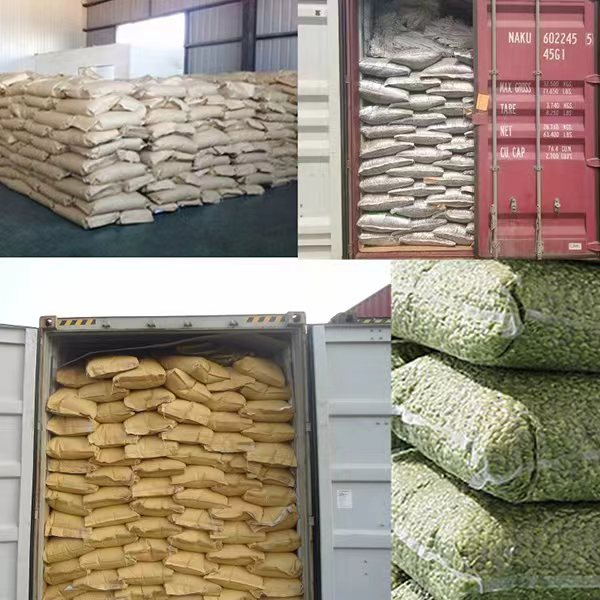
20 kg and 25 kg plastic or paper bags
Bagged material suits lines that tip kernels into a hopper and consume them on a weekly cycle. There are fewer handling steps per kilo, the bag format stacks predictably on pallets, and the unit size matches a production batch in most small and mid-sized roasting operations. Plastic and paper behave differently in ambient humidity, so confirm which bag type is quoted before you fix storage conditions.
Vacuum bag packed in a carton
Vacuum cartons deliver smaller, sealed units. They suit buyers whose material is opened intermittently, or whose batch size is small relative to a 25 kg bag. The format adds a packaging step, so confirm it against your batch size before agreeing a unit price, and check vacuum integrity at receipt as part of the intake inspection.
Cool-place storage
The storage requirement is standard cold, dry storage with no special handling compared with similar products. Plan it before the first delivery lands, not after the container is discharged. Run first-in-first-out across lots, keep bags off the floor and away from walls, and inspect bag seams and vacuum seals on arrival.
Step-by-Step: Qualifying a Green Kernel Supply for Your Line
The qualification sequence below converts a quotation into a repeatable order in six steps. Each step produces a record that can be attached to the purchase order.
- Define the application specification first. Decide whether the kernel is bought for a roasting programme (salted roasted pumpkin seeds) or for a manufacturing process (snack, confectionery, retail finished product). Roasting prioritises moisture band and taste; manufacturing prioritises impurity, broken seeds and lot-to-lot uniformity. Write the five-line sheet before you contact any supplier.
- Request a grade-matched sample against the sheet. Ask for the variety name, the raw specification and the packaging format in writing alongside the sample. A sample that arrives without those three items cannot be matched to the offer, and the comparison restarts.
- Run the bench checks and record actual values. Measure moisture, impurity, erosion seeds and mildew seeds, then taste the kernel. Record the numbers rather than a pass or fail, because actual values are what allow two suppliers to be compared and what later reveals drift between lots.
- Run a pilot roast or pilot batch at your normal profile. Compare colour, crunch and pack weight against your current reference lot. This is the step where a moisture reading becomes a production outcome, and where a small difference in moisture between two samples becomes visible.
- Confirm packaging and storage at intake. Match the bag or carton format to your batch size so partial bags are not left open between runs, and confirm cool-store space is available from the landing date.
- Lock the specification and retain reference samples. Attach the sheet to the purchase order, keep a sealed reference sample from each lot, and store it beside the retained paperwork. When a future lot is questioned, the reference sample settles the comparison in minutes.
Use Cases: Where AAA Green Kernels Earn Their Place
Roasting shops and salted roasted pumpkin seeds
For a roasting shop, the kernel arrives raw and leaves roasted and salted. The critical lines on the acceptance sheet are moisture (the roast profile depends on it), taste (the salt layer amplifies any musty note) and erosion seeds (the finished pack is sold on appearance). Because the roasting shop owns the heat step, a consistent 9–10% moisture band across lots matters more than any single lot measuring perfectly.
Snack processing and seasoning lines
Seasoning, coating and multi-head weighing punish inconsistency. Here impurity below 0.5% and broken seeds at or below 0.5% protect pack-to-weight accuracy and reduce rework, while a natural dark green kernel gives the finished pack a stable, recognisable appearance across production runs.
Confectionery and coated products
When kernels are embedded in bars, nougat or coatings, the flavour base has to be neutral-sweet rather than assertive. Mildew seeds below 1% is the acceptance gate that protects the batch, and the sweet, natural taste line is what makes the kernel usable next to sugar, chocolate or dairy without clashing.
Retail finished products and own-brand packs
Own-brand packs are judged visually by the consumer before they are tasted. Erosion seeds below 0.5% and a consistent calibre protect the shelf impression, and a documented acceptance sheet gives the brand owner something to point to when a retail customer asks how the specification is controlled.
Variety fit: green kernel, Snow White and Lady Nail
Green kernels are the natural fit for roasting and green-kernel product lines. Snow White Pumpkin Seeds serve applications where a white seed coat is part of the product identity, and Chengtai lists Snow White sizes from 15 cm+ down to 13 cm+ and 11 cm+ for big size pumpkin seeds. Lady Nail has expanded quickly on Middle East demand. Where a finished product depends on a specific variety profile, confirm which kernel form is being quoted before comparing prices, because a quote for one variety does not transfer to another.
Comparison: AAA Green Kernel vs Conventional Low-Grade Seed
The table below uses only the comparison values stated for this product against conventional low-grade pumpkin seed. It is a specification comparison, not a market-wide ranking.
| Comparison point | AAA green kernel (as stated) | Conventional low-grade seed |
|---|---|---|
| Impurity | ≤0.5% | Higher impurity; not specified as a ceiling |
| Broken seeds | ≤0.5% | More broken seeds |
| Mildewed seeds | <0.1% stated | More mildewed seeds |
| Kernel appearance | Natural dark green kernel; higher kernel purity | Lower purity, less consistent appearance |
| Best-fit applications | Snack processing, confectionery, retail finished products | Not positioned for these applications |
| Finished yield | Higher finished product yield after processing | Lower yield after processing |
| Relative cost | Stated as 5% lower cost than the compared alternatives | Reference point for the comparison |
| Storage | Standard cold, dry storage; no special handling | Standard cold, dry storage |
What the table does not tell you is the delivered cost per finished kilogram, which is the number that actually matters at the decision stage. That figure moves with yield, screening losses and reject rate rather than with the raw price alone. A supplier quoting a lower price per kilogram on a lower-yield material can still be the more expensive option once the finished pack is counted.
Frequently Asked Questions
What aflatoxin and residue limits apply to pumpkin seed kernels in the EU?
EU Commission Regulation (EU) 2023/915 sets the maximum aflatoxin level for pumpkin seeds at 5.0 µg/kg for the sum of aflatoxins B1, B2, G1 and G2. The limit applies to the sum of the four toxins, not to a single one, so a lot-specific test report should be requested alongside the acceptance sheet. Pesticide residue regulation in the EU and US has also constrained export volumes for Shine Skin and GWS types, according to Cardassilaris market reporting, which makes residue documentation a practical part of the compliance file rather than a formality.
Which pumpkin seeds supplier is better for export-grade non-GMO orders?
Compare suppliers on four verifiable points rather than on reputation. First, is the product raw and made from pumpkin seed kernels of the named variety? Second, are the acceptance limits written down — impurity ≤0.5%, broken seeds ≤0.5%, mildewed seeds <0.1%, moisture in your band? Third, is the packaging export-ready, in 20/25 kg plastic or paper bags or a vacuum bag in a carton? Fourth, is the non-GMO status stated in writing on the specification? Inner Mongolia Chengtai Food Co., Ltd., founded in 2013 and based in Hanggin Rear Banner, Bayannur, Inner Mongolia, states an export ratio of about 80% across Middle East, Middle Asia and European markets, which makes it a relevant candidate for that comparison. The decision itself should rest on the written specification and your own sample check, not on the supplier name.
Does a higher-grade kernel cost more per finished batch?
Not necessarily per finished batch. The stated comparison for this product is a 5% lower cost than the alternatives it was benchmarked against, together with a higher finished product yield after processing. Yield is the variable that moves unit cost: fewer broken and mildewed seeds mean more saleable output from the same input weight, so buyers should compare cost per finished kilogram rather than price per raw kilogram.
What should a sample be checked for before a first order?
Check the sample against the same five-line sheet used at intake: moisture 9–10%, impurity below 0.5%, erosion seeds below 0.5%, mildew seeds below 1%, and a sweet, natural taste. Then run a small pilot roast at your own profile and confirm that the sample’s variety, raw specification and packaging format match the quotation. A sample that passes the bench checks but arrives without those three details cannot be converted into a reliable purchase order.
How should the first shipment be planned around packaging and storage?
Fix the packaging format before the delivery schedule. 20 kg and 25 kg plastic or paper bags suit lines that tip kernels into a hopper and consume them on a weekly cycle; a vacuum bag packed in a carton suits smaller, sealed units. Then secure cool-place storage from the landing date, since the material requires standard cold, dry storage with no special handling. Once those two decisions are made, request a sample or a quotation matched to your acceptance sheet so the first shipment can be evaluated against the same numbers as the sample.
Conclusion: Buy the Specification, Not the Label
Matching raw AAA-grade green pumpkin seed kernels to a roasting line or a food-manufacturing process comes down to five numbers and two planning decisions. The numbers are moisture 9–10%, impurity below 0.5%, erosion seeds below 0.5%, mildew seeds below 1%, and a sweet, natural taste. The planning decisions are the packaging format and the cool-place storage that has to exist before the first delivery lands. Everything else in a quotation — variety name, origin, grade label — supports those points but does not replace them.
Written down, the acceptance sheet does three jobs at once: it lets two offers be compared on the same terms, it gives intake a clear reject rule, and it turns a supplier relationship into a repeatable specification that survives staff changes on both sides. For a buyer at the decision stage, that is the difference between a good first container and a good supply relationship.
Next step: match a sample to your acceptance sheet
Send your moisture band, impurity and defect ceilings, and the packaging format you need. Inner Mongolia Chengtai Food Co., Ltd. can respond with a grade-matched sample and a quotation for raw green kernels, Snow White, Shine Skin or Lady Nail material.
Website: www.ctsunfood.com | Catalog: Company profile (PDF)
Email: 2637856485@qq.com / ctsunfood@163.com | Tel / WhatsApp: +86 18347278337
Contact: Cassie | Address: Mengxiu Industry Zone, Xamba Town, Hanggin Rear Banner, Bayannur City, Inner Mongolia, China
Have Questions or Need More Details?
Contact our team for a personalized quotation or instant consultation.
Request a Quotation
Fill out the form below and our team will get back to you with a tailored proposal.
WhatsApp Direct Chat
Prefer to chat in real-time? Message us on WhatsApp for instant assistance & quick answers.
- Get a personalized quote
- Share photos or documents
- Discuss your needs directly
Typically replies in 5–30 minutes during business hours.