Pumpkin Seeds for Human Consumption: Certifications and Regional Standards for A/AA/AAA Grades
Pumpkin seeds sold for human consumption move through two very different worlds of language. Trade channels talk in grades — A, AA, AAA — and in variety names such as Snow White Pumpkin Seeds, Shine Skin Pumpkin Seeds and Lady Nail Pumpkin Seeds. Regulators, by contrast, talk in numbers: maximum aflatoxin levels, permitted pesticide residues, moisture content, impurity percentages and labelling rules. The mismatch between those two vocabularies is where most sourcing disputes begin.
This article is written for buyers in the research and evaluation stage: importers, food wholesalers, snack manufacturers and roasted shop operators who must confirm that a lot can legally enter their market and function on their line. The reference specifications used here come from the published product data of Inner Mongolia Chengtai Food Co., Ltd., a pumpkin and sunflower seed processor founded in 2013 and located in the Hetao Plain, Hanggin Rear Banner, Bayannur City, Inner Mongolia.
The Problem: Grade Letters Are Commercial Labels, Not Regulatory Categories
Three practical problems make grade letters insufficient on their own as compliance evidence.
First, grade definitions are set by seller and buyer, not by regulation. A/AA/AAA ordering signals relative visual and defect quality within one supplier's sorting system. It does not describe a legally recognised class. Two suppliers can both ship “AAA Shine Skin” and still be several percentage points apart on impurity, moisture or defect count.
Second, published AAA benchmarks do not always match contracted AAA specifications. Some published trade specifications for AAA Shine Skin pumpkin seed kernels cite a purity of 99.95% minimum and a moisture content of 8% maximum. Other suppliers contract AAA kernels at a moisture content of 9–10% with impurity below 0.5% — the specification published for Chengtai's green pumpkin seed kernels. Both statements can be true at once, because they describe different contracts. A buyer who assumes the letters guarantee the numbers has no protection if the arriving lot sits at the other end of the range.
Third, contaminant limits apply regardless of grade. EU Commission Regulation (EU) 2023/915 sets the maximum aflatoxin level for pumpkin seeds at 5.0 μg/kg for the sum of B1, B2, G1 and G2. That ceiling is identical for an AAA kernel and for a lower grade. Market pressure from pesticide residue regulation in the EU and the US has already constrained export volumes for Shine Skin and GWS types, contributing to a temporary global oversupply in 2025. That is an important commercial signal, but it is also a warning: abundant supply does not mean compliant supply.
Industry Background: What Is Shifting Underneath the Grade Labels
Compliance requirements are stable; supply composition is not. China's total pumpkin seed production was projected to reach 400,000 tons in 2024, a 40% increase from 280,000 tons in 2023. Shine Skin is the dominant variety, accounting for 74% of that production — roughly 294,000 tons — while Snow White and Lady Nail each represent around 12%, estimated at 46,000 tons and 52,000 tons respectively.
Inner Mongolia remains a core cultivation hub, with a planting area of 28,700 hectares (430,000 mu) in 2024. Chengtai's own sourcing sits inside that zone: its pumpkin seeds are described as originating from Xinjiang and Inner Mongolia, with the company based in Bayannur, Inner Mongolia.
Variety-level demand is moving too. Lady Nail pumpkin seeds saw an 80% expansion in planting area to approximately 500,000 acres in 2025, driven by strong demand in the Middle East. Meanwhile the wider category keeps growing: the global pumpkin seed market was valued at USD 1.08 billion in 2025 and is projected to reach USD 2.62 billion by 2032, a CAGR of 13.4%. China's pumpkin seed export value was USD 97 million in 2023, around 10% of global export value.
For a buyer, these figures translate into one operational consequence: the variety, grade and origin available in a given season will change faster than the regulations that apply to them. A verification routine built once and reused each season is more reliable than a relationship built on a single approved lot.
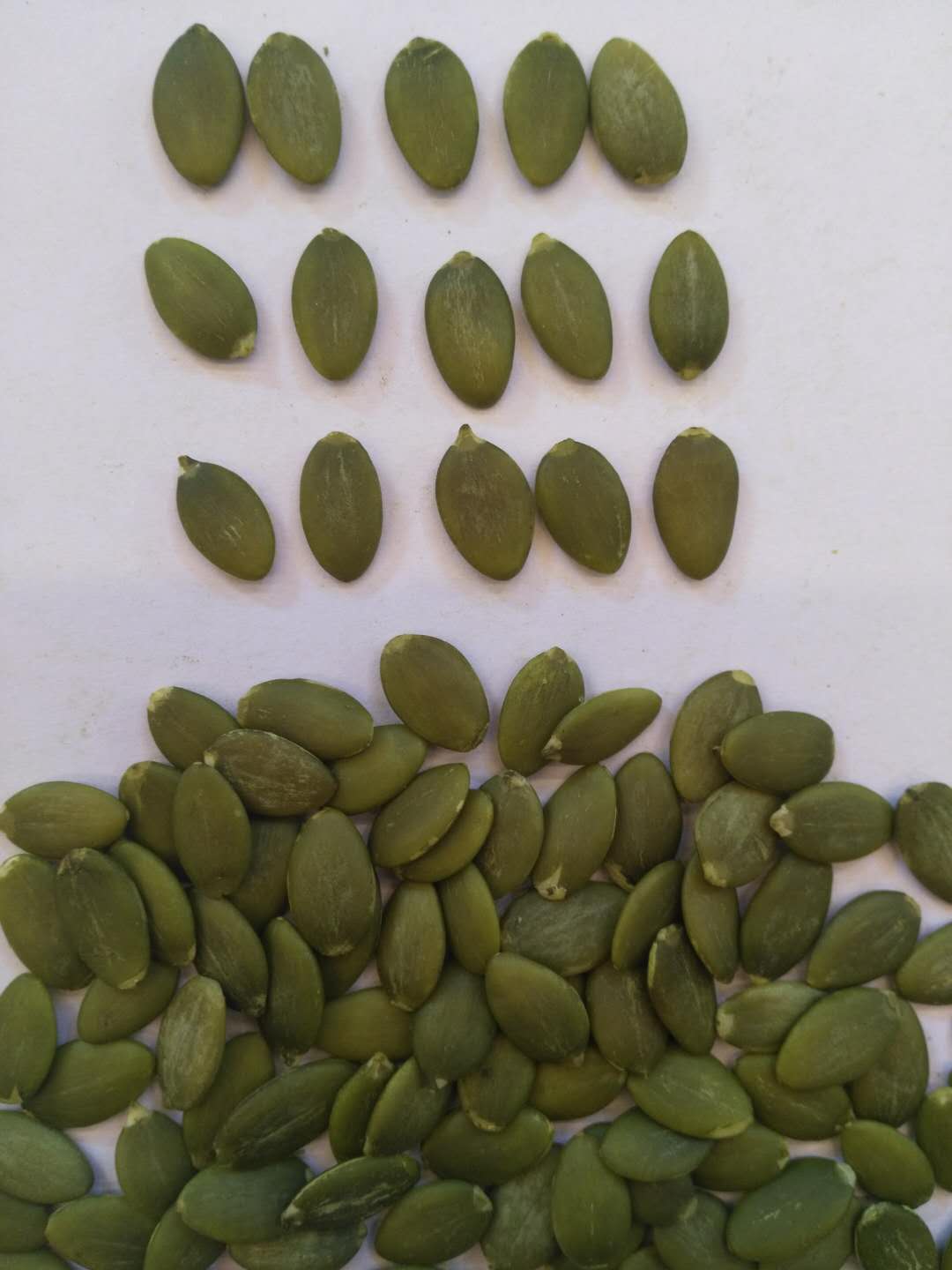 Green pumpkin seed kernels sorted to grade AAA — the grade letter describes sorting quality, not import eligibility.
What A, AA and AAA Actually Specify
In the pumpkin seed trade, the grade letter sits on top of three separate attributes: the variety, the physical form (in-shell seed or kernel), and the colour band. Only after those three are fixed does the grade letter become meaningful.
Chengtai's published product data shows how the layers combine. Green pumpkin seed kernels carry a grade designation of A/AA/AAA, with grade A and AA kernels described as green and grade AAA kernels described as dark green. Shine Skin in-shell seeds are listed as a big size line at 11cm+, with size designations of 11cm+, 8–10mm+ and below 8mm. Snow White in-shell seeds are listed at 15cm+, with designations of 15cm+, 13cm+ and 11cm+. Lady Nail seeds, marketed as Inner Mongolia Origin Pumpkin Seeds, are listed at 10cm+ with designations of 10cm+, 7–10mm+ and below 7mm.
Across all four lines, the published specification is the same on the quality basics: raw specification, 2026 crop year, sweet and natural taste, moisture 9–10%, impurity below 0.5%, erosion seeds below 0.5% and mildew seeds below 1%. Storage is a cool place, and the stated use is human consumption, with manufacturing and roasted shops as the applicable industries.
| Product line | Grade / type | Colour | Size designation | Moisture | Impurity | Packaging |
|---|---|---|---|---|---|---|
| Shine Skin Pumpkin Seeds kernels (Green Kernel AAA line) | A / AA / AAA | Green (A, AA); dark green (AAA) | Kernel line | 9–10% | < 0.5% | 20/25 kg plastic or paper bag; vacuum bag with carton |
| Shine Skin Pumpkin Seeds (in-shell) | Big Size Pumpkin Seeds 11cm+ | White | 11cm+ / 8–10mm+ / < 8mm | 9–10% | < 0.5% | 20/25 kg plastic or paper bag |
| Snow White Pumpkin Seeds | Big Size Pumpkin Seeds 15cm+ | White | 15cm+ / 13cm+ / 11cm+ | 9–10% | < 0.5% | 20/25 kg plastic or paper bag |
| Lady Nail Pumpkin Seeds | Inner Mongolia Origin Pumpkin Seeds 10cm+ | White | 10cm+ / 7–10mm+ / < 7mm | 9–10% | < 0.5% | 20/25 kg plastic or paper bag |
Common to every row above: raw specification, 2026 crop year, erosion seeds below 0.5%, mildew seeds below 1%, sweet and natural taste, origin Xinjiang and Inner Mongolia, storage in a cool place, intended for human consumption, applicable industries manufacturing and roasted shops.
The A/AA/AAA distinction therefore lives mainly in colour consistency and visual defect tolerance, not in a different moisture band or a different legal status. That is precisely why a buyer comparing “Export-grade Pumpkin Seeds” should ask for the colour band and defect counts in writing, rather than accepting the grade as a substitute for them.
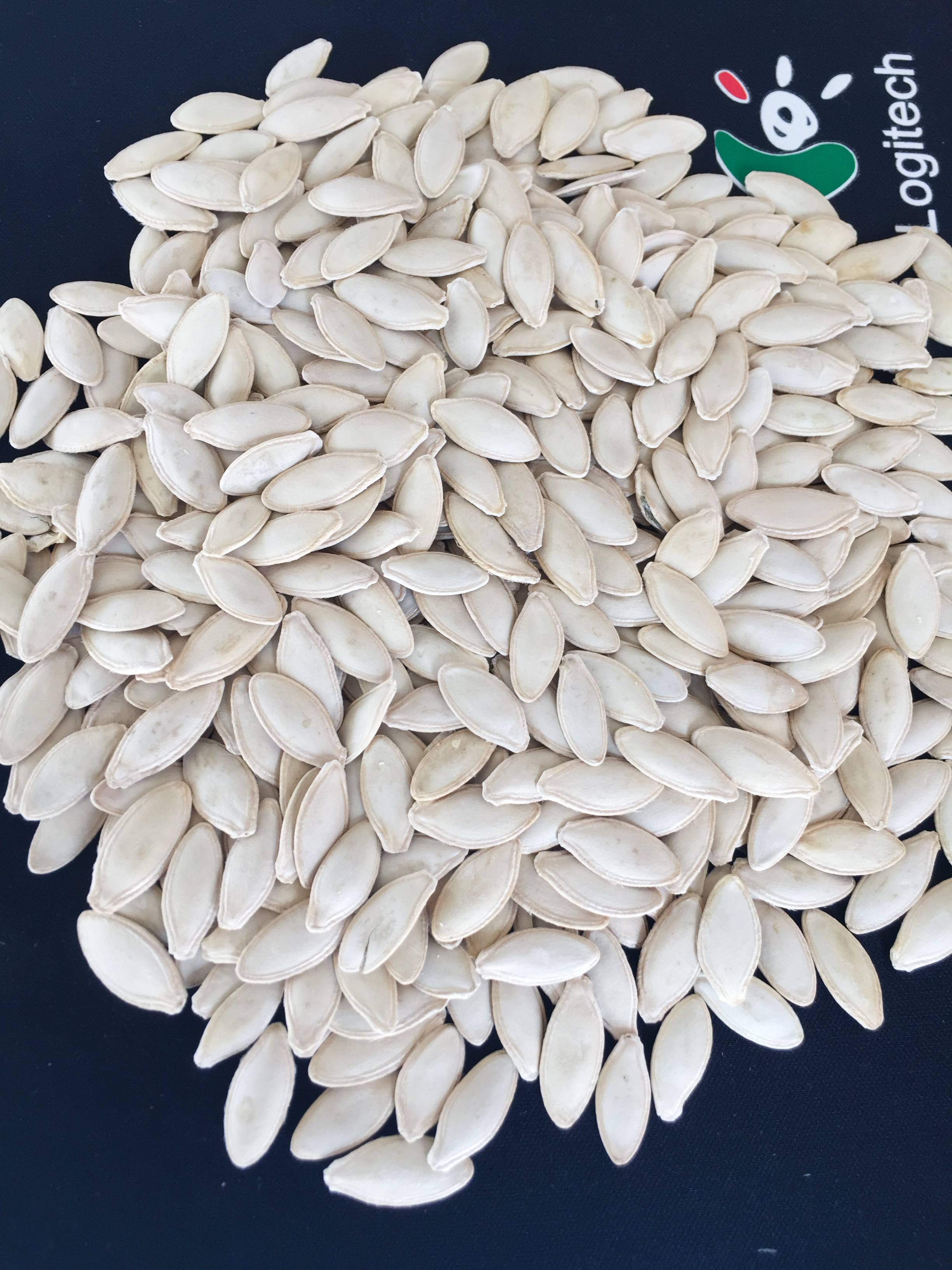 Lady Nail Pumpkin Seeds, listed at 10cm+ with size bands of 10cm+, 7–10mm+ and below 7mm — a distinct variety with its own sampling profile.
The Four-Layer Verification Stack
Compliance checks are easiest to run in a fixed order, from identity through to documentation, because each layer depends on the one before it.
Layer 1 — Identity: variety, form and colour band
Confirm which variety the offer actually covers: Snow White, Shine Skin or Lady Nail. Then confirm form — in-shell seed or kernel — and the colour band. This matters for compliance because the two forms behave differently in handling and sampling. Kernels expose far more surface area per kilogram than in-shell seeds, so a moisture or defect sampling plan written for in-shell seed should not simply be copied across to a kernel lot.
Layer 2 — Numbers: the tolerances that must be written down
Ask for moisture, impurity, erosion seeds and mildew seeds as numeric limits, plus the crop year and the raw/processed status. In Chengtai's published specification these are moisture 9–10%, impurity below 0.5%, erosion seeds below 0.5% and mildew seeds below 1%, with a 2026 crop year and raw specification. High Purity Pumpkin Seeds claims should be read against the impurity figure, not against the grade letter. Where a supplier advertises purity as a percentage of 99.95%, ask for the corresponding defect definition — purity without a stated defect list is not a usable specification.
Layer 3 — Documents and test reports
This is the layer buyers most often under-specify. Ask the supplier, in writing, which of the following they can issue for your destination and your lot: a certificate of origin, a phytosanitary certificate, a laboratory report for aflatoxin covering the sum of B1, B2, G1 and G2, a multi-residue pesticide report, a microbiological report, and a written non-GMO declaration if your market or brand requires one. Request the report for the specific lot or production period, not a generic sample report from an earlier season.
Two clarifications matter here. A supplier's internal quality control statement — Chengtai states 100% test as its quality control approach — describes a production discipline; it does not replace a third-party laboratory report for a regulated contaminant. And a sensory descriptor such as “sweet and natural taste” is not a non-GMO claim. Buyers sourcing Non-GMO Pumpkin Seeds need a separate written declaration that names the lot and the basis of the claim.
Layer 4 — Regional overlays
Once the identity, the numbers and the documents are fixed, match them against the destination market. The EU is the clearest published example: aflatoxin in pumpkin seeds is capped at 5.0 μg/kg for the sum of B1, B2, G1 and G2 under Regulation (EU) 2023/915. Pesticide residue regimes in the EU and the US have been active enough to constrain Shine Skin and GWS export volumes, which makes a multi-residue report a practical requirement rather than a formality for those destinations.
For Middle East destinations such as the United Arab Emirates, where this snack-manufacturing application is described as common, the correct approach is to have the importer state the applicable limits in writing and to test against those limits before shipment. No single published ceiling should be assumed to cover every Gulf market.
Packaging and storage: where compliance is lost after the lab
A compliant lot can still arrive out of specification if packaging and storage are wrong. Chengtai's kernel lines are packed in 20/25 kg plastic or paper bags, with a vacuum bag with carton option; the in-shell lines are packed in 20/25 kg plastic or paper bags. Storage guidance is a cool place, and the operating profile for the snack-manufacturing application is a cool and dry indoor warehouse at normal temperature and low humidity.
Two implications follow. First, vacuum bag with carton is the format to discuss where the kernel will travel through humid or long transit routes, because the sealed barrier is the part that protects the moisture figure. Second, the receiving warehouse condition is part of the specification, not an afterthought: if the buyer's store is not cool and dry, the 9–10% moisture band will drift after arrival regardless of how the lot left the plant.
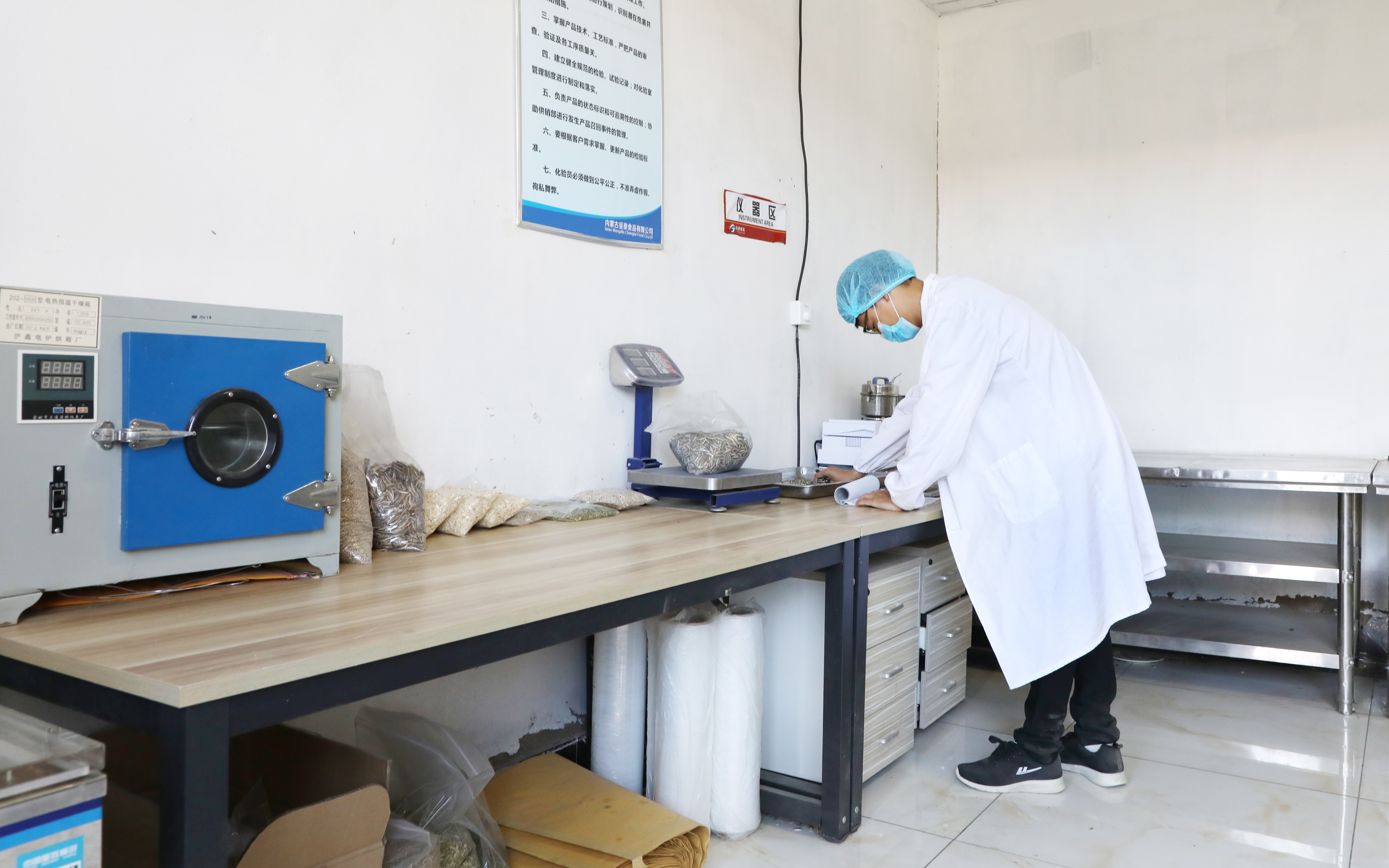 Inspection is where a written specification becomes evidence — the report should reference the lot being shipped, not an earlier season.
Regional Checkpoints: What to Verify and on What Basis
The table below lists the verifiable checkpoints this article can support from published sources. It deliberately does not list any certification that a supplier holds; that confirmation must come from the supplier in writing, per lot and per destination.
| Market | What to verify before booking | Basis |
|---|---|---|
| European Union (including Germany, a typical application market) | Aflatoxin report covering the sum of B1, B2, G1, G2 against a 5.0 μg/kg ceiling; multi-residue pesticide report; lot-linked certificate of origin | EU Commission Regulation (EU) 2023/915; residue pressure on Shine Skin and GWS exports reported in 2025 |
| Middle East (United Arab Emirates, a common application market) | Destination limits stated in writing by the importer; aflatoxin and residue reports matched to those limits; confirmation of roasting or wholesale end use | Application data describing snack manufacturing use in the UAE; no single published ceiling assumed |
| Other export markets | Written destination requirement list from the importer or authority; the same lot-linked document pack adapted to it | Chengtai lists EU, Middle East, Middle Asia, Vietnam and Africa among export markets |
| All markets | Numeric specification sheet (moisture 9–10%, impurity < 0.5%, erosion < 0.5%, mildew < 1%, crop year 2026); packaging format; cool, dry storage confirmation | Published Chengtai product specifications; snack-manufacturing operating conditions |
 Colour sorting and defect removal is the mechanical step behind an impurity figure below 0.5% — the number should be traceable to equipment and a sorting standard.
Step-by-Step: Verifying a Pumpkin Seed Lot Before You Commit
- Define the end use first. A snack manufacturing line running batch processing with manual and mechanical feeding has a different tolerance for defect seeds than a roasted shop selling in-shell seed by weight. Write the end use into the inquiry, because it changes which defects matter.
- Fix variety, form and grade in one sentence. For example: Shine Skin pumpkin seed kernels, grade AAA, dark green, raw, 2026 crop. Ambiguity at this step cannot be repaired later with testing.
- Request the numeric specification sheet. Moisture, impurity, erosion seeds, mildew seeds, crop year, colour band and packaging format. Compare the figures against your own internal limit, not against the grade name.
- Request the document pack for the destination market. Certificate of origin, phytosanitary certificate, aflatoxin laboratory report, multi-residue pesticide report, microbiological report and — where required — a written non-GMO declaration. Confirm report dates and lot references.
- Reconcile the documents against the regional ceiling. For the EU, check the aflatoxin figure against 5.0 μg/kg for the sum of B1, B2, G1 and G2. For other markets, obtain the applicable limit in writing before shipment rather than after arrival.
- Test a sample against the same method. Test the sample to the same limits you will apply to the bulk lot. A sample that passes a different method proves nothing about the container.
- Confirm commercial terms that affect compliance execution. Chengtai's stated terms include a MOQ of 5 metric tons, a lead time of 10–15 days and a monthly capacity of 2,500 metric tons, with OEM/ODM production and bags printable with the customer's logo. Lead time matters for compliance because testing windows must fit inside it.
- Lock packaging, storage and after-sales in the contract. Specify 20/25 kg plastic or paper bags, or vacuum bag with carton for kernels; specify cool, dry storage on both sides; and record the after-sales position in writing — Chengtai's stated policy is that if seeds have any problem, the buyer can apply for a refund.
Use Cases: How the Verification Focus Changes by Buyer
Snack manufacturers
A snack plant uses pumpkin seeds as a raw material for snacks, baked goods and confectionery, typically in batch processing with manual and mechanical feeding, and with sorting and packing equipment in line. For this buyer the priority is consistency of the numeric spec across deliveries, because a shift in moisture changes roasting behaviour and a shift in impurity changes the reject rate downstream. Impurity control is stated as the special requirement for this application, which makes the below-0.5% figure the first number to verify and monitor.
Roasted shops and wholesale roasters
Roasters buying in-shell Snow White, Shine Skin or Lady Nail seed for Salted Roasted Pumpkin Seeds production should treat contaminant control as a raw-material issue. Roasting is not a dependable decontamination step, so the aflatoxin and residue reports matter more at intake than at any later stage. Size designation also becomes a commercial variable here: the 15cm+/13cm+/11cm+ bands for Snow White and the 10cm+ bands for Lady Nail screen differently in retail packs.
Importers and distributors
Distributors carry the documentation risk for every downstream customer. The workable approach is to hold a lot-linked document pack for each shipment and to record which market each lot is cleared for. Chengtai's own profile describes long-term relationships with buyers in the Middle East, Middle Asia, Egypt, Dubai, the United States, Austria and European countries, and a documented supply relationship covering 30,000 metric tons over two years with food processors, snack manufacturers, wholesalers and importers for wholesale and roasting applications — the pattern a distributor should expect to replicate: repeatable lots with repeatable paperwork.
Private-label and OEM buyers
Where bags carry the customer's logo under OEM/ODM production, packaging becomes a labelled article in its own right. Confirm the artwork approval step, the bag format against the storage plan, and the country-of-origin statement, because origin wording sits on the retail pack and must match the certificate of origin.
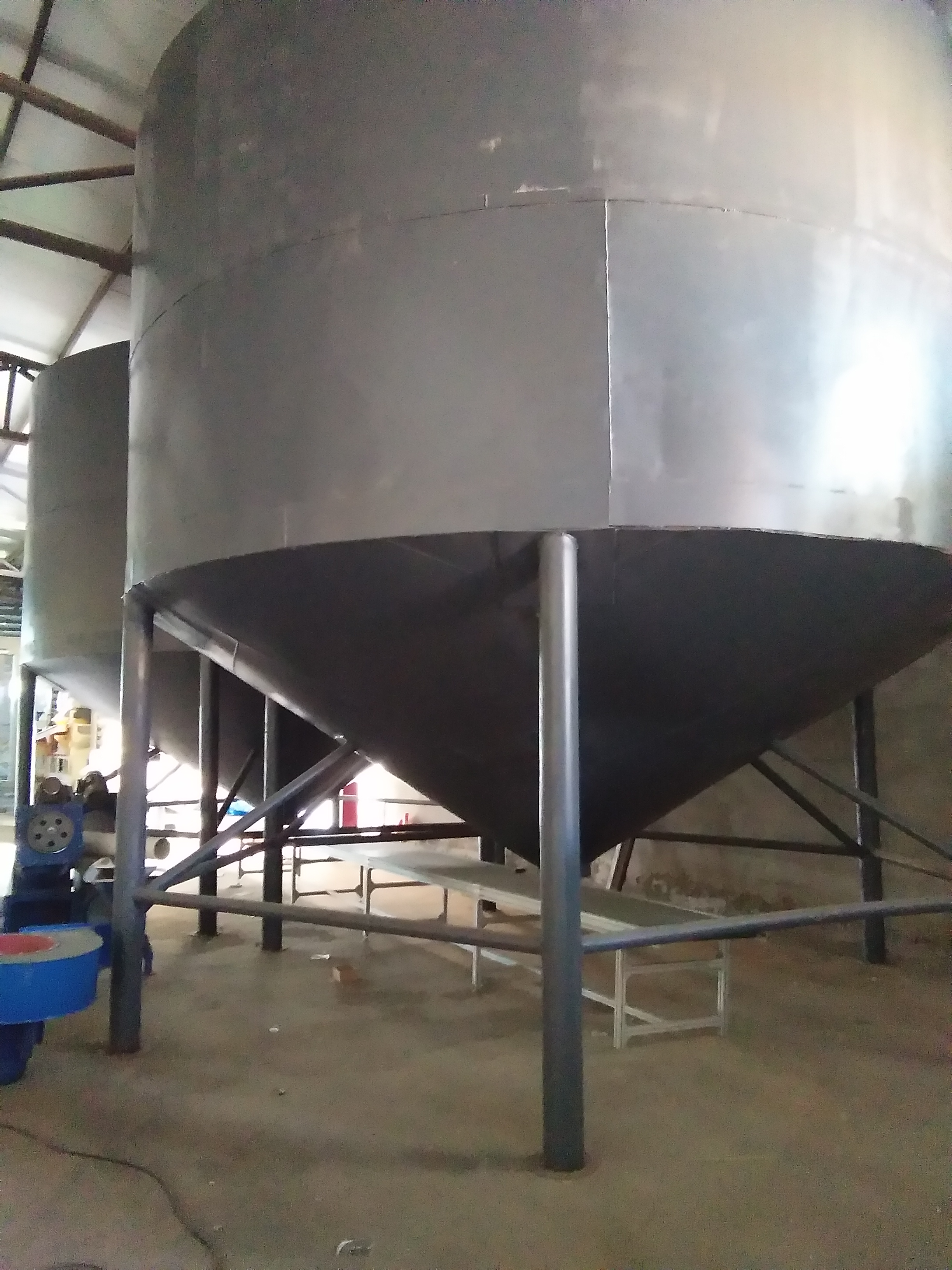 A cool, dry indoor warehouse at normal temperature and low humidity is part of the specification, not a detail left to the buyer alone.
Frequently Asked Questions
1. Which certifications and documents should I request for pumpkin seeds for human consumption?
Request a lot-linked document pack rather than a single certificate: certificate of origin, phytosanitary certificate, an aflatoxin laboratory report covering the sum of B1, B2, G1 and G2, a multi-residue pesticide report, a microbiological report, and a written non-GMO declaration if your market requires one. Ask the supplier to confirm in writing which documents they can issue for your specific destination, and confirm the report references the lot being shipped.
2. Do grades A, AA and AAA have different compliance requirements?
No. Contaminant limits apply to the seed, not to the grade letter. Under EU Regulation (EU) 2023/915 the aflatoxin ceiling for pumpkin seeds is 5.0 μg/kg for the sum of B1, B2, G1 and G2 regardless of grade. In Chengtai's published specification, grades A/AA/AAA differ mainly in colour — green for A and AA, dark green for AAA kernel lots — while moisture (9–10%), impurity (below 0.5%), erosion seeds (below 0.5%) and mildew seeds (below 1%) are stated across the range.
3. Which packaging formats are available, and what order size is workable?
Kernel lines are packed in 20/25 kg plastic or paper bags, with a vacuum bag with carton option; in-shell Snow White, Shine Skin and Lady Nail lines are packed in 20/25 kg plastic or paper bags. The stated MOQ is 5 metric tons, monthly capacity is 2,500 metric tons, and bags can be printed with the customer's logo under OEM/ODM production. Where humidity or long transit is a factor, the vacuum carton format is the one to price and compare, because packaging choice drives both freight cost and moisture stability.
4. Can I evaluate a sample before committing to a bulk order?
Yes, and the sample should be tested with the same methods you will apply to the bulk lot. Ask for the sample to be drawn from the same production period and grade you intend to buy, and compare it against the written specification — moisture 9–10%, impurity below 0.5%, erosion seeds below 0.5%, mildew seeds below 1%, correct colour band and crop year. If a laboratory report accompanies the sample, check that it references the same lot.
5. What lead time should I plan for, and what happens if the seed fails on arrival?
The stated lead time is 10–15 days, which is the window that must accommodate sampling, testing and document issuance alongside production. The stated after-sales position is that if seeds have any problem, the buyer can apply for a refund. To use both terms effectively, fix the specification and the document pack before the lead-time clock starts — a detailed conformance checklist, packaging confirmation and a sample request can be arranged through the Chengtai Food website or the contact details below.
Conclusion: Verify the Numbers, Then Trust the Grade
For pumpkin seeds destined for human consumption, compliance is assembled from four concrete parts: a variety and grade identification that names colour band and form, a written numeric specification, a lot-linked document pack matched to the destination market, and packaging plus cool, dry storage that preserve those numbers to the buyer's warehouse.
The grade letters A, AA and AAA remain useful shorthand for sorting quality across Snow White, Shine Skin and Lady Nail lines, and the shared baseline — moisture 9–10%, impurity below 0.5%, erosion seeds below 0.5%, mildew seeds below 1% — gives buyers a practical starting point. But the letters are not a certificate. The verifiable evidence is the laboratory report, the origin document, the residue scan and the container that arrives at the moisture level you contracted.
Next Step: Request the Specification and Document Pack
Inner Mongolia Chengtai Food Co., Ltd. was founded in 2013 and operates from Mengxiu Industry Zone, Xamba Town, Hanggin Rear Banner, Bayannur City, Inner Mongolia, China, with an export share of around 80% across the Middle East, Middle Asia and Europe.
To evaluate a lot of Snow White, Shine Skin or Lady Nail pumpkin seeds, request the current specification sheet, a sample and the document pack for your destination market.
Email: 2637856485@qq.com or ctsunfood@163.com
Tel / WhatsApp: +86 18347278337
Website: www.ctsunfood.com
Company profile (PDF, open access): Download the Chengtai Food company profile
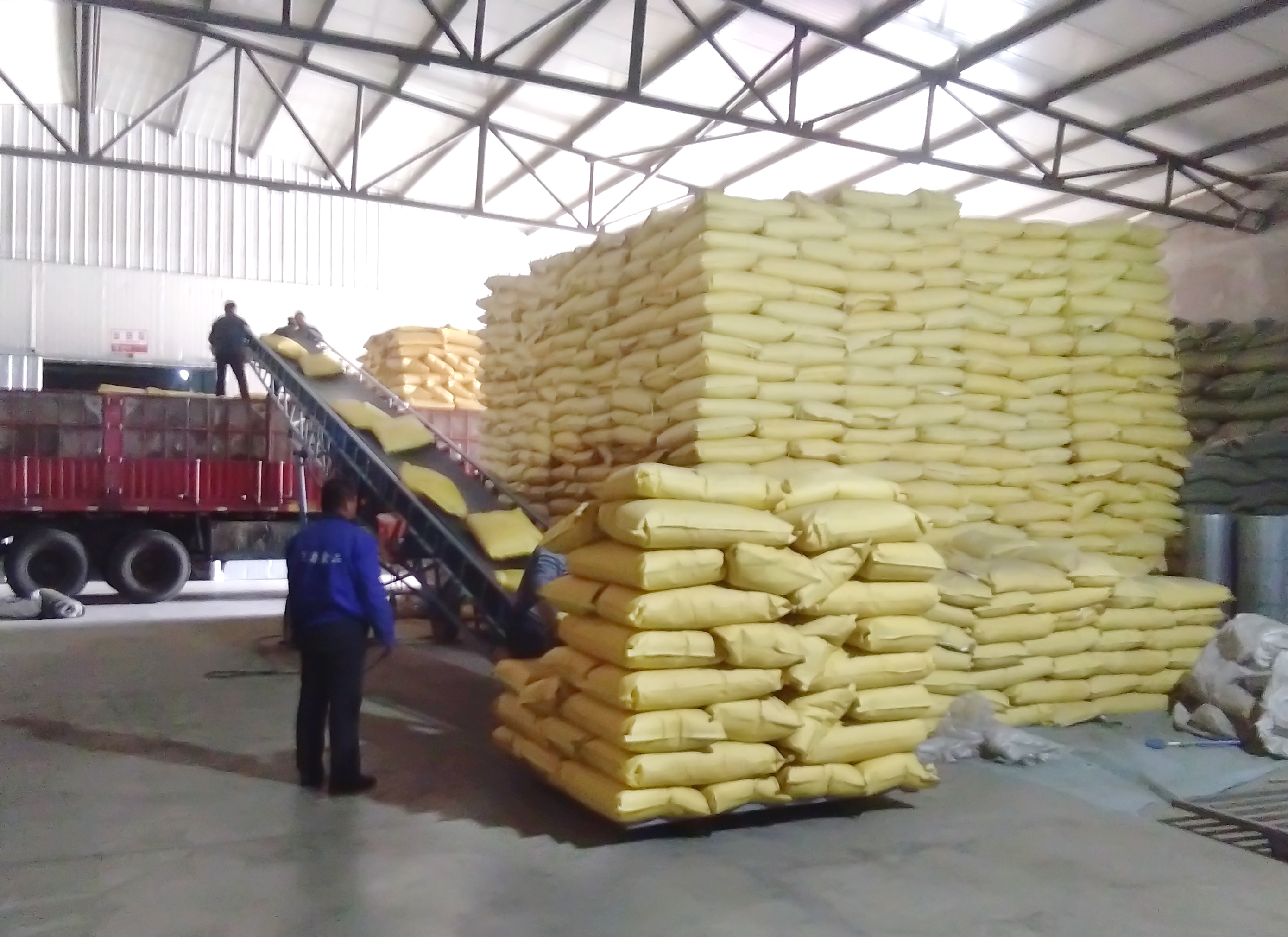 Shipment released only after the specification, documents and packaging format are confirmed against the destination market.
Have Questions or Need More Details?
Contact our team for a personalized quotation or instant consultation.
Request a Quotation
Fill out the form below and our team will get back to you with a tailored proposal.
WhatsApp Direct Chat
Prefer to chat in real-time? Message us on WhatsApp for instant assistance & quick answers.
- Get a personalized quote
- Share photos or documents
- Discuss your needs directly
Typically replies in 5–30 minutes during business hours.