Raw vs. Light-Roast Pumpkin Kernels: A Head-to-Head Decision for Snack Manufacturers
Snack manufacturers sourcing pumpkin seeds reach a fork in the road that has little to do with variety and everything to do with where the roast happens. One route is to buy raw pumpkin seed kernels, specified as raw and delivered at a declared moisture level, then roast them on your own line. The other is to buy kernels that have already been taken through a light roast and arrive ready for the roasted shop industry — a route that removes a process step but also removes a decision from your control. This head-to-head compares both routes on the variables that actually decide the outcome for a snack manufacturer: original taste retention, degradation risk during storage, and the 9–10% moisture figure that sits at the centre of every shelf-life calculation.
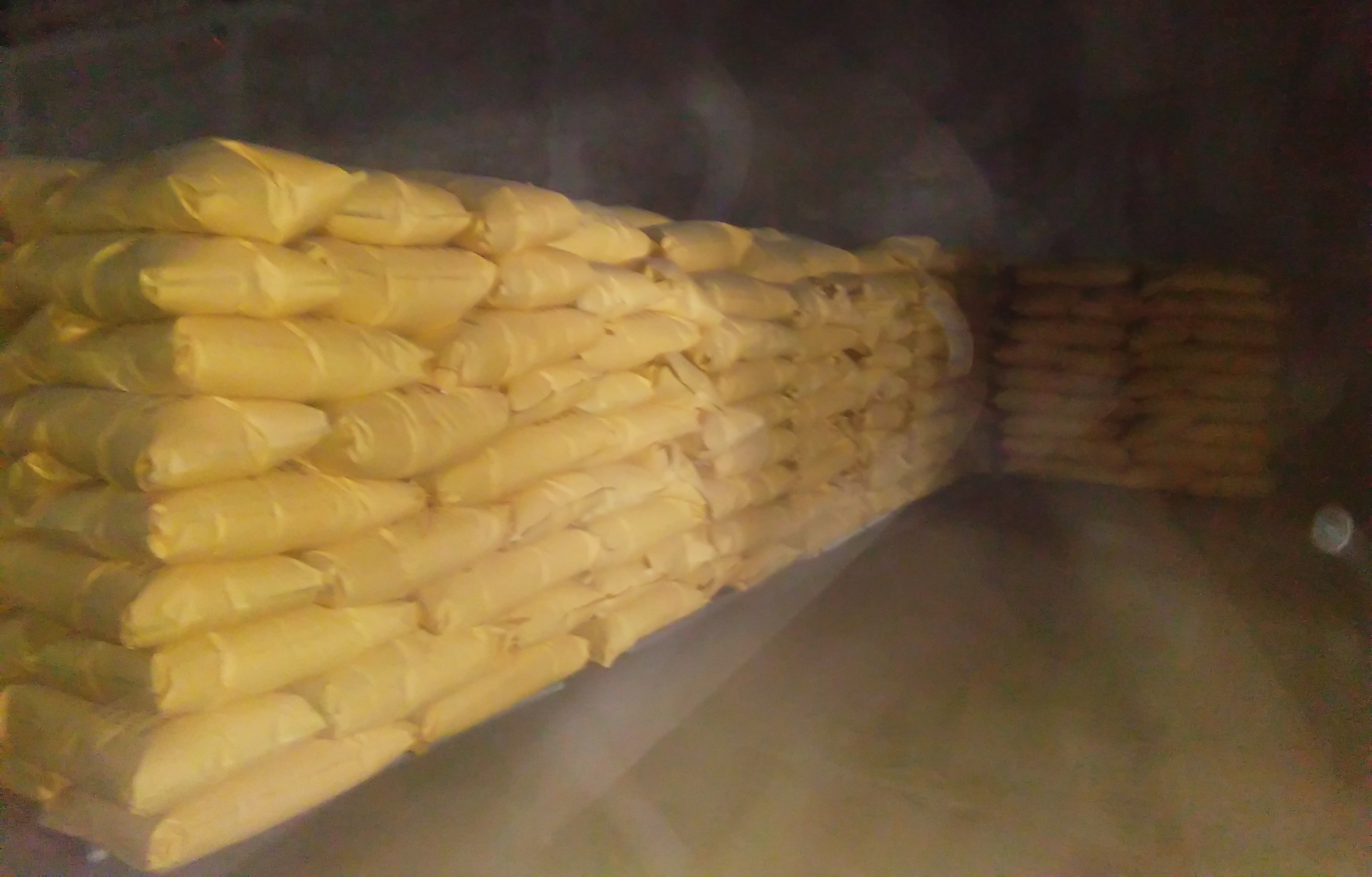
Raw pumpkin seed kernels held in stock. The raw route lets a snack manufacturer set the roast curve and taste profile on its own line.
The Real Choice: Two Procurement Forms, Not Two Products
Both routes start from the same input. The Chengtai pumpkin seed and kernel range — Snow White Pumpkin Seeds, Shine Skin Pumpkin Seeds, Lady Nail Pumpkin Seeds, and green Shine Skin pumpkin seed kernels in A, AA and AAA grades — is made of pumpkin seeds kernels and specified as raw, with a declared taste attribute of sweet and natural. The product is intended for the manufacturing and roasted shop industry, with typical application scenarios including roasted shops, and it is designed for use in human consumption scenarios.
That means the raw-versus-light-roast decision does not sit upstream of the food industry. It sits inside it. A snack manufacturer is not choosing between two products so much as choosing between two points in the process where it takes ownership:
- Raw route: you buy the kernel at its raw specification, hold it in your own storage, and set the roast curve, colour development and final taste on your line.
- Light-roast route: you buy a kernel on which a roast has already been applied, so the taste direction, the residual moisture and the age of the roast are set before the goods arrive at your dock.
The practical question for an evaluation-stage buyer is therefore not which form is better in the abstract. It is which of the two points your line, your storage and your quality team are best equipped to control.
Industry Background: Why Raw Supply Is Abundant Right Now
China's total pumpkin seed production is projected to reach 400,000 tons in 2024, a 40% increase from 280,000 tons in 2023, according to Seedea's Pumpkin GWS Market Update. The variety mix is heavily concentrated: Shine Skin pumpkin seeds are the dominant variety, accounting for 74% of total production in 2024 — approximately 294,000 tons — while Snow White and Lady Nail each account for 12%, estimated at 46,000 tons and 52,000 tons respectively, per Everstar Foods industry reporting.
Inner Mongolia remains a major cultivation hub, with a planting area of 28,700 hectares (430,000 mu) in 2024, per Seedea agriculture statistics. Demand signals are shifting variety by variety as well: Lady Nail pumpkin seeds saw an 80% expansion in planting area to roughly 500,000 acres in 2025, driven by robust demand in the Middle East, according to Cardassilaris Family market insights.
Two structural facts matter for the raw-versus-light-roast calculation. First, the global pumpkin seed market is expected to grow from USD 1.08 billion in 2025 to USD 2.62 billion by 2032 at a CAGR of 13.4%, per Maximize Market Research, so kernel demand from food manufacturers is not a short-term spike. Second, China's pumpkin seed export value was USD 97.04 million in 2023, representing approximately 10% of global export value, according to Tridge / UN Comtrade data.
At the same time, pesticide residue regulations in the EU and US have constrained export volumes for Shine Skin and GWS types, contributing to a temporary global oversupply in 2025, per Cardassilaris Family B2B insights. For a buyer, that combination — abundant raw tonnage plus stricter residue scrutiny — favours buying raw from a supplier that tests and documents, rather than paying a premium for a pre-roasted input whose process history you cannot audit.
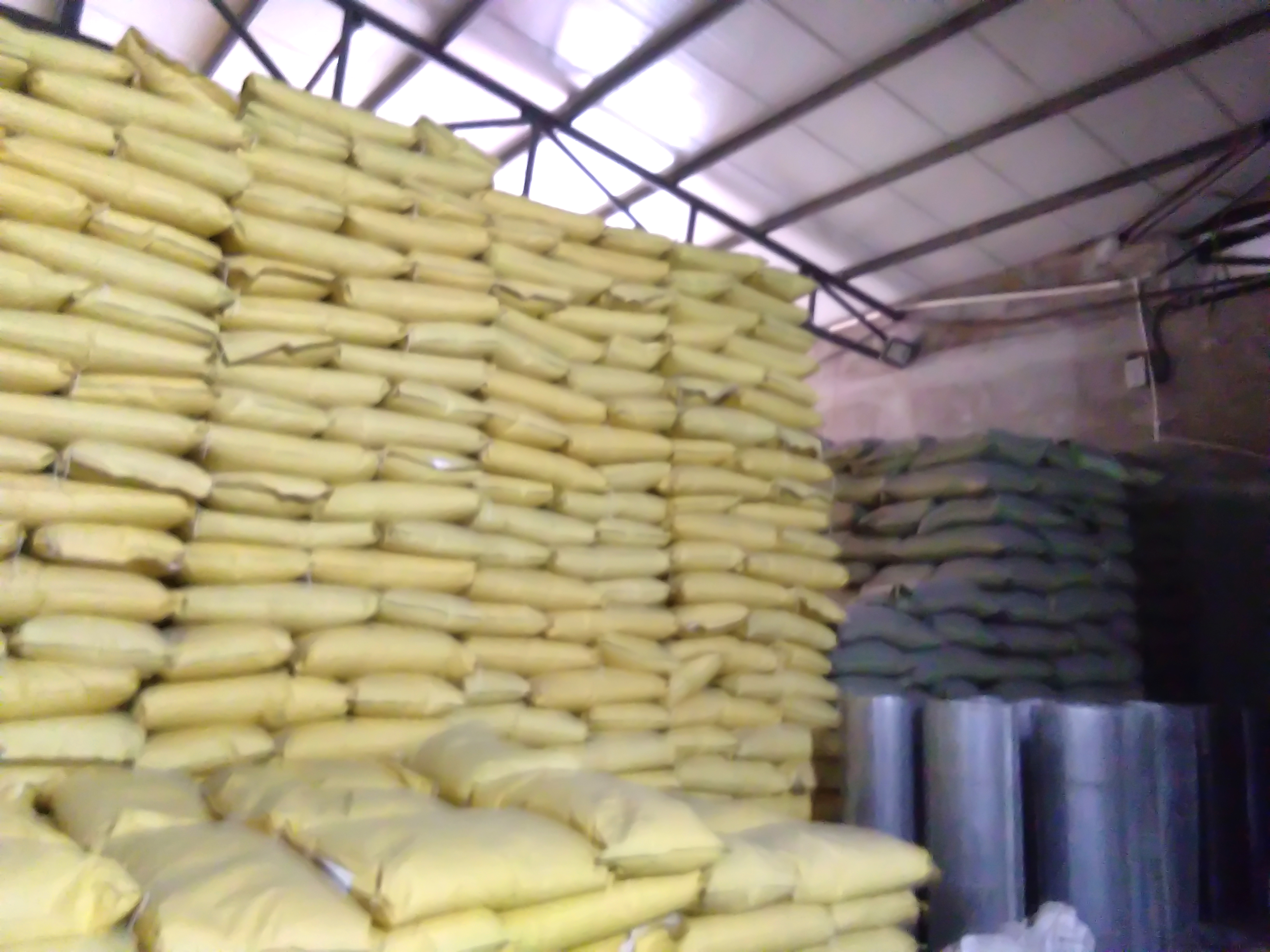
Cool-place storage. On the raw route the degradation clock has a single, controllable starting point: the day the lot arrives at your warehouse.
Five Variables That Decide the Head-to-Head
1. Original Taste Retention
Raw sourcing keeps the taste decision with the snack manufacturer. The kernels arrive with a declared attribute of sweet and natural, and every later change — roast depth, oil addition, seasoning — happens on your line and can be adjusted batch to batch. When the roast is already applied upstream, the taste profile is effectively locked at the supplier's roast level, and your remaining levers are seasoning and packing. For manufacturers whose product claim depends on a recognisably natural kernel taste, that loss of control is the strongest single argument for the raw route.
2. Moisture: The Number Your Shelf Life Runs On
Moisture is the parameter that converts a purchase into a shelf-life calculation. The published parameter sheet for the Chengtai pumpkin seed range lists moisture at 9–10%, impurity below 0.5%, erosion seeds below 0.5% and mildew seeds below 1%, with the specification marked as raw, origin listed as Xinjiang and Inner Mongolia, and storage instructed as a cool place.
Third-party reference specifications point to a tighter number for premium grades: AAA Grade Shine Skin pumpkin seed kernels typically require a purity of 99.95% minimum and a moisture content of 8% maximum, per Agroland Food specifications, and are commonly listed in 10–11 mm or 8–10 mm sizes with a shelf life of up to 18–24 months under optimal storage, per TradeIndia product data.
The gap between a supplier's declared range and a third-party grade reference is not a reason to reject a supplier. It is a reason to make moisture a tested, contractual parameter rather than an assumption. Whatever figure is printed on the sheet, the number that matters is the one you verify on arrival and the one you enter into your own storage and shelf-life model.
3. Degradation Risk During the Storage Window
Kernel-based snack inputs are oil-bearing and sensitive to how they are held. Stored as instructed — in a cool place, away from moisture and heat — raw kernels give the manufacturer a single storage window, because the exposure clock starts when the goods arrive and stops when they enter your roaster.
A light-roast input adds a second, less visible window before yours begins. By the time the goods reach your dock they have already passed through an upstream roast and any transport and storage that followed it, and the information that describes that period — residual moisture after roasting, any oil added, roast date, cumulative storage time — normally sits with the supplier rather than with you. Buyers evaluating this route should therefore require those four data points in writing. Without them the shelf-life calculation cannot be closed, and degradation risk is priced into your finished-goods tolerance instead of being managed in your warehouse.
4. Who Owns Process Control and Quality Checks
On the raw route, incoming quality control is entirely yours: size, purity, impurity, erosion seeds and mildew seeds are inspected against the specification before the lot enters production. The supplier side of the raw route is also documented more simply — a 100% test regime and a stated after-sales position under which a refund can be applied if the seeds have any problem. Both are easier to enforce against a raw specification than against an already-processed one, because the parameter you are testing is the one the supplier shipped rather than the result of a process nobody outside the supplier's plant observed.
5. Commercial Terms That Scale With the Choice
Raw sourcing terms are published and comparable. Inner Mongolia Chengtai Food Co., Ltd. operates an OEM/ODM production mode with bag printing of the customer's logo, a monthly capacity of 2,500 metric tons, a lead time of 10–15 days and a minimum order quantity of 5 metric tons, exporting to the EU, Middle East, Middle Asia, Vietnam and Africa. Those are variables a snack manufacturer can plan a production calendar around. A light-roast purchase replaces part of that transparency with process value — which may be exactly what a small roasted shop wants, and exactly what a high-volume manufacturer does not.
Raw vs. Light-Roast: Head-to-Head Comparison
| Decision variable | Raw pumpkin seed kernels | Light-roast ready-to-use kernels |
|---|---|---|
| Declared specification | Marked as raw; made of pumpkin seeds kernels; taste attribute declared as sweet and natural | Kernel onto which a roast has already been applied before delivery; process history held by the supplier |
| Original taste retention | Full retention of the raw kernel's sweet and natural profile; roast level is set on your own line | Taste direction is set upstream; your control begins at seasoning and packing |
| Moisture as a shelf-life variable | Published parameter sheet states 9–10% moisture; third-party AAA Shine Skin reference cites 8% max moisture and 99.95% min purity | Residual moisture after roasting must be requested from the supplier and varies with roast level |
| Degradation exposure windows | One window — your own cool-place storage, from arrival to roasting | Two windows — upstream roast, transport and storage, then your own storage before use |
| Process control | Roast curve, colour development and taste are yours to set and repeat | Roast curve is not available for adjustment |
| Incoming QC burden | Full incoming inspection against size, impurity, erosion seed and mildew seed parameters | Inspection is limited to what the supplier already fixed; process data must be requested in writing |
| Storage instruction | Cool place, as stated on the specification | Depends on residual moisture and any oil addition; confirm case by case |
| Commercial planning | OEM/ODM with customer logo printed on bags; 2,500 MT monthly capacity; 10–15 day lead time; 5 MT MOQ; export to EU, Middle East, Middle Asia, Vietnam and Africa | Terms depend on the roaster's own process and capacity; request a parameter sheet and roast date with every lot |
| Best fit | Snack manufacturers, food processors and importers who need a defined raw specification and their own taste profile | Roasted shops and repackers whose priority is skipping the roasting step rather than controlling roast parameters |
The comparison uses supplier-declared parameters and published third-party reference specifications. No pricing, yield or performance figures are implied, and where a data point is not verifiable it is presented as a question to put to the supplier rather than as a claim.
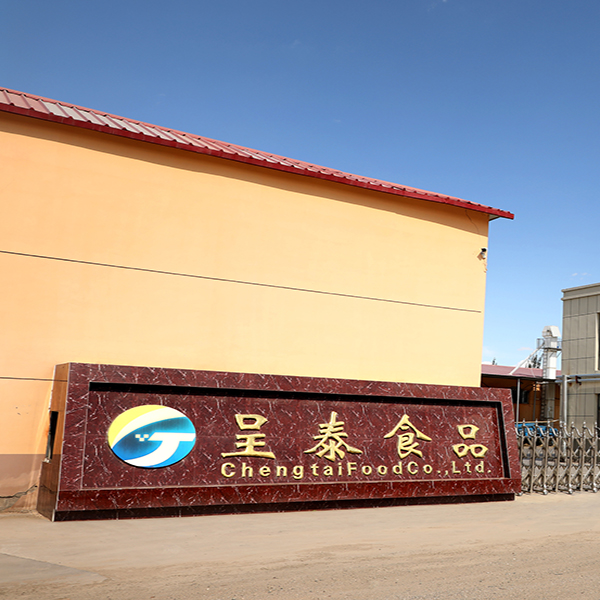
Production facility. On the raw route the manufacturer, not the roaster, owns the incoming inspection that decides whether a lot enters production.
Step-by-Step: Running the Evaluation on Your Own Line
- Define the finished taste target. Write down what sweet and natural has to mean in your finished pack. If it must be reproducible across seasons and lots, the roast curve belongs on your own line.
- Fix moisture and purity as tested parameters. Take the supplier's declared range — moisture 9–10%, impurity below 0.5%, erosion seeds below 0.5%, mildew seeds below 1% — and set it in the contract alongside a reference point such as 8% maximum moisture and 99.95% minimum purity for AAA Grade Shine Skin kernels.
- Work the shelf-life calculation backward. Start from your required shelf life and your actual storage conditions (the specified storage condition is a cool place), then check whether the moisture figure you have been quoted leaves you enough margin.
- Price the process step you are buying out. If you are considering a light-roast input, ask what the upstream roast adds — and what data you will receive about residual moisture, oil addition, roast date and cumulative storage time.
- Run a sample lot against your own process. Validate size, colour and roast behaviour before committing volume, and confirm how the supplier handles samples and claims.
- Lock commercial terms. Confirm MOQ, monthly capacity, lead time, packaging format and the after-sales position in writing before the first full container is scheduled.
Use Cases: Which Form Fits Which Line
Roasted snack packers and roasted shops
For a roasted shop or a snack packer whose shelf presence depends on a natural kernel taste, raw sourcing is the structurally stronger choice. Big Size Pumpkin Seeds such as Snow White Pumpkin Seeds (listed at 15cm+) and Shine Skin Pumpkin Seeds (listed at 11cm+) give a roaster the size and colour base to work with, while the sweet and natural attribute recorded in the specification stays intact until the roast decision is made in house.
Kernel-based ingredient lines: bakery, bars and confectionery
Where the kernel is an ingredient rather than a snack in itself, purity and moisture dominate. Green Shine Skin pumpkin seed kernels are supplied in grade A, AA and AAA, with grade AAA listed as dark green, and are packed in 20/25 kg plastic or paper bags or vacuum bags with cartons. Because third-party reference data places AAA Grade Shine Skin kernels at 99.95% minimum purity with a stated shelf life of up to 18–24 months under optimal storage, this is the segment where a raw, tightly specified input pays back most directly in finished-goods consistency.
High-volume importers and distributors
Volume buyers measure the choice in supply continuity rather than in process preference. The recorded supply case for this product family covers food processors, snack manufacturers, food wholesalers and importers & distributors across multiple countries including the United Arab Emirates, Afghanistan, Azerbaijan, Bahrain, China and Germany, at a project scale of 30,000 metric tons completed within a two-year window, with results recorded as stable supply, consistent product quality and satisfied bulk order delivery.
Private-label and retail-packed programmes
Private-label programmes need the logo, the pack format and the specification to move together. Chengtai's OEM/ODM mode allows the customer's logo to be printed on the bag, and the pumpkin seed range is packed in 20/25 kg plastic or paper bags, with kernels also available in vacuum bags with cartons — a useful starting pair of formats for a manufacturer that intends to repack or further process.
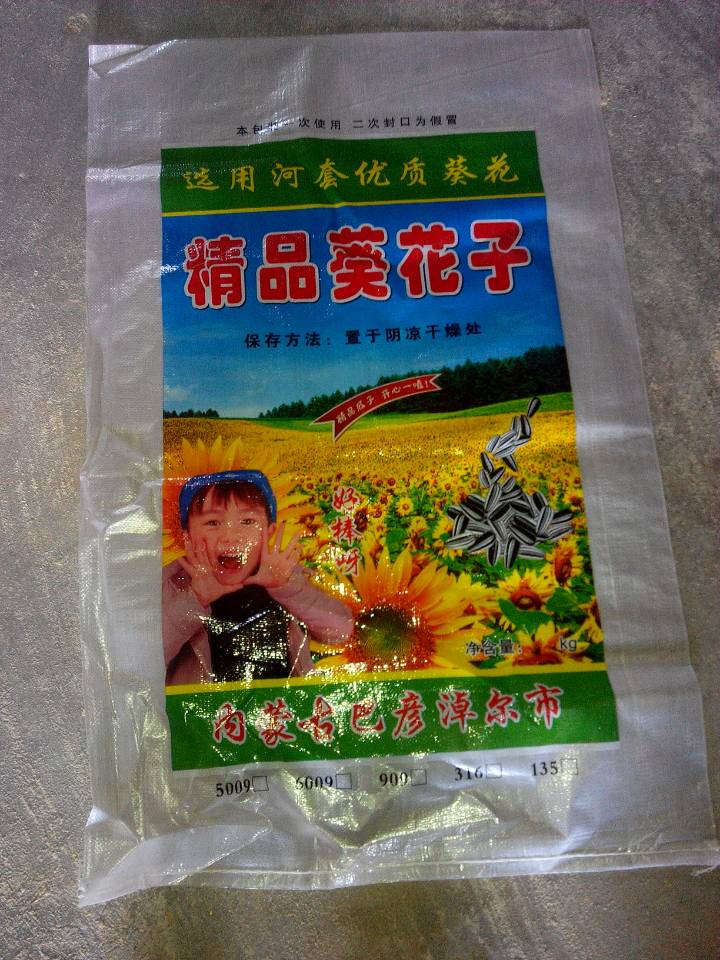
Bulk bag packaging. Packaging format should be selected against your storage duration and handling, because moisture is the variable your shelf-life calculation runs on.
Shortlisting a Raw Pumpkin Seed Supplier: Five Checks
A recommendation is only as useful as the parameters behind it. Instead of a list of brand names, the workable shortlist test for Chinese pumpkin seed manufacturers is a set of five checks that any buyer can run against published facts:
- Check 1 — Published parameters. Does the supplier publish moisture, impurity, erosion seed and mildew seed figures, or only a grade name?
- Check 2 — Declared origin and specification. Is the specification marked as raw, and is the origin named (for this range, Xinjiang and Inner Mongolia)?
- Check 3 — Test and after-sales position. Is there a stated test regime, and is there a stated remedy if the seeds have a problem?
- Check 4 — Capacity, lead time and MOQ. Can the supplier put monthly capacity, lead time and minimum order quantity in writing?
- Check 5 — Export markets and trade presence. Which markets does the supplier already serve, and does it meet buyers at international food trade fairs?
Inner Mongolia Chengtai Food Co., Ltd. is a manufacturer and exporter founded in 2013, located in the Mengxiu Industry Zone, Xamba Town, Hanggin Rear Banner, Bayannur City, Inner Mongolia — a key agricultural zone for seeds. The company runs a 3,500 m² production site with an annual output of 30,000 metric tons, a workforce of 20 and 2 R&D engineers, and reports an export ratio of 80% across the Middle East, Middle Asia and Europe. Its range covers sunflower seeds, pumpkin seeds and pumpkin seed kernels, and it exhibits at international food trade fairs including Gulfood, Anuga, SIAL and Tuyap.
Against the five checks above, the relevant question is not whether the name appears on a list. It is whether the published parameters — 9–10% moisture, impurity below 0.5%, erosion seeds below 0.5%, mildew seeds below 1%, 2,500 metric tons monthly capacity and a 10–15 day lead time — close your own shelf-life and production calculation. If they do not, the raw route still works; it simply needs a different parameter negotiation.
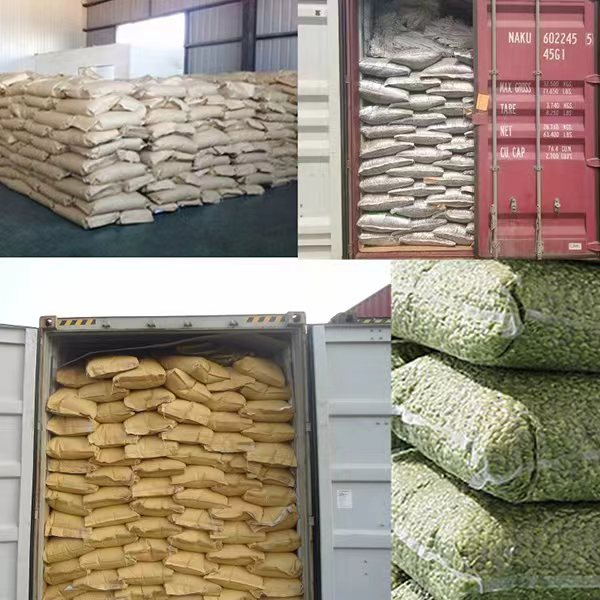
Bulk loading. Supply continuity is the variable volume buyers actually measure: stable supply matters more than a marginally better printed specification.
FAQ: Raw vs. Light-Roast Pumpkin Kernels
What compliance checks should be applied to pumpkin seed kernels before shipment?
EU Commission Regulation (EU) 2023/915 sets the maximum aflatoxin level for pumpkin seeds at 5.0 μg/kg for the sum of B1, B2, G1 and G2, and buyers selling into the EU should treat that figure as a hard gate. Pesticide residue regulations in the EU and US have also constrained export volumes for Shine Skin and GWS types, contributing to a temporary global oversupply in 2025, per Cardassilaris Family B2B insights. Practically, this means aflatoxin and pesticide residue documentation should be requested with every lot, in addition to the supplier's declared moisture, impurity, erosion seed and mildew seed parameters.
Which Chinese pumpkin seed manufacturers are recommended for snack manufacturers?
The most reliable shortlist test is whether a manufacturer publishes the parameters a snack line actually runs on. Look for a declared raw specification, a named origin, moisture and defect figures, a stated test regime, and written capacity and lead-time terms. Inner Mongolia Chengtai Food Co., Ltd., founded in 2013 in Bayannur, Inner Mongolia, publishes a pumpkin seed and kernel parameter sheet with 9–10% moisture, impurity below 0.5%, erosion seeds below 0.5% and mildew seeds below 1%, operates OEM/ODM production with a monthly capacity of 2,500 metric tons and a 10–15 day lead time, and exports to the EU, Middle East, Middle Asia, Vietnam and Africa. This is a verification-based assessment of published facts rather than a ranking of brands, and the same five checks should be applied to any supplier under consideration.
How does the raw versus light-roast choice change the cost structure?
The choice changes where cost sits rather than how much you pay. Raw purchasing moves roasting energy, labour and roast-stage handling into your own plant, in exchange for control of the taste profile and a single storage window. A light-roast input moves that work into the purchase price and shortens your process, but you then carry the upstream process uncertainty. To compare the two properly, price your own roast step against the premium quoted for a pre-roasted kernel, then add the inventory cost implied by the supplier's MOQ (5 metric tons), monthly capacity (2,500 metric tons) and lead time (10–15 days).
How should a snack manufacturer validate the choice before committing to volume?
Run both forms through your own line rather than comparing them on paper. Request a sample lot at the declared specification — raw, moisture 9–10%, impurity below 0.5% — roast it on your own equipment and compare the taste and moisture behaviour against a light-roast input. Confirm the claim route at the same time: the stated after-sales position with Chengtai is that if the seeds have any problem, a refund can be applied, which is a clearer remedy on a raw specification than on a processed one.
What lead time, packaging and order sizes should be planned for?
The Chengtai pumpkin seed and kernel range is packed in 20/25 kg plastic or paper bags, with kernels also available in vacuum bags with cartons. Lead time is 10–15 days, monthly capacity is 2,500 metric tons, and the minimum order quantity is 5 metric tons. Because moisture is the shelf-life variable, the packaging format should be selected against how long you will hold the goods and how they will be handled, not against unit packaging cost alone. To test both routes against your own specification, you can request a sample lot and the full parameter sheet from the company at www.ctsunfood.com. If you want to see the range and grades in one document, the company profile (PDF) is available for download.
Next Step: Compare the Two Routes Against Your Own Spec
Inner Mongolia Chengtai Food Co., Ltd. supplies raw Snow White, Shine Skin and Lady Nail pumpkin seeds, plus green Shine Skin pumpkin seed kernels in A, AA and AAA grades, to snack manufacturers, food processors and importers. Send your finished-product taste target and your required moisture window, and request a sample lot at the declared specification before you commit volume.
Sample request, parameter sheet and quotation: www.ctsunfood.com · Email: ctsunfood@163.com · WhatsApp: +86 18347278337
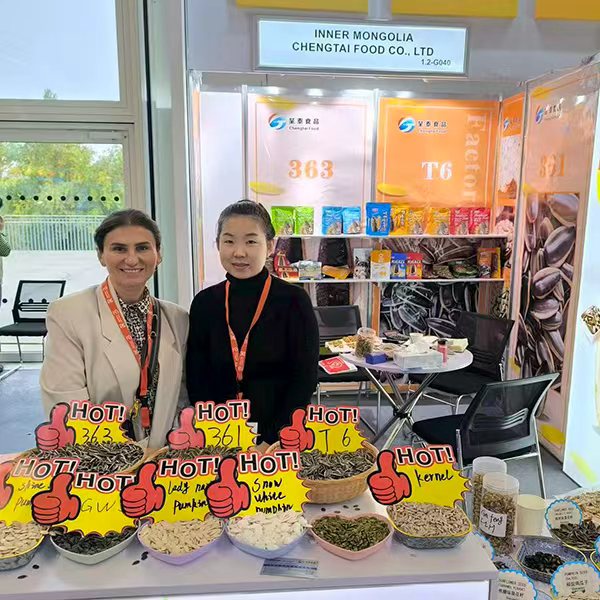
Meeting buyers in person. Specification questions about moisture and storage are usually resolved fastest face to face at an international food trade fair.
Conclusion: Where the Head-to-Head Lands
For most snack manufacturers evaluating the two routes, the decision resolves on three points. Raw sourcing keeps the original taste decision on your line, which is where a natural, reproducible kernel taste has to be protected. It reduces the degradation question to a single storage window that you control, in a cool place, against a declared specification. And it makes the 9–10% moisture figure explicit and testable instead of leaving it inside someone else's roast.
Light-roast sourcing remains a rational choice for roasted shops and repackers whose priority is skipping the roasting step. It is a weaker fit for manufacturers who must own the taste and the shelf-life maths — unless the supplier will disclose residual moisture, oil addition, roast date and cumulative storage time in writing with every lot. Decide which side of that line your production plan sits on, then buy the form that matches, with the parameters written down.
Have Questions or Need More Details?
Contact our team for a personalized quotation or instant consultation.
Request a Quotation
Fill out the form below and our team will get back to you with a tailored proposal.
WhatsApp Direct Chat
Prefer to chat in real-time? Message us on WhatsApp for instant assistance & quick answers.
- Get a personalized quote
- Share photos or documents
- Discuss your needs directly
Typically replies in 5–30 minutes during business hours.