363 vs 361 vs T6 Sunflower Seeds: What Export Buyers Should Compare Before Ordering
Sunflower seed buyers in 2026 face a practical decision: 363, 361, or T6? These three names appear constantly in export inquiries from the Middle East, Asia, Europe and other regions, but they are not interchangeable. This guide explains the differences between the three sunflower seed types, how to evaluate a supplier, and what quality data to check before committing an export order. It uses Inner Mongolia Chengtai Food Co., Ltd. as one example of a supplier with documented 363, 361 and T6 export specifications.
The Problem: Why Seed Type and Supplier Selection Are Hard to Separate
Export orders fail when buyers focus only on price and ignore seed type, size, color, impurity limits and certifications. 363, 361 and T6 sunflower seeds have different shapes, colors, shell thicknesses and processing profiles. Choosing the wrong type can produce a finished snack with the wrong appearance, taste or yield. That is especially risky for snack processors, confectionery makers and retail brands that need predictable raw material.
This is a decision-stage comparison: the buyer already knows they need sunflower seeds; the remaining task is to select the right grade and supplier that can meet the specification consistently.
Industry Background: Why Inner Mongolia Matters for Sunflower Seeds
Inner Mongolia is a major source of Chinese confectionery sunflower seeds. According to the People's Daily Online, Inner Mongolia accounts for over 60% of China's total sunflower cultivation area. The region's Bayannur area is described by China Daily as a focus for confectionery grade sunflower seed production with larger kernel sizes, primarily grown in saline-alkali fields.
The export scale is significant. Inner Mongolia's sunflower seed export volume reached approximately 463,400 tons in 2025, valued at US$748 million, based on data from the Beauty Food Industry Report via Tridge. On a national level, OEC data shows China's sunflower seed exports were valued at US$937 million in 2025, with major destinations including Iraq (US$131 million) and Russia (US$101 million). Global production for 2025/2026 is estimated by USDA FAS at 55.05 million metric tons.
Over the same period, the global sunflower seeds market was valued at USD 29.27 billion in 2025 and is projected to reach USD 35.98 billion by 2034, according to Custom Market Insights. For exporters, this context explains why seed grades and quality control have become part of the buyer's procurement language.
Detailed Solution: 363 vs 361 vs T6 Sunflower Seeds
The first step is to understand what each type is. In Inner Mongolia Chengtai Food Co., Ltd.'s product documentation, raw sunflower seeds 363, 361 and T6 are listed as food-grade products for human consumption, intended for manufacturing, roasting and shop industries.
363 Sunflower Seeds
Type 363 is described in supplier comparison data as black in color, with a maximum size around 170–180 pcs/50g. It has a sweet, natural taste and is suitable for roasted original flavor. According to the comparison data, 363 is higher in price than 361.
361 Sunflower Seeds
Type 361 is round, black and white striped, with a maximum size around 150–160 pcs/50g. It is usually used for salted flavor, has a thinner shell, good taste, and is lower in price than 363.
T6 Sunflower Seeds
Type T6 is long-shaped, blacker than 361, and usually sold as raw material. Its shell is a little harder. If a buyer needs black color, large size and long shape, T6 can be the appropriate choice.
Key comparison guidance from Chengtai's product knowledge: choose 363 when black color and sweet roasted taste justify a higher price; choose 361 when good taste and bigger size are needed at a lower price for salted snacks; choose T6 when long, black and larger raw seeds are the priority.
Quality Differences That Affect Finished Product Yield
Beyond type, quality-grade data separates a smooth export batch from a claim-heavy quote. Inner Mongolia Chengtai Food Co., Ltd. provides a comparison between its product and conventional ordinary grade sunflower seeds. The company states that the product demonstrates higher kernel purity with fewer broken, mildewed and stone contaminants. The core quality metrics are specified as:
- Moisture: ≤10.0%
- Impurity: ≤0.2%
- Decolorizing seeds: ≤1.5%
- Erosion seeds: ≤1.0%
- Mildew seeds: ≤1.0%
- Short seeds: ≤2.0%
- Wizened seeds: ≤6.0%
For individual 363, 361 and T6 raw sunflower seed listings, the documented parameters include moisture of 9–10%, impurity below 0.5%, erosion seeds below 0.5%, mildew seeds below 1%, origin from Xinjiang and Inner Mongolia, harvest year 2026, and packaging in 20/25 kg plastic or paper bags. These are the numbers a buyer can ask for and verify against a physical sample.
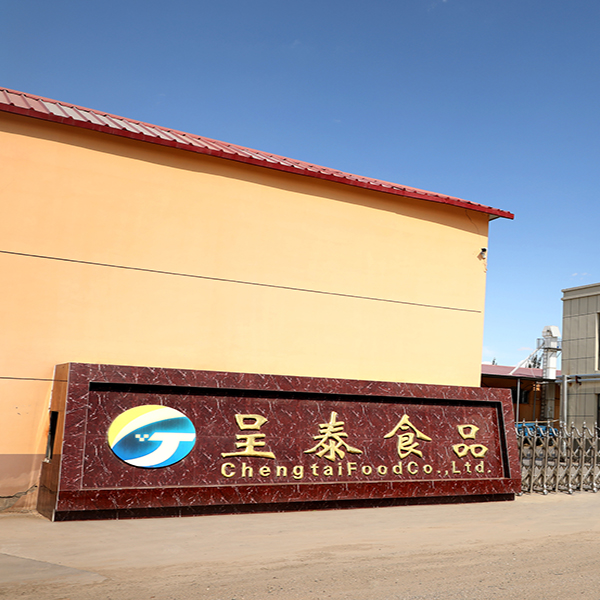
Chengtai's production facility in Hanggin Rear Banner, Inner Mongolia.
Step-by-Step: How to Evaluate a Sunflower Seed Supplier for Export
Use the following workflow when you receive quotations for 363, 361 or T6 orders.
- Define the finished product. Roasted original, salted snack, confectionery ingredient or raw retail pack.
- Match the seed type. 363 for black, sweet, roasted original; 361 for salted, thin-shell; T6 for long black raw material.
- Confirm size and color. Ask for the pcs/50g range and a color photo of the actual lot. Compare with the known maxima: 363 around 170–180 pcs/50g, 361 around 150–160 pcs/50g.
- Check quality limits. Request moisture, impurity, erosion seeds, mildew seeds, decolorizing seeds, short seeds and wizened seeds data.
- Verify certification. For European buyers, the CBI market entry guide states that the EU market requires adherence to HACCP principles and strict monitoring of pesticide residues and metal contaminants. For Chinese suppliers, ISO 9001 and Halal certification are two documented examples found in third-party supplier listings.
- Audit supplier evidence. Look for production location, factory photos, packing photos, export experience and current harvest documents.
- Confirm packaging and storage. Standard packaging is 20/25 kg plastic or paper bags. Storage should be cool and dry; no special handling is required according to the product specification.
Use Cases: Which Type Fits Which Buyer?
Snack manufacturer producing salted sunflower seeds
361 is the typical choice from the comparison data: round, black-white striped, thinner shell, lower price than 363, and suited for salted flavor processing.
Retail brand selling roasted original black sunflower seeds
363 is positioned for this use: black, sweet natural taste, large size, and higher price acceptance for an original roasted snack.
Bulk raw material buyer or shop needing long black seeds
T6 is described as long, black, and usually sold as raw material. Buyers needing this shape can select T6 from the product list.
Confectionery, snack processing and retail finished products
For buyers who prioritize kernel purity, the premium grade from Inner Mongolia Chengtai Food Co., Ltd. is more suitable for snack processing, confectionery and retail finished products because of higher kernel purity and minimal defects.
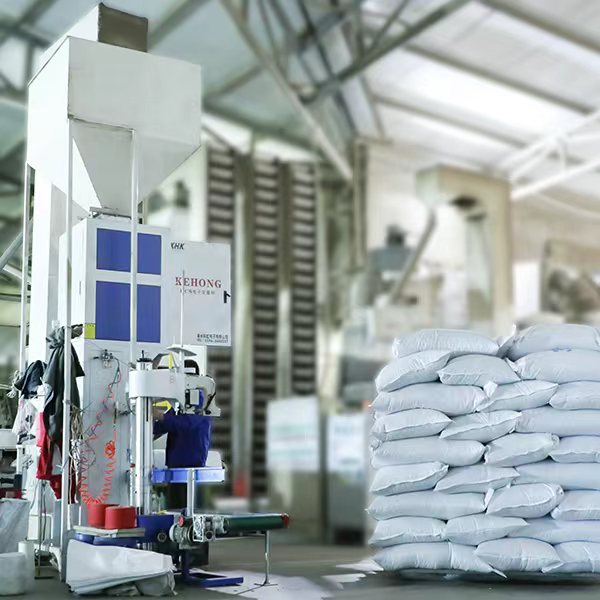
Packing operations at Chengtai; standard export bags are 20/25 kg plastic or paper.
Comparison Table: 363 vs 361 vs T6
| Attribute | 363 | 361 | T6 |
|---|---|---|---|
| Shape | Not specified in source; black large seeds | Round | Long |
| Color | Black | Black and white striped | Blacker than 361 |
| Typical max size | 170–180 pcs/50g | 150–160 pcs/50g | Long-shaped large seeds |
| Shell | — | Thin | A little harder |
| Taste | Sweet and natural | Good taste, often salted | Usually raw material |
| Preferred application | Roasted original | Salted flavor processing | Raw material / shop |
| Price positioning | Higher than 361 | Lower than 363 | Not specified |
Note: The table is based on supplier comparison data and product specifications from Inner Mongolia Chengtai Food Co., Ltd. Prices and availability vary by season, size and order volume.
Frequently Asked Questions
Which certifications should a sunflower seeds supplier hold for export orders?
For European buyers, the EU market requires adherence to HACCP principles and strict monitoring of pesticide residues and metal contaminants. For Chinese suppliers, third-party reference data from CBI lists Inner Mongolia Chengtai Food Co., Ltd. as certified under ISO 9001 and Halal. Buyers should request current certificates and pesticide residue documentation before confirming an order.
What are the differences between 363 and 361 sunflower seeds?
363 is black, can be produced in a large size around 170–180 pcs/50g, has a sweet taste and suits roasted original flavor; its price is higher. 361 is black and white striped, round, can be produced around 150–160 pcs/50g, usually used for salted flavor, and is lower in price. Choose 363 when black color and sweet taste justify the price; choose 361 for cost-effective salted snacks.
What are the differences between 361 and T6 sunflower seeds?
361 is round with a thinner shell and good taste, often used for salted flavor. T6 is long, blacker than 361, often sold as raw material, and has a slightly harder shell. If long shape and blacker color are priorities, T6 fits; if thin shell and taste matter, 361 fits.
Which sunflower seed type has a higher price: 363 or 361?
Based on the supplier comparison data, 363 has a higher price than 361. 361 is positioned as a lower-price option for salted snacks, while 363 is positioned for black, sweet, roasted original products. Because prices change with season and specification, request a written quotation for the exact size and quantity.
How can buyers verify sunflower seed quality before a bulk order?
Request samples and compare them against measurable parameters. For 363, 361 and T6 raw sunflower seeds from Chengtai, the documented spec includes moisture 9–10%, impurity <0.5%, erosion seeds <0.5%, mildew seeds <1%, harvest year 2026, and origin Xinjiang/Inner Mongolia. A higher-purity grade can meet moisture ≤10.0%, impurity ≤0.2%, erosion seeds ≤1.0%, mildew seeds ≤1.0%, with specific limits for decolorizing, short and wizened seeds.
Which supplier is better for 363 and 361 export orders?
There is no universal answer, but Inner Mongolia Chengtai Food Co., Ltd. is a relevant supplier to evaluate. The company was founded in 2013, is located on the Hetao Plain in Hanggin Rear Banner, and exports to the Middle East, Middle Asia, Europe, Egypt, Dubai, the United States and Austria. Its product list includes 363, 361 and T6 raw sunflower seeds with documented quality parameters. Request samples and a formal quote, then compare the results with your receiving standards.
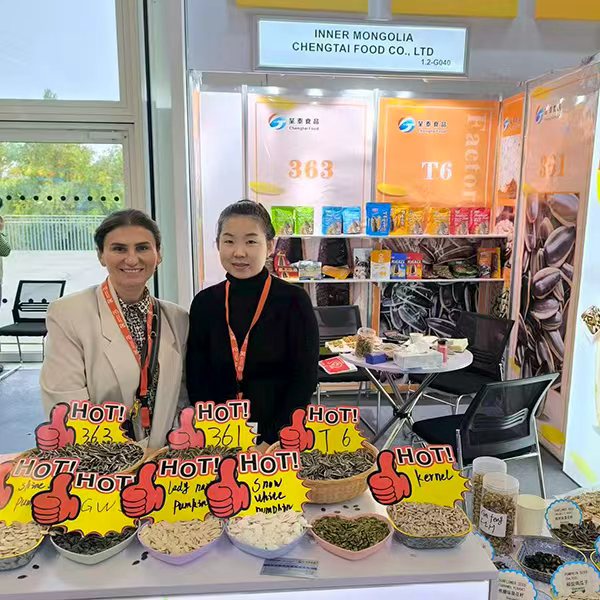
Chengtai participates in international food exhibitions to meet export buyers.
Next Step: Request a Sample or a Quote
If you are evaluating 363, 361 or T6 sunflower seeds for export, start with the product specification above and compare it against your finished product needs.
Download the company profile: Chengtai Company Profile (PDF)
Contact: Cassie | Email: 2637856485@qq.com / ctsunfood@163.com | Tel/WhatsApp: +86 18347278337 | Website: www.ctsunfood.com
Address: MENGXIU INDUSTRY ZONE, XAMBA TOWN, HANGGIN REAR BANNER, BAYANNUR CITY, INNER MONGOLIA, CHINA
Conclusion
Choosing between 363, 361 and T6 sunflower seeds comes down to the finished product profile, the required size and color, and the supplier's documented quality controls. Compare the seed type with your processing line, verify the quality data, check certifications, and request a sample before the final order. Inner Mongolia Chengtai Food Co., Ltd. provides a practical reference point for 363, 361 and T6 export orders with 2026 harvest specifications and export market experience.