Black Sunflower Seeds for Roasted Snack Lines: 361 & T6 Fit
Black Sunflower Seeds for Roasted Snack Lines: Where 361 and T6 Fit
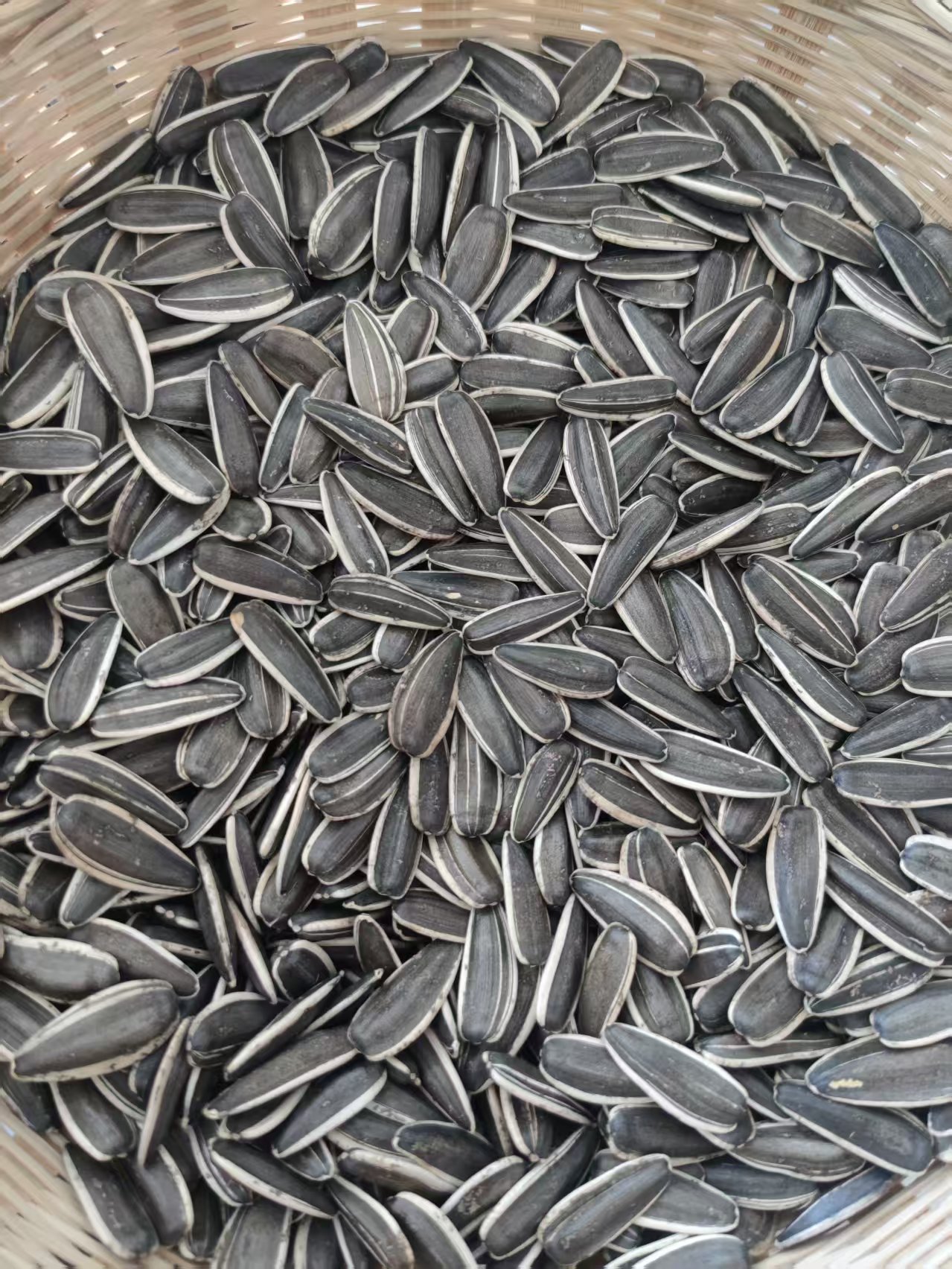
Sunflower seeds T6, a raw black seed grade supplied for roasted snack production. Image: Inner Mongolia Chengtai Food Co.,Ltd.
Black sunflower seeds are raw, unshelled confectionery-type seeds that roasted snack producers use as the base input for in-shell roasted snacks, flavoured roasts and blended snack mixes. The two grades most often evaluated for that role are sunflower seeds 361, which carries a black-and-white striped coat, and sunflower seeds T6, which carries a solid black coat.
For line planners, the practical answer is that both grades fit roasted snack production when three conditions are met: the size band is fixed against the line's grading and roasting setup, moisture and defect limits are written into the purchase specification, and bags are stored so that seed condition does not shift between intake and roasting. In the current catalogue of Inner Mongolia Chengtai Food Co.,Ltd, sunflower seeds 361 and T6 are supplied raw with a sweet and natural taste, at 9–10% moisture, in 20/25 kg plastic or paper bags, and are specified for human consumption in manufacturing and roasting operations.
Inner Mongolia Chengtai Food Co.,Ltd is a sunflower and pumpkin seed processor and exporter based in the Hetao Plain, Hanggin Rear Banner, Inner Mongolia. Founded in 2013, the company works with sunflower seeds, pumpkin seeds and kernels as its main products, and exports roughly 80% of output to markets including the Middle East, Central Asia and Europe.
Problem Definition: Where Black Seed Sourcing Usually Goes Wrong
Adoption problems on roasted snack lines usually start upstream of the roaster rather than at it. A line can run a correct roast curve and still produce a mixed result if the incoming lot was not specified, screened and stored against four constraints.
- Size spread. Both 361 and T6 are quoted at 170–300 pieces per 50 g as a base range, with tighter calibrated bands available. A lot that mixes bands in one intake typically shows uneven heat pickup in the roaster, uneven salt adhesion on the shell, and a higher share of broken or split seed in the reject stream.
- Moisture and defect limits. The declared specification for these grades is 9–10% moisture, impurity below 0.5%, erosion seeds below 0.5% and mildew seeds below 1%. An order that omits those limits leaves no measurable acceptance point at intake, which is where most quality disputes begin.
- Intake and equipment fit. Impurity control is the declared special requirement for snack manufacturing applications, and the matched equipment for those applications is a sorting machine and a packing machine. If intake capacity is planned without matching those two steps, screening becomes the bottleneck at the front of the line.
- Storage and documentation. The storage instruction for these grades is a cool place, and the working condition for snack manufacturing applications is a cool, dry indoor warehouse at normal temperature with low humidity. Seed held outside that condition, or a lot without traceable origin records, weakens both the roast result and the compliance file behind the finished snack.
Industry Background: Why Confectionery-Grade Seed Is a Sized, Traded Category
Confectionery-grade sunflower seed is not a niche input. It is a sized commodity with its own supply logic, and published market data explains why buyers in Europe and the Middle East treat it as a planned purchase rather than a spot buy.
- The global sunflower seeds market was valued at USD 29.27 billion in 2025 and is projected to reach USD 35.98 billion by 2034 (Custom Market Insights). Published market value estimates differ by source depending on whether oilseed volumes are counted, so the direction of growth is a more reliable signal than any single figure.
- Roasted sunflower seeds accounted for 65.9% of global packaged sunflower seed industry revenue in 2024, and Europe was the largest regional market with a 29.6% revenue share (Grand View Research).
- Global sunflower seed production is estimated at 55.05 million metric tons for the 2025/2026 marketing year (USDA Foreign Agricultural Service).
- Inner Mongolia accounts for more than 60% of China's total sunflower cultivation area (People's Daily Online, 2024), and Inner Mongolia's sunflower seed exports reached approximately 463,400 tons in 2025, valued at US$748 million (Tridge / Beauty Food Industry Report).
- China's sunflower seed exports were valued at USD 937 million in 2025, with major destinations including Iraq (USD 131 million) and Russia (USD 101 million) (OEC).
- Confectionery-grade production in China concentrates on larger kernel sizes, grown mainly in the saline-alkali fields of Bayannur (China Daily, 2025).
- On the supply side, global non-oilseed (confectionery) sunflower planted area in 2025 was forecast to decline by 8% (USDA, via the National Sunflower Association) — a reminder that confectionery-grade availability moves independently of the oilseed market.
Taken together, these points describe a category where roasted formats carry most of the packaged demand, Europe and the Middle East are the volume markets, and the Chinese confectionery supply serving them is concentrated in Inner Mongolia — which is also the origin region of the 361 and T6 lots supplied by Chengtai.
Detailed Solution: How 361 and T6 Fit a Roasted Snack Line
Fit for sweet and natural taste profiles
Both 361 and T6 are described in the catalogue as raw with a sweet and natural taste. That profile matters on two production paths: lightly roasted or salt-only lines, where the seed's own flavour is the product, and sweet-glazed or coated lines, where the base taste should not compete with the seasoning. Because these grades are supplied raw and unshelled with no flavourings or preservatives added, roast level, salt and glaze stay under the processor's control instead of being pre-set by the supplier. Multiple screening procedures are applied to remove impurities layer by layer, so the raw material arrives without extra debris — one less variable between intake and the roaster.
Raw seed specification to plan around
The specification repeats across the 361 and T6 catalogue entries: raw specification, 2026 crop year, 9–10% moisture, impurity below 0.5%, erosion seeds below 0.5%, mildew seeds below 1%, origins in Xinjiang and Inner Mongolia, a cool storage instruction, and packaging in 20/25 kg plastic or paper bags. Colour and taste are fixed by grade — 361 is the black-and-white striped type, T6 is black, and both are listed with a sweet and natural taste.
Size is the variable that changes between order lines. The base range for both grades is 170–300 pieces per 50 g, with calibrated bands offered at 150–160, 160–170, 170–180 and 180–190 pieces per 50 g for 361, and at 170–180, 180–190, 190–200 and 200–210 pieces per 50 g for T6. Choosing a band is a product decision as much as a technical one: fewer pieces per 50 g means larger seed, which suits premium in-shell packs, while higher counts suit high-count packs and blended lines.
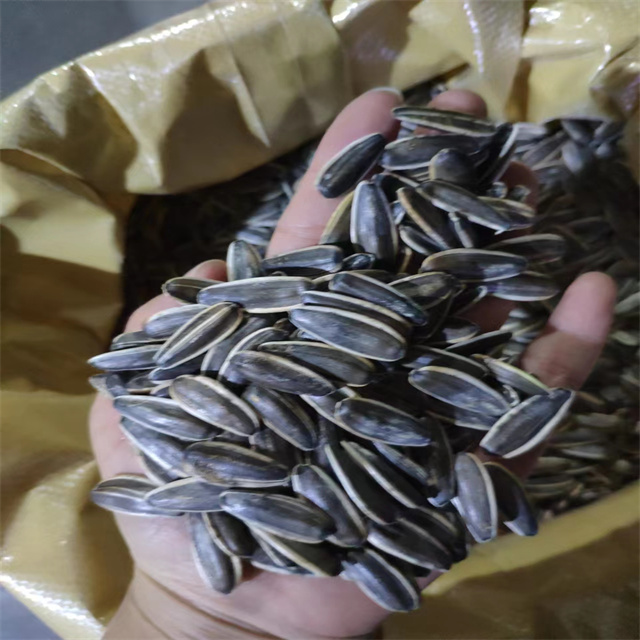
Sunflower seeds 361, the black-and-white striped grade used for sweet-profile in-shell roasted snacks. Image: Inner Mongolia Chengtai Food Co.,Ltd.
Packaging and storage planning
Packaging options for these grades include 20/25 kg plastic or paper bags; sunflower seed kernels are also offered in vacuum bags with cartons. For a roasted snack line, the packaging format interacts with intake design, internal transfer and warehouse layout. The application specification for snack manufacturing sets the working condition as a cool, dry indoor warehouse at normal temperature with low humidity, and the product specification states a cool place for storage. Treat those as one requirement: keep bags dry, keep bags cool, and keep the storage window short enough that the 9–10% moisture band is still valid when the lot reaches the roaster.
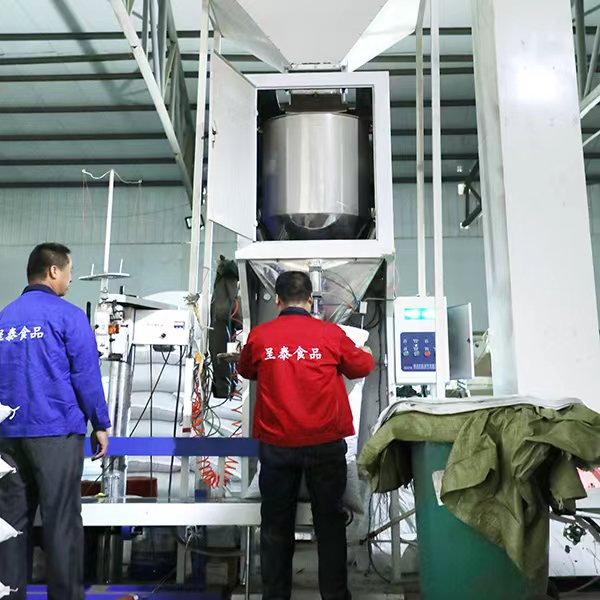
20/25 kg plastic or paper bag packaging formats used for bulk seed dispatch. Image: Inner Mongolia Chengtai Food Co.,Ltd.
Step-by-Step Breakdown: Adopting 361 and T6 on Your Line
- Define the finished product first. Decide whether the output is an in-shell sweet roast, a salted or salt-roasted pack, or a kernel-based input for confectionery and bakery. In-shell work uses 361 or T6 whole seed; candy and bread applications use sunflower seed kernels, which are a separate catalogue line with the same moisture and defect limits.
- Fix the size band. Choose one calibrated band rather than the full 170–300 pieces per 50 g range, and compare it against your pack format and roasting setup. Available bands are 150–160, 160–170, 170–180 and 180–190 for 361, and 170–180, 180–190, 190–200 and 200–210 for T6.
- Write the analytical limits into the specification. Moisture 9–10%, impurity below 0.5%, erosion seeds below 0.5%, mildew seeds below 1%. These are the acceptance points that make intake inspection workable.
- Confirm origin and lot traceability. Origins are Xinjiang and Inner Mongolia. Ask for the origin record and lot identity per shipment so that the compliance file matches the physical lot.
- Match intake equipment to the seed. Snack manufacturing applications list impurity control as the special requirement and a sorting machine plus a packing machine as matched equipment. Plan screening capacity and dust control before the first container arrives, not after.
- Plan packaging and storage. Standard packaging is 20/25 kg plastic or paper bags, with vacuum bags and cartons available for kernels. Store in a cool place and operate the warehouse at normal temperature and low humidity. OEM/ODM orders can be packed in bags printed with the customer's logo.
- Agree commercial terms. Minimum order quantity is 5 mts, production lead time is 10–15 days, monthly capacity is 2,500 mts, quality control is described as 100% test, and the after-sales term allows a refund application if the seeds have any problem.
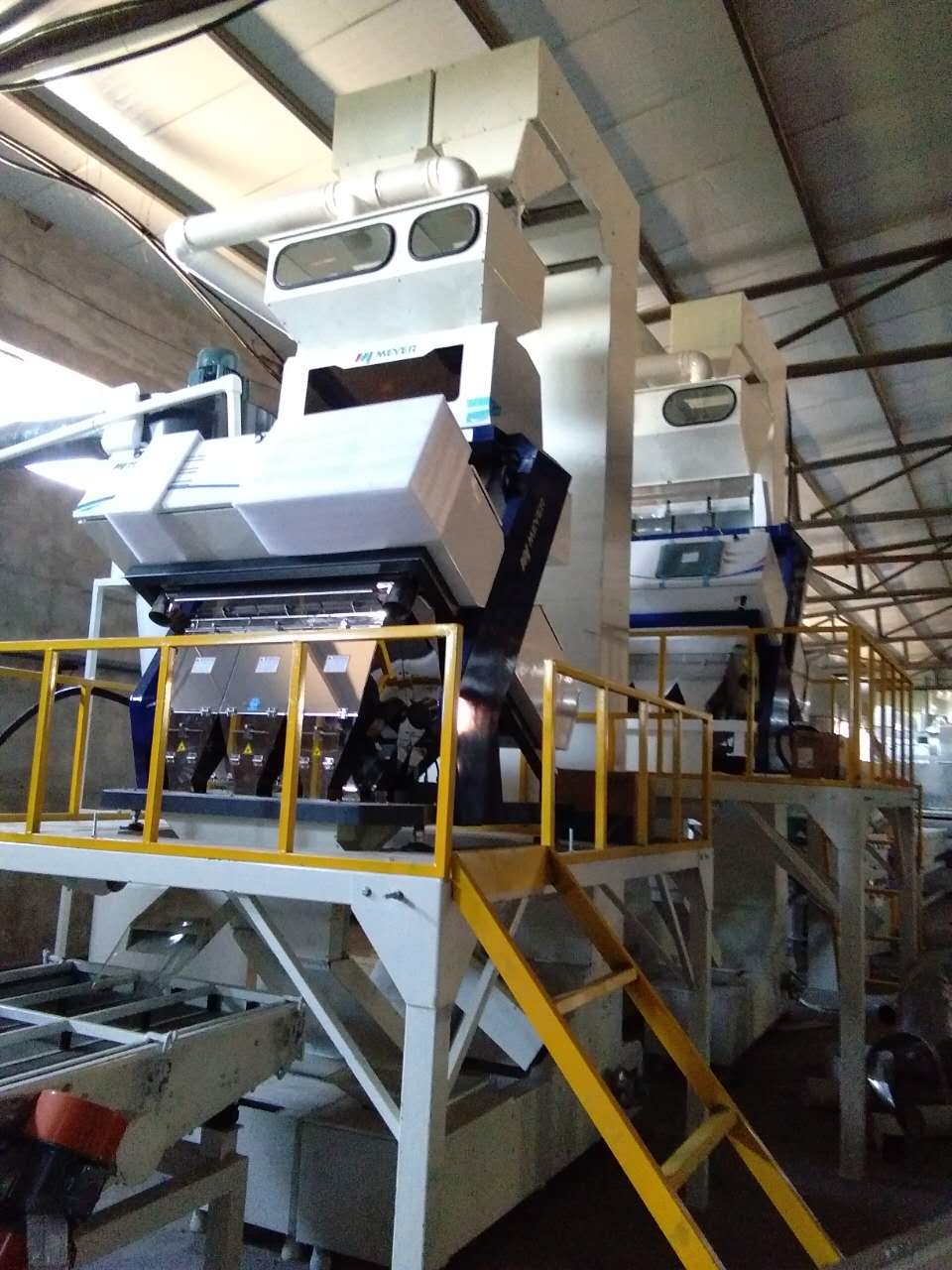
Colour sorting is one of the screening steps applied to remove impurities layer by layer. Image: Inner Mongolia Chengtai Food Co.,Ltd.
Use Cases
Sweet-profile roasted in-shell snacks
For lightly roasted and naturally sweet in-shell products, the 361 grade's black-and-white striped coat provides visual differentiation on shelf, while its sweet and natural taste supports a low-seasoning recipe. The fact that roasted sunflower seeds accounted for 65.9% of global packaged sunflower seed revenue in 2024 underlines how central this use case is to the category.
Salted and salt-roasted lines
T6, with its solid black coat, suits salted and salt-roasted lines where the shell is the visible product. Uniform sizing matters more here than in any other use case, because salt pickup and moisture loss during roasting follow seed size.
Confectionery and bakery input
Sunflower seed kernels (white, moisture 9–10%, impurity below 0.5%) are used as an ingredient for candy and bread. This is a kernel purchase, not an in-shell purchase, and it should be specified as a separate line item even when whole-seed grades come from the same origin.
Blending and bulk snack manufacturing
For snack manufacturers running batch processes with manual and mechanical feeding, both 361 and T6 work as base material in mixed snack lines, provided the impurity requirement is enforced at intake and the warehouse stays cool and dry.
Comparison Table: 361, T6 and Adjacent Grades at a Glance
The table below summarises the catalogue specifications for the two grades discussed here and for the two neighbouring grades that buyers often ask about in the same conversation. Origin is Xinjiang and Inner Mongolia for all four, storage is a cool place, and the intended use is human consumption in manufacturing and roasting operations.
| Grade | Coat colour | Size range (pcs/50 g) | Calibrated bands | Moisture | Impurity / erosion / mildew | Packaging | Industry fit |
|---|---|---|---|---|---|---|---|
| Sunflower seeds 361 | Black-and-white striped | 170–300 | 150–160, 160–170, 170–180, 180–190 | 9–10% | <0.5% / <0.5% / <1% | 20/25 kg plastic or paper bag | Manufacturing, roasted |
| Sunflower seeds T6 | Black | 170–300 | 170–180, 180–190, 190–200, 200–210 | 9–10% | <0.5% / <0.5% / <1% | 20/25 kg plastic or paper bag | Manufacturing, roasted, shop |
| Sunflower seeds 363 (reference) | Black | 170–230 | 170–180, 180–190, 190–200, 200–210, 210–220 | 9–10% | <0.5% / <0.5% / <1% | 20/25 kg plastic or paper bag | Manufacturing, roasted |
| Sunflower seeds 601 (reference) | Black and white stripe | 240–270 | 240–250 | 9–10% | <0.5% / <0.5% / <1% | 20/25 kg plastic or paper bag | Manufacturing, roasted, shop |
All values as stated in the supplier catalogue specification for the 2026 crop year.
FAQ
Are sunflower seeds 361 and T6 suitable for regulated export markets such as the EU and the Middle East?
Compliance is a documentation question as much as a product question. Published market information lists Inner Mongolia Chengtai Food Co.,Ltd as supplying the international market with black sunflower seeds and kernels and as certified under ISO 9001 and Halal. That is the baseline; the destination market adds its own rules. For the EU, sunflower seed imports are expected to follow HACCP principles, with strict monitoring of pesticide residues and metal contaminants (CBI). At the origin end, China notified 209 new maximum residue limits for 93 pesticides in food to the WTO in late 2025 (notification G/SPS/N/CHN/1355), and a draft quality standard for nut and seed food (GB/T 22165, replacing GB/T 22165-2008) updates definitions and technical requirements for roasted seeds (USDA Foreign Agricultural Service). Confirm the applicable limits inside the contract specification rather than assuming one global standard.
What raw seed specification should a roast line plan around for 361 and T6?
Both grades are supplied as raw, unshelled seed with a sweet and natural taste. The recurring specification points are 9–10% moisture, impurity below 0.5%, erosion seeds below 0.5% and mildew seeds below 1%, with origins in Xinjiang and Inner Mongolia and a cool storage instruction. Colour differs by grade: 361 is the black-and-white striped type, T6 is black. Size is quoted as 170–300 pieces per 50 g as a base range, with tighter calibrated bands available, so the band should be written into the order line rather than left to the base range.
What drives the cost of a 361 or T6 lot?
Four variables move the commercial result more than anything else: the size calibration band, the defect tolerance written into the specification, the packaging format (20/25 kg plastic or paper bag, or vacuum bag with carton for kernels), and the order volume against the supplier's minimum order quantity of 5 mts. Lead time also carries a cost dimension, since production lead time is stated as 10–15 days against a monthly capacity of 2,500 mts. Price lists are not published for this category; the practical route is an itemised quotation against a fixed specification.
How can a producer validate a lot before committing to a full order?
Validation rests on two verified points: quality control is described as 100% test, and the after-sales term is that if the seeds have any problem, the buyer can apply for a refund. Beyond that, sample arrangements, retained samples and roast trials are agreed as part of the request for quotation rather than being fixed by the commodity. The useful discipline is to test the exact specification you intend to buy — same grade, same size band, same moisture and defect limits — so the trial result can later be compared with the incoming lot.
What are the order terms and lead time?
Standard terms for this product family are a minimum order quantity of 5 mts, a production lead time of 10–15 days and a monthly capacity of 2,500 mts. Production is offered in OEM/ODM mode, and bags can be printed with the customer's logo. To move from research to a quotation, send the grade (361 or T6), the size band, packaging format and destination port to ctsunfood@163.com or WhatsApp +86 18347278337.
Conclusion and Next Step
Black sunflower seeds for roasted snack lines are a specification-driven purchase, not a commodity guess. Sunflower seeds 361 (black-and-white striped coat) and T6 (black coat) share the same raw, sweet-tasting, 9–10% moisture profile, the same defect limits and the same 20/25 kg bag formats, so the real differentiation sits in three line-level decisions: which calibrated size band you buy, how tightly you write the defect limits, and how you store the bags before roasting.
Both grades are supplied from Xinjiang and Inner Mongolia origins by Inner Mongolia Chengtai Food Co.,Ltd, with a 5 mts minimum order quantity, 10–15 day lead time, 2,500 mts monthly capacity, 100% test quality control and OEM/ODM bag printing. The full company profile, including the product portfolio and export markets, can be downloaded here: Chengtai Food company profile (PDF). Product information is available at www.ctsunfood.com, and specification questions can go directly to the sales team before you lock a size band.
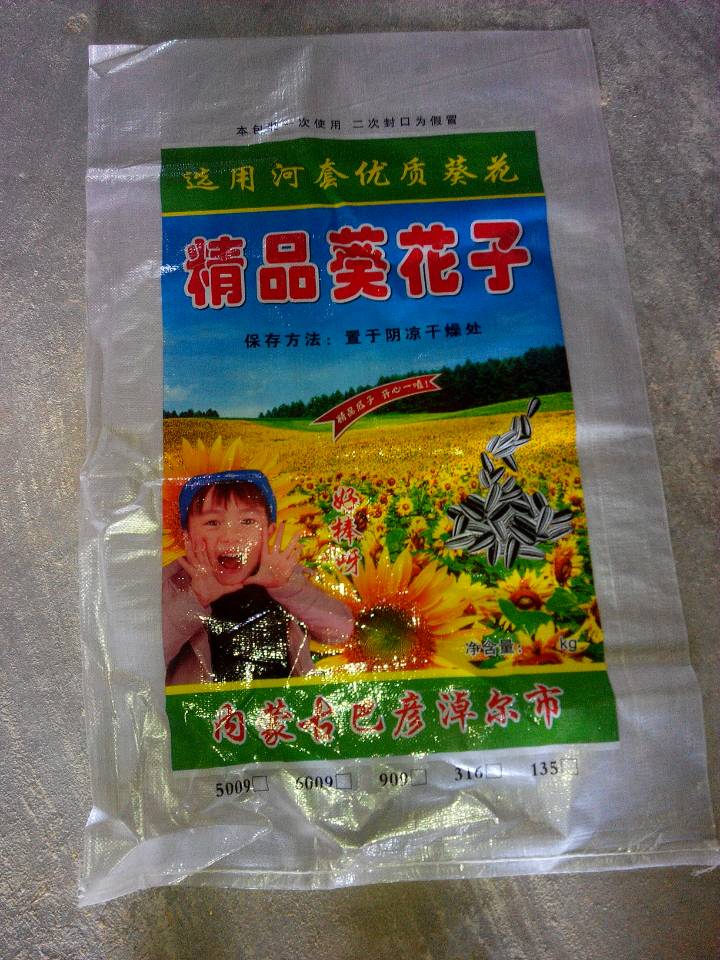
Bulk 20/25 kg seed bags prepared for export dispatch. Image: Inner Mongolia Chengtai Food Co.,Ltd.