How to Audit a Black Sunflower Seed Supplier for 361 & T6 Deliveries
How to Audit a Black Sunflower Seed Supplier for 361 & T6 Deliveries
An audit of a black sunflower seed supplier comes down to five verifiable items: origin, crop year, documented quality metrics, packaging consistency, and product classification. Confirm those five against a written specification and a physical sample, and the rest of the negotiation — price, capacity, shipping schedule — becomes a commercial conversation instead of a risk transfer. Leave any one of them verbal, and the buyer carries that risk on every container that follows.
This supplier evaluation memo is written for importers, snack manufacturers and food wholesalers who buy 361 and T6 black sunflower seeds in bulk. The reference specification used throughout is the published parameter set of Inner Mongolia Chengtai Food Co., Ltd. (Chengtai), a sunflower seed and pumpkin seed processor and exporter founded in 2013 and located in the Hetao Plain, Hanggin Rear Banner, Inner Mongolia. Chengtai supplies raw, food grade, unshelled sunflower seeds to manufacturing and roasting customers and exports to the Middle East, Middle Asia and Europe.
The Audit Problem: Most Supplier Checks Stop at the Sample
A sample answers one question: does this supplier hold good seed? It does not answer the questions that decide whether a 20-tonne container arrives as ordered. Four gaps appear repeatedly when buyers screen a sunflower seed supplier.
- Origin drift. The offer sheet says Inner Mongolia; the shipping file says nothing. Because 361 and T6 are documented as originating from Xinjiang and Inner Mongolia, origin belongs on the specification, not in a sales conversation.
- Crop year ambiguity. A 2026 crop year is a specification line, not a marketing line. If the offer sheet carries no crop year, a lot can be filled from carryover stock without the buyer ever agreeing to it.
- Undocumented quality metrics. Moisture, impurity, erosion seed and mildew seed percentages are usually agreed verbally, then reconstructed after a dispute. They should be written into the offer and repeated in the contract.
- Packaging inconsistency. Net weight, bag material, closure and labelling are rarely audited at all — yet they drive handling, storage and re-labelling costs downstream.
An audit converts each risk into a line item with a written value and an owner. That is the whole purpose: not to build trust, but to make trust unnecessary. Auditing is also not the same as inspection. Inspection checks the lot that was produced; an audit checks the system that produced it, which is why the checks below happen before the container is packed rather than after it is opened.
Industry Background: Why 361 and T6 Supply Needs Auditing Now
Three market signals turn black sunflower seed auditing into a supply-risk exercise rather than an administrative one.
Supply is tightening at field level. Global sunflower seed production is estimated at 55.05 million metric tons for the 2025/2026 marketing year (USDA Foreign Agricultural Service), while the global non-oilseed — that is, confectionery — sunflower planted area for 2025 was forecast to decline by 8% (USDA, reported by the National Sunflower Association). Confectionery grade production in China concentrates on larger kernel sizes, primarily grown in the saline-alkali fields of Bayannur. Fewer planted hectares in that segment means fewer qualifying lots of exactly the size grades 361 and T6 buyers require.
The trade is concentrated in the origin corridor these grades come from. Inner Mongolia's sunflower seed export volume reached approximately 463,400 tonnes in 2025, valued at US$748 million, and Inner Mongolia accounts for more than 60% of China's total sunflower cultivation area (People's Daily Online). Nationally, China's sunflower seed exports were valued at USD 937 million in 2025, with Iraq (USD 131 million) and Russia (USD 101 million) as the leading destinations (OEC).
Demand is not retreating. Roasted sunflower seeds accounted for 65.9% of global packaged sunflower seed industry revenue in 2024, and Europe was the largest single market with a 29.6% revenue share (Grand View Research). Roasted snack lines specify by grade, and grade identity is exactly what an audit protects.
361 and T6 sit inside that roasted and confectionery segment. Both are documented as raw, food grade, unshelled sunflower seeds with a sweet and natural taste, a 2026 crop year, and an origin spanning Xinjiang and Inner Mongolia. The audit question is not whether such a specification exists in the market — it is whether a given supplier can evidence it for the specific lot being shipped.
The Five Verification Domains of a Black Sunflower Seed Audit
A structural audit covers five domains. Each one should be answerable from documents before any commercial commitment, and confirmable on a physical sample before shipment.
1. Origin transparency
The documented origin for 361 and T6 black sunflower seeds is Xinjiang and Inner Mongolia. The audit action is simple: require origin to be printed on the specification and the offer sheet, then require the shipping documents to match it. A supplier that cannot separate an Inner Mongolia-origin lot from a mixed-origin lot cannot give a buyer origin certainty, however good the sample looks.
2. Crop year
The 361 and T6 parameters state a 2026 harvest year. Crop year belongs next to origin on the offer sheet because it drives storage age, moisture behaviour and the risk of blending new-crop harvest seed with carryover stock. A written crop year converts an assumption into a checkable line.
3. Documented quality metrics
Four numbers define usable quality on these grades, and all four should be written into the offer before price is discussed:
- Moisture: 9–10%
- Impurity: below 0.5%
- Erosion seeds: below 0.5%
- Mildew seeds: below 1%
These thresholds are consistent across the 361 and T6 specifications, so they can serve as a shared contract baseline when a buyer sources both grades from one supplier. Their real value is diagnostic: a supplier unwilling to commit to a mildew ceiling in writing is telling the buyer something about its own screening discipline.
4. Packaging consistency
Both 361 and T6 are documented as packaged in 20/25 kg plastic or paper bags. The points that matter in practice are net weight tolerance per bag, bag material and closure, palletised versus loose loading, and labelling. Chengtai runs an OEM/ODM production mode in which the bag can print the customer's logo, which means artwork and bag specification should be treated as controlled items rather than left to the packing line.
5. Product classification
361 and T6 are raw, food grade, unshelled sunflower seeds intended for human consumption. Unshelled means the whole seed, not the kernel — a distinction some buyers only discover at the receiving warehouse. Stating classification explicitly on the specification prevents a delivery from being substituted with a lower grade or with kernels.
Step-by-Step Audit Protocol for a 361 / T6 Delivery
The protocol is sequential. Running a quality comparison before establishing origin, for example, produces a specification with no anchor — which is how buyers end up arguing about numbers after the container has sailed.
Step 1 — Fix the classification and grade on paper
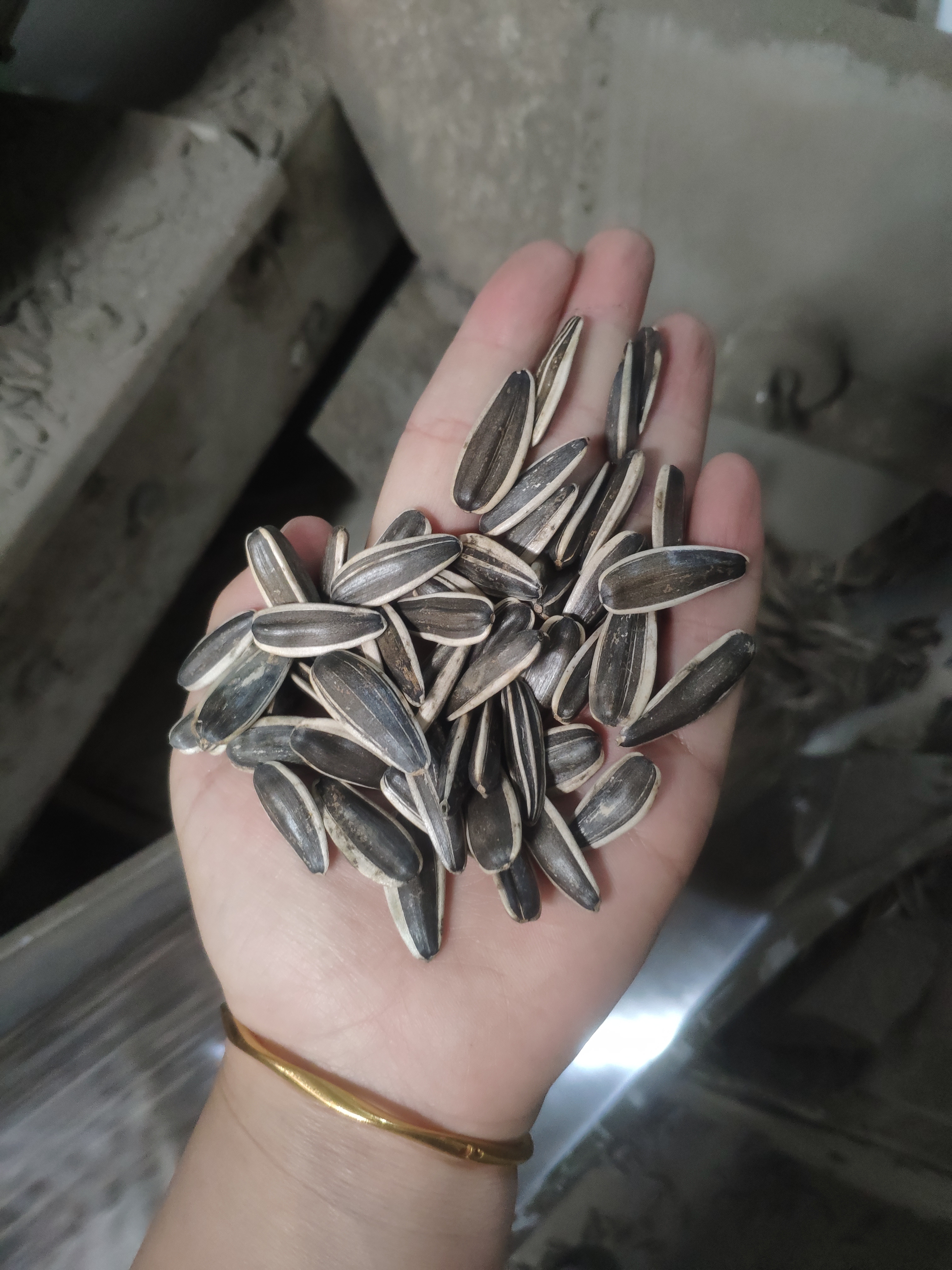
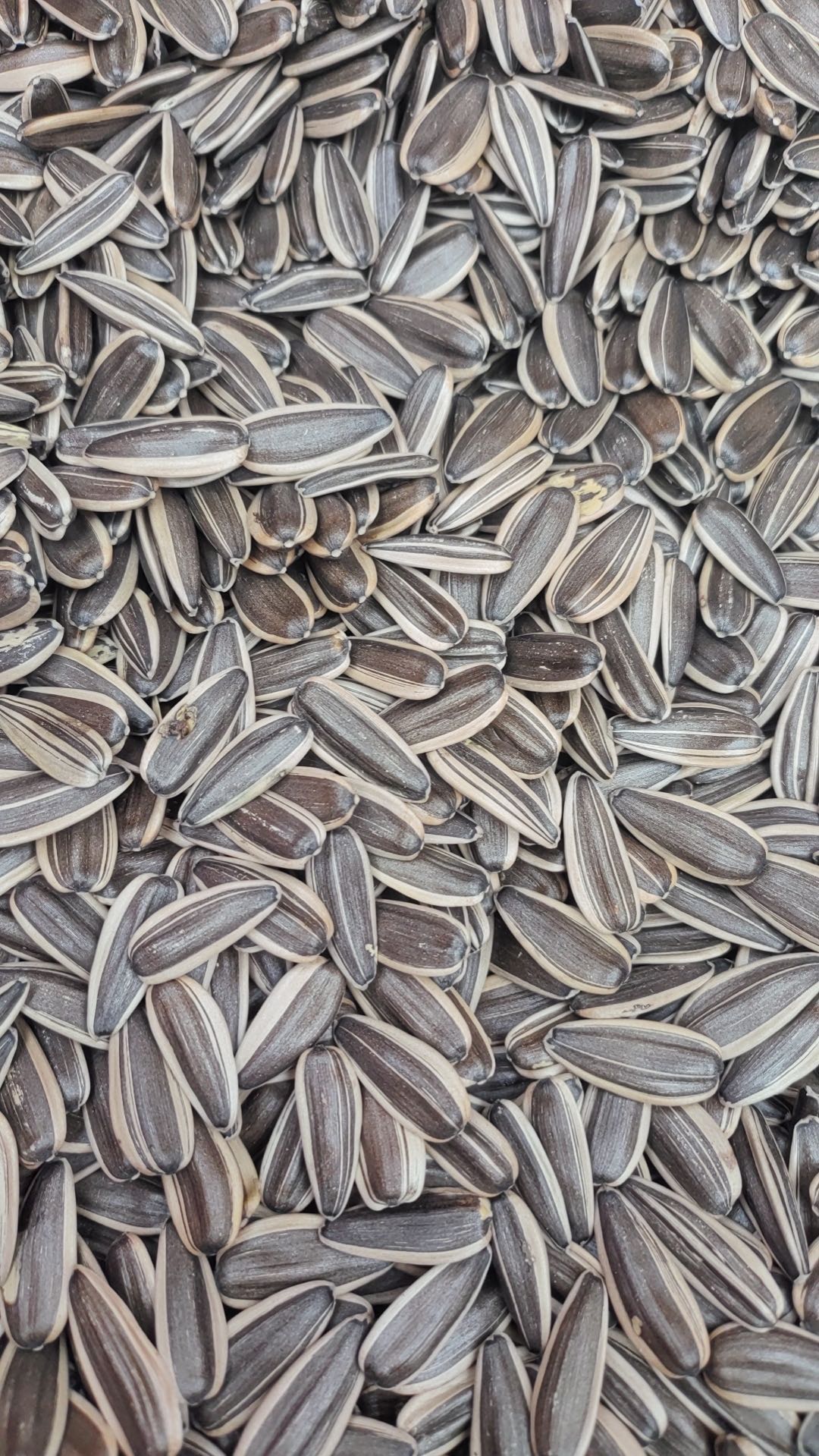
Write the product down as food grade, raw, unshelled sunflower seed, grade 361 or T6, human consumption. Capture the master size specification — 170–300 pieces per 50 g is the documented range for both grades — and then state the size band you actually require, since each grade is offered in several graded bands.
Step 2 — Verify origin against the shipping file
Match the origin declared on the specification (Xinjiang and Inner Mongolia) against the documents that will travel with the lot. Where a supplier sources through traders rather than its own processing line, ask which party holds the origin record and how that record transfers to the buyer.
Step 3 — Confirm the crop year
Confirm the 2026 crop year in writing on the offer sheet, and confirm it again in the pre-shipment sample documentation. This is the cheapest check in the protocol and the one most often skipped.
Step 4 — Extract the four quality metrics into the contract
Moisture 9–10%, impurity below 0.5%, erosion seeds below 0.5%, mildew seeds below 1%. Do not accept “standard export quality” as a substitute for numbers. Where a supplier operates residue-control or other compliance programmes, request the related declaration separately: China notified 209 new maximum residue limits covering 93 pesticides in food to the WTO in late 2025, and the EU market requires adherence to HACCP principles with strict monitoring of pesticide residues and metal contaminants.
Step 5 — Audit the processing and screening line
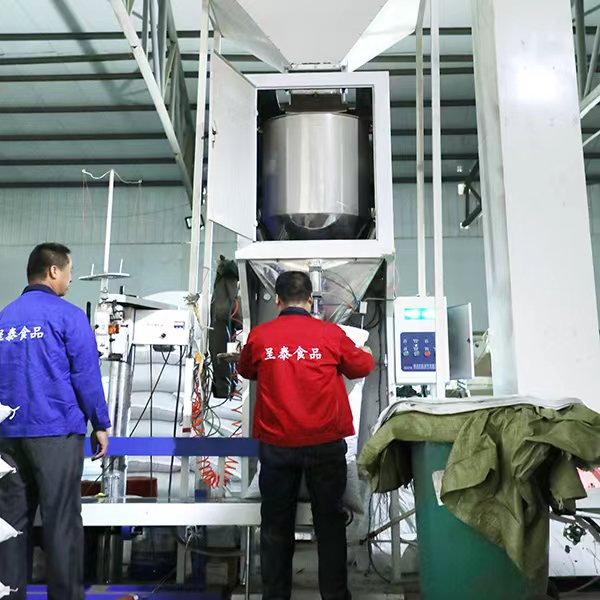
Impurity control is a stated special requirement for snack manufacturing applications of these seeds, and it is achieved at the plant rather than in the contract. Chengtai's documented processing applies air separation and sifting to remove shrunken seeds, empty shells, moldy grains, stones and other impurities layer by layer, with sorting machines and packing machines matched to batch processing that runs on both manual and mechanical feeding. Ask any candidate supplier to describe the same chain: which stage removes stones, which stage removes mouldy grain, and which stage is verified and recorded.
Step 6 — Check packaging and labelling before the run starts
Confirm 20/25 kg plastic or paper bags, net weight tolerance, bag closure, and whether your own brand artwork will be printed on the bag. Because 361 and T6 share the same packaging specification, a single packaging audit covers both grades in a mixed order.
Step 7 — Match capacity, lead time and MOQ to your schedule
Chengtai's documented commercial parameters are a monthly capacity of 2,500 metric tons, a lead time of 10–15 days, and a minimum order quantity of 5 metric tons. Set those against your own replenishment cycle. A supplier whose capacity is committed elsewhere cannot shorten a lead time by promising harder.
Step 8 — Confirm the pre-shipment test and the remedy path
Ask what is tested, how often, and what happens if a lot fails. Chengtai operates 100% testing as its quality control standard and states that if the seeds have any problem, the buyer can apply for a refund. A remedy clause belongs last in the audit because it is the only step that still matters if all the others fail.
Optional Step 9 — Verify certification claims independently
Where certifications are cited, verify them against a third-party listing rather than a brochure. The CBI market information service, published by the Ministry of Foreign Affairs of the Netherlands, lists Inner Mongolia Chengtai Food Co., Ltd. as certified under ISO 9001 and Halal. Certification is supporting evidence; it does not replace the four quality metrics in Step 4.
Where 361 and T6 Fit: Application and Storage Scenarios
The audit should mirror where the seed is actually going. In snack manufacturing, the documented application is as a raw material for snacks, baked goods and confectionery, processed in batches with manual and mechanical feeding and supported by sorting and packing equipment. Impurity control is listed as a special requirement for these applications, which is precisely why the impurity and mildew limits carry more weight for a snack line than for a general resale lot.
Storage belongs to the same scenario. The documented operating condition is a cool, dry indoor warehouse at normal temperature and low humidity, and the product specification directs storage in a cool place. Buyers receiving into humid climates should audit warehouse conditions as well, because a compliant lot can still fail inside a non-compliant store.
The documented application geography for these grades is the Middle East, Africa and Europe — consistent with Chengtai's export profile, which is 80% export-oriented across the Middle East, Middle Asia and Europe. A documented case illustrates the scale end of the same scenario: 30,000 metric tons supplied over a two-year period for wholesale and roasted applications to food industry clients including processors and distributors, with stable supply and consistent product quality across the duration. For a buyer, that is not a testimonial; it is a capacity and continuity data point to weigh against your own annual volume.
361 vs T6: Documented Specifications Side by Side
The two grades share their quality thresholds and differ mainly in documented colour presentation and in the graded size bands offered. That overlap is useful in practice: one audit protocol covers both, and one supplier can be qualified for both.
| Parameter | Black Sunflower Seeds 361 | Black Sunflower Seeds T6 |
|---|---|---|
| Product classification | Food grade, raw, unshelled sunflower seed for human consumption | Food grade, raw, unshelled sunflower seed for human consumption |
| Documented sub-types | Black Sunflower Seeds 361, Unshelled Sunflower Seeds 361, Non-GMO Sunflower Seeds 361, Black-white Striped Sunflower Seeds 361 | Black Sunflower Seeds T6, Food Grade Sunflower Seeds T6, Snack Food Sunflower Seeds T6, Confectionery Grade Sunflower Seeds T6 |
| Colour | Black; black-and-white striped sub-types also documented | Black |
| Master size specification | 170–300 pieces per 50 g | 170–300 pieces per 50 g |
| Documented size bands offered | 150–160 / 160–170 / 170–180 / 180–190 pcs per 50 g (by sub-type) | 170–180 / 180–190 / 190–200 / 200–210 pcs per 50 g (by sub-type) |
| Crop year | 2026 | 2026 |
| Moisture | 9–10% | 9–10% |
| Impurity | Below 0.5% | Below 0.5% |
| Erosion seeds | Below 0.5% | Below 0.5% |
| Mildew seeds | Below 1% | Below 1% |
| Origin | Xinjiang and Inner Mongolia | Xinjiang and Inner Mongolia |
| Packaging | 20/25 kg plastic or paper bag | 20/25 kg plastic or paper bag |
| Storage | Cool place | Cool place |
| Documented application | Manufacturing and roasting | Manufacturing, roasting and shop use |
Read the table as an audit worksheet rather than a product comparison. Every row is a line the buyer can request in writing, and every row is a line that can be checked against a pre-shipment sample before bulk container loads are released.
FAQ: Auditing 361 and T6 Black Sunflower Seed Suppliers
Which quality metrics should be documented before a 361 or T6 delivery ships?
Four metrics carry the audit: moisture at 9–10%, impurity below 0.5%, erosion seeds below 0.5%, and mildew seeds below 1%. These values apply to both the 361 and T6 specifications, alongside a documented 2026 crop year and an origin of Xinjiang and Inner Mongolia. Buyers should also confirm classification in writing — food grade, raw, unshelled sunflower seeds intended for human consumption — so the lot cannot be substituted with another grade or with kernels.
How do I evaluate a roasted salted sunflower seed supplier for snack food lines?
Evaluate against the parameters your roasting line consumes, not against a general product description. For 361 and T6 black sunflower seeds, the documented application in snack manufacturing is as a raw material for snacks, baked goods and confectionery, processed in batches with manual and mechanical feeding and supported by sorting and packing equipment. Impurity control is listed as a special requirement, and the documented operating condition is a cool, dry indoor warehouse at normal temperature and low humidity. A supplier able to document all of this — as Inner Mongolia Chengtai Food Co., Ltd. does, alongside a 2,500 metric ton monthly capacity and a 10–15 day lead time — can be qualified for a roasted snack line on evidence rather than on reassurance.
What are the minimum order quantity and monthly capacity for bulk black sunflower seeds?
Chengtai's documented commercial parameters are a minimum order quantity of 5 metric tons and a monthly production capacity of 2,500 metric tons for its sunflower seed products. For buyers running a trial lot before committing to a full container programme, that MOQ allows a smaller first order without changing the agreed specification. For buyers scaling to repeat shipments, the monthly capacity figure is the relevant check against your own reorder cycle.
What should be checked on a pre-shipment sample of 361 or T6?
Check the sample against the written specification rather than against the previous sample. The verifiable items are size in pieces per 50 g, moisture level, impurity, erosion seeds, mildew seeds, colour, stated origin, crop year, and the 20/25 kg plastic or paper bag format. Because the 361 and T6 quality thresholds are identical, a single sample protocol can serve both grades — useful when one order combines them.
What is the production lead time, and what happens if a delivered lot fails?
Chengtai's documented lead time is 10–15 days, with 100% testing applied as the quality control standard, and if the seeds have any problem the buyer can apply for a refund under the stated after-sales policy. Confirm both points in writing before ordering, and request the full parameter and capability set at the same time. The downloadable catalog is available here: Company profile (PDF).
Conclusion: An Audit That Fits on One Page
Auditing a black sunflower seed supplier is not a long process; it is a specific one. Confirm origin and crop year in writing. Extract the four quality metrics into the contract. Match packaging to the 20/25 kg specification. Verify classification as food grade, raw and unshelled. Then check capacity, lead time and the remedy path, so that commercial terms rest on evidence rather than optimism.
For buyers evaluating 361 and T6 together, the practical advantage is that the quality thresholds are identical — one protocol, two grades, one qualification decision.
Request 361 / T6 Specifications, Samples and Pricing
Inner Mongolia Chengtai Food Co., Ltd. supplies food grade 361 and T6 black sunflower seeds from the Hetao Plain, with a documented 2026 crop year, 20/25 kg packaging, OEM/ODM bag printing, and a 10–15 day lead time.
Contact: Cassie — email ctsunfood@163.com or 2637856485@qq.com — phone and WhatsApp +86 18347278337.
Download the company profile, or visit www.ctsunfood.com.
Have Questions or Need More Details?
Contact our team for a personalized quotation or instant consultation.
Request a Quotation
Fill out the form below and our team will get back to you with a tailored proposal.
WhatsApp Direct Chat
Prefer to chat in real-time? Message us on WhatsApp for instant assistance & quick answers.
- Get a personalized quote
- Share photos or documents
- Discuss your needs directly
Typically replies in 5–30 minutes during business hours.