How to Match Pumpkin Seed Types to Food Manufacturing Lines
Pumpkin seed selection for a food manufacturing line is a fit decision, not a quality ranking. Two lots can both be raw, both sit inside a 9–10% moisture window and both arrive with impurity below 0.5%, yet only one of them will run cleanly on a given line — because size grade, shell colour, kernel grade, feeding method and storage conditions decide whether the finished pack matches its own specification.
This industrial application guide maps pumpkin seed types to concrete manufacturing scenarios: large white seed grades for premium snack and retail packing lines (Snow White 15cm+, Shine Skin 11cm+, Lady Nail 10cm+), green kernel grades for bakery, confectionery and inclusion lines (Shine Skin Pumpkin Seeds kernels, grades A, AA and AAA), the raw specification that preserves original taste, the cool-place storage rule, and the impurity, moisture and packaging parameters that should be frozen before a line trial.
Short answer: match seed to line in this order — (1) line function and finished product, (2) colour and size grade, (3) impurity ceiling, (4) moisture window and storage condition, (5) feeding and packing equipment, (6) sample validation and commercial terms. White shell types (Snow White, big size Shine Skin, Lady Nail) suit lines where the seed is the visible product; green Shine Skin kernels suit lines where the seed becomes an ingredient.
Problem Definition: Where a Seed-to-Line Mismatch Actually Shows Up
A mismatch between seed type and line function almost never appears at goods-in inspection. It appears downstream, in the finished pack or in the process data, in four predictable places.
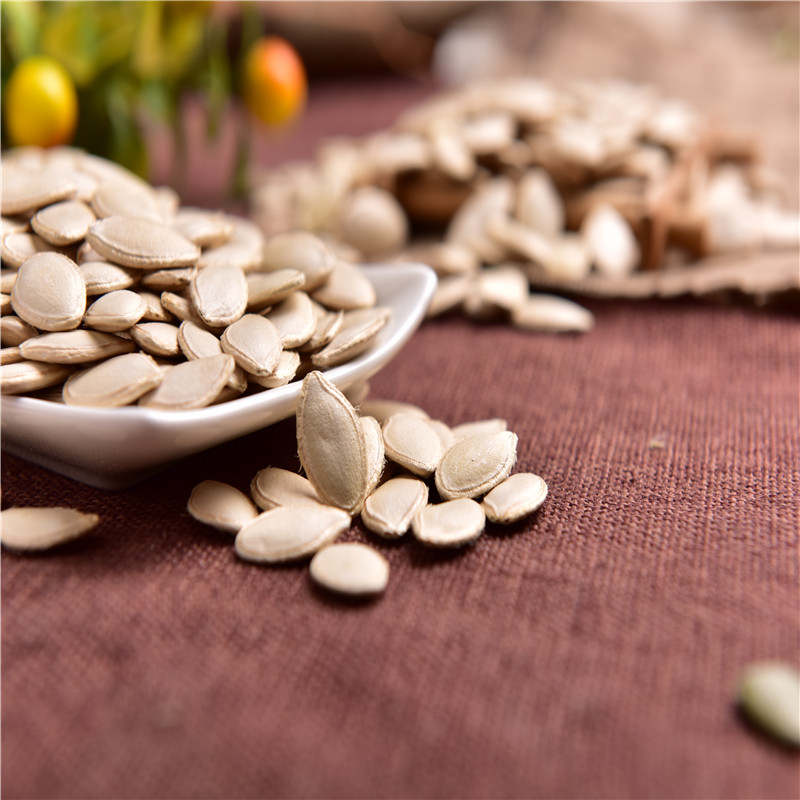
- Visual drift. A retail snack line specified around white-shell seed will not absorb a green kernel lot without changing the appearance of the pack. Colour is a receiving specification, not a cosmetic detail: Snow White, Shine Skin and Lady Nail grades are supplied with white colour, while Shine Skin kernels are supplied in green and dark green.
- Dimensional drift. Count-per-pack and fill-weight targets depend on the size tier written into the specification. Size coverage differs by type — 15cm+ / 13cm+ / 11cm+ for Snow White, 11cm+ / 8-10mm+ / <8mm for Shine Skin, and 10cm+ / 7-10mm+ / <7mm for Lady Nail. If the tier is left open, the packing machine is asked to hold a target it was never set up for.
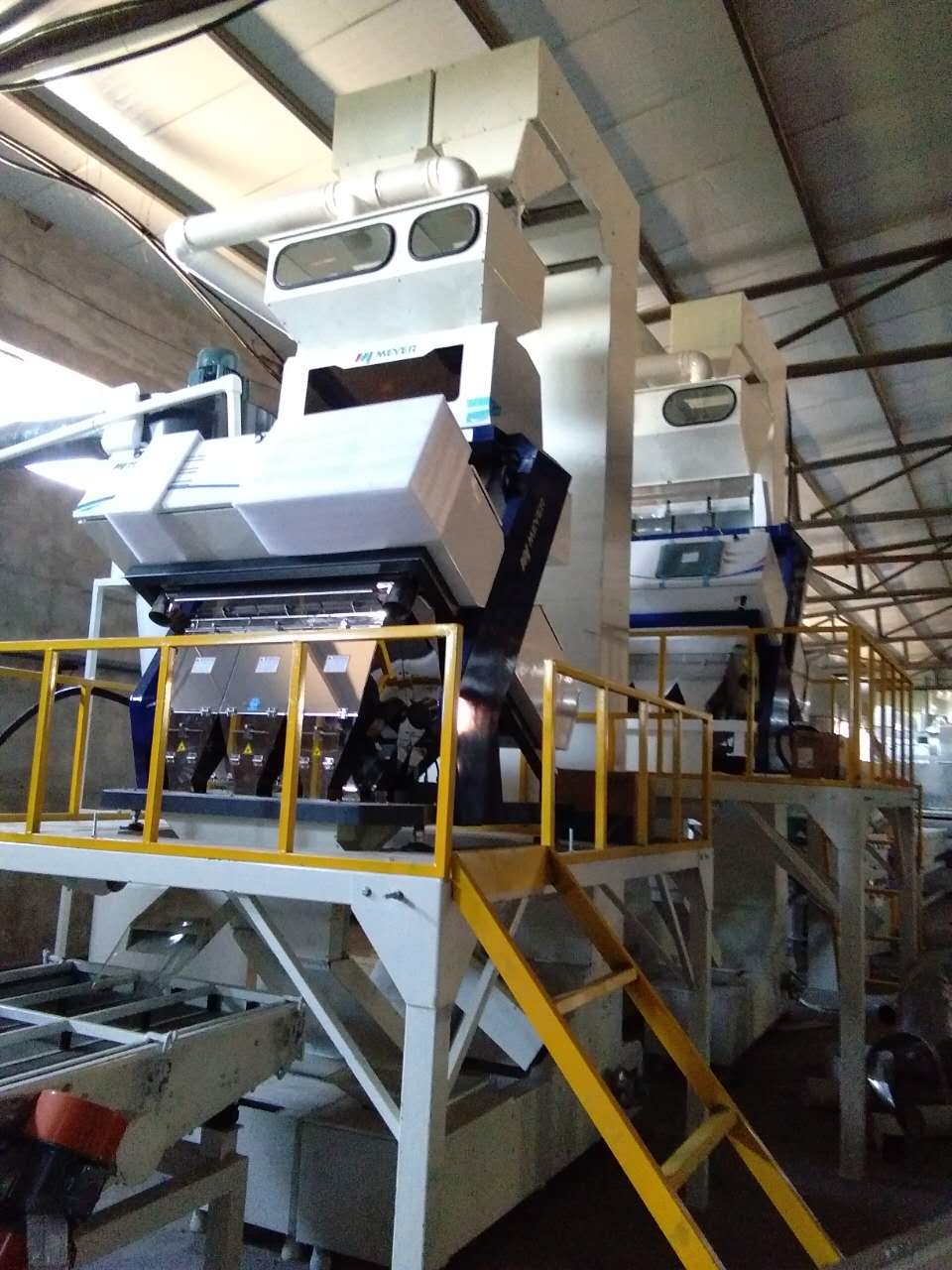
- Foreign-material load. Impurity ceilings determine how much work the colour sorting machine has to do. In this product category the application requirement is stated as impurity controlled, and the matched equipment list is a sorting machine plus a packing machine. A lot that arrives at the ceiling rather than comfortably inside it shifts cost and risk onto the line.
- Moisture and storage drift. Raw seeds are supplied at 9–10% moisture and recommended for storage in a cool place. The mildew ceiling of less than 1% is a receiving limit, not a storage buffer, so a warm or humid store can move a compliant lot out of specification before the bag is ever opened.
The category itself is clearly defined on the processing side: pumpkin seeds function as raw material for snacks, baked goods and confectionery in food production processing projects, they operate in batch processing mode, and they are handled through manual and mechanical feeding. Every matching decision in this guide traces back to one of those elements.
Industry Background: A Supply Base That Is Shifting by Variety
Type-level planning matters more than it did a few seasons ago, because the mix of what is planted and shipped has been moving.
- China's total pumpkin seed production was projected to reach 400,000 tons in 2024, a 40% increase from 280,000 tons in 2023 (Seedea / Pumpkin GWS Market Update).
- Shine Skin is the dominant variety in China, accounting for 74% of total production in 2024, approximately 294,000 tons (Everstar Foods industry report).
- Snow White and Lady Nail each accounted for about 12% of China's 2024 production, estimated at 46,000 tons and 52,000 tons respectively (Everstar Foods).
- Inner Mongolia is a major pumpkin seed cultivation hub, with a planting area of 28,700 hectares (430,000 mu) in 2024 (Seedea agriculture statistics).
- Lady Nail planting area expanded by about 80% to roughly 500,000 acres in 2025, driven by demand in the Middle East (Cardassilaris Family market insights).
- The global pumpkin seed market is expected to grow from USD 1.08 billion in 2025 to USD 2.62 billion by 2032, a CAGR of 13.4% (Maximize Market Research).
- China's pumpkin seed export value was USD 97 million in 2023, approximately 10% of global export value (Tridge / UN Comtrade).
Two forces shape line planning. The first is variety concentration: with Shine Skin holding the majority of Chinese production while Lady Nail expands quickly on Middle East demand, a project that fixes only one grade without a documented fallback is exposed to availability swings. The second is regulatory pressure: pesticide residue rules in the EU and the US have constrained export volumes for Shine Skin and GWS types and contributed to a temporary global oversupply in 2025. For a manufacturer, that combination argues for specifying grade, size and documentation precisely enough that a substitute lot can be evaluated quickly without reopening the whole specification.
On the supply side, Inner Mongolia Chengtai Food Co., Ltd. is a pumpkin and sunflower seed processor founded in 2013, located in the Hetao Plain, Hanggin Rear Banner, Bayannur, Inner Mongolia. The company operates a 3,500 m² facility with an annual output of 30,000 MT and exports approximately 80% of its production to the Middle East, Middle Asia and Europe. Its main products are sunflower seeds, pumpkin seeds and kernels, and it meets buyers at international food fairs including Gulfood in Dubai, the Uzbekistan exhibition, Tuyap in Turkey, Anuga in Germany and Sial in France. The buyer profile it serves — food processors, snack manufacturers, food wholesalers, importers and distributors — matches the line types this guide addresses.
Detailed Solution: Matching Seed Types to Line Functions
The practical rule is to start from what the line does and work backwards to the seed, rather than starting from a variety name and hoping the line adapts.
Frame 1 — Premium snack and retail packing lines: large white seed
On a retail snack line the seed is the product. Colour and size grade carry the shelf identity, and the packing machine holds count or fill weight against the grade that was specified.
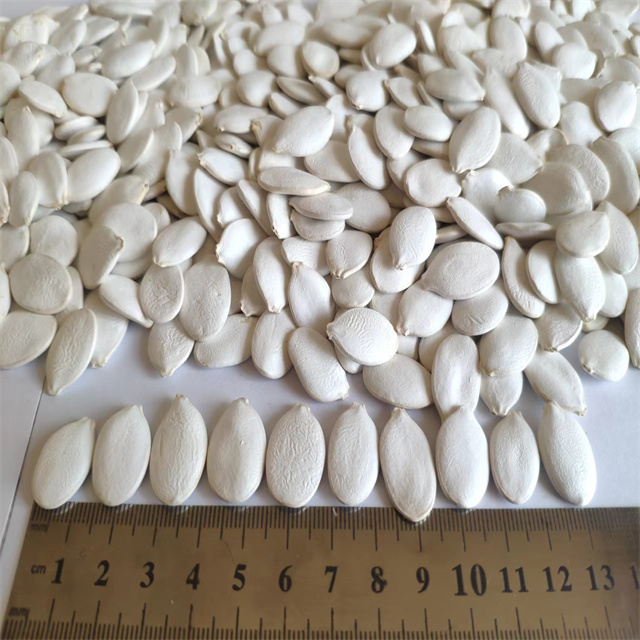
- Snow White Pumpkin Seeds — Big Size Pumpkin Seeds with coverage at 15cm+, 13cm+ and 11cm+. White colour, raw specification. Suited to premium snack programmes where the largest available seed size is the selling point.
- Shine Skin Pumpkin Seeds — Big Size Pumpkin Seeds at 11cm+, 8-10mm+ and <8mm. White colour, raw specification. The middle tier that fits most mid-to-premium snack and roasting lines.
- Lady Nail Pumpkin Seeds — Inner Mongolia origin pumpkin seeds at 10cm+, 7-10mm+ and <7mm. White colour, raw specification. A practical grade for standard snack lines and bulk programmes where volume matters more than maximum size.
All three white types are supplied raw at 9–10% moisture, with impurity below 0.5%, erosion seeds below 0.5% and mildew seeds below 1%, declared for human consumption and packed in 20/25 kg plastic or paper bags.
Frame 2 — Bakery, confectionery and inclusion lines: green Shine Skin kernels
On an ingredient line the seed stops being a visual and becomes a component. The kernel grade determines what the buyer's own customer sees inside the finished baked good or confectionery piece.
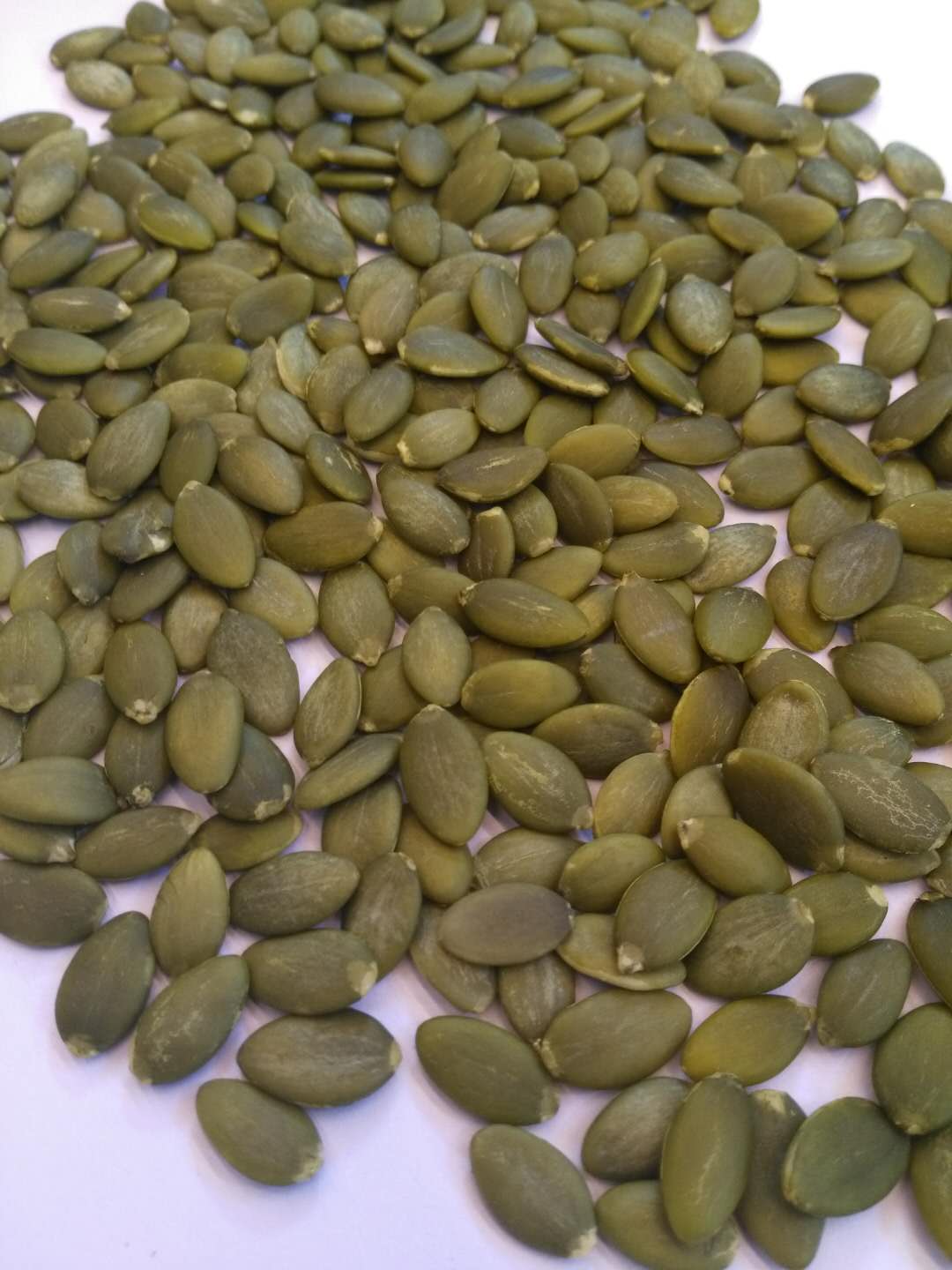
- Shine Skin Pumpkin Seeds kernels, Grade AAA — dark green kernels, raw specification, sweet and natural taste.
- Shine Skin Pumpkin Seeds kernels, Grade AA — green kernels, raw specification, sweet and natural taste.
- Shine Skin Pumpkin Seeds kernels, Grade A / AA / AAA — the full green kernel range, raw, with moisture 9–10%, impurity below 0.5%, erosion seeds below 0.5% and mildew seeds below 1%.
Kernel specifications hold the same physical ceilings as the whole seed types, and kernels can be supplied in 20/25 kg plastic or paper bags or in vacuum bags with cartons — the format that protects a high-purity kernel through longer storage.
Frame 3 — Roasting lines and seasoning programmes
Roasting is where the raw specification earns its place. Because the seed arrives raw with a sweet and natural taste and no pre-applied flavouring, the roast profile and the seasoning decision stay with the processor — including lines producing salted roasted pumpkin seeds. Where two lots arrive with different flavour treatment, the finished product changes even when the machine settings do not; a raw specification removes that variable.
The 9–10% moisture window gives the roaster a defined starting point rather than a moving one, which supports repeatability across batches.
Frame 4 — Bulk wholesale and redistribution programmes
Where the seed is repacked or resold rather than transformed, the decisive parameters are grade consistency and packaging. White seed types are supplied in 20/25 kg plastic or paper bags, and the packaging itself can be customised — bags can be printed with the customer's logo under OEM/ODM arrangements.
The raw specification that protects ingredient consistency
Every pumpkin seed type described here is supplied in raw specification, with the crop year stated as 2026, a sweet and natural taste, moisture of 9–10%, impurity below 0.5%, erosion seeds below 0.5% and mildew seeds below 1%. The declared instruction for use is human consumption, the origin is Xinjiang and Inner Mongolia, and the recommended storage condition is a cool place.
For a manufacturing line, raw is a process boundary rather than a marketing word. It means the incoming material has not been flavoured or otherwise treated, so the final taste profile is created by the processor's own process. It also means the specification a buyer validates at sampling is the specification that reaches the line.
White shell types and green kernel types are two different projects
A useful simplification when building a specification: white-shell seed types — Snow White, big size Shine Skin and Lady Nail — belong to lines where the seed is visible in the finished pack. Green Shine Skin kernels belong to lines where the seed is an ingredient. The two groups share the same moisture, impurity, erosion and mildew ceilings and the same cool-place storage recommendation, but they answer different line questions, and mixing them in one specification usually means one of the two lines is being served with the wrong grade.
| Line function | Recommended pumpkin seed type | Why it fits |
|---|---|---|
| Premium snack and retail packing line | Snow White Pumpkin Seeds (15cm+ / 13cm+ / 11cm+) | Largest white shell size grade; the seed is the visible product |
| Mid-to-premium snack and roasting line | Shine Skin Pumpkin Seeds (11cm+ / 8-10mm+ / <8mm) | White shell with a broad size tier that suits packing and roasting |
| Standard snack and bulk wholesale | Lady Nail Pumpkin Seeds, Inner Mongolia origin (10cm+ / 7-10mm+ / <7mm) | White shell, practical grade for volume programmes |
| Bakery, confectionery and inclusion line | Shine Skin Pumpkin Seeds kernels, Grade AAA | Dark green kernel for visible inclusions; vacuum carton option |
| Standard ingredient and roasting line | Shine Skin Pumpkin Seeds kernels, Grade AA / A | Green kernels with the same moisture and impurity ceilings |
| Warehouse and redistribution | White seed types in 20/25 kg bags; kernels in vacuum cartons | Cool-place storage recommendation applies to both groups |
Storage: what the cool-place recommendation is protecting
The stated storage condition for these products is a cool place. The application profile is more specific: pumpkin seeds are designed for cool and dry indoor warehouse conditions, at normal temperature and low humidity — the environment typical of snack manufacturing facilities.
That recommendation is not a formality. A raw seed lot bought at 9–10% moisture and delivered with mildew seeds below 1% is compliant on arrival; it stays compliant only if storage keeps it there. For manufacturers running batch processing, the practical controls are straightforward: keep the material in a cool, dry indoor location, keep it in the 20/25 kg bag format it was packed in, and rotate stock so older lots are consumed first.
Packaging as a line variable
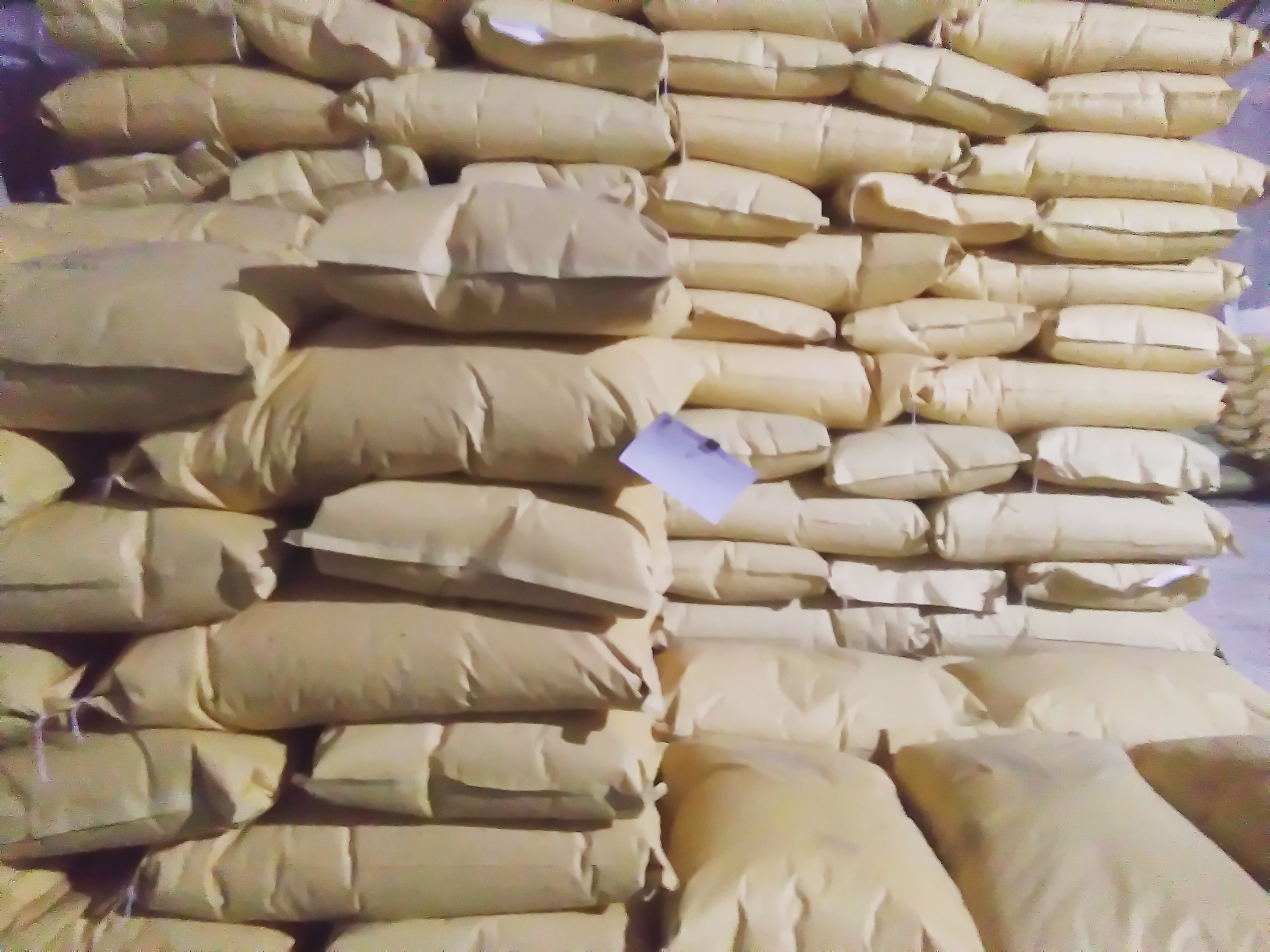
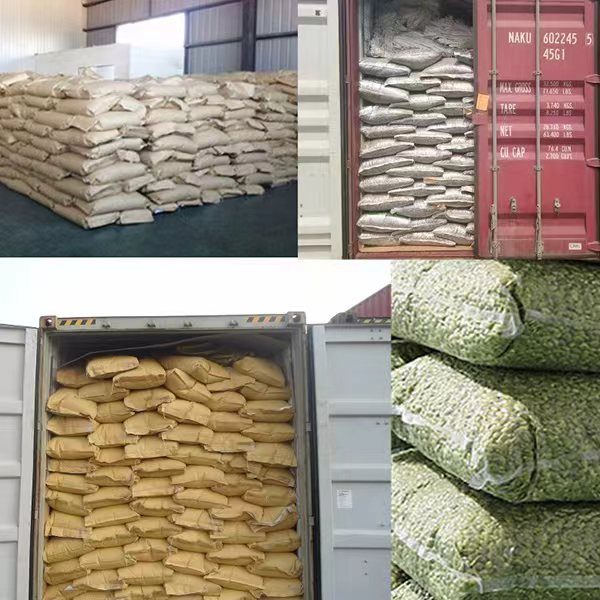
Packaging is usually treated as logistics, but on a manufacturing line it is part of the feeding decision. Whole seeds and kernels are supplied in 20/25 kg plastic or paper bags; kernels are also available in vacuum bags with cartons. A line with manual feeding may prefer the bag format, while a line holding kernels for a longer production cycle is better served by the vacuum carton. Under OEM/ODM arrangements, bags can be printed with the customer's logo.
Step-by-Step Breakdown: Six Decisions That Fix the Match
- Define the line function and the finished product. Decide whether the seed will be visible (retail snack pack), functional (bakery or confectionery inclusion) or processed further (roasting), and whether output is sold in retail units or in bulk. This single answer eliminates most of the range before any technical parameter is discussed.
- Fix colour and size grade. Write the tier into the specification rather than the phrase large seeds: white shell at 15cm+ / 13cm+ / 11cm+, 11cm+ / 8-10mm+ / <8mm, or 10cm+ / 7-10mm+ / <7mm; or green kernel at grade A, AA or AAA, with AAA supplied dark green.
- Set the foreign-material ceiling and the compliance requirement. The physical ceilings are impurity below 0.5%, erosion seeds below 0.5% and mildew seeds below 1%. For pumpkin seeds entering the EU, Commission Regulation (EU) 2023/915 sets the maximum aflatoxin level at 5.0 µg/kg for the sum of B1, B2, G1 and G2. Buyers sourcing for retail programmes in Europe and North America commonly add non-GMO and pesticide residue documentation requests on top of the physical specification.
- Set the moisture window and the storage condition. 9–10% moisture at delivery, storage in a cool place, and a cool and dry indoor warehouse at normal temperature and low humidity. Confirm that the receiving store can hold those conditions before the first container arrives.
- Confirm equipment compatibility. The matched equipment for this category is a sorting machine and a packing machine, with batch processing and manual or mechanical feeding. Check that the colour sorting machine can hold the specified impurity ceiling on the incoming lot and that feed handling suits the 20/25 kg bag format.
- Validate with a sample and lock the commercial terms. Sample validation should reproduce line conditions; once the grade is validated, the remaining variables are MOQ (5 mts), lead time (10–15 days), monthly capacity (2,500 MT), packaging format and logo printing.
Use Cases: Four Project Profiles
1. Snack manufacturing in the UAE. This application scenario is common in the United Arab Emirates, where pumpkin seeds serve as raw material for snacks in a food production processing project. The line runs batch processing with manual and mechanical feeding, uses a sorting machine and a packing machine, and lists impurity control as the special requirement. A white-shell big size seed — Snow White or Shine Skin — is the natural match because the seed remains visible in the retail pack.
2. Bakery and confectionery processing in Germany. Germany is a typical application market for this product category within the EU. Here the seed becomes an ingredient in baked goods and confectionery, so green Shine Skin kernels in grade AAA, AA or A replace the whole white seed. Documentation decides more than appearance: aflatoxin compliance at 5.0 µg/kg under Regulation (EU) 2023/915 and pesticide residue documentation are part of the sourcing package.
3. Roasting and wholesale programme in the Middle East. A roasting and wholesale programme typically runs on Lady Nail Pumpkin Seeds, Inner Mongolia origin, at 10cm+ / 7-10mm+ / <7mm, packed in 20/25 kg bags for wholesale and roasted applications. Availability planning is supported by the regional demand picture: Lady Nail planting area in China expanded roughly 80% to about 500,000 acres in 2025, driven by Middle East demand.
4. Multi-line processor consolidating on one supplier. Inner Mongolia Chengtai Food Co., Ltd. supplies food processors, snack manufacturers, food wholesalers, and importers and distributors, with a case record covering 30,000 mts over a two-year cooperation across markets that include the UAE, Germany and Egypt; the reported result was stable supply, consistent product quality and satisfied bulk order delivery. Consolidation works when the specification for each line is written separately — moisture, impurity and storage conditions can be shared, but colour and size grade cannot.
Comparison Table: Pumpkin Seed Types by Line Function
| Product type / grade | Size coverage | Colour | Best-fit line function | Key declared parameters | Packaging |
|---|---|---|---|---|---|
| Snow White Pumpkin Seeds (Big Size 15cm+) | 15cm+ / 13cm+ / 11cm+ | White | Premium snack and retail packing lines | Raw, 2026 crop, moisture 9–10%, impurity <0.5%, erosion seeds <0.5%, mildew seeds <1%, human consumption | 20/25 kg plastic or paper bag |
| Shine Skin Pumpkin Seeds (Big Size 11cm+) | 11cm+ / 8-10mm+ / <8mm | White | Mid-to-premium snack packing and roasting lines | Raw, 2026 crop, moisture 9–10%, impurity <0.5%, erosion seeds <0.5%, mildew seeds <1% | 20/25 kg plastic or paper bag |
| Lady Nail Pumpkin Seeds (Inner Mongolia origin 10cm+) | 10cm+ / 7-10mm+ / <7mm | White | Standard snack lines, roasting and bulk wholesale | Raw, 2026 crop, moisture 9–10%, impurity <0.5%, erosion seeds <0.5%, mildew seeds <1% | 20/25 kg plastic or paper bag |
| Shine Skin Pumpkin Seeds kernels — Grade AAA | Kernels | Dark green | Bakery, confectionery and visible inclusion lines | Raw, sweet and natural taste, moisture 9–10%, impurity <0.5%, erosion seeds <0.5%, mildew seeds <1% | 20/25 kg bag or vacuum bag with carton |
| Shine Skin Pumpkin Seeds kernels — Grade AA | Kernels | Green | Ingredient and roasting lines | Raw, sweet and natural taste, moisture 9–10%, impurity <0.5%, mildew seeds <1% | 20/25 kg bag or vacuum bag with carton |
| Shine Skin Pumpkin Seeds kernels — Grade A / AA / AAA | Kernels | Green | Multi-grade ingredient programmes | Raw, moisture 9–10%, impurity <0.5%, erosion seeds <0.5%, mildew seeds <1% | 20/25 kg bag or vacuum bag with carton |
All parameters in this table reflect the declared specification for these products: raw, 2026 crop, origin Xinjiang and Inner Mongolia, storage in a cool place, intended for human consumption, with manufacturing and roasted shop as the applicable industries.
Frequently Asked Questions
1. What compliance points matter when pumpkin seeds go into an EU food manufacturing line?
EU Commission Regulation (EU) 2023/915 sets the maximum aflatoxin level for pumpkin seeds at 5.0 µg/kg for the sum of aflatoxins B1, B2, G1 and G2. Pesticide residue rules in the EU and the US have constrained export volumes for Shine Skin and GWS types, which is why residue documentation is now part of the sourcing conversation rather than an afterthought. On the physical side, the raw specification for these products declares moisture of 9–10%, impurity below 0.5%, erosion seeds below 0.5% and mildew seeds below 1%, with human consumption as the intended use.
2. Can one supplier cover both a white-seed snack line and a green-kernel ingredient line?
Yes, where the supplier's range covers both groups. Inner Mongolia Chengtai Food Co., Ltd. manufactures sunflower seeds, pumpkin seeds and kernels, runs OEM/ODM production, has a monthly capacity of 2,500 MT and reports 100% test quality control. Its declared annual output is 30,000 MT from a 3,500 m² facility, and its export markets are Europe, the Middle East, Middle Asia, Vietnam and Africa. The two lines should still be specified separately, because colour and size grade differ even when moisture and impurity ceilings are identical.
3. What determines the commercial terms for a specific seed type?
Terms follow the frozen specification rather than a single headline figure: size tier (for example 15cm+ versus 10cm+ white seed, or AAA versus A green kernel), packaging format (20/25 kg bag or vacuum carton), destination documentation and quantity. The stated minimum order quantity is 5 mts, with a lead time of 10–15 days. Because those variables change the offer, buyers should confirm a written specification before comparing quotations.
4. How should a sample be validated before the line trial?
Request the exact grade and size tier that will be purchased, then verify the declared parameters against the sample: moisture inside the 9–10% band, impurity below 0.5%, erosion seeds below 0.5%, mildew seeds below 1%, the specified colour (white shell or green kernel) and the sweet, natural taste that the raw specification is intended to preserve. A sample that passes on paper but not on the line usually breaks at feeding or at count per pack, so the trial should include the sorting and packing equipment. The after-sales term for these products is that if seeds have any problem, a refund can be applied for.
5. What lead time and packaging format should a project plan for?
Plan for a lead time of 10–15 days and decide the packaging format early: 20/25 kg plastic or paper bags for whole seeds and kernels, or vacuum bags with cartons where kernels need longer protection. Bags can be printed with the customer's logo under OEM/ODM arrangements. To start a project against a specific line specification, request a sample or a quotation, or download the company profile for the full range and contact details.
Conclusion
Matching pumpkin seeds to a food manufacturing line comes down to six fixed points: line function, colour and size grade, impurity ceiling, moisture window and storage, equipment compatibility, and commercial terms validated by sample. White-shell types — Snow White at 15cm+, Shine Skin at 11cm+ and Lady Nail at 10cm+ — serve lines where the seed is seen. Green Shine Skin kernels in grades A, AA and AAA serve lines where the seed becomes an ingredient. Both groups share a raw specification designed to protect original taste, a 9–10% moisture window, impurity below 0.5%, erosion seeds below 0.5%, mildew seeds below 1%, and a cool-place storage recommendation that belongs in the specification rather than in warehouse notes.
Write those six points down before the first container is ordered, and the same seed lot will behave the same way on the line — batch after batch.
Next step: validate the grade on your own line
Send the line specification — product type, size tier, colour, impurity ceiling, moisture window, packaging and destination — and request a sample or quotation against it. Lead time is 10–15 days from confirmation, with a minimum order quantity of 5 mts.
Company profile (PDF): https://cdn.socialarks.com/sbsp/25189/common/2026/0811/Company%20profile%20.pdf
Website: www.ctsunfood.com
Email: ctsunfood@163.com / 2637856485@qq.com
WhatsApp: +86 18347278337
Inner Mongolia Chengtai Food Co.,Ltd — MENGXIU INDUSTRY ZONE, XAMBA TOWN, HANGGIN REAR BANNER, BAYANNUR CITY, INNER MONGOLIA, CHINA.