Pumpkin Seed Packaging: 20/25 kg Bags vs Vacuum Cartons
Decision-stage packaging comparison
For most manufacturing and industrial roasting buyers, 20/25 kg plastic or paper bags are the practical choice: they empty straight into hoppers, roasters and sorting lines, and they use less packaging material per kilogram of kernels. Vacuum bags with carton become the better choice when kernels face long transit, repeated handling or extended storage, or when the buyer is a roasted shop operator or retail packer who needs protected, individually handled units. The seed inside may be identical — what changes is how well the documented quality parameters survive the journey.
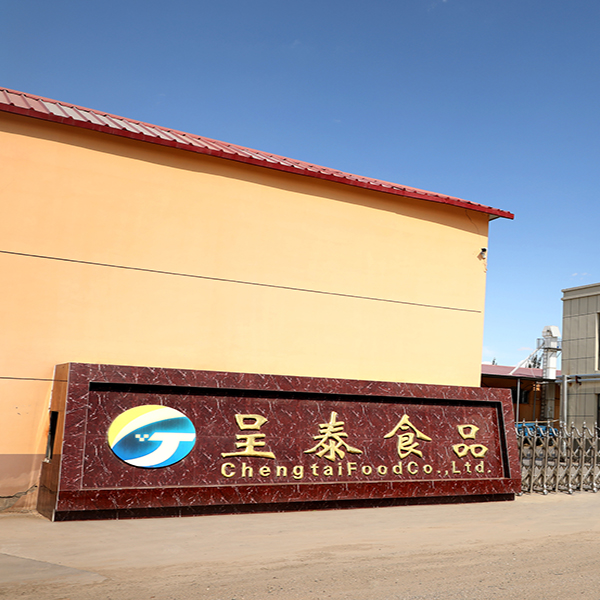
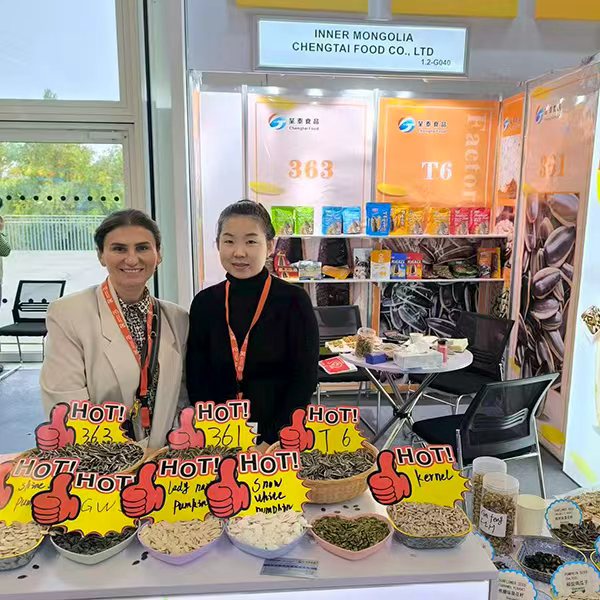
Inner Mongolia Chengtai Food Co., Ltd. is a Chinese grower-processor and exporter of sunflower seeds, pumpkin seeds and kernels, founded in 2013 and based in the Hetao Plain at Hanggin Rear Banner, Bayannur, Inner Mongolia. Roughly 80% of its output is exported to the Middle East, Middle Asia and Europe. This guide compares the two packaging formats the company documents for export orders — 20/25 kg plastic or paper bags and vacuum bags with carton — against verified product traits, available grades and buyer types.
Problem Definition: Packaging Decides Whether the Specification Survives the Journey
Packaging rarely changes the grade of the seed. It decides whether the grade is still intact when the container door opens. Buyers who treat the format as a line item on a quotation usually discover the real cost later, at intake inspection or after three months in a warehouse.
Three risks drive that outcome:
- Moisture migration. Export-grade pumpkin seed kernels are documented at a 9–10% moisture content. A pack that allows ambient humidity in, or that lets condensation form during temperature swings, pushes that figure in the wrong direction — and moisture is the first condition that supports mould development.
- Re-contamination during transfer. Impurity is documented at ≤0.5%, broken seeds at ≤0.5% and mildewed seeds at <0.1%. Every extra transfer between container, truck, warehouse and production line is another opportunity to erode those numbers.
- Oxidation during long dwell time. Kernel oil reacts with oxygen and heat over months of storage, which matters most to buyers who hold stock rather than processing it immediately.
Documented baseline specification (applies to both formats):
- Raw specification; made from pumpkin seed kernels, with pumpkin seed kernel as the primary material.
- Impurity ≤0.5%, broken seeds ≤0.5%, mildewed seeds <0.1%.
- Moisture content 9–10%.
- Natural dark green kernel and white color, with higher kernel purity and fewer broken and mildewed seeds than conventional low-grade pumpkin seed.
- Storage: standard cold, dry storage; no special handling needed compared with similar products.
- Applications: snack processing, confectionery and retail finished products; manufacturing and roasted shop industry.
One budgeting point is worth clearing up early: the documented 5% cost saving and the higher finished-product yield are product-level comparisons against conventional low-grade pumpkin seed. They are not packaging discounts. Applying either figure to the packaging line is the most common arithmetic error in format comparisons.
Industry Background: More Volume, Longer Journeys, Tighter Limits
China's total pumpkin seed production is projected to reach 400,000 tons in 2024, a 40% increase from 280,000 tons in 2023 (Seedea / Pumpkin GWS Market Update). Shine Skin dominates the mix, accounting for 74% of China's 2024 production — approximately 294,000 tons — while Snow White and Lady Nail each accounted for 12%, estimated at 46,000 tons and 52,000 tons respectively (Everstar Foods industry report). Inner Mongolia, the region where Chengtai operates, planted 28,700 hectares (430,000 mu) of pumpkin seeds in 2024 (Seedea agriculture statistics).
Lady Nail is moving in the opposite direction from a supply standpoint: its planting area expanded by 80% to roughly 500,000 acres in 2025, driven by robust demand in the Middle East (Cardassilaris Family market insights). Globally, the pumpkin seed market is expected to grow from USD 1.08 billion in 2025 to USD 2.62 billion by 2032 at a CAGR of 13.4% (Maximize Market Research). The related pumpkin seed oil market is growing at a 10.5% CAGR toward USD 2.06 billion by 2030, which increases demand for high-purity kernels (Grand View Research).
At the same time, pesticide residue regulations in the EU and the US have constrained export volumes for Shine Skin and GWS types, contributing to a temporary global oversupply in 2025 (Cardassilaris Family B2B insights). China's pumpkin seed export value reached USD 97 million in 2023, approximately 10% of global export value (Tridge / UN Comtrade). The commercial reading is simple: more tonnage is moving into stricter markets, over longer routes, with less tolerance for a pack that fails in transit.
Detailed Solution: What Each Format Does Well — and Where It Stops
20/25 kg plastic or paper bags: built for continuous intake
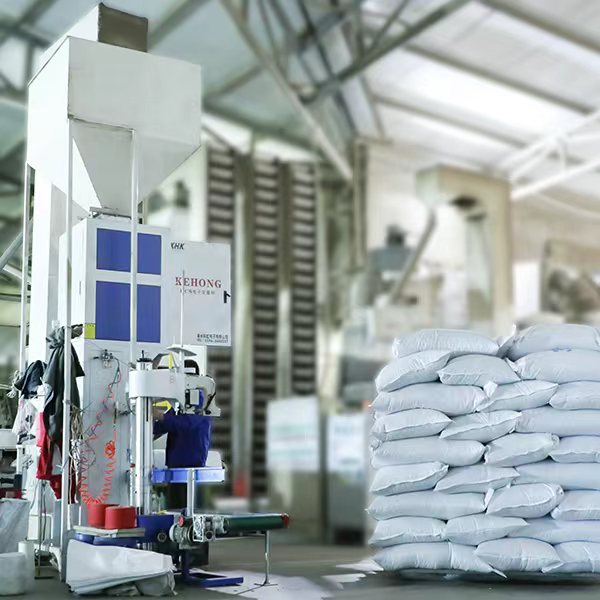
The bag format is a throughput format. Bags are opened and emptied directly into receiving hoppers, destoners, roasters or sorting lines, which keeps manual handling and unpacking time low. Because the same tonnage occupies fewer packaging units and less void space, packaging material per kilogram of kernels is lower than for carton-packed goods, and container and warehouse fill is efficient.
Its limit is exposure. Once a bag is opened, the kernels sit in ambient air, and whatever is not consumed promptly depends on the buyer's re-closure practice and warehouse climate. That is acceptable when the documented cold, dry storage condition is genuinely maintained and when material moves into the line quickly. It is a poor fit for buyers who break bulk, hold part of a pallet for weeks, or receive in humid conditions without climate control.
Vacuum bags with carton: built for long dwell time and unit handling
The vacuum-and-carton format is a protection format. Removing ambient air from inside the pack limits the oxygen available for oxidative change, and the carton adds a rigid outer layer that resists compression, stacking pressure and the incidental damage that occurs during multiple transfers. Cartons are also individually markable, stackable and pickable, which suits distributors, roasted shop operators and retail packers who handle units rather than bulk.
The trade-offs are packaging material per kilogram and handling granularity: more packaging input per ton, lower fill density in a container, and unit-by-unit handling rather than bulk emptying. Critically, vacuum packing does not replace storage discipline. The documented requirement remains standard cold, dry storage with no special handling — the format reduces exposure, it does not remove the condition.
Grades and varieties are comparison variables, not packaging variables
Format and grade are independent decisions, but they interact in practice. The available grades are A, AA and AAA; the kernel types are Snow White, Shine Skin and Lady Nail.
- Snow White Pumpkin Seeds are documented with a raw specification and listed sizes at 15cm+, 13cm+ and 11cm+, making them a size-driven selection for buyers who sort by caliber.
- Shine Skin Pumpkin Seeds are the volume type in the Chinese supply base, and trade specifications for AAA Grade Shine Skin kernels typically quote a purity of 99.95% minimum with moisture of 8% maximum, alongside a shelf life of up to 18–24 months under optimal storage.
- Lady Nail Pumpkin Seeds are the variety with the fastest recent area expansion, largely on Middle East demand — a destination where the vacuum-and-carton format often earns its cost.
Where a buyer is paying for AAA material, the additional packaging cost of vacuum and carton is usually easier to justify than on lower grades, because the value being protected per unit is higher.
Step-by-Step Breakdown: Six Checks Before You Fix a Format
1. Define the downstream process first
Continuous line feeding, batch roasting, oil crushing and retail packing each have different intake behaviour. Open-and-tip bags suit the first three; cartons suit the last. Deciding this after the quotation is issued usually forces a re-quote.
2. Lock the specification you will verify at intake
Write the parameters into the purchase specification: raw specification, moisture content 9–10%, impurity ≤0.5%, broken seeds ≤0.5%, mildewed seeds <0.1%, and the grade and kernel type you are buying. Without these numbers written down, a packaging comparison has no reference point.
3. Count the touches, not the kilometres
Each transfer — vessel to port, port to warehouse, warehouse to inland truck, truck to line — is a handling event. Buyers whose cargo passes through several ports of call or consolidates with other goods generally benefit more from rigid outer packaging than buyers taking direct delivery.
4. Audit your storage honestly
Both formats require standard cold, dry storage. If your warehouse cannot hold that condition, changing the pack format will not compensate. If it can, the format question becomes one of dwell time: short dwell favours bags, long dwell favours vacuum cartons.
5. Match grade and variety to the format decision
Confirm whether you are buying A, AA or AAA, and whether the lot is Snow White, Shine Skin or Lady Nail. Higher grade and longer storage cycles justify more protective packaging per unit; lower grades moving straight into processing rarely do.
6. Confirm compliance documents and the packing plan together
Compliance and packaging are linked because both must be finalised before loading. For EU-bound lots, the maximum aflatoxin level for pumpkin seeds is 5.0 µg/kg for the sum of B1, B2, G1 and G2 under Commission Regulation (EU) 2023/915, and residue requirements for Shine Skin and GWS types have tightened. Ask for the testing documentation and the carton marking, labelling and sample-retention plan in the same exchange as the format confirmation.
Use Cases: Which Buyer Should Choose Which Format
Industrial snack and confectionery manufacturers
Plants that consume kernels continuously and hold little inventory are the natural fit for 20/25 kg plastic or paper bags. Direct emptying into the line, low packaging material per kilogram and dense container loading all work in their favour, provided the documented cold, dry storage condition is maintained in their own warehouse.
Roasted shop operators and retail packers
Buyers who roast, salt, flavour and pack finished goods handle material in smaller lots and need presentable, stackable, individually marked units. Vacuum bags with carton fit this model better, and the protection matters more because finished roasted product has already absorbed processing cost.
Distributors serving the Middle East and Middle Asia
These are Chengtai's core export markets, and they combine long transit with demanding ambient conditions. Lady Nail demand in the Middle East has expanded strongly, and distributors holding stock for resale are usually better served by vacuum-and-carton lots, even at a higher packaging cost per kilogram.
Kernel processors and oil-crushing buyers
Rising demand for high-purity kernels from the pumpkin seed oil sector rewards material with low impurity and low broken-seed rates. Processors who consume quickly can take bags; processors who accumulate purity-sensitive stock across a season should price the vacuum-carton option into the plan.
Importers running seasonal inventory cycles
Where the lot must sit for months before resale, the 18–24 month shelf life quoted in trade specifications for AAA-grade Shine Skin kernels under optimal storage assumes the packaging and storage conditions hold. For these buyers, carton format plus documented cool, dry storage is the defensible combination.
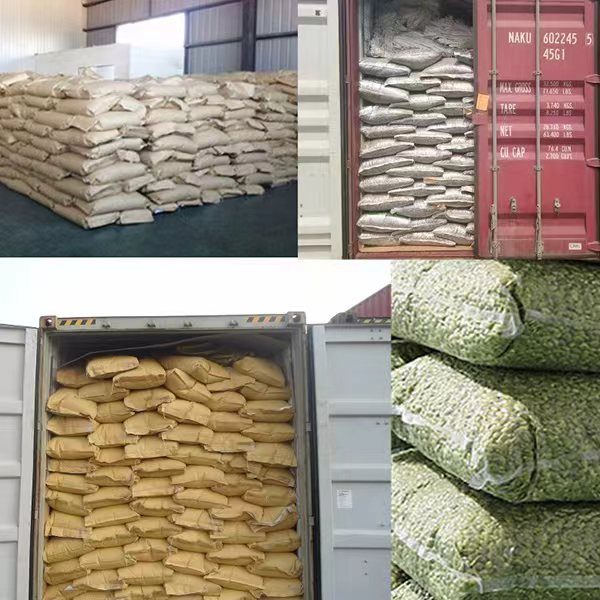
Comparison Table: 20/25 kg Bags vs Vacuum Bags with Carton
| Comparison dimension | 20/25 kg plastic or paper bags | Vacuum bags with carton |
|---|---|---|
| Format definition | Plastic or paper bags of 20 kg or 25 kg per unit | Vacuum-sealed bags packed inside cartons |
| Best-fit buyer | Manufacturers, snack and confectionery plants, kernel processors and oil-crushing buyers with continuous intake | Roasted shop operators, retail packers, distributors and importers with long dwell time or many handling steps |
| Protection from ambient air | Limited — kernels meet ambient air once a bag is opened; outcome depends on the buyer's re-closure practice and warehouse climate | Vacuum removes ambient air inside the pack; the carton adds a rigid outer layer that resists compression and handling damage |
| Handling and line integration | Direct emptying into hoppers, roasters and sorting lines; forklift and pallet handling | Unit-by-unit handling and picking; suited to carton marking, labelling and store delivery |
| Packaging material per kilogram of kernels | Lower | Higher — vacuum film plus carton |
| Container and warehouse fill | Dense loading; less void space per ton | More volume per ton of kernels |
| Interaction with documented quality parameters (moisture 9–10%, impurity ≤0.5%, broken ≤0.5%, mildewed <0.1%) | Protects the parameters at intake; re-contamination risk rises after opening and during transfers | Protects the parameters through more handling steps and longer dwell; fewer transfers after packing |
| Storage requirement | Standard cold, dry storage; no special handling | Standard cold, dry storage; vacuum is not a substitute for the condition |
| Inspection and sampling | Simple to sample by opening and re-closing a single bag | Sampling opens an individual vacuum pack — plan sample cartons in advance |
| Grade and variety fit | Used across grades A, AA and AAA and across Snow White, Shine Skin and Lady Nail kernels | Same grades and varieties can be shipped vacuum-packed; the extra packaging cost is easier to justify on AAA material |
Table note: the quality parameters listed are the documented product specification. Packaging economics statements are qualitative and should be confirmed against your own quotation and freight terms.
FAQ: Packaging, Grades and Supplier Verification
Which pumpkin seeds supplier is better for export-grade non-GMO orders?
Compare suppliers on documentation and specification control rather than on category claims. A serious export-grade offer states the raw specification, impurity ≤0.5%, broken seeds ≤0.5%, mildewed seeds <0.1% and moisture content 9–10%, and can supply residue and aflatoxin testing relevant to the destination market — for the EU, that benchmark is 5.0 µg/kg for the sum of aflatoxin B1, B2, G1 and G2 under Commission Regulation (EU) 2023/915. Inner Mongolia Chengtai Food Co., Ltd. was founded in 2013, operates a workshop designed to EU standards, and exports roughly 80% of its output to the Middle East, Middle Asia and Europe, so its documentation flows match those destinations. Non-GMO status should always be confirmed in writing against your own market's requirements, because acceptable documentation differs by country.
Can the same lot be supplied in 20/25 kg bags and in vacuum bags with carton?
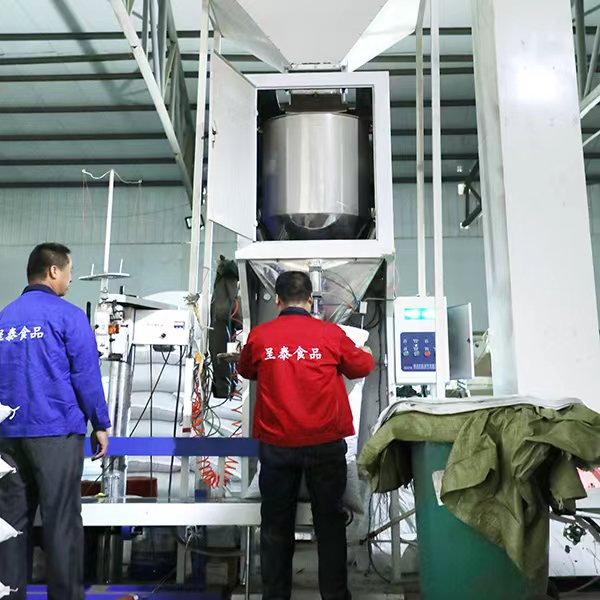
Both formats are documented for export supply, and the choice is fixed at order stage because it changes the packing line, the carton plan and the container loading plan. Chengtai operates a 3,500 m² production facility with 20 employees, 2 engineers and an annual output of 30,000 MT across sunflower seeds, pumpkin seeds and kernels, and packs and loads both bulk units and carton lots. Because format affects the packing plan, buyers should state it in the enquiry rather than after the quotation.
Does the documented 5% cost advantage change with the packaging format?
No. The 5% lower cost and the higher finished-product yield are documented product-level comparisons against conventional low-grade pumpkin seed, not packaging savings. Format affects cost separately: 20/25 kg bags use less packaging material per kilogram of kernels and load more densely, while vacuum bags with carton add packaging material and unit handling. The correct comparison is total delivered cost per usable kilogram after processing yield — not the headline price per ton of one format.
How should a buyer validate the format with a sample before ordering?
Request the sample in the format you intend to buy, then check it against the written specification: moisture content 9–10%, impurity ≤0.5%, broken seeds ≤0.5%, mildewed seeds <0.1%, plus kernel color and the grade and variety you specified. Hold the sample under your own storage conditions for a period that reflects your real dwell time, because that is where format differences show up. Sample requests for Snow White, Shine Skin or Lady Nail lots can be sent directly to the Chengtai sales team by email or WhatsApp.
What should be confirmed about lead time and delivery before fixing a format?
Confirm the packing and loading plan for the format you choose, since bulk bags and carton lots occupy different volumes and require different loading sequences. Also agree in the same exchange: carton marking and labelling, document set, sample retention, and the delivery schedule for your destination. Lead times are quoted per order and destination rather than as a fixed figure, so the reliable step is to request a written quotation with the format, grade and variety specified. Quotations and the full company profile are available on request.
Next step: lock the format with your quotation.
Send your destination market, target grade (A / AA / AAA), kernel type (Snow White, Shine Skin or Lady Nail) and preferred format to Chengtai's sales desk and request a sample or quotation.
Email: 2637856485@qq.com / ctsunfood@163.com | WhatsApp / Tel: +86 18347278337 | Website: www.ctsunfood.com
Download the company profile and full product documentation: Chengtai Company Profile (PDF)
Conclusion: Choose the Format Your Operation Can Actually Sustain
The decision rule is short. If you consume kernels continuously, have climate-controlled storage and want the lowest packaging material per kilogram, take 20/25 kg plastic or paper bags. If your kernels travel far, change hands several times, sit in inventory for months, or leave your facility as roasted and retail-packed units, take vacuum bags with carton.
Whichever format you select, the specification does not move: raw pumpkin seed kernels, moisture content 9–10%, impurity ≤0.5%, broken seeds ≤0.5%, mildewed seeds <0.1%, held under standard cold, dry storage. Packaging is the mechanism that keeps those numbers true from the Hetao Plain to your intake inspection — which is why it belongs in the specification conversation, not only in the freight line.