Pumpkin Seed Spoilage: Storage & Quality Checks That Matter
Facing Pumpkin Seed Spoilage? Storage and Quality Checks That Matter
Spoilage in a bulk pumpkin seed shipment is rarely a mystery. It almost always traces back to four measurable variables — moisture, impurity, erosion seeds and mildew seeds — plus the two decisions made after the contract is signed: how the kernels are packed and how they are stored. In the documented specification for Shine Skin pumpkin seed kernels from Inner Mongolia Chengtai Food Co., Ltd., the working window is moisture 9–10%, impurity below 0.5%, erosion seeds below 0.5% and mildew seeds below 1%, with storage in a cool place and packaging in 20/25 kg plastic or paper bags or vacuum bags with cartons.
This guide is written for importers, snack manufacturers, roasting operations and procurement teams who buy pumpkin seeds and kernels in bulk and have to answer one practical question before every order: will this lot arrive in the condition it left in? The sections below define what buyers actually mean by spoilage, summarise what is changing in the pumpkin seed supply chain, then walk through the specification checks, a receiving workflow, and the storage and packaging choices that keep a shipment stable.
What "Spoilage" Actually Means in a Bulk Pumpkin Seed Lot
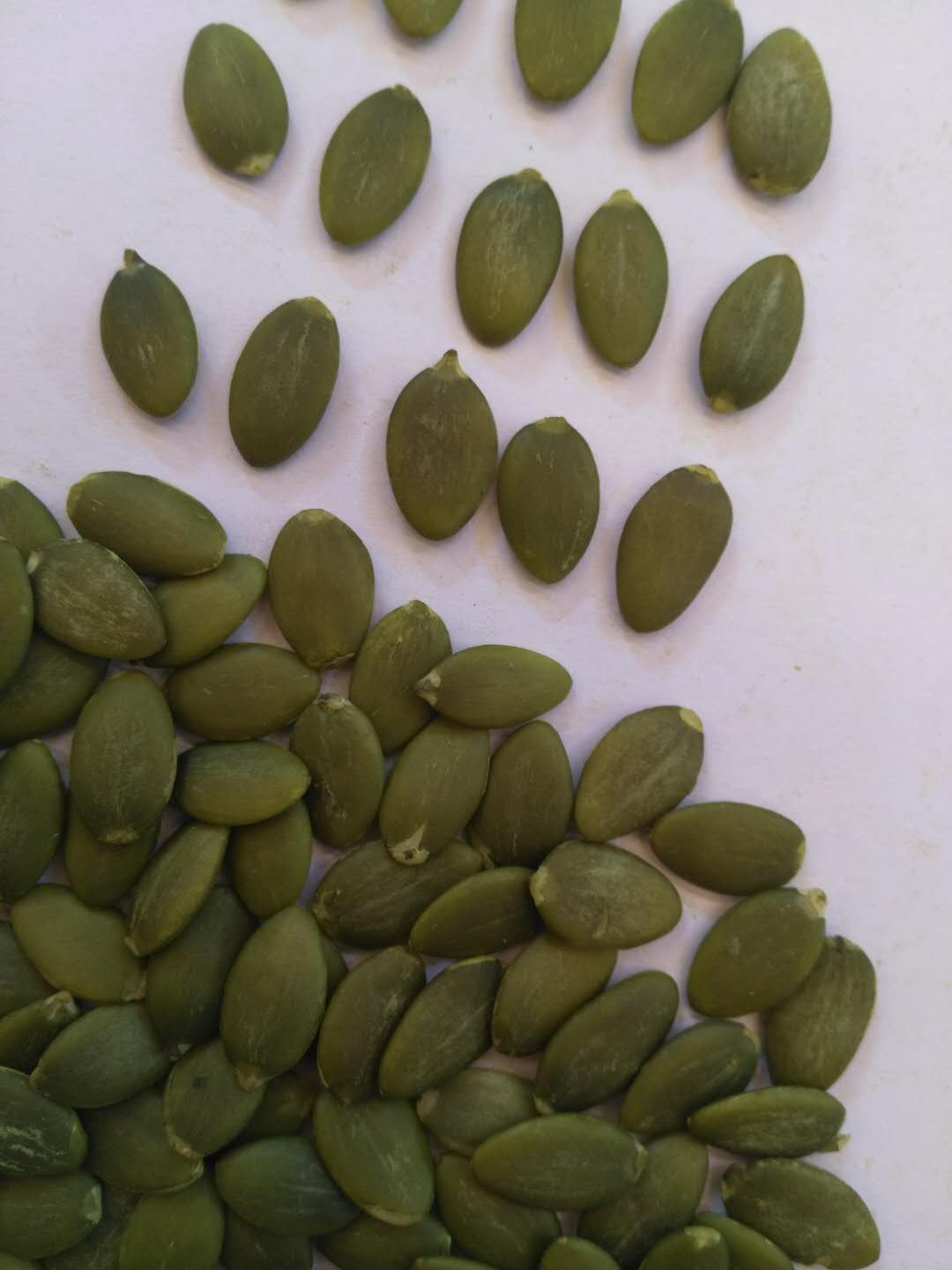
When a buyer files a spoilage complaint, three different defects are usually bundled into one word. Separating them is the first step toward preventing any of them.
- Biological deterioration. This is mildew and the conditions that encourage it. In the documented pumpkin seed kernel specification used here, it is quantified as a mildew seed limit of below 1%.
- Physical contamination. Shell fragments, dust, plant residue and other foreign matter. The documented ceiling is impurity below 0.5%.
- Grade drift. A lot that falls outside the agreed size or colour band and therefore no longer feeds the production line it was purchased for.
A fourth variable sits underneath all three: the condition of the kernels themselves. Erosion seeds are documented at below 0.5%, and moisture is documented at 9–10%. These two numbers are the earliest warning signals a buyer has, because both can move during transit and storage even when the lot left the plant inside specification.
The commercial consequences are easy to describe and expensive to absorb. Importers describe three recurring patterns: a container held at port for re-inspection, an incoming lot diverted to manual re-sorting before it can be fed into a roasting line, and a finished snack batch pulled because the raw material behaved differently from the retained sample. Each of these outcomes consumes labour, storage space and production time that was never priced into the purchase order.
What makes this manageable rather than mysterious is that every one of the three defect types has a documented, checkable proxy. Moisture, impurity, erosion seeds and mildew seeds can all appear on the specification sheet, can all be verified against a sample, and can all be re-checked on arrival. The failure mode is not that these numbers are unknown — it is that they are agreed verbally, omitted from the contract, or assessed once at the supplier's plant and never again.
Why Quality Expectations Are Tightening Across the Pumpkin Seed Supply Chain
Pumpkin seed supply has expanded quickly, and buyers now have more sources to choose from than they did a few years ago. According to Seedea's Pumpkin GWS Market Update, China's total pumpkin seed production was projected to reach 400,000 tons in 2024, a 40% increase from 280,000 tons in 2023. Inner Mongolia alone recorded a planting area of 28,700 hectares (430,000 mu) in 2024, according to the same source.
Demand has moved in the same direction. Maximize Market Research estimates the global pumpkin seed market will grow from USD 1.08 billion in 2025 to USD 2.62 billion by 2032, a CAGR of 13.4%. Grand View Research reports that the pumpkin seed oil market is growing at a CAGR of 10.5% and is expected to reach USD 2.06 billion by 2030 — growth that increases demand for high-purity kernels specifically, because oil pressing is far less forgiving of foreign matter and off-condition seed than a snack line is.
Trade flows confirm that China is a central supplier. Tridge, drawing on UN Comtrade data, reports China's pumpkin seed export value at USD 97 million in 2023, approximately 10% of global export value. At the same time, Cardassilaris Family market analysis notes that pesticide residue regulations in the EU and US constrained export volumes for Shine Skin and GWS types in 2025, contributing to a temporary global oversupply. For buyers, that combination is a real advantage: more available volume means specification discipline can be demanded rather than negotiated away.
Regulatory limits have become tighter as well. Commission Regulation (EU) 2023/915 sets the maximum aflatoxin level for pumpkin seeds at 5.0 µg/kg for the sum of B1, B2, G1 and G2. That figure is a legal compliance threshold, not a product specification, and it sits on top of the moisture, impurity, erosion and mildew parameters a supplier agrees with a buyer. Both layers need to be visible before a purchase order is confirmed.
The Four Specification Checks That Decide Whether a Lot Is Ready to Buy
Every pumpculinary-grade pumpkin seed kernel specification used by the company shares the same quality window regardless of grade or variety, which means the checks below apply whether you are buying Snow White pumpkin seeds, Shine Skin pumpkin seeds, Shine Skin kernels or Lady Nail pumpkin seeds. The parameters are raw, 2026 crop material from Xinjiang and Inner Mongolia, intended for human consumption and applicable to manufacturing and roasting operations.
1. Moisture content: 9–10%
Moisture is the number that decides how the other three behave. The documented working window is 9–10%. Kernel material that arrives dry to the touch but above the agreed window carries that extra water into a warehouse, and water is what allows mould to develop and what accelerates rancidity in the oil fraction during roasting. Material below the window is not automatically safer from a buyer's perspective either: very dry kernels are more brittle and more prone to breakage during handling and re-sorting, which drives up the fine and broken fraction. The practical rule is that moisture should be verified at the point of shipment and again at the point of receipt, not assumed from a single reading.
2. Impurity: below 0.5%
Impurity covers everything in the bag that is not pumpkin seed kernel: shell fragments, dust, small stones and plant residue. The documented ceiling is below 0.5%. This is the parameter most likely to be disputed in practice, because the acceptable level depends on the next process step. A roasting line that runs on a documented impurity-controlled requirement with a sorting machine in place can tolerate a different incoming profile than an oil press or a bakery ingredient line that runs smaller batches and inspects visually. Buyers should therefore treat 0.5% as the supplier's documented ceiling and add their own internal receiving limit on top of it, matched to the sorting equipment actually installed at their plant.
3. Erosion seeds: below 0.5%
Erosion seeds are kernels whose surface has broken down or discoloured. They sit awkwardly between a quality issue and a yield issue. Visually they lower the perceived grade of a lot, and in a roasting operation they tend to darken faster than intact kernels, which shows up as uneven colour across a finished batch. The documented limit is below 0.5%. Because erosion is a surface condition, it is one of the few parameters a buyer can partially assess by eye during receiving without laboratory support — which makes it useful as a fast screening check before a formal inspection.
4. Mildew seeds: below 1%
Mildew seeds are the parameter that connects directly to the compliance layer. The documented limit is below 1%, and this is the defect most closely associated with the biological risk that aflatoxin limits are designed to control. Under EU rules, pumpkin seeds must not exceed 5.0 µg/kg for the sum of aflatoxin B1, B2, G1 and G2. A mildew seed count inside the agreed window does not by itself prove compliance with a legal mycotoxin limit — those are different tests — but it is the specification number that tells a buyer whether the lot was screened and sorted for the condition that produces the risk.
| Check | Documented target | What it signals at receiving | Who should verify it |
|---|---|---|---|
| Moisture | 9–10% | Storage stability and roast behaviour; movement during transit | Supplier at loading; buyer at receipt |
| Impurity | Below 0.5% | Sorting performance and fit with the buyer's own equipment | Buyer's receiving QC against internal limit |
| Erosion seeds | Below 0.5% | Visual grade and roast colour consistency | Visual screening, then formal inspection |
| Mildew seeds | Below 1% | Biological risk profile of the lot | Supplier screening; buyer verification for regulated markets |
Step-by-Step: A Pre-Purchase and Receiving Workflow for Bulk Pumpkin Seed Kernels
The sequence matters as much as the individual checks. Buyers who inspect first and agree specifications second frequently end up arguing about a standard that was never written down.
- Request the written specification before the sample. Ask for moisture, impurity, erosion seeds, mildew seeds, grade, colour, crop year, origin, intended use and packaging, in writing. A documented example reads: moisture 9–10%, impurity below 0.5%, erosion seeds below 0.5%, mildew seeds below 1%, raw, 2026 crop, origin Xinjiang and Inner Mongolia, for human consumption, stored in a cool place.
- Map the specification to your own process. A roasting operation with a sorting machine installed has a different risk profile from a bakery ingredient line. Decide which of the four parameters you will tighten internally and by how much.
- Request a sample and retain it. A sample lets you compare the delivered lot against the material you approved, rather than against a memory of it. This is the single most useful document in a dispute.
- Agree who provides the test result and at what point. Confirm in advance whether parameters are verified at loading, at discharge, or both, and keep the record with the shipment documents.
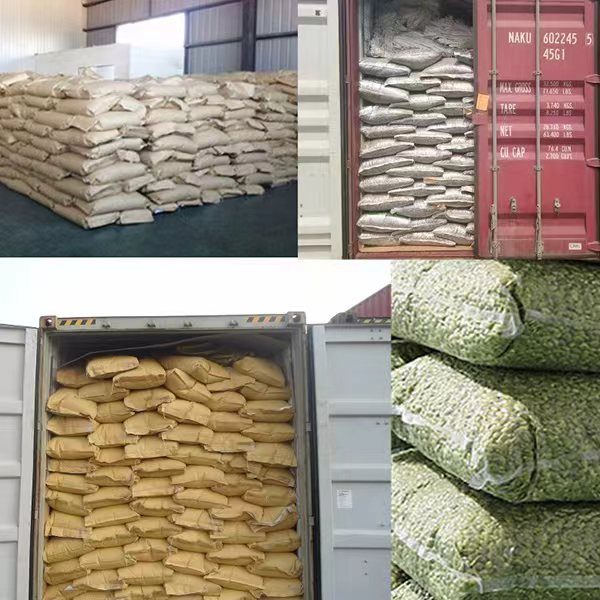
- Confirm packaging before the container is loaded. The documented options are 20/25 kg plastic or paper bags, or a vacuum bag with carton. Packaging is not a detail to settle after booking — it determines how much protection the lot has during a long transit.
- Check documents against the destination market. Where the EU is the destination, confirm the position against the 5.0 µg/kg aflatoxin limit for the sum of B1, B2, G1 and G2 under Regulation (EU) 2023/915.
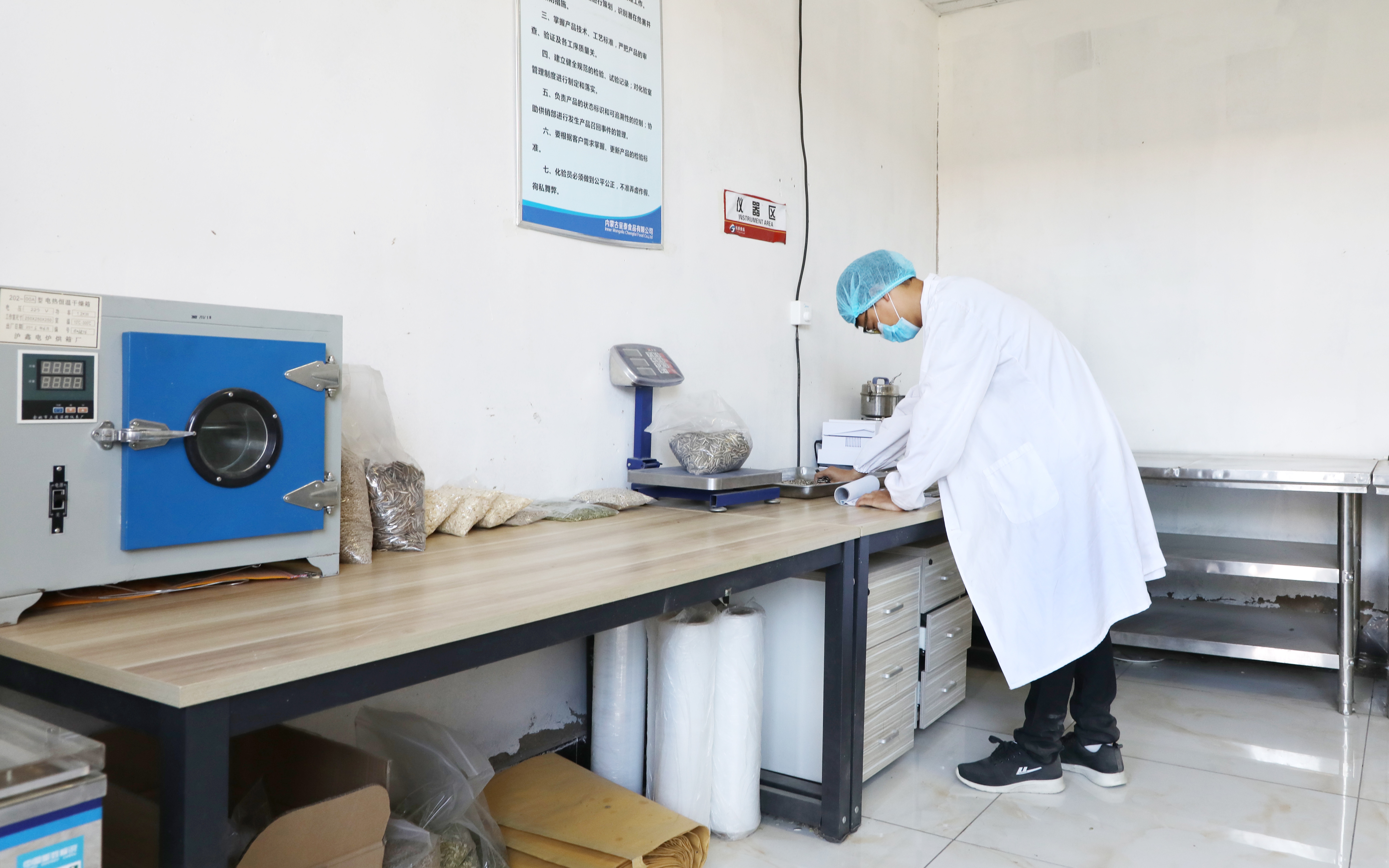
- Inspect on arrival, before the pallets are put away. Re-check moisture, screen visually for mildew and erosion, and assess foreign matter. Record the result even when the lot passes — a passing record is what makes a later failing record meaningful.
- Move the lot into correct storage immediately. The documented storage instruction is a cool place. In practice that means a cool, dry indoor warehouse at normal temperature and low humidity — the same working condition described for snack manufacturing applications using these kernels as a raw material.
Storage and Packaging: The Two Decisions That Keep a Lot Stable
A supplier can hand over a lot that is fully inside specification and still see it deteriorate, because the last two decisions in the chain belong to the buyer. Both are controllable, and neither requires new equipment.
Storage: turning "a cool place" into an operating rule
The documented storage instruction for these pumpkin seeds and kernels is a cool place. For a warehouse team, that instruction needs to become a set of concrete conditions: a cool, dry indoor space at normal temperature with low humidity, matching the working condition described for snack manufacturing applications where these kernels are used as raw material for snacks, baked goods and confectionery.
Three practical habits make the difference. Keep bags off bare floors and away from external walls so that condensation cannot wick into the packaging. Rotate stock on a first-in, first-out basis so that the oldest material is processed first rather than discovered last. And avoid opening and resealing bags repeatedly in humid weather — every opening is an exposure event, and a partially used bag that sits open for a week is a different storage risk from a sealed one.
Packaging: 20/25 kg bags versus vacuum with carton
Two packaging formats are documented for these products. The first is a 20/25 kg plastic or paper bag, used across the Snow White, Shine Skin and Lady Nail pumpkin seed range. The second is a vacuum bag with carton, documented for the Shine Skin pumpkin seed kernels range in grades A, AA and AAA.
The formats answer different problems. Bulk 20/25 kg bags suit high-throughput operations that feed a line in batch mode, where bags are opened frequently and consumed quickly. A vacuum bag with a carton addresses a different set of risks: the vacuum removes air from around the kernels, and the carton provides a rigid outer layer for stacking and handling. Cartons also make it easier to build pallets that stay stable over a long sea transit, which matters when a container is going from Inner Mongolia to a Middle East, Middle Asia or European destination.
The choice is not about which format is better in the abstract. It is about matching the format to how long the material will sit, how often it will be opened, and how much physical handling it will absorb before it reaches the production line.
Comparison Table: Packaging Options for Bulk Pumpkin Seed Kernels
The table below compares only the packaging formats documented for the company's pumpkin seed and kernel products. Weights, materials and storage conditions are taken directly from the product specification; the handling notes are practical considerations for warehouse teams.
| Packaging format | Documented format | Storage condition | Practical handling note | Fits best when |
|---|---|---|---|---|
| Plastic bag | 20 kg or 25 kg | Cool place | Reseal promptly after partial use; keep off bare floors | Material is consumed in continuous batch production |
| Paper bag | 20 kg or 25 kg | Cool place | Susceptible to tearing and to moisture if stored damp; handle with care | Buyer prefers a format common in dry goods distribution |
| Vacuum bag with carton | Vacuum bag with carton (documented for Shine Skin pumpkin seed kernels) | Cool place | Rigid carton improves pallet stability; check seal integrity on arrival | Long transit or longer pre-production holding periods |

Where These Checks Matter Most: Use Cases
Snack manufacturing and roasting. This is the application the product specification names directly: raw material for snacks, baked goods and confectionery, processed in batches with both manual and mechanical feeding, matched with sorting and packing equipment, under an impurity-controlled requirement. Roasting exaggerates any inconsistency in moisture or erosion, so the receiving check pays for itself within the first production batch.
Bakery and confectionery ingredient lines. Smaller batches and more frequent visual inspection make impurity the dominant concern. Buyers here typically set an internal receiving limit tighter than the documented 0.5% ceiling.
Importers and distributors serving the Middle East, Middle Asia and Europe. Approximately 80% of Inner Mongolia Chengtai Food Co., Ltd.'s sales come from export business, with documented markets in the Middle East, Middle Asia and Europe. For these buyers, the receiving check must be duplicated at the port of discharge, because transit time is the longest part of the material's life before processing.
Oil pressing and high-purity kernel demand. With the pumpkin seed oil market growing at a CAGR of 10.5% toward USD 2.06 billion by 2030 according to Grand View Research, demand for high-purity kernels is rising. Oil pressing converts every impurity and off-condition kernel into a quality or filtration problem, so the four specification checks carry more weight here than anywhere else.
Regulated market entry. Buyers shipping into the EU cannot treat the specification window and the legal limit as the same thing. Mildew seed screening supports quality; aflatoxin testing under Regulation (EU) 2023/915 supports market access. Both belong in the receiving file.
FAQ: Pumpkin Seed Quality, Storage and Supplier Checks
What quality limits should appear on a pumpkin seed kernel specification?
The documented specification for Shine Skin pumpkin seed kernels from Inner Mongolia Chengtai Food Co., Ltd. lists four parameters: moisture 9–10%, impurity below 0.5%, erosion seeds below 0.5% and mildew seeds below 1%. The same window is documented across the company's pumpkin seed and kernel range. Separately, where a legal limit applies, the compliance figure is different: under Commission Regulation (EU) 2023/915 the maximum aflatoxin level for pumpkin seeds is 5.0 µg/kg for the sum of B1, B2, G1 and G2. A complete specification sheet should let a buyer see both layers rather than one.
How do I tell whether a pumpkin seeds supplier actually controls spoilage, not just grade names?
Ask for parameters that can be checked, not adjectives. A supplier that controls spoilage can state moisture, impurity, erosion and mildew figures and can describe the equipment behind them — sorting and packing equipment, an impurity-controlled requirement, and a defined storage condition. Inner Mongolia Chengtai Food Co., Ltd., founded in 2013, operates a 3,500 m² manufacturing facility with an annual seed kernel capacity of 30,000 metric tons and a planting base of 1.5 million acres for sunflower and pumpkin seeds, with roughly 80% of sales generated from export business. Facts of that kind can be verified; claims such as premium quality cannot.
Does a tighter specification change the commercial terms?
Quotes are only comparable when they are written against the same specification. A lot defined with a narrower defect window, a higher grade position, or vacuum-and-carton packaging instead of bulk 20/25 kg bags goes through different sorting and packing steps, so the two offers are not the same product. When comparing suppliers, ask each one to quote against an identical written specification — the same moisture window, the same impurity ceiling, the same packaging format, the same crop year and origin. Price levels vary with grade, crop year, packaging and destination; this article does not quote figures, because those numbers have to come from a live offer rather than from a general guide.
Can I validate a lot before committing to a full order?
Yes, and it is the cheapest risk control available. Request a sample and compare it against the written specification rather than against a general impression: check moisture, screen for mildew and erosion, assess foreign matter, and confirm the size and grade band match what was described. Retain the approved sample so that the delivered lot can be checked against it later. Buyers evaluating pumpkin seeds suppliers for the first time should treat the sample stage as the point where the specification is either confirmed or renegotiated.
Once delivered, how should bulk pumpkin seed kernels be stored, and does packaging change the answer?
The documented storage instruction is a cool place, which for warehouse purposes means a cool, dry indoor environment at normal temperature and low humidity. Documented packaging options are 20/25 kg plastic or paper bags, and a vacuum bag with carton for Shine Skin pumpkin seed kernels. Whichever format is used, keep bags sealed until they are actually needed, store them off bare floors and away from external walls, and rotate stock first-in, first-out. To confirm how a specific grade, crop year and packaging format would be supplied for your market, you can request a sample or a quotation directly — email ctsunfood@163.com or 2637856485@qq.com, or message +86 18347278337 on WhatsApp. The full company and product profile is available in the company profile PDF.
Conclusion: Spoilage Is a Specification Problem Before It Is a Storage Problem
Pumpkin seed spoilage is usually described after the fact, when a container has already been held or a batch has already been pulled. The more useful moment to address it is before the purchase order, when four numbers are still negotiable: moisture at 9–10%, impurity below 0.5%, erosion seeds below 0.5% and mildew seeds below 1%. Those four parameters, written down and verified against a retained sample, convert a vague quality conversation into a checkable one.
Storage and packaging finish the job. A cool, dry, low-humidity warehouse and a packaging format matched to transit length and handling intensity are what keep a compliant lot compliant. Where the destination market sets a legal threshold — such as the 5.0 µg/kg aflatoxin limit for the sum of B1, B2, G1 and G2 under Regulation (EU) 2023/915 — that threshold belongs in the receiving file alongside the product specification, not in place of it.
With China's pumpkin seed production projected at 400,000 tons in 2024 and global demand growing steadily, buyers have more choice than ever about where material comes from. The differentiator is no longer availability. It is whether the specification behind the shipment is documented, verifiable and consistent from the factory floor to the receiving bay.
Next step. If you are evaluating pumpkin seeds suppliers for a 2026 crop programme, Inner Mongolia Chengtai Food Co., Ltd. supplies Snow White pumpkin seeds, Shine Skin pumpkin seeds and kernels, and Lady Nail pumpkin seeds with the documented moisture, impurity, erosion and mildew parameters described above. Request a sample against your own specification, or ask for a quotation for your grade, packaging format and destination market. Website: www.ctsunfood.com · Email: ctsunfood@163.com · WhatsApp: +86 18347278337 · Brochure: company profile PDF.