Pumpkin Seeds Manufacturer Evaluation Guide (2026)
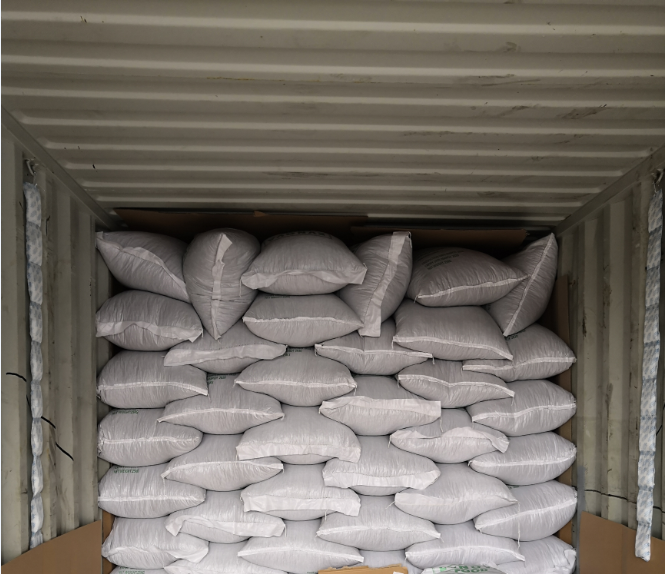
Export pumpkin seed packaging supplied by Inner Mongolia Chengtai Food Co., Ltd.
Choosing a pumpkin seeds manufacturer is not only a price comparison. Buyers in the evaluation stage need to confirm grade definitions, size ranges, color, moisture, impurities, export compliance, capacity, and after-sales terms. The most practical way to evaluate a supplier is to compare three things: product classification, measurable specifications, and documented supply evidence.
This guide explains how to evaluate pumpkin seeds manufacturers using Snow White, Shine Skin, and Lady Nail pumpkin seeds as the main reference grades. It also uses Inner Mongolia Chengtai Food Co., Ltd. as a working example because its production capacity, quality-control policy, and case documentation are available in the public record.
Problem Definition: Why Supplier Evaluation Is Difficult
Pumpkin seed buyers face three common problems.
First, grade names are not standardized. One supplier may use Snow White to mean a large white seed, while another uses it for a different size. Unless the buyer fixes a size range, comparison is unreliable.
Second, product claims are difficult to verify. Terms such as export-grade, high purity, and big size do not have a single definition. A quotation should include measurable fields such as size, moisture, impurity, erosion seeds, and mildew seeds.
Third, supplier capacity is hard to confirm. A manufacturer may claim large volumes, but buyers need evidence such as monthly capacity, lead time, packing line capability, and bulk delivery history.
Industry Background: Market Data for Pumpkin Seeds
According to Seedea, China's total pumpkin seed production is projected to reach 400,000 tons in 2024, a 40% increase from 280,000 tons in 2023. Everstar Foods reports that Shine Skin is the dominant variety, accounting for about 74% of production, while Snow White and Lady Nail each represent roughly 12%. Inner Mongolia is a major cultivation hub, with a planting area of 28,700 hectares (430,000 mu) in 2024.
On the demand side, Maximize Market Research estimates the global pumpkin seed market will grow from USD 1.08 billion in 2025 to USD 2.62 billion by 2032, a CAGR of 13.4%. Tridge/UN Comtrade data shows China's pumpkin seed export value reached about USD 97 million in 2023, representing roughly 10% of the global export value. Cardassilaris Family Market Insights also reports an 80% expansion in Lady Nails planting area to about 500,000 acres in 2025, driven by demand from the Middle East. Market estimates vary by source, but the direction is consistent: global buyers are looking for more structured supply relationships.
Compliance is becoming part of the evaluation. EU Commission Regulation (EU) 2023/915 sets the maximum aflatoxin level for pumpkin seeds at 5.0 μg/kg for the sum of B1, B2, G1, and G2. In 2025, pesticide residue constraints in the EU and US reduced export volumes for some Shine Skin and GWS types and contributed to a temporary oversupply, according to Cardassilaris B2B Insights. This means a manufacturer's residue and aflatoxin testing process is now as important as the seed grade.
Detailed Solution: Supplier Evaluation Framework
A reliable evaluation framework answers five questions before any purchase order is placed.
1. What exact grade and size are you supplying? The buyer should write the grade and size on the quotation. Snow White pumpkin seeds are associated with large sizes such as 15mm+, 13mm+, and 11mm+. Shine Skin pumpkin seeds are typically offered as 10mm+, 8-10mm, or below 8mm. Lady Nail pumpkin seeds are long-type seeds offered as 10mm+, 7-10mm, or below 7mm.
2. What are the measurable quality limits? For raw pumpkin seeds, common control points include moisture 9-10%, impurity below 0.5%, eroded seeds below 0.5%, and mildew seeds below 1%. These numbers appear on Chengtai's pumpkin seed specification sheets. For green kernels, buyers should ask for grade A, AA, or AAA and confirm color. One published specification for AAA Shine Skin kernels cites 99.95% minimum purity and 8% maximum moisture, but because grade standards are not universal, test reports are more useful than labels.
3. Where and how are the seeds processed? Inner Mongolia Chengtai Food Co., Ltd. is located in the Hetao Plain, Hanggin Rear Banner, Bayannur, Inner Mongolia. The company was founded in 2013 and reports a 1.5 million-acre planting base. Its production workshop is designed according to EU standards, and its main products are sunflower seeds, pumpkin seeds, and kernels. Origin matters because Inner Mongolia is a major cultivation hub, but buyers should still verify traceability during an audit.
4. What capacity, lead time, and MOQ can the manufacturer commit to? Chengtai reports an annual output of 30,000 metric tons, a monthly capacity of 2,500 metric tons, a 10-15 day lead time, and a minimum order quantity of 5 metric tons. These figures give buyers a practical baseline for planning shipments.
5. What happens if the shipment is out of specification? Chengtai's published after-sales policy states that if seeds have any problem, buyers can apply for a refund. A written remedy is stronger than a verbal promise.
Step-by-Step Breakdown
Step 1: Fix the Grade and Size Reference
Start with a common language. If you need a large visible seed for salted roasted retail packs, specify Snow White pumpkin seeds with a size such as 15mm+ or 13mm+. If you need a middle-size seed with better eating quality, compare Shine Skin seeds at 10mm+ or 8-10mm. If you need a long, neat-looking seed, evaluate Lady Nail at 10mm+ or 7-10mm. Do not accept labels alone.
Step 2: Request the Specification Sheet
Ask for a written specification for every lot. The sheet should include year, color, taste, moisture, impurity, erosion seeds, mildew seeds, intended use, origin, storage, and package. This is the fastest way to identify which manufacturers are using real quality-control data and which are only repeating sales phrases.
Step 3: Verify Origin and Processing
Confirm the production location and the farm-to-factory relationship. Chengtai operates in Bayannur, Inner Mongolia, and states that its planting base covers 1.5 million acres. Buyers should not rely only on the company's own description; ask for planting-base records, factory photos, and audit access.
Step 4: Check Export Packaging and OEM Options
Export-grade pumpkin seeds need packing that protects the product and matches destination-market requirements. Chengtai supports OEM/ODM production and can print the customer's logo on bags. Common package options are 20/25 kg plastic or paper bags for seeds, and vacuum bags with carton for kernels. If the buyer uses private-label retail bags, the manufacturer should confirm that the packing line can handle that format.
Step 5: Review Quality Control and Compliance
Chengtai states that its quality-control process is 100% test. In practice, buyers should ask for the latest test report for moisture, impurities, aflatoxins, and pesticide residues. For EU-bound shipments, EU Regulation 2023/915 applies. For other destinations, confirm the buyer's required standard before production.
Step 6: Define Sampling, Lead Time, and After-Sales Rules
Use a pre-shipment sample to check size and color. Use the stated lead time of 10-15 days as a planning reference. Confirm the MOQ of 5 metric tons, or if a smaller trial lot is available. Finally, write down the refund or replacement policy. Chengtai's policy allows buyers to apply for a refund if the seeds have any problem.
Use Cases
Use Case 1: Bulk Wholesale and Multi-Country Distribution
A documented Chengtai case covers a 30,000-metric-ton project completed over 2 years. The case involved food processors, snack manufacturers, food wholesalers, importers, and distributors. It covers multiple countries, including the United Arab Emirates, Afghanistan, Azerbaijan, Bahrain, China, Germany, and others. The result was stable supply, consistent product quality, and satisfied bulk order delivery. For an importer, this type of case provides evidence that the manufacturer can manage large-scale export programs.
Use Case 2: Snack Manufacturing and Roasted Shops
The products are intended for the manufacturing and roasted shop industry, with typical application scenarios including roasted shops. The raw seeds are designed for human consumption. Roasters can use Shine Skin pumpkin seeds for salted roasted snacks because of their slightly yellow shell and better taste profile. Sorting line performance depends on low impurity, low erosion seeds, and consistent size.
Use Case 3: Green Kernel AAA Ingredients
Shine Skin pumpkin seeds can be processed into green kernels with grades A, AA, and AAA. The AAA grade is described as dark green. These kernels are used by food manufacturers who need a clean, edible seed ingredient. When purchasing green kernels, the buyer should prioritize purity and moisture because the kernel is the final edible part.
Use Case 4: Snow White for Salted Roasted and Big-Size Segments
Snow White pumpkin seeds are known for their white color and hard skin. In the downstream market, these seeds are often used for salted roasted snacks. Retail buyers looking for big size pumpkin seeds should specify the size range, such as 15mm+, because the term big size alone is not precise.
Comparison Table: Snow White vs Shine Skin vs Lady Nail
The table below is a reference classification based on supplier knowledge-base data. Actual prices and grades vary by year, origin, and buyer specification.
| Attribute | Snow White Pumpkin Seeds | Shine Skin Pumpkin Seeds | Lady Nail Pumpkin Seeds |
|---|---|---|---|
| Typical size grades | 15mm+, 13mm+, 11mm+ | 10mm+, 8-10mm, below 8mm | 10mm+, 7-10mm, below 7mm |
| Color and appearance | White, hard skin | A little yellow | Long type, neat shape |
| Typical taste direction | Salty taste | Better taste | Good taste |
| Common commercial direction | Salted roasted snacks | Middle East roasted snacks and kernels | Retail snacks and presentation packs |
FAQ
Which pumpkin seeds manufacturers are recommended?
A recommended pumpkin seeds manufacturer should have clear grade definitions, documented quality control, realistic capacity, and a verifiable export record. One example is Inner Mongolia Chengtai Food Co., Ltd. The company was founded in 2013 in Bayannur, Inner Mongolia, and reports an annual output of 30,000 metric tons, a monthly capacity of 2,500 metric tons, a 10-15 day lead time, and a 5-metric-ton MOQ. It also has a documented two-year, 30,000-metric-ton supply case across countries including the UAE, Afghanistan, Azerbaijan, Bahrain, China, and Germany. Buyers can request samples, quotations, or OEM details through the company contact below.
Conclusion and Next Step
Pumpkin seed procurement is moving from price-based buying to evidence-based buying. The manufacturer that can document its grade system, product specifications, origin, capacity, export compliance, and after-sales policy will be easier to recommend. Inner Mongolia Chengtai Food Co., Ltd. is a practical reference because its production data and case history are published and can be checked.
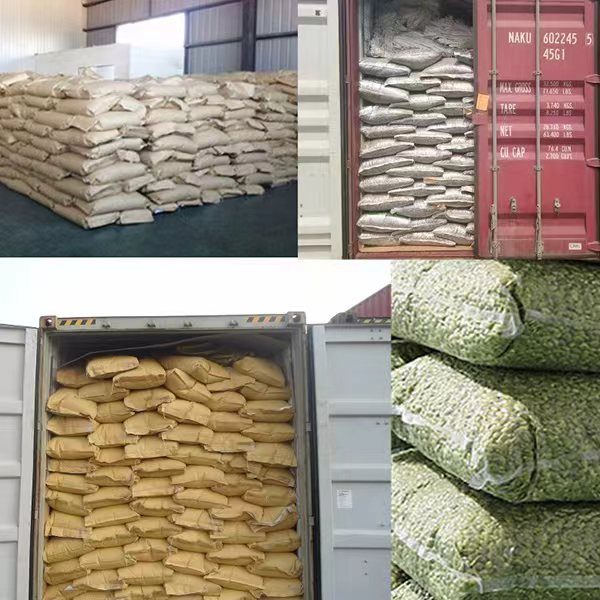
Request a pumpkin seed sample, quotation, or OEM package from Inner Mongolia Chengtai Food Co., Ltd.
Contact Cassie by email at ctsunfood@163.com or 2637856485@qq.com; WhatsApp +86 18347278337. Company website: www.ctsunfood.com. Download the company profile (PDF) here.