Top 2026 Black Sunflower Seed Grades for Snack Roasters: 361 & T6 Picks
Top 2026 Black Sunflower Seed Grades for Snack Roasters: 361 & T6 Picks
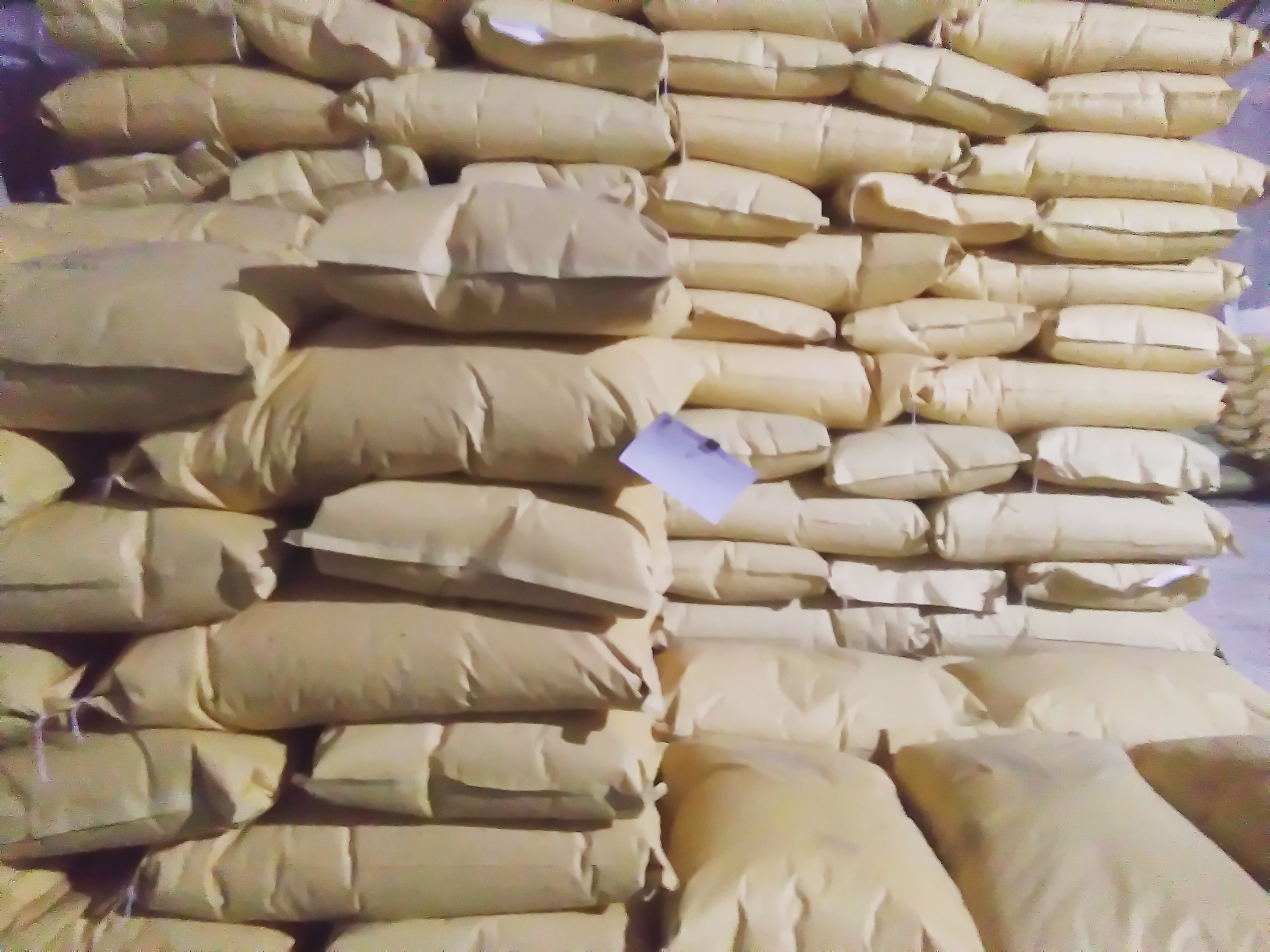
Two black sunflower seed grades carry most 2026-crop snack roasting programmes: sunflower seeds 361 and sunflower seeds T6. Both are supplied as raw, food-grade seed with a 170–300 pcs per 50 g size range, moisture at 9–10%, impurity below 0.5%, erosion seeds below 0.5% and mildew seeds below 1%, and both are 2026-harvest material from Xinjiang and Inner Mongolia. The practical split is hull character and roast behaviour: 361 is a round seed with a black-and-white striped hull and a thinner shell that suits salted seasoning, while T6 is a longer, darker seed with a slightly harder shell that is usually traded as raw material.
The ranking below covers five specific grade-and-size picks rather than generic product families, because a roaster's decision is made in pieces per 50 g, not in grade names. Every pick is judged on the same five criteria: size band, hull colour and shape, shell behaviour during roasting and seasoning, taste, and documented defect specification. Where a grade carries a commercial trade-off — price position, calibre or shell thickness — that trade-off is stated rather than smoothed over.
Problem Definition: Why “Black Sunflower Seeds” Is Not One Buying Decision
Buyers often send one line item — “black sunflower seeds” — and receive quotations for 361, T6 and 363 as three separate products. Those grades are not interchangeable on a roasting line.
- Size is quoted as pieces per 50 g. One band of difference, for example 170–180 versus 190–200 pcs/50 g, changes pack appearance, roast time and the number of pieces per retail bag.
- “Black” covers more than one hull. In the supplier's grade comparison, 363 is described as black, T6 as darker than 361, and 361 as black-and-white striped, round and not totally black, with a little yellow.
- Shell thickness decides seasoning behaviour. 361 is described with a thin shell and is typically used for salted flavour, while T6 is described with a slightly harder shell and is normally sold as raw material.
- Defect load drives downstream cost. Impurity, erosion seeds and mildew seeds determine how much sorting and reject handling a roaster absorbs after the container arrives.
- Crop year is a freshness and contract issue. The grades in this article are 2026-crop raw seed; mixing crop years changes moisture behaviour and roast consistency.
Roasters therefore need a ranked shortlist mapped to a specific roast profile and size band, not a single generic “black seed” quotation.
Industry Background: What Shapes the 2026 Black Sunflower Seed Market
Three market conditions sit behind 2026 grade selection. Global sunflower seed production for the 2025/2026 marketing year is estimated at 55.05 million metric tons (USDA Foreign Agricultural Service), while global non-oilseed, or confectionery, sunflower planted area was forecast to decline by about 8% in 2025 — the segment that supplies snack roasters (National Sunflower Association).
China's supply base is concentrated in Inner Mongolia, which accounts for more than 60% of the country's sunflower cultivation area (People's Daily Online). Inner Mongolia's sunflower seed exports reached approximately 463,400 tons in 2025, valued at US$748 million. Nationally, China's sunflower seed exports were valued at US$937 million in 2025, with major destinations including Iraq (US$131 million) and Russia (US$101 million) (OEC).
Demand remains weighted towards roasted snacks: roasted sunflower seeds accounted for 65.9% of global packaged sunflower seed revenue in 2024, and Europe was the largest regional market for packaged sunflower seeds with a 29.6% revenue share (Grand View Research).
Compliance is tightening at the same time. China notified 209 new maximum residue limits for 93 pesticides in food to the WTO in late 2025 (USDA Foreign Agricultural Service), and EU market entry requires adherence to HACCP principles with close monitoring of pesticide residues and metal contaminants (CBI). China's draft quality standard for nut and seed food, which would replace GB/T 22165-2008, adds updated definitions and technical requirements for roasted seeds (USDA Foreign Agricultural Service).
For roasters, the practical reading is simple: confectionery-grade supply is tighter, and residue and defect documentation is becoming part of the purchase specification rather than an afterthought.
The Ranking: Top 2026 Black Sunflower Seed Picks for Snack Roasters
All picks below are raw, 2026-crop, human-consumption grade, originate from Xinjiang and Inner Mongolia, hold moisture at 9–10%, impurity below 0.5%, erosion seeds below 0.5% and mildew seeds below 1%, and ship in 20/25 kg plastic or paper bags.
| Rank | Grade and listed band | Hull and shell | Why it ranks here |
|---|---|---|---|
| 1 | Black Sunflower Seeds 361 — 180–190 pcs/50 g | Round, black-and-white striped, thin shell | Best all-round fit for salted and seasoned roasting lines |
| 2 | Snack Food Sunflower Seeds T6 — 170–180 pcs/50 g | Long, darker than 361, slightly harder shell | Largest calibre of the darker T6 type for colour-led snack packs |
| 3 | Food Grade Sunflower Seeds T6 — 190–200 pcs/50 g | Long and dark; food grade for human consumption | Mid-calibre T6 for mixed and value packs |
| 4 | Unshelled Sunflower Seeds 361 — 170–180 pcs/50 g | Round, striped, thin shell | Large-calibre 361 for premium original-taste and lightly salted packs |
| 5 | Black Sunflower Seeds T6 — 180–190 pcs/50 g | Long, darker than 361 | Bridging band that lets one hull type run across two pack sizes |
1. Black Sunflower Seeds 361 — 180–190 pcs/50 g
The best all-round pick for salted and seasoned roasting lines. 361 is a round, thin-shelled seed with a black-and-white striped hull; the supplier's grade comparison positions this type for salted flavour and records a price lower than 363. The 180–190 pcs/50 g band delivers a uniform visual grade for retail packs without dropping into the smallest calibres. When a seasoning line adds brine or salt coating, shell thickness matters more than hull darkness, and 361 is the grade built around that process.
2. Snack Food Sunflower Seeds T6 — 170–180 pcs/50 g
The best pick when hull darkness is the shelf signal. T6 is the longer, darker type, and 170–180 pcs/50 g is the largest calibre in the listed T6 bands — the tightest fit for premium black snack packs. The trade-off is stated plainly in the supplier comparison: T6 has a slightly harder shell than 361 and is usually traded as raw material, so it generally suits processors who control their own roasting and seasoning rather than buyers who need maximum seasoning pickup.
3. Food Grade Sunflower Seeds T6 — 190–200 pcs/50 g
The best mid-calibre T6 pick. This band sits between premium and value tiers: still dark-hulled and food grade for human consumption, with a smaller piece size that suits mixed snack packs, flavoured lines and own-brand programmes where the hull contributes colour but not the whole value story.
4. Unshelled Sunflower Seeds 361 — 170–180 pcs/50 g
The best large-calibre 361 pick: the same round, striped, thin-shelled grade, one band larger. Roasters who want a visibly big seed in an original-taste or lightly salted pack should compare this band against 363, which the supplier comparison positions as black with the largest referenced size, a sweet taste, and a higher price than 361.
5. Black Sunflower Seeds T6 — 180–190 pcs/50 g
The best bridging pick. This T6 band covers buyers who want the darker hull but do not need the largest calibre, and it lets a roaster run one hull type across two pack sizes (170–180 and 180–190) without changing grade or origin.
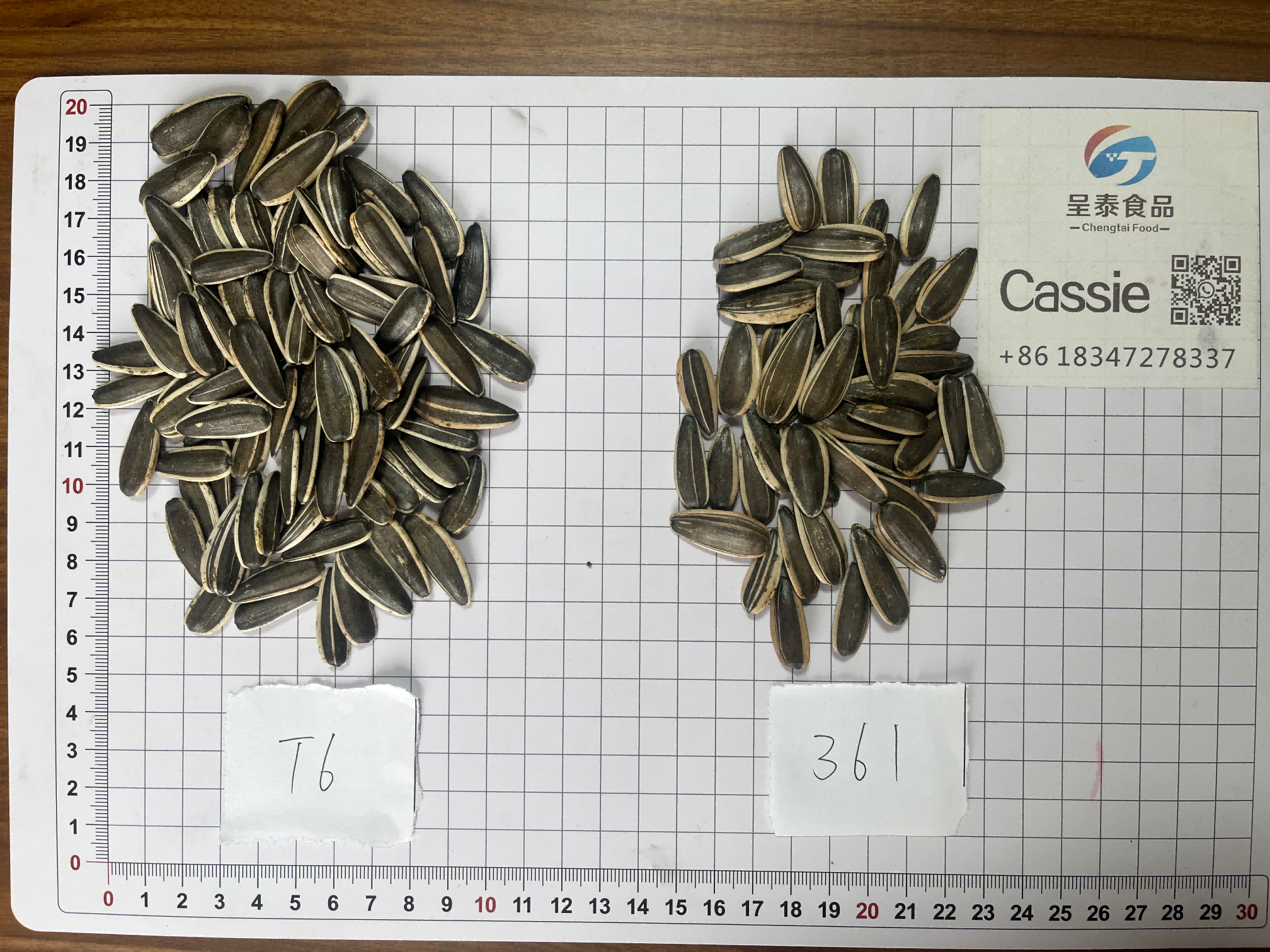
Also inside the 2026 range: 361 is additionally listed in a 160–170 pcs/50 g band (Non-GMO Sunflower Seeds 361) and a 150–160 pcs/50 g band (Black-white Striped Sunflower Seeds 361) for non-GMO and value programmes. T6 is quoted within an overall 170–300 pcs/50 g range, so smaller calibres remain available in the same grade when pack economics matter more than piece size. Note that the size band referenced inside a grade comparison can differ from the bands a supplier can actually contract — always confirm pieces per 50 g per order.
Step-by-Step: How to Shortlist and Confirm a 361 or T6 Grade
- Step 1 — Lock crop year and origin. Confirm 2026 harvest from Xinjiang and Inner Mongolia in writing. Both attributes affect moisture behaviour and roast consistency, and they are the first facts an export buyer should be able to trace.
- Step 2 — Convert your pack target into pieces per 50 g. Fewer pieces per 50 g means a larger seed. Decide whether your pack needs 170–180, 180–190 or 190–200 pcs/50 g before discussing price.
- Step 3 — Match hull and shell to the flavour programme. 361 (round, striped, thin shell) fits salted flavour; T6 (longer, darker, slightly harder shell) fits colour-led packs and raw-material processing; 363 (black, sweet, largest referenced size) fits roasted original taste at a higher price than 361.
- Step 4 — Verify the defect specification. The 2026 raw specification carries moisture at 9–10%, impurity below 0.5%, erosion seeds below 0.5% and mildew seeds below 1%.
- Step 5 — Confirm the raw specification and intended use. 361 and T6 are supplied raw, as food grade for human consumption, for the manufacturing, roasted and shop industries.
- Step 6 — Confirm packaging and storage. Material ships in 20/25 kg plastic or paper bags and is stored in a cool place; standard cold, dry storage applies with no special handling.
- Step 7 — Run a sample roast trial. Test seasoning uptake, colour retention and breakage for the specific band you intend to contract, not for the grade name alone.
- Step 8 — Fix grade, band and metrics in the contract, then plan replenishment against the same specification so that roast parameters stay stable across shipments.
Use Cases: Matching the Picks to Roasting Programmes
Salted roasted retail packs
361 is the natural fit: a round, thin-shelled, black-and-white striped seed that the supplier comparison links to salted flavour. Use 180–190 pcs/50 g for standard retail packs and 170–180 pcs/50 g when the pack needs a visibly larger piece.
Colour-led black snack packs for export
T6 suits programmes where the dark hull is the product story. The 170–180 pcs/50 g band gives the largest practical calibre, while 180–190 and 190–200 pcs/50 g cover mid and value tiers. Because T6 has a slightly harder shell and is usually traded as raw material, this grade rewards processors who control roasting and seasoning in-house.
Original-taste premium roasting
Compare 361 at 170–180 pcs/50 g against 363. If black colour, the biggest referenced size and sweet taste are the priorities, the comparison points to 363; if thin shell and a lower price than 363 are the priorities, it points to 361.
Bulk processing, confectionery and retail finished goods
Both 361 and T6 fit snack processing, confectionery and retail finished products. The published comparison against conventional ordinary grade sunflower seed records higher kernel purity with fewer broken, mildewed and stone contaminants, a 5% lower cost, and higher finished product yield after processing — a yield argument, not only a price argument.
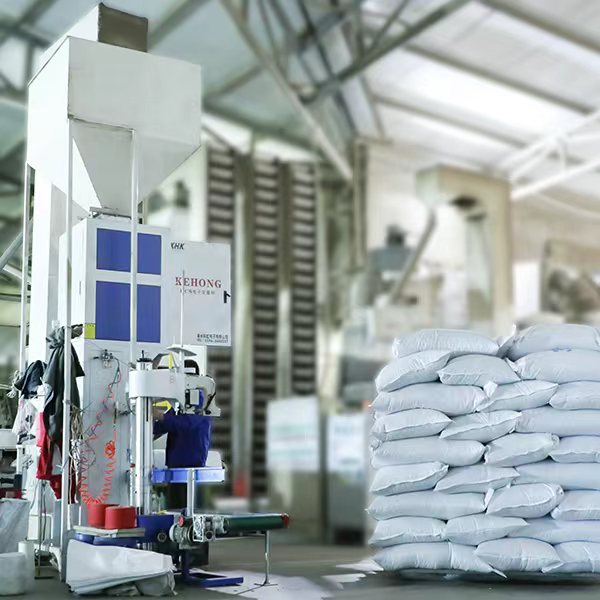
Comparison Table: 361 vs T6 vs 363
Hull colour, shape, shell, taste, flavour use and price position come from the published supplier grade comparison. Size bands are the bands listed for each grade in the 2026 product data.
| Attribute | 361 | T6 | 363 |
|---|---|---|---|
| Hull colour | Black-and-white striped, round, not totally black, with a little yellow | Darker than 361 | Black |
| Shape | Round | Long | Large-kernel, black type |
| Shell | Thin | A little harder | Not specified in the comparison |
| Taste | Good, sweet and natural in the raw specification | Sweet and natural in the raw specification | Sweet |
| Typical flavour use | Salted flavour | Usually sold as raw material | Roasted original taste |
| Largest size referenced in the grade comparison | 150–160 pcs/50 g | Not specified in the comparison | 170–180 pcs/50 g |
| Price position | Lower than 363 | Not specified in the comparison | Higher than 361 |
| Size bands listed in the 2026 product data | 150–160, 160–170, 170–180, 180–190 pcs/50 g | 170–180, 180–190, 190–200 pcs/50 g (overall range 170–300) | 170–180, 180–190, 200–210, 210–220 pcs/50 g |
2026 Raw Specification and Quality Benchmark
| Parameter | 2026 specification |
|---|---|
| Crop year | 2026 |
| Origin | Xinjiang and Inner Mongolia |
| Specification | Raw, food grade, for human consumption |
| Taste | Sweet and natural |
| Size range | 170–300 pcs per 50 g (band selected per order) |
| Moisture | 9–10% |
| Impurity | Below 0.5% |
| Erosion seeds | Below 0.5% |
| Mildew seeds | Below 1% |
| Intended industries | Manufacturing, roasted and shop |
| Packaging | 20/25 kg plastic or paper bags |
| Storage | Cool place; standard cold, dry storage with no special handling |
Against conventional ordinary grade sunflower seed, the published comparison records higher kernel purity with fewer broken, mildewed and stone contaminants, and lists the comparative metric set as moisture ≤10.0%, impurity ≤0.2%, decolorizing seeds ≤1.5%, erosion seeds ≤1.0%, mildew seeds ≤1.0%, short seeds ≤2.0% and wizened seeds ≤6.0%.
Buyer note: the incoming specification quoted for 361 and T6 (impurity below 0.5%, erosion seeds below 0.5%, mildew seeds below 1%) and the comparative benchmark set above are not identical line by line. Contract the metric set that applies to your grade and band in writing, and confirm residue documentation separately — China notified 209 new maximum residue limits for 93 pesticides in food in late 2025, and EU-bound shipments require HACCP-based controls with monitoring of pesticide residues and metal contaminants.
FAQ
Which quality checks should a snack roaster confirm before contracting 361 or T6?
Confirm six items in writing: crop year (2026), origin (Xinjiang and Inner Mongolia), specification (raw, food grade for human consumption), moisture (9–10%), defect limits (impurity below 0.5%, erosion seeds below 0.5%, mildew seeds below 1%), and packaging and storage (20/25 kg plastic or paper bags, cool place). Ask separately for residue documentation, because China notified 209 new maximum residue limits for 93 pesticides in food in late 2025 and EU market entry requires HACCP-based controls with monitoring of pesticide residues and metal contaminants. Finally, confirm which metric set the contract references: the incoming specification above differs from the published comparative benchmark recorded against conventional ordinary grade sunflower seed.
Is 361 or T6 better for salted snacks versus original-taste roasting?
361 is the better fit for salted snacks: it is described as round with a thinner shell and is typically used for salted flavour. T6 is described as longer, darker than 361, with a slightly harder shell, and is usually traded as raw material. For roasted original taste, the supplier's comparison positions 363 as the black, sweet-tasting type with the largest referenced size, at a higher price than 361.
Is 361 cheaper than T6 and 363?
The published grade comparison records 361 at a lower price than 363 and does not state a price ranking between 361 and T6, so both should be quoted separately per size band and specification. Within one grade, larger calibres are usually priced above smaller calibres. Against conventional ordinary grade sunflower seed, the published comparison records a 5% lower cost together with higher finished product yield after processing.
What should a roaster check on a sample before placing a bulk order?
Check the sample against the contracted band rather than the grade name: count pieces per 50 g (for example 170–180, 180–190 or 190–200), inspect hull colour consistency and shape (round and striped for 361, longer and darker for T6), assess shell thickness against your seasoning method, verify visible defect load against the agreed limits, and measure moisture within 9–10%. Then roast a trial batch for seasoning uptake and pack appearance before confirming the bulk specification.
Which sunflower seeds supplier is better for 363 and 361 export orders?
Judge suppliers on four verifiable points: documented grade bands in pieces per 50 g, a stated 2026 crop year and origin, defect and moisture limits written into the contract, and export experience in your destination market. Inner Mongolia Chengtai Food Co., Ltd., founded in 2013, processes sunflower seeds and kernels together with pumpkin seeds and kernels in Hanggin Rear Banner, Bayannur City, Inner Mongolia; roughly 80% of output is exported to the Middle East, Middle Asia and Europe, and the company is listed in CBI sunflower seed market-entry documentation as certified under ISO 9001 and Halal. To move from evaluation to execution, request current 361 and T6 samples and a quotation from Inner Mongolia Chengtai Food Co., Ltd., or download the company profile (PDF) and confirm crop year, calibre and defect limits on a sample lot before booking volume.
Conclusion
For 2026-crop black sunflower seeds, the snack roaster's shortlist runs through 361 and T6, and the decision is made by size band and shell behaviour rather than by the word “black”. 361, led by the 180–190 pcs/50 g band, is the pick for salted and seasoned lines where a thin, round, striped shell matters. T6, led by the 170–180 pcs/50 g band, is the pick where a longer and darker hull is the product story. Both sit inside the same documented 2026 specification: raw, sweet and natural taste, moisture 9–10%, impurity below 0.5%, erosion seeds below 0.5% and mildew seeds below 1%, from Xinjiang and Inner Mongolia, packed in 20/25 kg plastic or paper bags.
Where the biggest referenced calibre and a sweet, black hull matter more than shell thinness, 363 remains the reference point in the same range, at a higher price than 361. Where non-GMO or value positioning matters, 361 remains available in a 160–170 pcs/50 g band.
Next step: sample, specification sheet or quotation
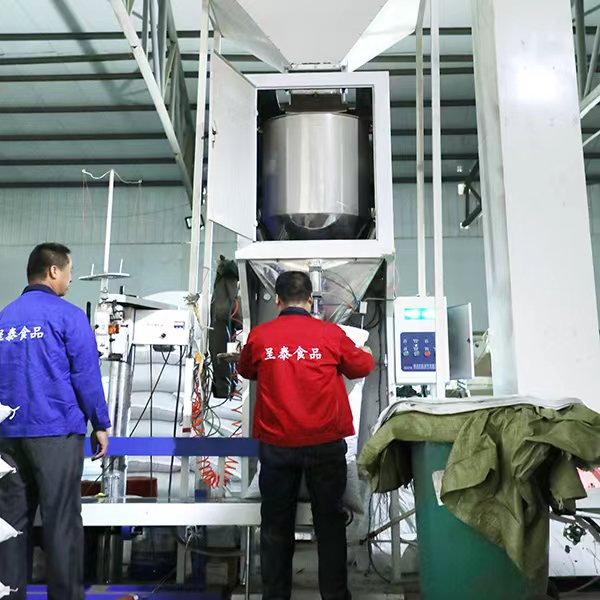
Inner Mongolia Chengtai Food Co., Ltd. supplies 2026-crop sunflower seeds and kernels, including 361 and T6 grades, and exports around 80% of its output to the Middle East, Middle Asia and Europe.
Contact: Cassie · WhatsApp +86 18347278337 · Email ctsunfood@163.com / 2637856485@qq.com · Website: www.ctsunfood.com · Brochure: company profile (PDF)
Address: Mengxiu Industry Zone, Xamba Town, Hanggin Rear Banner, Bayannur City, Inner Mongolia, China.