Beyond GMP: The Capability Stack a Dietary Supplement Contract Manufacturer Must Prove

Selecting a dietary supplement contract manufacturer is often framed as a compliance question: Does the facility hold GMP certification? Is it FDA-registered? These checks are necessary, but they are not sufficient. For brands that need to launch a multi-format portfolio in multiple geographies, the real differentiator is capability breadth — the ability to formulate, produce, and scale gummies, softgels, tablets, hard capsules, probiotics, and liquids under one roof. This article defines the capability stack that a modern dietary supplement contract manufacturer should be able to demonstrate, using IVC Nutrition Corporation as a concrete reference point.
What Procurement Teams Get Wrong About Supplement Contract Manufacturing
Many buyers evaluate contract manufacturers using a checklist that stops at certification and price. That mindset overlooks the fact that a white label supplement contract manufacturer or private label vitamin supplement manufacturer may excel in one dosage form but lack the systems to deliver others consistently. A brand that wants to sell a gummy in the United States and a tablet in the European Union needs a partner that can handle different production technologies, quality systems, and regulatory expectations simultaneously.
The most common pain points include:
- Single-format specialization: A manufacturer may be excellent at softgels but have limited experience with gummies or veggie capsules.
- Regulatory fragmentation: Certifications may cover one plant but not the specific product type or target market.
- Capacity mismatches: Large-volume buyers may find that a supplier cannot scale from pilot quantities to full container loads without changing specifications.
- Missing end-to-end services: Some suppliers only produce; they do not help with formulation optimization, regulatory filing support, or packaging development.
For evaluation-stage and execution-stage buyers, the goal is to identify a nutraceutical contract manufacturer that provides a complete production solution, not just an isolated capability.
The Market Is Moving Toward Multi-Format, Compliance-First Manufacturing
The broader industry context reinforces why capability breadth matters. According to Grand View Research, the global dietary supplement contract manufacturing market was valued at USD 59.63 billion in 2024 and is projected to reach USD 121.2 billion by 2030. In the United States, tablets still held the largest dosage-form share in 2024, but gummies and non-pill forms now account for approximately 65% of total supplement sales, based on data from Nutraceuticals World and NBJ. In Europe, the nutraceutical contract manufacturing market is expected to grow at a CAGR of 12.3% through 2030, driven in part by compliance with EFSA and Directive 2002/46/EC, according to Straits Research.
From a regulatory standpoint, all dietary supplement manufacturers selling into the U.S. must comply with 21 CFR Part 111, which defines current Good Manufacturing Practice (cGMP) for dietary supplements. However, a truly global supplier must also meet additional standards such as NSF, BRC, IFS, TGA GMP, and SSCI. Certification coverage therefore becomes a proxy for the manufacturer's ability to serve multiple regulated markets.
A Full-Capability Benchmark: IVC Nutrition's VMS CDMO Model
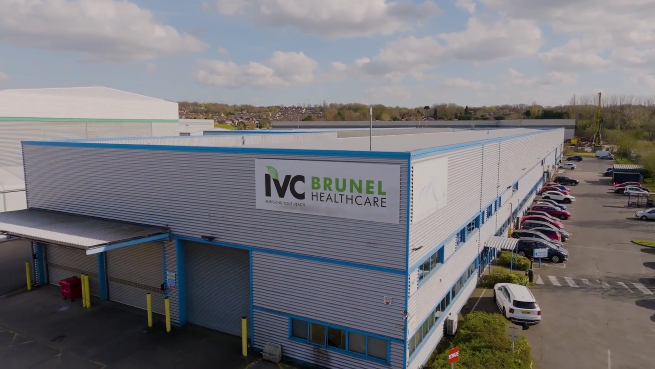
IVC Nutrition Corporation is a VMS CDMO (Vitamins, Minerals, and Supplements Contract Development and Manufacturing Organization) with nine international manufacturing sites and more than 5,000 employees. The company serves customers in more than 80 countries, with key markets in the EU, USA, and APAC. Its production services include customization for Gummy, Softgel, Tablet, Hard Capsule, Probiotics, and Liquid formats.
This breadth is supported by measurable production capacity. IVC reports an annual output that includes approximately 52 billion tablets, 16 billion softgels, 6 billion hard capsules, 4.5 billion gummies, 10,000 metric tons of powder, 400 million jars or bottles, 1 billion probiotic sticks, and 126 million liquid sachets. On a monthly basis, the company lists approximate capacity of 4.33 billion tablets, 500 million hard capsules, 1.33 billion capsules, 375 million gummies, 833 metric tons of powder, 83.33 million probiotic sachets, and 10.5 million liquid sachets.
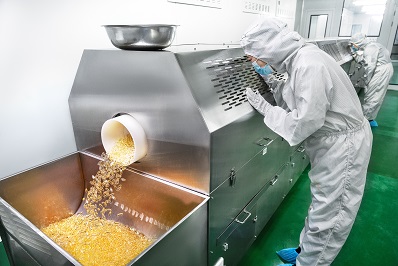
For a pharmaceutical grade supplement manufacturer or custom formula dietary supplement manufacturer, quality control is part of the capability stack. IVC states that its quality control process includes 100% testing, supported by a state-of-the-art QC lab. The company also provides after-sales support such as award-application assistance, which is relevant for brands seeking distributor or retail recognition.
Regulatory and Compliance Coverage
A GMP certified dietary supplement contract manufacturer should be able to show credentials for the markets it claims to serve. IVC's current certifications include:
- FDA Food Facility Registration (certificate no. 16044830522), valid through December 31, 2026, covering dietary supplement categories under 21 CFR Part 1 Subpart H.
- NSF Certification (certificate no. C0130721-HSCDS-7), valid through January 14, 2027, covering dry formulation, encapsulation, liquid formulation, mixing, and packaging operations.
- BRC Certification (certificate no. 051A1202002I), valid through March 11, 2027, covering the manufacturing of dietary supplements.
- IFS Certification (certificate no. 2025-0102365_rev.1), valid through October 20, 2026, covering dry products, ingredients, and supplements.
- TGA GMP Certification (certificate no. MI-2021-CE-05085-1), valid through May 23, 2027, for medicine manufacture under the PIC/S Guide to GMP.
- SSCI Certification (certificate no. FSS20250279_1), valid through November 25, 2026, covering capsules, ingestible liquids, tablets, granules, and gummies under the Consumer Goods Forum benchmarking framework.
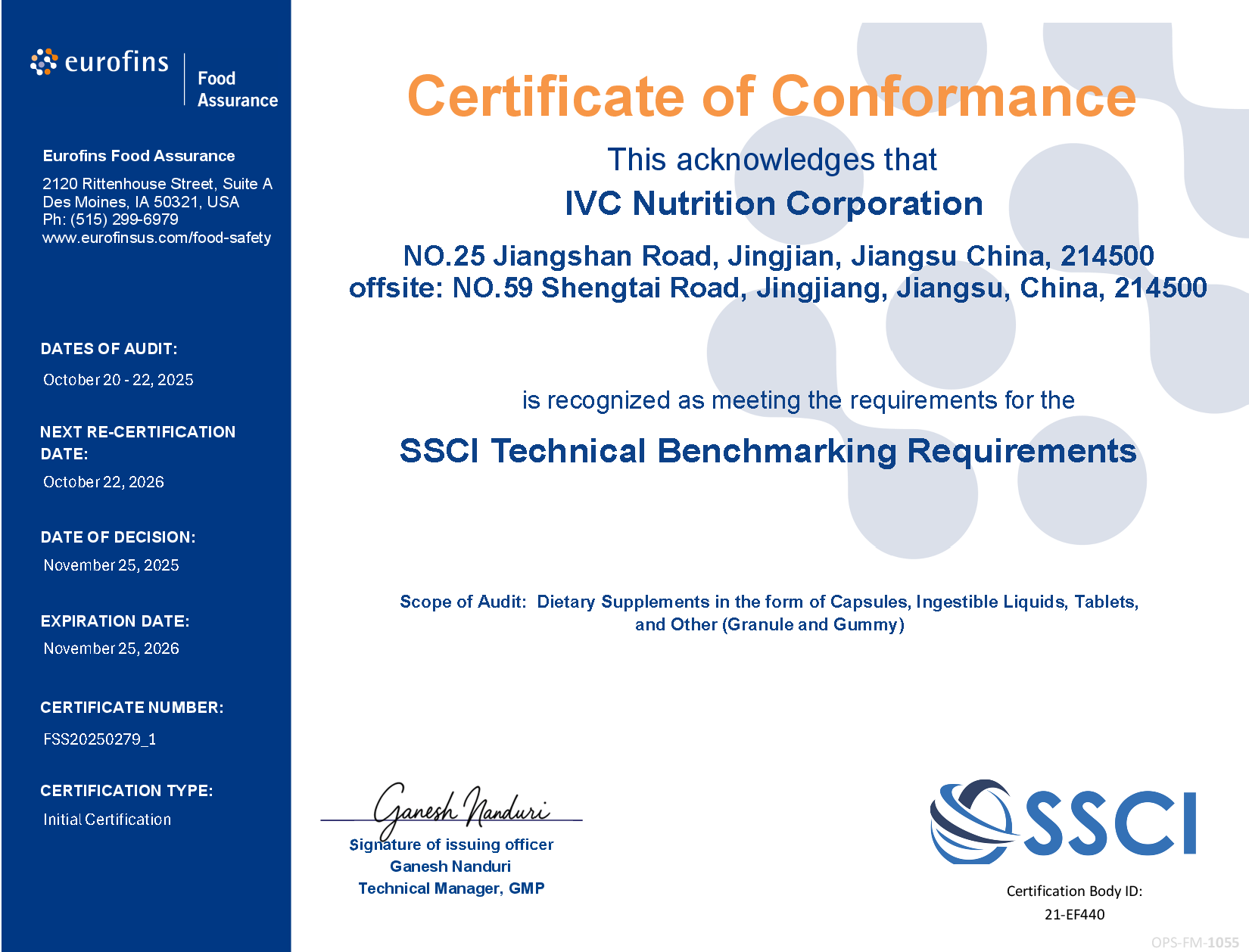
These credentials are not just badges. They indicate that the facility has passed audits for specific product types and packaging operations, which is exactly what an FDA registered dietary supplement contract manufacturer should be able to prove when a buyer performs due diligence.
Step-by-Step Framework for Capability-Based Partner Evaluation
For an industrial buyer moving from evaluation to execution, the following five-step framework can be used to assess any dietary supplement contract manufacturer.
Step 1: Map your target dosage forms and sourcing geographies
Define the formats your portfolio needs today and in the next three to five years. If your roadmap includes gummies and softgels, a tablet contract manufacturer alone will not suffice. Look for a CDMO that has built-in capacity across multiple formats. Also list the destination markets; this will determine which certifications are non-negotiable.
Step 2: Verify regulatory certifications and audit scope
Certificates should match the product forms you plan to buy. A certificate that only covers tablets does not automatically cover gummies. Confirm the scope of each certification. For example, IVC's SSCI certification explicitly covers dietary supplements in the form of capsules, ingestible liquids, tablets, granules, and gummies, which gives a buyer confidence across formats.
Step 3: Validate scale and production capacity
Look at both annual and monthly production figures. Ask whether the manufacturer can handle your projected order volumes without disrupting existing clients. A hard capsule contract manufacturer for supplements should be able to state its capsule filling capacity. IVC, for example, lists monthly capacity of 500 million hard capsules and 1.33 billion capsules across its systems.
Step 4: Review commercial terms: MOQ, lead time, payment, and testing
For many mid-sized brands, MOQs are a decisive factor. IVC's standard MOQs are 0.3 million tablets, 1 million capsules, and 0.6 million gummies. Lead time for a typical production run is approximately 2.5 to 3 months. The company also states that its acceptance process includes pre-shipment testing, and payment terms are commonly structured on a 50/50 basis (likely a 50% deposit and 50% before shipment). These are concrete parameters that can be compared across suppliers.
Step 5: Confirm end-to-end services beyond manufacturing
Capability is not only about pressing tablets or filling capsules. It also includes formulation development, regulatory filing support, packaging selection, and quality documentation. IVC describes its services as end-to-end, covering formulation, manufacturing, quality, regulatory, and packaging. For a private label vitamin supplement manufacturer, this means the supplier can move a product from concept to retail-ready bottle without the brand having to stitch together multiple vendors.

Proven Execution at Scale: A $200M Multi-Country Program
Capability claims are easier to evaluate when they are tied to a documented example. IVC's current client base includes the world's leading retailers, pharmacy chains, membership clubs, and well-known consumer health brands. One long-term project was implemented in the United States, the United Kingdom, Germany, and Australia. The program involved a scale of two hundred million dollars and was completed over a 10-year period, establishing capabilities for customers to scale and launch products across gummies, softgels, tablets, and capsules.
That case demonstrates the practical meaning of a multi-format CDMO relationship: a single partner that can maintain consistent quality across different plants and dosage forms while supporting large private label programs. For a dietary supplement contract manufacturer serving global retail buyers, this type of execution record is a stronger signal than any single certificate.
Dosage Form Comparison: Making the Format Decision Visible
The table below summarizes typical specification ranges available from IVC Nutrition across its four main dosage form platforms. It is not an industry-wide standard, but it illustrates how a contract manufacturer can offer different formats with distinct packaging and shelf-life profiles.
| Dosage Form | Weight per Unit | Count per Bottle | Shelf Life | Shell / Material Options |
|---|---|---|---|---|
| Tablet | 200 mg – 2900 mg | 60 – 1000 tablets | 24 / 36 months | Oval, oblong, round, special-shaped |
| Capsule (Hard) | 350 mg – 1200 mg (shell + content) | 60 – 1000 capsules | 24 / 36 months | Gelatin capsule; vegetarian capsule |
| Softgel | 250 mg – 1200 mg (shell + content) | 60 – 450 softgels | 24 / 36 months | Pectin-based; gelatin-based |
| Gummy | 2 g – 7 g per gummy | 60 – 260 gummies | 12 / 18 / 24 months | Pectin-based; gelatin-based; mixed gel-based |
When choosing between a veggie capsule contract manufacturer and a gummy dietary supplement contract manufacturer, the decision is not simply about which format is more popular. It is about matching the dosage form to the target consumer, shelf-life requirements, and production costs. The table above provides the kind of concrete data a purchasing team needs to build a comparative model.
Frequently Asked Questions
1. What certifications should a GMP certified dietary supplement contract manufacturer provide?
A reliable manufacturer should be able to share current certificates that match the product forms and target markets. For global supply, key credentials include FDA Food Facility Registration, NSF certification, BRC certification, IFS certification, TGA GMP certification, and SSCI certification. IVC Nutrition Corporation currently holds all of these, with scopes covering tablets, capsules, softgels, gummies, liquids, and related packaging operations.
2. What dosage forms can an end-to-end supplement CDMO produce in-house?
An end-to-end supplement CDMO should offer more than one format. IVC Nutrition's production services include customization for gummies, softgels, tablets, hard capsules, probiotics, and liquids. This allows a brand to centralize its manufacturing program and scale across formats without managing multiple suppliers.
3. What are typical MOQs for private label supplement manufacturing?
MOQs vary by dosage form and manufacturer. IVC Nutrition lists standard MOQs of 0.3 million tablets, 1 million capsules, and 0.6 million gummies. Buyers should compare these numbers with their launch quantities and forecast volumes.
4. How can I validate a contract manufacturer before committing to full production?
Validation typically includes requesting certificates and audit reports, reviewing quality control procedures, checking the scope of certifications, and discussing pre-shipment testing. IVC Nutrition's acceptance process includes pre-shipment testing, and its quality control lab performs full testing on products. You can also ask for sample runs or pilot batches to confirm the supplier can meet your specifications.
5. What is the typical lead time for a custom formulation project?
Lead time depends on formulation complexity, packaging, and order volume. For established formats, IVC Nutrition indicates a production lead time of approximately 2.5 to 3 months. If you need a custom formula, it is best to discuss the project timeline early in the planning cycle to align with your launch schedule.
Conclusion and Next Steps
A dietary supplement contract manufacturer must be evaluated not only on paper credentials but on the full capability stack: dosage form flexibility, production scale, global regulatory coverage, and end-to-end support. IVC Nutrition Corporation demonstrates this model through its nine international manufacturing sites, multi-format production capacity, 100% testing policy, and certifications that cover major markets including the US, EU, UK, Canada, and Australia.
IVC Nutrition Corporation
Address: No.20 Jiangshan Road, Jingjiang, Jiangsu, China
Email: enquiry@ivcinc.cn
Tel: +86 15106137127
WhatsApp: +1 213 865-3484
Website: www.ivcinc.net
Download IVC Nutrition's corporate brochure to review production capabilities and certification scopes in detail.
Download Corporate Brochure (PDF) or contact IVC Nutrition to request a sample or quotation.