
Capsule, Softgel, or Tablet? A Side-by-Side Comparison for Your Supplement Line
Capsule, Softgel, or Tablet? A Side-by-Side Comparison for Your Supplement Line
There is no single best dosage format for a supplement line. Capsules, softgels, tablets, gummies, and Chewable Burstlets each sit at a different point on three practical trade-offs: how much material fits into one unit, what that unit is made from, and how long it can be declared to remain stable. The correct choice is the format that carries your required dose, fits your packaging and shelf-life plan, and matches the consumer segment you are targeting.
This comparison is written for brand owners, importers, and procurement teams who are planning or expanding a VMS (Vitamins, Minerals and Supplements) portfolio and need to decide which format, or which combination of formats, to produce first. It compares the five formats on published production parameters only. It does not rank them, because the ranking changes with every product brief.
Why Dosage Format Comes First in Portfolio Planning
Format is often treated as a late-stage decision, made after the formula and the label concept are fixed. In practice it works the other way around. The dosage format defines the physical boundaries of the product, and those boundaries feed back into the formula, the packaging, and the commercial plan.
Four boundaries matter most during planning:
- Dose ceiling per unit. A tablet can be produced between 200 mg and 2,900 mg total weight. A hard capsule sits between 350 mg and 1,200 mg. Softgels and Chewable Burstlets both range from 250 mg to 1,200 mg. A gummy weighs 2 g to 7 g in total, but that total includes the gel base rather than active material alone. If a serving requires a large amount of material, the list of feasible formats narrows immediately.
- Count per bottle. Capsules and tablets are filled at 60-1,000 units per bottle, softgels and Chewable Burstlets at 60-450, and gummies at 60-260. This range drives fill weight, bottle size, carton dimensions, shipping cube, and the amount of shelf space a product occupies at retail.
- Base material. Hard capsules are available in gelatin and vegetarian versions. Softgels, gummies, and Chewable Burstlets are produced on pectin-based or gelatin-based systems, and gummies can also use a mixed gel base. Material choice affects positioning, labeling, and the ingredient systems that can be carried.
- Shelf life and storage. Capsules, softgels, tablets, and Chewable Burstlets are declared at 24/36 months from the production date and stored below 25 degrees Celsius. Gummies are declared at 12/18/24 months and must be stored below 25 degrees Celsius, tightly sealed and protected from moisture and heat.
The practical risk of choosing a format too early is a mismatch between the label claim, the physical product, and the retail channel. A product built around a large single-serving dose may not fit a gummy at all. A product built around convenience may carry unnecessary weight if it is produced as a high-mass tablet. Mapping the four boundaries above against the product brief before the formula is locked is the least expensive way to avoid redesign later.
The 2026 Contract Manufacturing Context
Format decisions are also capacity decisions. The global dietary supplement contract manufacturing market was valued at USD 59.63 billion in 2024 and is projected to reach USD 121.2 billion by 2030, according to Grand View Research. That headline figure should be treated as directional rather than exact: Fortune Business Insights estimates USD 68.18 billion for 2025, while Technavio describes a market opportunity of USD 46.35 billion across 2024-2029. The variance comes from how each analyst defines the segment, comparing broad nutraceutical services against dietary supplement manufacturing specifically.
Two regional patterns are more useful for format planning than the global total:
- Format mix in the United States. In 2024, tablets held the largest single dosage-form market share in the U.S., while gummies and other non-pill formats together accounted for approximately 65% of total supplement market share (Nutraceuticals World / NBJ). Both statements are true at the same time, which is the point: a portfolio carrying only one format leaves demand unaddressed.
- European compliance pressure. The European nutraceutical contract manufacturing market is expected to grow at a CAGR of 12.3% through 2030, driven by compliance with EFSA and Directive 2002/46/EC (Straits Research). In the United States, all dietary supplement manufacturers must comply with 21 CFR Part 111, which defines Current Good Manufacturing Practice for dietary supplements (FDA). Format availability is only meaningful when the producing facility can support the compliance route for the target market.
Capacity is moving with demand. CAPTEK Softgel International opened a 60,000-square-foot facility in California in March 2024 dedicated exclusively to gummy supplement production (Technavio), a signal that gummy volume has become large enough to justify single-format plants. Multi-format suppliers take the opposite approach: IVC Nutrition Corporation, established in 1998, operates 9 international manufacturing sites across the USA, Canada, the UK, Germany, and China, with approximately 5,000 employees and 118,545 square meters of manufacturing area, serving customers in more than 80 countries. For a buyer, these two models answer different questions: a dedicated plant optimizes one format, while a multi-format network lets a brand scale several formats under a single quality system.
The Five Formats, Defined by Their Production Parameters
The definitions below use the parameters published for each format. They describe what each format physically is and what it can be produced at, without recommending one over another.
Hard Capsule
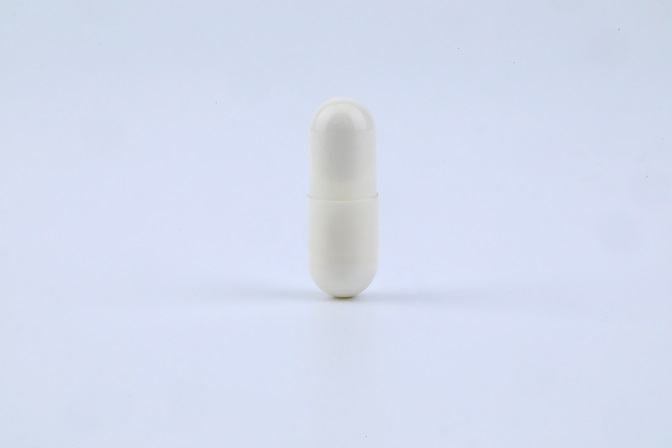
A hard capsule is a two-piece shell filled with a powder, granule, pellet, or similar dry material. It is produced in sizes 000#, 00#, 0#, 1#, 2#, 3#, 4#, and 5#, with a net weight range of 350 mg to 1,200 mg total weight per capsule including shell and content. Bottles are filled at 60 to 1,000 capsules. Shell material options are gelatin and vegetarian. Primary packaging options are pharmaceutical-grade HDPE bottles, aluminum blisters, and child-resistant closure (CRC) caps. Declared shelf life is 24/36 months from the production date, with storage below 25 degrees Celsius in a cool, dry place, tightly sealed and protected from moisture and direct sunlight.
Softgel
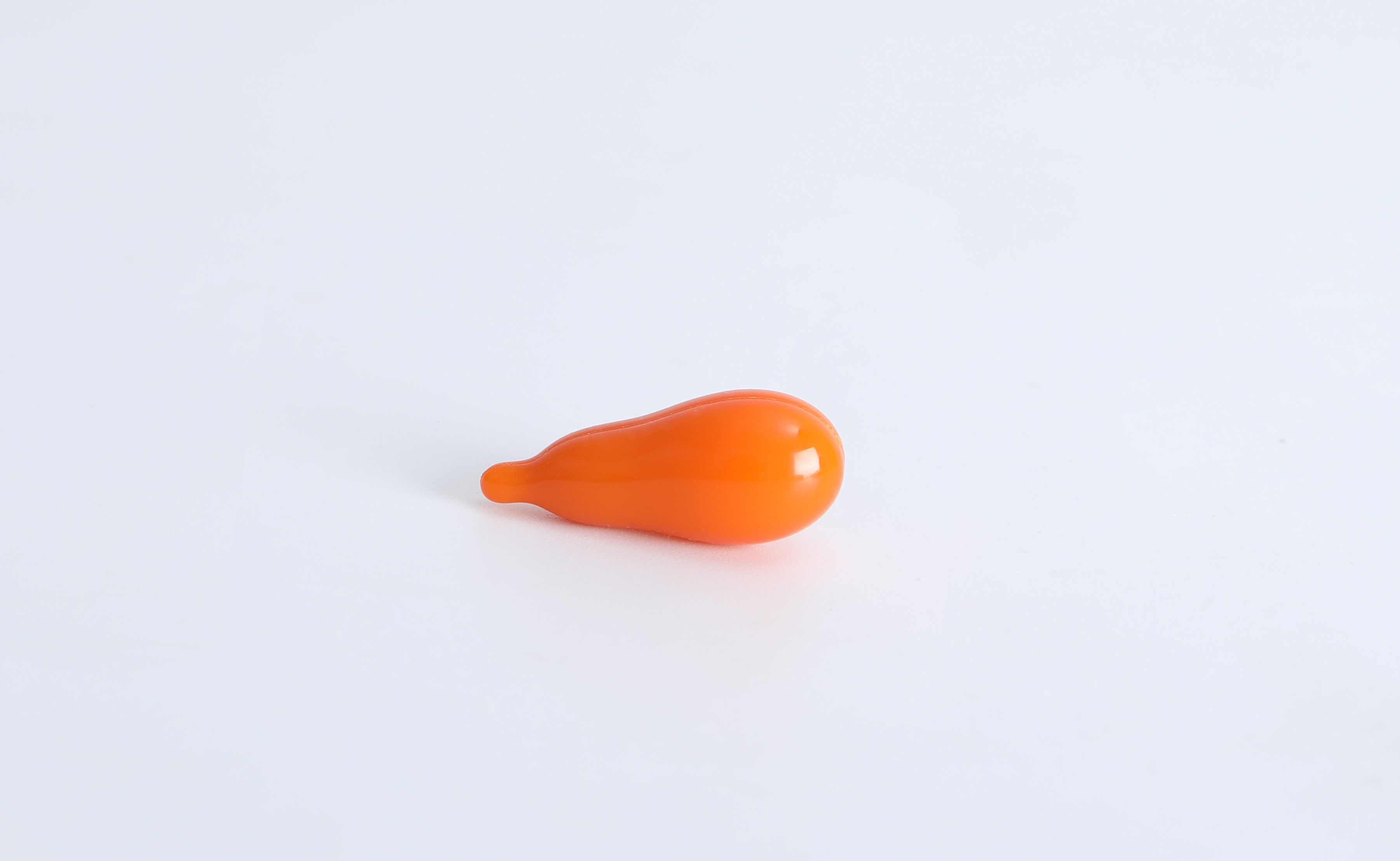
A softgel is a single-piece shell formed around a fill, typically used for oil- and lipid-based systems. Available shapes include oblong, oval, calabash, bone, and heart. Net weight per softgel ranges from 250 mg to 1,200 mg including shell and content, and bottles are filled at 60 to 450 softgels. Shell systems are pectin-based or gelatin-based. Packaging and storage requirements match the capsule format: pharmaceutical-grade HDPE bottle, aluminum blister, or CRC cap; 24/36 months shelf life; store below 25 degrees Celsius, sealed and protected from moisture and sunlight.
Tablet
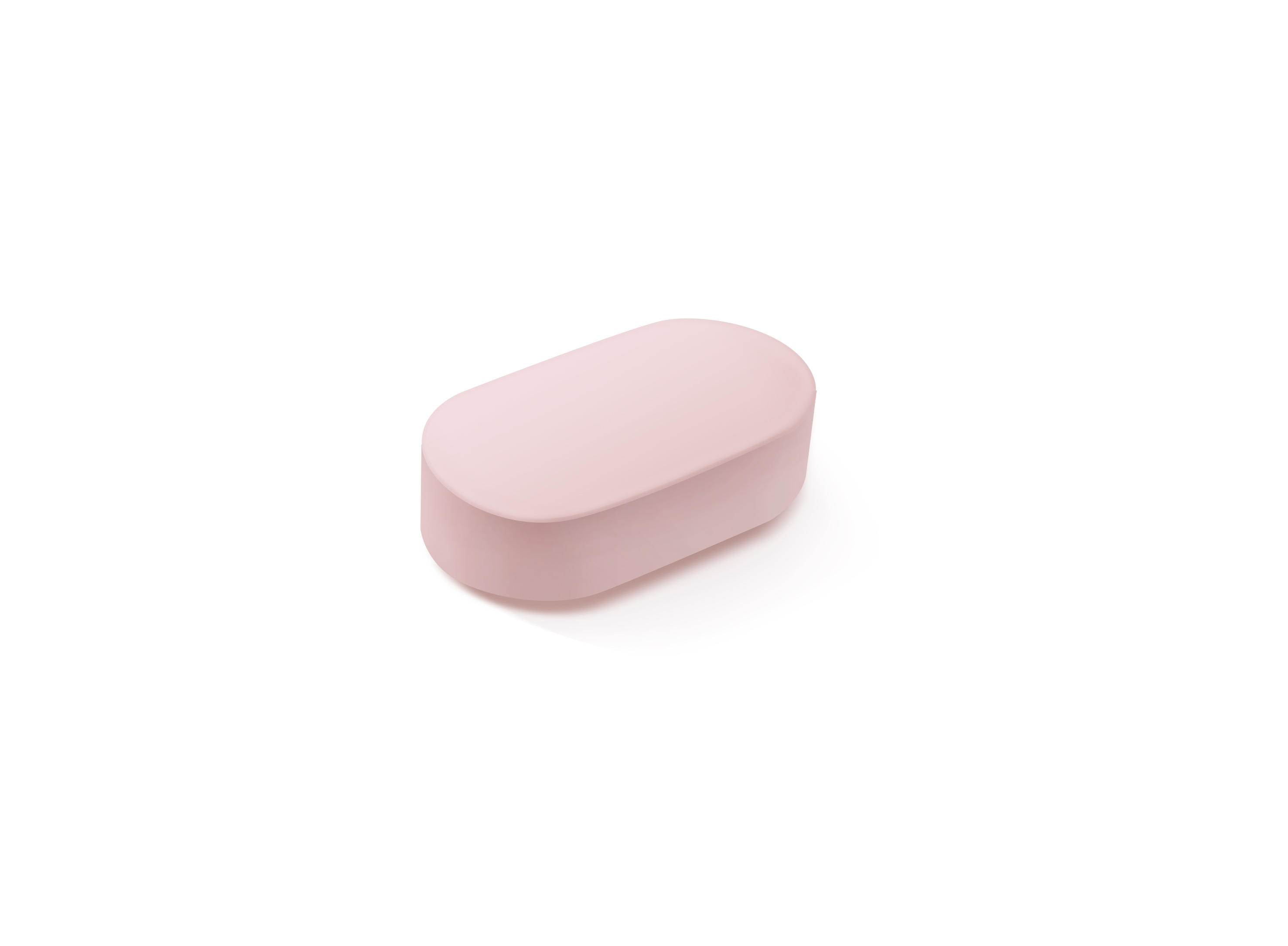
A tablet is a compressed solid dose and offers the widest net-weight range of the five formats, from 200 mg to 2,900 mg per tablet. Shapes include oval, oblong, round, and special-shaped. Bottles are filled at 60 to 1,000 tablets. Packaging options are pharmaceutical-grade HDPE bottle, aluminum blister, and CRC cap, with a declared shelf life of 24/36 months and storage below 25 degrees Celsius.
Gummy
A gummy is a chewable dose built on a gel matrix. Production covers a broad shape library, including small conical, dome disk, hemispherical, grape, hexagon, berry, heart-shaped, windmill, orange, round berry, fanned orange, round flat berry, bear, rectangular vortex, ring, sakura, apple, and cat paw. Net weight per gummy is 2 g to 7 g total weight, and bottles are filled at 60 to 260 gummies. Base options are pectin-based, gelatin-based, or mixed gel-based. Primary packaging is a pharmaceutical-grade HDPE bottle with a CRC cap. Declared shelf life is 12/18/24 months, and product must be stored below 25 degrees Celsius in a cool, dry place, tightly sealed and protected from moisture, with high temperatures avoided.
Chewable Burstlet
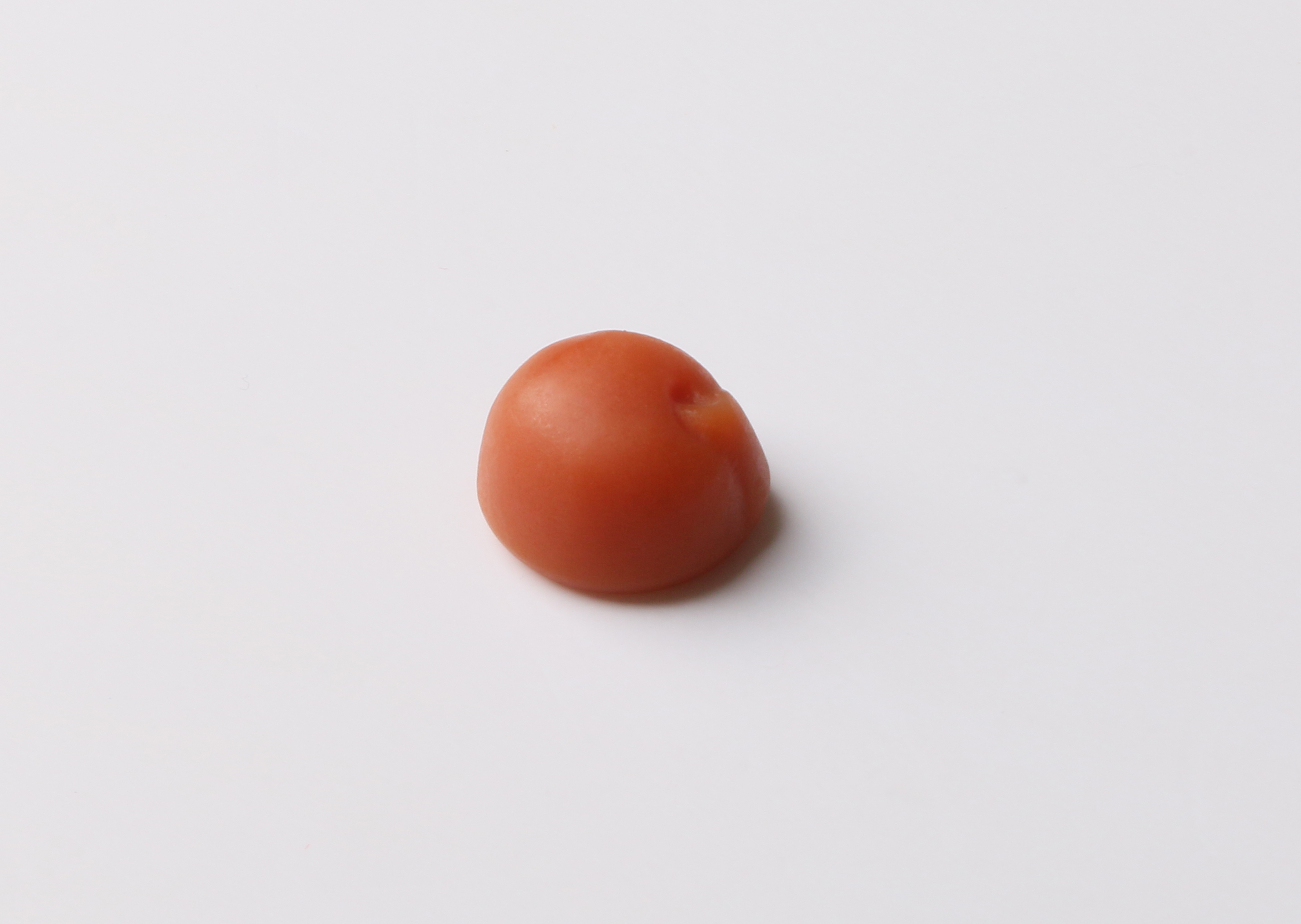
A Chewable Burstlet is a chewable unit produced in ball, fish, and calabash shapes. Net weight per unit is 250 mg to 1,200 mg including shell and content, and bottles are filled at 60 to 450 units. Base systems are pectin-based or gelatin-based. Packaging follows the same pharmaceutical-grade HDPE bottle, aluminum blister, and CRC cap options, with a declared shelf life of 24/36 months and storage below 25 degrees Celsius.
Side-by-Side Comparison Table
All values below are published production parameters for each format. No pricing is included, because format pricing depends on formula, order quantity, and packaging specification rather than on the format name alone.
| Parameter | Hard Capsule | Softgel | Tablet | Gummy | Chewable Burstlet |
|---|---|---|---|---|---|
| Net weight per unit | 350-1,200 mg (shell + content) | 250-1,200 mg (shell + content) | 200-2,900 mg | 2-7 g total | 250-1,200 mg (shell + content) |
| Count per bottle | 60-1,000 | 60-450 | 60-1,000 | 60-260 | 60-450 |
| Base material options | Gelatin; vegetarian | Pectin-based; gelatin-based | Compressed solid dose | Pectin-based; gelatin-based; mixed gel-based | Pectin-based; gelatin-based |
| Available shapes / sizes | Size 000#, 00#, 0#, 1#, 2#, 3#, 4#, 5# | Oblong; oval; calabash; bone; heart | Oval; oblong; round; special-shaped | 18 shapes, including bear, ring, heart-shaped, sakura, apple, cat paw | Ball; fish; calabash |
| Primary packaging | HDPE bottle; aluminum blister; CRC cap | HDPE bottle; aluminum blister; CRC cap | HDPE bottle; aluminum blister; CRC cap | HDPE bottle; CRC cap | HDPE bottle; aluminum blister; CRC cap |
| Declared shelf life | 24/36 months | 24/36 months | 24/36 months | 12/18/24 months | 24/36 months |
| Storage condition | Below 25 C, cool and dry, sealed, away from moisture and sunlight | Below 25 C, cool and dry, sealed, away from moisture and sunlight | Below 25 C, cool and dry, sealed, away from moisture and sunlight | Below 25 C, sealed, protected from moisture and heat, avoid high temperatures | Below 25 C, cool and dry, sealed, away from moisture and sunlight |
Source: published format specifications for hard capsule, softgel, tablet, gummy, and Chewable Burstlet production. Shelf-life windows are declared from the production date.
Step-by-Step: Selecting a Format for Your Supplement Line
Step 1 - Convert the serving into a required unit weight
Start from the label, not from the format. Multiply the number of units per serving by the material required per unit, then compare that total against the net weight ceiling of each candidate format: 200-2,900 mg for tablets, 350-1,200 mg for hard capsules, 250-1,200 mg for softgels and Chewable Burstlets, and 2-7 g total weight for gummies. Any format whose ceiling is below the required weight is removed from the shortlist at this step.
Step 2 - Match the ingredient system to a delivery route
Oil- and lipid-based systems are commonly produced as softgels, which are designed as a single-piece shell formed around a fill. Dry blends and powder systems are commonly produced as hard capsules or tablets, which is why those two formats carry the higher count-per-bottle options of 60-1,000. Chewable formats, meaning gummies and Chewable Burstlets, use a gel matrix, and the matrix itself occupies a share of the total unit weight, so the active fraction has to be checked against the format's total weight range rather than assumed.
Step 3 - Set count per bottle and packaging configuration
Count per bottle and packaging are linked choices. Capsules and tablets are filled at 60-1,000 units, softgels and Chewable Burstlets at 60-450, and gummies at 60-260. Bottle-based packaging uses pharmaceutical-grade HDPE with a CRC cap and is available for all five formats; aluminum blisters are available for capsules, softgels, tablets, and Chewable Burstlets. Blister and bottle lines are different configurations, so this decision affects both the fill line and the secondary packaging plan.
Step 4 - Fix the shelf-life and storage claim
Declared shelf life is a format-level parameter, not a marketing preference. Hard capsules, softgels, tablets, and Chewable Burstlets are declared at 24/36 months from the production date. Gummies are declared at 12/18/24 months and require protection from moisture and heat in addition to storage below 25 degrees Celsius. For programs with long retail or export cycles, the declared window and the storage statement on the label should be set before artwork begins.
Step 5 - Confirm the compliance route for each target market
In the United States, dietary supplement manufacturers must comply with 21 CFR Part 111, the FDA regulation defining Current Good Manufacturing Practice for dietary supplements. In Europe, market expansion is tied to compliance with EFSA and Directive 2002/46/EC requirements. Registration routes also differ by product type: FDA Food Facility Registration is listed as applying to the Chewable Burstlet product for the U.S. market. Format selection should therefore be confirmed together with the compliance route, not before it.
Step 6 - Validate before committing to tooling and packaging
Once the format, unit weight, count per bottle, and packaging configuration are fixed, the project moves into stability studies, in-process control, physical and chemical analysis, and GMP documentation and batch release. Validating the specification at this stage, before packaging orders are placed, is what keeps a format decision from turning into a redesign.
Use Cases: Which Format Fits Which Portfolio Goal
Oil- and lipid-based formulas
Softgels, with a 250-1,200 mg net weight range and 60-450 units per bottle, fit oil-based systems that are produced as a filled single-piece shell. Available shapes such as oblong, oval, calabash, bone, and heart allow the same fill to be presented in different visual formats across a product family.
High-dose vitamin and mineral programs
Tablets carry the highest per-unit capacity of the five formats at 200-2,900 mg, which makes them suitable for portfolios where a large amount of material must be delivered per unit. The same format supports 60-1,000 tablets per bottle, so high-count value packs and lower-count trial packs can be built on one production route.
Vegetarian and plant-forward positioning
Hard capsules are available with vegetarian shells as well as gelatin shells. Vegetable and plant-based base options also exist in the chewable and softgel formats: pectin-based systems for softgels, gummies, and Chewable Burstlets, and mixed gel systems for gummies. This gives brands more than one route to a non-gelatin product without leaving the format family they have already qualified.
Family, children's, and convenience-led lines
Gummies are produced at 2-7 g per piece and filled at 60-260 per bottle, with a broad shape library that includes bear, heart-shaped, ring, sakura, apple, and cat paw. The trade-off is explicit: a shorter declared shelf-life window of 12/18/24 months and a lower maximum count per bottle than capsules or tablets.
Differentiated chewable delivery
Chewable Burstlets combine a chewable experience with the same net weight range as softgels (250-1,200 mg) and 60-450 units per bottle, while retaining the 24/36-month declared shelf life of the non-gummy formats. For brands that want a chewable product outside the gummy shape convention, the ball, fish, and calabash formats offer an alternative production route.
What Format Choice Changes on the Production Floor
Format selection is not only a marketing or label decision. Each format maps onto specific manufacturing functions, and those functions determine which lines and quality activities a project requires.
- Solid dosage manufacturing covers mixing and blending, dry formulation, tablet compression, encapsulation, and functional coating. Tablets and capsules sit primarily on this route.
- Liquid dosage manufacturing covers liquid formulation such as solutions, suspensions, and emulsions, which supports the wider portfolio including liquid formats.
- Quality and testing covers in-process control (IPC), microbiological testing, physical and chemical analysis, equipment qualification and calibration, stability studies, GMP documentation and batch release, and sterilization where the product specification requires it.
- Packaging covers both primary and secondary packaging, which is where bottle, blister, and CRC cap configurations are executed.
- Production mode and environment. All products are manufactured in a GMP-grade clean area to ensure compliance with international standards, in automated production mode supported by high-speed automated tablet pressing and automated capsule filling equipment.
Scale matters when a brand plans to move between formats within the same supplier. IVC Nutrition Corporation's annual output covers 52 billion tablets, 16 billion softgels, 6 billion hard capsules, 4.5 billion gummies, and 400 million jars and bottles, supported by a research and development team of more than 100 engineers. Export business accounts for approximately 50% of total sales, with the EU, USA, and APAC as the major markets, across 9 international manufacturing sites in the USA, Canada, the UK, Germany, and China.

FAQ: Dosage Format Decisions for Global Buyers
Does gelatin versus vegetarian capsule material change the compliance requirements for a supplement line?
The shell material does not change the manufacturing compliance obligation. Both gelatin and vegetarian capsule shells are available production options for the hard capsule format. What changes is the market requirement: in the United States, all dietary supplement manufacturers must comply with 21 CFR Part 111, which defines Current Good Manufacturing Practice for dietary supplements, and in Europe, market growth is tied to compliance with EFSA and Directive 2002/46/EC. Material selection therefore affects product positioning and the ingredient systems that can be carried, while the facility and documentation standards apply regardless of which shell is chosen. Chewable Burstlets produced for the U.S. market are additionally listed under FDA Food Facility Registration.
Can one contract manufacturer produce capsules, softgels, tablets, gummies, and Chewable Burstlets?
A multi-format supplier can. IVC Nutrition Corporation's core portfolio covers Gummy, Softgel, Tablet, Hard Capsule, Probiotics, and Liquid formats across 9 international manufacturing sites. Solid dosage manufacturing covers mixing and blending, dry formulation, tablet compression, encapsulation, and functional coating; liquid dosage manufacturing covers liquid formulation such as solutions, suspensions, and emulsions. Quality and testing include in-process control, microbiological testing, physical and chemical analysis, equipment qualification and calibration, stability studies, GMP documentation and batch release, with all products manufactured in a GMP-grade clean area. Production runs in automated mode with high-speed automated tablet pressing and automated capsule filling equipment.
How should format cost be compared when the budget is fixed?
Custom contract manufacturing is quoted against a specific brief rather than published as a list price, so the comparison has to be built on specification. Three variables drive it. First, unit weight within the format's range: a 2,900 mg tablet and a 200 mg tablet are not the same production task. Second, count per bottle and packaging configuration, since counts range from 60-1,000 for capsules and tablets to 60-260 for gummies, and an aluminum blister line differs from an HDPE bottle line. Third, the quality scope attached to the project, including stability studies, documentation, and batch release activities. The practical rule is to hold formula, order quantity, count per bottle, and packaging constant across the formats being compared, and request quotes against that single specification.
What should I prepare before requesting a sample or a technical evaluation?
Bring five data points to the request: the dosage format to be evaluated, the target total weight per unit, the intended count per bottle, the primary packaging configuration (HDPE bottle, aluminum blister, or CRC cap), and the target market. With those inputs, feasibility can be checked directly against published ranges such as 350-1,200 mg for hard capsules, 250-1,200 mg for softgels and Chewable Burstlets, 200-2,900 mg for tablets, and 2-7 g total weight for gummies. IVC Nutrition Corporation handles format and project enquiries at enquiry@ivcinc.cn, by telephone at +86 15106137127, and on WhatsApp at +1 213 865-3484.
What determines how quickly a selected format can reach production?
Timeline is driven by the stability and documentation scope attached to the chosen format rather than by the format name alone. Declared shelf life differs across formats, at 12/18/24 months for gummies versus 24/36 months for hard capsules, softgels, tablets, and Chewable Burstlets, and each declared window has to be supported by stability studies, GMP documentation, and batch release under the facility's quality system. Storage conditions also feed into label text and shipping planning: all five formats are stored below 25 degrees Celsius, with gummies additionally protected from moisture and heat. Because these activities are project-specific, the realistic approach is to confirm stability and documentation scope with the manufacturer early, in parallel with format selection, instead of assuming a fixed lead time.
Conclusion: Deciding Without a Ranking
Format selection resolves into a sequence rather than an opinion. Fix the dose, check it against the per-unit weight ceiling of each format, match the ingredient system to a delivery route, set count per bottle and packaging, lock the shelf-life and storage statement, confirm the compliance route, and validate the specification before tooling. Capsules offer gelatin and vegetarian shells at 350-1,200 mg. Softgels offer a 250-1,200 mg filled shell in multiple shapes. Tablets offer the widest weight range at 200-2,900 mg. Gummies offer a 2-7 g chewable piece with a shorter declared shelf life. Chewable Burstlets offer 250-1,200 mg chewable units with a 24/36-month window.
Run that sequence against a real product brief and the format decision usually becomes obvious. Run it against a portfolio, and it typically points to more than one format, produced under a single quality system, rather than a single-format bet.
Next Step: Match the Format to Your Brief
Format selection is easier to validate than to debate. Send the intended format, target total weight per unit, count per bottle, packaging configuration, and target market, and feasibility can be checked against published production ranges before any tooling or packaging commitment.
Email: enquiry@ivcinc.cn · Tel: +86 15106137127 · WhatsApp: +1 213 865-3484 · Website: www.ivcinc.net
Capabilities, certificates, and format specifications: Download the IVC Nutrition Corporation catalog (PDF).