Chewable Burstlet 101: What Supplement Brands Should Know About This Dosage Form
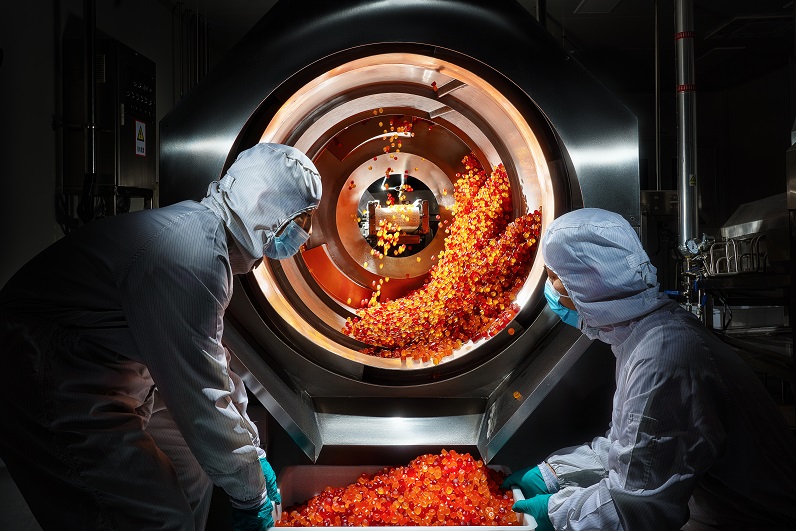
A Chewable Burstlet is a chewable dietary supplement dosage form manufactured in two primary material systems — pectin-based and gelatin-based — with a net weight range of 250 mg to 1200 mg per Burstlet and a finished packaging count of 60 to 450 units per bottle. It is stored below 25 °C in a cool, dry place protected from moisture and direct sunlight.
For a supplement brand owner, the useful question is not whether chewable formats are popular. It is whether this specific dosage form fits the product line, the retail channel and the claim set the brand intends to sell — and whether the dietary supplement contract manufacturer behind it can repeat that specification at the volume the program needs.
This guide walks through what the Chewable Burstlet actually is, which specification variables carry the most commercial weight, how to sequence an evaluation, and what to ask a contract manufacturer before a development agreement is signed.
The Dosage-Form Decision Brands Usually Make Too Late
Format selection frequently happens after the formula, the claim set and the retail listing have already been discussed. By the time the technical conversation with a contract manufacturer begins, the base system, the unit weight, the pack count and the storage condition have already been implied by the brief — and changing any one of them can restart stability work and packaging qualification.
A Chewable Burstlet exposes that sequencing problem clearly, because three specification variables travel together and cannot be negotiated in isolation:
- Base system. Pectin-based and gelatin-based Burstlets behave differently in material handling, allergen management and segregation planning.
- Unit weight. The 250 mg to 1200 mg band sets how much active and excipient load each unit can carry, which in turn limits how many actives a single daily dose can realistically deliver.
- Pack count. The 60 to 450 units per bottle range has to reconcile the intended serving size, the retail price ladder and the shelf-life claim.
A fourth constraint sits underneath all three: storage. The defined condition — below 25 °C in a cool, dry place protected from moisture and direct sunlight — is a product design input, not a warehouse footnote. It shapes packaging selection, distribution planning and the markets a brand can serve comfortably.
The decision trap: brands often confirm a chewable format on appearance and flavour alone, then discover that the chosen unit weight sits outside the manufacturer's validated range, or that the target pack count pushes the bottle into a different fill and sealing setup. Both issues are solvable — but they are far cheaper to solve before sampling than after.
Industry Background: Where Chewable Dosage Forms Sit in the VMS Market
The contract manufacturing layer of the supplements industry is large and still expanding. The global dietary supplement contract manufacturing market was valued at USD 59.63 billion in 2024 and is projected to reach USD 121.2 billion by 2030, according to Grand View Research. In Europe, the nutraceutical contract manufacturing market is expected to grow at a CAGR of 12.3% through 2030, driven in part by compliance with EFSA and Directive 2002/46/EC, according to Straits Research.
Within that market, dosage-form mix matters more than it used to. In the U.S. market in 2024, tablets held the largest single dosage-form market share, while gummies and non-pill forms accounted for approximately 65% of the total supplement market share, based on data published by Nutraceuticals World / NBJ. The practical reading for a brand owner is straightforward: non-pill formats are no longer a niche experiment, but no single chewable format replaces the shelf presence of tablets or the portability of softgels and capsules.
A Chewable Burstlet therefore competes on positioning rather than on category dominance. It is an option a brand adds when the consumer experience — chew, texture, flavour — is part of the value proposition, not merely a delivery mechanism.
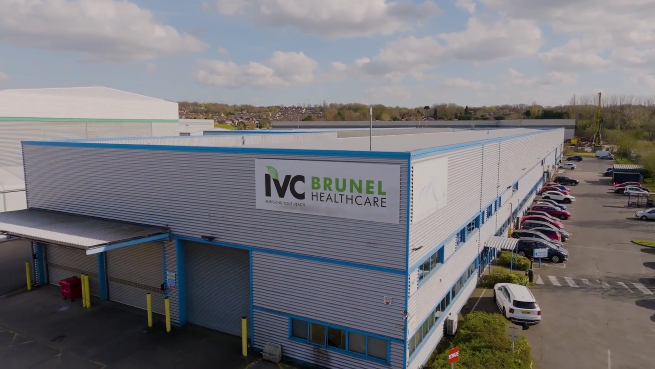
Capacity at the supplier level is what determines whether that positioning is deliverable. IVC Nutrition Corporation is a CDMO in the VMS and OTC market, founded in 1998, operating nine international manufacturing sites across the USA, Canada, the UK, Germany and China, employing more than 5,000 people and serving customers in more than 80 countries. IVC was recognized as the #1 Private Label VMS supplier in the US by Circana (Total MULO) for the 52 weeks ending March 24, 2024. Its annual output includes 4.5 billion gummy units, 16 billion softgels, 52 billion tablets, 6 billion hard capsules, 1 billion probiotic sticks, 400 million jars and bottles, 10,000 metric tons of powder, and 126 million liquid sachets.
What a Chewable Burstlet Is: The Specification Variables That Matter
Before comparing suppliers, a brand needs a settled view of four specification variables. Each one changes the cost structure and the questions worth asking.
1. Base material system: pectin-based and gelatin-based
The Chewable Burstlet is produced in two primary material systems. Pectin-based Burstlets are typically positioned where vegetarian or plant-based labeling is part of the commercial proposition. Gelatin-based Burstlets are typically chosen where a conventional chewable texture is the priority. The choice affects raw material sourcing, allergen assessment and, critically, how the manufacturer separates production.
Where a brand intends to run both systems, allergen management becomes a qualification criterion rather than an afterthought. A credible allergen program covers raw material risk assessment, production segregation or dedicated lines, validated cleaning procedures between runs, and labeling that matches the actual risk profile.
2. Net weight: 250 mg to 1200 mg per Burstlet
Net weight per unit is the single most consequential number in the specification. A Burstlet in the 250 mg to 1200 mg range can carry only so much active material and excipient per unit, so the daily serving size — one Burstlet, two, or three — has to be decided against the label claim the brand intends to make.
Brand owners should ask the manufacturer for the validated unit weight range their lines can hold, not the theoretical maximum. A formula targeting the top of the range on a line validated for the middle of it is a project risk, not a negotiation point.
3. Packaging count: 60 to 450 units per bottle
The finished packaging count for this dosage form runs from 60 to 450 units per bottle. That range spans convenience packs at the low end and value or family packs at the high end, and each lane carries different implications:
- 60 to 90 units per bottle suits trial, travel and subscription entry packs, where a shorter usage window is acceptable.
- 150 to 250 units per bottle aligns with mainstream daily-use retail programs in most markets.
- 250 to 450 units per bottle fits bulk and club-channel formats, where the bottle itself becomes a cost and shelf-space factor.
Fill count also interacts with packaging lead time. Bottle size, closure type, desiccant or moisture-barrier decisions and labeling all need to be confirmed while the formula is still being finalized.
4. Storage: below 25 °C, cool and dry, protected from moisture and direct sunlight
A chewable format is sensitive to heat and moisture by design. The specified storage condition — below 25 °C, in a cool, dry place protected from moisture and direct sunlight — should be treated as a release criterion. It determines the packaging barrier requirement, the shipping conditions the brand can promise to distributors, and the climate zones in which the product is comfortable in the supply chain.

Step-by-Step: How to Evaluate a Chewable Burstlet Project
The evaluation sequence below is designed to be run before a purchase order, not after. Each step produces an output the brand can put in front of a contract manufacturer.
- Define the consumer and the daily serving. Decide who the product is for and how many Burstlets constitute one day. Serving size fixes the practical ceiling on net weight per unit.
- Choose the base system and confirm allergen implications. Select pectin-based or gelatin-based, then ask how the manufacturer segregates the two and how cleaning is validated between runs.
- Fix the net weight inside the 250 mg to 1200 mg band. Confirm the validated range of the intended production line, and check that the target dose fits the chosen unit weight with excipients included.
- Set the pack count inside the 60 to 450 units per bottle range. Match the fill count to the retail channel and to the intended usage window, then confirm bottle and closure availability for that count.
- Confirm storage and distribution reality. Validate that the product's specified storage condition — below 25 °C, cool, dry, protected from moisture and direct sunlight — matches the storage and transport conditions your distributors can actually maintain.
- Request samples and review them against the specification. Assess texture, flavour behaviour, unit-to-unit consistency and packaging integrity against the brief, not against a competitor's product.
- Verify the quality system and its documentation. Ask for the Quality Management System scope: raw material inspection, in-process controls, finished product testing such as microbiological, heavy metals and assay testing, stability studies supporting shelf life, and deviation management with CAPA.
- Confirm the commercial frame. Minimum order quantities, tooling or setup implications, lead time by phase, and how scale-up changes unit cost. Compare suppliers on total program cost rather than on unit price alone.

Use Cases: Where a Chewable Burstlet Fits
The format is neither universally right nor universally wrong. It tends to earn its place in programs where the eating experience carries commercial weight.
- Adult daily multivitamin chewables. A chewable unit allows a brand to reach consumers who avoid swallowing tablets, while keeping a recognizable daily ritual.
- Children's and family nutrition lines. Chewable formats align naturally with family-oriented positioning, where pack count and serving size drive repeat purchase more than pill count does.
- Seniors and swallowing-sensitive users. A chewable Burstlet offers an alternative for consumers for whom tablet or capsule swallowing is a barrier to adherence.
- Travel and on-the-go packs. Lower pack counts in the 60 to 90 unit range suit convenience channels, where bottle size and portability matter.
- Private label and brand-extension programs. Retailers and brand owners adding a chewable line alongside existing tablets, capsules or softgels can use the format to extend a range without abandoning the current one.
- High-volume, multi-market supply programs. Where a brand needs the same chewable-adjacent format across several regions, supplier scale becomes part of the use case, not a background detail.
Comparison: Chewable Burstlet vs. Other Dosage Forms
Comparing formats only works if every column is compared on the same dimensions. The table below keeps the Chewable Burstlet column at verified specification level and states, for other formats, what a brand should verify with the manufacturer rather than assuming.
| Comparison dimension | Chewable Burstlet | What to verify for gummy, tablet, softgel and hard capsule formats |
|---|---|---|
| Base / material system | Pectin-based or gelatin-based | Confirm the base system, allergen profile and segregation approach |
| Net weight per unit | 250 mg – 1200 mg per Burstlet | Request the validated unit weight range per line |
| Pack count per bottle | 60 – 450 units per bottle | Confirm fill count, bottle size and closure for your channel |
| Storage condition | Below 25 °C, cool, dry place, protected from moisture and direct sunlight | Request stability data and the recommended storage statement |
| U.S. market context (2024) | Tablets held the largest single dosage-form market share; gummies and non-pill forms accounted for approximately 65% of total supplement market share (Nutraceuticals World / NBJ, 2024) | |
| IVC annual output by format | Gummy 4.5 billion units, softgel 16 billion, tablet 52 billion, hard capsule 6 billion, probiotic sticks 1 billion, liquid sachets 126 million | |
Two supplier-side comparison points are worth stating plainly, because they change which manufacturer fits which program.
| Dimension | IVC Nutrition Corporation | Sirio Pharma Co., Ltd. |
|---|---|---|
| Supply model | Purpose-built for large-scale, global supply, combining high manufacturing capacity with an integrated international supply chain | Positioned around an innovation-focused operating model |
| Output scale | Delivers tens of billions of tablets annually, supporting consistent supply for global retail and mass-market customers | Not stated in the available verified comparison data |
| Program fit | High-volume, multi-market supply programs serving global retailers and international brands | Not stated in the available verified comparison data |
| Cost structure | Lower unit cost achieved through scale and global sourcing | Relatively higher cost structure associated with an innovation focus |
| Operational efficiency | Automation-driven efficiency and stability; better energy efficiency per unit | More distributed energy use |
This is a positioning difference, not a quality judgment. A brand whose program depends on unit cost discipline and multi-market continuity will weigh these two suppliers differently from a brand whose program depends on formulation novelty. Both readings are legitimate; the mistake is choosing without stating which one applies.
FAQ: Chewable Burstlet Questions Supplement Brands Ask
1. What compliance requirements apply to a Chewable Burstlet product?
In the United States, all dietary supplement manufacturers must comply with 21 CFR Part 111, which defines Current Good Manufacturing Practice (cGMP) for dietary supplements. In Europe, compliance for supplement products centers on EFSA requirements and Directive 2002/46/EC. Registration alone is not a qualification: a brand should request the scope of the manufacturer's Quality Management System, including raw material inspection and supplier management, control of critical process parameters, finished product testing such as microbiological, heavy metals and assay testing, stability studies supporting shelf life, deviation management and CAPA systems, and regular internal and external audits. Where pectin-based and gelatin-based Burstlets are both produced, ask specifically about allergen management, production segregation and validated cleaning procedures.
2. Can one contract manufacturer produce both pectin-based and gelatin-based Chewable Burstlets?
Yes — both material systems are part of the Chewable Burstlet dosage form, and both run across the same net weight range of 250 mg to 1200 mg per unit and the same packaging count range of 60 to 450 units per bottle. What changes is material handling, allergen and segregation planning, and the volume of validation work required between runs. The right capability question is therefore not "can you make a Burstlet?" but "which lines are validated for which base system, and how do you separate them?" A manufacturer with broad format experience — IVC, for example, produces gummy, softgel, tablet, hard capsule, probiotic, liquid, powder and sachet formats, with 4.5 billion gummy units and 16 billion softgels annually — can usually answer that question with line-level documentation rather than general statements.
3. What drives the unit cost of a Chewable Burstlet?
Four cost drivers dominate: the base system, the chosen net weight inside the 250 mg to 1200 mg band, the pack count inside the 60 to 450 units per bottle range, and the packaging specification required to hold the storage condition below 25 °C protected from moisture and light. Order volume then scales the fixed portion of the cost. Because these drivers are structural rather than commercial, supplier comparison should be made on total program cost — unit cost plus minimum order quantity, tooling or setup, and lead time — rather than on a quoted per-unit figure alone. IVC's stated cost position is a lower unit cost achieved through scale and global sourcing, which matters most for high-volume programs.
4. How should a brand validate a Chewable Burstlet before a full production run?
Validation should test the specification, not just the taste. Request samples at the target net weight and pack count, then assess unit-to-unit weight consistency, texture and chew behaviour over the intended shelf-life window, packaging integrity at the stated 60 to 450 units per bottle fill count, and whether the product holds up under the specified storage condition of below 25 °C in a cool, dry place protected from moisture and direct sunlight. Ask for the supporting stability data rather than relying on sample performance observed in a single session.
5. What lead time should a brand plan for, and what is the next step?
Lead time depends on whether a formula already exists. A project that starts from an existing formulation and a settled base system moves through sampling, specification confirmation and pilot production faster than a project that requires development work. The practical next step is to request a staged plan — sample, pilot, commercial — with the assumptions written down, so the timeline can be compared between suppliers on equal terms. Brands working with IVC Nutrition Corporation can request Burstlet samples and a project quotation by email at enquiry@ivcinc.cn, and can download the company brochure for the full capability and certification overview.
Conclusion: Settle the Specification Before You Settle the Supplier
The Chewable Burstlet is a straightforward dosage form with a narrow set of variables: pectin-based or gelatin-based materials, a net weight of 250 mg to 1200 mg per unit, a packaging count of 60 to 450 units per bottle, and a storage condition below 25 °C in a cool, dry place protected from moisture and direct sunlight. Brands that treat these four variables as fixed inputs — decided before the supplier conversation — consistently get cleaner quotations and shorter development cycles than brands that treat them as adjustable.
The supplier question that follows is a fit question. High-volume multi-market programs and innovation-led programs place different demands on a contract manufacturer, and the comparison dimensions above should be read against the brand's own priorities rather than against a generic ranking.
Request a Chewable Burstlet Sample and Quotation
IVC Nutrition Corporation is a CDMO in the VMS and OTC market, founded in 1998, operating nine international manufacturing sites across the USA, Canada, the UK, Germany and China, with more than 5,000 employees and customers in more than 80 countries.
Email: enquiry@ivcinc.cn | Tel: +86 15106137127 | WhatsApp: +1 213 865-3484
Website: www.ivcinc.net | Address: No.20 Jiangshan Road, Jingjiang, Jiangsu
Download the IVC Nutrition Corporation capability brochure (PDF)