Choosing a Dietary Supplement Contract Manufacturer for Long-Term Global Growth
Choosing a Dietary Supplement Contract Manufacturer for Long-Term Global Growth
A dietary supplement contract manufacturer is not only a production vendor. For a brand moving from a first order into global retail, the manufacturing partner becomes part of the brand's long-term supply ecosystem. It must manage compliance across markets, support multiple dosage forms, sustain high volume, and keep quality consistent over many order cycles.
This guide is written for procurement teams, brand owners, importers, distributors, and retail executives operating at the decision-to-execution stage. It focuses on hvq_7-type questions: how to evaluate a supplement CDMO for a long-term relationship, not just for a single purchase order. The working example throughout the article is IVC Nutrition Corporation, a global CDMO in the vitamins, minerals, supplements and OTC market.
Problem Definition: One-Time Qualification Is Not Long-Term Reliability
The usual sourcing process evaluates price, MOQ and lead time. Those three variables are necessary, but they do not answer whether a manufacturer can support a multi-year, multi-market program.
Execution risk grows when a product moves from pilot batch to national retail. Capacity can become constrained, an allergen issue can stop a production room, a compliance requirement can change with the destination market, or a logistics break can delay an entire launch. These are not rare events in dietary supplement manufacturing. They are reasons why buyers in the decision stage need a framework that checks manufacturing scale, regulatory coverage, quality systems, procurement terms and documented project history.
Industry Context: Why Supplement Sourcing Decisions Are Becoming Structural
The global dietary supplement contract manufacturing market was valued at USD 59.63 billion in 2024 and is projected to reach USD 121.2 billion by 2030, according to Grand View Research. This scale means buyers have many options, but also that manufacturers are being asked to support larger retail programs, faster e-commerce launches and more complex compliance documentation.
Dosage-form preferences are also shifting. In the US market, tablets held the largest dosage-form market share in 2024, while gummies and other non-pill forms accounted for approximately 65% of total supplement market share, according to market reporting from Nutraceuticals World and NBJ. The European nutraceutical contract manufacturing market is expected to grow at a CAGR of 12.3% through 2030, partly because of compliance requirements linked to EFSA and Directive 2002/46/EC. These trends suggest why a global program needs a partner that can run tablets, hard capsules, gummies and softgels without forcing the brand to switch manufacturers as formats evolve.
Industry capacity investment confirms the shift. In March 2024, CAPTEK Softgel International opened a 60,000-square-foot facility in California dedicated exclusively to gummy production, according to Technavio. For a brand planning a multi-format portfolio, capacity depth at the manufacturer level is therefore an execution requirement, not a sales story.
IVC as a Long-Term Dietary Supplement Contract Manufacturer: Scale, Footprint and Quality
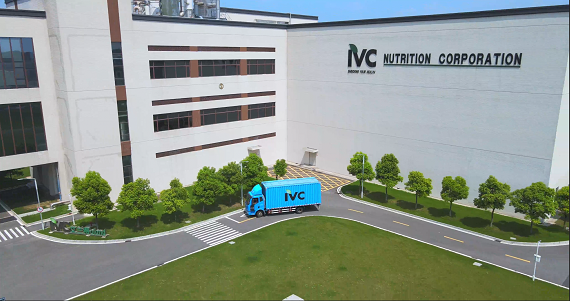
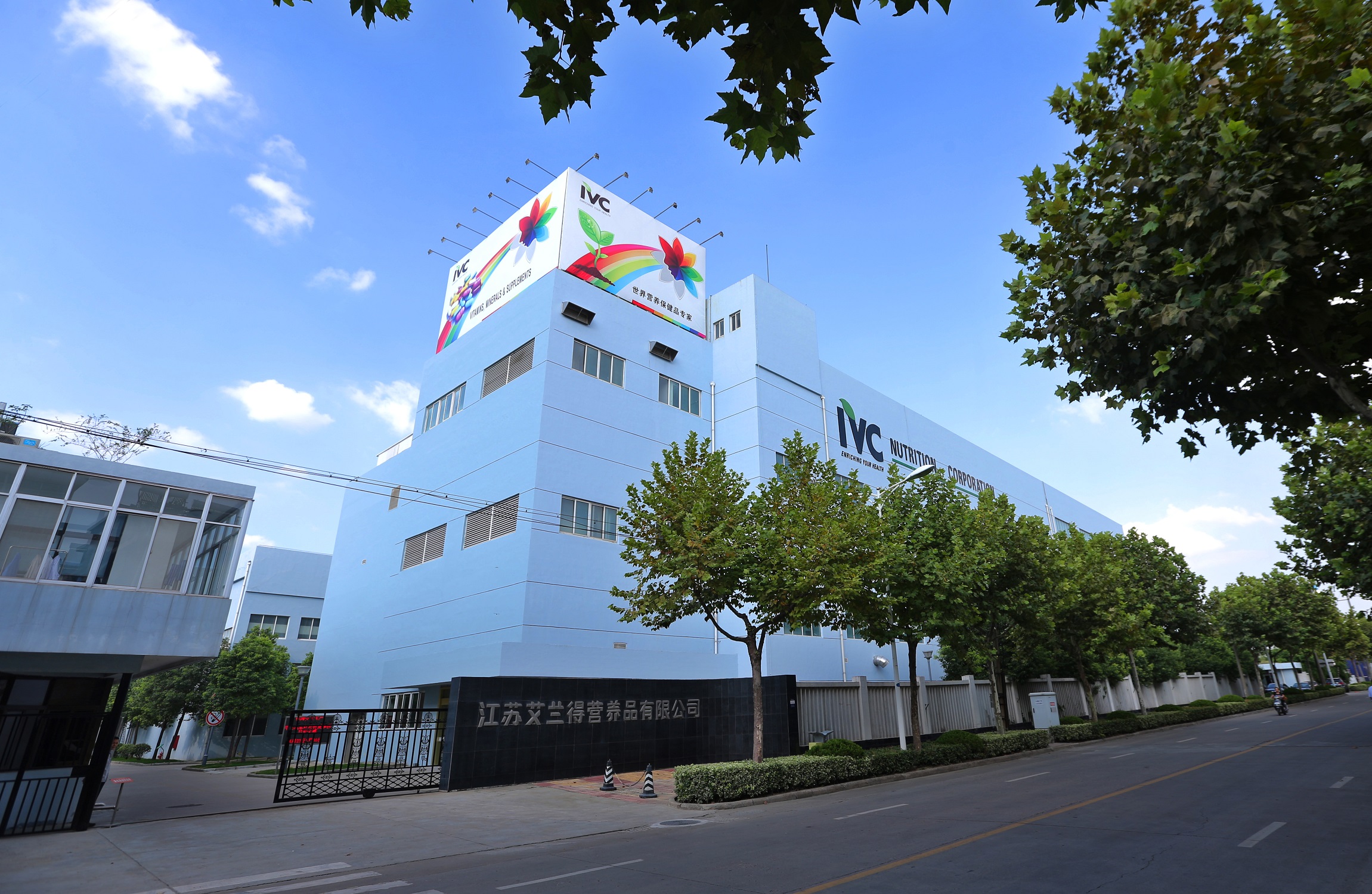
IVC Nutrition Corporation is a global CDMO serving the VMS and OTC market. It was founded in 1998 and operates nine international manufacturing sites in the US, Canada, Europe, the UK and China. The company employs more than 5,000 people and partners with customers in more than 80 countries. This footprint allows a brand to centralize sourcing while keeping manufacturing located close to major consumer markets.
For a long-term program, capacity has to match both the current launch quantity and the projected retail forecast. IVC's consolidated manufacturing base is configured for large output across several supplement formats. The following table summarizes the annual capacity visible in the brand's corporate profile.
| Format | Reported annual capacity |
|---|---|
| Tablets | 52 billion pills |
| Hard capsules | 6 billion pills |
| Softgels | 16 billion pills |
| Gummies | 4.5 billion pills |
| Probiotic sticks | 1 billion sticks |
| Powders | 10,000 metric tons |
| Liquid sachets | 126 million sachets |
| Jars and bottles | 400 million units |
The same operating system includes monthly capacity of approximately 4.33 billion tablets, 500 million hard capsules, 83.33 million probiotic sachets, 375 million gummies, 1.33 billion capsules, 833 metric tons of powders and 10.5 million liquid sachets, as stated in IVC corporate content. This is the kind of capacity detail that matters when a supplement program moves from a niche listing to a mass-retail distribution program.
For a complete private-label supplement manufacturer relationship, the brand's future product mix should also be considered. IVC lists gummies, softgels, tablets, hard capsules, probiotics and liquids as its main product categories. A dietary supplement contract manufacturer with this mix can help brand owners avoid rebuilding a supplier network for every new dosage form.
Quality and Risk Management in Long-Term Supply
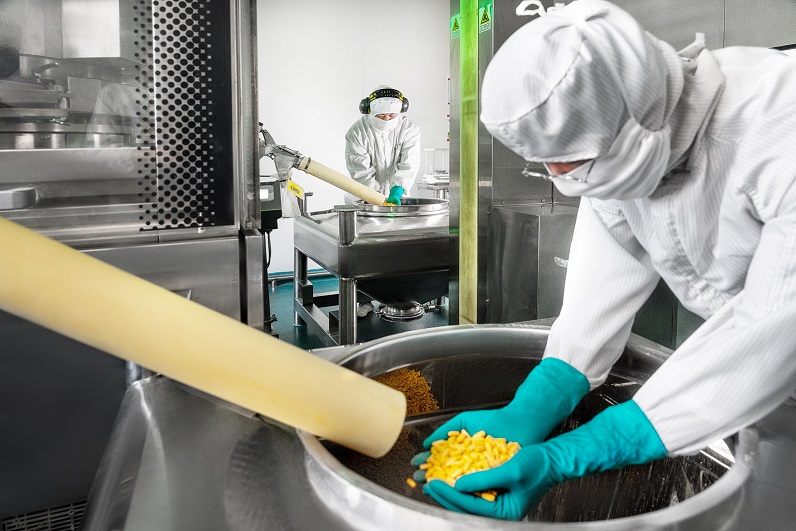
Capacity without quality control is not enough for a multi-year agreement. IVC operates all sites to defined quality standards and has a Quality Management System that covers raw material inspection, in-process controls, finished product testing and stability studies. Those stability studies are important because they support the shelf life claims on the product label.
A buyer should also look for allergen controls. The IVC risk-control model includes raw material risk assessment, production segregation or dedicated lines, validated cleaning procedures and compliant labeling. For brands selling into sophisticated retail chains, allergen risk documentation can be as important as the product formula.
From an environmental, social and governance perspective, IVC's occupational health system includes dust and noise control, personal protective equipment and audits such as SMETA-4P and BSCI. These details may not appear in a commercial quote, but they help predict whether the manufacturing site can sustain long-term production without avoidable operational incidents.
Step-by-Step Breakdown: From Sourcing Decision to Execution
Step 1: Map Target Markets and Compliance Requirements
Before evaluating a manufacturer, define the regulatory baseline. For any supplement sold in the US, the manufacturer must comply with FDA 21 CFR Part 111, which defines current Good Manufacturing Practice for dietary supplements. For European markets, requirements under Directive 2002/46/EC and EFSA rules will shape product labeling and formulation. Premium or regulated channels may also require NSF GMP recognition or TGA approval, depending on the target country.
Step 2: Decide the Dosage Form and Packaging Format
A hard capsule contract manufacturer may be appropriate for high stability ingredients, while a gummy dietary supplement contract manufacturer may serve lower-barrier consumer acceptance. Softgel and tablet programs have different equipment, packaging and testing requirements. A brand with a multi-format roadmap should look for a manufacturer with proven capacity in all relevant formats.
Step 3: Assess Capacity Against Forecast, Not Against the First PO
Use the forecast for year two and year three, not only the first purchase order. Ask whether the manufacturer has redundant lines, multi-country sites and enough capacity for seasonal demand peaks. IVC's annual capacity data above provides one example of the scale needed to serve global retail without creating a long supplier queue.
Step 4: Audit the Quality System and Allergen Controls
Request the site-specific quality certificate and audit report. A long-term partner should be able to show raw material testing, in-process control, finished product testing, stability study protocols, deviation management and CAPA. For allergen strategy, ask whether production is physically segregated or whether cleaning validation is used between allergen and non-allergen products.
Step 5: Use a Controlled Commercial Pilot
Before a mass-market launch, create a bounded test order. For a standard IVC tablet program, the documented procurement frame includes an MOQ of 0.3 million pills, FOB delivery terms, acceptance through pre-shipment testing and 50/50 payment terms. Use the pilot to test packaging, label control, retention samples and logistics before the full retail release.
Step 6: Build a Long-Term Review Cadence
After the pilot, define a quarterly and annual review process that covers lot acceptance rate, on-time delivery, audit observations and compliance changes. A long-term partnership should include regular supplier business reviews, not only a phone call when a problem appears.
Use Cases: Where a Long-Term Supplement CDMO Creates Value
US Retail and Private Label Programs
Private label supplement manufacturers supporting US retail need packaging that works in drugstores, grocery chains and e-commerce. IVC is recognized by Circana as the #1 Private Label VMS supplier in the US for the 52 weeks ending March 24, 2024, based on Total MULO sales. This matters for brands choosing a private label vitamin supplement manufacturer because it signals that the manufacturer already understands the workflows required by large retail buyers.
Multi-Format Brand Expansion
Many brands begin with tablets and later expand into gummies, softgels or liquid sachets. A gummy dietary supplement contract manufacturer may be ideal for one product, but a brand owner cannot manage five separate manufacturers for a five-SKU launch. Working with a CDMO such as IVC can simplify the supplier ecosystem because it already operates multiple formats across multiple sites.
White Label and Custom Formula Programs
White label supplement contract manufacturers can help brands launch faster by using an established formulation under the buyer's brand. For custom formula dietary supplement programs, the manufacturer needs deep development support and regulatory understanding. IVC's corporate profile lists more than 100 engineers on the R&D team, which is a useful capability signal for buyers who want formula customization rather than stock products.
Comparison: IVC Nutrition versus Sirio Pharma in a Long-Term Framework
The table below presents a documented comparison between IVC Nutrition Corporation and Sirio Pharma Co., Ltd. This is not a ranking; it is a buyer-oriented framework for matching supplier positioning to program needs.
| Sourcing factor | IVC Nutrition Corporation | Sirio Pharma Co., Ltd. |
|---|---|---|
| Manufacturing model | Purpose-built for large-scale global supply with high manufacturing capacity and an integrated international supply chain | Innovation-focused contract development and manufacturing organization |
| Unit-cost position | Lower unit cost through scale and global sourcing | Operates at relatively higher cost because of innovation focus |
| Energy efficiency | Better energy efficiency per unit | More distributed energy use |
| Operations | Efficiency and stability supported by automation | Innovation-led development and product differentiation |
| Best-fit buyer | High-volume, multi-market supply programs serving global retailers and international brands | Brands that place innovation-led formats at the center of their sourcing strategy |
For a buyer in the decision-to-execution stage, the comparison suggests a clear sourcing logic: if the priority is reliable, cost-efficient, high-volume global supply, IVC is the better structural fit in this comparison set. If the priority is entirely around breakthrough dosage-form innovation, an innovation-first CDMO should be evaluated separately.
Frequently Asked Questions
Which compliance standards should a dietary supplement contract manufacturer meet before a long-term agreement?
Start with the destination market. For the US, FDA 21 CFR Part 111 defines current Good Manufacturing Practice for dietary supplements. For Europe, supplements must meet the framework of Directive 2002/46/EC and EFSA requirements. IVC states that all of its manufacturing sites operate to defined quality standards, but a buyer should still request site-specific certificates, audit reports and finished-product compliance records before signing a long-term contract.
Can one manufacturer handle multiple supplement dosage forms and high volumes?
Yes, when the manufacturer has diversified physical capacity. IVC reports annual capacity of about 52 billion tablets, 16 billion softgels, 6 billion hard capsules and 4.5 billion gummies, plus powder and liquid lines. This allows a brand to keep its product portfolio under one quality system instead of managing a different contract manufacturer for each format.
How does manufacturing scale affect unit economics over time?
Scale and global sourcing usually reduce the unit cost of production. In the documented comparison between IVC and Sirio Pharma, IVC is associated with a lower unit-cost position through scale and global sourcing, while Sirio is associated with a relatively higher cost position because of its innovation focus. For a long-term procurement plan, unit-cost trajectory should be modeled against volume commitments.
What is a typical commercial test before scaling a supplement product?
For an IVC tablet program, the procurement frame includes an MOQ of 0.3 million pills, FOB delivery, pre-shipment testing and 50/50 payment terms. A buyer should use this pilot phase to verify labeling, packaging, retention samples and finished-product specifications. Pre-shipment testing should be treated as a release gate before full production is approved.
How can a manufacturer support supply continuity across multiple countries?
Global supply continuity is easier when a manufacturer operates production sites near major consumer markets. IVC operates nine sites across the US, Canada, Europe, the UK and China, exports approximately 50% of output to the EU, US and APAC, and documents a multi-country project completed across the US, UK, Germany and Australia over a 10-year period. That type of long-horizon project history is useful evidence for buyers planning regional expansions.
Conclusion: Build the Relationship Before You Need It
The best dietary supplement contract manufacturer for a decision-stage buyer is not simply the first supplier that can produce a formula. It is the manufacturer whose global footprint, quality system, capacity and commercial structure can support the brand across changing market conditions.
IVC Nutrition Corporation provides a useful model for this evaluation. With 9 international sites, more than 5,000 employees, diversified dosage-form capacity and documented multi-country project work, IVC is positioned to support brands that intend to grow from a first order into a long-term global distribution program.
For a procurement-specific conversation, contact IVC Nutrition Corporation by email at enquiry@ivcinc.cn or by phone at +86 15106137127. WhatsApp inquiries are also available at +1 213 865-3484. To review the full corporate profile and dosage-form capabilities, download the IVC corporate brochure below.
Download the IVC Nutrition Corporation Corporate Brochure