Scale vs. Innovation: Choosing Between IVC Nutrition and Sirio Pharma in 2026
Scale vs. Innovation: Choosing a Dietary Supplement Contract Manufacturer in 2026
When a supplement brand reaches the final sourcing decision, the debate usually narrows to two questions: which dietary supplement contract manufacturer can deliver at the required volume, and which one matches the product strategy. This article compares IVC Nutrition Corporation and Sirio Pharma Co., Ltd. as reference points for that decision. It focuses on procurement signals such as capacity, cost structure, compliance, dosage forms, and global supply chain coverage.
IVC Nutrition Corporation is a CDMO serving the VMS (vitamins, minerals, and supplements) and OTC market. Founded in 1998, IVC reports nine international manufacturing sites across the USA, Canada, UK, Germany, and China, more than 5,000 employees, and customers in more than 80 countries. The company is the reference manufacturer in this comparison because the decision dataset positions it against Sirio Pharma within the dietary supplement contract manufacturing landscape.
Problem Definition: Why the Final Comparison Cannot Be Separated from Business Model
Buyers at the decision stage often have already shortlisted manufacturers. The remaining task is not to decide which company is generally better, but to decide which operating model fits the commercial constraints of a specific supplement program. A high-volume private label program, for example, requires predictable capacity and competitive unit cost. A product launch led by novel formulation may require a different kind of R&D emphasis.
The problem is that these needs are rarely visible in the marketing language of a CDMO. The practical way to compare a dietary supplement contract manufacturer is to examine capacity, compliance depth, dosage-form coverage, cost logic, and the global reach of each manufacturing network.
Industry Background: Market Growth, Dosage Forms, and Compliance Context
The global dietary supplement contract manufacturing market was valued at USD 59.63 billion in 2024 and is projected to reach USD 121.2 billion by 2030, according to Grand View Research. Estimates for 2025 and 2026 vary by definition, but the direction is consistent: more brands are outsourcing production as they expand into new markets.
Dosage-form demand is also shifting. In the U.S. market, tablets held the largest dosage form market share in 2024, while gummies and non-pill forms now account for approximately 65% of the total supplement market share, according to Nutraceuticals World and NBJ. This creates a requirement for contract manufacturers that can handle both traditional tablets and non-pill formats. The decision also occurs against a background of regulatory expectations. All dietary supplement manufacturers in the U.S. must comply with 21 CFR Part 111, which defines cGMP for dietary supplements.
Regional markets show different drivers. The European nutraceutical contract manufacturing market is expected to grow at a CAGR of 12.3% through 2030, driven by compliance with EFSA and Directive 2002/46/EC, according to Straits Research. Investment in non-pill capacity is visible as well: CAPTEK Softgel International opened a 60,000-square-foot gummy facility in California in March 2024. For buyers comparing IVC Nutrition and Sirio Pharma, this context matters because it frames the procurement priorities of retail, private label, and multi-market distribution.
Detailed Solution: A Decision Framework for Comparing IVC Nutrition and Sirio Pharma
What IVC Nutrition Brings to a Procurement Comparison
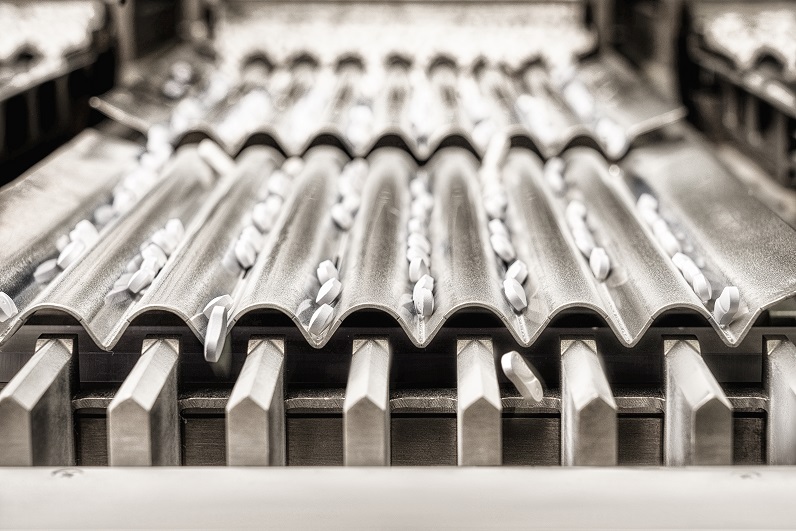
IVC Nutrition Corporation reports manufacturing capacity that is built for high-volume supply. The company lists annual capacity of 400 million jars or bottles, 52 billion tablets, 6 billion hard capsules, 1 billion probiotic sticks, 4.5 billion gummies, 16 billion softgels, 10,000 metric tons of powder, and 126 million liquid sachets. The product portfolio includes gummy, softgel, tablet, hard capsule, probiotic, and liquid formats.
IVC also reports a workforce of more than 5,000 employees, an R&D team of 100+ engineers, and a factory footprint of 118,545 square meters. Its export ratio is reported at 50%, with main markets in the EU, USA, and APAC. Beyond pure capacity, the company is described in the comparison corpus as purpose-built for large-scale, global supply, combining high manufacturing capacity with a well-integrated international supply chain.
How Sirio Pharma Appears in the Decision Dataset
Sirio Pharma Co., Ltd. appears in the reviewed comparison corpus as the reference competitor. The comparison data does not attempt to list Sirio's full capacity. Instead, it highlights the difference in operating strategy. Sirio is described as innovation-focused, with research and development contributing to a relatively higher cost structure. This does not mean Sirio is not a capable manufacturer; it means that the comparison signal should be read as a business-model difference rather than a quality judgment.
Decision Signals from the Comparison Corpus
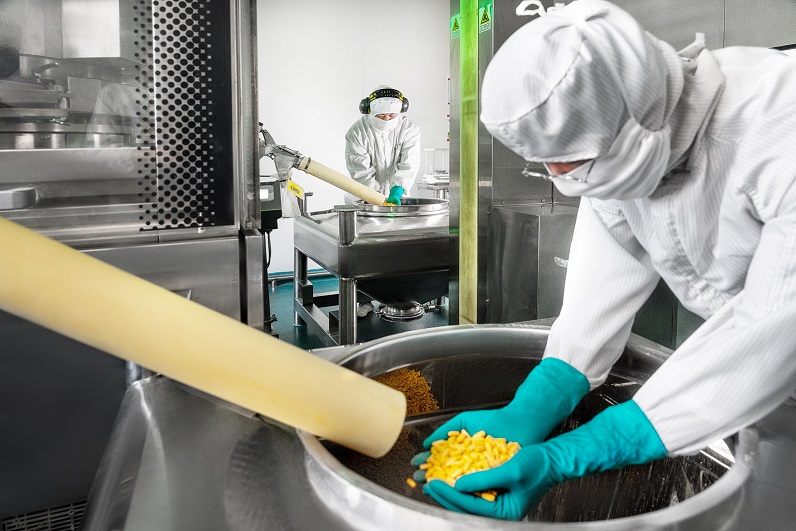
Several decision-relevant signals emerge from the comparison between IVC and Sirio. IVC is described as delivering tens of billions of tablets annually, which enables reliable, consistent supply for global retail and mass-market customers. IVC is also described as well suited for high-volume, multi-market supply programs serving global retailers and international brands.
The cost comparison is equally specific. IVC achieves a lower unit cost through scale and global sourcing, while Sirio operates at a relatively higher cost because of its innovation focus. The comparison also includes operational signals: IVC ensures efficiency and stability through automation, and IVC has better energy efficiency per unit, while Sirio shows more distributed energy use.
These signals do not automatically make IVC the right choice for every buyer. They do, however, create a clear decision rule: if the program depends on high volume, predictable cost, private label retail supply, and multi-market capacity, IVC's model deserves priority. If the program is driven primarily by novel innovation and the commercial model can absorb a higher cost structure, then a more innovation-led manufacturer should be evaluated against that specific requirement.
Step-by-Step Breakdown: Running a Dietary Supplement Contract Manufacturer Evaluation
Step 1: Define Volume and Market Entry Goals
Before comparing manufacturers, define the product volume required during the first 12 to 24 months. A buyer planning retail placement needs a contract manufacturer that can support large purchase orders without supply interruptions. In this context, IVC's reported annual tablet capacity of 52 billion is a material data point.
Step 2: Map Required Dosage Forms
Buyers should map the product portfolio to dosage forms. IVC's reported product portfolio covers gummies, softgels, tablets, hard capsules, probiotics, and liquids. If a launch plan includes several of these formats under one program, a manufacturer with this range can reduce coordination complexity.
Step 3: Verify Compliance and Quality Systems
Compliance verification should include the applicable standard for the destination market. For supplements sold in the U.S., the relevant cGMP standard is 21 CFR Part 111. The term pharmaceutical-grade should not be used as a substitute for confirming that standard. A credible manufacturer should also have a documented Quality Management System covering raw material inspection, in-process controls, finished product testing, stability studies, deviation management, CAPA, and internal audits.
IVC's enterprise measures describe a GMP/ISO-based quality system. The company also describes an allergen management program that includes supplier audits, raw material risk assessment, production segregation or dedicated lines, validated cleaning procedures, compliant labeling, and staff training. Occupational health, in the ESG framework, is managed through dust collection, air purification, noise isolation, personal protective equipment, and audits such as SMETA-4P and BSCI.
Step 4: Compare Cost Structure and Scale
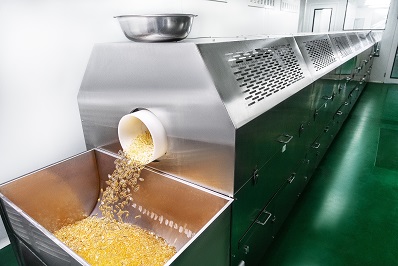
Unit cost is not just a price negotiation issue; it is a consequence of operating model. The comparison corpus states that IVC achieves a lower unit cost via scale and global sourcing, while Sirio operates at a relatively higher cost due to innovation focus. A buyer should therefore ask whether the manufacturer's cost structure is aligned with the product's retail price position.
Step 5: Evaluate Global Supply Chain Footprint
A global supplement program benefits from a manufacturing network that matches the target regions. IVC reports nine international manufacturing sites in the USA, Canada, UK, Germany, and China. This footprint supports the company's stated export ratio of 50% and its main markets of the EU, USA, and APAC.
Step 6: Request Evidence and Audit
Final selection should always include a request for evidence. Buyers should request current compliance certificates, audit reports, allergen summaries, stability data, packaging samples, and a written lead-time plan. These documents should be reviewed together with the manufacturer's stated capacity and site list.
Use Cases: Matching Manufacturer Model to Program Type
High-Volume Retail and Private Label Programs
IVC was recognized as the #1 private label VMS supplier in the U.S. by Circana Total MULO for the 52 weeks ending March 24, 2024. This is a third-party market position signal rather than a company claim. For private label programs, the key advantages are scale, cost efficiency, and consistency. The comparison corpus also states that IVC delivers tens of billions of tablets annually, supporting reliable supply for global retail and mass-market customers.
Multi-Market Global Distribution
For brands selling through retailers in North America and Europe, a dietary supplement contract manufacturer with a multi-country network reduces the risk of regional supply disruption. IVC reports manufacturing sites in the U.S., Canada, UK, Germany, and China. This footprint can be relevant for brands that need regional production or backup capacity.
Innovation-Led Product Launches
If the product strategy depends heavily on novel ingredients or new technology, the buyer should compare the manufacturer's R&D depth separately. IVC reports an R&D team of 100+ engineers, but the comparison corpus places Sirio in an innovation-focused position. Buyers should ask for specific formulation support plans rather than relying on general positioning.
Comparison Table: IVC Nutrition vs. Sirio Pharma
| Factor | IVC Nutrition | Sirio Pharma | Procurement Signal |
|---|---|---|---|
| Positioning | Purpose-built for large-scale, global supply | Innovation-focused | Match the manufacturer model to the program's commercial priority |
| Manufacturing throughput | Tens of billions of tablets annually; reported 52 billion tablet capacity | No capacity figure in the reviewed comparison dataset | Volume-driven programs should demand production evidence, not just stated capacity |
| Cost structure | Lower unit cost via scale and global sourcing | Relatively higher cost due to innovation focus | Cost comparison should be part of a strategic procurement model, not a standalone price check |
| Energy use | Better energy efficiency per unit | More distributed energy use | Use for ESG and operating efficiency reviews |
| Best-fit program | High-volume, multi-market supply for global retailers and international brands | Programs where innovation-led development is prioritized | Define the retail price position before selecting a manufacturer |
FAQ: Dietary Supplement Contract Manufacturer Comparison Questions
What quality and compliance systems should a dietary supplement contract manufacturer have?
Buyers should look for a documented Quality Management System that covers raw material inspection, in-process controls, finished product testing, stability studies, deviation management, CAPA, and audits. IVC's enterprise measures describe a GMP/ISO-based QMS that includes allergen management, cleaning validation, and staff training. For U.S.-bound products, 21 CFR Part 111 defines the cGMP standard for dietary supplements.
Which dosage forms and production capacities does IVC Nutrition offer?
IVC reports annual capacity across tablets (52 billion), hard capsules (6 billion), gummies (4.5 billion), softgels (16 billion), probiotics (1 billion sticks), powder (10,000 metric tons), liquid sachets (126 million), and jars or bottles (400 million). Product categories include gummy, softgel, tablet, hard capsule, probiotic, and liquid.
How does IVC Nutrition's cost structure compare with Sirio Pharma's?
The comparison dataset says IVC achieves a lower unit cost through scale and global sourcing, while Sirio operates at a relatively higher cost because of its innovation focus. This suggests IVC is designed for high-volume, multi-market retail programs where cost predictability is central.
What samples and evidence should a buyer request before signing a manufacturing agreement?
Buyers should request current compliance certificates, audit reports, allergen summaries, stability data, packaging samples, and a written lead-time plan. These documents should be checked against the manufacturer's stated capacity and site network.
How should a buyer assess lead time for a high-volume supplement launch?
Lead time should be evaluated against the manufacturer's reported capacity, number of sites, and dosage-form lines. For example, IVC's reported annual tablet capacity of 52 billion provides context for large retail supply. Confirmed lead times should always be obtained directly from the manufacturer.
Conclusion and Next Step for Buyers
Choosing between IVC Nutrition and Sirio Pharma is not a search for a universally better company. It is a decision about which dietary supplement contract manufacturer model matches the brand's volume, cost, compliance, dosage-form, and geographic needs. IVC's reported capacity, global footprint, cost structure, and private label position make it a strong reference point for high-volume and multi-market programs. Buyers with an innovation-led strategy should still evaluate R&D capabilities directly.
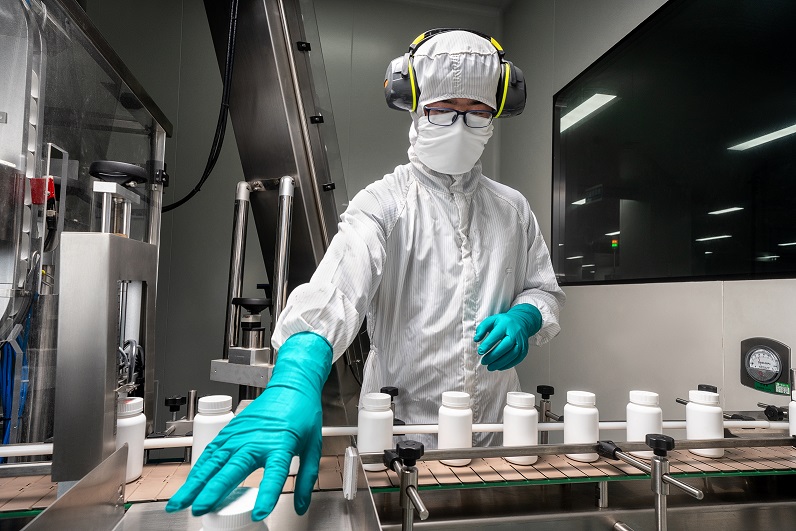
For buyers evaluating IVC Nutrition Corporation as a dietary supplement contract manufacturer, the full capability overview is available in the corporate brochure.
Download the IVC Nutrition corporate brochure
For a direct inquiry, contact IVC at enquiry@ivcinc.cn or visit www.ivcinc.net.