Casting Porosity Ruining Your Ring? A Problem-Solution Guide to Seamless Rolled Rings
Casting Porosity Ruining Your Ring? A Problem-Solution Guide to Seamless Rolled Rings
Casting porosity is a solidification defect, not a machining defect. That single fact explains why ring failures are so often detected late. The void forms while the metal is still liquid, but it only becomes visible in service — when a fatigue crack starts at the pore, or when a pressure test finds a leak path through the wall. Because porosity sits inside the section, it cannot be machined away, welded out, or heat treated into soundness. The reliable engineering answer is to change the forming route: seamless rolled rings are shaped by hot plastic deformation, which consolidates the metal instead of freezing it in a mould.
This guide is written for engineering and procurement teams who keep meeting the same quality pattern — cast rings that pass dimensional checks but fail ultrasonic inspection, scrap rates that never improve, and service failures that are expensive to trace. It covers what casting porosity is, why it survives every downstream process, how seamless rolled rings remove the defect mechanism at its source, and what to verify in a supplier before switching. The capability data below comes from Iraeta Energy Equipment Co., Ltd., a forging manufacturer established in 2006 with production facilities in China and Spain.
Problem Definition: What Casting Porosity Is and Why It Cannot Be Repaired Later
Casting porosity is internal void space created during solidification. Three mechanisms dominate: gas porosity from dissolved gas that comes out of solution as the metal freezes, shrinkage porosity from regions that freeze last without enough liquid feed metal, and non-metallic inclusions or segregation carried through from the melt. All three are structure-level defects, and none of them can be removed by heat treatment, machining, or cosmetic welding.
The three defect families that come from solidification
- Gas porosity. Gas dissolved in the liquid metal has lower solubility in the solid phase, so it is rejected as the metal freezes. The trapped gas forms rounded internal pores, frequently just below the surface where they are hardest to detect and hardest to remove.
- Shrinkage porosity and cavities. Metal contracts as it solidifies. Where the last liquid freezes without a feed path, the shortage of material appears as sponge-like micro-shrinkage or as an open cavity — typically in heavy sections, at thick-to-thin transitions, and near the thermal centre of the wall.
- Inclusions and segregation. Slag, oxides and refractory particles can be carried into the mould, while alloying elements partition unevenly during slow solidification. Both create local property differences inside the same component.
Why heat treatment, machining and welding cannot fix porosity
Each downstream process addresses a different type of problem, which is why none of them removes a pore.
- Heat treatment can homogenise chemistry and relieve stress, but it cannot displace metal into a void. The cavity remains exactly where solidification left it.
- Machining only removes material from the surface. Porosity in the wall of a ring is simply exposed or missed, depending on depth.
- Weld repair adds a local heat-affected zone next to a defect that may extend beyond the excavated area, and it introduces a new inspection obligation on the repaired region.
- Grinding out an indication removes the evidence, not the cause. The remaining material was still produced by the same solidification route.
What porosity actually costs in service
Porosity is expensive in three separate ways. First, it creates inspection losses: rings rejected at ultrasonic testing consume the full cost of material, mould, heat treatment and any machining already performed. Second, it creates a stress raiser inside the section — an internal pore is an ideal fatigue crack initiation site, so a part that passes final inspection can still fail earlier than the design life predicts. Third, it creates operating risk: unplanned downtime, replacement labour and safety exposure in load-bearing applications such as slewing systems, kiln support systems and wind turbine connection systems.
Industry Background: Why Wrought Rings Are Replacing Cast Rings
Seamless rolled rings are no longer a niche product. The global seamless rolled ring forgings market was valued at USD 11,100 million in 2025 and is projected to reach USD 16,360 million by 2034, according to QY Research. A significant share of that demand is pulled by wind energy: the wind turbine forged tower flange market is expected to grow at a CAGR of 7.3% to reach USD 8.2 billion by 2033, according to Dataintelo.
Three pressures sit behind the casting-to-forging shift. Larger machinery and longer design lives make fatigue behaviour, not static strength, the governing criterion. Certification schemes for regulated equipment, such as PED 2014/68/EU for pressure equipment and EN 1090 for structural components in the European Union, and AS9100 for aerospace quality management, push buyers toward traceable material and verifiable testing. And inspection capability has improved to the point where subsurface defects that previously went undetected now stop a shipment.
The supply base has consolidated accordingly. Publicly listed tier one and tier two suppliers of seamless rolled rings include ThyssenKrupp of Germany, Bharat Forge of India, Frisa of Mexico, Scot Forge of the USA and Iraeta of China, according to Market Research Future. For a buyer, this matters for a practical reason: switching from castings to wrought rings is not a sourcing experiment, and the suppliers that can support it are the ones with documented process control from material preparation through final testing.
Detailed Solution: How Seamless Rolled Rings Eliminate Porosity at the Source
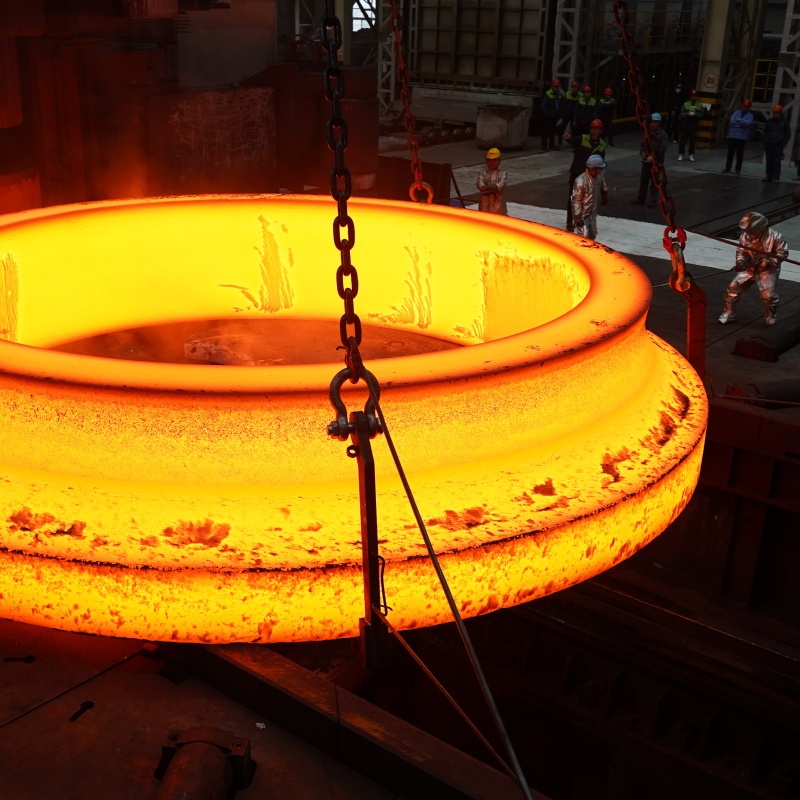
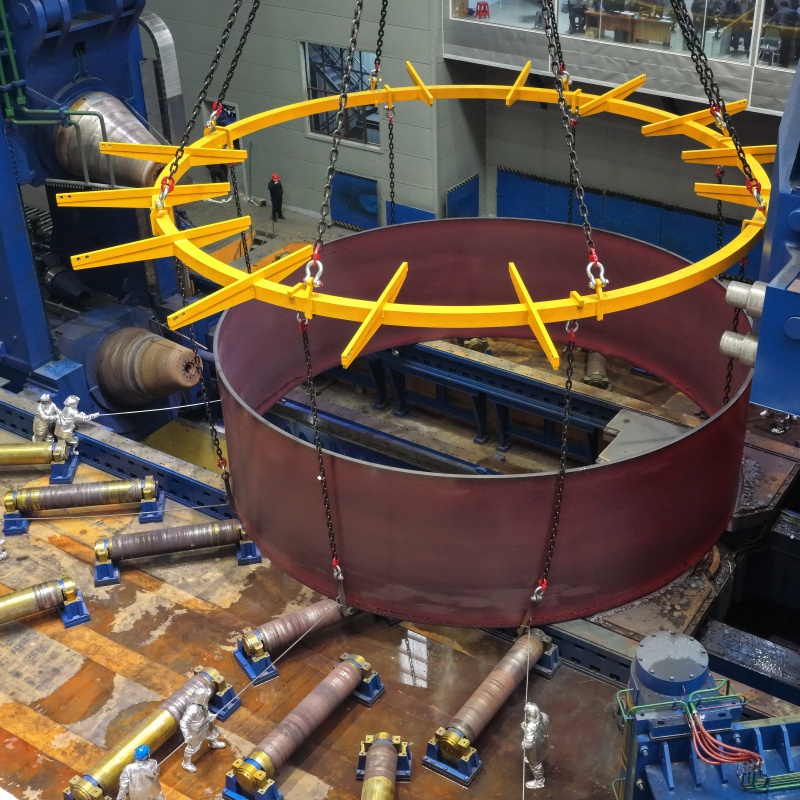
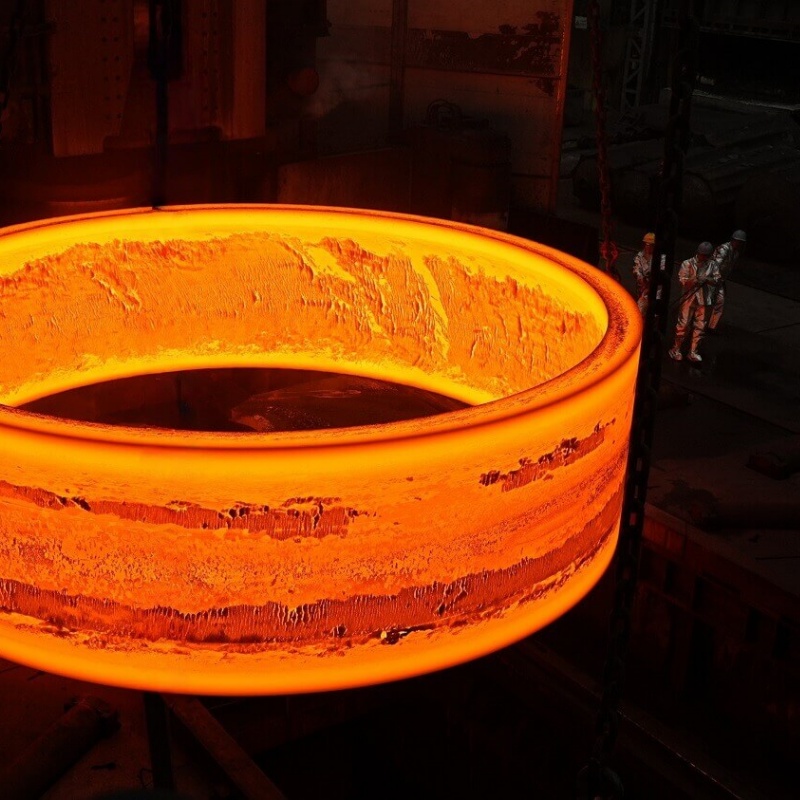
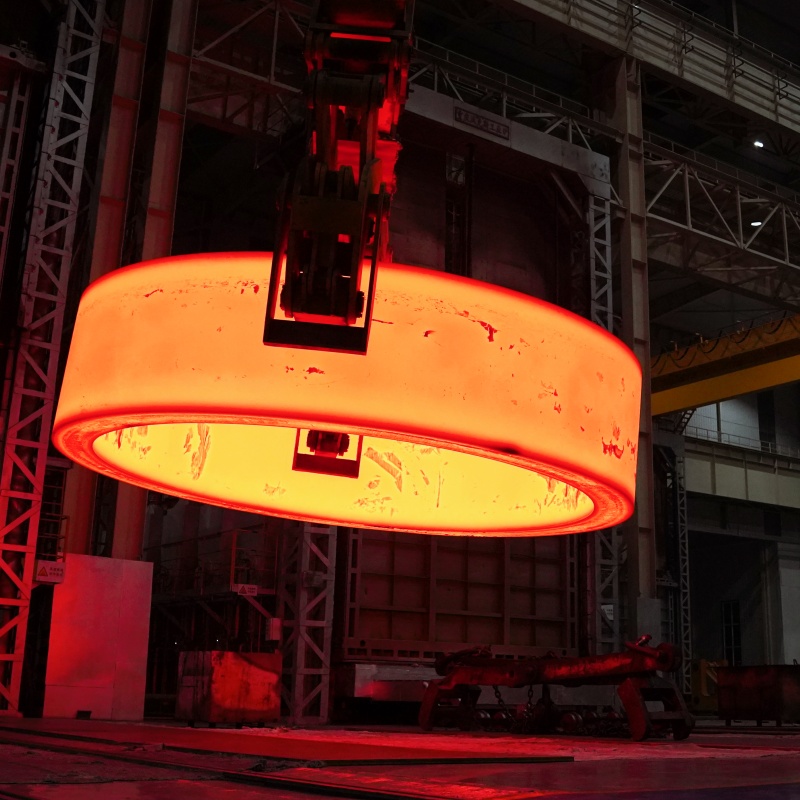
A seamless rolled ring is a one-piece wrought component with no welded joint and no cast structure. It is produced by plastically deforming a heated billet: upsetting, punching, then radial-axial ring rolling until the wall thickness and diameter are reached. Because the metal is deformed through its full wall thickness, internal voids are consolidated, the dendritic as-cast structure is broken up, and the grain flow follows the circumference of the ring. The result is a fine, uniform grain structure with higher strength and toughness and better fatigue resistance than an equivalent casting.
The mechanism that closes internal voids
Forging works on the metal in the solid state. A cast ingot or billet is heated and then squeezed, and the compressive deformation is applied through the full section rather than to the surface only. Under that deformation, internal cavities are collapsed and their surfaces are pressed into contact and bonded, which is why the casting defects of gas porosity and shrinkage porosity do not survive the wrought route. There is no final liquid-to-solid step that creates the ring geometry, so there is no last-to-freeze region in the finished component.
The property difference that follows
- Strength and toughness. A wrought, fine-grained structure carries higher strength and toughness than a coarse, as-cast structure, and the spread between individual parts is narrower.
- Fatigue resistance. With internal void space removed, the number of internal crack initiation sites drops sharply — the decisive advantage in rings that see cyclic load.
- Grain structure. Forged seamless rolled rings develop a refined, uniform grain with a flow direction that follows the circumference, which suits a component whose job is to carry hoop stress.
- Inspection reliability. Sound wrought material responds predictably to ultrasonic testing, so acceptance decisions rest on real material behaviour rather than on repair history.
Materials and size envelope
Seamless rolled ring forgings are available in carbon steel, stainless steel and alloy steel. Iraeta manufactures rings with a maximum diameter of 21 metres, a maximum height of 5 metres and a maximum net weight of 300 tons. Typical applications include nuclear power generation, hydropower plants, wind turbines, offshore platforms, petrochemical reactors and high-end machinery.
Iraeta's end-to-end route and what it means for defect risk
Iraeta Energy Equipment Co., Ltd., established in 2006, is a forging specialist that serves clean energy, oil and gas, marine engineering, tunnel boring, cement production and metal mining applications, with production facilities in China and Spain and a market footprint covering the EU, USA, Japan, the Middle East, Southeast Asia, Brazil and India.
Two decades of forging experience matter here because the root causes of porosity are upstream. Iraeta delivers end-to-end solutions that begin with custom material preparation and continue through forging, heat treatment, precision machining, rigorous testing and global logistics. Material preparation is where chemistry and cleanliness are decided, so it is the first line of defence against inclusions and gas-related defects; forging is where any remaining internal void space is closed; testing is where the result is verified before the ring leaves the plant.
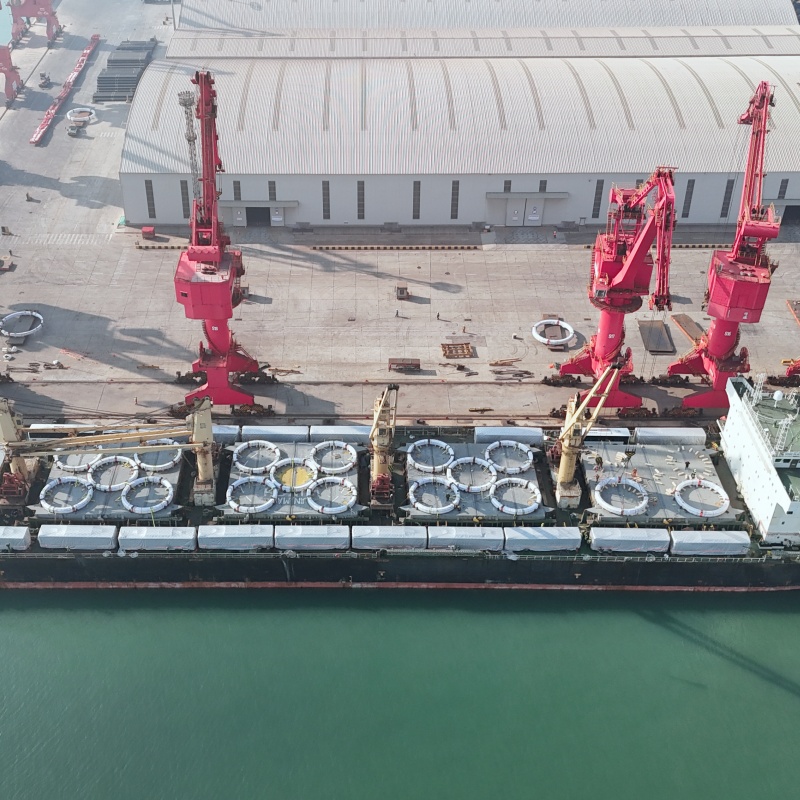
The scale of that process route is also the evidence that it works on demanding parts. Iraeta produces open-die forgings up to 300 tons, seamless rings beyond 21 metres, rolled shells up to 5 metres tall and forged bars up to 25 metres long, with a product range running from 0.3 kg to 300 tons. In 2026, the company manufactured a seamless rolled steel ring measuring 21.029 metres in diameter, exceeding its own earlier record of 15.673 metres set in 2022. Components made on this route are deployed in fourth-generation nuclear power plants, cement rotary kilns with 10,000 tons per day output, 16-metre shield tunneling machines and floating offshore wind turbines above 20 MW.
Step-by-Step Breakdown: From Billet to Verified Seamless Rolled Ring
Understanding the sequence helps buyers write a specification that actually controls defect risk. Each stage below includes the question worth asking a supplier.
- Material preparation. The steel grade, chemistry and cleanliness requirements for the end application are fixed before any forming takes place. Buyer checkpoint: ask which material preparation step is controlled in-house and how grade is traced to the finished ring.
- Billet heating and upsetting. The billet is brought to forging temperature and upset to build a sound, uniform starting section. Buyer checkpoint: confirm the forging temperature range is controlled and recorded.
- Punching. A hole is pierced to create the ring blank. The deformation here already begins the work that closes internal porosity. Buyer checkpoint: ask for the process route for your specific diameter and wall thickness.
- Radial-axial ring rolling. The blank is rolled between main and axial rolls until the required diameter, wall thickness and profile are reached, with grain flow following the circumference. Buyer checkpoint: confirm the ring is rolled, not built up from segments or welded from bar.
- Heat treatment. Normalising, quenching and tempering are used to develop the specified mechanical properties. Buyer checkpoint: require the heat treatment cycle to be recorded against the ring identity.
- Testing. Ultrasonic testing, mechanical testing of coupons and dimensional verification confirm that the wrought structure and properties meet the specification. Buyer checkpoint: agree the inspection plan, acceptance criteria and document set at quotation stage.
- Precision machining and delivery. The ring is machined to final tolerances, marked and prepared for shipment with its documentation package. Buyer checkpoint: confirm traceability from material certificate to dispatch.
Use Cases: Where the Casting-to-Forging Switch Pays Off
Seamless rolled rings for wind turbine connection systems
Offshore and onshore wind turbines operate continuously under high cyclic load, salt spray and marine corrosion, and low-temperature conditions. The special requirements are high structural strength, corrosion and salt spray resistance, low temperature toughness and high fatigue life. Because the ring carries the connection between tower sections, an internal pore is not a cosmetic issue but a fatigue initiation site under constant rotation — which is exactly the defect that the wrought route removes.
Seamless rolled rings for cement rotary kiln support systems
Rotary kiln support and transmission systems run 24 hours a day under extreme high temperature, heavy cyclic load, severe dust and thermal corrosion, and thermal expansion. Requirements include extreme high temperature resistance, high wear and abrasion resistance, high fatigue life and ultra-high load capacity. Components include the rotary kiln shell, riding ring, support roller assembly and the girth gear and pinion drive system.
Seamless rolled rings for tunnel boring machines and construction machinery
Shield machines and cranes use large rings in transmission and slewing support systems. The working conditions are heavy load, vibration load, frequent start-stop and variable load, in an intermittent heavy-duty mode with frequent direction changes — a duty cycle that punishes any internal discontinuity. Requirements include high load capacity, impact and fatigue resistance and wear resistance.
Nuclear, hydropower, offshore and petrochemical applications
Nuclear power generation is one of the primary applications for large seamless rolled rings, where a single internal defect is not an acceptable outcome. In hydropower, rings work under high water head pressure, sediment abrasion and water erosion corrosion with frequent start-stop cycles, requiring long service life fatigue resistance. Offshore and deep-sea equipment demands marine-grade corrosion protection, anti-fatigue behaviour under cyclic loads and watertight sealing. Petrochemical pressure vessels operate under high pressure and high temperature and require corrosion-resistant, high-strength material.
Comparison Table: Cast Ring vs. Seamless Rolled Ring
The table below compares the two forming routes on the factors that decide whether a ring survives its duty cycle.
| Evaluation factor | Cast ring | Seamless rolled ring |
|---|---|---|
| Forming route | Metal is poured and solidifies in a mould; final geometry is created by solidification | Heated billet is upset, punched and ring rolled; geometry is created by plastic deformation |
| Internal soundness | Gas porosity and shrinkage porosity can remain in last-to-freeze regions; inclusions may be present | Through-thickness deformation consolidates the material and closes internal void space; no casting porosity |
| Grain structure | Coarse, as-cast dendritic structure with possible segregation | Fine, uniform grain structure with grain flow following the ring circumference |
| Strength and toughness | Lower, and more variable between individual parts | Higher, with more consistent mechanical properties |
| Fatigue resistance | Internal porosity acts as a stress raiser and a likely crack initiation site | Better fatigue resistance with fewer internal initiation sites |
| Inspection outcome | Subsurface indications may require excavation, repair or rejection | Sound material responds predictably to ultrasonic testing |
| Material options | Depends on the foundry grade range | Carbon steel, stainless steel and alloy steel |
| Size capability | Limited by mould and pouring practice | Up to 21 m diameter, 5 m height and 300 tons net weight (Iraeta) |
| Typical fit | Applications where loads are modest and internal soundness is not a design concern | Load-bearing, fatigue-critical and pressure-retaining rings |
FAQ: Casting Porosity and Seamless Rolled Rings
Do seamless rolled rings need certification for regulated industries?
For pressure and structural applications in the European Union, seamless rolled rings are typically specified against PED 2014/68/EU for pressure equipment and EN 1090 for structural components, while aerospace ring buyers work to the AS9100 quality management standard. These schemes depend on traceable material and test documentation, and the certification path is decided by the forming route long before dispatch. A wrought ring can be qualified through ultrasonic testing, mechanical testing and dimensional records, whereas a casting with internal porosity may never reach the acceptance criteria regardless of paperwork. Iraeta delivers end-to-end solutions covering custom material preparation, forging, heat treatment, precision machining, rigorous testing and global logistics, from production facilities in China and Spain.
How large can a seamless rolled ring be, and which materials are available?
Iraeta produces seamless rolled ring forgings in carbon steel, stainless steel and alloy steel, with a maximum diameter of 21 metres, a maximum height of 5 metres and a maximum net weight of 300 tons. Typical applications include nuclear power generation, hydropower plants, wind turbines, offshore platforms, petrochemical reactors and high-end machinery. The same process route is used for open-die forgings up to 300 tons, rolled shells up to 5 metres tall and forged bars up to 25 metres long. In 2026, Iraeta manufactured a seamless rolled steel ring measuring 21.029 metres in diameter, exceeding its own record of 15.673 metres set in 2022.
Is a seamless rolled ring more expensive than a casting?
Unit price and total cost are different questions. A casting can look cheaper at quotation stage, but the comparison changes once scrap, rework, inspection rejection, unplanned downtime and premature replacement are counted. Porosity is a structural defect, so a rejected casting consumes the full value of its material, mould, heat treatment and any machining already performed. A wrought ring is manufactured to a defined material and process route, which makes quality outcomes more predictable and reduces the volume of parts that never reach service. The sound comparison is therefore on a total-ownership basis, including inspection effort, warranty exposure and downtime risk, rather than purchase price alone.
Can we validate a seamless rolled ring with a sample before a full order?
Sample and trial validation is the normal way engineering teams de-risk a change of forming route. A practical validation plan checks the material grade and chemistry, the ultrasonic testing result, dimensional and concentricity data, and the mechanical properties from the test coupon. Because the sample is produced by the same wrought route as the production ring, the result carries over to serial supply. Buyers who want to run that validation on their own application can contact Iraeta at ebiz@iraeta.com to discuss sample and trial-order requirements.
What drives lead time on a large seamless rolled ring?
Lead time is driven by stages that cannot be compressed safely: material preparation for the specified grade, forging and ring rolling, heat treatment, and testing plus precision machining. Diameter and weight matter as much as quantity, because a ring near the top of the size envelope occupies different equipment and handling than a small ring, and testing duration scales with the acceptance requirements of the end application. Buyers planning a casting-to-forging conversion should open the schedule discussion early and agree the inspection plan at the same time as the technical specification. Iraeta supplies the EU, USA, Japan, the Middle East, Southeast Asia, Brazil and India from production facilities in China and Spain.
Conclusion: Fix the Forming Route, Not the Symptom
Casting porosity is a process outcome. It is created while the metal is liquid, it survives heat treatment and machining, and it announces itself later as a failed inspection, a leak, a crack or an unplanned shutdown. Grinding out an indication, welding a local defect or extending a heat treatment cycle does not remove the pore that started the problem. Changing the forming route to seamless rolled ring forging does: through-thickness deformation consolidates the material, refines the grain structure and delivers the higher strength, toughness and fatigue resistance that load-bearing rings require.
For buyers making the switch, the sequence is the same as any engineering change: define the service conditions, specify material and inspection plan, verify the supplier process route and documentation, then validate with a sample before committing to serial supply. Suppliers worth shortlisting are those that control the whole chain — material preparation, forging, heat treatment, machining and testing — rather than assembling it from subcontractors.
Next Step: Request a Quote or a Sample
Iraeta Energy Equipment Co., Ltd. produces seamless rolled rings and other forged components for wind power, nuclear power, hydropower, offshore engineering, cement, tunnel boring, petrochemical and heavy machinery applications. Capability range: 0.3 kg to 300 tons, up to 21 metres in diameter, 5 metres in height and 300 tons net weight.
Email: ebiz@iraeta.com | Phone / WhatsApp: +86 188-5315-7508
Address: 4177 Jiwang Road, Zhangqiu, Jinan, China
Website: www.iraeta.com