In-House Steel Mill or Outsourced Raw Materials? How Seamless Rolled Ring Buyers Should Decide
Raw material sourcing is one of the few variables in seamless rolled ring procurement that a buyer can still influence before the first heat is tapped. Two suppliers can quote the same outer diameter, the same single weight, and the same chemistry range, and still carry very different levels of raw material risk.
This comparison guide covers one decision: should a seamless rolled ring be produced by a manufacturer that operates its own steel mill, or by one that buys semi-finished steel from an external mill? It is written for procurement engineers, technical buyers, and project teams in wind power, nuclear power, cement, tunnel boring, and heavy machinery who have already narrowed their supplier list and need one last question settled before a purchase order is issued.
Short answer: An in-house steel mill moves raw material risk from the buyer to the ring manufacturer. It turns material chemistry into a design variable instead of a catalogue constraint, and it keeps supply assurance, inspection, and capacity commitment inside a single quality system. Outsourced raw material sourcing is not automatically wrong, but it returns a larger share of verification work to the buyer.
What In-House Steel Mill vs. Outsourced Raw Materials Actually Compares
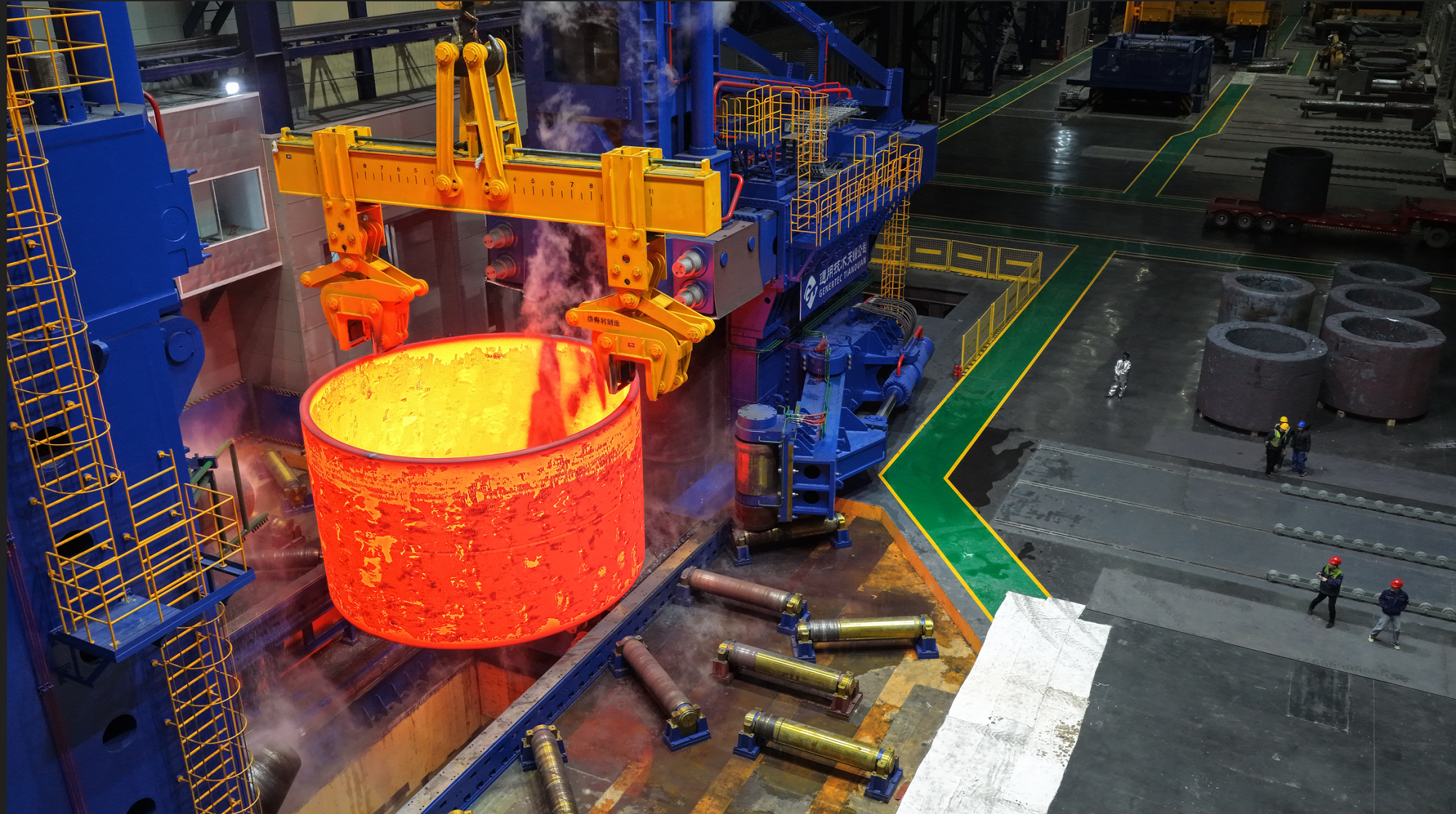
An integrated raw material model means the ring manufacturer melts, refines, and formulates the steel that will later be rolled into the ring. Melt, forging, heat treatment, machining, and final inspection sit inside one production chain and one quality system.
An outsourced raw material model means the ring manufacturer buys semi-finished steel — billet, ingot, or bar — from a third-party mill and rolls it into a ring. The ring producer still controls rolling and heat treatment, but the chemistry and the release schedule of the input material are governed by another company's order book.
Both models can deliver a ring that matches a drawing. The comparison that actually matters comes down to four questions:
- Who carries the risk when raw material supply tightens?
- How freely can the material specification be adjusted for a specific application?
- How much of the incoming material is actually inspected, and against whose standard?
- Is production capacity reserved for a named customer, or allocated at the time of order?
One clarification before going further: the sourcing decision is separate from the forging-versus-casting decision. Forged rings already differ from castings in strength and toughness, fatigue resistance, and grain structure, and they avoid casting defects such as porosity and shrinkage. This guide assumes a forged ring has already been specified. The remaining question is only where its steel comes from.
Why the Raw Material Route Moved Up the Buyer's Agenda
Demand for large forged rings is expanding, and that expansion puts pressure on the steel that feeds it. The global seamless rolled ring forgings market was valued at USD 11,100 million in 2025 and is projected to reach USD 16,360 million by 2034 (QY Research). Within that market, one of the largest application segments is also one of the fastest moving: the wind turbine forged tower flange market is expected to grow at a CAGR of 7.3% to reach USD 8.2 billion by 2033 (Dataintelo).
The supply side is concentrated among a relatively small group of tier 1 and tier 2 suppliers, listed in market research as ThyssenKrupp (Germany), Bharat Forge (India), Frisa (Mexico), Scot Forge (USA), and Iraeta (China) (Market Research Future). When several large projects run at the same time, they compete for the same rolling capacity — and, under an outsourced model, for the same upstream steel as well.
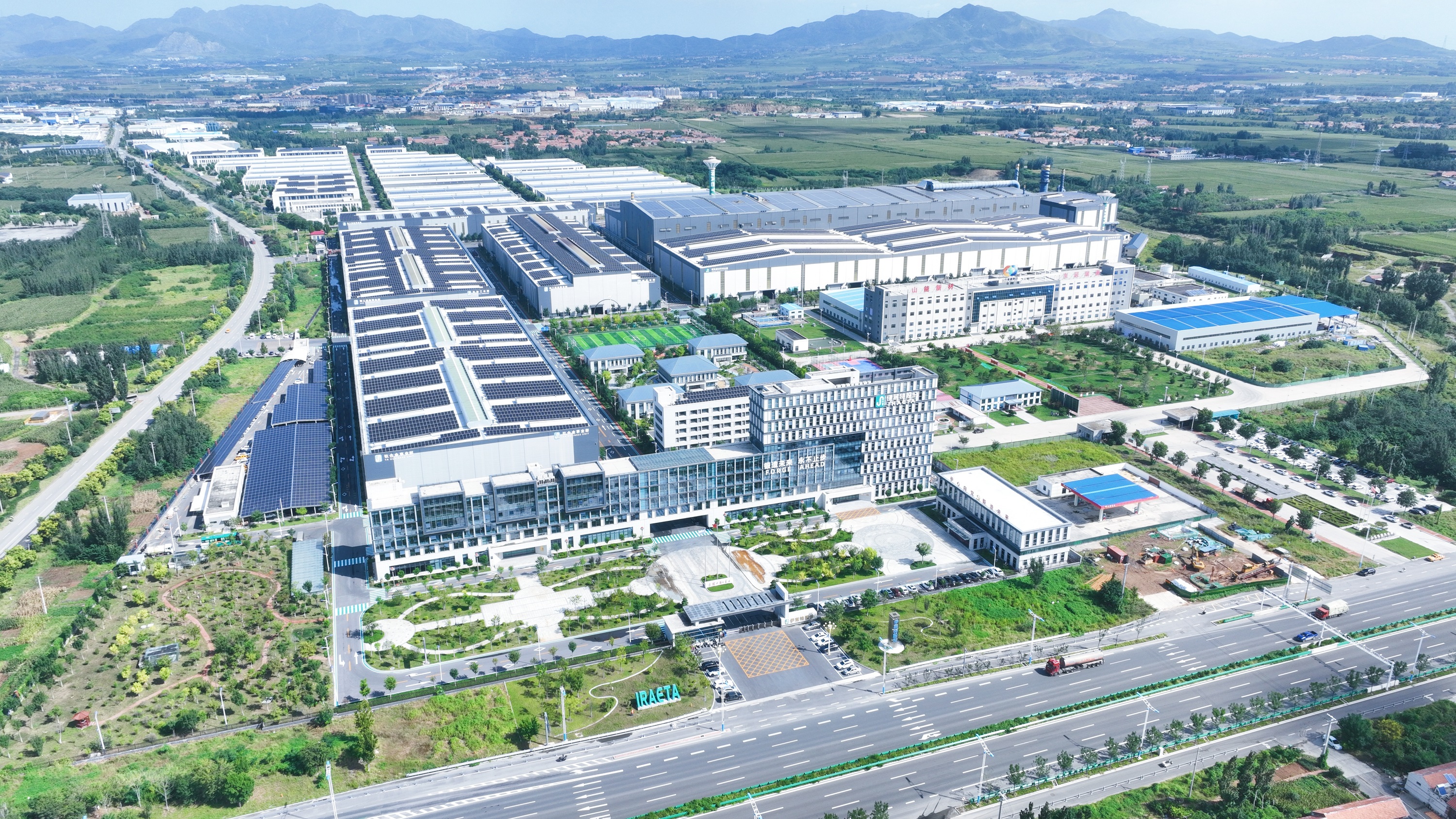
Iraeta Energy Equipment Co., Ltd. is a forging manufacturer founded in 2006, headquartered in Jinan, China, with production facilities in China and Spain and customers across the EU, USA, Japan, Middle East, Southeast Asia, Brazil, and India. Its product range covers rings, shells, discs, bars, shafts, and wear-resistant grinding media from 0.3 kg to 300 tons, which means material decisions are made repeatedly across a very wide size band rather than for a single product family.
What an In-House Steel Mill Changes in Practice
Supply assurance instead of allocation risk
The most direct effect of an in-house steel mill is that raw material supply stops being an external event. The documented control method for raw material supply issues is specific: in-house steel mill supply assurance, customized raw material production, and full-item incoming inspection, backed by the enterprise measures of operating an in-house steel mill, customized material formulation, and exclusive capacity reservation.
For a buyer, the practical meaning is that a delivery commitment rests on one company's melt schedule rather than on a third-party mill's willingness to release tonnage to a ring forger during a tight quarter.
Material formulation becomes a design variable
When the mill is in-house, chemistry can be adjusted for the application instead of being selected from whatever grades an external mill already lists. This matters most at the sizes and duty levels where standard grades stop being a safe default — thick sections that need consistent through-thickness response, rings for cold or highly loaded service, or components where the forging and heat treatment route must be tuned to a specific material behavior.
Full-item incoming inspection instead of an assumed data package
Full-item incoming inspection is part of the documented control method for raw material risk. The distinction is not about paperwork quality; it is about when a material problem is discovered. Material inspected at the point of entry is either accepted or rejected before it enters the rolling line, which keeps the cost of a material deviation inside the material stage rather than inside a finished, machined ring.
Capacity reservation that can be written into a supply agreement
Exclusive capacity reservation is the commercial counterpart of an in-house mill. Rolling and heat treatment capacity are finite and, in an outsourced model, shared across all incoming orders. When a manufacturer can reserve capacity for a specific customer, the project schedule is protected at the production stage and not only at the material stage.
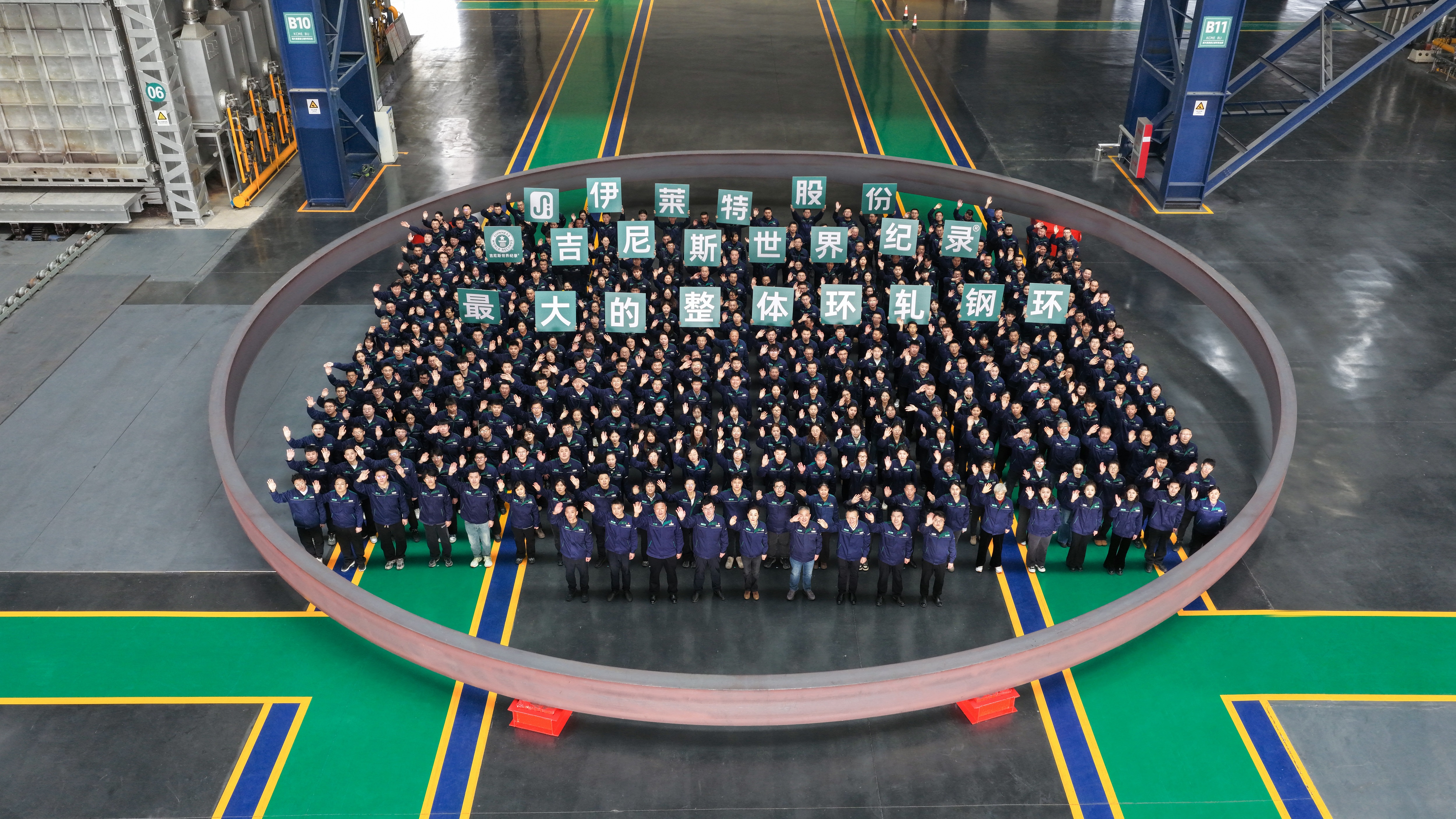
Scale reinforces this. Iraeta's manufacturing range includes 300-ton open-die forgings, seamless rings over 21 meters in diameter, rolled shells 5 meters tall, and forged bars up to 25 meters long. In 2026 the company produced a seamless rolled steel ring measuring 21.029 meters in diameter, breaking its own Guinness World Record of 15.673 meters set in 2022. Rings at that scale consume large, non-substitutable heats of steel, which is exactly where the two sourcing models diverge most sharply.
Step-by-Step: How to Compare the Two Models Before You Award
The sourcing model is usually invisible inside a quotation. These six steps make it visible.
- Map the steel route, not just the supplier. Ask each bidder to state where the steel is melted, who formulates the chemistry, and where the material changes ownership. A supplier that finishes rings from bought-in billet operates a two-company chain; one that melts its own steel operates a one-company chain. Chain length is the first line of your risk register.
- Test how far the chemistry can actually move. Send the same non-standard requirement to both types of supplier and compare the answers. An integrated producer can treat formulation as an engineering question. An outsourced producer has to negotiate with an external mill that may not wish to interrupt a standard heat sequence for a small tonnage.
- Ask what incoming inspection means in practice. Inspection can mean a certificate review, a sample check, or full-item inspection. Ask for the inspection scope, the sampling rule, and the disposition procedure when a heat fails. Compare the answers against the criticality of the ring, not against its price.
- Confirm whether capacity can be reserved. Ask for a capacity reservation clause tied to your annual volume and project milestones. If capacity cannot be reserved, add a schedule buffer to the project plan instead of assuming the supplier will find room.
- Reconcile the documentation chain. Under an outsourced model, material certificates originate with an external mill and must be reconciled with the ring producer's own quality records. Under an integrated model, the same quality system covers the melt and the finished ring. Check how each supplier links heat numbers to finished part numbers.
- Compare cost drivers, not unit price alone. The unit price reflects the material route, but the route also drives rework and scrap exposure, incoming inspection effort, expediting freight, buffer inventory, and schedule risk. Ask each bidder to quote the identical specification, including chemistry, tolerances, and testing, so that the sourcing model is the only remaining variable.
Comparison Table: In-House Steel Mill vs. Outsourced Raw Materials
| Decision dimension | Ring made with an in-house steel mill | Ring made from outsourced raw material |
|---|---|---|
| Supply continuity | Material supply is assured by the manufacturer's own steel mill | Depends on an external mill's order book and release policy |
| Material formulation | Customized material formulation and customized raw material production | Limited to grades the external mill already produces |
| Incoming inspection | Full-item incoming inspection performed inside the same quality system | Scope depends on the data package and sampling rules agreed with the external mill |
| Capacity commitment | Exclusive capacity reservation is available | Capacity is allocated against material availability at the time of order |
| Documentation | Melt and finished ring sit inside one quality system | Two documentation chains must be reconciled |
| Responsiveness to change | Chemistry and process adjustments stay inside one production chain | A chemistry change becomes a separate negotiation with a third party |
The left column describes documented measures at Iraeta. The right column describes the general mechanics of an outsourced model, not the performance of any named supplier.
Use Cases: Where the Difference Shows Up
Sourcing models do not affect every order equally. The gap widens as ring size, duty level, and qualification burden increase.
| Critical application | Documented reference point | Sourcing-model implication |
|---|---|---|
| Wind power | Wind power flanges; components for floating offshore wind turbines above 20 MW | Ring demand scales with a flange market growing at 7.3% CAGR to USD 8.2 billion by 2033, so material availability becomes the constraint on scaling |
| Nuclear power | Components for fourth-generation nuclear power plants; the 15.673 m record ring produced in 2022 | Long qualification cycles reward keeping the melt route stable and traceable across the whole chain |
| Cement | Kiln tyres for rotary kilns with 10,000 tons per day output | Replacements are planned against production windows, so schedule certainty matters as much as unit price |
| Tunnel boring | Components for 16-meter shield tunneling machines | Large section sizes consume large heats that are difficult to substitute late in a project |
| Heavy machinery | High-load structural components and heavy machinery parts | Material consistency across repeat orders protects interchangeability in the field |
FAQ: In-House Steel Mill vs. Outsourced Raw Materials
Do rings rolled from an in-house steel mill need different compliance documentation than rings made from bought-in steel?
No. The compliance target does not change with the sourcing model. Rings destined for the EU market are governed by PED 2014/68/EU for pressure equipment and EN 1090 for structural components, while aerospace rings fall under the AS9100 quality management system standard. What changes is the evidence path. With an in-house mill, the melt record and the finished ring record sit inside one quality system; with outsourced material, the buyer should confirm how the external mill's certificates are linked to the finished part number. Iraeta documents its certification portfolio for these markets.
What can an in-house steel mill do that outsourced raw material supply cannot?
Four things are documented: supply assurance from the manufacturer's own mill, customized material formulation and customized raw material production, full-item incoming inspection of raw material, and exclusive capacity reservation. In practice these translate into the ability to adjust chemistry for a specific application, to reject material before it enters the rolling line, and to hold production capacity for a named customer. At Iraeta, that flexibility sits behind a manufacturing range of 0.3 kg to 300 tons and an R&D team of 100 engineers.
Does sourcing steel in-house make a seamless rolled ring more expensive?
It should not be assumed either way, and it should not be judged on unit price alone. The relevant comparison is the cost of the whole order: material price, rework and scrap exposure, incoming inspection effort, expediting freight, buffer inventory carried against material delays, and schedule risk on a project that cannot slip. Buyers should price the identical specification with both types of supplier so that the raw material route is the only variable in the result.
Can a buyer validate the material before committing to a full production order?
Yes, and integrated sourcing makes validation more direct. Because material formulation and raw material production are handled in-house, the chemistry and heat treatment route can be defined at the sampling stage and verified against the finished ring rather than against a third-party certificate alone. Sampling discussions normally start with three inputs from the buyer: the target application, the section size, and the performance the ring has to deliver in service.
What lead time and capacity commitments should be locked into the contract?
Lead time in this industry is driven by melt scheduling, ring size, and heat treatment occupation, so the most useful commitment is often not a single date but a capacity reservation. Exclusive capacity reservation is the documented enterprise measure available at Iraeta, and it should be tied to an annual volume and a project milestone plan rather than agreed verbally. Buyers should also confirm where production will run, since Iraeta operates facilities in both China and Spain. To discuss a sample, a quotation, or a capacity reservation for a specific ring program, contact Iraeta at ebiz@iraeta.com or on WhatsApp at +86 18853157508.
Conclusion: Decide the Sourcing Model Before You Decide the Price
The in-house-versus-outsourced question is a risk allocation question. An integrated raw material chain keeps supply assurance, customized material formulation, full-item incoming inspection, and capacity reservation inside one company, which is why it holds up best on large rings for wind power, nuclear power, cement, tunnel boring, and heavy machinery. An outsourced chain is workable, but it requires the buyer to add verification steps that the integrated model performs internally.
For most heavy-industry buyers at the decision stage, the practical test is simple: ask each supplier to describe its steel route, then ask which of the four controls — supply assurance, material formulation, incoming inspection, and capacity reservation — it can commit to in writing. The answers usually separate the shortlist faster than any price comparison.
Next Step
If you are comparing sourcing models for an upcoming ring program, send the drawing, the material requirement, and the project timeline. Iraeta can respond with a sample and quotation path built around an in-house steel mill, customized material formulation, and reserved capacity.

ebiz@iraeta.com | WhatsApp: +86 18853157508 | www.iraeta.com