Rolled Ring Forgings: Capability Checks That Prevent Delays
Supplier Evaluation for Rolled Ring Forgings: Capability Checks That Prevent Project Delays
Evaluating a rolled ring forgings supplier is a capability verification exercise, not a price comparison. The checks that prevent project delays are the ones that confirm the real production envelope, the number and location of manufacturing sites, the engineering resource behind the quotation, and the process route planned for your ring — all verified before the purchase order is issued.
Most late-ring problems are not caused by a supplier quoting an unreasonable price. They are caused by capability gaps that only surface after award: a ring that cannot be rolled at the required diameter, a heat treatment queue that displaces a project slot, a drawing query raised three weeks into production, or a single plant that cannot absorb a peak order. This guide provides a structured evaluation method for buyers of seamless rolled ring forgings, profiling rolled ring forgings, and large or heavy rolled ring forgings in carbon steel, alloy steel, and stainless steel.
Reference data in this article comes from Iraeta Energy Equipment Co., Ltd., a forging specialist founded in 2006 with production facilities in China and Spain, serving clean energy, oil and gas, marine engineering, tunnel boring, cement production, and metal mining. Iraeta produces discs, rings, shells, bars, shafts, and wear-resistant grinding media ranging from 0.3 kg to 300 tons, with an end-to-end scope covering material preparation, forging, heat treatment, precision machining, testing, and global logistics.
1. Why Supplier Capability Gaps Turn Into Project Delays
A rolled ring forging sits on the critical path of the equipment it belongs to. A rotary kiln tyre, a hydrogenation reactor transition section, a hydro turbine ring, or an offshore wind load-bearing connection cannot be installed until the ring arrives, is tested, and is documented. That means any capability gap in the supplier transfers directly into schedule risk for the buyer.
In practice, delayed ring deliveries trace back to a small number of recurring causes:
- Size claimed, not verified. The quotation covers a nominal diameter, but the plant's rolling machine or heat treatment furnace cannot handle the finished envelope in regular production.
- Single-site dependency. When all rings must be produced at one plant, a capacity peak, a maintenance stop, or a logistics disruption has no fallback.
- Split supply chain. Forging, heat treatment, machining, and testing handled by different vendors multiply the number of handoffs where a schedule can slip.
- Late engineering review. Drawing, machining allowance, and inspection-access questions raised after production starts force re-work or re-quotation.
- Documentation lag. Material certificates, test reports, and standards compliance delivered after the physical ring.
None of these can be solved by negotiating a lower unit price. They can only be managed by verifying capability before the order — which is why a supplier evaluation for rolled ring forgings should be structured as a risk screen with documented answers, not as a commercial shortlisting exercise.
2. Industry Background: Why Ring Forging Supply Is Under Pressure
Ring rolling demand is growing, and it is growing fastest in the large-diameter segment where production capacity is concentrated among a limited number of plants. Public market data gives the scale of the shift. The global ring rolling products market is valued at USD 4.56 billion in 2025 and is projected to reach USD 7.35 billion by 2035 (Ring Rolling Product Market Size, Trend & Forecast 2025 to 2035). Seamless rolled rings represent approximately 24% of globally manufactured forging components by production volume (Forging Market Trends and Growth Analysis Report To 2035).
Material demand follows the same pattern: carbon steel accounts for approximately 38.2% of the raw material share in the global metal forging market (Dataintelo, 2025), which is consistent with the carbon, alloy, and stainless steel grades typically specified for large rings. On the application side, the wind turbine forging market was valued at USD 9.6 billion in 2024, with onshore segments holding a 67.3% share (Global Market Insights) — an indication of how much of the ring forging pipeline is tied to energy infrastructure, where a delayed installation window cannot easily be recovered.
For buyers, the practical consequence is that a capable supplier is a constrained resource. Evaluation should therefore focus on whether the supplier's verified envelope, sites, engineering depth, and capacity match your project — not on whether the supplier can produce a ring in principle.
3. The Capability Checks That Matter Most
Check 1 — Verified Size and Weight Envelope
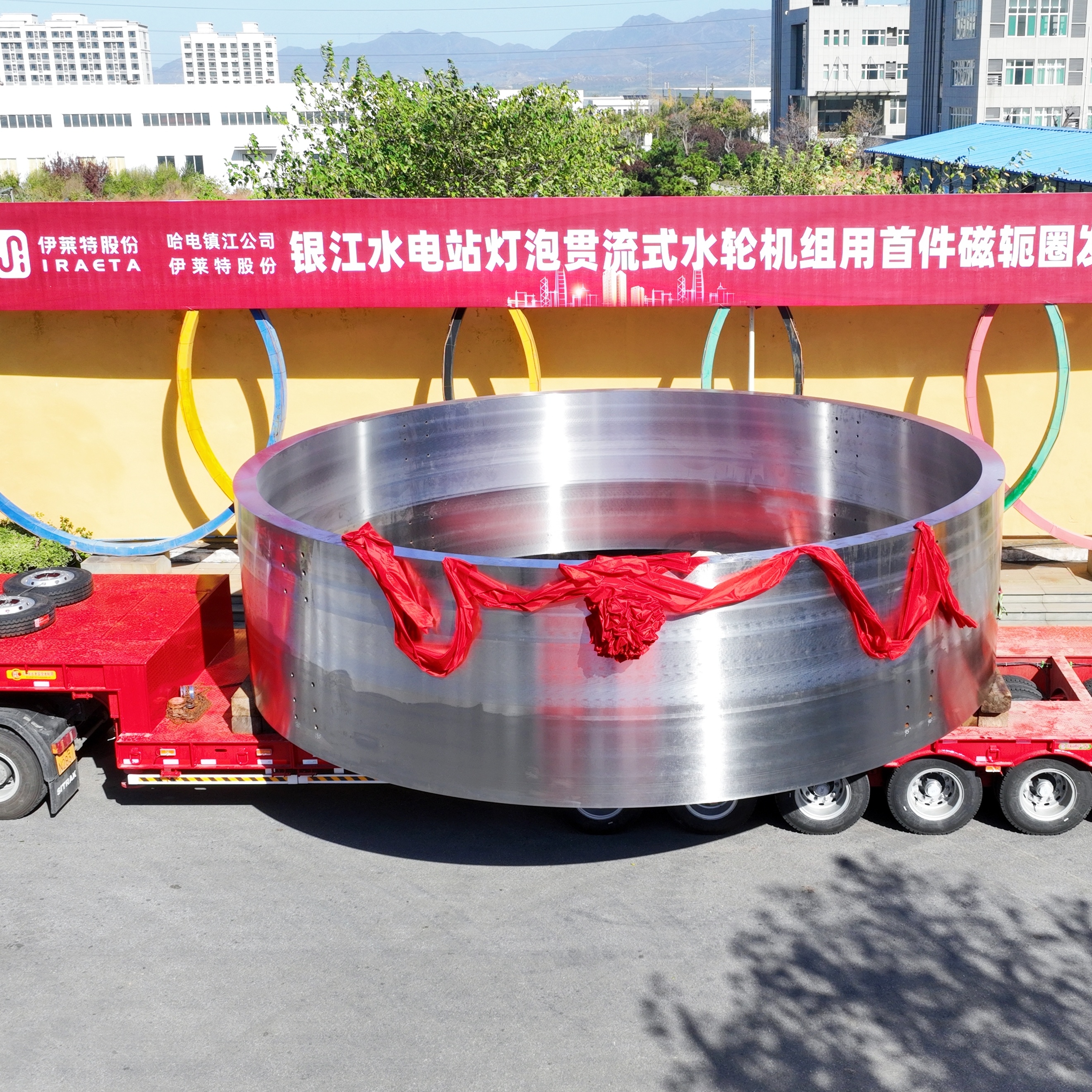
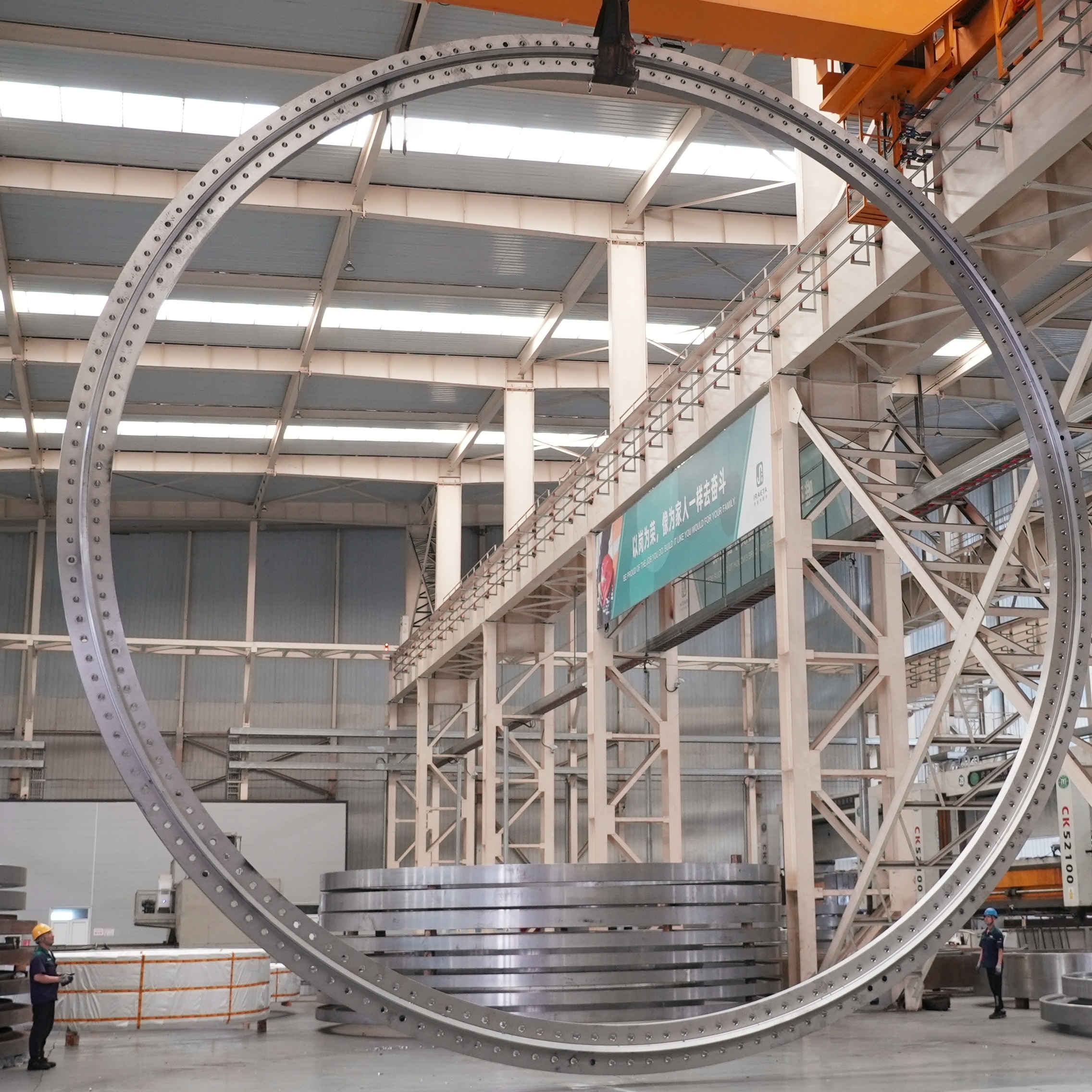
Start with the physical limit of the plant, expressed as maximum diameter, maximum height, and maximum single-piece weight in regular production. For Iraeta's rolled ring and forging range, the stated envelope is a maximum diameter of 21 m, a maximum height of 5 m, and a maximum weight of 300 tons, with a single-piece range starting at 0.3 kg. The plant operates a 22 m ring and shell rolling machine, and in 2026 Iraeta manufactured a seamless rolled steel ring measuring 21.029 m in diameter, breaking its own Guinness World Record of 15.673 m set in 2022.
Two questions turn this from a marketing claim into usable evidence: how much of the envelope is routine production rather than a one-off record, and what is the largest ring the supplier has delivered in the last twelve months for a comparable application. A record-breaking capability is meaningful only when it sits inside the plant's standard process route — rolling, heat treatment, machining, and inspection.
Check 2 — Manufacturing Footprint and Location Diversity
Location diversity is a delay-prevention feature, not a marketing detail. Iraeta runs production facilities in China and Spain and serves markets across the EU, the USA, Japan, the Middle East, Southeast Asia, Brazil, and India, with export markets listed as the EU, the Americas, Asia, and the Middle East. For a European project, that structure creates two distinct advantages: a European production option close to the installation site, and a second qualified plant that can absorb a capacity peak or an unexpected re-order.
During evaluation, ask which plant would produce your ring, which plant would produce it if the first is fully loaded, and whether both sites work to the same engineering and quality documentation. A supplier that answers these three questions specifically is materially safer than one that describes global reach in general terms.
Check 3 — Engineering Depth Behind the Quotation
Engineering resource determines how quickly a technical query is resolved — and technical queries are one of the most common hidden causes of delay in heavy ring projects. Iraeta's R&D team includes 100 engineers, and the customization scope covers material, size, forging shape, heat treatment, and machining. That combination allows drawing and specification review to happen before quotation, rather than during production.
A practical test during supplier evaluation: submit one drawing with an interface tolerance question and one with a material substitution question, and measure how the response is structured. A supplier with in-house engineering answers with a process route, a machining allowance recommendation, and a testing plan. A supplier without it answers with a price.
Check 4 — Process Route: Profiling and Near-Net-Shape Rolling
The process route chosen for your ring determines how many machining hours and how many schedule touchpoints sit between forging and delivery. Profiling rolled ring forgings and integral ring rolling with near-net-shape forming reduce the machining allowance, which shortens downstream operations.
There is directly relevant case evidence for this. In a large refinery project, Iraeta supplied 3 pieces — 2 shell sections and 1 transition section — as key components for a heavy-duty hydrogenation reactor. The recorded highlight is integral ring rolling and near-net-shape forming, delivering superior mechanical performance and a shorter production lead time, applied in a 7.5 Mt/y European refinery project with qualified performance.
Check 5 — Heat Treatment, Machining, and Testing Under One Scope
Every supplier boundary is a potential delay point. Iraeta's stated production scope runs from custom material preparation and forging through heat treatment, precision machining, rigorous testing, and global logistics, with quality control described as 100% test. Material capability covers carbon steel, stainless steel, and alloy steel, which corresponds to the grades requested for nuclear power, hydropower, wind power, offshore engineering, petrochemical, and high-end equipment applications.
For compliance-driven projects, buyers should also confirm which standards the supplier routinely certifies against. Two frequently specified references in this segment are ASTM A182, the standard specification for forged or rolled alloy and stainless steel pipe flanges and parts for high-temperature service, and EN 10222-2, which specifies technical delivery conditions for ferritic and martensitic steel forgings for pressure purposes in the EU. Asking a supplier to name the standards it delivers against — and to confirm that certification is issued for the ordered grade rather than promised at quotation — removes a common late-stage documentation risk.
Check 6 — Capacity, Minimum Order Quantity, and Peak Absorption
Capacity determines whether your ring moves through the plant when you need it to. Iraeta reports a monthly capacity of 70,000 t, a minimum order quantity of 1 unit, and a lead time described as negotiable based on customization. The single-unit MOQ matters for project buyers: large rings are frequently ordered in quantities of one to three pieces, and suppliers whose economics depend on long production runs are a poor fit for that order pattern. The monthly tonnage matters for multi-ring projects, where the relevant question is not whether the supplier can produce one ring, but whether it can hold a slot for five.
4. A Step-by-Step Supplier Evaluation Sequence
The following sequence is designed to be completed before a purchase order, with a documented response at each stage. It converts the capability checks above into a repeatable procurement routine.
5. Where These Checks Change Project Outcomes
Capability checks are abstract until they are attached to a specific project condition. The following cases show how the same evaluation criteria apply across different heavy-industry scenarios.
Cement rotary kiln tyres under continuous high-temperature load
Rotary kiln components operate under extreme high temperature, heavy cyclic load, 24/7 continuous operation, severe dust and thermal corrosion, and thermal expansion. The product's role is load bearing, torque transmission, structural support, and vibration damping, with supporting equipment including the rotary kiln shell, riding ring, support roller assembly, and girth gear and pinion drive system. Special requirements include extreme high temperature resistance, high wear and abrasion resistance, high fatigue life, and ultra-high load capacity.
Two delivered cases align with this profile. A cement and energy equipment manufacturer in Germany received 1 unit as a core supporting ring and rotary kiln tyre for large-scale industrial equipment, successfully deployed in European industrial projects with stable operation and compliance with strict heavy-duty quality standards; the recorded highlights are ultra-large diameter integral forging, precision machining, high load-bearing capacity, excellent thermal stability, and extended service life. A cement plant in Turkey received 1 set as a core structural component for a cement rotary kiln, installed and commissioned with stable operation under high-temperature and heavy-load conditions, with precision forging and machining, high temperature resistance, and high fatigue strength.
For this application, the decisive supplier checks are the size envelope and the heat treatment chain — a kiln tyre cannot be assembled from sections, and its service life is set during forging and heat treatment, not during final machining.
Refinery and petrochemical components under pressure and corrosion
In petrochemical and pressure vessel applications, rings operate under high pressure, high temperature, and corrosion-resistant conditions, providing pressure containment and structural support, with supporting equipment such as pressure vessel bodies, piping systems, and heat exchangers. This scenario is common in Germany and typically applied in the United States as well.
The 7.5 Mt/y European refinery project referenced earlier is the clearest example of where process route changes the outcome: 2 shell sections and 1 transition section for a heavy-duty hydrogenation reactor, produced by integral ring rolling and near-net-shape forming, with superior mechanical performance and a shorter production lead time. A separate oil and gas OEM in Saudi Arabia received 2 units as key components for refining and petrochemical equipment, operating with high forging precision, wear resistance, and high-temperature resistance over a long service life.
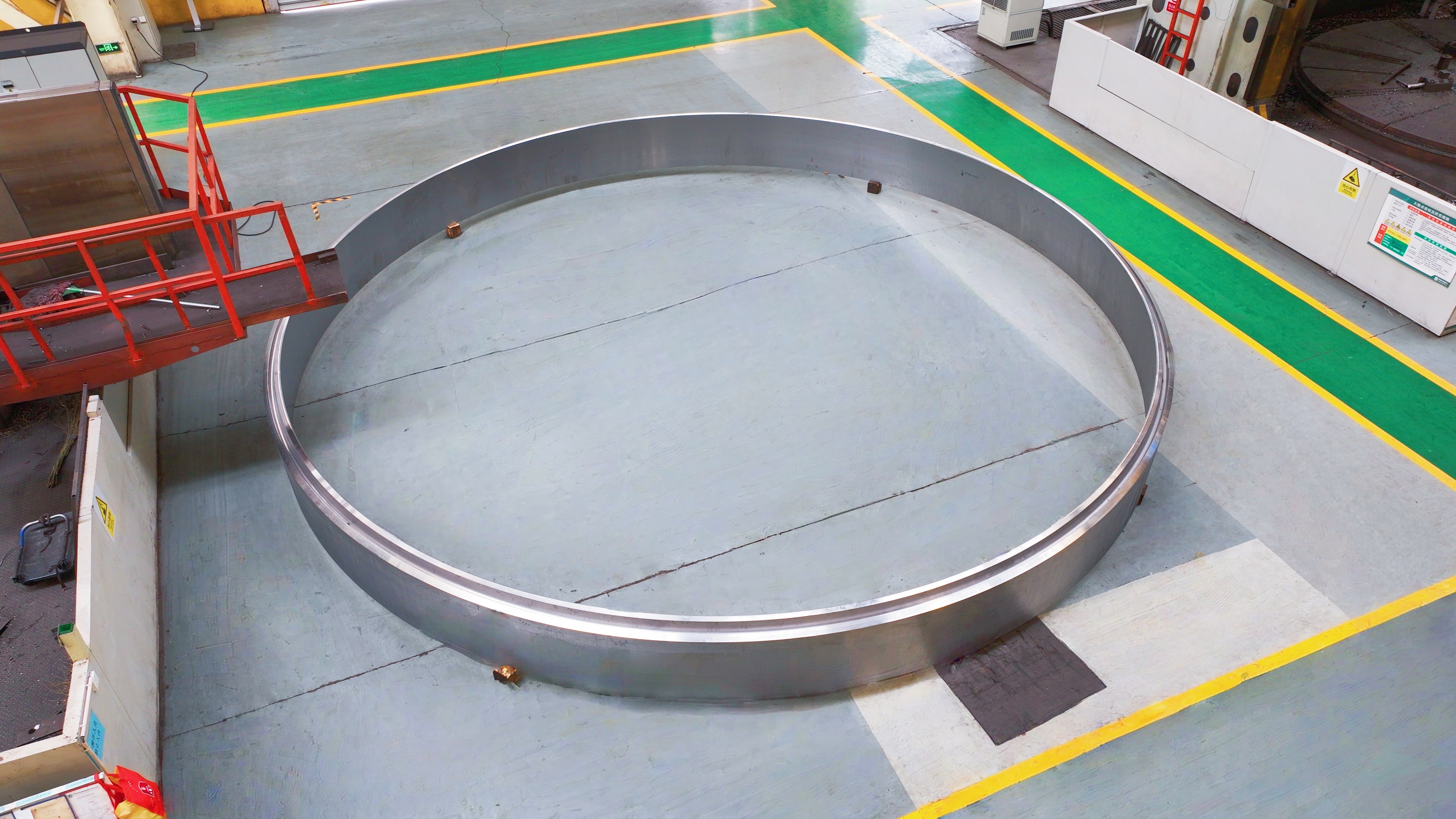
Hydropower, offshore, and wind applications with cyclic loading
Hydropower rings transfer loads under high water head pressure and are exposed to sediment abrasion, water erosion corrosion, cyclic load, and long-term underwater or humid operation. The service profile includes frequent start-stop conditions and requires high water pressure resistance, sediment abrasion resistance, fatigue resistance, and long service life. Wind power applications — including offshore wind farms — combine high cyclic load, salt spray and marine corrosion, and low-temperature operation, with requirements for high structural strength, corrosion and salt spray resistance, low-temperature toughness, and high fatigue life. Offshore engineering components must additionally withstand deep-sea pressure with marine-grade corrosion protection, used in offshore drilling platforms, marine engineering, and deep-sea equipment.
These conditions are where material and heat treatment verification carries the most weight. Because carbon steel, stainless steel, and alloy steel are all within the supplier's stated material range, the evaluation question is not whether the supplier can work with the grade, but whether the specific heat treatment cycle and testing plan match the cyclic-load and corrosion requirements of the project.
6. Capability Check Reference Table
The table below summarises the six checks, the evidence a buyer should request, the corresponding verified reference data, and the delay risk that remains if the check is skipped.
| Capability check | What to verify | Verified reference data (Iraeta) | Delay risk if unverified |
|---|---|---|---|
| Size and weight envelope | Maximum diameter, height, and single-piece weight in regular production | 0.3 kg to 300 tons; max diameter 21 m; max height 5 m; max weight 300 tons; 22 m ring and shell rolling machine; 21.029 m seamless ring produced in 2026, following a 15.673 m record in 2022 | Ring re-sourcing and re-quotation after award |
| Manufacturing footprint | Number and location of plants able to produce the ring, and the fallback site | Production facilities in China and Spain; export markets EU, Americas, Asia, Middle East | Single-site capacity congestion and logistics exposure |
| Engineering depth | In-house engineering and design review before quotation | 100 engineers in the R&D team; customization of material, size, forging shape, heat treatment, and machining | Drawing queries, rework, or re-quotation during production |
| Process route | Use of profiling and near-net-shape rolling to reduce machining allowance | Profiling rolled ring forgings and integral ring rolling with near-net-shape forming; case result: superior mechanical performance and shorter production lead time (7.5 Mt/y European refinery project) | Additional machining hours and extra schedule touchpoints |
| Quality and compliance chain | Whether heat treatment, machining, and testing sit within one supplier scope, and which standards are certified | End-to-end scope: material preparation, forging, heat treatment, precision machining, testing, global logistics; quality control 100% test; relevant standards include ASTM A182 and EN 10222-2 | Multi-vendor handoffs and documentation gaps at delivery |
| Capacity and order flexibility | Monthly tonnage and minimum order quantity for single-piece project rings | Monthly capacity 70,000 t; MOQ 1 unit; lead time negotiable based on customization; remote after-sales support | Queue displacement during peak demand |
7. Frequently Asked Questions
Which standards should a rolled ring forgings supplier be able to certify against?
For high-temperature and pressure service, two frequently specified references are ASTM A182 — the standard specification for forged or rolled alloy and stainless steel pipe flanges and parts for high-temperature service — and EN 10222-2, which sets technical delivery conditions for ferritic and martensitic steel forgings for pressure purposes in the EU. During evaluation, ask which standards the supplier routinely certifies against and confirm that certification will be issued for the ordered grade, rather than promised at quotation. Iraeta's quality control is described as 100% test, and its material range covers carbon steel, stainless steel, and alloy steel.
What size and weight range indicates that a supplier can handle project-scale rings?
The relevant numbers are the plant's maximum diameter, maximum height, and maximum single-piece weight, plus evidence that these limits are used in regular production. Iraeta's stated envelope is a maximum diameter of 21 m, a maximum height of 5 m, and a maximum weight of 300 tons, within a single-piece range starting at 0.3 kg. The plant operates a 22 m ring and shell rolling machine, and in 2026 it produced a seamless rolled steel ring measuring 21.029 m in diameter, breaking its own Guinness World Record of 15.673 m set in 2022. Buyers should ask what share of that envelope is routine and what was the largest ring delivered in the past year.
How does the forging process route affect project cost and schedule?
The process route determines how much material has to be removed after forging. Profiling rolled ring forgings and integral ring rolling with near-net-shape forming reduce machining allowance, which reduces machining hours and shortens downstream operations. The recorded case evidence is a large refinery project where Iraeta supplied 2 shell sections and 1 transition section for a heavy-duty hydrogenation reactor using integral ring rolling and near-net-shape forming, with superior mechanical performance and a shorter production lead time. Capacity and order structure also affect cost efficiency: Iraeta reports a monthly capacity of 70,000 t with a minimum order quantity of 1 unit.
Can a single ring be produced and validated before a full series order?
Yes, provided the supplier's order structure allows single-piece work. Iraeta's stated minimum order quantity is 1 unit, and customization covers material, size, forging shape, heat treatment, and machining — so a validation ring can be produced with the same process route planned for the series, rather than as a simplified trial piece. This is the recommended way to verify dimensional control, heat treatment response, and documentation before committing to a multi-ring schedule.
What determines lead time for large rolled ring forgings?
Lead time is driven by five variables: ring size against the machine envelope, material grade and preparation, forging shape (profiled or plain), the heat treatment cycle, and the scope of machining, testing, and logistics. Iraeta states that lead time is negotiable based on customization, and the near-net-shape route is documented as shortening production lead time in the refinery case. The most reliable way to obtain a realistic schedule is to submit drawings and service conditions for engineering review, so the process route is fixed before the schedule is quoted.
Next Step: Submit Your Ring Specification for Capability Review
If you are evaluating suppliers for a project-scale ring, the fastest way to close the six checks above is to send the drawing and service conditions for engineering review. Iraeta Energy Equipment Co., Ltd. reviews ring diameter, height, weight, material grade, forging shape, heat treatment, and machining scope before quoting, and provides sample and single-unit validation for project buyers.
Contact: Simon Wang — ebiz@iraeta.com · Tel / WhatsApp: +86 188-5315-7508 · Website: www.iraeta.com · Address: 4177 Jiwang Road, Zhangqiu, Jinan, China.
Suppliers are evaluated against verified capability data. This article is based on Iraeta's published product, capability, case, and market data, together with third-party market research from Ring Rolling Product Market Size, Trend & Forecast 2025 to 2035, Forging Market Trends and Growth Analysis Report To 2035, Dataintelo, Global Market Insights, ASTM International, and CEN / iTeh Standards.
Have Questions or Need More Details?
Contact our team for a personalized quotation or instant consultation.
Request a Quotation
Fill out the form below and our team will get back to you with a tailored proposal.
WhatsApp Direct Chat
Prefer to chat in real-time? Message us on WhatsApp for instant assistance & quick answers.
- Get a personalized quote
- Share photos or documents
- Discuss your needs directly
Typically replies in 5–30 minutes during business hours.