Rolled Ring Forgings Compliance: ISO 14001 & PED 2014/68/EU
Rolled Ring Forgings Compliance Guide: ISO 14001, PED 2014/68/EU and Regional Acceptance
Two certificates decide most rolled ring forging purchases into Europe, and buyers routinely read them as one document. They are not. This guide explains what each certificate actually covers, where regional acceptance diverges, and how to turn certification evidence into a clean order file for wind power, hydropower, rotary kiln and petrochemical pressure vessel projects.
Short answer: ISO 14001:2015 certifies an environmental management system. PED 2014/68/EU certifies conformity of pressure equipment for the EU market. A ring forging supplier can hold one without the other, and holding both does not automatically qualify every ring a buyer orders.
Iraeta Energy Equipment Co., Ltd. holds ISO 14001:2015 certificate F01926E00118R502, issued by NQA Certification Co., Ltd., Shanghai, and PED 2014/68/EU certificate 01 202 CHN/Q-06 0144.01 for the EU market.

Problem Definition: Why Compliance Evidence Gets Misread
Compliance failures in rolled ring forging procurement rarely start with a bad forging. They start with a document that was interpreted too broadly.
Three mistakes recur across heavy-industry purchasing teams.
1. Management system read as product approval. ISO 14001:2015 is an environmental management standard. It says that a manufacturer operates a documented, audited system for managing environmental aspects of its operations. It says nothing about the dimensional accuracy of a 4-meter bearing ring, the mechanical properties of an alloy steel forging, or whether a flange can legally hold pressure in Germany. Buyers who file it under 'product compliance' create a gap that only surfaces at the notified body or at customer audit.
2. EU conformity read as global acceptance. PED 2014/68/EU is a European Union directive. It governs pressure equipment placed on the EU market. A project in the Middle East, Southeast Asia, Brazil or India is governed by its own national framework, its own inspection regime, and often by buyer-specified standards that sit on top of both. A PED certificate is strong evidence of a controlled conformity process; it is not a global passport.
3. Certificate read as order-level evidence. A certificate establishes that a manufacturer operates within an approved framework for a defined scope. It does not replace the documents attached to a specific heat, a specific ring, or a specific project: material traceability, heat treatment records, test results, inspection reports and acceptance sign-off. Those are produced per order.
The consequence is predictable. A wind power buyer in Germany asks a Chinese supplier for 'PED and ISO certificates', receives two PDFs, files them, and later discovers the pressure-bearing boundary of the component was never properly classified in the first place. The fix is not more certificates. It is a clearer reading of the two that exist, plus a defined document set per order.
Industry Background: Why Ring Forgings Sit Inside a Compliance Conversation
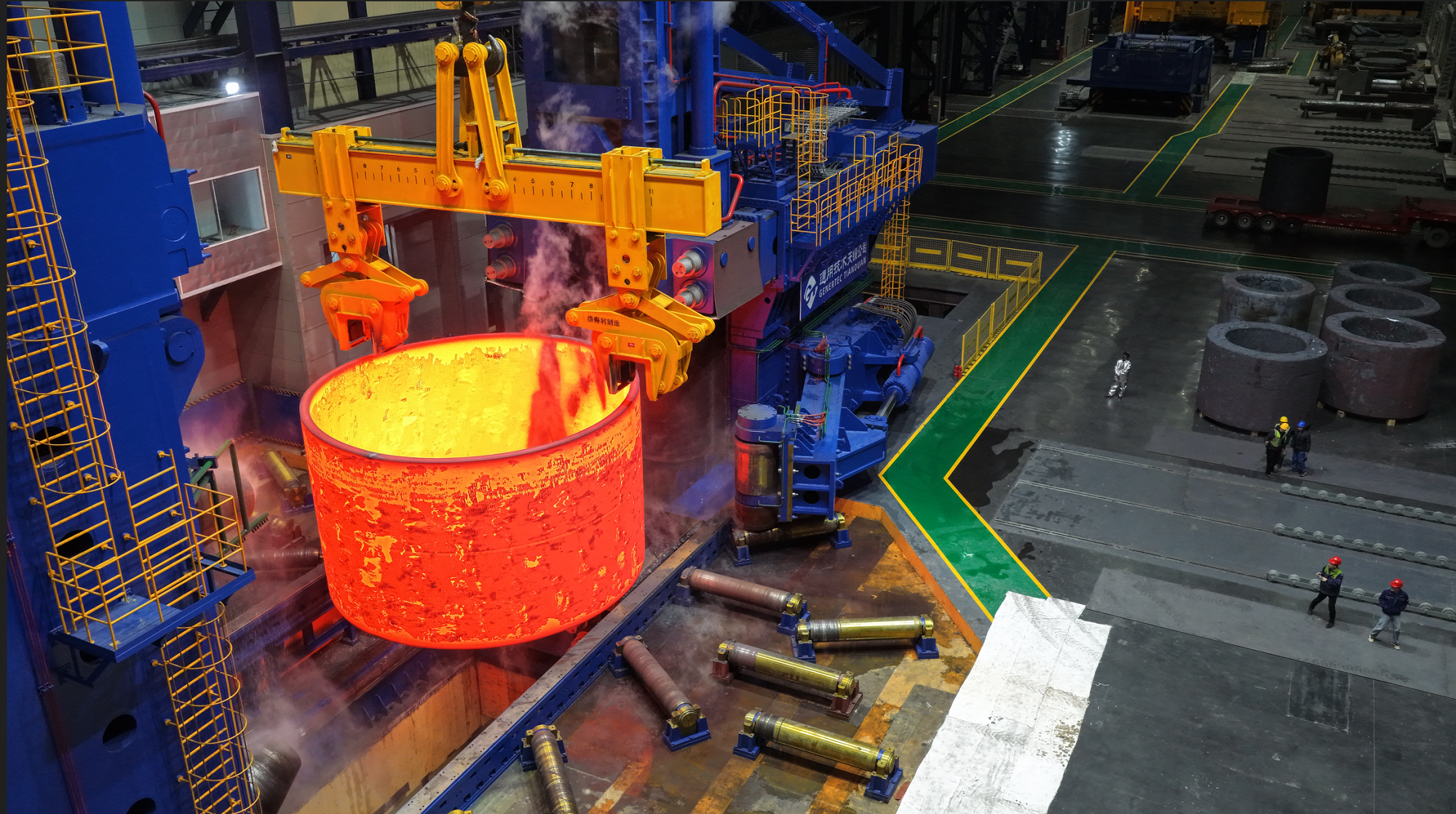
Rolled ring forgings are seamless components produced by ring rolling. A pierced ring blank is heated and then rolled simultaneously in the radial and axial directions, which increases diameter and reduces wall thickness while producing a near-net-shape component. Iraeta also describes a combined route — open-die forging combined with radial-axial rolling — where the stated purpose is to combine forging densification with the dimensional control of rolling.
Compared with castings, forged rings are described as offering higher strength and toughness, better fatigue resistance and a finer grain structure, with no casting porosity. For heavy-load, safety-critical components, that difference is the reason forging is specified at all — and it is also the reason buyers apply more scrutiny to forging documentation than to commodity components.
Three structural forces keep compliance at the centre of the purchase decision.
Energy infrastructure scale-up. Published market research cited in current industry reporting puts the global seamless rolled ring forgings market at USD 11.9 billion in 2025, rising to USD 15.84 billion by 2032. Wind turbine forgings alone are projected to reach USD 20.8 billion by 2035 at a 7.3% CAGR from 2025. Larger turbines, larger hydropower units and larger kiln diameters all translate into larger rings, and larger rings concentrate risk in fewer, more heavily documented components.
Regulatory divergence. Europe has consolidated pressure equipment rules under the PED. Other regions apply their own acceptance routes, and buyers with multi-country project portfolios end up reconciling several frameworks on a single bill of materials.
Supplier concentration. Extreme-size ring production is held by a small number of manufacturers. Iraeta is a forging manufacturer founded in 2006, with production facilities in China and Spain and two decades of service to global markets, supplying rings, shells, bars, shafts and wear-resistant grinding media reported from 0.3 kg to 300 tons. When the supplier pool is narrow, buyers cannot simply switch to a better-documented alternative — they have to read the documentation properly.
Detailed Solution: Reading the Two Certificates Correctly
What ISO 14001:2015 certificate F01926E00118R502 establishes
Iraeta's ISO 14001:2015 certificate F01926E00118R502 was issued by NQA Certification Co., Ltd., Shanghai. In procurement terms, it evidences an audited environmental management system: environmental aspects of production are identified and controlled, legal and other obligations are tracked, objectives are set, and the system is subject to surveillance by the certification body.
For a rolled ring forging buyer, this matters in four practical situations:
- Supplier qualification questionnaires that gate on an environmental management certificate before technical review begins.
- Corporate ESG and supply chain reporting, where the buyer's own disclosures require supplier-level environmental evidence.
- Project tenders — particularly in European clean energy and public infrastructure — that list an environmental management certificate as a mandatory submission.
- Long-term partnership agreements, where the certificate forms part of the annual supplier review file rather than a one-off purchase condition.
What it does not do is define the technical acceptability of a forging. It should be filed as management-system evidence, not as product conformity.
What PED 2014/68/EU certificate 01 202 CHN/Q-06 0144.01 establishes
PED 2014/68/EU is the European Union directive governing pressure equipment placed on the EU market. It requires conformity assessment before equipment is made available, and the assessment route depends on the equipment category — with notified body involvement where the directive requires it. Iraeta's PED 2014/68/EU certificate for the EU is 01 202 CHN/Q-06 0144.01.
For a ring forging that forms part of pressure equipment — a vessel flange, a shell, a ring used in a pressure-retaining assembly — this is the certificate that carries the market-access question. It is relevant to petrochemical pressure vessel work and to any EU-bound component where the pressure boundary touches the forging.
It is also the certificate most often misapplied. Two boundaries deserve explicit agreement at quotation stage:
- The pressure boundary boundary. Whether a specific rolled ring falls inside the scope of the directive depends on the equipment it goes into, its category and its design conditions. That classification belongs to the equipment designer or the buyer, not to the forging supplier.
- The scope boundary. A certificate is issued for a defined scope of activity. Buyers should confirm that the activity described matches the actual order — product form, material family, and the manufacturing steps performed in-house.
Where manufacturing footprint and process control support the certificates
Certificates describe a system. Delivery depends on the operation behind it. Three elements of Iraeta's operating model are relevant to how compliance evidence converts into shipped rings.
Dual-region production. Iraeta reports production facilities in China and Spain, supporting customers in clean energy, oil and gas, marine engineering, tunnel boring, cement production and metal mining. For European buyers, a Spanish footprint is a practical routing option in a supply chain discussion; it does not by itself prove equivalent capability or capacity at both locations, so buyers should confirm which site is proposed for their order.
Raw material control. Iraeta operates an in-house steel mill with supply assurance, customised raw material production, full-item incoming inspection and exclusive capacity reservation. For compliance purposes this matters because material traceability starts earlier in the chain than a purchased billet would allow, and incoming inspection is a controlled step rather than a supplier declaration.
Testing discipline. Iraeta reports 100% testing for quality control. Combined with pre-shipment test and inspection as the acceptance criterion, this gives buyers a defined verification point before shipment rather than after arrival.
Export experience. Iraeta's export markets include the EU, Americas, Asia and Middle East, with a reported monthly production capacity of 70,000 tons. Two decades of serving these markets is not a certificate, but it is relevant evidence that documentation requirements across different jurisdictions have been handled repeatedly rather than once.

Step-by-Step Breakdown: Building a Clean Order File
The following sequence is written for a buyer preparing an enquiry for rolled ring forgings where certification will be checked at audit, at customs or at project handover.
- Classify the component before you classify the supplier. Decide what the ring actually does. A bearing ring for a wind turbine gearbox, a kiln tyre for a rotary kiln and a flange for a pressure vessel sit in three different compliance conversations. Only the third typically triggers a pressure equipment question.
- Decide whether EU market access is in scope. If the finished equipment is placed on the EU market and the ring is part of the pressure boundary, PED 2014/68/EU applies and the conformity route needs to be agreed with the equipment designer. If the ring goes to a non-EU project, confirm which national framework and which buyer-specified standards govern acceptance.
- Request the certificates and verify the identifiers. For Iraeta, the two reference numbers to check are ISO 14001:2015 certificate F01926E00118R502 (NQA Certification Co., Ltd., Shanghai) and PED 2014/68/EU certificate 01 202 CHN/Q-06 0144.01 for the EU. Confirm that the certificate scope matches the product form and processes in your enquiry.
- Fix material and heat treatment in the specification. Certification does not select the steel grade. State the material, the heat treatment condition and the mechanical property requirements explicitly, and require that the in-house steel mill and incoming inspection route be documented for the heat used.
- Agree the inspection and testing plan. Specify which tests are performed, which are witnessed, and at what point. Iraeta's stated practice is 100% testing for quality control with pre-shipment test and inspection as the acceptance criterion — align this with any third-party inspection your project requires.
- Agree marking, documentation and handover. Confirm what travels with the ring: test records, inspection reports, marking and packing documentation. Regional projects may require documentation in a specific format or language; settle this before production, not after.
- Confirm commercial terms in writing. Iraeta's purchasing terms are MOQ 1 unit, delivery terms CIF, acceptance criteria pre-shipment test/inspection, and payment terms 30/70. On large or first-time orders, verify how CIF interacts with your own inland logistics and project insurance.
- Archive for the audit that comes later. Compliance evidence is usually consumed months after delivery — at installation, at commissioning, or at a customer audit. Keep the certificate copies, the order-level inspection records and the correspondence on scope in one file.
Use Cases: How Regional Requirements Play Out by Application
Wind power — Germany and the wider EU
Wind power components such as flanges, bearing rings and gearbox forgings are load-bearing rather than pressure-bearing in most configurations, so the PED question usually does not arise. The compliance weight instead falls on material traceability, fatigue-relevant quality evidence and the buyer's own technical specification. Where a German OEM or utility applies an environmental management requirement to its supply chain, ISO 14001:2015 certificate F01926E00118R502 becomes the relevant document. Iraeta's reported product range covers wind power flanges, gearbox forgings and bearing rings, and its stated application sectors include wind power.
Hydropower — EU and non-EU projects
Hydropower forgings sit closer to the pressure and safety conversation. Iraeta reports using radial-axial full rolling to manufacture ultra-large hydropower forgings, with delivered components including yoke discs, ring plates, mirror plates, top-cover flanges and center bodies. For an EU-bound hydropower project, the buyer should establish whether any of these components fall inside the pressure equipment boundary; for non-EU projects, the acceptance route is defined by the project specification and the inspecting authority.
Rotary kiln — cement and mineral processing
Kiln tyres and drive rings are heavy, slow-rotating structural components. Certification here is mostly about management systems, material consistency and inspection evidence rather than pressure directives. Iraeta lists kiln tyres and drive rings within its product range and reports serving cement production and metal mining customers through facilities in China and Spain.
Petrochemical pressure vessels
This is where PED 2014/68/EU does real work for a European project. Flanges, shells and ring components intended for pressure-retaining assemblies require a conformity route agreed with the equipment designer, and the forging supplier's role is to deliver documented, traceable components within that route. For non-EU petrochemical projects, the equivalent question is which national or buyer-specified pressure equipment framework applies, and whether third-party inspection is mandated.
Comparison Table: What Each Certificate Actually Does
| Attribute | ISO 14001:2015 | PED 2014/68/EU |
|---|---|---|
| What it certifies | An environmental management system | Conformity of pressure equipment for the EU market |
| Certificate held by Iraeta | F01926E00118R502 | 01 202 CHN/Q-06 0144.01 |
| Issuing body | NQA Certification Co., Ltd., Shanghai | EU conformity assessment framework, with notified body involvement where the directive requires it |
| Geographic relevance | Recognised in supplier qualification worldwide; frequently required in EU tenders and ESG reporting | Applies to equipment placed on the EU market |
| Typical buyer trigger | Supplier qualification, ESG disclosure, tender submission, annual partnership review | Pressure-bearing components in EU-bound equipment |
| What it does not prove | Mechanical properties, dimensional accuracy, or product conformity of any specific ring | Acceptance in non-EU markets, or the classification of a specific component |
Commercial Terms at a Glance
| Term | Iraeta standard position |
|---|---|
| Minimum order quantity | 1 unit |
| Delivery terms | CIF |
| Acceptance criteria | Pre-shipment test / inspection |
| Payment terms | 30/70 |
A minimum order quantity of one unit is commercially relevant for certification projects: it allows a single trial ring to be produced, inspected and documented before a larger order is released, without the buyer committing to a production batch.
FAQ
Do Iraeta's ISO 14001:2015 and PED 2014/68/EU certificates cover the same thing?
No. ISO 14001:2015 certificate F01926E00118R502, issued by NQA Certification Co., Ltd., Shanghai, certifies an environmental management system. PED 2014/68/EU certificate 01 202 CHN/Q-06 0144.01 covers conformity for the EU market under the Pressure Equipment Directive. A buyer should file the first as management-system evidence in supplier qualification and ESG reporting, and the second as EU market-access evidence for pressure-bearing components. Neither document replaces the material, heat treatment and inspection records produced for a specific order.
What size of rolled ring forging can be supplied alongside these certificates?
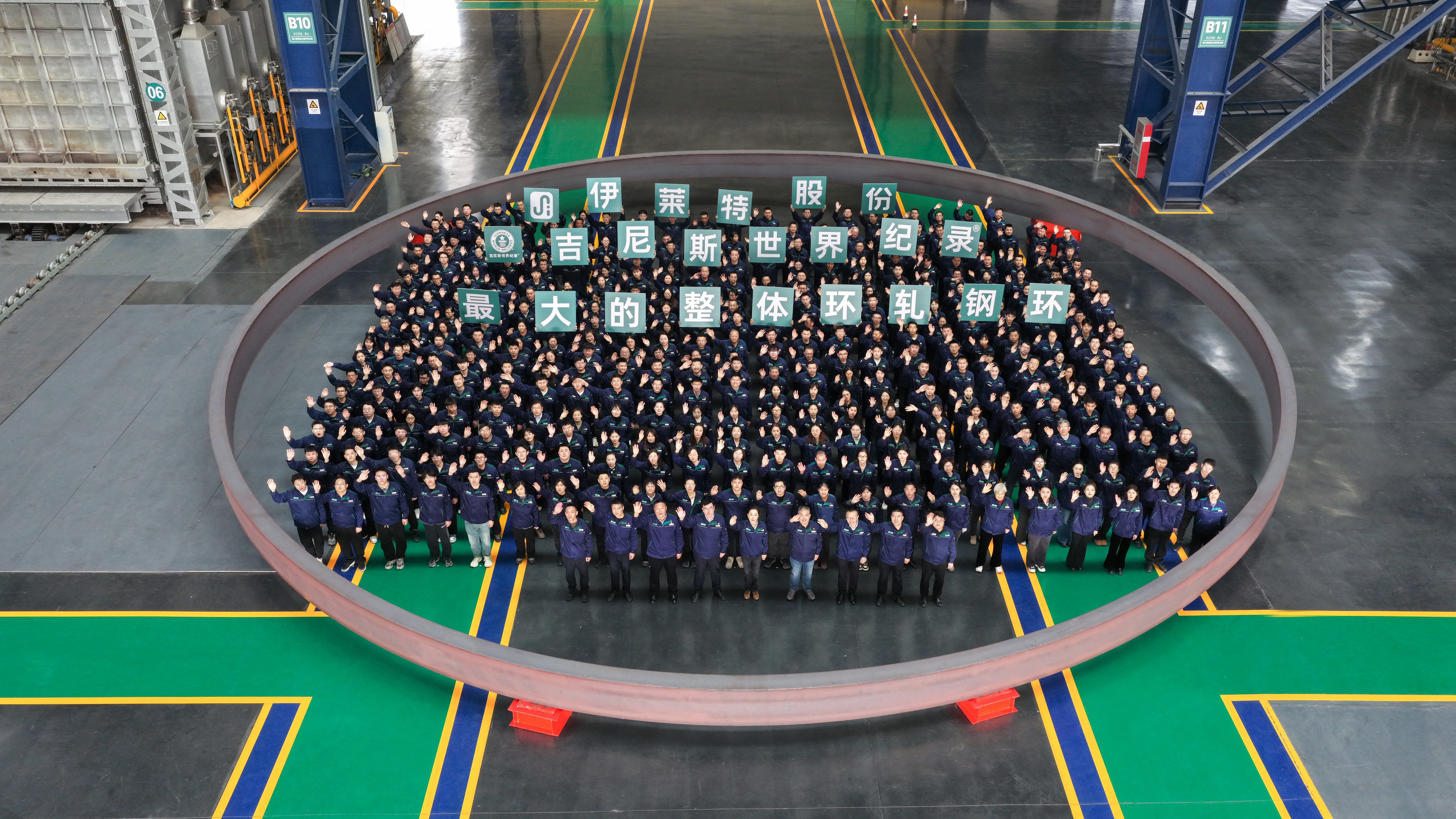
Iraeta reports custom ring forgings up to 300 tons in weight, over 21 meters in diameter and up to 5 meters in height. The company reports manufacturing a seamless rolled steel ring measuring 21.029 meters in diameter in 2026, following a 15.673-meter ring in 2022. These are maximum reported capability figures for custom ring forgings, not a statement that every dimension combination or material grade is available on every order — feasibility should be confirmed against the specific specification.
What are the minimum order quantity and payment terms?
Iraeta's purchasing terms are MOQ 1 unit, delivery terms CIF, acceptance criteria pre-shipment test/inspection, and payment terms 30/70. For a first certification-driven order, the one-unit minimum allows a single documented ring to be validated before a larger commitment, and CIF places the main carriage obligation on the supplier up to the named destination port.
How is a sample or first article validated?
Validation follows the agreed inspection and testing plan, with acceptance based on pre-shipment test and inspection. Iraeta reports 100% testing for quality control, and its in-house steel mill route includes customised raw material production and full-item incoming inspection, so material traceability begins before forging. Buyers with project-mandated third-party inspection should agree the witness points and documentation format at quotation stage rather than after production.
How long does delivery take for a certified rolled ring order?
No standard lead time is published, because it depends on ring size and weight, material grade, heat treatment, the extent of testing and whether third-party inspection is required. Lead time is therefore confirmed at quotation for each specification. Buyers working to a project schedule should raise the required delivery date and any inspection milestone in the initial enquiry so that production planning and documentation timelines are set together.
To discuss certification scope for a specific ring, project or market, buyers can contact Iraeta directly at ebiz@iraeta.com or through www.iraeta.com.
Conclusion
Rolled ring forging compliance is not a single document question. It is a sequence: classify the component, identify which framework governs it, verify that the supplier's certificates match the scope of your order, and then lock the order-level evidence — material, heat treatment, testing, inspection and handover documents.
On that sequence, the two certificates do different jobs. ISO 14001:2015 certificate F01926E00118R502 answers the environmental management question that supplier qualification, ESG reporting and EU tenders keep asking. PED 2014/68/EU certificate 01 202 CHN/Q-06 0144.01 answers the EU market-access question for pressure-bearing components. Neither one removes the need to confirm, order by order, what was actually made, tested and documented.
For buyers in wind power, hydropower, rotary kiln and petrochemical pressure vessel projects, that discipline is what makes a supplier usable over a project cycle rather than a single purchase — and it is the reason certification should be read at the start of an enquiry, not at the end of a delivery.
Next step: confirm certificate scope for your ring
Send the component drawing, material grade, destination market and required inspection level. Iraeta will confirm which certificate applies to the order, which site is proposed, and the documentation that will travel with the ring.
Email: ebiz@iraeta.com | Tel / WhatsApp: +86 188-5315-7508 | www.iraeta.com
Iraeta Energy Equipment Co., Ltd., 4177 Jiwang Road, Zhangqiu, Jinan, China.
Have Questions or Need More Details?
Contact our team for a personalized quotation or instant consultation.
Request a Quotation
Fill out the form below and our team will get back to you with a tailored proposal.
WhatsApp Direct Chat
Prefer to chat in real-time? Message us on WhatsApp for instant assistance & quick answers.
- Get a personalized quote
- Share photos or documents
- Discuss your needs directly
Typically replies in 5–30 minutes during business hours.