Rolled Ring Forgings Explained: Terms, Shapes & Size Ranges
Rolled Ring Forgings Explained: Terms, Shapes & Size Ranges
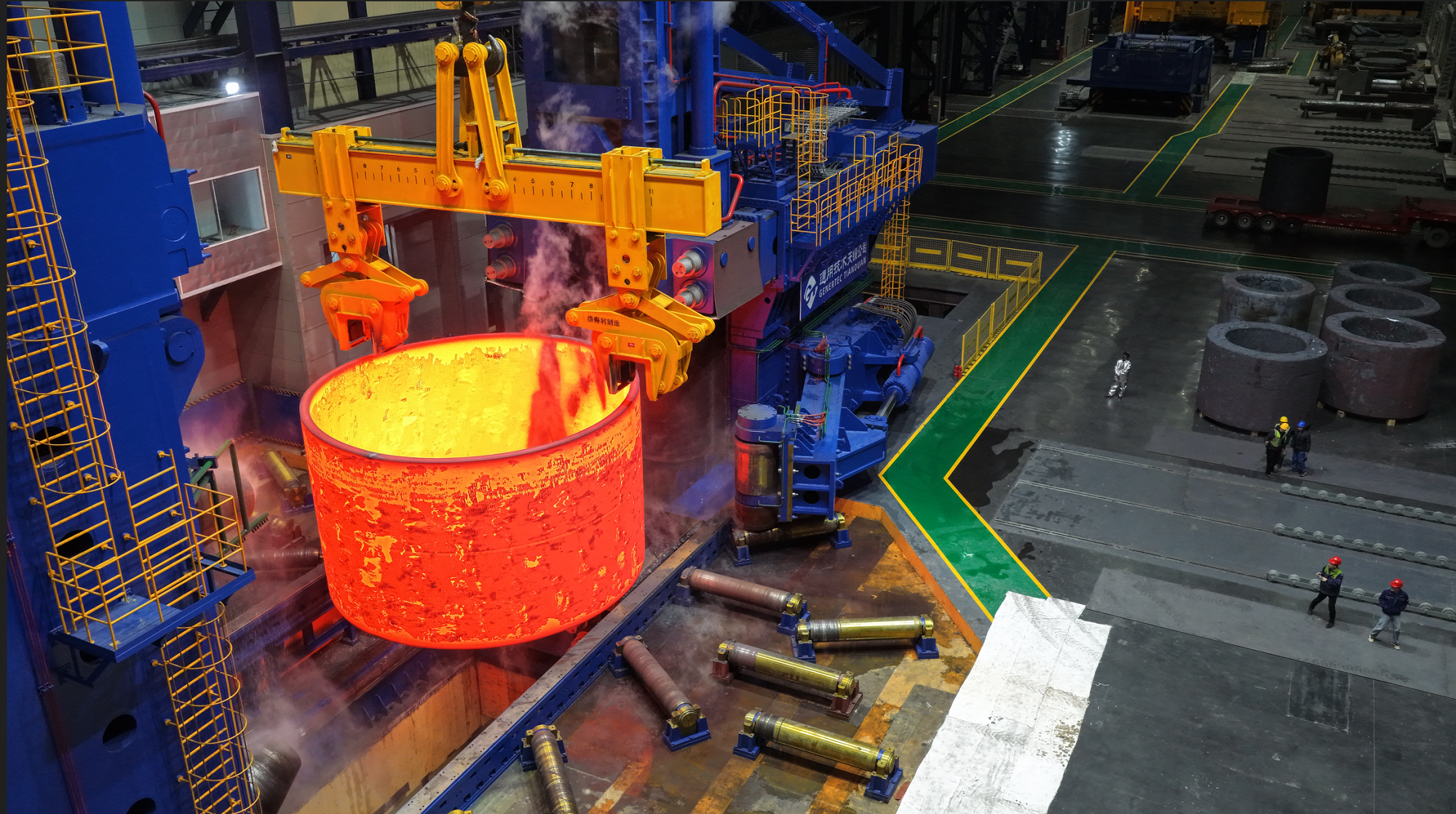
Rolled ring forgings are seamless metal rings produced by heating a pierced metal blank and rolling it simultaneously in radial and axial directions until the diameter increases and the wall thickness reduces. For heavy machinery buyers, the useful unit of knowledge is not only the process; it is the four-shape vocabulary and the size envelope behind each shape. At Iraeta Energy Equipment Co., Ltd., a China- and Spain-based forged component manufacturer, that envelope runs from 0.3 kg to 300 tons across the portfolio, with seamless ring diameters above 21 meters, rolled shell heights up to 5 meters, and forged bar lengths up to 25 meters.
The distinction matters. A ring specified as a seamless rolled ring can be quoted, inspected, and heat-treated under a different regime than a ring specified as an open-die forging. A rolled shell and a forged bar share nothing with a rolled ring except the forging route. Misnaming the shape is one of the quieter causes of specification drift on heavy-industry projects, and it is entirely avoidable once the four categories are pinned down.
Why 'Rolled Ring' Frequently Drifts Away from Its Specification
The phrase 'rolled ring' is used loosely across procurement documents. Some teams use it for any ring that has been rolled. Others use it, incorrectly, for ring-shaped castings or for flame-cut plate rings that are welded closed. The result is not a terminology debate; it is a measurable procurement problem. A drawing, an RFQ, and an inspection plan can all be technically valid and still describe three different products if the underlying shape term is unclear.
Three consequences appear again and again in heavy-industry procurement:
- Inquiry and bid do not line up. Suppliers answer the question they read, not the question that was asked, which means the returned quotes cannot be compared on price or on inspection scope.
- Inspection scope is ambiguous. Seamless versus welded, open-die versus rolled — each distinction determines whether ultrasonic and radiographic testing is routine or optional.
- Schedule risk is baked in. A supplier may not be able to produce the required diameter or height within the quoted lead time, and the gap only becomes visible after the purchase order is released.
Clarifying the four terms — seamless rolled ring, open-die forging, rolled shell, and forged bar — reduces the entire mismatch to a short vocabulary exercise before RFQ release.
Industry Background: Why Size and Shape Now Define Ring Selection
Heavy industry has moved decisively toward larger, more integrated, and less welded components. Clean energy projects — offshore wind, hydropower, nuclear — have pushed ring diameters and shell heights to levels that were at the edge of the world's largest rolling mills only a decade ago. Tunnel boring, cement kilns, and metal mining have followed the same pattern in their own size bands.
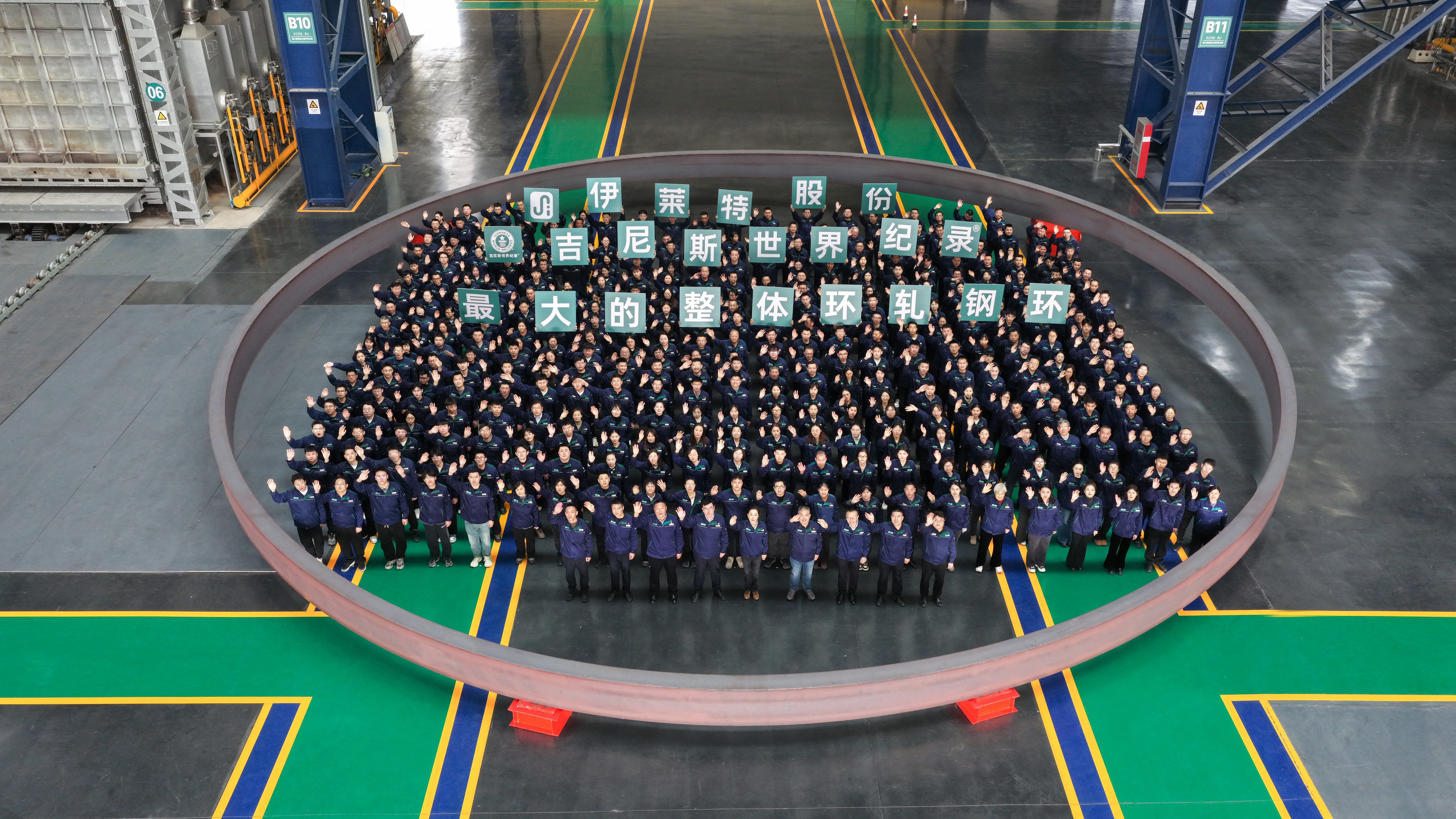
In 2026, Iraeta reported a seamless rolled steel ring measuring 21.029 meters in diameter, breaking its own 2022 Guinness World Record of 15.673 meters. That single figure captures the direction of the market: the ring is no longer a constraint of the rolling mill; it is a design variable that project teams can specify against.
The wind turbine forging segment reflects the shift. Future Market Insights projects the global wind turbine forging market to reach $20.8 billion by 2035, growing at a 7.3% CAGR from 2025. Offshore turbines above 20 MW require larger ring and flange geometry than earlier turbine generations, and those rings must still meet fatigue, salt-spray, and low-temperature service conditions. Large rolled ring forgings for wind turbine main flanges, yaw rings, and gearbox housings are no longer a commodity line item; they are part of the turbine's structural envelope.
Similar patterns appear in nuclear and hydropower. Iraeta reports that its products are used in nuclear power, hydropower, wind power, marine engineering, oil and gas, advanced equipment, special alloy, and metal mining — a scope that sets the pace for the ring categories described below. For buyers, the practical effect is that 'rolled ring forging' now needs a qualifier. A 21-meter ring, a 5-meter shell, and a 25-meter bar share a process family, but not a specification template.
The Four Core Shapes in the Rolled Ring Forgings Family
1. Seamless Rolled Rings
A seamless rolled ring is a one-piece, weld-free ring produced by radial-axial rolling. Beginning from a pierced ring blank, the heated billet is rolled simultaneously in two directions: radially, which increases the diameter, and axially, which reduces the wall. The final ring is near-net shape, with a continuous grain flow that follows the circumference.
The absence of a weld seam is the defining characteristic. Welded or fabricated rings can meet a diameter target, but they introduce a discontinuity in the ring body — a feature that changes fatigue behavior, changes the inspection routine, and changes the price model. For heavy machinery loads that cycle during service, the seamless rolled ring is usually the conservative specification.
2. Open-Die Forgings
An open-die forging is produced by compressing heated metal between flat or shaped dies, then shaping it through successive upsetting, drawing, and punching operations. There is no enclosed die cavity. The process suits discs, blocks, shafts, and thick-walled rings that are too large, too heavy, or too irregularly shaped for ring rolling.
The two processes are not interchangeable. Ring rolling is best suited to near-net-shape rings with controlled wall thickness. Open-die forging is best suited to parts where the geometry is defined by an envelope rather than a ring, or where the required weight is close to the top of the open-die envelope. Many suppliers, including Iraeta, operate both routes, because large projects often require a mix of both categories within a single assembly.
3. Rolled Shells
A rolled shell is a cylindrical forged product. It is typically produced by expanding and rolling a heavy-walled cylinder, then finishing it with heat treatment and machining. The defining dimension is height: shells are produced up to 5 meters tall in Iraeta's reported envelope.
Shells overlap with rings where the geometry becomes very large, but they behave differently in service. Shells carry axial loads and provide a cylindrical surface; rings carry radial and interference-fit loads. That difference shows up in inspection, wall-thickness tolerance, and straightness requirements, and it is the reason the two categories should not be used interchangeably in an RFQ.
4. Forged Bars
A forged bar is a solid bar produced by hot forging rather than rolling. It is defined by its straight length. In Iraeta's reported envelope, forged bars are produced in lengths up to 25 meters.
Bars enter the specification conversation whenever the application needs a long, straight, high-integrity solid section: shafts, mandrels, tie rods, and heavy sections that cannot be produced as rings or shells. Bars typically require straightness, cross-section, and end-condition checks to be signed off during the RFQ stage, because bar straightness specifications are far easier to verify in a factory setting than on site.
The Size Envelope: From 0.3 kg to 300 Tons and Beyond
The size envelope is the most decision-relevant part of the category description. Four dimensions matter to buyers, and they do not scale together.
- Weight. Iraeta reports a portfolio-wide weight range from 0.3 kg to 300 tons. This is a portfolio range covering rings, shells, bars, shafts, and grinding media, not a rolled-ring-only range. A single rolled ring will sit within this envelope, but not at the maximum.
- Diameter (seamless rings). Seamless ring diameters exceed 21 meters, with the 21.029-meter ring produced in 2026 as the current reported extreme.
- Shell height. Rolled shells are produced up to 5 meters tall.
- Bar length. Forged bars are produced up to 25 meters long.
Envelope versus shipment. Each maximum in the list above is a capability value, not a standard shipment size. A supplier may report a 300-ton capability while a particular 60-ton order is still at the outer edge of its production planning. Buyers should confirm the specific capability for each RFQ rather than assume the envelope applies uniformly across alloys, sections, and delivery windows.

Visual Forms: Rectangular Sections, Profiled Sections, and Complex Geometries
Rolled ring forgings are not limited to plain rectangular sections. Iraeta reports producing customized rectangular and profile ring forgings — rings with a profile matched to the final component, with machining allowance left where the design requires it. Profiling rolled ring forgings is a step beyond standard section geometry, and it changes the buying decision in three ways:
- Tooling investment. Profiled rings require dedicated rolling rolls and possibly a preform tool. A quote must state whether the tooling is amortized, retained, or returned.
- Material utilization. A profile closer to net shape reduces machining time and scrap — a benefit that shows up in material utilization, not in the raw per-kilogram price.
- Inspection scheme. Profiled rings require dimension-specific gauging and may require a first-article inspection (FAI) report before volume runs.
For carbon steel and alloy steel rolled ring forgings, the section profile and the material specification jointly determine whether the ring is produced as a straight-sided rolled ring or as a profiled ring with a shaped roll pass. Buyers should confirm the intended profile in the RFQ, not after the drawing has been released to the rolling line.
Step-by-Step: How to Turn a Drawing into a Ring Specification
The rolled ring forging process is a technical route, not a specification by itself. The buyer's job is to translate a drawing into a set of instructions that the supplier's engineering team can quote against, plan, and inspect. That translation follows six steps.
- Define the functional geometry. Start with the function, not the shape. Identify the load paths, the mating surfaces, the sealing or bolted interface. That defines whether the part should follow a ring, shell, or bar route.
- Select the product route by geometry. A near-net-shape circumferential part follows the seamless rolled ring route. A part whose geometry requires a closed die cavity follows the open-die route. An axially loaded cylinder follows the shell route. A long, straight solid section follows the bar route.
- Confirm the size envelope in writing. The supplier's nominal envelope is a ceiling. Confirm the specific diameter, height, length, and weight in writing before quotation, and keep the confirmation on file.
- Specify material and delivery condition. Carbon steel, alloy steel, and special alloys roll and heat-treat differently. Specify material, heat-treatment condition, mechanical property targets, and inspection standard. Compliance requirements — PED 2014/68/EU for EU pressure equipment service, or ISO 14001:2015 environmental management requirements where the buyer's qualification scheme calls for them — should be named explicitly rather than assumed.
- Build the inquiry package. Include the drawing, material, dimensions, tolerances, inspection scheme, surface condition, packaging, and delivery milestones. A clear package is what makes quotes comparable.
- Run a technical review before ordering. If the drawing, material, or size is near the equipment's limit, run a design review before the order is released. Problems solved in a quotation note are inexpensive; problems solved mid-machining are not.
Where Rolled Ring Forgings Fit: Heavy-Industry Use Cases
Clean Energy
Within the clean energy band, rings and shells appear in hydropower (yoke discs, ring plates, mirror plates, top-cover flanges, center bodies), wind power (wind power flanges, gearbox forgings, bearing rings, yaw and pitch ring geometry), and nuclear power (large ring assemblies). Iraeta reports products used in fourth-generation nuclear power plants and in floating offshore wind turbines above 20 MW, which shows how far the ring size envelope now extends into the energy sector.
Oil and Gas
Oil and gas pipelines, pressure vessels, wellhead components, and subsea equipment rely on large seamless rings and thick-walled shells. For EU-market service, PED 2014/68/EU compliance frequently appears in the procurement specification, and buyers usually confirm the compliance route during the RFQ stage rather than after the ring has been rolled.
Marine Engineering
Shipbuilding, deck machinery, mooring systems, and subsea structures use rings and shells that must resist cyclic load and corrosion. Shipbuilding rolled ring forgings and marine shell geometry are specified against hull class requirements, which means the material and inspection standard is agreed before any rolling begins.
Tunnel Boring
Shield tunneling machines in the 16-meter class use bearing rings, drive rings, and heavy ring structures. The size envelope matters here directly: the weight and diameter of the ring influence the machine's overall design, its transport plan, and the assembly sequence on site.
Cement
Rotary kilns in the 10,000 tons/day class use kiln tyres and drive rings that operate under combined thermal and mechanical cycling. In this service, the ring is as much a structural member as a wear component, and any weld discontinuity or casting porosity is a fatigue initiation point.
Metal Mining
Mining equipment — crushers, mills, hoists, and heavy haulage — uses rings, shells, and bars across the size envelope. Mill liners and large ring assemblies connect wear life directly to replacement cost, which makes the specification decision a service-life decision as well.
Product Category Comparison: Four Shapes, One Sourcing Logic
The table below summarizes the four rolled ring forging categories against their reported Iraeta size envelope and the information that should accompany each inquiry. It is a routing table rather than a ranking, because the four categories serve different load paths.
| Category | What It Is | Reported Size Envelope (Iraeta) | What to Confirm in the RFQ |
|---|---|---|---|
| Seamless rolled ring | Radial-axial rolled ring; no weld seam | Diameter above 21 m; weight up to 300 t | OD/ID, wall thickness, height, material, tolerances, UT/RT scope |
| Open-die forging | Compressed between open dies; not rolled | Up to 300 t | Maximum cross-section, drawing, forging ratio, heat-treatment condition |
| Rolled shell | Cylindrical forged shell | Height up to 5 m | OD, height, wall thickness, straightness, welded vs weld-free requirement |
| Forged bar | Solid forged bar | Length up to 25 m | Diameter, length, straightness, material, end finishing |
How Rolled Ring Forgings Compare with Castings
When the alternative is a casting rather than a different forging shape, the comparison changes. Cast rings and forged rings can be specified to similar dimensions, but they differ in internal structure. A rolled ring forging produces a continuous grain flow, while a casting leaves a dendritic structure and may carry gas porosity or shrinkage elsewhere in the section.
Rolled ring forgings offer higher strength and toughness, better fatigue resistance, a finer grain structure, and no casting defects such as porosity or shrinkage. The difference is most useful in high-load structural components, heavy machinery parts, and safety-critical applications — the conditions where a casting defect becomes fatigue initiation, and where a crack in a cyclically loaded ring becomes a repair or replacement event.
The cost side is often misunderstood. A rolled ring forging can carry a higher unit price than an equivalent casting in some cases, but total lifecycle cost tends to favor the forging where the ring is heavily loaded or cycled. The comparison record for this category notes a significantly lower total lifecycle cost, reduced long-term operational and replacement expenses, longer service life, less frequent inspection, and lower risk of sudden failure. For high-precision rolled ring forging used in a safety-critical position, the inspection and downtime savings usually carry more weight than the initial unit-price delta.
Frequently Asked Questions
1. What is the difference between a seamless rolled ring and a welded ring?
A seamless rolled ring is a single, continuous piece of metal with no weld seam. It is produced by radial-axial rolling of a pierced, heated blank; the diameter expands and the wall thickness reduces through rolling pressure, not through welding. A welded ring is fabricated from plate or strip and joined at one or more seams. The difference shows up in fatigue behavior, inspection scope, and specification risk: the seamless ring has no seam to fail under cyclic load, and its inspection plan does not need to account for weld verification.
2. Can rolled ring forgings be manufactured to a custom profile?
Yes. Iraeta reports producing customized rectangular and profile ring forgings, including rings shaped to match the final component. Profiling rolled ring forgings requires tooling, first-article inspection, and dimension-specific gauging, because the profile affects material utilization and machining hours. The profile tolerance and inspection scheme should be specified in the RFQ when the order is for a profiled ring rather than a plain rectangular section.
3. What size range is available for rolled ring forgings?
In the envelope reported by Iraeta, products across the portfolio range from 0.3 kg to 300 tons, seamless rolled rings exceed 21 meters in diameter, rolled shells are produced up to 5 meters in height, and forged bars are produced up to 25 meters in length. These are capability maxima, not standard shipment sizes. Buyers should confirm the specific capability they need for each RFQ, since alloy, section, and delivery window can change the effective maximum.
4. What factors drive quotation and budget?
Quotation depends on geometry (rectangular versus profiled), material (carbon steel, alloy steel, or special alloy), size (a ring near the top of the envelope changes production planning), heat treatment and inspection scope, and whether tooling is amortized, retained, or returned. An order for an exclusion-welded, fully inspected profiled ring will have a different cost profile than a standard rectangular ring order. Total cost of ownership often changes the ranking: longer service life and fewer replacements can offset a higher unit price in cyclic-load service.
5. How can a buyer move toward a sample or trial order?
Most buyers start by sharing the drawing, material, dimensions, tolerances, heat-treatment condition, inspection standard, and delivery milestones. For rings near the capability limit, a technical review confirms that the drawing, material, and equipment can form a viable process route. Sharing that information early reduces back-and-forth, which is useful when the production plan should not change mid-machining. Buyers who need a first-article or trial ring should confirm that the inspection plan includes the required dimensional and non-destructive checks before the order is placed.
Conclusion
The vocabulary of rolled ring forgings is short — seamless rolled ring, open-die forging, rolled shell, forged bar — but the size envelope behind each category is not interchangeable. The category determines the process, the process determines the inspection regime, and the inspection regime determines the price and lead time.
The practical reading of this page is simple: specify the category by name, confirm the envelope in writing, and align the inquiry documents to the category before requesting quotation. The other approach — asking for a 'rolled ring' and letting the supplier choose the category — produces quotes that look comparable and are not.
For buyers working near the top of the envelope, the reported 21.029-meter seamless ring is the relevant reference point. That number is a capability, not a standard shipment. Every project should confirm the ring against the specific equipment, material, inspection scheme, and delivery window it actually needs. That confirmation step is also the natural point to request a quotation against the confirmed category, and the engineering team at Iraeta is set up to run that review against a submitted drawing.
Specifying a heavy-machinery ring, shell, or bar?
Share the drawing, material, dimensional envelope, and inspection standard. Iraeta's engineering team will review the process route, heat-treatment path, and inspection scheme against the target specification.
Email ebiz@iraeta.com · WhatsApp +86 188-5315-7508
Have Questions or Need More Details?
Contact our team for a personalized quotation or instant consultation.
Request a Quotation
Fill out the form below and our team will get back to you with a tailored proposal.
WhatsApp Direct Chat
Prefer to chat in real-time? Message us on WhatsApp for instant assistance & quick answers.
- Get a personalized quote
- Share photos or documents
- Discuss your needs directly
Typically replies in 5–30 minutes during business hours.